

P2015 on 2007-2015 Audi Q7 3.0L TDI: Intake Runner Sensor Causes and Fixes
On the Audi Q7 3.0L V6 TDI, code P2015 almost always points to the intake manifold runner motor over-rotating due to a worn plastic stop inside the actuator. The most common, affordable, and permanent fix is a simple metal repair bracket that limits the motor's movement, costing around $15-$70. This repair avoids a dealership-recommended intake manifold replacement that can cost over a thousand dollars.
- P2015 on your Q7 TDI is almost certainly caused by a worn plastic stop on the intake runner motor.
- Do not immediately agree to replace the entire intake manifold. The problem can usually be fixed for under $70 with a simple metal repair bracket.
- The repair is straightforward for a DIYer with basic tools and can often be completed in under an hour.
- It is wise to install repair brackets on both intake manifolds (for Bank 1 and Bank 2) as a preventative measure, even if only one is showing a fault code.
What's Unique About the 2007-2015 Audi Q7
The VAG 3.0L V6 TDI engine is notorious for this specific problem across multiple vehicles, including the Q7, Touareg, and Cayenne Diesel. The issue isn't usually the sensor or the motor itself, but rather the small plastic limiting stops on the actuator linkage that wear out or break from heat and vibration. This allows the motor to over-travel, triggering the P2015 code. The aftermarket has responded with simple, robust metal brackets that act as a new, stronger stop for the actuator. This makes it a well-understood and highly preventable failure that rarely requires replacing the entire expensive intake manifold assembly, a repair that could cost over €2200 at a dealer.
Symptoms You May Notice
- Check Engine Light (Malfunction Indicator Lamp) is on.
- Reduced engine power and acceleration.
- Rough or unstable idle.
- Decreased fuel economy.
- Engine may hesitate or stumble.
- Vehicle may enter 'limp mode' with significantly reduced power.
- Replacing the entire intake manifold assembly. This is what a dealership might propose and costs thousands (€2200+). In most cases, only the inexpensive repair bracket is needed to solve the root cause of the actuator over-travel.
Most Likely Causes
- Worn or Broken Intake Manifold Runner Actuator Stop 🔴 High Probability The original actuator linkage uses a plastic stop that becomes brittle and wears down over time due to engine heat and vibration, allowing the motor to exceed its intended range of motion.
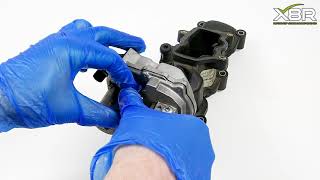
How to confirm: Visually inspect the actuator motor on the side of the intake manifold. You will likely see excessive play in the linkage arm. With the engine off, you can often manually push the arm past its normal stopping point. The installation is often possible in under 15-20 minutes with basic tools.
Typical fix: Install an aftermarket metal repair bracket. This bracket bolts onto the actuator motor and provides a new, hard stop, preventing over-travel. This is the most common, cost-effective, and permanent repair.
Est. part cost: $15-$70 - Failed Intake Manifold Runner Motor / Position Sensor 🟡 Medium Probability The motor or the integrated position sensor can fail electrically, though it's far less common than the mechanical stop failing. A TSB for the related 4.2L FSI engine notes that a deformed oil seal behind the potentiometer can cause it to stick, which could be a similar failure mode.
How to confirm: If the repair bracket does not solve the issue, or if there is no physical play in the linkage, the motor/sensor assembly should be tested with a diagnostic scan tool (like VCDS) that can read live data and actuate the component.
Typical fix: Replace the intake manifold runner motor assembly. The part is often made by Bosch or VDO.
Est. part cost: $150-$300 - Excessive Carbon Buildup ⚪ Low Probability Like many direct-injection diesel engines with EGR systems, the 3.0L TDI can suffer from significant carbon deposits in the intake manifold, which can restrict or bind the movement of the swirl flaps. One owner on AudiWorld noted that at 205,000 km, their manifold was 50% caked with carbon.
How to confirm: This is difficult to confirm without removing the intake manifold for a visual inspection. A significant loss of power accompanying the code is a strong indicator.
Typical fix: The intake manifold must be removed and professionally cleaned (e.g., via walnut blasting or pressure washing with specialized cleaners) or replaced entirely if the buildup is too severe.
Est. part cost: $450-$1000+
Rare But Worth Checking
- Wiring Harness or Connector Issue: Damage to the wiring or a corroded connector for the actuator motor can cause an implausible signal. This is worth checking before replacing expensive parts.
- Vacuum Leak: On some related VAG engines, vacuum lines control the flaps. A leak in a vacuum line or a faulty control solenoid could prevent proper flap actuation, leading to a position error. One user traced a persistent code to a faulty vacuum valve.
Diagnosis Steps
- Read the fault codes with an OBD-II scanner. Confirm if P2015 is present, and check for P2020 (Bank 2) or other related codes.
- Gain access to the intake manifold runner motors. There is one on the outer side of each intake manifold (Bank 1 and Bank 2).
- With the engine off, visually inspect the actuator arm and linkage for obvious damage or excessive play. Try to move the arm by hand; if it moves loosely or beyond a clear stop, the plastic limiter has failed.
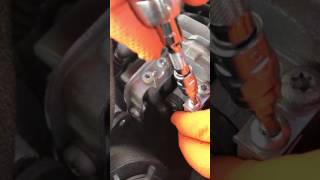
- If significant play is found, the most likely solution is to install a P2015 repair bracket. The installation involves removing one or two T30 Torx screws, positioning the bracket to create a new hard stop, and re-tightening.
- After fitting the bracket, the fault code should clear on its own after a few engine starts; no special software is needed.
- If no play is evident, use a capable scan tool (like VCDS) to monitor the live data from the position sensor while commanding the actuator to move. Check if the sensor's reported position matches the commanded position.
- If the sensor data is erratic or does not change, inspect the wiring and connector to the actuator motor for damage or corrosion.
- If wiring is intact and the actuator doesn't respond correctly to scan tool commands, the motor/sensor assembly itself has likely failed and needs replacement.
- If the actuator attempts to move but seems to bind or makes noise, suspect heavy carbon buildup inside the manifold requiring removal and cleaning.
Parts You'll Likely Need
- Intake Manifold Runner Repair Bracket Kit — This is the most common fix. It provides a new, durable metal stop for the actuator motor, preventing the over-rotation that causes the P2015 code. It is considered a permanent solution.
Trusted brands: Dieselgeek, X8R, RASTP, DPF Solutions Sheffield
Aftermarket price range: $15-$70 - Intake Manifold Runner Motor
(OEM #059129086M (or D, G, J, K, L))— If the motor itself or its integrated position sensor has failed electrically, the entire unit must be replaced. Part numbers may vary, but they are often interchangeable.
Trusted brands: Bosch, VDO, Audi Genuine
OEM price range: $250-$400
Aftermarket price range: $150-$250 - Intake Manifold Assembly
(OEM #059129711 (Bank 1) / 059129712 (Bank 2) - Suffixes vary)— This is the worst-case scenario, needed only if the internal flaps are broken or so caked with carbon that they cannot be cleaned. This is rarely required for a P2015 code alone and is the most expensive repair.
Trusted brands: Audi Genuine, Pierburg
OEM price range: $800-$1200
Aftermarket price range: $300-$600
Related Codes That Often Appear With This One
- P2020 — P2020 is the identical 'Intake Manifold Runner Position Sensor/Switch Circuit Range/Performance' code, but for Bank 2. Since the V6 engine has two banks, it's common to see both codes if both actuator stops are worn. It is recommended to install repair brackets on both banks at the same time.
- P2004, P2006 — These codes indicate the intake runner control is stuck open (P2004) or stuck closed (P2006). They are directly related to the same flap system and can appear alongside P2015 if the flaps are binding or the actuator has failed.
- P1018, P3135 — These are other VAG-specific codes related to the intake runner flaps being stuck or faulty, often pointing to the same root causes.
Technical Service Bulletins (TSBs) & Recalls
- A0124312072273_2: This bulletin from Audi addresses MIL-on conditions for codes P2004, P2006, P2014, and P2015, linking them to the electric changeover valve (the intake runner motor).
- 01-12-55 (2030192): TSB for 4.2L FSI V8 engines in the Q7 (and other models) for P2015/P2020, identifying a sticking linkage due to a deformed oil seal behind the potentiometer a
Platform-Specific Known Issues
- The provided Technical Service Bulletin (TSB) #A0124312072273_2 confirms that P2015 is a known issue related to the 'electric changeover valve N316' on Audi engines.
- A separate TSB (01-12-55 / 2030192) for the 4.2L FSI engine in the Q7 also addresses P2015/P2020, attributing it to a deformed oil seal behind the position sensor causing the linkage to stick. While for a different engine, it highlights a known failure pattern in the platform's intake design.
Mechanic-Grade Diagnostic Values
- Wiring continuity/resistance check on V157 motor harness — expected: Less than 1.5 Ohms. Failure: High resistance or an open circuit (no continuity) on any pin indicates a wiring break.
Hidden / Shadow Codes Worth Checking
- 008213 / 18447 / 7859: These are VAG-specific fault codes for 'Intake Manifold Flap Position Sensor (Bank 1): Implausible Signal', which are functionally identical to P2015. (see via These codes are visible using a VAG-specific diagnostic tool like VCDS (VAG-COM) or ODIS, and may not appear on a generic OBD-II scanner.)
Scan Tool Commands That Help
- VCDS (VAG-COM) or ODIS: Engine (01) -> Basic Settings -> Group 142 — To run the adaptation/calibration sequence for the intake manifold flaps. This is often required after replacing the actuator motor or the entire intake manifold to teach the ECU the new end-stops. A TSB also specifies performing this basic setting.
- VCDS (VAG-COM) or ODIS: Engine (01) -> Output Tests — To command the V157 actuator motor to cycle through its range of motion. This allows a technician to visually confirm if the motor is physically operating, stuck, or binding, without having to remove parts.
Wiring & Ground Locations
- V157 / G336 Connector (Bank 1) — The 5-pin electrical connector on the intake manifold runner motor, located on the outer side of the Bank 1 (left side/driver's side on US models) intake manifold.. This is the primary connection for the motor and sensor. A corroded or damaged connector/wiring here will directly cause a P2015 fault. A pinout is available for testing continuity back to the ECU: Pin 1 to ECU T10, Pin 2 to ECU T27, Pin 3 to ECU T51 (Ground), Pin 4 to ECU T35, Pin 5 to ECU T50.
- Engine Ground Strap — A primary engine-to-chassis ground strap on the Q7 is located under the vehicle, connecting to the chassis on the right front long member, accessible from behind the right front wheel.. The Audi Q7 is known for having grounding issues that can cause a variety of electrical problems, including slow starting and erratic sensor behavior. A poor engine ground can introduce electrical noise or voltage drops, potentially causing the sensitive position sensor to send an implausible signal to the ECU.
Real Owner Repair Stories
- Dieselgeek.com customer review (Audi Q7 3.0 TDI) — Check engine light was on for over 18 months.
❌ Tried (didn't work) Overhauling the intake manifolds completely.
✅ What actually fixed it Installing the DieselGeek metal repair bracket. The check engine light went out on its own after the fix. - Reddit user in r/Audi (Audi TDI (model not specified, but 3.0L engine)) — Check engine light with P2015 code.
❌ Tried (didn't work) Installing the aftermarket repair bracket did not solve the problem.
✅ What actually fixed it Replacing the entire intake manifold and cleaning the throttle body finally resolved the issue. The user noted there was still some smoke on startup as carbon buildup was burning off the glow plugs. - AudiWorld Forums user (Audi (model not specified)) — P2015 fault code.
❌ Tried (didn't work) Initial diagnosis pointed to the position sensor.
✅ What actually fixed it The root cause was a faulty vacuum valve that operates the manifold flaps, not the actuator motor or sensor itself.
When the Usual Fixes Don't Work
- While the aftermarket repair bracket is the most common and successful fix, it is not a guaranteed solution. In cases where the code persists after bracket installation, the root cause is more likely to be a truly failed motor/sensor unit, excessive carbon buildup causing the flaps to bind, or a wiring issue. One owner reported the bracket did not fix their issue, and a full intake manifold replacement was ultimately required.
OEM Part Supersession History
059129086 (various early suffixes like D, G)→059129086M, 059129086L— Revisions to improve reliability of the motor and/or the internal sensor and linkage.
Heads up: Most suffixes are interchangeable, but some vendors note that after replacement, the ECU may need to be updated or have the basic settings procedure run. Always verify fitment with the vehicle's VIN.059129711 (various early suffixes like AF, AG, AL, BP, BQ)→059129711CG, 059129711CK, 059129711CL— Likely improvements to the swirl flap mechanism, linkage rods, and material to better resist carbon buildup and wear.
Heads up: While physically interchangeable, later part numbers represent improved designs. When replacing one manifold, it is best to match the part number series of the opposing manifold or replace them in pairs.
Model Year Variations Within This Range
- 2007 (Early Models): A Technical Service Bulletin for early MY07 A4 models with a specific ECU software part number instructed technicians to replace the Intake Flap Motor (V157) and perform basic settings, but not to perform other diagnostic steps, suggesting a known issue with the original parts on the earliest engines.
- 2007-2015: The 3.0L TDI engine came in several versions during this period (e.g., BUG, CATA, CASA). While the P2015 failure mechanism is common to all, specific part numbers for the manifolds or motors may have slight variations. Always confirm part compatibility with the vehicle's specific engine code and VIN.
Diagnostic Flowchart
Other Known Issues on This Vehicle
Issues unrelated to this code that are worth knowing about as an owner of this generation:
- AdBlue Heater/Pump Failure 🔴 High — Common after 60,000 miles. Can cause a 'no-start' condition if the AdBlue tank level is misread or the system fails. (Ref: A TSB exists for a related code (P205B) for the reductant tank temperature sensor.)
- Timing Chain Tensioner Wear 🔴 High — Can manifest between 120,000-150,000 km. Symptoms include a rattling noise on cold starts. Repair is engine-out and very expensive.
- Oil Leaks (Timing Cover, Oil Cooler Seals) 🟠 Medium — Upper timing chain cover leaks and oil cooler seal degradation are common. Repair can be labor-intensive.
- Air Suspension Failure 🟠 Medium — Air springs (especially rear) and the compressor can fail as early as 80,000 km (50,000 miles), resulting in an uneven vehicle stance.
- LED Taillight Failure 🟡 Low — LED modules in the taillights are known to fail, often due to moisture ingress. The entire unit often needs replacement.
Used vs. New Parts: Buying Guide for This Vehicle
When a used part is the smart pick: A complete, used intake manifold assembly can be a cost-effective option if the primary failure is a broken internal flap and not just the common actuator stop issue. One owner successfully used a pair of manifolds from eBay for around £100.
Donor-vehicle mileage cap: roughly under 80000 miles for the part to have meaningful remaining life.
What to inspect on the donor part:
- Ask for photos of the intake ports to assess carbon buildup. Avoid parts that are heavily caked in soot.
- Verify the actuator linkage arm is tight with no excessive play.
- Manually actuate the swirl flap linkage to ensure it moves smoothly without binding.
- Prefer donors from regions that do not use high-sulfur diesel, if possible, to reduce carbon/soot accumulation.
OEM-only on this vehicle (don't cheap out):
- Intake Manifold Runner Motor (Actuator): While cheaper aftermarket units exist, the integrated position sensor is sensitive. Using an OEM supplier like Bosch, VDO, or Pierburg is strongly recommended to ensure accurate readings and longevity.
Aftermarket brands forum-validated for this vehicle:
- Repair Brackets: Dieselgeek and X8R are two highly-regarded brands with numerous positive testimonials for permanently fixing the actuator over-travel issue.
Brands owners have reported issues with on this vehicle:
- Unbranded, generic intake runner motors from online marketplaces can be a gamble, with higher reported failure rates or inaccurate sensor readings.
Real Owner Stories
Aggregated from forums and TSBs cited above. Mileages and costs reflect what owners reported in those sources.
2007-2015 Audi Q7 3.0L V6 TDI
Symptoms: P2015 code present; facing a potential €2200 dealer repair bill for entire new manifolds.
What fixed it: Installed an aftermarket metal repair bracket to provide a new hard stop for the actuator motor.
Source hint: Dieselgeek.com owner testimonials
2014 Audi Q7 3.0L TDI — ~127381 miles
Symptoms: Intake manifold over 50% blocked and caked with carbon deposits.
What fixed it: Intake manifold removal and cleaning.
Source hint: AudiWorld Forums - '3.0 TDI carbon cleaning??' (March 2024)
Audi Q7 4.2L FSI
Symptoms: P2020 and P2015 Intake Flap Codes; linkage sticking due to a deformed oil seal behind the potentiometer.
What fixed it: Addressed sticking linkage as per TSB 01-12-55.
Source hint: AudiWorld Forums - 'P2020 and p2015 Intake Flap Codes' (August 2014)
Related OBD-II Codes
Frequently Asked Questions
Does Audi TSB #A0124312072273_2 apply to my Q7's P2015 code?
Can I use the same repair bracket for my 2014 Porsche Cayenne Diesel as the Audi Q7 3.0L TDI?
Is there a TSB for the 4.2L FSI engine that might explain similar intake flap issues?
Do I need special software like VCDS to clear the P2015 code after installing a repair bracket?
How long does the typical repair bracket installation take on the 3.0L TDI?
Could carbon buildup be causing my P2015 code instead of a broken plastic stop?
Helpful Videos

Used OEM Parts in Stock


New Aftermarket Parts Available

The information in this article is provided for general reference and educational purposes only. Vehicle specifications, procedures, and part compatibility can vary by production date, trim level, and region. Always consult your vehicle's factory service manual and verify part numbers before purchasing or performing repairs. Safety-critical components such as airbags, seat belts, and braking systems should be installed by a qualified professional.
- Audi Q7:
- 🎬 Helpful Videos
- 🛍️ Shop This Part
- What's Unique About the 2007-2015 Audi Q7
- Symptoms You May Notice
- Most Likely Causes
- Rare But Worth Checking
- Diagnosis Steps
- Parts You'll Likely Need
- Related Codes That Often Appear With This One
- Technical Service Bulletins (TSBs) & Recalls
- Platform-Specific Known Issues
- Mechanic-Grade Diagnostic Values
- Hidden / Shadow Codes Worth Checking
- Scan Tool Commands That Help
- Wiring & Ground Locations
- Real Owner Repair Stories
- When the Usual Fixes Don't Work
- OEM Part Supersession History
- Model Year Variations Within This Range
- Diagnostic Flowchart
- Other Known Issues on This Vehicle
- Used vs. New Parts: Buying Guide for This Vehicle
- Real Owner Stories
- 2007-2015 Audi Q7 3.0L V6 TDI
- 2014 Audi Q7 3.0L TDI — ~127381 miles
- Audi Q7 4.2L FSI
- Related OBD-II Codes
- Frequently Asked Questions
- 🎟️ Get 5% Off