

P2015 on 2008-2012 Audi A4 3.2L: Intake Manifold Runner Sensor Causes and Fixes
This code typically points to a problem with the intake manifold runner control (IMRC) system, often a failed position sensor or a broken plastic actuator linkage. In many cases, an inexpensive aftermarket metal repair kit for the linkage can fix the issue without replacing the entire intake manifold.
- P2015 on the Audi A4 3.2L almost always points to the intake manifold runner control system.
- Before buying an expensive new intake manifold, carefully inspect the external plastic linkage arms for breaks; a cheap repair kit often solves the problem.
- Carbon buildup is a major contributing factor on FSI engines; if the manifold is removed, a thorough cleaning of the ports and valves is highly recommended.
- After replacing parts, an 'intake manifold flap adaptation' may need to be performed using a compatible diagnostic tool to clear the code permanently.
What's Unique About the 2008-2012 Audi A4

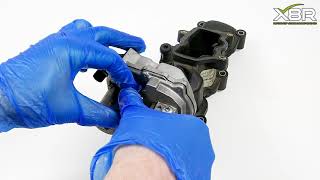
On the Audi 3.2L FSI engine, the P2015 code is notoriously common. The issue often stems from the failure of plastic components on the intake manifold's actuator linkage, which become brittle over time and allow the actuator arm to over-rotate. Several aftermarket companies have developed more durable metal repair kits (e.g., from GruvenParts, Dieselgeek, X8R) specifically to address the weak plastic linkage, offering a cost-effective fix. This specific engine design is also prone to significant carbon buildup on the intake valves and runners, which can cause the flaps to bind and lead to this fault.
Generation note: This year range covers the end of the B7 generation (2008) and the start of the B8 generation (2009-2012). The 3.2L V6 FSI engine was available in both, primarily in early B8 models before being phased out. While the core design of the intake runner system is similar, some part numbers for the manifold and sensors may differ between generations. However, the causes and fixes for P2015 are largely the same.
Symptoms You May Notice
- Check Engine Light (MIL) is on
- Reduced engine power, especially at higher or lower RPMs
- Rough or unstable idle, sometimes with shaking.
- Decreased fuel economy.
- Hesitation during acceleration
- Rattling or loud 'whooshing' air sound from the engine bay near the intake manifold.
- Replacing the entire intake manifold when only a linkage repair kit was needed. Many shops or DIYers assume the manifold is a single unit, but often the failure is a small, replaceable external component that costs significantly less.
- Replacing the throttle body. The throttle body is a separate component from the intake manifold runner system and is not related to the P2015 code.
Most Likely Causes


- Broken Intake Manifold Runner Linkage Arm 🔴 High Probability The factory linkage arms and the stop-limit on the manifold are made of plastic that becomes brittle from engine heat cycles. The arm can pop off its ball joint, or the stop itself breaks, allowing the actuator to over-travel and send an implausible signal.
How to confirm: Visually inspect the actuator arms on the front of the intake manifold. Look for any visible cracks, breaks, or if the arm has popped off the ball joint. Attempt to move the linkage by hand to see if it moves past its intended stop.
Typical fix: Install an aftermarket metal repair bracket or linkage arm. These kits bolt onto the manifold and provide a new, robust stop for the actuator arm, preventing over-rotation which is the root cause of the failure.
Est. part cost: $30-$80 - Faulty Intake Manifold Runner Position Sensor 🟡 Medium Probability The sensor itself can fail electronically over time or get contaminated with oil and carbon deposits, sending erratic signals.
How to confirm: Use a diagnostic scanner (like VCDS) to monitor the sensor's live data in measuring blocks. The reading should change smoothly as the engine RPM changes. If the value is stuck, jumps erratically, or shows 'implausible signal', the sensor is likely faulty.
Typical fix: Replace the intake manifold runner position sensor. On the 3.2L engine, this sensor is typically sold as a separate part.
Est. part cost: $70-$200 - Carbon Buildup on Intake Runners 🟡 Medium Probability As a Fuel Stratified Injection (FSI) engine, fuel is injected directly into the cylinders, so it doesn't wash over the intake valves. This leads to heavy carbon deposits that can restrict the movement of the runner flaps, causing them to stick or bind.
How to confirm: This requires removing the intake manifold for visual inspection of the intake ports and runner flaps. If the flaps cannot be moved smoothly by hand, carbon buildup is the likely cause.
Typical fix: Perform a manual carbon cleaning (walnut blasting is the preferred method) of the intake ports and manifold runners.
Est. part cost: $0 (if DIY), $400-$800 (shop service) - Failed Intake Manifold Runner Actuator Motor ⚪ Low Probability The electric motor that drives the runner flaps can fail internally, though this is less common than linkage or sensor failure.
How to confirm: With the engine off, have an assistant turn the key to the 'on' position while you observe the actuator motor to see if it attempts to move. A diagnostic tool may also be able to command an actuator test to verify its function.
Typical fix: Replace the actuator motor assembly.
Est. part cost: $150-$350
Rare But Worth Checking
- Deformed Oil Seal Behind Potentiometer: A Technical Service Bulletin (TSB) for similar V8 FSI engines mentions that a deformed oil seal behind the position sensor (potentiometer) can cause the linkage to stick, triggering P2015. While for a different engine, the principle is similar and worth noting.
- Damaged Wiring or Connectors: Check the wiring harness and connector going to the position sensor and actuator motor for any signs of corrosion, fraying, or loose pins. This is less common but can lead to the same code.
- Faulty Vacuum Solenoid or Check Valve: The system uses vacuum to control the flaps. A leaking or faulty N316 changeover valve or a bad check valve (Part No. 058905291K) can cause erratic operation and trigger faults.
Diagnosis Steps
- Read the fault codes with an OBD-II scanner to confirm P2015 and any other related codes.
- Perform a visual inspection of the front of the intake manifold. Check the plastic actuator arms and linkages for any obvious breaks, cracks, or disconnection. This is the most common failure point.
- With the engine off, try to move the runner flap linkage by hand. It should move smoothly with some spring resistance. If it feels stuck, gritty, or has excessive play, suspect carbon buildup or a broken linkage stop.
- Use a capable scan tool (like VCDS/VAG-COM) to view live data for 'Intake Manifold Runner Position Sensor (Bank 1)'. In Advanced Measuring Values, check blocks like IDE01924 (actual) and IDE01925 (specified). Observe the percentage or voltage as you rev the engine past 3,000 RPM or during an actuator test. The value should change smoothly. If it's stuck, jumps erratically, or reads an impossible value (e.g., 110%), the sensor, linkage stop, or wiring is faulty.
- Inspect the vacuum lines connected to the intake manifold and actuator solenoids for cracks or leaks. A faulty check valve can also cause issues.
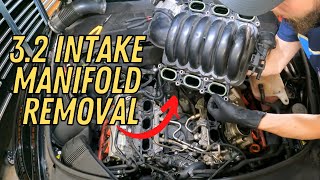
- If the linkage and sensor appear to be working, the next step is to remove the intake manifold to inspect for internal carbon buildup or a broken internal flap.
- If all else fails, check the wiring and connector at the position sensor for power, ground, and signal continuity back to the ECM.
Parts You'll Likely Need

- Intake Manifold Linkage Repair Kit — This is the most common failure point. Aftermarket kits made of aluminum or steel offer a permanent solution to the weak factory plastic stop on the manifold.
Trusted brands: Dieselgeek, X8R, GruvenParts
OEM price range: N/A
Aftermarket price range: $30-$80 - Intake Manifold Runner Position Sensor
(OEM #06E907386)— The sensor can fail electronically, providing incorrect readings to the ECM. It is often the source of the 'implausible signal'.
Trusted brands: Bosch, VDO
OEM price range: $150-$250
Aftermarket price range: $70-$150 - Intake Manifold Gasket Set
(OEM #06E198717)— These must be replaced anytime the intake manifold is removed for service, such as for carbon cleaning or manifold replacement, to prevent vacuum leaks.
Trusted brands: Victor Reinz, Elring
OEM price range: $50-$100
Aftermarket price range: $30-$60
Related Codes That Often Appear With This One
- P2004 — Indicates 'Intake Manifold Runner Control Stuck Open (Bank 1)'. This often appears with P2015 as the sensor's implausible signal is a result of the flaps being stuck.
- P2006 — Indicates 'Intake Manifold Runner Control Stuck Closed (Bank 1)'. Similar to P2004, this points to a mechanical issue (like binding or broken linkage) that the P2015 sensor code is detecting.
- P2020 — This is the equivalent of P2015 but for Bank 2. On a V6 engine, it's possible for both banks to have issues simultaneously, especially with carbon buildup or age-related linkage failure.
Technical Service Bulletins (TSBs) & Recalls
- TSB 24 16 53 / 2044003 - Mentions corrosion in the changeover valve for intake manifold flap (N316) can cause DTC P2015. The fix is to replace the valve.
Platform-Specific Known Issues
- Owner Repair Story: The $50 Bracket Fix: On the Audizine forums, a user with a 2009 A4 3.2L reported a P2015 code and rough idle. After a visual inspection, they discovered the small plastic stop for the actuator arm on the intake manifold had snapped off, allowing the arm to travel too far. Instead of replacing the entire intake manifold for over $1000, they purchased an aluminum repair bracket online for about $50. The installation took about two hours and involved removing the throttle body for access, ultimately resolving the code and idle issues.
Mechanic-Grade Diagnostic Values
- Intake Manifold Runner Position Sensor (G336) Connector Voltage - Pin 1 to Ground — expected: Approximately 5V with ignition on. Failure: No voltage or significantly lower voltage indicates a wiring or ECM issue.
- Intake Manifold Runner Position Sensor (G336) Connector Voltage - Pin 3 to Ground — expected: Battery Voltage with ignition on. Failure: No voltage or low voltage points to a problem with the power supply relay or wiring.
- Wiring resistance between G336 sensor connector and ECM connector (T60) — expected: 1.5 Ohms Maximum. Failure: Higher resistance indicates an open circuit or corrosion in the wiring harness.
- Sensor signal voltage (bench test) — expected: A smooth, gradual change from ~0.5V to ~4.5V as the sensor arm is moved through its range of motion.. Failure: Voltage that jumps, drops out, or does not change indicates a faulty potentiometer inside the sensor.
Scan Tool Commands That Help

- VCDS (VAG-COM): Engine -> Basic Settings -> Group 060 (Throttle Body Adaptation) — After removing and reinstalling the intake manifold for carbon cleaning or replacement, a throttle body adaptation should be performed to reset its learned values.
- VCDS (VAG-COM): Engine -> Basic Settings -> Intake Manifold Runner Adaptation — After replacing the intake manifold, actuator motor, or position sensor, this function must be run for the ECM to learn the new component's end stops. The ECM will automatically adapt after running the engine at idle for at least 70 seconds with no faults present. If faults persist, a manual basic setting may be required.
- VCDS (VAG-COM): Engine -> Adv. Meas. Values -> Check IDE01924 (actual) and IDE01925 (specified) for runner position — For live diagnosis to see if the sensor's reported position matches what the ECM is commanding. A mismatch points directly to a sensor, linkage, or actuator problem.
Wiring & Ground Locations
- G12 — Located at the center of the firewall in the engine bay.. This is a primary ground point for the Engine Control Module (ECM). A corroded or loose connection here can cause a wide range of erratic sensor readings and engine management faults, including P2015.
- Engine Block to Firewall Ground Strap — A braided strap connecting the engine block to the vehicle's firewall.. This is a critical ground path for the engine and its sensors. Degradation from heat and vibration is common and can cause more than 0.15V of voltage drop, leading to implausible signals from sensors like the G336.
- G336 Sensor Connector — The 3-pin electrical connector on the Intake Manifold Runner Position Sensor itself, located on the front of the intake manifold.. This is the direct test point for checking power, ground, and signal integrity for the sensor. Pin 1 is 5V reference, Pin 2 is signal, and Pin 3 is ground.
Real Owner Repair Stories
- Reddit user in r/mk6gti (VW MK6 GTI (similar vacuum-controlled system)) — P2015 code returned immediately after a complete intake manifold replacement and carbon cleaning.
❌ Tried (didn't work) Replacing the entire intake manifold., Carbon cleaning.
✅ What actually fixed it The user had accidentally swapped two vacuum lines on the solenoid control valve. Correcting the vacuum line routing allowed the actuator to move correctly and the code was resolved after an adaptation. - Reddit user in r/Audi (2019 Audi RS3 (different engine, but similar fault logic)) — P2006 code initially, then a persistent P2015 code after replacing a solenoid.
❌ Tried (didn't work) Replacing a vacuum pump solenoid., Replacing the entire lower intake manifold assembly., Replacing the PCV system., Checking for vacuum leaks and electrical continuity.
✅ What actually fixed it A dealership technician found coolant inside the vacuum lines that control the intake runner flap solenoid. The root cause was a leaking water pump. Replacing the water pump and the contaminated vacuum lines finally resolved the issue.
OEM Part Supersession History
06E907386, 6E907386F→06E907386L— Part revision and update by the manufacturer.
Heads up: While the parts are generally interchangeable for the specified models, it is always best to confirm the correct part number with a VIN at the dealership to ensure compatibility with the vehicle's specific ECM software.
Diagnostic Flowchart
Other Known Issues on This Vehicle
Issues unrelated to this code that are worth knowing about as an owner of this generation:
- Timing Chain Tensioner Failure 🔴 High — More common on higher mileage vehicles (80k-120k+ miles). Characterized by a metallic rattle from the back of the engine on cold starts lasting a few seconds.
- Excessive Oil Consumption 🟠 Medium — Frequently reported problem, often attributed to failing PCV system, worn piston rings, or valve cover gasket leaks.
- Carbon Buildup on Intake Valves 🔴 High — An inherent issue with all FSI (direct injection) engines. Requires manual cleaning (walnut blasting) typically every 60k-80k miles to prevent misfires, rough idle, and power loss.
- Thermostat Failure 🟠 Medium — The thermostat can fail, often getting stuck open or closed, leading to engine overcooling or overheating, respectively. Symptoms include erratic temperature gauge readings and heater problems.
- Failing PCV System 🟠 Medium — The Positive Crankcase Ventilation (PCV) valve can fail, leading to pressure imbalances, rough idle, and increased oil consumption.
Used vs. New Parts: Buying Guide for This Vehicle
When a used part is the smart pick: A used intake manifold assembly can be a cost-effective option IF, and only if, it comes from a low-mileage donor vehicle and you can verify the plastic linkage arms and stops are intact and not brittle. A used position sensor (06E907386) is also a reasonable choice, as they are not a high-wear item.
Donor-vehicle mileage cap: roughly under 60000 miles for the part to have meaningful remaining life.
What to inspect on the donor part:
- For a used intake manifold, physically inspect the actuator linkage. The plastic arms should move smoothly without binding and have no visible cracks.
- Press on the actuator arm's ball joint; it should be firm and not pop off easily.
- Look down the intake runners with a flashlight. Avoid any manifold with excessive, thick carbon deposits, as it suggests the flaps may be prone to sticking.
- Ensure all vacuum nipples and electrical connector housings are intact and not cracked.
OEM-only on this vehicle (don't cheap out):
- While the manifold itself can be sourced used, it is highly recommended to use new OEM or high-quality OE-supplier (Victor Reinz, Elring) intake manifold gaskets to prevent vacuum leaks upon reinstallation.
Aftermarket brands forum-validated for this vehicle:
- For the common broken linkage stop failure: Dieselgeek, X8R, and GruvenParts are widely cited in forums as providing durable, metal repair kits that offer a permanent fix.
- For the position sensor: Bosch and VDO are original equipment manufacturers and are reliable alternatives to Genuine Audi parts.
Brands owners have reported issues with on this vehicle:
- Be cautious with unbranded, generic intake manifold assemblies from online marketplaces. Some owners have reported receiving units that were defective out of the box or failed shortly after installation.
Real Owner Stories
Aggregated from forums and TSBs cited above. Mileages and costs reflect what owners reported in those sources.
2009 Audi A4 3.2L V6 FSI
Symptoms: P2015 code and rough idle. Visual inspection showed the small plastic stop for the actuator arm on the intake manifold had snapped off, allowing the arm to travel too far.
What fixed it: Installed an aluminum repair bracket that provided a new stop for the actuator arm. The repair involved removing the throttle body for access.
Cost: $50-$50
Source hint: Owner Repair Story: The $50 Bracket Fix / Audizine forum thread 'P2015-Intake-Manifold-Runner-Position-Sensor-Switch-Circuit-Range-Performance'
Audi A4 Avant (B8)
Symptoms: Check engine light with P2015 code; identified a popped-out linkage arm during inspection.
What fixed it: Reconnected the popped-out linkage arm and addressed the plastic linkage failure.
Source hint: YouTube video 'I Broke my A4 Avant Already... (P2015 Code Fix)'
Related OBD-II Codes
Frequently Asked Questions
Does TSB 24 16 53 apply to my 3.2L V6 Audi A4 regarding the P2015 code?
Can I fix the P2015 code on my 2009 Audi A4 3.2L without replacing the entire intake manifold?
Why does my Audi A4 3.2L FSI engine suffer from carbon buildup that triggers runner codes?
How can I use VCDS to confirm if my intake manifold runner position sensor is failing?
Is the P2015 issue on my A4 3.2L shared with other Audi models?
What is the preferred method for cleaning the intake ports on my Audi A4 to resolve sticking runners?
Helpful Videos
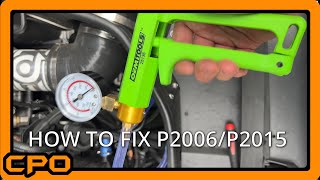
We Have This Part in Stock


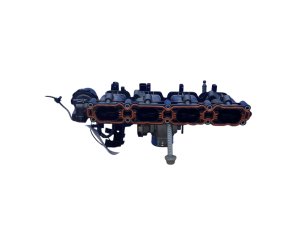


The information in this article is provided for general reference and educational purposes only. Vehicle specifications, procedures, and part compatibility can vary by production date, trim level, and region. Always consult your vehicle's factory service manual and verify part numbers before purchasing or performing repairs. Safety-critical components such as airbags, seat belts, and braking systems should be installed by a qualified professional.
- Audi A4:
- 🎬 Helpful Videos
- 🛍️ Shop This Part
- What's Unique About the 2008-2012 Audi A4
- Symptoms You May Notice
- Most Likely Causes
- Rare But Worth Checking
- Diagnosis Steps
- Parts You'll Likely Need
- Related Codes That Often Appear With This One
- Technical Service Bulletins (TSBs) & Recalls
- Platform-Specific Known Issues
- Mechanic-Grade Diagnostic Values
- Scan Tool Commands That Help
- Wiring & Ground Locations
- Real Owner Repair Stories
- OEM Part Supersession History
- Diagnostic Flowchart
- Other Known Issues on This Vehicle
- Used vs. New Parts: Buying Guide for This Vehicle
- Real Owner Stories
- 2009 Audi A4 3.2L V6 FSI
- Audi A4 Avant (B8)
- Related OBD-II Codes
- Frequently Asked Questions
- 🎟️ Get 5% Off