

OBD-II Code P2011: Intake Manifold Runner Control Circuit/Open (Bank 2)
The Ultimate 2026 Guide: What P2011 Means, Why It Triggers, and Exactly How to Fix It
- P2011 is a hard electrical fault indicating a broken circuit in the Bank 2 Intake Manifold Runner Control (IMRC) system, most often caused by a burnt-out actuator motor or chewed wiring.
- Never replace the $200+ actuator without first testing the IMRC fuse and checking the connector for a 5V or 12V reference signal.
- On direct-injection engines (like Audi/VW) and Ford 5.0L V8s, carbon buildup or snapped plastic linkages physically jam the flaps, which burns out the actuator motor.
- Fix this code within 1 to 3 months; driving with stuck IMRC flaps drops fuel economy by up to 15% and eventually destroys the $1,500 catalytic converter.
What Does P2011 Mean?

P2011 signifies the Powertrain Control Module (PCM) detects an open electrical circuit in the Bank 2 Intake Manifold Runner Control (IMRC) system. The IMRC uses butterfly flaps inside the intake manifold to change the air path length, optimizing torque at low RPMs and horsepower at high RPMs. An 'open circuit' means the PCM's electrical signal is physically interrupted by a broken wire, blown fuse, or failed actuator motor, leaving the flaps paralyzed.
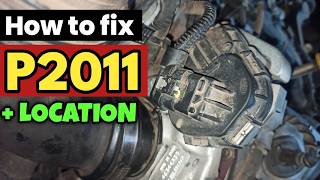
Technical definition: The SAE/OBD-II definition is "Intake Manifold Runner Control (IMRC) Circuit/Open Bank 2". The PCM detects a complete loss of electrical continuity in the Bank 2 IMRC actuator control circuit. Bank 2 is the engine side opposite cylinder #1. 🎬 Watch: A quick overview of the P2011 code and its meaning. When the PCM commands the flaps to move and detects no electrical response, it triggers P2011.
Can I Drive With P2011?
Yes, But With Caution. You can drive in the short term, but it is not recommended. Performance drops significantly, and ignoring the code carries severe risks. The worst-case scenario involves brittle IMRC hardware breaking and falling into the engine, causing catastrophic internal damage. Prolonged driving with an improper air/fuel mixture also destroys the catalytic converter, an $800 to $2,500 repair. Address the issue within 200 miles to prevent costly secondary failures.
Common Causes

- Faulty IMRC Actuator or Solenoid (Very Common) — The electric motor or vacuum solenoid driving the runner flaps is the most frequent failure point. The internal coil burns out from heat and age, creating an open circuit that ignores PCM commands.
- Damaged Wiring or Loose/Corroded Connectors (Very Common) — Located in a harsh, high-heat environment, the IMRC wiring harness becomes brittle and breaks. Connectors vibrate loose or develop corrosion, physically interrupting the electrical signal.
- Blown Fuse or Faulty Relay (Common) — An electrical short in the circuit or a failing actuator blows the IMRC system fuse. This instantly creates an open circuit and triggers P2011. It is the easiest and cheapest component to check first.
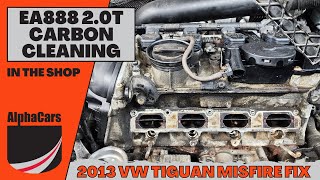
- Carbon Buildup Seizing the Runner Flaps (Common) — In direct-injection engines (GDI, FSI, TDI), oil vapor bakes onto the intake flaps, seizing them solid. 🎬 See how carbon buildup causes runner failures and engine misfires. This overworks the actuator motor, causing it to burn out and result in an open circuit.
- Broken IMRC Linkage, Bushings, or Couplers (Common) — The mechanical arms connecting the actuator to the flaps are often plastic. These become brittle and snap—a notorious issue on Ford and Kia models. This mechanical break causes the actuator to over-travel and set electrical codes.
- Vacuum Leaks (for Vacuum-Actuated Systems) (Less Common) — On older vacuum-operated IMRC systems, rubber vacuum lines crack or disconnect. A clogged vacuum solenoid filter also paralyzes the actuator.
- Outdated Engine Control Module (ECM) Software (Less Common) — The fault sometimes lies in glitchy control software rather than physical hardware. Manufacturers release software updates to fix false codes, a known fix for several Chevrolet/GMC trucks.
- Faulty Powertrain Control Module (PCM) (Rare) — The driver circuit inside the PCM that controls the IMRC actuator fails in rare instances. Consider this a last-resort diagnosis only after exhaustively ruling out wiring and actuators.
Symptoms
- Reduced Engine Power, Hesitation, and Surging — The vehicle feels weak, bucks, or stumbles during acceleration. The runner flaps are stuck in a suboptimal position, choking the engine's airflow at specific RPMs.
- Rough or Unstable Idle — The engine shakes, surges, or idles erratically at a stop due to the incorrect air-fuel mixture caused by paralyzed intake flaps.
- Decreased Fuel Economy — Engine inefficiency causes a tangible drop in average miles per gallon (MPG), often by 10-15%.
- Check Engine Light is On (also visible on scanner) — The dashboard displays a steady Check Engine Light the moment the PCM logs the P2011 open circuit fault.
- Failed Emissions Test (also visible on scanner) — The imbalanced air-fuel ratio increases harmful emissions, guaranteeing a failed state inspection or smog test.
Diagnostic Flowchart
Tap your situation to follow the diagnostic path that matches what you're seeing on this code.
Common Fixes & Costs
- Replacing the IMRC Actuator/Solenoid — Parts: $70-$400, Labor: $150-$450, ~1.5 hr book time (DIY)
- Repairing Damaged Wiring or Replacing Connector Pigtail — Parts: $15-$50, Labor: $100-$300, ~1 hr book time (Intermediate)
- Replacing a Blown Fuse — Parts: $1-$5, Labor: $0-$50, ~0.1 hr book time (Beginner)
- Replacing the Entire Intake Manifold Assembly — Parts: $300-$1,000, Labor: $400-$1,200, ~3.5 hr book time (Professional)
- Cleaning Carbon from Intake Manifold and Flaps — Parts: $30-$60, Labor: $300-$900, ~4 hr book time (Professional)
Used vs. New Parts: Buying Guide
When a used part is worth it: For a complete intake manifold assembly, a used part from a low-mileage vehicle (under 80k miles) is cost-effective. Avoid used actuators sold individually, as they are wear items with no reliable way to gauge remaining life.
Donor-vehicle mileage cap: roughly under 80000 miles for the part to have meaningful remaining life.
Donor quality checklist:
- Verify the donor vehicle was not scrapped for engine failure.
- Inspect plastic manifolds for cracks around coolant passages and mounting points.
- Check for excessive oil residue inside, which must be cleaned before installation.
- Ensure all electrical connectors and vacuum ports are intact.
Decision logic:
- If The failure is a common wear part like a plastic linkage or an accessible actuator → Buy a new aftermarket or OEM part. The savings on a used part are not worth the risk of repeat failure.
- If The entire manifold assembly is required and the vehicle is over 100,000 miles on a tight budget → A used manifold from a reputable salvage yard is a reasonable choice.
- If The part is a simple electrical connector (pigtail) or fuse → Always buy new. Used wiring is never recommended.
Warranty tradeoff: Used salvage parts carry a 30-90 day warranty. New aftermarket parts offer 1-year to lifetime warranties. New OEM parts have a 1-2 year warranty.
Worst-case if a used part fails: $500-$1500 if a used manifold fails prematurely, requiring you to pay labor costs a second time.
What Happens If You Wait — Timeline
- 0-2 weeks: Check Engine Light is on. The vehicle has a slightly rough idle on cold starts, but performance impact is minimal. (MPG impact: 0-5%% · Added cost: $0)
- 2 weeks - 3 months: A noticeable loss of power and sluggish acceleration occurs at low RPMs. The engine hesitates during light throttle. (MPG impact: 5-15%% · Added cost: $50-$200 in wasted fuel.)
- 3-8 months: The incorrect air/fuel mixture causes the catalytic converter to operate outside its ideal temperature range, beginning thermal degradation. (MPG impact: 10-20%% · Added cost: $1,200 - $2,800 for catalytic converter replacement.)
- 8+ months: Worst-case scenario: plastic IMRC flaps or linkages break apart and fall into a cylinder, causing catastrophic internal engine damage. (MPG impact: 15-25%+% · Added cost: $4,000 - $10,000+ for engine rebuild or replacement.)
Cost of Not Fixing It
- 0-1 month: Noticeable drop in fuel economy (5-15%) and poor acceleration. The vehicle feels sluggish. (Added cost: $50-$150 in wasted fuel.)
- 1-6 months: The imbalanced air/fuel ratio causes the catalytic converter to overheat and degrade, leading to permanent failure. (Added cost: $1,200-$2,800 for catalytic converter replacement.)
- 6+ months: Internal plastic or metal components of the IMRC flaps break off and fall into the engine, causing catastrophic internal damage. (Added cost: $4,000-$10,000+ for engine rebuild or replacement.)
Diagnosis Steps

- Scan for All Trouble Codes
Use an OBD-II scanner to confirm P2011. Document related codes like P2008 (Bank 1), P2007 (Stuck Closed), or P0174 (System Too Lean), as they dictate whether the issue is isolated to Bank 2 or system-wide.
Tools: OBD-II Scanner (Beginner) - Check the IMRC Fuse
Consult the owner's manual to locate the IMRC system fuse. A blown fuse confirms a short circuit or a burnt-out actuator motor. Replace it; if it blows again immediately, you have a hard short.
Tools: Fuse Puller or Pliers (Beginner) - Perform a Thorough Visual Inspection
Locate the Bank 2 IMRC actuator. Inspect the wiring harness for melting, fraying, or rodent damage. Ensure the connector is securely plugged in and free of green corrosion. Check visible plastic linkage arms for cracks.
Tools: Flashlight, Inspection Mirror (Beginner) - Test the Electrical Connector for Power and Ground
Disconnect the IMRC actuator harness. With the ignition on (engine off), use a multimeter to verify voltage at the power pin (typically 5V or 12V) and continuity at the ground pin. Missing voltage proves a wiring or fuse issue upstream.
Tools: Multimeter (Intermediate) - PRO TIP: Use a Scan Tool Actuation Test
Use a bi-directional scan tool to command the Bank 2 IMRC actuator open and closed. Listen for a click or whir. If it operates, the electrical circuit is intact, and the problem is mechanically stuck flaps.
Tools: Bi-Directional Scan Tool (Intermediate) - PRO TIP: Test the Actuator/Solenoid Circuit Integrity
With the actuator unplugged, measure resistance across its pins. Compare this to OEM specs (typically 20-30 ohms). A reading of infinite resistance (OL) definitively proves the internal coil is broken and the actuator requires replacement.
Tools: Multimeter (Advanced) - Check for Mechanically Stuck Flaps
If electrical tests pass, the issue is mechanical. With the engine off, move the IMRC linkage by hand. If it feels gritty or seized, carbon buildup is binding the flaps inside the manifold, requiring removal and cleaning.
Tools: Hand Tools (Advanced) - PRO TIP: Back-Probe and Watch the Command Signal
Use T-pins to back-probe the signal wire at the connected actuator. Have a helper rev the engine. The voltage signal from the PCM must change (switching from 0V to battery voltage or showing a PWM signal). No signal indicates a broken wire from the PCM.
Tools: Multimeter or Oscilloscope, T-pins (Advanced) - ADVANCED: Live Data PID Analysis
Monitor 'IMRC Actuator Position Bank 2' and 'IMRC Commanded Position Bank 2' on a scan tool. Accelerate past 3,000 RPM. If the commanded state changes to 'Open' but the actual position remains 'Closed', the actuator or linkage has failed.
Tools: Advanced OBD-II Scan Tool (Advanced) - ADVANCED: Specific Resistance and Voltage Checks
Check the service manual for exact specs. For example, VW/Audi solenoids require 25 +/- 10 ohms. The position sensor signal wire should vary smoothly between 1.2V (closed) and 3.4V (open) as the actuator moves.
Tools: Digital Multimeter, Vehicle-Specific Service Manual (Advanced)
When This Code Triggers (Freeze-Frame Conditions)
- Engine Coolant Temp: 175-210°F (The engine has reached full operating temperature.)
- RPM: 1,500-3,000 RPM (The fault triggers during light acceleration or steady cruising as the PCM attempts to adjust the runners.)
- Engine Load: 25-70% (Occurs under normal driving conditions, rarely at idle or full throttle.)
- Vehicle Speed: 30-60 mph (The code sets during city or highway cruise conditions when the IMRC system is highly active.)
Related Codes
- P2008 — This is the identical 'Circuit/Open' fault for Bank 1. If both P2008 and P2011 are present, check the shared IMRC fuse or relay first.
- P2007 — Indicates 'IMRC Stuck Closed Bank 2'. P2011 is electrical, while P2007 is mechanical. A P2007 causes a P2011 if the actuator motor burns out trying to move seized flaps.
- P0174 — Indicates 'System Too Lean (Bank 2)'. An IMRC flap stuck open at low RPMs causes a lean condition. Fixing P2011 almost always resolves P0174.
- P2020 — Indicates 'IMRC Position Sensor Circuit Bank 2'. P2011 points to the command circuit, while P2020 points to the feedback sensor circuit.
Climate & Environmental Factors
- Cold Weather: Extreme cold makes plastic IMRC linkage arms brittle and prone to snapping. It also stiffens actuator motor lubricants, increasing friction and causing motor burnout.
- High Humidity / Moisture: Moisture accelerates corrosion on electrical connectors and pins for the IMRC actuator, increasing electrical resistance and eventually causing an open circuit.
- High Heat: Engine bay heat degrades plastic wiring insulation over time, making it brittle and susceptible to cracking. It also contributes to the failure of electronic components inside the actuator.
How to Talk to a Mechanic About This Code
Say this: "I have a P2011 code for the Intake Manifold Runner Control Circuit on Bank 2. Please test the circuit's wiring, connector, and fuse before quoting a replacement actuator or manifold."
This proves you understand P2011 is an electrical code and prevents the shop from immediately replacing the most expensive part without proper diagnosis. It directs them to check for cheaper fixes like a broken wire first.
Avoid saying:
- 'Just fix whatever's wrong'
- 'My check engine light is on, can you look at it?'
- 'Whatever you recommend'
Questions to ask before authorizing the repair:
- Did you test for power and ground at the Bank 2 IMRC actuator connector?
- What was the resistance reading across the actuator's pins? Was it open (OL)?
- If you recommend an intake manifold replacement, can you show me pictures of the carbon buildup or broken internal linkage?
- What is the warranty on the proposed repair, for both parts and labor?
Where to Take It: Dealer vs Independent vs Chain
- Dealer:
Recommended only if the vehicle is under warranty or has a known software TSB. Otherwise, it is an unnecessarily costly option.
Best for: Vehicles still under powertrain or emissions warranty., Vehicles with known software issues causing P2011 (e.g., GM trucks)., Complex diagnostics on German brands (Audi, VW, BMW) where extended manifold warranties apply.
Downsides: Highest labor rates, often $180-$250 per hour., More likely to recommend replacing a full intake manifold assembly rather than repairing a smaller linkage arm. (Typical cost: +50% vs. baseline) - Independent Shop:
Best fit for most P2011 repairs. A good independent shop balances diagnostic skill and cost-effectiveness to trace an open circuit or handle a mechanical replacement.
Best for: Out-of-warranty vehicles where cost is a major factor., Diagnosing and repairing electrical issues, such as a broken wire or corroded connector., Vehicles with common mechanical failures where aftermarket solutions are viable.
Downsides: Shop quality and diagnostic skill vary widely. Vet the shop by checking for ASE certifications. (Typical cost: +0% vs. baseline) - Chain Shop:
AVOID for P2011 diagnosis. The risk of misdiagnosis and being sold unnecessary parts is high.
Best for: Simple, unambiguous repairs like replacing a fuse.
Downsides: Technicians lack the in-depth electrical diagnostic training to properly trace an open circuit., High pressure to sell parts leads to replacing the actuator without confirming it is the root cause., Unlikely to perform complex repairs like intake manifold walnut blasting. (Typical cost: -10% vs. baseline)
When to Walk Away From the Repair
If the estimated repair cost for P2011 exceeds 40-50% of the car's current private-party value, seriously consider selling the car as-is or trading it in.
- Car worth $4000, fix is $2000: Borderline. This repair cost represents 50% of the car's value. Get a second opinion before authorizing a full intake manifold replacement.
- Car worth $12000, fix is $1800: Fix it. The repair is only 15% of the vehicle's value and restores performance and reliability.
- Car worth $2500, fix is $1500: Walk away. The repair cost is 60% of the car's value. It is not economically sensible to proceed.
What Scan Tool You Need for This Code
Minimum: A scanner that reads live data PIDs for the IMRC system and offers bi-directional control to command the actuator.
A basic $20 code reader only tells you P2011 is present. It cannot distinguish between a bad wire, a seized flap, or a failed motor. You must command the part to work and watch its response in live data, requiring an advanced tool.
Budget: Autel MaxiAP AP200 (~$60) — This Bluetooth dongle pairs with your phone and offers full system diagnostics, including reading IMRC live data and providing bi-directional control to test the actuator.
Mid-range: Foxwell NT510 Elite (~$180) — This handheld tool provides dealer-level diagnostics. It offers robust bi-directional control to command the IMRC actuator open and closed, easily confirming if the motor works.
Professional: Autel MaxiCOM MK808Z / Topdon ArtiDiag Pro (~$450-700) — These diagnostic tablets provide comprehensive bi-directional control, advanced live data graphing, and access to service functions invaluable for tracing an open circuit.
Rent vs buy: AutoZone's free loaner tool service confirms the code but lacks the bi-directional control needed to test the IMRC system. Buying a budget tool like the Autel AP200 is a better investment for DIY diagnosis.
How to Clear the Code After You Fix It
- Reconnect the battery if it was disconnected.
- Use an OBD-II scan tool to clear the P2011 fault code.
- Perform a complete OBD-II drive cycle to allow readiness monitors to run.
Drive cycle (~20 minutes): Start the engine cold (coolant below 122°F) and idle for 3 minutes. Drive in stop-and-go traffic with several idle periods. Drive for 10 minutes at a steady 55 mph. Decelerate without braking and allow the vehicle to cool down.
Readiness monitors affected: Catalyst Monitor, Oxygen (O2) Sensor Monitor, EGR System Monitor
Before emissions retest: drive at least 50 miles to fully set monitors.
Watch out for:
- Clearing the code without performing a drive cycle leaves readiness monitors 'Not Ready', causing an automatic emissions failure.
- The code returns immediately if the underlying open circuit (bad wire, fuse, or actuator) is not physically repaired.
- Some vehicles require multiple drive cycles for the catalyst monitor to complete.
Will This Fail Emissions / State Inspection?
Yes — this code typically fails an OBD-II emissions inspection.
- California: An active P2011 code is an automatic smog check failure. After repair, a full drive cycle must set all readiness monitors before re-testing.
- New York: The NYS DMV inspection includes an OBD-II scan. An illuminated Check Engine Light results in an immediate emissions failure.
- Texas: In emissions-testing counties, an illuminated Check Engine Light is an automatic failure. After repair, you can have at most one monitor 'Not Ready' to pass.
Most Commonly Affected Vehicles

- Ford F-150 (with 5.0L V8) (2011-2023) — Extremely common failure. The plastic linkage arms connecting the actuator to the flaps snap easily, especially on 2015-2017 models.
- Audi A6, A4, Q7 (with V6 FSI/TDI engines) (2005-2016) — Highly susceptible to heavy carbon buildup that seizes the runner flaps, requiring complete intake manifold removal for walnut blasting.
- Volkswagen Touareg, Jetta, Golf (with TDI engines) (2004-2015) — VW TDI engines suffer from severe carbon buildup in the intake manifold, the primary cause of P2011. The 3.0L TDI is particularly known for this.
- Chevrolet/GMC Silverado, Sierra (with 5.3L/6.2L V8) (2014-2022) — These trucks frequently trigger false P2011 codes due to outdated ECM software. A dealer reflash is required before replacing parts.
- Chrysler/Dodge/Jeep 300, Charger, Grand Cherokee (with 5.7L HEMI) (2011-2023) — The IMRC system (Short Runner Valve) is prone to actuator failure or flaps sticking due to carbon deposits.
- BMW 3-Series, 5-Series, X5 (with N55 engine) (2010-2018) — IMRC functions tie into the Valvetronic system. P2011 is caused by a failing Valvetronic motor, sensor, or wiring short.
- Subaru Forester XT, Impreza WRX (2004-2014) — Subaru calls this the Tumble Generator Valve (TGV). The code is caused by a failed TGV motor or bad electrical connection.
- Kia/Hyundai Sorento, Santa Fe (with 2.4L GDI engine) (2011-2016) — The small plastic coupler connecting the actuator motor to the runner flap rod degrades and breaks, paralyzing the flaps.
Manufacturer-Specific Notes
- Ford: On 5.0L V8s, plastic IMRC linkage arms snap frequently. Aftermarket metal replacement arms are available, saving you from buying an entire $500 intake manifold.
- Audi/Volkswagen: Direct injection engines require professional walnut shell blasting to remove carbon from intake flaps. Audi/VW issued extended 10-year/120,000-mile warranties for intake manifolds on certain models; check your VIN with a dealer.
- General Motors (Chevrolet/GMC): Always check for ECM software Technical Service Bulletins (TSBs). A simple dealer reflash resolves false P2011 codes on many V8 trucks.
- Subaru: The Tumble Generator Valve (TGV) system suffers frequent motor failures. Enthusiasts often perform a 'TGV delete' using a custom ECU tune to permanently eliminate the system.
Real Owner Stories
2016 Ford F-150 5.0L at 115K miles
Check Engine Light came on with codes P2007 and P2011. Truck felt noticeably sluggish when accelerating from a stop.
What they tried:
- Owner visually inspected the intake manifold and found the plastic linkage arm for the Bank 2 IMRC actuator was snapped in half.
Outcome: Instead of replacing the entire intake manifold for $1000+, the owner installed an aftermarket metal linkage repair kit for $60. The repair was successful, and the codes did not return.
Lesson: On Ford 5.0L engines, a broken plastic IMRC linkage is a very common failure. Always check for aftermarket metal linkage kits before replacing the whole manifold.
2012 Audi A6 3.0T at 85K miles
Car had a rough idle on cold starts and felt hesitant. The Check Engine Light illuminated with P2011 and P0174 (Lean Bank 2).
What they tried:
- A mechanic initially suggested replacing the Bank 2 IMRC actuator for $650.
- Owner sought a second opinion from an Audi specialist who performed a borescope inspection of the intake valves.
- The inspection revealed severe carbon buildup preventing the flaps from moving.
Outcome: The specialist shop performed a walnut shell blasting service on the intake ports for $900. This resolved the rough idle, and the P2011 code was permanently cleared.
Lesson: On direct-injection engines, carbon buildup is a primary suspect for IMRC codes. Don't replace the actuator without ruling out mechanically stuck flaps.
2014 Dodge Charger 5.7L HEMI at 130K miles
P2011 code appeared intermittently during long highway drives. No major performance issues were felt.
What they tried:
- Owner replaced the IMRC actuator, but the code returned a week later.
- A technician traced the wiring from the actuator back towards the PCM.
- They discovered the wiring harness was rubbing against a metal bracket, causing an intermittent short.
Outcome: The technician repaired the damaged wire and secured the harness with a zip tie for $180. The P2011 code never came back.
Lesson: An 'open circuit' code doesn't always mean a failed part. A thorough visual and electrical inspection of the wiring harness is crucial before buying components.
How to Prevent This Code From Triggering
- Install a high-quality oil catch can on the PCV line. (Once; empty every 3,000-5,000 miles.) — On direct-injection engines, the PCV system routes oil vapor into the intake, baking onto the runner flaps. A catch can intercepts this oil before it forms carbon deposits.
- Use Top Tier certified gasoline. (Every fill-up.) — Top Tier fuels contain detergents that keep fuel injectors clean, preventing poor combustion and excess soot that enters the intake via the EGR system.
- Perform regular oil changes with manufacturer-specified synthetic oil. (Every 5,000-7,500 miles.) — Synthetic oil resists breakdown at high temperatures, reducing the oil vapor and sludge passed through the PCV system into the intake.
- Periodically use a PEA-based (Polyetheramine) fuel system cleaner. (Every 10,000-15,000 miles.) — PEA cleans carbon deposits from combustion chambers, maintaining overall engine efficiency and reducing soot creation.
- Inspect and clean engine bay wiring harnesses. (During any major service or every 30,000 miles.) — Heat and vibration cause wiring insulation to crack, leading to open circuits. Inspecting the IMRC harness prevents electrical failures.
Frequently Asked Questions
What is 'Bank 2' and how do I find it?
Bank 2 is the cylinder bank that does not contain cylinder #1. On V-shaped engines, find the cylinder head sitting slightly further forward; that is Bank 1, making the opposite side Bank 2. For transverse engines, Bank 2 is usually closer to the radiator.
Can I fix a P2011 code myself?
Yes, if the cause is a blown fuse, a visibly broken wire, or an accessible actuator bolted to the top of the manifold. However, if the intake manifold requires removal for cleaning or replacement, stop DIY and take it to an independent shop. Manifold removal risks dropping debris into the engine cylinders.
Will a P2011 code clear itself?
No. P2011 indicates a 'hard' electrical fault, meaning a physical break in the circuit exists. You must physically repair the broken wire, blown fuse, or dead motor before the code stays clear.
How much does it cost to diagnose a P2011 code?
Most independent repair shops charge a standard diagnostic fee ranging from $120 to $180. This fee covers one hour of the technician's time to test the circuit and pinpoint the exact failure.
What are the most common mistakes when fixing P2011?
The biggest mistake is replacing the $200+ IMRC actuator without performing electrical tests first. A $5 blown fuse or a broken wire causes the exact same code. Always test the circuit's power, ground, and signal before buying expensive parts.
Can a bad IMRC damage my engine?
Yes. In a worst-case scenario, brittle plastic linkage pieces or the flaps themselves break off and fall into the engine cylinders. This causes catastrophic internal engine damage requiring a complete rebuild.
How can I prevent carbon buildup that causes IMRC issues?
For direct-injection engines, prevention requires using high-quality synthetic oil and changing it every 5,000 miles. Installing an oil catch can intercepts oil vapor before it bakes onto the intake flaps. Top Tier gasoline also keeps the overall combustion process cleaner.
Key Takeaways
- P2011 is a hard electrical fault indicating a broken circuit in the Bank 2 Intake Manifold Runner Control (IMRC) system, most often caused by a burnt-out actuator motor or chewed wiring.
- Never replace the $200+ actuator without first testing the IMRC fuse and checking the connector for a 5V or 12V reference signal.
- On direct-injection engines (like Audi/VW) and Ford 5.0L V8s, carbon buildup or snapped plastic linkages physically jam the flaps, which burns out the actuator motor.
- Fix this code within 1 to 3 months; driving with stuck IMRC flaps drops fuel economy by up to 15% and eventually destroys the $1,500 catalytic converter.
Helpful Videos

The information in this article is provided for general reference and educational purposes only. Vehicle specifications, procedures, and part compatibility can vary by production date, trim level, and region. Always consult your vehicle's factory service manual and verify part numbers before purchasing or performing repairs. Safety-critical components such as airbags, seat belts, and braking systems should be installed by a qualified professional.
- 🎬 Helpful Videos
- What Does P2011 Mean?
- Can I Drive With P2011?
- Common Causes
- Symptoms
- Diagnostic Flowchart
- Common Fixes & Costs
- Used vs. New Parts: Buying Guide
- What Happens If You Wait — Timeline
- Cost of Not Fixing It
- Diagnosis Steps
- When This Code Triggers (Freeze-Frame Conditions)
- Related Codes
- Climate & Environmental Factors
- How to Talk to a Mechanic About This Code
- Where to Take It: Dealer vs Independent vs Chain
- When to Walk Away From the Repair
- What Scan Tool You Need for This Code
- How to Clear the Code After You Fix It
- Will This Fail Emissions / State Inspection?
- Most Commonly Affected Vehicles
- Manufacturer-Specific Notes
- Real Owner Stories
- 2016 Ford F-150 5.0L at 115K miles
- 2012 Audi A6 3.0T at 85K miles
- 2014 Dodge Charger 5.7L HEMI at 130K miles
- How to Prevent This Code From Triggering
- Frequently Asked Questions
- What is 'Bank 2' and how do I find it?
- Can I fix a P2011 code myself?
- Will a P2011 code clear itself?
- How much does it cost to diagnose a P2011 code?
- What are the most common mistakes when fixing P2011?
- Can a bad IMRC damage my engine?
- How can I prevent carbon buildup that causes IMRC issues?
- Key Takeaways
- 🎟️ Get 5% Off