

P2008 on 2015-2019 Nissan Altima: IMRC Solenoid Fixes and ECM Issues
On a 2015-2019 Nissan Altima, code P2008 is often caused by a faulty Intake Manifold Runner Control (IMRC) solenoid, but can also be triggered by a software glitch. Before replacing parts, check for Technical Service Bulletins (TSBs) that may require a simple ECM reprogram by a dealer.
- P2008 on a 2015-2019 Altima indicates an electrical fault in the intake manifold runner control circuit.
- **Crucially, check for TSBs first.** A known software glitch in the ECM is a very common cause, and a dealer reprogram may be the only fix needed.
- If hardware is the cause, the most likely failed part is the IMRC solenoid itself, which is a relatively inexpensive and accessible part to replace.
- Driving with this code may cause poor performance and fuel economy, but is unlikely to cause immediate, severe engine damage.
- This code is often seen with P0101, P0087, and P0448 due to the same ECM software issue.
What's Unique About the 2015-2019 Nissan ALTIMA

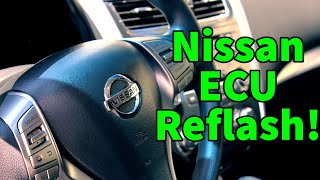
For this specific generation of Nissan Altima, the P2008 code is frequently linked to software issues within the Engine Control Module (ECM). Nissan has issued multiple Technical Service Bulletins (TSBs) acknowledging that 'calibration errors' can cause this code to be stored incorrectly, sometimes as a permanent DTC. In many cases, the fix is not a new part, but an ECM software update performed 🎬 Watch: How a Nissan ECU is professionally reflashed by a dealership. This makes it crucial to check for applicable TSBs before assuming a hardware failure.
Diagnostic Flowchart
Tap your situation to follow the diagnostic path that matches what you're seeing on this vehicle.
Generation note: This range covers the end of the fifth generation (L33, 2015-2018) and the first year of the sixth generation (L34, 2019). The provided TSBs from NHTSA cover the entire 2015-2019 range, indicating the IMRC system and the related ECM software issues are present across these models.
Symptoms You May Notice
- Check Engine Light is on
- Reduced engine power, especially at low RPMs
- Hesitation or stumbling during acceleration
- Rough or uneven idle
- Decreased fuel economy
- Replacing the entire intake manifold when only the external solenoid is bad.
- Replacing the IMRC solenoid when the actual root cause is an ECM software glitch that requires a reprogram per TSBs.
Most Likely Causes
- ECM Software Calibration Error 🔴 High Probability Nissan issued multiple TSBs (NTB19-045b, P9328_P9343_P934) for this exact issue, stating the ECM may improperly store this code due to software errors.
How to confirm: A Nissan dealership or a qualified shop with OEM tools can check your vehicle's VIN and current ECM software version against the TSBs to see if a reprogram is required.
Typical fix: Reprogramming the Engine Control Module (ECM) with updated software.
Est. part cost: $0 - Faulty Intake Manifold Runner Control (IMRC) Solenoid 🟡 Medium Probability The solenoid is an electro-mechanical part that can fail over time due to heat cycles and vibration. It is often the primary hardware failure point for this code.
How to confirm: Test the solenoid's resistance with a multimeter; an open circuit (infinite resistance) indicates failure. You can also try activating it with a capable scan tool to see if it clicks.
Typical fix: Replace the IMRC solenoid.
Est. part cost: $40-$100 - Damaged Wiring or Loose Connector ⚪ Low Probability The wiring harness to the solenoid can become brittle or damaged from engine heat and vibration, leading to an open circuit.
How to confirm: Visually inspect the wiring harness and connector for any signs of breaks, corrosion, or loose pins. Perform a continuity test on the wires from the ECM to the solenoid.
Typical fix: Repair the damaged wire or replace the connector pigtail.
Est. part cost: $10-$30
Rare But Worth Checking
- Mechanically Stuck Intake Runner Flaps: While the code points to an electrical fault, it's possible for the flaps inside the manifold to get stuck due to carbon buildup. This can put stress on the control system, though it usually triggers different codes related to position/performance.
- Faulty Powertrain Control Module (PCM/ECM): In rare cases where a reprogram doesn't work and all wiring/solenoids are good, the driver circuit inside the ECM itself may have failed. This is an expensive last resort.
Diagnosis Steps

- Scan the vehicle for all stored trouble codes. Note if P2008 is present with P0101, P0087, or P0448.
- Check for TSBs: Contact a Nissan dealer or use a professional database to check if TSBs NTB19-045b, P9328_P9343_P934, or others apply to your vehicle's VIN. If so, an ECM reprogram is the first recommended step.
- Inspect the IMRC Solenoid: Locate the IMRC solenoid on the intake manifold. Visually inspect its connector and nearby wiring for obvious damage, corrosion, or loose connections.
- Test the Solenoid: Disconnect the solenoid and measure its resistance with a multimeter. Compare the reading to the manufacturer's specification. An open circuit (infinite resistance) or a dead short (zero resistance) indicates a bad solenoid.
- Test the Circuit: Check for voltage at the solenoid's connector with the key on. One wire should have battery voltage. Then, check the continuity of the ground-side control wire back to the ECM.
- Check for Mechanical Binding: If possible, manually actuate the linkage connected to the runner flaps to ensure they are not seized due to carbon buildup.
- Repair and Clear: Based on your findings, replace the faulty component (solenoid, wiring) or have the ECM reprogrammed. Clear all codes and perform a test drive to ensure the issue is resolved.
Parts You'll Likely Need
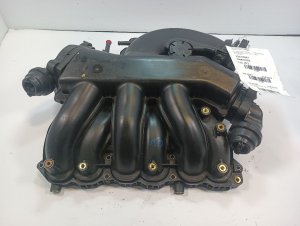
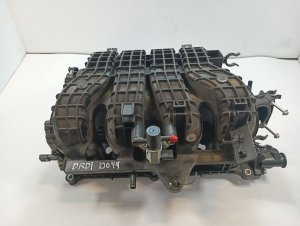
- Intake Manifold Runner Control Solenoid
(OEM #14955-JA10D)— This solenoid is the most common hardware component to fail, causing the P2008 open circuit code.
Trusted brands: Hitachi, Dorman, Standard Motor Products
OEM price range: $80-$150
Aftermarket price range: $40-$100
Related Codes That Often Appear With This One
- P0101 — This Mass Air Flow (MAF) sensor code is listed in the same Nissan TSBs (NTB19-045b, etc.) as P2008, indicating they can be triggered together by the same ECM software issue.
- P0087 — This Fuel Rail/System Pressure code is also mentioned in the Nissan TSBs (NTB19-045b, etc.) and can be part of the same ECM calibration error.
- P0448 — This EVAP system code is another one listed in the Nissan TSBs (NTB19-045b, etc.) that can be falsely triggered by the ECM software glitch.
Technical Service Bulletins (TSBs) & Recalls

- NTB19-045b: 'MIL ON WITH DTC P0087, P0101, P0448, OR P2008, VEHICLES REGISTERED OUTSIDE OF CALIFORNIA'
- P9328_P9343_P934: Mentions reprogramming the ECM for permanent DTCs P0448, P0101, P2008, or P0087 due to calibration errors on California vehicles.
- NTB19-045a / NTB19-045: Earlier versions of the bulletin addressing the same set of DTCs, including P2008.
Platform-Specific Known Issues
- ECM Software Glitch: As documented in Nissan TSBs #NTB19-045b, #P9328_P9343_P934, #NTB19-045, and #NTB19-045a, a primary cause for P2008 on this vehicle is a 'calibration error' in the ECM. This can cause the code to be stored improperly, and the official fix is an ECM reprogram, not a part replacement.
Mechanic-Grade Diagnostic Values
- IMRC Solenoid Internal Resistance — expected: Approximately 30-40 Ohms. Failure: Infinite resistance (Open circuit) or 0 Ohms (Short circuit).
- Voltage at IMRC Solenoid Connector (Key On, Engine Off) — expected: Pin 1: Battery Voltage (approx. 12V). Pin 2: Near 0V (this is the ground-side control from the ECM).. Failure: No voltage on Pin 1 indicates a power supply issue (fuse, relay). Voltage on Pin 2 when not commanded indicates a short to power.
Scan Tool Commands That Help
- Nissan CONSULT or professional bidirectional scanner (e.g., Autel, Foxwell): Active Test for 'Intake V/T Control Solenoid Valve' or similar name. — Use this after confirming power and ground at the connector. This command tells the ECM to ground the solenoid's control circuit, which should make the solenoid 'click'. This tests the ECM's driver, the wiring, and the solenoid's mechanical function in one step.
Wiring & Ground Locations
- IMRC (VIAS) Control Solenoid Valve — On the 2.5L engine, it is typically located on the driver's side of the plastic intake manifold, near the throttle body, with a two-wire connector and vacuum hoses attached.. This is the component directly indicated by code P2008. Its location is exposed to engine heat and vibration, making the solenoid and its connector primary points of failure.
- Solenoid Connector Pinout — The 2-pin connector at the solenoid itself.. Pin 1 is the 12V+ power supply (often a Red or Brown wire). Pin 2 is the control wire that the ECM grounds to activate the solenoid. Knowing the pinout is essential for correctly testing voltage and continuity.
Real Owner Repair Stories
- Multiple forum discussions (e.g., NICOclub, Reddit) (2015-2018 Nissan Altima 2.5L) — Check Engine Light with code P2008, sometimes accompanied by slight hesitation but often no other noticeable symptoms.
❌ Tried (didn't work) Clearing the code, only for it to return., Testing the solenoid by applying 12V and hearing it 'click', assuming it was good.
✅ What actually fixed it Replacing the IMRC solenoid. Several owners reported that even though the original solenoid would click on a bench test, it was failing intermittently under real-world heat and vibration. A new solenoid resolved the code immediately.
OEM Part Supersession History
14955-8J10A, 14955-JA10A→14955-JA10B, then 14955-JA10D— Standard part revision and improvement by the manufacturer.
Heads up: The newer part numbers are generally backward compatible. Aftermarket equivalents like Dorman 911-506 are also widely available.
Model Year Variations Within This Range
- 2019 (L34 Generation): The 2019 model year introduced the new L34 chassis and a new PR25DD engine with direct injection. While the IMRC/VIAS concept is similar, the intake manifold and associated part numbers are different from the previous L33 generation (2015-2018). However, the TSBs from Nissan cover the 2019 model year, indicating the underlying ECM calibration issue can still occur.
Helpful Videos
![What is P2008 Engine Code [Quick Guide]](https://img.youtube.com/vi/nV9bjUt5vh8/mqdefault.jpg)
We Have This Part in Stock





The information in this article is provided for general reference and educational purposes only. Vehicle specifications, procedures, and part compatibility can vary by production date, trim level, and region. Always consult your vehicle's factory service manual and verify part numbers before purchasing or performing repairs. Safety-critical components such as airbags, seat belts, and braking systems should be installed by a qualified professional.
- Nissan ALTIMA:
- 🎬 Helpful Videos
- 🛍️ Shop This Part
- What's Unique About the 2015-2019 Nissan ALTIMA
- Diagnostic Flowchart
- Symptoms You May Notice
- Most Likely Causes
- Rare But Worth Checking
- Diagnosis Steps
- Parts You'll Likely Need
- Related Codes That Often Appear With This One
- Technical Service Bulletins (TSBs) & Recalls
- Platform-Specific Known Issues
- Mechanic-Grade Diagnostic Values
- Scan Tool Commands That Help
- Wiring & Ground Locations
- Real Owner Repair Stories
- OEM Part Supersession History
- Model Year Variations Within This Range
- 🎟️ Get 5% Off