

P2008 on 2007-2014 Ford Edge 3.5L: Intake Runner Control Circuit Causes and Fixes
This code almost always points to a failed Intake Manifold Runner Control (IMRC) solenoid or its wiring. The solenoid for Bank 1 (firewall side) is the specific culprit. Expect to pay $40-$90 for a replacement solenoid, which is a DIY-friendly fix for many owners.
- P2008 on a Ford Edge 3.5L almost always means there's an electrical problem with the Bank 1 IMRC solenoid or its wiring.
- The most likely fix is replacing the IMRC solenoid, which is relatively inexpensive and accessible for DIY repair.
- Before buying parts, perform a simple resistance test on the solenoid with a multimeter to confirm it has failed.
What's Unique About the 2007-2014 Ford Edge
On the Ford Edge's 3.5L V6, the IMRC system is a common source of this trouble code as the vehicle ages. The primary culprit is often the control solenoid, which is exposed to engine heat and vibration, leading to eventual failure. Unlike some vehicles where the entire intake manifold must be replaced, the solenoid on the Edge is typically a separate, accessible component, making the repair more straightforward for DIYers. The Bank 1 solenoid is located on the back of the intake manifold, which can be fiddly to access but does not require manifold removal.
Generation note: The 2007-2014 year range covers the entire first generation of the Ford Edge, including the 2011 facelift. Both versions used the 3.5L Cyclone V6, and there are no significant differences in the IMRC system or the causes of code P2008 between them.
Symptoms You May Notice
- Check Engine Light is on
- Rough or fluctuating idle.
- Hesitation or stumbling during acceleration.
- Noticeable loss of power and torque, especially at low RPMs.
- Reduced fuel economy.
- Engine may surge at times.
- Replacing the entire intake manifold when only the external solenoid has failed.
- Replacing the Mass Airflow (MAF) sensor, as some generic advice lists it as a possible cause, but it would typically set its own specific codes.
Most Likely Causes
- Faulty Intake Manifold Runner Control (IMRC) Solenoid 🔴 High Probability The solenoid is an electromechanical part located on the engine, where constant heat cycles and vibration can cause its internal coil windings to fail and create an open circuit. Its position on the back of the intake manifold subjects it to significant heat.
How to confirm: After locating the solenoid for Bank 1 (firewall side), disconnect the electrical connector. Use a multimeter to check the resistance across the two pins on the solenoid. An infinite resistance reading (OL) indicates an open circuit and a failed solenoid. You can also try applying 12V directly to the solenoid pins to see if it clicks. A known good solenoid should have a resistance value, typically between 30 and 50 ohms.
Typical fix: Replace the IMRC solenoid for Bank 1.
Est. part cost: $40-$90 - Damaged Wiring or Poor Electrical Connection 🟡 Medium Probability The wiring harness in the engine bay is exposed to heat, oil, and movement, which can cause wires to become brittle and break or connectors to become corroded or loose. The harness section running to the rear-mounted solenoid is particularly susceptible.
How to confirm: Visually inspect the wiring harness leading to the IMRC solenoid for any signs of cracking, melting, or breaks. Check the electrical connector for corrosion, pushed-out pins, or a loose fit. With the key on and engine off, use a multimeter to check for 12V power on one wire and a ground signal from the PCM on the other at the connector.
Typical fix: Repair the broken wire(s) or clean/replace the damaged connector.
Est. part cost: $5-$30
Rare But Worth Checking
- Stuck or Binding Intake Runner Flaps: While P2008 is an electrical code, severely carbon-fouled or broken runner flaps inside the intake manifold can prevent movement. In some cases, this can put stress on the control system. This is less common and often accompanied by other codes (like P2004 or P2006) or mechanical noises.
- Faulty Powertrain Control Module (PCM): It is very rare for the PCM itself to fail, but the internal driver circuit that controls the IMRC solenoid can burn out. This should only be considered after all other possibilities (solenoid, wiring) have been definitively ruled out.
Diagnosis Steps
- Read the codes with an OBD-II scanner to confirm P2008 is present and note any other codes.
- Locate the IMRC solenoid for Bank 1. On the transverse 3.5L V6, this is the bank closer to the firewall, on the back of the intake manifold.
- Inspect the electrical connector and wiring harness going to the solenoid. Look for any obvious signs of damage, corrosion, or loose connections.
- Disconnect the connector. Check for 12-volt reference power on one of the pins in the harness-side connector with the ignition on.
- Check the resistance of the solenoid itself using a multimeter across its two pins. A reading of 'OL' or infinite resistance confirms the solenoid's internal circuit is open and it needs replacement. A good solenoid will have a specific resistance value (check service manual, but often 30-50 ohms).
- If the solenoid's resistance is within spec, check the integrity of the control wire from the connector back to the PCM for continuity.
- If wiring and the solenoid are good, the issue may be with the runner flaps themselves. Try to manually move the runner linkage by hand (if accessible) to see if it moves freely or is stuck.
- If all else fails, the final step would be to suspect a faulty PCM driver, which typically requires professional diagnosis.
Parts You'll Likely Need
- Intake Manifold Runner Control Solenoid
(OEM #1S7Z-9J559-BA (Motorcraft part number, may have supercessions like 3S4Z-9J559-AA))— This is the most common failure point for the P2008 code, as the solenoid's internal coil fails over time due to heat and vibration.
Trusted brands: Motorcraft, Dorman (p/n 911-906), Standard Motor Products (SMP)
OEM price range: $70-$120
Aftermarket price range: $40-$90
Related Codes That Often Appear With This One
- P2004 — This code means 'Intake Manifold Runner Control Stuck Open Bank 1'. It can appear if the mechanical flaps are stuck, even if the electrical solenoid is trying to work.
- P2006 — This code means 'Intake Manifold Runner Control Stuck Closed Bank 1'. It indicates a mechanical issue with the flaps being stuck in the closed position.
Technical Service Bulletins (TSBs) & Recalls
- TSB 06-7-10: While for a different engine (4.6L 3V), this TSB addresses P2004-P2008 codes and outlines diagnostic procedures for the IMRC system, including checking for linkage interference and wiring issues, which is a relevant diagnostic pattern.
Platform-Specific Known Issues
- Access to the Bank 1 (firewall side) IMRC solenoid can be tight. Some owners find it easier to access from underneath the vehicle or by removing the throttle body for better visibility and reach.
Mechanic-Grade Diagnostic Values
- IMRC Solenoid Coil Resistance — expected: 30-50 Ohms. Failure: Infinite resistance (OL) indicates an open circuit. A reading significantly outside the expected range suggests a failing coil.
- Voltage at IMRC Solenoid Connector (harness side) — expected: One pin should have >10V (battery voltage) with Key On, Engine Off.. Failure: No voltage suggests a problem with the power supply circuit or a blown fuse.
- PCM Command Voltage (Live Data) — expected: Should toggle between 0V and 12V when the PCM commands the IMRC actuator on and off.. Failure: A steady 0V when the PCM is commanding the valve to open points to a circuit fault or a bad PCM driver.
Scan Tool Commands That Help
- Ford IDS (or equivalent like FORScan): Output State Control (OSC) or Actuator Command — This bidirectional command allows the technician to manually cycle the IMRC solenoid on and off while observing its physical operation or monitoring circuit voltage. This is useful to confirm if the solenoid itself is capable of actuating when commanded, separating a part failure from a wiring or PCM command issue.
- Ford IDS (or equivalent): IMRCM (Intake Manifold Runner Control Monitor) PID — This PID displays the feedback voltage from the IMRC actuator's internal position sensor. Monitoring this while commanding the actuator on/off can confirm whether the actuator is not only moving but also reporting its position back to the PCM correctly.
Wiring & Ground Locations
- Engine Harness Chafe Point — Inspect the engine wiring harness where it may contact sharp edges on the engine block, cylinder head, or brackets like the ECM/TCM bracket and shock towers.. Vibration can cause the harness to rub through, creating an open or short in the IMRC solenoid control wire. While not specific to the Edge in the search results, this is a common failure pattern on many Ford platforms and a critical inspection point for any circuit-related code.
- Main Chassis Grounds — There are primary ground points on the frame behind the front bumper cover on both the driver and passenger sides. Another critical ground connects the battery negative terminal to the engine block.. A poor or corroded main engine or chassis ground can cause a variety of unpredictable electrical issues, including intermittent circuit faults for components like the IMRC solenoid. Verifying these grounds are clean and tight is a fundamental step in diagnosing any electrical code.
- IMRC Solenoid Connector — On the IMRC solenoid for Bank 1, located on the firewall side of the intake manifold.. This is the final connection point before the component. The pins for power (often Red/Yellow or similar) and PCM control (often Brown) should be checked here for voltage and continuity. Corrosion or pushed-out pins are common failures.
OEM Part Supersession History
1S7Z-9J559-BA→3S4Z-9J559-AA— This appears to be a standard part number update by Ford. The parts are functionally identical and interchangeable.
Heads up: No incompatibility is noted. The new part number directly replaces the old one for a wide range of Ford vehicles.
Model Year Variations Within This Range
- 2007-2010 vs 2011-2014: While the core 3.5L engine and IMRC function remained the same, the 2011 model year received a facelift and an engine power increase. However, sources do not indicate a change in the IMRC solenoid part or its common failure modes for P2008 across the first generation. The intake manifold itself may have internal differences contributing to the power bump, but the external control solenoid remains the primary fix for this code.
Diagnostic Flowchart
Other Known Issues on This Vehicle
Issues unrelated to this code that are worth knowing about as an owner of this generation:
- Internal Water Pump Failure 🔴 High — A known weak point of the transverse 3.5L Cyclone engine. Failure can occur at any mileage but becomes more common after 80,000 miles. A failed seal can leak coolant directly into the engine oil, causing catastrophic engine damage.
- Power Transfer Unit (PTU) Failure (AWD Models) 🔴 High — The PTU is prone to overheating and fluid breakdown, leading to seal leaks and eventual gear failure. The lack of a drain plug makes servicing difficult. Failures are common and costly.
- Electronic Throttle Body (ETB) Failure 🟠 Medium — Can cause sudden deceleration, stalling, or entering 'limp-home' mode. This was a widespread issue across many Ford models of this era. (Ref: Ford Customer Satisfaction Program 13N03 (for some models, may not cover all Edges); TSB 10-21-6)
- Door Ajar Sensor Failure 🟡 Low — A very common annoyance where the sensor in the door latch fails, causing the 'Door Ajar' light to stay on, interior lights to remain on, and preventing doors from locking automatically. (Ref: TSB 18-2013)
- Brake Booster Failure 🔴 High — A diaphragm inside the brake booster can tear, leading to a hissing noise and a hard brake pedal with reduced braking effectiveness. (Ref: Warranty extension for 2010-2013 models mentioned in Bulletin 13-N02.)
- Timing Chain Wear 🟠 Medium — While less common than the water pump issue, the 3.5L V6 can experience timing chain stretch or guide wear, leading to rattling noises on startup and potential timing-related codes.
Used vs. New Parts: Buying Guide for This Vehicle
When a used part is the smart pick: A used IMRC solenoid from a junkyard is a reasonable choice if you are on a tight budget, as it is an external, easily-swapped part. However, it is an electromechanical component prone to failure from heat and age, so a used part carries a higher risk of premature failure compared to a new one.
Donor-vehicle mileage cap: roughly under 80000 miles for the part to have meaningful remaining life.
What to inspect on the donor part:
- Look for a donor vehicle with the lowest possible mileage.
- Inspect the plastic body of the solenoid for cracks, melting, or signs of extreme heat exposure.
- Check the electrical connector pins to ensure they are straight and free of corrosion.
- If possible, test the resistance of the used solenoid with a multimeter before purchase; it should be within the 30-50 Ohm range.
OEM-only on this vehicle (don't cheap out):
- Powertrain Control Module (PCM) - Due to the need for specific VIN programming and the high risk of incompatibility, a used PCM is not recommended unless sourced from a specialist who can virginize and program it.
Aftermarket brands forum-validated for this vehicle:
- Motorcraft (OEM)
- Standard Motor Products (SMP)
- Dorman
Brands owners have reported issues with on this vehicle:
- No specific brands were consistently reported as problematic in search results, but ultra-low-cost, unbranded parts from online marketplaces may have questionable quality control.
Real Owner Stories
Aggregated from forums and TSBs cited above. Mileages and costs reflect what owners reported in those sources.
Ford Focus (referenced for IMRC diagnostic logic)
Symptoms: Replaced the intake manifold runner control solenoid but the P2008 code persisted.
What fixed it: The owner was advised to check the linkage movement using diagnostic software (ForScan) to determine if the issue was a mechanical flap failure or a wiring fault rather than the solenoid itself.
Source hint: r/FordFocus - 'P2008 replaced intake manifold runner control, no difference'
Ford 1.8 Duratec (referenced for similar IMRC system)
Symptoms: P2008 code present; owner performed diagnostic checks for vacuum leaks and inspected wiring.
What fixed it: Replacing the 'air shut off assy' (solenoid pack).
Source hint: Ford Owners Club - 'P2008 Fix Worked!'
Ford (General IMRC System)
Symptoms: Sluggish performance and a confirmed 'Intake Manifold Runner Control - Open Circuit' definition for the P2008 code.
What fixed it: The source confirms the electrical nature of the fault requiring circuit diagnosis.
Source hint: Ford Owners Club - 'P2008 Code Help Please'
Related OBD-II Codes
Frequently Asked Questions
Where is the IMRC solenoid located on my 3.5L V6 Ford Edge?
Does TSB 06-7-10 apply to my Ford Edge P2008 code?
How can I test if the solenoid itself has failed on my Edge?
Are there other common failures on the 2007-2014 Edge I should look out for while fixing this?
Can I just clean the connector to fix the P2008 code?
Helpful Videos
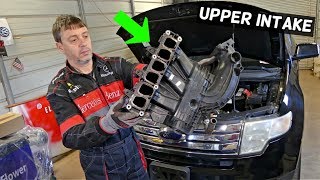
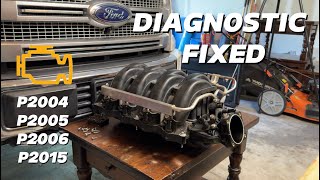
Used OEM Parts in Stock


New Aftermarket Parts Available
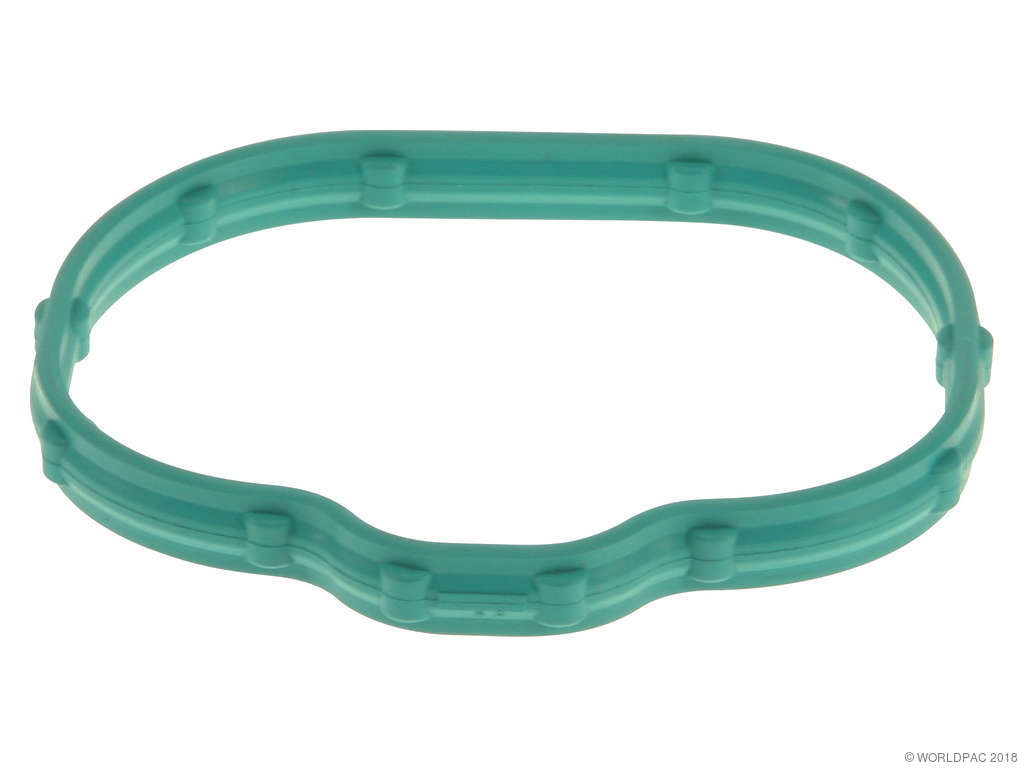


The information in this article is provided for general reference and educational purposes only. Vehicle specifications, procedures, and part compatibility can vary by production date, trim level, and region. Always consult your vehicle's factory service manual and verify part numbers before purchasing or performing repairs. Safety-critical components such as airbags, seat belts, and braking systems should be installed by a qualified professional.
- Ford Edge:
- 🎬 Helpful Videos
- 🛍️ Shop This Part
- What's Unique About the 2007-2014 Ford Edge
- Symptoms You May Notice
- Most Likely Causes
- Rare But Worth Checking
- Diagnosis Steps
- Parts You'll Likely Need
- Related Codes That Often Appear With This One
- Technical Service Bulletins (TSBs) & Recalls
- Platform-Specific Known Issues
- Mechanic-Grade Diagnostic Values
- Scan Tool Commands That Help
- Wiring & Ground Locations
- OEM Part Supersession History
- Model Year Variations Within This Range
- Diagnostic Flowchart
- Other Known Issues on This Vehicle
- Used vs. New Parts: Buying Guide for This Vehicle
- Real Owner Stories
- Ford Focus (referenced for IMRC diagnostic logic)
- Ford 1.8 Duratec (referenced for similar IMRC system)
- Ford (General IMRC System)
- Related OBD-II Codes
- Frequently Asked Questions
- 🎟️ Get 5% Off