

P2007 on 2014-2018 Subaru Forester: TGV Stuck Closed (Bank 2) Causes & Fixes
P2007 on a 2014-2018 Subaru Forester almost always means the Tumble Generator Valve (TGV) assembly for Bank 2 (driver's side) has failed. For the 2.0L Turbo (FA20DIT) engine, this is a known issue addressed by Subaru TSB #02-182-19, which points to a corroded internal shaft. For the 2.5L (FB25), failure is often due to the electric motor burning out. The definitive fix is to replace the entire TGV assembly with an updated part, which can cost between $300 and $460.
- P2007 on a 2014-18 Forester points directly to a problem with the driver's side Tumble Generator Valve (TGV).
- For the 2.0L Turbo (XT models), the most probable cause is a known design flaw where the TGV shaft corrodes and seizes, an issue Subaru addressed with an updated part (P/N 14111AA051).
- For the 2.5L non-turbo, the cause is more likely a burnt-out TGV motor.
- The correct and permanent fix is to replace the entire TGV assembly for Bank 2. Cleaning is usually a temporary solution at best.
- This repair requires removing the intake manifold, making it a moderately difficult DIY job (4/5 difficulty).
- When the Check Engine Light comes on for this issue, Subaru's system typically disables the cruise control and flashes a warning light as a safety measure.
What's Unique About the 2014-2018 Subaru FORESTER

For the Forester XT with the 2.0L FA20DIT turbo engine, Subaru has acknowledged a specific design flaw. Technical Service Bulletin (TSB) #02-182-19 explicitly states that "Condensation resulting from EGR system operation may enter the area between the TGV shaft and bearing. Over time, corrosion can develop and impede movement of the TGV shaft..." causing the valve to seize. 🎬 Watch: Learn how the TGV system works and common modifications. In response, Subaru updated the part with a corrosion-resistant stainless steel shaft. The updated part numbers are 14111AA041 (Right) and 14111AA051 (Left/Bank 2). This isn't just random part failure; it's a documented weak point in the original design for turbo models.
Diagnostic Flowchart

Tap your situation to follow the diagnostic path that matches what you're seeing on this vehicle.
Symptoms You May Notice
- Check Engine Light is on
- Flashing cruise control light and/or BRAKE light (a common Subaru feature when a CEL is present)
- Rough idle, especially when the engine is cold
- Reduced engine power and poor acceleration, may feel 'choked out' or sluggish
- Hesitation when accelerating
- Decreased fuel efficiency
- Replacing only the TGV motor when the valve shaft itself is seized due to corrosion (common on FA20DIT).
- Assuming the issue is carbon buildup when it is actually the known corrosion failure mode described in TSB 02-182-19.
- Performing a chemical intake cleaning, which is often a temporary fix if the underlying issue is a worn-out motor or seized shaft.
Most Likely Causes

- Failed Tumble Generator Valve (TGV) Assembly due to Corrosion 🔴 High Probability Specifically on the 2.0L FA20DIT Turbo engine, Subaru TSB #02-182-19 confirms the original TGV shaft material is prone to corrosion from EGR condensation, causing it to seize.
How to confirm: Use a scan tool to monitor commanded vs. actual TGV position for Bank 2. If the position does not change, the assembly is likely seized. This is the most probable cause on Forester XT models.
Typical fix: Replace the entire Bank 2 (driver's side) TGV assembly with the updated OEM part (Subaru P/N: 14111AA051).
Est. part cost: $300-$460 - Faulty TGV Motor or Position Sensor 🔴 High Probability On non-turbo 2.5L FB25 engines, which are not covered by the corrosion TSB, the electric motor that drives the valve or the integrated sensor is a common failure point. One owner of a 2014 Outback (with a similar engine) reported that after a cleaning service failed to provide a lasting fix, the mechanic determined the motors were simply 'fried/worn out from age'.
How to confirm: If the valve is not physically seized by corrosion or carbon, but the scan tool shows no movement or incorrect position, the motor/sensor unit has likely failed electronically. A continuity test across the two bottom pins of the motor connector can confirm a failed motor; if there is no continuity, the motor coil is broken.
Typical fix: On these models, the motor and sensor are integrated into the TGV housing and are not sold separately by Subaru. The entire TGV assembly must be replaced.
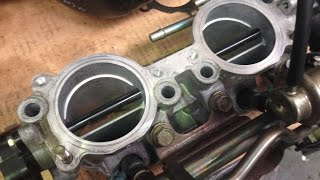
Est. part cost: $300-$460 - Carbon Buildup ⚪ Low Probability The 2.0L FA20DIT is a direct-injection engine, which is inherently prone to carbon buildup on intake components since fuel detergents don't wash over the valves. While less common than the corrosion issue, heavy carbon deposits can physically restrict the TGV butterfly valve from moving.
How to confirm: This can only be confirmed by removing the intake manifold and visually inspecting the TGV housing and valve for deposits. An owner on a forum reported that a chemical cleaning service by the dealer only solved the problem for two weeks before it returned.
Typical fix: Thoroughly clean the TGV housing and valve. If cleaning is unsuccessful or the part is already corroded or electrically faulty, replacement is necessary.
Est. part cost: $0 (if cleaning works, though often temporary)
Rare But Worth Checking
- Wiring or Connector Issue: Damage to the wiring harness or corrosion in the connector for the Bank 2 TGV motor can cause a loss of signal, preventing it from operating. This should be checked before replacing parts, especially if any recent work has been done under the intake manifold.
- Aftermarket Tuning / Modifications: Installation of certain aftermarket parts, like a flex-fuel kit that intercepts the TGV wiring, can trigger a P2007 code. This typically needs to be resolved with a corresponding ECU tune to disable the TGV codes.
Diagnosis Steps
- Confirm the P2007 code using an OBD-II scanner.
- Check for the flashing cruise control and/or brake light, a hallmark of a Subaru CEL.
- Check for applicable Technical Service Bulletins. For 2.0L Turbo models, TSB 02-182-19 is highly relevant.
- Using a capable scan tool, access live data and monitor the 'TGV Position Sensor L' (or Bank 2) and 'TGV Drive' command.
- Command the TGV to open and close via the scan tool (if available). Observe if the actual position follows the command.
- If the position does not change, the valve is either stuck or the motor has failed.
- Inspect the wiring harness and connector at the Bank 2 (driver's side) TGV for any visible damage, corrosion, or loose connections. Ensure the harness was not pinched during previous repairs.
- If wiring is intact and the valve is unresponsive, the TGV assembly needs to be replaced. The intake manifold must be removed to access it. 🎬 See this walkthrough on how to remove the intake manifold.
Parts You'll Likely Need

- Tumble Generator Valve Assembly (Left/Driver Side/Bank 2)
(OEM #14111AA051)— This is the complete, updated unit for the FA20DIT Turbo engine that fails due to internal corrosion or motor failure, as documented in Subaru's TSB 02-182-19. The entire assembly, including the housing, valve, motor, and sensor, is replaced as one unit. The corresponding part for Bank 1 (Right) is 14111AA041.
Trusted brands: Subaru (OEM)
OEM price range: $300-$460
Aftermarket price range: N/A (as a complete assembly)
Related Codes That Often Appear With This One
- P2006 — This code is for 'TGV Stuck Open Bank 2'. It can appear with P2007 if the valve is intermittently sticking or the sensor is failing, causing erratic position readings.
- P2004 / P2005 — These are the codes for Bank 1 (passenger side) TGV failure. Since both sides use the same original part design, it is common for both to fail around the same time. One owner reported getting P2004 and P2007 simultaneously.
Technical Service Bulletins (TSBs) & Recalls
- 02-182-19: Announces a design change for the TGV shaft to a more corrosion-resistant stainless steel to prevent DTCs P2004-P2007 on 2014-18 Forester Turbo and 2015-19 WRX models. It specifies updated part numbers 14111AA041 (Right) and 14111AA051 (Left).
Platform-Specific Known Issues
- TSB for Turbo Models: Subaru TSB #02-182-19 directly addresses codes P2004, P2005, P2006, and P2007 on 2014-2018 Forester Turbo models, stating that corrosion from EGR condensation can impede TGV shaft movement. The fix was a material change to stainless steel.
- Owner Story: Cleaning vs. Replacement: An owner of a 2014 Subaru Outback with P2004/P2007 codes shared their experience on Reddit. A dealer-performed 'upper engine maintenance' cleaning service costing $250 only resolved the issue for two weeks. The codes returned, and the final repair was replacing both TGV assemblies for just under $1000, as the internal electric motors had burned out. This highlights that cleaning is often not a permanent solution.
- DIY Motor Replacement & Temporary Fix: A 2017 Forester XT owner on Reddit noted that while Subaru does not sell the TGV motor separately, it is a Denso part (old P/N: 0120109-1091, new P/N: 012010-6111) that can sometimes be sourced online for a DIY repair, though this is not an official procedure. To maintain driveability while waiting for the part, the owner removed the faulty TGV motor, manually set the valve to the open position, and zip-tied it open to restore engine power.
Mechanic-Grade Diagnostic Values
- TGV Motor Coil Continuity (FB25 Engine) — expected: Continuity (a low resistance reading) between the two bottom pins of the motor's electrical connector.. Failure: No continuity (infinite resistance or 'OL' on a multimeter) indicates a broken internal coil, and the motor must be replaced.
- TGV Position Sensor Voltage (Reference from older models) — expected: Approximately 0.4V with ignition on, engine off (valve at rest position).. Failure: A constant high voltage (e.g., 4.3-4.9V) that does not change when the valve is commanded to move suggests a sensor or wiring fault. NOTE: These values are from older Subaru models (1999-2005) and should be used as a general guideline only; they may not be exact for the 2014-2018 models.
Scan Tool Commands That Help
- Subaru Select Monitor (SSM) or equivalent professional scan tool: Current Data Display / Live Data Monitoring for 'TGV Position Sensor L' and 'TGV Drive' — This is the primary diagnostic step. It allows the technician to compare the ECU's commanded position with the actual position reported by the sensor to confirm if the valve is responding.
- Subaru Select Monitor (SSM) or equivalent professional scan tool: Active Test / Bidirectional Control for the TGV — If available, this function allows the technician to manually command the TGV to open and close to test the motor's function and the valve's range of motion without starting the engine. The specific name may vary by scan tool.
Wiring & Ground Locations
- E51 / E55 — These are the wiring diagram identifiers for the 5-pin Tumble Generator Valve connectors on the engine harness.. Identifying the correct connector is crucial for testing voltage, continuity, and inspecting for damage. The 2014-2018 Forester uses a 5-pin connector that integrates both the motor and sensor functions into a single unit on the TGV assembly.
- Main Engine Ground — On many Subarus, a primary engine ground strap is located on top of the engine, often near the starter or bolting to the intake manifold itself, before connecting to the chassis.. A poor engine ground can cause a variety of electrical issues, including erratic sensor readings and actuator failures. While not a common cause for an isolated P2007, checking that the main grounds are clean and tight is a good practice if other electrical symptoms are present.
Real Owner Repair Stories
- Blog post by owner of a Subaru with FB25B engine (Subaru with FB25B engine (e.g., 2014-2018 Forester 2.5i)) — Check Engine Light with codes P2004 (historic) and P2007 (pending), flashing brake and cruise lights, and a rattle at low RPM.
❌ Tried (didn't work) The first failure was temporarily fixed by cleaning the valve. The code returned after ~2 years and 20,000 miles.
✅ What actually fixed it The second time, the owner diagnosed a failed TGV motor by confirming it had no continuity on the two bottom pins of its connector. As a temporary measure while waiting for parts, the owner would manually apply 12V to the motor pins to force the valve open for cold starts. The final fix was replacing the TGV motor.
OEM Part Supersession History
14111AA050→14111AA051— This is the updated part for the Bank 2 (Left) TGV assembly, as referenced in TSB 02-182-19. The new part features a stainless steel shaft to prevent the corrosion that causes the original part to seize.Denso 0120109-1091 (Motor Only)→Denso 012010-6111 (Motor Only)— This is the updated Denso part number for the electric motor used in the TGV assembly. While Subaru does not sell the motor separately, owners have successfully sourced this updated part online for a DIY repair.
Heads up: A Subaru Service Information Bulletin notes that replacement TGV assemblies may have motors with different colored labels (blue or green) from different Denso facilities, but they are functionally identical and interchangeable.
Helpful Videos
Used OEM Parts in Stock


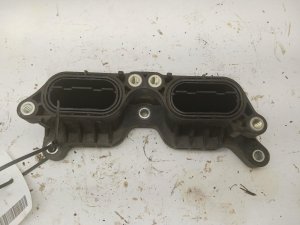
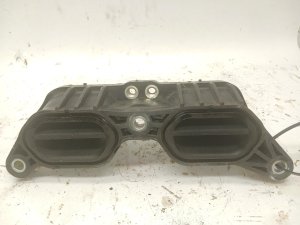
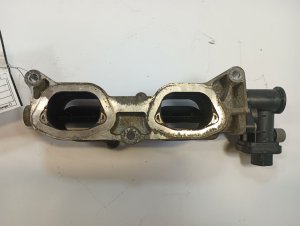

New Aftermarket Parts Available
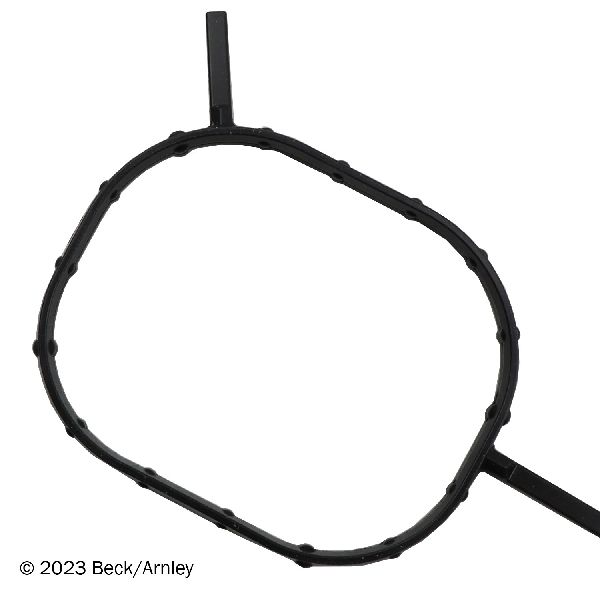


The information in this article is provided for general reference and educational purposes only. Vehicle specifications, procedures, and part compatibility can vary by production date, trim level, and region. Always consult your vehicle's factory service manual and verify part numbers before purchasing or performing repairs. Safety-critical components such as airbags, seat belts, and braking systems should be installed by a qualified professional.
- Subaru FORESTER:
- 🎬 Helpful Videos
- 🛍️ Shop This Part
- What's Unique About the 2014-2018 Subaru FORESTER
- Diagnostic Flowchart
- Symptoms You May Notice
- Most Likely Causes
- Rare But Worth Checking
- Diagnosis Steps
- Parts You'll Likely Need
- Related Codes That Often Appear With This One
- Technical Service Bulletins (TSBs) & Recalls
- Platform-Specific Known Issues
- Mechanic-Grade Diagnostic Values
- Scan Tool Commands That Help
- Wiring & Ground Locations
- Real Owner Repair Stories
- OEM Part Supersession History
- 🎟️ Get 5% Off