

P2004 on 2014-2018 Subaru Forester: Tumble Generator Valve (TGV) Stuck Open Causes and Fixes
On a 2014-2018 Forester, P2004 almost always means the passenger-side Tumble Generator Valve (TGV) assembly is failing due to a known corrosion issue. The most reliable fix is replacing the entire TGV assembly, which can cost between $600 and $1000 at a shop. While the TSB specifically mentions turbo models, this is a very common failure on non-turbo 2.5i models as well.
- P2004 on a 2014-2018 Forester means the passenger side Tumble Generator Valve (TGV) is stuck open.
- This is almost always caused by a known design flaw where the valve's shaft corrodes and seizes, as outlined in Subaru TSB #02-182-19.
- The most reliable fix is replacing the entire passenger-side TGV assembly with the updated OEM part.
- A key diagnostic step is to swap the TGV motors between the driver and passenger sides to see if the fault code follows the motor.
- Symptoms include a Check Engine Light, rough cold idle, and often a flashing 'BRAKE' light with disabled cruise control.
What's Unique About the 2014-2018 Subaru FORESTER
This generation of Subaru Forester is particularly prone to this code due to a specific design flaw. As documented in Subaru's Technical Service Bulletin (TSB) #02-182-19, condensation from the EGR system can cause the steel shaft of the TGV to corrode and seize within its housing. This mechanical failure is the root cause in the vast majority of cases, making it more of a predictable wear item than a random electrical fault. Subaru later updated the part with a stainless steel shaft to prevent this from recurring. While the TSB officially applies to 2014-18 Forester Turbo models, the same issue is widely reported by owners of the non-turbo 2.5i models which use a similar TGV design.
Diagnostic Flowchart
Tap your situation to follow the diagnostic path that matches what you're seeing on this vehicle.
Symptoms You May Notice
- Check Engine Light is on
- Flashing 'BRAKE' light and disabled cruise control
- Rough idle, especially on cold starts
- Slight decrease in fuel economy
- Possible engine hesitation or sputtering at low RPMs
- Replacing only the TGV motor/sensor when the underlying problem is a mechanically seized TGV assembly. The code will return because the new motor is still unable to move the stuck valve.
- Assuming an upper engine cleaning will fix the issue. While carbon can be a factor, the primary cause is almost always corrosion of the valve shaft, which cleaning will not resolve.
Most Likely Causes
- Failed Tumble Generator Valve (TGV) Assembly 🔴 High Probability Per Subaru TSB #02-182-19, the original TGV shaft is made of a material prone to corrosion from condensation, which causes the valve to bind and get stuck. This is a widely documented failure on this platform, affecting both turbo and non-turbo models.
How to confirm: With the engine off, locate the TGV actuator on the passenger side of the intake manifold. Try to move the external linkage by hand. If it is stiff, gritty, completely seized, or makes a crunching sound, the internal valve assembly has failed. This is the most common failure mode.
Typical fix: Replacement of the entire TGV assembly for Bank 1 (passenger side). It is highly recommended to use the updated OEM part with the corrosion-resistant stainless steel shaft. Some owners choose to replace both sides at the same time, as the other side is likely to fail soon after.
Est. part cost: $350-$480 - Failed TGV Position Sensor or Motor 🟡 Medium Probability While the sensor or motor can fail electrically, it's often misdiagnosed. The mechanical valve assembly usually fails first, but sometimes the electronic components fail on their own. A Reddit user noted their mechanic found the motors were simply worn out from age, not seized by corrosion.
How to confirm: Swap the TGV motor/sensor assembly from Bank 1 (passenger side) with the one from Bank 2 (driver's side). They are held on by two 10mm bolts and an electrical connector. Clear the codes and start the engine. If the code changes to P2005 (TGV Stuck Open Bank 2), the motor/sensor assembly is the faulty component. If P2004 returns, the valve assembly itself is the problem.
Typical fix: Replacement of the TGV motor and sensor assembly. The motor is a Denso part, and some owners have found success sourcing updated Denso part numbers online.
Est. part cost: $100-$150
Rare But Worth Checking
- Wiring Harness Damage: The wiring leading to the TGV motor can become frayed or damaged, causing a loss of signal. This should be checked if both the valve and motor/sensor are known to be good. A visual inspection of the harness near the actuator is a good first step.
- Excessive Carbon Buildup: In very high-mileage engines, heavy carbon deposits could physically restrict the movement of the TGV butterfly valve. Some owners have tried a chemical cleaning service (like Subaru's 'Upper Engine Maintenance Kit') with temporary success before the code returned, suggesting the underlying issue was mechanical wear or a failing motor, not just buildup.
Diagnosis Steps
- Read the code using an OBD-II scanner to confirm P2004 is present.
- Visually inspect the TGV motor on the passenger side of the intake manifold. Check its electrical connector and wiring for any obvious damage.
- With the engine off, attempt to manually move the TGV's external linkage. If it does not move smoothly or is completely stuck, the TGV assembly is faulty and must be replaced. This is the most likely outcome.
- If the linkage moves freely, the issue may be the motor/sensor. To confirm, swap the motor/sensor units between the passenger side (Bank 1) and driver's side (Bank 2). The units are identical and held on by two 10mm bolts.
- After the swap, clear the trouble codes with the scanner and start the engine. If code P2005 (Bank 2) appears, the motor/sensor you moved is bad. If P2004 reappears, the Bank 1 TGV assembly is bad despite the linkage feeling free, or there is a wiring problem.
- If the diagnosis is still unclear, use a multimeter to check for proper voltage and ground at the TGV motor connector to rule out a wiring issue.
- A temporary 'fix' some owners have used for a 'stuck closed' code is to remove the motor and manually move the valve to the open position to restore power until the part can be replaced. This is not a solution for a 'stuck open' code.
Parts You'll Likely Need
- Tumble Generator Valve (TGV) Assembly - Right / Passenger Side
(OEM #14111AA041 (Updated Part))— This is the primary point of failure due to the internal valve shaft corroding and seizing, as documented by Subaru TSB #02-182-19. Replacement of the entire assembly is the official and most reliable repair. The TSB lists 14111AA041 as the updated part for the right side.
Trusted brands: Subaru (OEM)
OEM price range: $450-$480
Aftermarket price range: $350-$420 - Tumble Generator Valve (TGV) Motor / Sensor
(OEM #14120AA040)— This part is replaced when diagnosis confirms the motor or sensor has failed electrically, which can be determined by swapping it with the opposite bank. A Reddit user identified an updated Denso part number 012010-6111 as a compatible replacement for the original motor.
Trusted brands: Subaru (OEM), Denso
OEM price range: $120-$150
Aftermarket price range: $90-$120
Related Codes That Often Appear With This One
- P2005 — This is the same 'stuck open' fault but for Bank 2 (driver's side). It's common for both TGVs to fail around the same time due to the shared design flaw.
- P2006 — This indicates 'TGV Stuck Closed Bank 1'. It stems from the same corrosion issue described in TSB #02-182-19, just with the valve getting stuck in the opposite position.
- P2007 — This indicates 'TGV Stuck Closed Bank 2'. Like P2006, it's caused by the same binding TGV shaft issue. One owner reported seeing P2004 and P2007 at the same time, indicating one valve was stuck open and the other stuck closed.
Technical Service Bulletins (TSBs) & Recalls
- Bulletin #02-182-19 (NHTSA ID 10161831): Announces a design change to the TGV assembly, replacing the original shaft with a stainless steel one to prevent corrosion and binding that causes codes P2004-P2007. Specifies updated part numbers.
Platform-Specific Known Issues
- Subaru issued Technical Service Bulletin #02-182-19 for 2014-18 Forester Turbo models explicitly stating that condensation can cause the TGV shaft to corrode, triggering codes P2004-P2007. The fix was an updated part (14111AA041 for Right, 14111AA051 for Left) with a stainless steel shaft. This issue is known to affect non-turbo models with the FB25 engine within this year range as well, as corroborated by numerous owner forums.
Scan Tool Commands That Help
- Subaru Select Monitor: Each System Check / Diagnostic Code(s) Display — Used to read manufacturer-specific DTCs and perform system-level diagnostics beyond a generic OBD-II scanner's capability.
- Subaru Select Monitor: Clear Memory Mode — To clear stored trouble codes after a repair has been completed.
- Subaru Select Monitor: All system diagnostic check — To perform a comprehensive health check of all vehicle control modules, which can help identify related issues or communication problems.
Wiring & Ground Locations
- TGV Connector (5-pin) — The TGV motor/sensor assembly on the side of the intake manifold runner for each bank. For the 2014-2018 Forester, this is a 5-pin connector that combines motor and sensor functions.. This connector provides power to the motor and relays position data from the sensor. A damaged connector or wiring pigtail can cause P2004. The wiring diagram IDs for this connector are B3, E51, and E55.
- Engine Ground Terminals — There are multiple engine ground points. Key locations on newer Subarus include one or two on top of the intake manifold, and the main battery ground cable connection near the starter.. A poor ground connection can cause a voltage drop or intermittent power to the TGV motor, potentially leading to incorrect operation or fault codes. Ensuring these grounds are clean and tight is a crucial diagnostic step.
Real Owner Repair Stories
- Reddit user MaineGuytoday (2015 Subaru Impreza (with similar FB-series engine)) — Check Engine Light with code P2004.
❌ Tried (didn't work) Preparing to replace the intake manifold runner control motor.
✅ What actually fixed it While the car was running, the owner gave the TGV motor a few taps with the handle of a Phillips head screwdriver. The check engine light immediately went out. This suggests the motor was slightly stuck due to carbon or minor corrosion, and the vibration was enough to free it. - Reddit user on r/subaru (2014 Subaru Outback (with similar FB25 engine), ~155k miles) — Check Engine Light, flashing 'BRAKE' light, disabled cruise control with codes P2004 and P2007.
❌ Tried (didn't work) Using the Subaru 'Upper Engine Maintenance Kit' for cleaning. The fix only lasted for two weeks before the codes returned.
✅ What actually fixed it The final repair was replacing both TGV assemblies. The mechanic noted that the motors themselves were worn out from age, not that the valves were stuck with carbon.
OEM Part Supersession History
14111AA040→14111AA041— The updated part 14111AA041 features a stainless steel shaft to prevent the corrosion and binding issue that plagued the original design, as noted in TSB #02-182-19.
Model Year Variations Within This Range
- 2014-2016: The 2014 model year was the first for the SJ generation and is noted to have more issues, including being the last year Subaru acknowledged and warrantied excessive oil consumption for the FB25B engine. The 2017-2018 models are considered more desirable as they represent the end of the generation's production run, by which time many early issues were resolved.
- 2014-2018: The TGV system on the FB25 engine in this Forester generation uses a 5-pin combined motor and sensor unit, unlike older Subaru EJ engines which used separate 2-pin motor and 3-pin sensor connectors.
Used OEM Parts in Stock


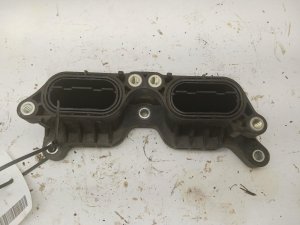
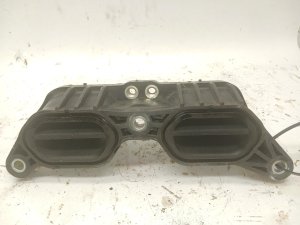
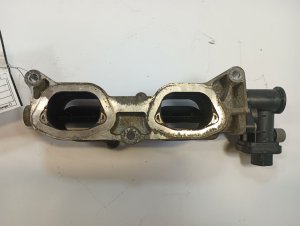

New Aftermarket Parts Available
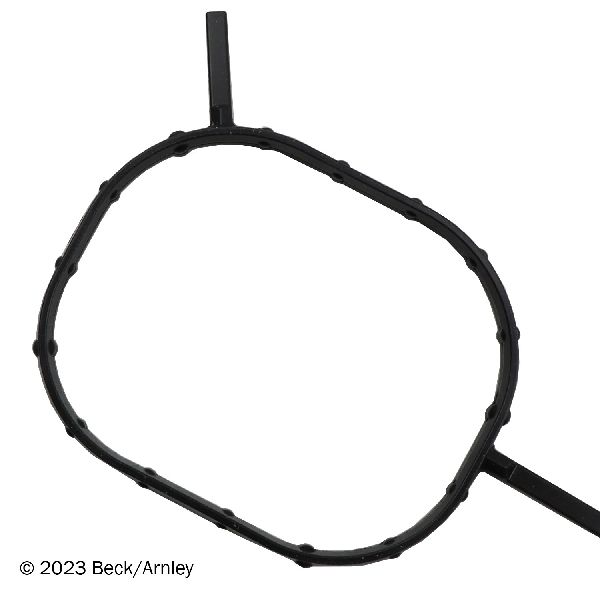


The information in this article is provided for general reference and educational purposes only. Vehicle specifications, procedures, and part compatibility can vary by production date, trim level, and region. Always consult your vehicle's factory service manual and verify part numbers before purchasing or performing repairs. Safety-critical components such as airbags, seat belts, and braking systems should be installed by a qualified professional.
- Subaru FORESTER:
- 🛍️ Shop This Part
- What's Unique About the 2014-2018 Subaru FORESTER
- Diagnostic Flowchart
- Symptoms You May Notice
- Most Likely Causes
- Rare But Worth Checking
- Diagnosis Steps
- Parts You'll Likely Need
- Related Codes That Often Appear With This One
- Technical Service Bulletins (TSBs) & Recalls
- Platform-Specific Known Issues
- Scan Tool Commands That Help
- Wiring & Ground Locations
- Real Owner Repair Stories
- OEM Part Supersession History
- Model Year Variations Within This Range
- 🎟️ Get 5% Off