

P2002 on 2014-2020 Ram 1500 EcoDiesel: DPF Efficiency Causes and Fixes
P2002 on a Ram 1500 EcoDiesel means the Diesel Particulate Filter (DPF) is not working efficiently. This is often due to a clogged filter, faulty DPF pressure sensors, or failed regeneration cycles. Before replacing the expensive DPF, check sensors, inspect for exhaust leaks, and attempt a forced regeneration with a capable scan tool.
- P2002 means your Ram 1500 EcoDiesel's particulate filter isn't working correctly, often due to being clogged or damaged.
- Don't immediately assume you need a new DPF, which costs thousands. The problem is frequently a much cheaper DPF pressure sensor or a simple exhaust leak.
- Driving habits matter. Regular highway driving helps the DPF clean itself automatically. Too many short trips can cause this code to appear.
- A capable OBD-II scan tool is essential for proper diagnosis, allowing you to read soot levels and perform a 'forced regeneration'.
- Check if your vehicle is covered by the extended emissions warranty, as it could make the repair free of charge at a dealership.
What's Unique About the 2014-2020 Ram 1500

The 3.0L EcoDiesel engine in the Ram 1500 is known for being sensitive to driving habits. Frequent short trips can prevent the DPF from reaching the high temperatures needed for automatic regeneration, leading to premature clogging and the P2002 code. While some owners experience a cracked or failed DPF, many P2002 events on this platform are traced back to faulty DPF pressure sensors or their connecting hoses, which can trick the PCM into thinking the filter has failed. For 2018+ models, a security gateway bypass module or cable is required for aftermarket scan tools like AlfaOBD to perform advanced diagnostics like a forced regeneration.
🎬 Watch: Using a scan tool to diagnose P2002 and force regeneration.Diagnostic Flowchart

Tap your situation to follow the diagnostic path that matches what you're seeing on this vehicle.
Generation note: This range covers the end of the fourth-generation Ram 1500 (DS) and the beginning of the fifth-generation (DT), which was introduced in 2019. The 3.0L EcoDiesel engine itself was updated to a 'Gen 3' version for the 2020 model year which included a new low-pressure EGR system. While the P2002 code's meaning is the same, numerous TSBs exist for software updates to resolve this and other codes, suggesting some causes may be generation-specific. Notably, 2018 and newer models have a Security Gateway Module (SGM) that requires a bypass cable for aftermarket scan tools to perform commands like a forced regeneration.
Symptoms You May Notice

- Check Engine Light is on
- Reduced engine power or 'limp mode'
- Decreased fuel economy
- Message on the dashboard indicating "DPF is full, see dealer" or similar.
- Visible black soot inside the tailpipe, which is a strong indicator of a cracked or bypassed DPF.
- Engine may have difficulty starting or exhibit poor acceleration.
- Immediately replacing the DPF without diagnosing sensors. The DPF is the most expensive part of the system; faulty sensors or clogged sensor tubes are a much cheaper fix and a common cause.
- Confusing DPF issues with DEF (Diesel Exhaust Fluid) issues. P2002 is related to the soot filter (DPF), not the SCR/DEF system that treats NOx emissions, although a failure in one can sometimes affect the other.
Most Likely Causes

- Clogged or Saturated DPF 🔴 High Probability Frequent short trips or prolonged idling prevent the DPF from getting hot enough to perform a passive or active regeneration cycle, causing soot to build up. Use of high-sulfur diesel fuel can also accelerate clogging.
How to confirm: Use a capable scan tool (like AlfaOBD or a professional scanner) to check the 'soot load' percentage. If it's high, attempt a forced stationary regeneration. If the regeneration fails or the code returns immediately, the filter is likely clogged beyond recovery or has failed internally.
Typical fix: Perform a forced stationary regeneration using a scan tool. This requires the engine to be at operating temperature and can take over 30 minutes, during which the RPMs will hold around 2000-2500. If that fails, the DPF may need to be professionally cleaned or, in worst-case scenarios, replaced.
Est. part cost: $1500-$4000 - Faulty DPF Differential Pressure Sensor 🟡 Medium Probability These sensors and their connecting rubber hoses are exposed to extreme heat and vibration, which can cause them to fail, leak, or melt, sending inaccurate pressure readings to the PCM.
How to confirm: Monitor the DPF pressure sensor data with a scan tool. The voltage should change with engine RPM (typically 0.5V at idle to 4.5V under load). If the reading is stuck, erratic, or implausible, the sensor is likely bad. Visually inspect the sensor's rubber hoses for cracks, melting, or blockages. The sensor is located roughly mid-ship, above the DPF assembly.
Typical fix: Replace the DPF differential pressure sensor and/or its hoses. This is a common point of failure and a relatively inexpensive first step. 🎬 See this walkthrough on inspecting and replacing the DPF pressure sensor.
Est. part cost: $50-$150 - Exhaust System Leaks ⚪ Low Probability Leaks in the exhaust system upstream of or near the DPF can alter the pressure readings, causing the PCM to incorrectly flag the DPF's efficiency. The woven flex pipe section of the DPF assembly is a known potential failure point that can crack.
How to confirm: Visually inspect the exhaust system from the engine to the DPF for soot trails, cracks, or loose clamps, especially around flanges and the flex pipe. A smoke test can definitively identify hard-to-see leaks.
Typical fix: Repair the leak by replacing gaskets, tightening clamps, or welding the cracked component.
Est. part cost: $50-$300 - Faulty Exhaust Gas Temperature (EGT) Sensors ⚪ Low Probability The regeneration process relies on accurate temperature readings to reach over 1100°F. A failed EGT sensor can prevent regeneration from starting or completing successfully. The EcoDiesel has four EGT sensors, and a failure in any of them can disrupt the process.
How to confirm: Use a scan tool to monitor all EGT sensor readings. With a cold engine, they should all read close to ambient temperature. As the engine warms, they should rise plausibly. A sensor that is stuck or reads illogically needs to be replaced.
Typical fix: Replace the faulty EGT sensor. There are multiple sensors in the exhaust stream.
Est. part cost: $80-$200
Rare But Worth Checking
- Cracked DPF Internals: While a clogged filter is common, the internal ceramic honeycomb can also crack. This allows soot to pass through unfiltered, triggering P2002 due to low backpressure. A sooty tailpipe is a strong indicator of a cracked DPF. This is considered a manufacturing defect by some technicians who see frequent replacements.
- PCM Software Glitch: Manufacturer TSBs 18-002-23, 18-019-15 REV C, and 18-021-15 REV F all list P2002 as a code addressed by a PCM software update. This suggests the fault logic itself can be flawed and a dealer reflash may be required.
- Upstream Engine Issues: Problems like leaking fuel injectors, a faulty EGR system, or a failing turbocharger can produce excessive soot, overwhelming the DPF and causing it to clog faster than it can regenerate. A bad CCV filter can also halt regens and lead to DPF issues.
Diagnosis Steps
- Check for other DTCs. Codes for sensors (EGT, DPF pressure), EGR, or fuel systems can provide clues to the root cause.
- Use a scan tool to view live data. Check the DPF soot load percentage and the readings from the DPF pressure sensor and all EGT sensors at idle and while driving.
- Visually inspect the DPF pressure sensor hoses. Look for any cracks, melting, kinks, or blockages from soot. These are a known failure point.
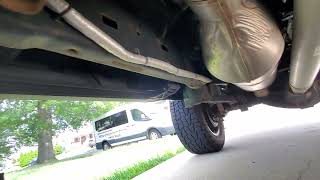
- Inspect the exhaust system for any signs of leaks (soot streaks) between the engine and the DPF, paying close attention to flanges and the woven flex pipe section.
- If sensor readings are plausible and no leaks are found, attempt a forced stationary regeneration using a capable scan tool. Follow all safety precautions as the exhaust will become extremely hot. For 2018+ models, a security gateway bypass is necessary for this step with aftermarket tools.
- If regeneration completes but the P2002 code returns quickly, perform a 'cheese cloth test' by holding a white cloth over the tailpipe and revving the engine; if black soot appears on the cloth, the DPF is almost certainly cracked internally and needs replacement. 🎬 Watch: How to perform a simple DIY test for a cracked DPF.
- If regeneration fails to start or complete, investigate EGT sensor readings. The engine must reach operating temperature for regen to begin.
- If the DPF is confirmed to be cracked or clogged with ash (which does not burn off), it must be professionally cleaned or replaced.
Parts You'll Likely Need
- DPF Differential Pressure Sensor
(OEM #68229761AB, 68312096AB)— This sensor is a frequent failure point and is critical for measuring DPF restriction. Its failure often mimics a clogged DPF.
Trusted brands: Mopar, Bosch, Standard Motor Products
OEM price range: $100-$180
Aftermarket price range: $50-$120 - Diesel Particulate Filter (DPF) — The filter can become clogged with soot or non-combustible ash over time, or it can crack internally, requiring replacement. This is the most expensive component in the system.
Trusted brands: Mopar, Dorman, AP Exhaust Technologies
OEM price range: $2000-$4000
Aftermarket price range: $1200-$2500
Related Codes That Often Appear With This One
- P2463 — This code specifically means 'Diesel Particulate Filter Restriction - Soot Accumulation,' often appearing with P2002 when the filter is heavily clogged.
- P242F — Similar to P2463, this indicates 'Diesel Particulate Filter Restriction - Ash Accumulation,' pointing to a filter that is reaching the end of its service life.
- P20EE — This code relates to the SCR NOx Catalyst efficiency. Problems in one part of the complex diesel exhaust aftertreatment system can sometimes trigger faults in another.
Technical Service Bulletins (TSBs) & Recalls
- TSB #18-002-23: For 2020 DT Ram 1500s, involves a PCM flash to address P2002 along with a long list of other potential DTCs, including those for fuel pressure and NOx sensors.
- TSB #18-019-15 REV C: For 2015 DS Ram 1500s, involves a PCM software update to address P2002 and other codes. This was also released as a Rapid Response Transmittal (RRT) 15-088.
- TSB #18-021-15 REV F: For 2014 DS Ram 1500s, this comprehensive TSB involves a PCM reflash and, if certain codes are present, replacement of an O2 sensor and cleaning/replacement of an EGT sensor to fix shuddering and vibration issues, with P2002 being one of the covered DTCs.
Platform-Specific Known Issues
- Security Gateway Module (SGM) Complication: For model years 2018 and newer, a Security Gateway Module prevents unauthorized access to vehicle systems. This means DIY-ers using tools like AlfaOBD must purchase and install a security bypass cable or module to perform active commands like a forced DPF regeneration.
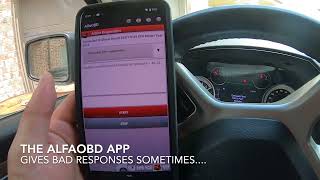
- Forced Regeneration with AlfaOBD: Many owners use the AlfaOBD application on Android with a compatible OBD2 dongle to perform a dealer-level forced regeneration. The process involves enabling the regen, cycling the ignition, and letting the truck run at high RPM for an extended period. It is a cost-effective diagnostic step before considering parts replacement.
- Sooty Tailpipe = Cracked DPF: A recurring theme in owner forums and technician videos is that a key diagnostic clue is the tailpipe. A modern diesel with a functioning DPF should have a clean tailpipe. Any visible black soot is a near-certain sign that the DPF's internal filter media is cracked and it is no longer filtering exhaust, requiring a full replacement.
Mechanic-Grade Diagnostic Values
- DPF Differential Pressure Sensor Signal Voltage (KOEO) — expected: 0.61 - 0.77 VDC (at or below 25°C/77°F) or 0.642 - 0.738 VDC (at or above 26°C/78°F).. Failure: Voltage outside of these specific ranges at KOEO indicates a potential sensor or wiring issue.
- DPF Differential Pressure Sensor Signal Voltage (Engine Running) — expected: Approximately 0.5V at idle, rising smoothly towards 4.5V as engine RPM and load increase.. Failure: Voltage that is stuck, erratic, or does not respond to changes in engine RPM suggests a faulty sensor or clogged sensor tubes.
- DPF Differential Pressure Sensor 5V Reference Circuit — expected: 4.5V - 5.0V with ignition on.. Failure: Voltage below 4.5V or no voltage indicates a wiring problem (short to ground, open circuit) or an ECM fault.
Hidden / Shadow Codes Worth Checking
- P1289: NOx Sensor 1/2 Zero Offset Too Low. While not a direct sub-code of P2002, a failing NOx sensor can provide erroneous data about the aftertreatment system's efficiency, potentially contributing to or being discovered during P2002 diagnosis. (see via May require a dealer-level scan tool like wiTECH, as it might not be flagged by all generic OBD-II readers.)
Scan Tool Commands That Help
- Professional Scan Tool (Snap-on, Autel, etc.) or AlfaOBD: Service Diesel Particulate Filter Regeneration / Forced Stationary Regeneration — Used to manually initiate a DPF cleaning cycle when the soot load is high but the vehicle has been unable to perform an automatic regeneration due to driving conditions. This is a primary diagnostic step before condemning the DPF.
- Stellantis wiTECH 2.0: OBD Monitors — Used to initiate a specific, guided drive cycle to allow the vehicle's onboard diagnostics to run and verify the function of the emissions system components after a repair has been performed.
Wiring & Ground Locations
- DPF Pressure Sensor Circuits — In the harness connector for the DPF differential pressure sensor.. Knowing the circuit IDs allows for precise testing. (K354) is the 5V supply, (K355) is the signal wire, and (K951) is the sensor ground. A fault in any of these wires can mimic a failed sensor or DPF.
- Engine Block Ground (CSN W14) — Battery ground cable connection to the engine block.. For 2020 models, a specific notification (W14) was issued for an incorrect length bolt at this location, which could lead to a poor ground connection, causing a no-start and potentially other electrical issues. A bad ground can affect sensor readings across the system.
- General Engine Ground Strap — Typically runs from the engine block (often near the alternator) to the frame/body.. Owners have reported that factory ground connections are often made to painted surfaces. Over time, corrosion can build up, creating a poor ground path that can cause erratic sensor behavior and confusing diagnostic codes.
Real Owner Repair Stories
- Reddit user in r/EcoDiesel (2014 Ram 1500 EcoDiesel) — DPF became 100% full after being stuck in traffic, check engine light on, dealer quoted $4,000 to replace the 'catalytic converter'.
❌ Tried (didn't work) Driving at highway speeds did not initiate a regeneration. The dealership immediately recommended replacement.
✅ What actually fixed it The community recommended purchasing the AlfaOBD software and a compatible OBD-II adapter to perform a forced stationary regeneration at home, which is the correct procedure for a clogged (but not failed) filter and costs significantly less than dealer replacement. - Reddit user in r/MechanicAdvice (2015 Ram 3.0L EcoDiesel) — Initially had code P0128 (Thermostat Rationality). After replacing the thermostat, the engine would warm up, then the temperature would spike to 220-235°F before dropping back to normal.
❌ Tried (didn't work) The initial thermostat replacement was with an aftermarket part.
✅ What actually fixed it The community pointed out that aftermarket thermostats for this engine are often faulty out of the box. The symptoms described are classic for a thermostat that is not opening correctly, causing temperature spikes. A faulty thermostat that prevents the engine from consistently reaching operating temperature will inhibit DPF regeneration, leading to soot buildup and an eventual P2002 code. The fix is to use a genuine Mopar thermostat. - Reddit user in r/EcoDiesel (2014 Ram 1500 EcoDiesel) — Truck went into limp mode with a completely clogged DPF. The woven flex pipe portion of the exhaust was identified as part of the problem.
❌ Tried (didn't work) Initially struggled to find the correct, expensive part number for the DPF assembly.
✅ What actually fixed it Another user pointed out that this repair might be covered under the extended emissions warranty (4 years/48,000 miles added) if the vehicle had the Approved Emissions Modification (AEM) recall performed. This provided a path to get the costly repair covered instead of paying out of pocket.
"I Checked Everything" — The Actual Cause
- A common scenario for P2002 is performing an exhaust smoke test and finding no leaks, leading to confusion. The actual cause is often not a leak, but an electrical or sensor-related issue. The DPF differential pressure sensor may be failing internally or its connecting tubes are clogged with soot, providing the PCM with a false low-efficiency reading. A smoke test will not identify a bad sensor or clogged tubes, which is why it's critical to analyze the sensor's live data with a scan tool even if no leaks are found.
OEM Part Supersession History
68229761AA→68229761AB— Standard part revision and improvement by the manufacturer.
Model Year Variations Within This Range
- 2020: The 'Gen 3' 3.0L EcoDiesel was introduced. It features significant changes including redesigned pistons, new injectors, and a new low-pressure EGR system that works in conjunction with the high-pressure system. These changes affect the overall emissions strategy and may alter diagnostic approaches.
- 2018-2020: These models are equipped with a Security Gateway Module (SGM). This requires a bypass cable or device for aftermarket scan tools (like AlfaOBD) to perform bidirectional commands, such as a forced DPF regeneration.
- 2020: A Customer Satisfaction Notification (W14) was issued for an incorrect length battery ground-to-engine-block bolt. A poor ground can cause numerous, difficult-to-diagnose electrical faults, including erroneous sensor readings that could potentially trigger a P2002 code.
Helpful Videos

The information in this article is provided for general reference and educational purposes only. Vehicle specifications, procedures, and part compatibility can vary by production date, trim level, and region. Always consult your vehicle's factory service manual and verify part numbers before purchasing or performing repairs. Safety-critical components such as airbags, seat belts, and braking systems should be installed by a qualified professional.
- Ram 1500:
- 🎬 Helpful Videos
- What's Unique About the 2014-2020 Ram 1500
- Diagnostic Flowchart
- Symptoms You May Notice
- Most Likely Causes
- Rare But Worth Checking
- Diagnosis Steps
- Parts You'll Likely Need
- Related Codes That Often Appear With This One
- Technical Service Bulletins (TSBs) & Recalls
- Platform-Specific Known Issues
- Mechanic-Grade Diagnostic Values
- Hidden / Shadow Codes Worth Checking
- Scan Tool Commands That Help
- Wiring & Ground Locations
- Real Owner Repair Stories
- "I Checked Everything" — The Actual Cause
- OEM Part Supersession History
- Model Year Variations Within This Range
- 🎟️ Get 5% Off