

P2002 on 2018-2020 GMC Sierra 2500 6.6L Duramax: DPF Causes and Fixes
P2002 on your Duramax Sierra indicates the Diesel Particulate Filter (DPF) is no longer working efficiently. This is most often due to a cracked or clogged DPF, but can also be caused by faulty sensors or exhaust leaks. Expect to diagnose sensors and check for soot in the tailpipe first before considering a costly DPF replacement, which can exceed $2,500.
- P2002 means your truck's Diesel Particulate Filter (DPF) has lost efficiency, most likely due to being cracked or severely clogged.
- Before assuming the worst, always check for black soot in the tailpipe. Soot is a near-certain sign of a cracked, failed DPF requiring replacement.
- If there is no soot, diagnose the DPF pressure sensors and Particulate Matter (PM) sensor, as a faulty sensor is a much cheaper fix.
- Ignoring this code will lead to reduced engine power (limp mode) and can cause more expensive damage to the aftertreatment system.
- Be aware of TSB #17309, which indicates the warning for this code may have been disabled on some trucks, making a visual check for black smoke even more important.
What's Unique About the 2018-2020 Gmc SIERRA 2500

A unique issue for some 2018 GMC Sierra models with the L5P Duramax engine is a factory service update (Bulletin #17309) that addressed a concern where the P2002 code may have been disabled in the original software. This could cause a cracked or failed DPF to go completely undetected, with the only symptom being black smoke from the tailpipe. This makes it crucial to ensure the vehicle's software is up to date by a dealer and to investigate any signs of soot, even if a Check Engine Light isn't present.
Diagnostic Flowchart

Tap your situation to follow the diagnostic path that matches what you're seeing on this vehicle.
Generation note: The 2018-2019 models are part of the third generation (K2XX), while the 2020 model is the first year of the fourth generation (T1XX). However, both generations in this range use the same 6.6L L5P Duramax engine and a similar DPF system, making the causes and fixes for P2002 largely identical. The primary differences are the 2020 model's introduction of the 10-speed Allison transmission and body/interior updates.
Symptoms You May Notice

- Check Engine Light is on.
- Reduced engine power or 'limp mode'.
- Excessive black smoke from the tailpipe (a key indicator of a cracked DPF).
- Noticeable decrease in fuel economy.
- Exhaust brake may not function correctly, as noted in TSB #21-NA-214.
- Shudder, noise, or vibration, as noted in TSB #21-NA-214.
- Harsh or delayed transmission shifts.
- Replacing the DPF when the actual fault is a much cheaper pressure sensor, a simple exhaust leak, or a wiring issue.
- Replacing oxygen (O2) sensors, which are not the primary sensors used for calculating DPF efficiency for this code. The key sensors are the DPF pressure sensor and the Particulate Matter (PM) sensor.
Most Likely Causes

- Cracked or Internally Failed DPF 🔴 High Probability Thermal stress from repeated heating and cooling cycles (regeneration) can cause the ceramic filter media to crack over time. This is a widely reported manufacturing defect. GM has issued service bulletins like 16-NA-380 that specifically mention P2002 being set by a cracked or broken DPF, which is diagnosed by the Particulate Matter sensor.
How to confirm: The most definitive test is finding soot in the tailpipe. 🎬 Watch: How to diagnose a cracked DPF without special tools. Perform a 'cheesecloth test' as described in GM bulletin 16-NA-380: hold a white cheesecloth over the tailpipe and have an assistant rev the engine to the rev limiter and back to idle 8 times. If the cloth shows black soot, the filter is breached internally. Visual inspection with a borescope may also reveal cracks.
Typical fix: Replacement of the Diesel Particulate Filter assembly.
Est. part cost: $2000-$3000 - Clogged or Saturated DPF 🟡 Medium Probability Frequent short trips, excessive idling, or stop-and-go driving prevent the DPF from reaching the high temperatures needed for automatic regeneration, leading to soot buildup. This driving style is a common trigger for the code.
How to confirm: Use a capable OBD-II scan tool to check the 'Soot Accumulation' percentage. On L5P engines, the ECM will not attempt a regeneration until the soot level is approximately 100%. At 115%, a 'continue driving' message appears, and at 140%, DTC P2463 will set, requiring a service regeneration. If a forced regeneration fails to lower the percentage significantly, the filter is likely clogged beyond recovery.
Typical fix: Attempt a forced regeneration with a scan tool. If that fails, the DPF may need professional off-vehicle cleaning or replacement.
Est. part cost: $300-$600 (for professional cleaning) - Faulty DPF Pressure Sensor or Particulate Matter Sensor 🟡 Medium Probability These sensors operate in a harsh, high-heat environment. If a sensor provides inaccurate readings, the ECM may misinterpret the DPF's efficiency. TSB 16-NA-380 explicitly states the Particulate Matter (PM) sensor is used to diagnose a cracked DPF for code P2002. The DPF pressure sensor can also fail due to contamination, heat, or vibration.
How to confirm: Use a scan tool to monitor the DPF pressure sensor (Delta P) live data at idle and while driving. The voltage should change with engine load. If the reading is stuck, erratic, or doesn't correlate with RPM, the sensor or its wiring is likely faulty. For the PM sensor, diagnostics are more complex as it performs its own self-tests and communicates on a network, making it difficult to test without a dealer-level tool.
Typical fix: Replace the faulty sensor. A reset or relearn procedure may be required after installation.
Est. part cost: $100-$300 - Exhaust System Leak ⚪ Low Probability Leaks in gaskets, flanges, or pipes between the DPF pressure sensor ports can cause incorrect pressure differential readings, tricking the ECM into setting a P2002 code. A leaking gasket at the flange between the DPF and SCR is critical, as it can melt nearby DEF lines during regeneration, causing further issues.
How to confirm: Visually inspect the exhaust system from the turbo back for signs of soot streaks, which indicate a leak. A smoke test can also be performed to pinpoint the exact location. Pay close attention to all flanges and gaskets.
Typical fix: Replace the leaking gasket or repair the damaged exhaust component.
Est. part cost: $20-$150
Rare But Worth Checking
- Upstream Engine Issues: Problems like leaking injectors, a faulty turbo, or excessive oil consumption can create more soot than the DPF is designed to handle, leading to premature clogging and failure. A bad injector pigtail harness is a known issue on L5P engines that can cause misfires and inefficient combustion, contributing to soot. If the P2002 code returns quickly after a DPF replacement, these root causes should be investigated.
- Wiring Harness or Connector Issues: The wiring harnesses for the various aftertreatment sensors are routed in high-heat areas. Corrosion or damage to connectors, particularly those for the DPF pressure sensor or PM sensor, can cause intermittent or false readings, leading to a P2002 code. Technicians note that connector integrity is a known problem area on L5P engines.
Diagnosis Steps
- Check for all stored DTCs to see if other codes are present that could point to a root cause (e.g., P2463, P2459).
- Crucial First Step: Inspect the tailpipe for black soot. Use a flashlight or wipe the inside with a rag. If any significant soot is present, the DPF is almost certainly cracked internally and needs replacement. This can save hours of unnecessary sensor diagnosis. 🎬 Watch this quick DPF health test you can do with no tools.
- If no soot is found, use a scan tool to view live data for the DPF pressure sensors (Delta P) and soot load percentage. Monitor the pressure sensor readings at idle, 2500 RPM, and during a test drive to ensure they are plausible and change with engine load.
- If soot load is high (approaching 100-140%), attempt a service (forced) regeneration using a compatible scan tool. Monitor sensor data and soot load percentage during the process. Note if the regeneration completes successfully and if the code returns shortly after.
- If regeneration fails or the code returns quickly, perform the official GM 'cheesecloth test' as detailed in TSB 16-NA-380 to definitively confirm if the DPF is passing soot.
- Inspect the entire exhaust system for leaks, paying special attention to gaskets and the flexible pipe sections. A smoke test is the most effective method.
- Test the DPF pressure sensor(s) and Particulate Matter (PM) sensor. Check their wiring and connectors for damage, corrosion, or melting. Compare sensor readings to specifications.
- If all sensors, wiring, and the DPF itself are confirmed to be good, investigate potential upstream engine issues (injectors, turbo, etc.) that could be producing excessive soot.
Parts You'll Likely Need
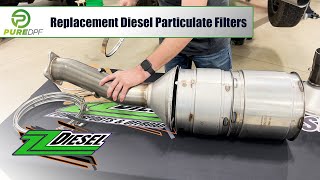
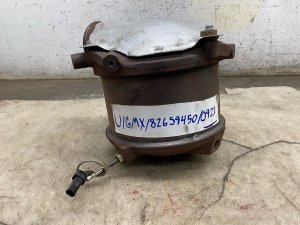
- Diesel Particulate Filter (DPF)
(OEM #86534413 (supercedes 85165535, 84614676 for CC/SB models, verify by VIN))— This is the most common fix when the filter is confirmed to be cracked or clogged beyond recovery, which is a frequent failure on the L5P engine.
Trusted brands: ACDelco (GM Genuine), Dorman, PureDPF
OEM price range: $2500-$3500
Aftermarket price range: $1800-$2900 - DPF Pressure Sensor
(OEM #12677718)— This sensor measures backpressure to determine soot load. A faulty sensor can send incorrect data, falsely triggering the P2002 code.
Trusted brands: ACDelco, Bosch
OEM price range: $120-$200
Aftermarket price range: $70-$150
Related Codes That Often Appear With This One
- P2463 — Indicates 'DPF Soot Accumulation,' often appearing alongside P2002 when the filter is heavily clogged. This is a very common companion code mentioned in TSB 21-NA-214 and will set when soot levels reach 140%.
- P2459 — Means 'DPF Regeneration Frequency' is too high, suggesting the truck is trying to clean a failing or clogged filter too often. Also listed in TSB 21-NA-214.
- P226D — Indicates 'Particulate Filter Missing.' TSB 16-NA-380 clarifies this code is set by the DPF pressure differential sensor when it detects pressure is *too low*, suggesting the filter is internally destroyed or missing.
- P20EE — Relates to the SCR (DEF) system's efficiency. Problems in one part of the aftertreatment system can often affect others, and this code is frequently listed alongside P2002 in service bulletins.
Technical Service Bulletins (TSBs) & Recalls
- 17309: Service Update regarding a disabled P2002 DTC, potentially hiding a cracked DPF.
- 21-NA-214: Connects P2002 with numerous other engine and transmission performance issues.
- 16-NA-380: Provides diagnostic tips, including the 'cheesecloth test' to confirm a cracked/broken DPF when P2002 is set.
Platform-Specific Known Issues
- TSB #17309: Specifically for 2018 models, this bulletin warns that the P2002 diagnostic may have been disabled from the factory. A dealer must perform a software update to the ECM to re-enable it. Without this update, a cracked DPF would only be noticeable by black smoke from the tailpipe.
- TSB #21-NA-214: This comprehensive bulletin for 2020 models links a clogged DPF (and codes like P2002, P2463) to a wide array of drivability complaints, including harsh transmission shifts, shuddering, noise, and loss of exhaust brake function, indicating a bad DPF can have cascading effects. The fix is often a software update for the ECM and TCM.
- TSB #16-NA-380: This bulletin provides the key diagnostic tip for P2002. It confirms the PM sensor is used to detect a cracked DPF and details the 'cheesecloth test' (updated to 8 engine revs) as the definitive way to confirm soot is passing through a failed filter.
Mechanic-Grade Diagnostic Values
- DPF Soot Accumulation % for Active Regeneration — expected: ~100%. Failure: If the ECM cannot initiate a regeneration at this level, it points to an issue with enabling conditions or the system itself.
- DPF Soot Accumulation % for 'Continue Driving' DIC Message — expected: 115%. Failure: This indicates the system has been unable to perform a passive or active regen and now requires driver intervention (highway driving).
- DPF Soot Accumulation % for setting DTC P2463 — expected: 140%. Failure: At this level, the DPF is considered excessively clogged, reduced power is likely, and a manual/service regeneration is required.
- Exhaust Gas Temperature during Service Regeneration — expected: 1000-1200°F (540-650°C). Failure: If temperatures fail to reach this range during a forced regen, it could indicate a problem with the 9th injector (vaporizer) or other system components.
Scan Tool Commands That Help
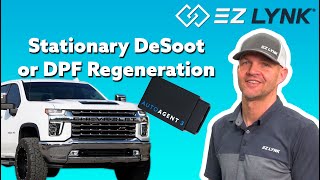
- GDS2 (GM Dealer Tool), EZ LYNK, Edge Insight, etc.: Service Regeneration (also called Stationary DeSoot or DPF Regen) — Used to manually command the DPF cleaning process when soot levels are high (e.g., over 100%) but below the point of total blockage, or as instructed by service information. This is necessary when driving conditions don't allow for an automatic regeneration.
- GDS2 or equivalent professional scan tool: DPF Replacement Reset — This function must be performed after installing a new DPF. It resets the learned soot mass values in the Engine Control Module (ECM). Failure to perform this reset will cause the ECM to think the new, clean filter is still clogged, leading to persistent codes and incorrect regeneration attempts.
Wiring & Ground Locations
- E41 ECM Connector (X1, X2, X3) — On 2018-2019 models, the ECM is located behind the driver-side headlight, between the battery and the power steering reservoir. On 2020+ models, it is also behind the driver-side headlight but may require removing the inner fender liner for access.. These connectors are the termination point for the DPF pressure sensor, PM sensor, and EGT sensor wiring. Checking for corrosion or backed-out pins at the ECM is a critical step if sensor readings are erratic or missing.
- MAP Sensor Connector — Located on the top of the engine, easily accessible. It has a gray locking tab.. While not directly part of the DPF system, issues with the MAP sensor or its wiring can affect the engine's air-fuel calculations, potentially leading to excess soot creation that overloads the DPF.
- Fuel Rail Pressure Sensor Connector — Located on the engine's fuel rail, near the MAP sensor. It has a red locking tab.. Incorrect fuel pressure readings can lead to poor combustion and increased soot. The wiring for this sensor is often bundled with other engine sensors, making it a point to check for harness damage.
Real Owner Repair Stories
- Reddit user @pakman82 (2023 (likely typo for 2018-2020 range) Duramax with 101,000 miles) — Persistent P2002 code after a CAC (Charge Air Cooler) pipe blew. Truck would not perform a regeneration.
❌ Tried (didn't work) Dealer performed forced regens, replaced leaking EGR seals. Another shop replaced the DPF pressure sensor because it was 'reading funny'.
✅ What actually fixed it The user's story is one of ongoing diagnosis, highlighting a common frustration. After multiple failed attempts by shops, the user was contemplating a DPF chemical clean, DPF replacement, or a full emissions delete as the next steps. This story illustrates how the code can persist even after replacing common-cause parts like sensors. - Reddit user @Bitter_Inflation8105 (2019 L5P Duramax) — P2002 code present along with a known bad #4 injector pigtail.
❌ Tried (didn't work) The user was asking if the bad pigtail could cause the P2002 before starting repairs.
✅ What actually fixed it Another user, a technician, confirmed that upstream engine issues like a misfiring injector (caused by the bad pigtail) must be sorted out before diagnosing the DPF. However, they stressed that if the tailpipe is black with soot, the DPF is definitively cracked and will need replacement regardless of the injector issue.
OEM Part Supersession History
84614676, 85165535 (and others)→86534413— Likely internal revisions to improve durability or manufacturing consistency.
Heads up: This part number (86534413) is specified for Crew Cab models with the 6.6 ft box. Other cab/box configurations use different part numbers. Always verify the correct part number by VIN before ordering.
Model Year Variations Within This Range
- 2020: The 2020 model year introduced the T1XX platform, which paired the L5P engine with a 10-speed Allison transmission, replacing the 6-speed used in 2018-2019. While the engine and DPF system are fundamentally the same, the transmission and its control module are different. The physical location of the ECM and TCM also differs slightly from the 2018-2019 K2XX models.
- 2020-2022: GM issued a preliminary information bulletin (PIP5838A) regarding a running change in the DEF tank wiring harness for 2020-2022 models. Service replacement harnesses may have a different pinout than the original. While not directly causing P2002, it's a critical detail for technicians working on the aftertreatment system, as an incorrect harness can set other DEF-related codes (P20B9, P20C1).
Helpful Videos



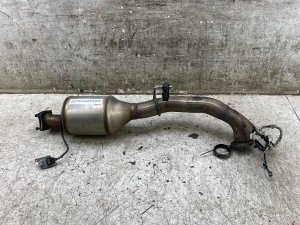
We Have This Part in Stock

The information in this article is provided for general reference and educational purposes only. Vehicle specifications, procedures, and part compatibility can vary by production date, trim level, and region. Always consult your vehicle's factory service manual and verify part numbers before purchasing or performing repairs. Safety-critical components such as airbags, seat belts, and braking systems should be installed by a qualified professional.
- Gmc SIERRA 2500:
- 🎬 Helpful Videos
- 🛍️ Shop This Part
- What's Unique About the 2018-2020 Gmc SIERRA 2500
- Diagnostic Flowchart
- Symptoms You May Notice
- Most Likely Causes
- Rare But Worth Checking
- Diagnosis Steps
- Parts You'll Likely Need
- Related Codes That Often Appear With This One
- Technical Service Bulletins (TSBs) & Recalls
- Platform-Specific Known Issues
- Mechanic-Grade Diagnostic Values
- Scan Tool Commands That Help
- Wiring & Ground Locations
- Real Owner Repair Stories
- OEM Part Supersession History
- Model Year Variations Within This Range
- 🎟️ Get 5% Off