

P2002 on 2015-2019 Ford F-250 SD 6.7L: Cracked DPF, Sensor Faults, and Fixes
On a 2015-2019 F-250 with the 6.7L Power Stroke, code P2002 almost always points to a cracked or failed Diesel Particulate Filter (DPF). Ford has issued multiple Technical Service Bulletins (TSBs) for this exact issue and even created a warranty extension program (20M06) to cover the repair. Replacement is expensive, often costing $2,500-$5,500 at a dealership, though the warranty may cover it. The primary indicator is often black soot inside the tailpipe, which should normally be clean.
- P2002 on a 6.7L Power Stroke is a very specific and well-documented code, most often meaning the DPF assembly has failed internally.
- Before condemning the expensive DPF, always check for soot in the tailpipe—it's a strong sign of a cracked filter.
- Rule out cheaper possibilities first: check the DPF pressure sensor, its hoses, and for any upstream exhaust leaks.
- Check with a Ford dealer for any applicable warranty extensions (like 20M06) or PCM software updates before paying for repairs out-of-pocket.
- Do not attempt to fix this code by simply cleaning the DPF; if it's cracked, cleaning is a waste of money.
What's Unique About the 2015-2019 Ford F-250 SD

The 6.7L Power Stroke engine in this generation of Super Duty trucks is known for this specific failure. Ford has acknowledged the problem through multiple Technical Service Bulletins (TSBs), specifically mentioning that the DPF substrate can crack internally due to thermal stress. This isn't just a case of the filter being clogged; it's a structural failure of the part itself, leading to low backpressure and triggering the code. In response to the high failure rate, Ford issued Customer Satisfaction Program 20M06, which extended the warranty coverage for the DPF assembly on many of these trucks specifically for DTC P2002. 🎬 Watch: Why the DPF cracks and Ford's TSB explained. This program covered the replacement for up to 11 years or 120,000 miles, whichever came first.
Diagnostic Flowchart

Tap your situation to follow the diagnostic path that matches what you're seeing on this vehicle.
Generation note: The 2015-2019 year range covers two generations of the F-250 Super Duty: the end of the third generation (2015-2016, P473) and the start of the fourth generation (2017-2019, P558). The P2002 code is a known issue on both. TSBs specifically call out different build date ranges and part numbers; for example, TSB 20-2272 applies to 2017-2020 models built on or after May 13, 2017, while TSB 17-0055 applies to 2017 models built on or before May 12, 2017. The DPF assemblies are different between these generations and are not interchangeable. The warranty extension 20M06 specifically covered 2015-2016 models.
Symptoms You May Notice
- Check Engine Light (MIL) is on.
- Reduced engine power or the truck entering "limp mode".
- Decreased fuel economy.
- More frequent DPF regeneration cycles than normal.
- Visible black soot buildup inside the tailpipe, which should normally be clean or have light gray ash.
- Replacing oxygen sensors. While related to the exhaust, oxygen sensors do not directly measure DPF pressure differential and are not the cause of a P2002 code.
- Unnecessarily cleaning the DPF. If the DPF is cracked internally, cleaning it will not solve the problem. The efficiency issue is due to physical damage allowing soot to bypass the filter, not a clog that can be baked or washed out.
Most Likely Causes

- Cracked Diesel Particulate Filter (DPF) 🔴 High Probability Ford has issued multiple TSBs (e.g., TSB 20-2272, TSB 17-0055) confirming that the internal ceramic substrate of the DPF is prone to cracking due to thermal stress from regeneration cycles. This is the most common cause for a P2002 code on these trucks, acknowledged by Ford's warranty extension program 20M06.
How to confirm: A visual inspection of the tailpipe for black, greasy soot is the strongest and easiest indicator. A clean tailpipe is normal; a sooty one suggests the filter is cracked and allowing particulates to pass through. A shop can confirm with a backpressure test or by removing the DPF for internal inspection. An endoscope may be needed to see micro-cracks if the tailpipe is clean.
Typical fix: Replace the entire DPF/SCR assembly. After replacement, the PCM must be reprogrammed or have its DPF-related values reset using a Ford diagnostic scan tool (IDS). This is not an optional step.
Est. part cost: $2800-$5500 - Faulty DPF Differential Pressure Sensor 🟡 Medium Probability These sensors operate in a harsh exhaust environment and can fail, sending incorrect pressure data to the PCM. The PCM may interpret a false low-pressure reading as a failed (cracked) DPF or a false high reading as a clogged one.
How to confirm: Use a diagnostic scan tool to monitor the DPF pressure sensor's live data (PID) while the engine is off (should read 0 kPa/0 psi) and while running. The voltage should change logically with engine RPM, typically within a 0.5V to 4.5V range. If the reading is stuck or erratic, the sensor is likely faulty.
Typical fix: Replace the DPF differential pressure sensor. There are multiple sensors on the exhaust; ensure you are replacing the correct one.
Est. part cost: $80-$180 - Clogged or Damaged DPF Pressure Sensor Hoses ⚪ Low Probability The rubber or silicone hoses connecting the sensor to the exhaust pipe bungs can become clogged with soot, cracked from heat, or melted, leading to inaccurate pressure readings being sent to the PCM.
How to confirm: Visually inspect the hoses for cracks, melting, or blockages. Remove the hoses and attempt to blow compressed air through them to check for obstructions. A smoke machine can also be used to check for leaks in the lines.
Typical fix: Replace the damaged hoses. Aftermarket silicone hose kits are available.
Est. part cost: $20-$60 - Exhaust Leak Upstream of the DPF ⚪ Low Probability A leak from a cracked exhaust manifold, broken flange, or loose clamp before or between the DPF sensors can alter the pressure differential, tricking the PCM into setting a P2002 code.
How to confirm: Listen for unusual exhaust noises (hissing or ticking). A visual inspection may reveal black soot stains around flanges or cracks. A smoke test is the most effective way to pinpoint a small leak.
Typical fix: Repair the exhaust leak by replacing the gasket, tightening clamps, or welding the cracked component.
Est. part cost: $10-$300
Rare But Worth Checking
- Outdated PCM Software: On some earlier models, the original PCM calibration may be too sensitive or have flawed logic for DPF monitoring. Ford has released software updates that can change the parameters for triggering this code. TSB 17-0017 and a YouTube video by a technician for a 2015 model show that reprogramming the PCM to the latest calibration is a valid first step before replacing expensive hardware. Always check with a dealer for available updates for your VIN.
Diagnosis Steps
- Check for Warranty. Before any diagnosis, contact a Ford dealer with your VIN to check for coverage under Customer Satisfaction Program 20M06 or any other applicable emissions warranty.
- Scan the PCM for trouble codes. Confirm P2002 is present. Note if it is the only code. If other codes are present, diagnose them first as they may be related.
- Inspect the tailpipe. If it is coated in black soot, the DPF is almost certainly cracked internally and needs replacement. This is the most definitive sign.
- If the tailpipe is clean, proceed with sensor diagnostics. Use a scan tool to view live data from the DPF differential pressure sensor. Check for plausible readings that change with engine RPM.
- Visually inspect the DPF pressure sensor hoses for cracks, melting, or blockages. Ensure they are securely connected at both the sensor and the exhaust bungs.
- Test the DPF pressure sensor's electrical circuit. Verify it has a 5-volt reference, a good ground, and a signal that changes with pressure.
- Inspect the exhaust system upstream of the DPF for any signs of leaks (soot trails at flanges, audible hissing). A smoke test is the best method.
- If all sensors, wiring, and hoses are confirmed good and there are no leaks, the DPF itself is the most likely culprit, even if the tailpipe is not excessively sooty.
- Before replacing the DPF, check with a Ford dealer if any PCM software updates are available for your vehicle's VIN. An update is a cheaper first step than a new DPF.
Parts You'll Likely Need

- Catalyst and Particulate Filter Assembly
(OEM #HC3Z-5H270-A (2017-2019 Pickup), HC3Z-5H270-C (2017-2019 Chassis Cab))— This is the most common failure for code P2002 on this platform, as documented by multiple Ford TSBs. The DPF and SCR are sold as one unit.
Trusted brands: Motorcraft
OEM price range: $3500-$5500
Aftermarket price range: $1800-$2800 - DPF Pressure Sensor
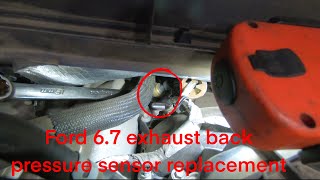
(OEM #HC3Z-9J460-H (Motorcraft DPFE-127) for 2017-2022 models. DC3Z-9J460-E (Motorcraft DPFE-25) for 2013-2015 Chassis Cab. Part numbers vary by year and model, always verify with VIN.)— This sensor provides the critical pressure data for the PCM to evaluate DPF efficiency. Its failure can directly cause a P2002 code.
Trusted brands: Motorcraft, Bosch, Standard Motor Products
OEM price range: $100-$180
Aftermarket price range: $50-$120
Technical Service Bulletins (TSBs) & Recalls
- 20M06
- 20M06-S1
- 20M06-S2
- 20-2272
- 21-2332
- 17-0055
- 17-0017
- 18-2109
- 15-0158
Platform-Specific Known Issues
- Warranty Extension Program 20M06: Ford extended the warranty coverage for the DPF on 2015-2016 Super Duty and 2016-2019 Medium Duty trucks for repairs related to DTC P2002. The coverage was for 11 years or 120,000 miles. It was created because the DPF could crack due to overheating, especially during extended idle times.
Mechanic-Grade Diagnostic Values
- DPF Pressure Sensor Voltage (General) — expected: 0.5V - 4.5V, varying with engine RPM and load.. Failure: Voltage is stuck at a specific value or is erratic and does not correspond to engine load.
- DPF Pressure Sensor Reading (Key On, Engine Off) — expected: 0 kPa (0 psi).. Failure: Any reading other than zero indicates a biased or faulty sensor.
- DPF Pressure Sensor Live Data (IDS Scan Tool) — expected: The PCM uses PIDs named DPF_P (pressure) and DPF_V (volts) to monitor the sensor.. Failure: Values that are implausible for the current engine state (e.g., high pressure at idle, no change with RPM).
- DPF Pressure (Scan Tool) — expected: A healthy DPF should have a small pressure difference, for example 5-15 psi at idle.. Failure: Pressure is too low (<3 psi), indicating a crack, or too high (>30 psi), indicating a clog.
Scan Tool Commands That Help

- Ford IDS (Integrated Diagnostic System): DPF Regeneration (Static or Dynamic) — To command a manual or operator-commanded regeneration of the DPF to burn off accumulated soot. A static regen is performed while parked, and a dynamic regen occurs while driving. This is a primary function used when the truck fails to auto-regenerate due to driving habits.
- Ford IDS (Integrated Diagnostic System): PCM Reprogramming — Required after replacing the DPF assembly to update the PCM with the latest software calibration, which may have revised logic for DPF monitoring and to prevent the P2002 code from returning.
- Ford IDS (Integrated Diagnostic System) or equivalent: DPF Parameter Reset — After installing a new DPF, the learned values for soot load and ash accumulation must be reset in the PCM. Failure to do this will cause the PCM to operate with incorrect data, potentially leading to the P2002 code returning.
Wiring & Ground Locations
- DPF Pressure Sensor Wiring — At the DPF pressure sensor connector.. Knowing the wire colors is critical for testing the sensor's circuit. For some 6.7L models, the wire colors are: Ground (Green with White stripe), 5V Reference (Blue with White stripe), and Signal (Brown with Blue stripe). Always verify with a vehicle-specific diagram.
- Main Chassis Grounds — Both batteries should have a ground cable going directly to the chassis/frame. The starter also has a dedicated ground to the frame.. A poor main ground can cause a cascade of electrical issues and unpredictable sensor readings. While not a direct cause, verifying main grounds is a fundamental step in any electrical diagnosis.
- In-Dash Ground Point — The metal frame under the dashboard is grounded. There are often dedicated ground studs available for use near the driver's side kick panel.. This is less directly related to P2002 but is crucial information for any aftermarket installations that could potentially interfere with vehicle electronics if improperly grounded.
Real Owner Repair Stories
- Reddit user cpa2actuary on r/tdi (2012 VW Golf TDI (Note: Not a Ford, but illustrates an edge-case principle)) — P2002 code appeared immediately after a new DPF was installed at a shop.
❌ Tried (didn't work) Checking if pressure sensors were plugged in and not clogged., Checking for exhaust leaks around the turbo V-band clamp.
✅ What actually fixed it The brake light switch was faulty and constantly on. Fixing the brake light switch resolved the P2002 code. The reason for the interaction is unknown but highlights how unrelated electrical faults can sometimes trigger emissions codes.
OEM Part Supersession History
BC3Z-9J460-D (DPFE-21)→BC3Z-9J460-F (DPFE-131)— Part revision by the manufacturer for improved reliability or design change.
Heads up: These parts are for the earlier generation within the specified range and should not be confused with the 2017+ parts.HC3Z-5H270-B (Chassis Cab)→Not specified, but multiple revisions exist (e.g., -C, -D).— Ford often revises DPF assemblies to address cracking issues or make manufacturing improvements.
Heads up: Pickup (HC3Z-5H270-A) and Chassis Cab (HC3Z-5H270-B/C) DPF assemblies are different and not interchangeable. Always verify the correct part number by VIN.
Model Year Variations Within This Range
- 2015-2016 (P473 Generation): These models use a different DPF assembly and DPF pressure sensor (e.g., DC3Z-9J460-E) than the 2017+ models. TSBs like TSB 17-0021 and the warranty extension 20M06 are often specific to this earlier generation.
- 2017-2019 (P558 Generation): A significant design change occurred in 2017. TSBs 20-2272 and 17-0055 reference specific build dates in 2017 that determine which (updated) DPF part number is required. For example, vehicles built on or after May 13, 2017, are subject to TSB 20-2272, indicating a known cracking issue with that specific DPF version. These models use a different DPF pressure sensor (e.g., HC3Z-9J460-H).
Helpful Videos
We Have This Part in Stock



The information in this article is provided for general reference and educational purposes only. Vehicle specifications, procedures, and part compatibility can vary by production date, trim level, and region. Always consult your vehicle's factory service manual and verify part numbers before purchasing or performing repairs. Safety-critical components such as airbags, seat belts, and braking systems should be installed by a qualified professional.
- Ford F-250 SD:
- 🎬 Helpful Videos
- 🛍️ Shop This Part
- What's Unique About the 2015-2019 Ford F-250 SD
- Diagnostic Flowchart
- Symptoms You May Notice
- Most Likely Causes
- Rare But Worth Checking
- Diagnosis Steps
- Parts You'll Likely Need
- Technical Service Bulletins (TSBs) & Recalls
- Platform-Specific Known Issues
- Mechanic-Grade Diagnostic Values
- Scan Tool Commands That Help
- Wiring & Ground Locations
- Real Owner Repair Stories
- OEM Part Supersession History
- Model Year Variations Within This Range
- 🎟️ Get 5% Off