

P2002 on 2020 Chevrolet Silverado 3500: DPF Efficiency Causes and Fixes
On a 2020 Silverado 3500 with the 6.6L Duramax, P2002 means the Diesel Particulate Filter (DPF) is not working efficiently. This is often due to a physically cracked DPF substrate, a clogged filter from short-trip driving, or a known software issue requiring an update. The first diagnostic step is to check for soot in the tailpipe using a white cloth; if soot is present, the DPF has failed internally and needs replacement, which is a costly repair. If no soot is found, investigate software updat
- P2002 on your 2020 Silverado 3500 means the Diesel Particulate Filter (DPF) is inefficient.
- Before any repairs, check for soot in the tailpipe. Black soot almost certainly means the expensive DPF is cracked and needs replacement.
- Check with a dealer if TSB 21-NA-214 applies to your truck. A simple software update could fix the code and improve transmission performance.
- Avoid frequent short trips and extended idling to allow the DPF to complete its automatic cleaning cycles and prevent premature clogging.
- If there is no soot in the tailpipe, the problem could be a much cheaper fix, like a faulty sensor or a software issue.
What's Unique About the 2020-2020 Chevrolet SILVERADO 3500
For the 2020 Silverado HD with the L5P Duramax engine, code P2002 is specifically addressed in manufacturer bulletins. These trucks use a sophisticated aftertreatment system where a minor fault can trigger a cascade of symptoms. A key issue highlighted by GM is that a physically cracked or broken DPF can be the root cause, not just a simple clog. The PM sensor is specifically used to diagnose this type of failure. Furthermore, a comprehensive Technical Service Bulletin (TSB 21-NA-214) links this code to a wide range of seemingly unrelated drivability problems, including transmission shifting issues, shuddering, and loss of the exhaust brake, which can be resolved with a software update for both the engine and transmission control modules.
Diagnostic Flowchart
Tap your situation to follow the diagnostic path that matches what you're seeing on this vehicle.
Symptoms You May Notice
- Check Engine Light (MIL) illuminated.
- Reduced engine power or "limp mode".
- Poor fuel economy.
- Harsh or delayed transmission shifts, shudder, or vibration.
- Exhaust brake not working or feels weak.
- Excessive black smoke from the tailpipe, especially if the filter is cracked.
- Message on Driver Information Center (DIC) such as "Cleaning Exhaust Filter, Keep Driving" or "Exhaust Filter Full".
- Replacing the DPF without first checking for software updates. TSB 21-NA-214 suggests that reprogramming the ECM/TCM can resolve the code and associated drivability issues.
- Assuming the DPF is just clogged when it is actually cracked internally. A clogged filter won't pass soot, but a cracked one will. The 'cheesecloth test' is crucial to differentiate.
- Replacing the DPF without checking for upstream issues like leaking injectors or boost leaks, which can cause the new DPF to fail again quickly.
Most Likely Causes
- Cracked or Internally Failed DPF 🔴 High Probability GM has issued service bulletins specifically identifying that a cracked or broken DPF can trigger code P2002, detected by the particulate matter sensor. This is considered a common failure on these units, with many technicians reporting frequent replacements.
How to confirm: Perform the 'cheesecloth test' as described in GM bulletin 16-NA-380: hold a clean white cloth over the tailpipe while an assistant revs the engine firmly to the rev limiter and back to idle 8 times. Any significant black soot on the cloth indicates the filter has failed internally and is allowing soot to pass through. A technician may also use a borescope camera to visually inspect the DPF's internal structure for cracks.
Typical fix: Replacement of the Diesel Particulate Filter assembly. After replacement, a DPF reset or relearn procedure must be performed with a scan tool.
Est. part cost: $1700-$3000 - Control Module Software Issue 🟡 Medium Probability TSB 21-NA-214 explicitly addresses P2002 along with a host of drivability issues on 2020 models, stating the cause may be a "software anomaly". The prescribed fix is to reprogram the Engine Control Module (ECM) and Transmission Control Module (TCM).
How to confirm: A GM dealership or a qualified shop with access to GM's Techline Connect software can check if the vehicle's modules have the latest calibration by comparing the installed software part numbers to the latest ones available for the vehicle's VIN. If the TSB applies and the software is outdated, this is the likely cause.
Typical fix: Reprogram the ECM and TCM with the latest software updates provided by GM. This must be done with a stable power supply to the vehicle to prevent module damage during programming.
Est. part cost: $0 (if under warranty) - $250 - Clogged or Saturated DPF 🟡 Medium Probability Driving habits that involve frequent short trips, extended idling, or low-speed city driving prevent the exhaust from getting hot enough to perform a complete automatic 'regeneration' (self-cleaning cycle). This allows soot to build up beyond the normal operating range, eventually triggering a P2463 code alongside P2002.
How to confirm: Use an advanced scan tool (GDS2) to check the 'DPF Soot Accumulation' percentage. A value of 115% will trigger a 'Continue Driving' message, and at 140%, DTC P2463 will set, requiring a service regeneration.
Typical fix: Attempt a forced 'Service Regeneration' using a scan tool. If that fails, the DPF may need to be removed for professional off-vehicle cleaning ('baking') or replacement if cleaning is unsuccessful or if the filter is clogged with ash, which cannot be burned out.
Est. part cost: $200-$600 (for cleaning service) - Faulty DPF Pressure or Particulate Matter (PM) Sensor ⚪ Low Probability Sensors provide the data the ECM uses to evaluate DPF efficiency. If a sensor provides incorrect readings due to internal failure or clogged sensor lines, the ECM can misinterpret the DPF's condition. A leaking sensor hose can underreport backpressure, triggering P2002 even if the filter is fine.
How to confirm: Monitor live sensor data with a scan tool. The DPF pressure sensor readings should increase with engine RPM. A sensor that is stuck at a certain voltage or provides erratic readings is likely faulty. The PM sensor is more complex and often requires a dealer-level tool for proper diagnosis. Visual inspection of sensor hoses for cracks or blockages is also necessary.
Typical fix: Replace the faulty sensor and its associated hoses if they are cracked or leaking. The PM sensor for a 2020 L5P is part number 12696927. A reset procedure may be required after installation.
Est. part cost: $100-$300
Rare But Worth Checking
- Exhaust Leak Upstream of DPF: A leak in the exhaust system before or between the DPF pressure sensor ports can alter the pressure differential, leading the ECM to incorrectly flag the DPF's efficiency. Check for soot streaks around flanges and gaskets, particularly at the turbocharger outlet and DPF inlet flange.
- Upstream Engine Issues Causing Excessive Soot: Problems like leaking fuel injectors, a faulty turbocharger, or issues with the EGR system can cause the engine to produce too much soot, overwhelming the DPF and causing it to clog or fail prematurely. This is often overlooked and leads to repeat DPF failures if not addressed.
Diagnosis Steps
- Check for Technical Service Bulletins (TSBs). Specifically, see if TSB 21-NA-214 applies to your vehicle's VIN, as a software update may be the required fix.
- Scan for all DTCs. Note any other codes related to the DPF, SCR, or sensor systems, such as P2463, P2459, or P226D.
- Perform a visual inspection of the exhaust system. Look for signs of soot streaks around flanges, which would indicate an exhaust leak.
- Conduct the 'cheesecloth test' to check for an internally failed DPF. Hold a clean white cloth over the tailpipe and have an assistant rev the engine firmly to the rev limiter 8 times. If black soot appears on the cloth, the DPF is cracked and must be replaced.
- If no soot is present, connect a scan tool (GDS2) to monitor live data. Check the 'DPF Soot Accumulation' percentage and the readings from the DPF pressure sensor(s) and particulate matter sensor while the engine is running.
- If soot load is high (e.g., over 100%), attempt a forced 'Service Regeneration' using the scan tool. Monitor if the soot level decreases significantly.
- If sensor readings are erratic, stuck, or do not correlate with engine RPM, test the sensor and its wiring. Inspect sensor hoses for blockages or cracks.
Parts You'll Likely Need
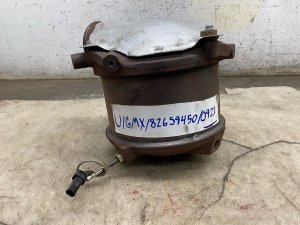
- Diesel Particulate Filter (DPF)
(OEM #12706228)— This is the most common cause of P2002, either due to being cracked internally or clogged beyond the point of regeneration.
Trusted brands: ACDelco (GM Genuine), Dorman
OEM price range: $2000-$3000
Aftermarket price range: $1500-$2500 - Particulate Matter (PM) Sensor
(OEM #12696927)— A faulty PM sensor can send incorrect data to the ECM, causing it to falsely trigger P2002. This sensor is what GM uses to detect a cracked DPF.
Trusted brands: ACDelco (GM Genuine)
OEM price range: $250-$350
Aftermarket price range: $150-$250 - DPF Pressure Sensor — A faulty pressure sensor or its associated lines can send incorrect backpressure readings, leading to a misdiagnosis of the DPF's condition.
Trusted brands: ACDelco, Bosch
OEM price range: $100-$150
Aftermarket price range: $50-$100
Related Codes That Often Appear With This One
- P2463 — This code means 'DPF Restriction - Soot Accumulation.' It often appears with P2002, indicating the filter is both clogged and inefficient. According to GM, this code sets when soot accumulation reaches 140%.
- P2459 — This code means 'DPF Regeneration Frequency.' It indicates the truck is trying to clean the DPF too often, which is a symptom of the filter being unable to clean itself effectively.
- P226D — This code means 'Particulate Filter Missing.' It can be set if the filter is cracked so severely that the pressure differential is below the minimum threshold, tricking the sensor into thinking the filter isn't there.
- P20EE — This is a code for 'SCR NOx Catalyst Efficiency Below Threshold.' Problems in the DPF can affect the entire aftertreatment system downstream, including the SCR system. This code is also mentioned in TSB 21-NA-214.
Technical Service Bulletins (TSBs) & Recalls
- 21-NA-214: Addresses a Service Engine Soon lamp with P2002 and numerous other codes, causing harsh shifts, shudder, and other drivability issues, fixed by an ECM/TCM reprogram.
- 16-NA-380: Provides diagnostic tips for P2002, confirming it can be set by a cracked DPF and detailing the 'cheesecloth test' to verify soot pass-through.
Platform-Specific Known Issues
- TSB #21-NA-214 is a significant issue for 2020 models, where P2002 is part of a larger group of codes that can cause transmission shifting problems, shuddering, and exhaust brake failure. The fix is a software update for the ECM and TCM.
- TSB #16-NA-380 provides a specific diagnostic procedure (the 'cheesecloth test') to confirm if a P2002 code is caused by a physically broken DPF, which is a known failure mode on these trucks.
Mechanic-Grade Diagnostic Values
- DPF Soot Accumulation (in GDS2) — expected: Regeneration is attempted at ~100%.. Failure: A 'Continue Driving' message appears on the DIC at 115%. DTC P2463 (DPF Restriction) sets at 140%.
- DPF Pressure Sensor Voltage (Key On, Engine Off) — expected: Approximately 0.16V - 0.33V, corresponding to 0 PSI.. Failure: A reading of 5.0V (14 PSI) with the sensor plugged in indicates a potential wiring or ECM issue, as this reading should only appear when the sensor is unplugged.
Hidden / Shadow Codes Worth Checking
- P0101, P0299, P2463, etc. (multiple): A large cluster of codes, including P2002, can be triggered by a single root cause: a loose charge air cooler (CAC) duct connection. A leak in the CAC system can throw off sensor readings for the MAF, turbo, and DPF systems. (see via Standard OBD-II scanner. The key is recognizing the pattern of seemingly unrelated codes as pointing to a potential boost leak, as outlined in GM TSB 22-NA-013.)
Scan Tool Commands That Help
- GDS2 (GM Dealer Scan Tool): Service Regeneration — To perform a stationary, forced cleaning of the DPF when soot levels are critically high (e.g., 140%) and DTC P2463 is set. This is a controlled burn but is noted to be less effective than a driving regeneration.
- GDS2 (GM Dealer Scan Tool): Regeneration Enable — To command the vehicle to begin a normal, driving regeneration cycle as soon as conditions are met. This is preferred over a Service Regeneration if the soot level is not yet critical and is considered more effective at cleaning the filter.
Wiring & Ground Locations
- DEF Tank Harness Connector — Along the driver's side frame rail. It is a large gray connector with a lever lock.. This connector links the DEF tank components (heater, level sensor, quality sensor) to the main harness. A mid-year change in 2022 altered the pinout for the pressure and temperature sensor circuits. Service replacement tanks for 2020 models come with the new configuration, which will not match the vehicle's original wiring or service manual diagrams for a 2020 truck, potentially causing diagnostic confusion and new DTCs like P20B9/P20C1 if a technician tries to pin it out.
- Upstream NOx Sensor Connector — Under the hood on the passenger side, below the charge air pipe.. While not directly for P2002, a faulty upstream NOx sensor can affect the overall aftertreatment system calculations. Knowing its location is key for comprehensive diagnosis.
- Downstream NOx Sensor Connector — On the passenger side frame rail, near the front of the truck.. This sensor provides feedback on the aftertreatment system's performance. Its connector is exposed and can be a point of failure.
Real Owner Repair Stories
- Reddit user @pakman82 on r/Diesel (2023 Duramax L5P with 101k miles) — Persistent P2002 code that would not clear, truck would not perform a regeneration.
❌ Tried (didn't work) Forced regeneration by a dealer., Replacement of EGR gaskets and seals by the dealer.
✅ What actually fixed it The user's problem started immediately after a Charge Air Cooler (CAC) pipe blew. Although the user was still in the process of diagnosis, another shop identified a DPF pressure sensor that was 'reading funny' and replaced it. The strong implication is the initial CAC failure was the root cause or a major contributing factor to the persistent P2002 code.
OEM Part Supersession History
84876221 (or similar 'early build' harness)→Service replacement DEF tanks for 2020 models now use a harness configuration originally from mid-2022+ models.— Part design change for the DEF tank assembly and its integrated harness.
Heads up: A 2020 truck receiving a new service DEF tank will have a different wiring pinout than what is shown in the 2020 service manual. Specifically, Terminal 10 moves to cavity 12, and Terminal 11 moves to cavity 6. A technician must use late-build 2022 wiring diagrams to diagnose the new part on the old truck.
Model Year Variations Within This Range
- 2020-2022: Service replacement Diesel Exhaust Fluid (DEF) tanks for 2020 models are built with an updated wiring harness pinout that was introduced in mid-2022. This creates a mismatch with the original 2020 service information, which can lead to significant diagnostic challenges if not known.
Helpful Videos
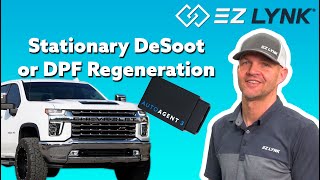
We Have This Part in Stock
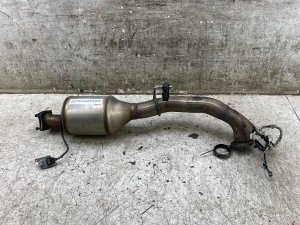

The information in this article is provided for general reference and educational purposes only. Vehicle specifications, procedures, and part compatibility can vary by production date, trim level, and region. Always consult your vehicle's factory service manual and verify part numbers before purchasing or performing repairs. Safety-critical components such as airbags, seat belts, and braking systems should be installed by a qualified professional.
- Chevrolet SILVERADO 3500:
- 🎬 Helpful Videos
- 🛍️ Shop This Part
- What's Unique About the 2020-2020 Chevrolet SILVERADO 3500
- Diagnostic Flowchart
- Symptoms You May Notice
- Most Likely Causes
- Rare But Worth Checking
- Diagnosis Steps
- Parts You'll Likely Need
- Related Codes That Often Appear With This One
- Technical Service Bulletins (TSBs) & Recalls
- Platform-Specific Known Issues
- Mechanic-Grade Diagnostic Values
- Hidden / Shadow Codes Worth Checking
- Scan Tool Commands That Help
- Wiring & Ground Locations
- Real Owner Repair Stories
- OEM Part Supersession History
- Model Year Variations Within This Range
- 🎟️ Get 5% Off