

P2002 on 2018-2020 Chevy Silverado 2500: DPF Efficiency Below Threshold Fixes
P2002 on a Silverado 2500 with the L5P Duramax engine indicates the Diesel Particulate Filter (DPF) is not working efficiently. The most common causes are a clogged DPF from frequent short trips, or a faulty DPF differential pressure sensor or its hoses. Check the sensor and hoses first. In some cases, a software update from GM is required. A physically damaged or ash-clogged DPF is a last resort, costly repair.
- P2002 means your truck's DPF is not cleaning the exhaust properly. Do not ignore it.
- Before suspecting a bad DPF, always inspect the cheaper components first: the DPF differential pressure sensor and its hoses.
- Your driving habits matter. If you take many short trips, take the truck for an extended highway drive (30+ minutes) at least once a week to allow the DPF to regenerate.
- This issue may be covered under the federal emissions warranty (8 years/80,000 miles). Check with your dealer if you are within this window.
- A forced 'service regeneration' using a professional scan tool is a valid diagnostic step and may temporarily resolve the issue if it's just a mild soot buildup.
What's Unique About the 2018-2020 Chevrolet SILVERADO 2500

The 2018-2020 Silverado 2500 with the L5P Duramax engine has a sophisticated emissions system. This code frequently appears due to driving habits, such as repeated short trips or excessive idling, which prevent the DPF from reaching the high temperatures needed for its automatic cleaning cycle (regeneration). 🎬 Watch: How a DPF regen works and why they fail. GM has issued multiple Technical Service Bulletins (TSBs) that group P2002 with other DPF-related codes. TSB #21-NA-214 specifically notes that a "software anomaly" can be the cause, requiring an ECM and TCM reprogram by a dealer to fix the issue. This TSB also links P2002 to symptoms like shuddering, noise, and poor exhaust brake function.
Diagnostic Flowchart

Tap your situation to follow the diagnostic path that matches what you're seeing on this vehicle.
Generation note: This range covers two generations. The 2018-2019 models are part of the 3rd Gen (GMT K2XX), and the 2020 model is the first year of the 4th Gen (GMT T1XX). While the body and chassis were redesigned for 2020, both generations use the same 6.6L L5P Duramax engine and aftertreatment system, so the causes and fixes for P2002 are largely identical.
Symptoms You May Notice

- Check Engine Light (MIL) illuminated
- "Service Emission System" or "Cleaning Exhaust Filter" message on the driver information center
- Reduced engine power or entering "limp mode"
- Noticeably worse fuel economy
- Vehicle may perform more frequent DPF regeneration cycles
- Shudder, noise, whine, growl, shake, and/or vibration
- Exhaust brake may not function correctly
- Visible black soot or smoke from the tailpipe, indicating a physically failed (cracked) DPF.
- Replacing the entire DPF assembly when only the differential pressure sensor or its hoses were faulty.
- Replacing oxygen sensors, which are not the primary cause for this specific DPF efficiency code.
- Assuming the DPF is bad without first attempting a forced service regeneration with a proper scan tool.
- Overlooking a small exhaust leak upstream of the DPF that is altering sensor readings.
Most Likely Causes

- Clogged or Overloaded Diesel Particulate Filter (DPF) 🔴 High Probability Frequent short trips, city driving, or extended idling prevent the exhaust from getting hot enough to perform a passive or active regeneration, leading to soot buildup.
How to confirm: Use a capable OBD-II scanner to check the 'Soot Load' percentage. On L5P engines, the ECM triggers regeneration around 100% calculated soot load. A high percentage that doesn't decrease after a forced regeneration indicates a clogged filter. A Reddit user with a persistent P2002 at 101k miles found that even multiple forced regens by the dealer did not solve the issue, pointing towards an ash-filled or damaged DPF.
Typical fix: Attempt a forced 'service regeneration' with a scan tool. If that fails, the DPF may need to be professionally cleaned ('baked and blown') or, if internally damaged, replaced.
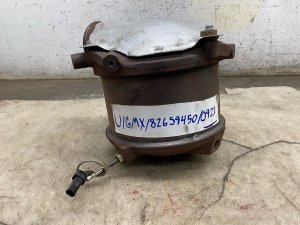
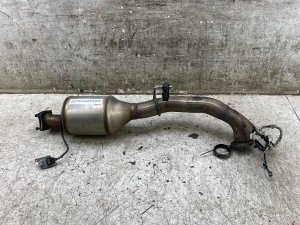
Est. part cost: $1500-$3000 for a new DPF assembly. - Faulty DPF Differential Pressure Sensor 🟡 Medium Probability This sensor measures the backpressure before and after the DPF to calculate soot load. It operates in a harsh environment and can fail from contamination, heat, or vibration, sending incorrect data to the ECM.
How to confirm: With the key on and engine off, the sensor should read at or near zero pressure on a scan tool. With the engine running, the voltage should be low at idle (around 0.5V) and increase with RPM. A user on a Duramax forum confirmed the sensor operates on a 5-volt reference circuit; if the 5V supply from the ECM is missing, the sensor won't work correctly.
Typical fix: Replace the DPF differential pressure sensor.
Est. part cost: $50-$150 - Leaking, Cracked, or Clogged DPF Pressure Sensor Hoses 🟡 Medium Probability The rubber or metal hoses connecting the sensor to the DPF bungs are exposed to extreme heat, especially during regeneration, causing them to become brittle, crack, or get clogged with soot. This leads to inaccurate pressure readings.
How to confirm: Visually inspect the hoses for any signs of damage, cracking, melting, or loose connections. Remove them and blow compressed air through to check for blockages. A smoke test can also reveal leaks.
Typical fix: Replace the damaged or clogged hoses. It is often recommended to replace them whenever the sensor is replaced.
Est. part cost: $20-$60 - Exhaust Leak Upstream of the DPF ⚪ Low Probability A leak from a cracked exhaust manifold, loose flange, or bad gasket before the DPF can alter pressure and temperature readings, causing the system to miscalculate DPF efficiency and potentially preventing proper regeneration.
How to confirm: Visually inspect the exhaust system from the engine to the DPF for black soot marks, which indicate a leak. Listen for an audible ticking or hissing sound from the exhaust, especially when the engine is cold.
Typical fix: Repair the leak by replacing the gasket or tightening the connection. A cracked component will need replacement.
Est. part cost: $10-$500 depending on the location and severity of the leak.
Rare But Worth Checking
- Faulty Exhaust Particulate Matter Sensor: GM TSB 16-NA-380 notes that P2002 can be set by a faulty exhaust particulate sensor detecting a cracked or broken DPF. This sensor is located after the DPF and 'sniffs' the exhaust for soot. If it detects soot, it assumes the DPF has failed. The TSB suggests a 'cheese cloth test' (revving the engine with a cloth over the tailpipe) to visually confirm if soot is passing through.
- Contaminated Manifold Absolute Pressure (MAP) Sensor: On L5P engines, the MAP sensor is prone to getting caked in soot from the EGR system. This can cause incorrect intake pressure readings, affecting engine performance and emissions calculations, which can indirectly contribute to DPF issues. Cleaning the sensor with MAF cleaner is a common preventative maintenance item recommended every other oil change. 🎬 See this walkthrough on how to clean your MAP sensor. Aftermarket spacer kits are also available to move the sensor out of the direct soot stream.
- Software Anomaly: TSB #21-NA-214, updated in August 2023, states that for 2020 models, a software anomaly can cause P2002 along with a host of other DPF and transmission-related codes. The prescribed fix is to have a GM dealer reprogram the Engine Control Module (ECM) and Transmission Control Module (TCM).
Diagnosis Steps
- Read all stored DTCs with a capable OBD-II scanner. Note any other codes present, especially P2463, P2459, or codes related to sensors.
- Check for TSBs. Specifically, check if TSB #21-NA-214 applies to your vehicle, as a simple ECM/TCM re-flash by a dealer might be the solution.
- Check the DPF soot load percentage in the live data stream. On L5P engines, this is a percentage, not grams. This gives an idea of how clogged the filter is.
- Visually inspect the DPF differential pressure sensor and its hoses. Look for cracks, melting, kinks, or blockages. Ensure connections are tight. These hoses are a known failure point.
- Inspect the exhaust system for any leaks between the turbocharger and the DPF. Look for black soot trails at flanges and connections.
- Using the scan tool, monitor the DPF pressure sensor readings. With the key on/engine off, it should be 0 psi. At idle, voltage should be low (~0.5V), and it should increase with RPM. If it's unresponsive, stuck, or reads high with the engine off, the sensor or its circuit is suspect.
- Perform the 'cheese cloth test' from TSB 16-NA-380. Have an assistant rev the engine several times while you hold a clean white cloth over the tailpipe. If significant soot appears on the cloth, the DPF is physically cracked or failed internally and must be replaced.
- If soot levels are high and no physical faults are found, attempt to perform a 'Service Regeneration' using the scan tool. 🎬 Watch: How to perform a stationary service regeneration. This process can take over an hour and must be done outdoors away from flammable materials.
- If regeneration fails or the P2002 code returns quickly, and the cheese cloth test was clean, the DPF is likely clogged with ash (a non-burnable byproduct) and will require professional cleaning or replacement.
Parts You'll Likely Need
- DPF Differential Pressure Sensor
Related Codes That Often Appear With This One
- P2463 — This code means 'DPF Restriction - Soot Accumulation.' It is very common to see with P2002, as it indicates the direct cause (heavy soot load) for the inefficiency (P2002). TSB 21-NA-214 lists them together.
- P2459 — This code means 'DPF Regeneration Frequency.' It often appears when the truck is attempting to regenerate too often because the DPF is clogged and cannot successfully clean itself. TSB 21-NA-214 lists them together.
- P0106 — This is a MAP sensor code. It can appear alongside P2002 if the emissions issue is related to incorrect pressure readings in the intake, as noted in TSB #21-NA-214.
Technical Service Bulletins (TSBs) & Recalls
- 21-NA-214: Service Engine Soon Lamp Illuminated, Harsh or Delayed Transmission Shifts Including Slip, Surge, Shudder, Noise, Whine, Growl, Shake and/or Vibration, DTCs P2002, P2463, P2459, P144E, P0421, P0422, P0106 and/or P20EE Set
- PIP5468F: Check Engine Light On With DTCs P0101, P0299, P0712, P11CC, P11DC, P2002, P2463, P2627, P2A00, P2459, P22B6, P200C, P200E, P0263, P0266, P0269, P0272, P0275, P0278, P0281 and/or P0284
- PIP5468D: Check Engine Light On With DTCs P0101, P0299, P0712, P11CC, P11DC, P20EE, P2002, P2463, P2627, P2A00, P2459, P22B6, P200C, P200E, P0263, P0266, P0269, P0272, P0275, P0278, P0281 and/or P0284
- 16-NA-380: Diagnostic Tip for Malfunction Indicator Lamp (MIL) Illuminated, Excessive Smoke from Tail Pipe - DTC P2002, P226D and/or P244A Set
Platform-Specific Known Issues
- TSB #21-NA-214: Addresses customer concerns of shudder, noise, vibration, and inoperative exhaust brake accompanied by DTC P2002 along with a host of other emissions and powertrain codes.
- TSB #PIP5468F: Notes P2002 as one of many potential codes set when the check engine light is on, pointing towards a general diagnostic path for engine performance issues.
- TSB #16-NA-380: Provides diagnostic tips for P2002, explaining that it can be set by a cracked or broken DPF detected by the exhaust particulate sensor. It recommends a 'cheese cloth test' at the tailpipe to confirm if soot is passing through a failed filter.
Mechanic-Grade Diagnostic Values
- DPF Differential Pressure Sensor 5V Reference — expected: 4.8V to 5.2V with key on, sensor disconnected, measured between the 5V reference pin and battery ground.. Failure: 0V indicates an open circuit or a short to ground. Voltage below 4.8V can indicate a wiring issue or a problem with the ECM's 5V supply.
- DPF Differential Pressure Sensor Signal Voltage (KOEO) — expected: Approximately 0.5V with Key On, Engine Off.. Failure: A reading significantly different from 0.5V, or a reading that doesn't change when pressure is applied (e.g., with a hand vacuum/pressure pump), indicates a faulty sensor or circuit issue.
- DPF Differential Pressure Sensor Signal Voltage (Engine Running) — expected: Voltage should be low at idle (near 0.5V) and increase steadily as engine RPM and load increase.. Failure: Voltage that is stuck, erratic, or does not respond to changes in engine RPM points to a failed sensor, clogged hoses, or an exhaust leak.
- Low-Side Fuel Pressure (Lift Pump) — expected: While not a direct test for P2002, inadequate fuel volume can prevent proper regeneration. A volume test should yield a minimum of one liter per 30 seconds.. Failure: Low fuel volume can lead to incomplete regeneration and contribute to DPF clogging, even if pressure readings seem adequate.
Scan Tool Commands That Help
- GDS2, EZ LYNK, Edge Insight, Foxwell, etc.: Stationary DeSoot / DPF Service Regeneration — Used to manually initiate a DPF cleaning cycle when soot load is high but the truck hasn't performed a passive or active regen due to driving conditions. This is a primary step before condemning the DPF.
- Foxwell HD500 (and similar advanced scanners): DPF Pressure Sensor Reset — This function should be performed after replacing the DPF differential pressure sensor to clear learned values and ensure the ECM uses accurate data from the new sensor.
- GDS2 (GM Dealer Tool): DPF Regeneration Enable — As per TSB PIP5468F, this command should be used after confirming no other faults exist to enable the vehicle to perform a regeneration cycle during normal driving, helping to clean the exhaust before returning the vehicle to the customer.
Wiring & Ground Locations
- Engine Control Module (ECM) — Located behind the driver-side front fender liner, accessible by removing the liner bolts.. The ECM provides the 5-volt reference to the DPF pressure sensor and interprets its signal. All wiring for the sensor ultimately routes back to one of the ECM's multi-pin connectors (X1, X2, etc.).
- ECM/TCM Fuse — In the under-hood fuse block. For 2018-2019 models, it is typically Fuse F57. For 2020 models, it is typically Fuse F78.. Loss of power to the ECM will prevent the entire aftertreatment system from functioning. This fuse is a primary power source and a key test point for no-communication issues with the ECM.
- DPF Differential Pressure Sensor Connector — The sensor is typically mounted on the aftertreatment assembly or on a bracket nearby, connected by two hoses to the DPF housing.. This 3-pin connector (5V reference, ground, signal) is a common point of failure due to heat and vibration. Checking for voltage and good pin tension here is a critical diagnostic step.
- DEF Tank Harness Connector — Located along the driver-side frame rail.. While not directly causing P2002, a fault in the DEF system can inhibit regeneration. A known wiring change occurred on 2020+ models, making connector identification important for any aftertreatment system diagnosis.
Real Owner Repair Stories
- Reddit user @pakman82 (2023 Chevrolet Silverado with 101,000 miles) — Persistent P2002 code.
❌ Tried (didn't work) Multiple forced regens performed by the dealer., Replacement of EGR seals., Cleaning of the EGR sensor.
✅ What actually fixed it The issue was unresolved by standard dealer procedures, with the next recommended step being a costly DPF replacement. The owner was investigating professional DPF cleaning services as an alternative, highlighting that repeated forced regens may not fix a filter that is heavily loaded with ash. - DuramaxDiesels.com forum user (2018 L5P Duramax) — P2455 (DPF Differential Pressure Sensor Circuit Stuck Low) and P244A, related to P2002.
❌ Tried (didn't work) Replacing the DPF pressure sensor.
✅ What actually fixed it The diagnosis pointed to a wiring issue. The 5V reference circuit showed 5 volts when the sensor was unplugged, but the voltage dropped significantly to ~0.33V when the sensor was connected (even a new one). The final diagnosis was a corroded or broken wire in the harness that could show voltage but could not support the sensor's electrical load.
"I Checked Everything" — The Actual Cause
- In cases where P2002 persists but there are no visible exhaust leaks (smoke test clean) and the DPF pressure sensor hoses are clear, the root cause can be a wiring fault. A wire may have enough integrity to show correct voltage with no load (e.g., when tested with a multimeter with the sensor unplugged) but fails to supply the necessary current when the sensor is connected and operating. This 'voltage drop under load' scenario points to a corroded wire or a failing pin connection that standard continuity or voltage checks might miss.
Model Year Variations Within This Range
- 2018-2019 vs. 2020: The fuse location for the ECM/TCM in the under-hood fuse block is different. 2018-2019 models use fuse F57, while 2020 models use fuse F78. This is critical information for electrical troubleshooting of the ECM and its related sensors.
- 2020+: A design change was made to the Diesel Exhaust Fluid (DEF) tank wiring harness. The 'first design' harness has an empty pin location at pin 12 of the 16-pin connector, while the 'second design' has a wire in that location. This is noted in TSB PIP5838A and is important when diagnosing any aftertreatment system issues on 2020 and newer models.
Helpful Videos
We Have This Part in Stock

The information in this article is provided for general reference and educational purposes only. Vehicle specifications, procedures, and part compatibility can vary by production date, trim level, and region. Always consult your vehicle's factory service manual and verify part numbers before purchasing or performing repairs. Safety-critical components such as airbags, seat belts, and braking systems should be installed by a qualified professional.
- Chevrolet SILVERADO 2500:
- 🎬 Helpful Videos
- 🛍️ Shop This Part
- What's Unique About the 2018-2020 Chevrolet SILVERADO 2500
- Diagnostic Flowchart
- Symptoms You May Notice
- Most Likely Causes
- Rare But Worth Checking
- Diagnosis Steps
- Parts You'll Likely Need
- Related Codes That Often Appear With This One
- Technical Service Bulletins (TSBs) & Recalls
- Platform-Specific Known Issues
- Mechanic-Grade Diagnostic Values
- Scan Tool Commands That Help
- Wiring & Ground Locations
- Real Owner Repair Stories
- "I Checked Everything" — The Actual Cause
- Model Year Variations Within This Range
- 🎟️ Get 5% Off