

OBD-II Code P1958: Glow Plug Control Module 'B' Circuit Fault / EGT Sensor Fault
The ultimate expert guide to what P1958 means, why it triggers, and how to fix it for good.
- On Volkswagen, Audi, and BMW diesels, P1958 indicates a failed Exhaust Gas Temperature (EGT) sensor, not a glow plug issue, requiring a $250-$500 sensor replacement.
- For Ford and GM diesel trucks, P1958 points to a Glow Plug Control Module (GPCM) or wiring failure, causing hard starts in temperatures below 40°F.
- Ignoring an EGT sensor fault disables the Diesel Particulate Filter (DPF) regeneration cycle, leading to irreversible DPF clogging and a $2,000+ replacement within 1 to 3 months.
- Always use a manufacturer-specific OBD-II scanner to read P1958; generic $20 readers will misdiagnose a VW EGT fault as a generic glow plug error, wasting hundreds of dollars on incorrect parts.
What Does P1958 Mean?

P1958 indicates an electrical fault in the 'B' control circuit for the glow plug system on most domestic diesel trucks. However, on European diesels (Volkswagen, Audi, BMW), P1958 specifically flags a failed Exhaust Gas Temperature (EGT) sensor. Using a manufacturer-specific scanner is mandatory to determine exactly which system has failed on your specific vehicle.
Technical definition: The SAE/ISO definition for P1958 is "Glow Plug Control Module 'B' Control Circuit / Open", meaning the Powertrain Control Module (PCM) detects a break, short, or out-of-range electrical value in the glow plug control module's secondary circuit. On VAG (VW/Audi) vehicles, the ECU defines it as "Exhaust Gas Temperature Sensor 2 (Bank 1) - Short to Plus" or similar, indicating a broken sensor element or wiring short.
Can I Drive With P1958?
Yes, But With Caution. Yes, but driving with an Exhaust Gas Temperature (EGT) sensor fault (the most common cause in VW/Audi/BMW) prevents Diesel Particulate Filter (DPF) regeneration. Continuing to drive for more than 2 to 3 weeks causes irreversible DPF clogging, requiring a $1,500-$4,000 replacement and risking turbocharger damage from excessive backpressure. If the fault is in the glow plug system (common in Ford/GM), you will experience hard starts in cold weather but risk less immediate engine damage.
Common Causes

- Failed Exhaust Gas Temperature (EGT) Sensor (Very Common) — On Volkswagen, Audi, and BMW diesels, this code is triggered by a faulty EGT sensor. The sensor's internal element breaks from extreme heat cycles, creating an open circuit that sends an irrational signal to the ECU.
- Defective Glow Plug Control Module (GPCM) (Common) — The module powering the glow plugs frequently fails on Duramax and Power Stroke engines. Internal electronics burn out, causing a total loss of communication or power to the glow plug circuit.
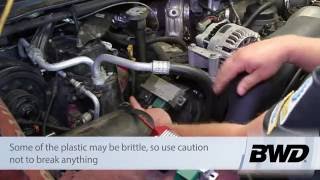
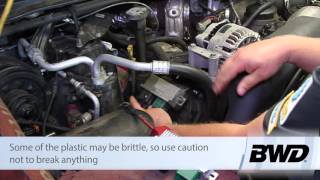
- Damaged or Corroded Wiring Harness (Common) — Wiring connecting the GPCM to the glow plugs, or the EGT sensor to the ECU, degrades from extreme engine heat and vibration. Connectors corrode or wires chafe, causing high resistance. Ford issued TSB 04-22-8 specifically for GPCM connector failures on Power Stroke engines. 🎬 See this step-by-step Powerstroke glow plug control module replacement guide.
- Failed Glow Plug(s) (Common) — One or more glow plugs have burned out. The internal heating element breaks over time, creating an open circuit that the GPCM detects and flags with this code. 🎬 Watch: A mechanic's guide on how to test glow plugs.
- Blown Fuse or Faulty Relay (Less Common) — The glow plug system draws massive current. A power surge or short circuit blows the heavy-duty fuse or burns out the relay, instantly cutting power to the control module.
- Soot or Carbon Buildup on EGT Sensor (Less Common) — Excessive exhaust soot coats the EGT sensor probe, insulating it from the true exhaust temperature. This causes delayed or inaccurate readings that the ECU interprets as a circuit fault.
- Faulty Powertrain Control Module (PCM) (Rare) — The engine computer itself fails to process the incoming signals correctly. This requires exhaustive testing of all other components and wiring before condemning the PCM.
Symptoms
- Flashing Glow Plug Light (VW/Audi) — On European diesels, a flashing glow plug light indicates a general powertrain fault. For P1958, this almost exclusively points to an EGT sensor failure, not a glow plug problem.
- Check Engine Light is On — The vehicle's computer illuminates the Malfunction Indicator Lamp (MIL) on the dashboard to alert the driver of the active fault.
- Difficult Cold Starts — The engine cranks for an extended period or fails to start in temperatures below 40°F (4°C). This applies only when the fault is within the glow plug system.
- White or Black Smoke from Exhaust on Startup — Unburned fuel from cold cylinders is expelled into the exhaust, creating excessive white or black smoke for a few minutes after a cold start.
- Reduced Fuel Economy and DPF Clogging (also visible on scanner) — An EGT sensor fault feeds incorrect data to the ECU, halting DPF regeneration cycles. This causes rapid soot buildup and a noticeable drop in fuel economy.
Diagnostic Flowchart
Tap your situation to follow the diagnostic path that matches what you're seeing on this code.
Common Fixes & Costs
- Replace Exhaust Gas Temperature (EGT) Sensor — Parts: $80-$150, Labor: $150-$350, ~1.5 hr book time (Intermediate)
- Replace Glow Plug Control Module (GPCM) — Parts: $150-$350, Labor: $100-$200, ~1.0 hr book time (Intermediate)
- Replace All Glow Plugs — Parts: $80-$150, Labor: $200-$500, ~2.5 hr book time (Intermediate)
- Repair Damaged Wiring or Connectors — Parts: $20-$150, Labor: $150-$300, ~1.5 hr book time (DIY)
DIY vs Professional
- Replace Exhaust Gas Temperature (EGT) Sensor — Beginner: No
Tools: Socket set, penetrating oil, EGT sensor socket (17mm slotted or crow's foot). - Replace Glow Plug Control Module (GPCM) — Beginner: Yes
Tools: Basic socket set. - Replace All Glow Plugs — Beginner: No
Tools: Deep sockets, torque wrench, penetrating oil, compressed air. - Repair Damaged Wiring or Connectors — Beginner: Yes
Tools: Multimeter, wire strippers, crimpers, heat shrink tubing.
Used vs. New Parts: Buying Guide
When a used part is worth it: A used OEM Glow Plug Control Module (GPCM) from a low-mileage donor is a cost-effective alternative to new. Never buy a used EGT sensor; they are wear items degraded by extreme heat.
Donor-vehicle mileage cap: roughly under 80000 miles for the part to have meaningful remaining life.
Donor quality checklist:
- Verify the part number matches exactly.
- Avoid parts from regions with heavy road salt use to prevent connector corrosion.
Decision logic:
- If The part is an EGT sensor → Always buy new. The risk of premature failure outweighs the savings.
- If The part is a GPCM and the vehicle is over 100K miles → A used OEM module is acceptable, but a new aftermarket unit with a warranty is preferable.
Warranty tradeoff: Used salvage parts offer 30-90 day warranties. New aftermarket parts offer 1-year to lifetime warranties.
Worst-case if a used part fails: $250. If a used GPCM fails, you pay repeat labor and the cost of a new part.
What Happens If You Wait — Timeline

- 0-2 weeks: The ECU disables DPF regeneration. No drivability symptoms are noticeable. (MPG impact: 0-3%% · Added cost: $0)
- 2 weeks - 2 months: The DPF accumulates soot. Exhaust backpressure builds, causing a subtle drop in fuel economy. The DPF warning light illuminates. (MPG impact: 3-7%% · Added cost: $50 in wasted fuel)
- 2-4 months: The vehicle enters 'limp mode' with reduced power. The DPF requires professional off-car cleaning to be salvaged. (MPG impact: 7-15%% · Added cost: $350-$800 (professional DPF cleaning))
- 4+ months: The DPF irreversibly clogs and cracks. Extreme backpressure destroys turbocharger seals. Full replacement is mandatory. (MPG impact: 15-25%% · Added cost: $2,000-$5,000 (DPF and turbo replacement))
Cost of Not Fixing It
- 0-1 month: The ECU disables DPF regeneration. Fuel economy decreases by 5-10%. Glow plug faults cause hard starting. (Added cost: $50 in wasted fuel.)
- 1-3 months: The DPF clogs with soot. Exhaust backpressure builds, straining the turbocharger. The vehicle enters 'limp mode' with severely reduced power. (Added cost: $350-$800 for professional off-car DPF cleaning.)
- 3+ months: Catastrophic DPF failure. The filter irreversibly clogs and cracks. Extreme backpressure destroys turbocharger seals. Full DPF and turbo replacement required. (Added cost: $2,000 - $5,000+)
Diagnosis Steps
- Verify Code with a Manufacturer-Specific Scanner
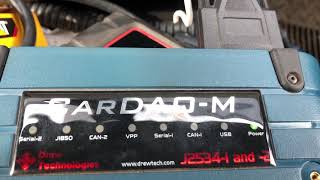
Use an advanced OBD-II scanner (like VCDS for VW/Audi or AutoEnginuity for Ford) to read the manufacturer-specific definition. This definitively tells you if the code refers to the 'Glow Plug Control Module' or an 'Exhaust Gas Temperature Sensor', dictating your entire diagnostic path.
Tools: Advanced OBD-II Scanner (Beginner) - Analyze Live EGT Sensor Data
If diagnosing a VW/Audi/BMW, use the scanner's live data function. With the engine cold (off overnight), all EGT sensors must read within 5°C of the ambient air temperature. A sensor reading an extreme value (e.g., -40°C or 900°C) has failed internally.
Tools: Advanced OBD-II Scanner with Live Data (Intermediate) - Test GPCM Power and Ground
If diagnosing a Ford/GM truck, identify the main power and ground wires at the GPCM connector using a wiring diagram. With the key on, verify battery voltage at the power supply wire and less than 1 Ohm of resistance on the ground pin. If power and ground are perfect but the module fails to activate the plugs, the GPCM is dead.
Tools: Multimeter, Vehicle-Specific Wiring Diagram (Advanced) - Test the EGT Sensor (Resistance)
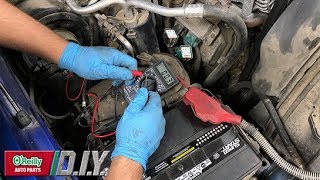
Disconnect the suspected EGT sensor's electrical connector. Measure the resistance across the two pins with a multimeter. An open circuit (O.L.) or a dead short (near 0 Ohms) confirms a failed sensor element.
Tools: Multimeter (Intermediate) - Test Individual Glow Plugs (Resistance)
Disconnect the wiring from the glow plugs. Set a multimeter to Ohms. Place one probe on the glow plug terminal and the other on the engine block. A healthy glow plug reads between 0.5 and 2.0 Ohms. A reading of infinity (O.L.) means the plug is burned out.
Tools: Multimeter (Intermediate) - Perform a Visual Inspection and Voltage Drop Test
Inspect the GPCM or EGT wiring harness for melted plastic, chafing, or green corrosion. To find hidden high resistance, perform a voltage drop test across the harness while the system is commanded ON. A drop of more than 0.5 volts requires harness repair.
Tools: Flashlight, Multimeter, Advanced OBD-II Scanner (Advanced) - Test Glow Plug System Fuses and Relays
Locate the heavy-duty fuse and relay for the GPCM in the power distribution box. Verify the fuse is intact. Swap the relay with an identical non-critical relay (like the horn) to rule out a relay failure.
Tools: Fuse Puller (Beginner) - Check GPCM Enable Conditions and Feedback
On Ford 6.0L engines, verify the Engine Oil Temperature (EOT) sensor reads below 55°C (131°F), or the GPCM will not activate. On Duramax engines, check the GPCM feedback voltage PID on your scanner; it must be above 4V when commanded OFF and below 4V when commanded ON.
Tools: Advanced OBD-II Scanner with Live Data (Advanced)
When This Code Triggers (Freeze-Frame Conditions)
- Engine Coolant Temp: 185-205°F (85-96°C) (EGT sensor faults are detected when the engine is fully warmed up and actively managing exhaust temperatures.)
- Vehicle Speed: 50-70 mph (80-113 kph) (Consistent highway driving provides the stable conditions the ECU needs to detect an irrational EGT sensor reading.)
- Glow Plug Command: ON (Glow plug system faults trigger immediately during a cold start when the key is turned and the GPCM is commanded to activate.)
Related Codes
- P0670 — Generic code for 'Glow Plug Control Module Control Circuit/Open'. P0670 points to the primary control circuit, while P1958 specifies the secondary ('B') circuit. Both point to a GPCM or main wiring failure.
- P0671-P0678 — These codes pinpoint a circuit fault for a specific individual glow plug (e.g., P0671 for Cylinder 1). P1958 points to the module managing multiple plugs.
- P0380 — Generic code for 'Glow Plug/Heater Circuit A Malfunction'. This is the direct counterpart to P1958 ('B' circuit). A wiring diagram determines which bank is 'A' and which is 'B'.
- P0544 — Code for 'Exhaust Gas Temperature Sensor Circuit - Bank 1 Sensor 1'. On VW/Audi vehicles, P0544 and P1958 both point to the same family of EGT sensor failures.
Climate & Environmental Factors
- Cold Climate: Temperatures below 40°F (4°C) expose weak glow plug systems, causing extended cranking and white smoke. The GPCM keeps plugs on longer in the cold, increasing stress and accelerating component failure.
- High Humidity and Road Salt: Moisture and salt cause severe corrosion on EGT sensor bodies, seizing them in the exhaust bung. This also corrodes electrical connectors, causing the high resistance that triggers P1958.
- Altitude: Thinner air at high altitudes provides less compression heat, making the engine entirely reliant on glow plugs for a clean start. Some GPCMs use altitude inputs to increase glow plug 'on' time.
How to Talk to a Mechanic About This Code
Say this: "I have a P1958 code. For VW/Audi: 'I believe this is an EGT sensor. Can you use a VCDS scanner to confirm which sensor failed via live data, and check if it's under the emissions warranty?' For Ford/GM: 'I believe this is a glow plug circuit fault. Please test the GPCM, wiring pigtail, and plugs to pinpoint the failure before replacing the module.'"
This directs the technician to the correct, vehicle-specific diagnostic path. It prevents wasting money on misdiagnosis (like checking glow plugs on a VW) and enforces a 'test, don't guess' approach.
Avoid saying:
- 'My check engine light is on, can you just fix it?'
- 'I'm not sure what's wrong, just do what you think is best.'
- 'My friend said it's probably the glow plugs.'
Questions to ask before authorizing the repair:
- For VW/Audi: Which specific EGT sensor failed and what was the live data reading?
- For Ford/GM: Did you test the GPCM's power and ground, and did it fail a commanded test?
- For Duramax: Do you have the GM Tech 2 tool to program the new module?
- Can you provide a written estimate with a clear breakdown of parts and labor?
Where to Take It: Dealer vs Independent vs Chain
- Dealer:
Best for: VW/Audi vehicles checking for 'Dieselgate' extended emissions warranty coverage., GM Duramax trucks (2006+) requiring GPCM programming.
Downsides: Highest labor rates., Prefers replacing entire harnesses rather than splicing a $150 pigtail. (Typical cost: +50% vs. baseline) - Independent Shop:
Best overall fit. A reputable diesel or European specialist shop handles either variant of P1958 correctly and more affordably than a dealer.
Best for: Out-of-warranty Ford/GM glow plug system repairs., VW/Audi EGT sensor replacements at European specialist shops.
Downsides: May lack the specialized GM Tech 2 tool for programming newer Duramax modules. (Typical cost: +0% vs. baseline) - Chain Shop:
AVOID. The dual nature of this code requires specific expertise. The risk of paying for the wrong repair is extremely high.
Best for: Simple services like oil changes.
Downsides: Lacks specialized diesel knowledge., Relies on generic code definitions, leading to massive misdiagnosis. (Typical cost: -10% vs. baseline)
When to Walk Away From the Repair
If the estimated repair cost exceeds 40-50% of the car's private-party value, consider selling it. For P1958, this only happens if you ignore an EGT fault until the DPF is destroyed.
- Car worth $8000, fix is $450: Fix it. A single EGT sensor or GPCM replacement is well below the threshold.
- Car worth $4000, fix is $3000: Walk away. Ignoring the EGT fault destroyed the DPF. The repair is 75% of the car's value.
What Scan Tool You Need for This Code

Minimum: A scanner that reads manufacturer-specific trouble codes and displays live sensor data. A generic $20 code reader is NOT sufficient.
A basic reader shows a generic 'Glow Plug Circuit' fault for all vehicles. It cannot differentiate between a VW's EGT fault and a Ford's GPCM fault, guaranteeing a misdiagnosis.
Budget: ANCEL BD500 (for VW/Audi) or BlueDriver Pro (~$70) — The ANCEL properly identifies VW EGT faults. The BlueDriver accesses manufacturer-specific codes and live data via smartphone.
Mid-range: Ross-Tech VCDS (VW/Audi) or Foxwell NT710 (~$199) — VCDS is the gold standard for VW/Audi, offering dealer-level live data. Foxwell performs deep diagnostics and bidirectional tests on domestic trucks.
Professional: Autel MaxiCOM MK808S (~$450) — Provides OE-level diagnostics, live data graphing, and bidirectional controls to command the GPCM on any make.
Rent vs buy: Buy. Free auto parts store scans use basic readers that misdiagnose this code. A VCDS or Foxwell is mandatory for accurate DIY diagnosis.
How to Clear the Code After You Fix It
- Use an OBD-II scan tool to clear the diagnostic trouble codes.
- Perform a specific drive cycle to allow the vehicle's readiness monitors to run.
- Re-scan the vehicle to confirm the code has not returned and monitors are 'Ready'.
Drive cycle (~20 minutes): For an EGT sensor fault: Cold start (engine below 122°F), idle for 3 minutes. Accelerate to 50 mph for 7 minutes. Accelerate to 65 mph and cruise for 5 minutes. Decelerate to a stop and idle for 3 minutes.
Readiness monitors affected: Exhaust Gas Sensor Monitor, Catalyst Monitor, EGR System Monitor
Before emissions retest: drive at least 50 miles to fully set monitors.
Watch out for:
- Clearing the code without performing a drive cycle leaves emissions monitors 'Not Ready', resulting in an automatic smog test failure.
- Disconnecting the battery resets all adaptive learning and monitors, drastically increasing the time required to pass an emissions test.
Will This Fail Emissions / State Inspection?
Yes — this code typically fails an OBD-II emissions inspection.
- California: An active P1958 code causes an automatic smog check failure. All readiness monitors must be 'Ready' before re-testing.
- New York: The NYS inspection includes an OBD-II scan. P1958 results in an immediate emissions failure.
Most Commonly Affected Vehicles

- Volkswagen Jetta TDI / Golf TDI / Beetle TDI (2005-2015) — P1958 almost exclusively refers to a failed Exhaust Gas Temperature (EGT) Sensor on these models. Check for 'Dieselgate' Extended Emissions Warranty coverage before paying out of pocket.
- Audi A3 TDI (2009-2013) — Triggered by a failed EGT sensor (often G448, Sensor 2). Diagnosis must focus entirely on the exhaust sensors, not the glow plug system.
- Chevrolet / GMC Silverado/Sierra 2500/3500 HD (Duramax) (2004-2012) — Glow Plug Control Module (GPCM) failures are the primary cause. Modules on 2006+ engines require programming after installation.
- Ford F-250/F-350 Super Duty (Power Stroke) (2003-2010) — TSB 04-22-8 identifies the GPCM wiring connector as a frequent failure point, requiring a harness repair kit (P/N 4C3Z-12B568-AA).
- Dodge Ram 2500 / 3500 (Cummins) (2007-2019) — Prone to EGT sensor failures that halt DPF regeneration. The 6.7L Cummins uses multiple EGT sensors; scan tools must identify the exact sensor location.
- BMW M5 / M6 (E60, E63/E64) (2006-2010) — On the S85 V10 engine, this code points to a failure of one of the two Exhaust Gas Temperature (EGT) sensors (P/N 11787836452).
- Chevrolet Cruze Diesel (2014-2015) — GM issued bulletin PIP5266E to address frequent EGT sensor failures presenting as P1958 or related exhaust codes.
- Mercedes-Benz Sprinter (2007-2018) — Frequently experiences glow plug module faults triggering P1958 alongside generic P0670-P0676 codes.
Manufacturer-Specific Notes
- Volkswagen/Audi/Skoda: P1958 almost exclusively means 'Exhaust Gas Temperature Sensor Circuit Fault'. Diagnosing the glow plug system is a waste of time. A flashing glow plug light is the primary indicator. Many vehicles are covered by the 'Dieselgate' Extended Emissions Warranty (10 years/120,000 miles post-modification).
- GM (Duramax): On 2006 (LBZ) and newer Duramax engines, the GPCM stores fuel injector flow rate data. When replacing the GPCM, you must use a GM Tech 2 scan tool to program the new module. Failure to do so causes poor engine performance.
- Ford (Power Stroke): On 6.0L and 7.3L engines, the wiring harness connector at the GPCM melts and fails. TSB 04-22-8 advises replacing the connector with service kit 4C3Z-12B568-AA before condemning the module itself.
- Dodge (Cummins): The 6.7L Cummins uses multiple EGT sensors. A failure of one sensor halts DPF regeneration. You must use a scan tool to identify the specific sensor (pre-turbo, pre-DPF, post-DPF) as they are not interchangeable.
Real Owner Stories
2012 VW Jetta TDI at 115K miles with flashing glow plug light.
Flashing glow plug light appeared on the highway. Car drove normally. Scanned with a generic reader showing P1958.
What they tried:
- Used VCDS software to confirm the fault was 'Exhaust Gas Temperature Sensor 2 - Short to Plus'.
- Checked live data and saw Sensor 2 reading an illogical -40°C.
Outcome: Purchased an OEM EGT sensor (03L906088EG) for $90. Soaked the seized sensor in penetrating oil for two days before removing it with a slotted socket. Code cleared and car passed emissions.
Lesson: On a VW TDI, a flashing glow plug light with normal starting means an EGT sensor failure. Use a VCDS scanner to pinpoint the exact sensor.
2008 GMC Sierra 2500 HD (LMM Duramax) at 160K miles with hard starting.
Truck cranked excessively in the morning and blew white smoke. Codes P1958 and U0106 (Lost Communication with GPCM) were active.
What they tried:
- Tested glow plug resistance; all were within spec.
- Checked GPCM main fuse and wiring harness; no damage found.
Outcome: Replaced the GPCM with a new AC Delco unit for $280. The truck still wouldn't start properly until a mobile mechanic used a GM Tech 2 scanner to program the new module with the injector flow rates for $120.
Lesson: P1958 with communication codes on a Duramax points to a dead GPCM. 2006+ models require professional programming after physical installation.
2005 Ford F-250 (6.0L Power Stroke) at 190K miles with intermittent no-start.
Truck intermittently cranked but wouldn't start. Wiggling the wiring harness temporarily fixed it. P1958 became persistent.
What they tried:
- Replaced the GPCM and all 8 glow plugs, but the problem continued.
- Traced the wiring and found the main GPCM connector had burnt pins and brittle plastic.
Outcome: Spliced in the Ford GPCM wiring pigtail repair kit (4C3Z-12B568-AA) for $150. The solid connection permanently resolved the code and starting issue.
Lesson: On 6.0L Power Strokes, the GPCM wiring connector melts from engine heat. Inspect the connector thoroughly before buying an expensive module.
How to Prevent This Code From Triggering
- Use High-Quality, Low-Ash Diesel Engine Oil (Every oil change) — Low-ash oil (CJ-4, CK-4) prevents permanent ash buildup in the DPF, reducing backpressure and extending EGT sensor life.
- Perform Regular Highway Driving (At least once every 1-2 weeks) — Sustained highway driving allows passive DPF regeneration, burning off soot and preventing the active, high-heat regenerations that stress EGT sensors.
- Clean Electrical Connectors (Every 30,000 miles) — Applying dielectric grease to GPCM and EGT connectors prevents the corrosion and high resistance that trigger false P1958 codes.
Frequently Asked Questions
What is the most common mistake when diagnosing P1958?
Relying on a generic scanner. On VW, Audi, and BMW diesels, technicians waste hours diagnosing the glow plug system when P1958 actually means a failed EGT sensor. Always use a manufacturer-specific tool.
My VW has a flashing glow plug light but starts fine. Is it P1958?
Yes. On VW/Audi vehicles, the flashing light is a general powertrain warning. If the car starts fine, P1958 indicates an EGT sensor failure, which affects emissions and DPF regeneration, not starting.
Can I just replace one bad glow plug?
No, you must replace all glow plugs simultaneously. They degrade at the exact same rate, so if one fails, the others will follow shortly.
Why is the labor cost for replacing glow plugs sometimes so high?
Glow plugs seize in the cylinder head from carbon buildup and extreme heat. If a plug snaps during removal, extracting it requires specialized tools or removing the cylinder head entirely, adding $1,000+ to the bill.
Do I need to program a new glow plug module?
It depends on the vehicle. For 2006 and newer GM Duramax trucks, you must program the new module with a scan tool to transfer fuel injector flow rate data from the main computer.
What happens if I ignore a P1958 code caused by a bad EGT sensor?
The ECU halts DPF regeneration cycles. Within weeks, the DPF clogs with soot, causing massive exhaust backpressure that destroys the filter and potentially the turbocharger, costing $2,000+ to fix.
Is a glow plug the same as a spark plug?
No. Spark plugs ignite gasoline with an electrical spark. Glow plugs are heating elements used in diesel engines to warm the cylinder, helping fuel ignite via compression in cold weather.
Key Takeaways
- On Volkswagen, Audi, and BMW diesels, P1958 indicates a failed Exhaust Gas Temperature (EGT) sensor, not a glow plug issue, requiring a $250-$500 sensor replacement.
- For Ford and GM diesel trucks, P1958 points to a Glow Plug Control Module (GPCM) or wiring failure, causing hard starts in temperatures below 40°F.
- Ignoring an EGT sensor fault disables the Diesel Particulate Filter (DPF) regeneration cycle, leading to irreversible DPF clogging and a $2,000+ replacement within 1 to 3 months.
- Always use a manufacturer-specific OBD-II scanner to read P1958; generic $20 readers will misdiagnose a VW EGT fault as a generic glow plug error, wasting hundreds of dollars on incorrect parts.
Helpful Videos


The information in this article is provided for general reference and educational purposes only. Vehicle specifications, procedures, and part compatibility can vary by production date, trim level, and region. Always consult your vehicle's factory service manual and verify part numbers before purchasing or performing repairs. Safety-critical components such as airbags, seat belts, and braking systems should be installed by a qualified professional.
- 🎬 Helpful Videos
- What Does P1958 Mean?
- Can I Drive With P1958?
- Common Causes
- Symptoms
- Diagnostic Flowchart
- Common Fixes & Costs
- DIY vs Professional
- Used vs. New Parts: Buying Guide
- What Happens If You Wait — Timeline
- Cost of Not Fixing It
- Diagnosis Steps
- When This Code Triggers (Freeze-Frame Conditions)
- Related Codes
- Climate & Environmental Factors
- How to Talk to a Mechanic About This Code
- Where to Take It: Dealer vs Independent vs Chain
- When to Walk Away From the Repair
- What Scan Tool You Need for This Code
- How to Clear the Code After You Fix It
- Will This Fail Emissions / State Inspection?
- Most Commonly Affected Vehicles
- Manufacturer-Specific Notes
- Real Owner Stories
- 2012 VW Jetta TDI at 115K miles with flashing glow plug light.
- 2008 GMC Sierra 2500 HD (LMM Duramax) at 160K miles with hard starting.
- 2005 Ford F-250 (6.0L Power Stroke) at 190K miles with intermittent no-start.
- How to Prevent This Code From Triggering
- Frequently Asked Questions
- What is the most common mistake when diagnosing P1958?
- My VW has a flashing glow plug light but starts fine. Is it P1958?
- Can I just replace one bad glow plug?
- Why is the labor cost for replacing glow plugs sometimes so high?
- Do I need to program a new glow plug module?
- What happens if I ignore a P1958 code caused by a bad EGT sensor?
- Is a glow plug the same as a spark plug?
- Key Takeaways
- 🎟️ Get 5% Off