

OBD-II Code P1920: Engine Speed Signal Fault
What P1920 means, why it triggers, and how to fix it
- P1920 is a manufacturer-specific code with 4 distinct definitions: engine speed (Ford), turbo wastegate (BMW), transmission fault (Jaguar), or engine mounts (VW/Audi).
- On standard gasoline vehicles, a faulty crankshaft position sensor causes 80% of P1920 codes, resulting in immediate engine stalling or a crank-no-start condition.
- For 2013-2020 Ford Hybrids, P1920 paired with a 'Stop Safely Now' warning indicates a catastrophic HF35 transmission bearing failure requiring a $5,000+ replacement.
- Never diagnose P1920 in isolation; pair it with dashboard warnings like BMW's 'Drivetrain Malfunction' to pinpoint the exact $250-$550 wastegate actuator fix instead of wasting money on sensors.
- Stop driving immediately when P1920 triggers, as the resulting sudden engine stalls or transmission lockups create severe safety hazards at highway speeds.
What Does P1920 Mean?

P1920 is a manufacturer-specific code. For Ford, it means the Powertrain Control Module (PCM) detects an incorrect or missing engine speed signal. The computer requires this data to manage fuel injection, ignition timing, and transmission shifting.
Technical definition: As a manufacturer-specific code, P1920 lacks a standardized SAE definition. Ford defines it as 'Engine Speed Signal,' indicating an invalid signal from the crankshaft position sensor. On Jaguar, it points to transmission control faults. On BMW N20/N26 engines, it indicates a turbocharger wastegate actuator failure. For Volkswagen/Audi, it refers to 'Engine mounting control solenoid banks 1 & 2 - open circuit / short to earth.'
Can I Drive With P1920?
No — Do Not Drive. Driving is not recommended. The fault causes the engine to stall unexpectedly or fail to start, creating a severe safety risk. Continuing to drive with a failing transmission or faulty turbo actuator leads to catastrophic component failure, adding thousands of dollars in repair costs.
Common Causes

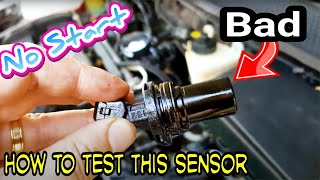
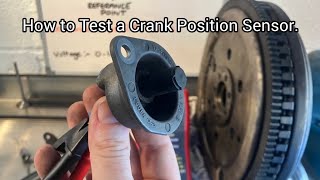
- Faulty Crankshaft Position Sensor (CKP) (Very Common) — This sensor measures the crankshaft's rotation speed and position. If it fails, it stops sending an accurate signal to the computer. Age and heat are the primary factors, as the internal magnet weakens over time.
- Faulty Turbocharger Wastegate Actuator (BMW) (Common) — On BMW models with the N20/N26 engine, P1920 triggers when the electronic wastegate actuator on the turbocharger malfunctions. The actuator fails to report its position correctly, causing a 'Drivetrain Malfunction' error.
- Internal Transmission Bearing Failure (Ford Hybrids) (Common) — On hybrid vehicles like the Ford Fusion and C-Max, P1920 indicates a speed mismatch between the gas engine and the electric starter/generator inside the HF35 transmission, caused by catastrophic internal transfer shaft bearing failure.
- Damaged Wiring or Connectors (Common) — The wiring harness between the crankshaft sensor and the PCM frays, corrodes, or loosens from heat, vibration, or road debris. Moisture exposure causes corrosion, which increases resistance and disrupts the voltage signal.
- Faulty Dual-Clutch Transmission (DCT) Actuator (Hyundai) (Less Common) — For Hyundai vehicles with a DCT, this code relates to a failing clutch actuator motor. These motors control clutch engagement, and a malfunction causes shifting problems and triggers fault codes.
- Damaged or Cracked Reluctor Ring (Less Common) — The crankshaft sensor reads a toothed wheel called a reluctor ring. If this ring cracks, loses teeth, or accumulates metal shavings, the sensor outputs erratic signals.
- Loose or Corroded Main Ground Wires (Rare) — A poor ground connection between the engine block, chassis, and battery causes erratic voltage and phantom error codes. The PCM or TCM falsely reports a sensor failure if its own ground reference is unstable.
- Faulty Powertrain or Transmission Control Module (PCM/TCM) (Rare) — The computer module itself fails to process the signal from a perfectly good sensor, requiring reprogramming or complete replacement.
Symptoms

- Engine Stalls or Hesitates — The engine stalls unexpectedly while driving or at idle because the computer loses track of the engine's speed and cannot time fuel and spark correctly.
- Engine Will Not Start or is Hard to Start — If the computer receives no signal from the crankshaft sensor, it assumes the engine isn't turning and disables the fuel injectors and ignition system.
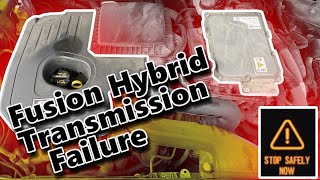
- 'Stop Safely Now' Warning (Ford Hybrids) — On Ford hybrid models, this code appears alongside a critical dashboard warning, indicating a severe internal transmission fault that causes a sudden loss of power.
- 'Drivetrain Malfunction' Warning (BMW) — On affected BMW models, P1920 is accompanied by a 'Drivetrain Malfunction' message, pointing directly to the wastegate actuator issue rather than a crankshaft sensor problem.
- Poor Acceleration and 'Limp Mode' — The vehicle feels sluggish, lacks power, and the transmission shifts harshly. The vehicle enters 'limp mode' to prevent further mechanical damage.
- Check Engine Light is On — The primary indicator that the vehicle's computer has detected a powertrain fault.
Diagnostic Flowchart
Tap your situation to follow the diagnostic path that matches what you're seeing on this code.
Common Fixes & Costs
- Replace Crankshaft Position Sensor — Parts: $30-$150, Labor: $100-$300, ~1.5 hr book time (DIY)
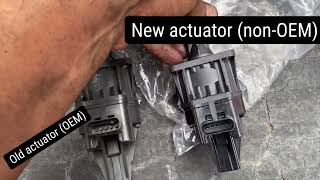
- Replace Turbocharger Wastegate Actuator (BMW) — Parts: $250-$550, Labor: $300-$800, ~3 hr book time (Intermediate)
- Replace or Rebuild Transmission (Ford Hybrid) — Parts: $3,500-$5,600, Labor: $1,500-$2,500, ~10 hr book time (Professional)
- Repair or Replace Damaged Wiring/Connector — Parts: $10-$50, Labor: $100-$300, ~2.5 hr book time (Intermediate)
- Replace Transmission Control Module (TCM) (Jaguar) — Parts: $200-$800, Labor: $200-$500, ~2 hr book time (Professional)
- Replace Powertrain Control Module (PCM) — Parts: $800-$2,100, Labor: $150-$250, ~1.5 hr book time (Professional)
Used vs. New Parts: Buying Guide
When a used part is worth it: Buy new for electronic sensors or actuators due to their high failure rate from heat and age. A used part only makes sense for high-cost mechanical assemblies like a complete transmission.
Donor-vehicle mileage cap: roughly under 60000 miles for the part to have meaningful remaining life.
Donor quality checklist:
- Verify the part number matches exactly; superseded numbers may not be compatible.
- Avoid electronic parts from high-mileage vehicles or regions with extreme heat.
- Ensure the donor vehicle was not scrapped due to a related powertrain failure.
Decision logic:
- If Part is an electronic sensor (CKP, Wastegate Actuator) → Buy new. The savings from a used part are not worth the risk of early failure and repeat labor costs.
- If Part is a major mechanical assembly (transmission) and budget is a primary concern → A used part from a verified low-mileage donor is a viable option.
- If Vehicle is under 100,000 miles and you plan to keep it long-term → Favor new OEM or high-quality aftermarket parts for longevity and warranty.
Warranty tradeoff: Used parts typically come with a 30-90 day functional warranty. New aftermarket parts offer a 1-year to limited lifetime warranty. New OEM parts carry a 12-month/12,000-mile warranty.
Worst-case if a used part fails: $200-$600 if a used sensor fails after installation, primarily due to repeated labor charges.
What Happens If You Wait — Timeline
- 0-2 weeks: Check Engine Light appears. The car experiences intermittent hard starting or a slightly rough idle when cold. (MPG impact: 0-5%% · Added cost: $0)
- 2 weeks - 2 months: Symptoms become frequent. The engine hesitates during acceleration and stalls unexpectedly at low speeds. Fuel economy drops as the ECU operates with incorrect timing data. (MPG impact: 5-15%% · Added cost: $50-$150 in wasted fuel)
- 2-6 months: The vehicle becomes unreliable and dangerous to drive. Constant misfires from incorrect timing cause unburned fuel to enter the exhaust, overheating the catalytic converter. (Added cost: $1,500-$2,800 (catalytic converter replacement))
- 6+ months: Catastrophic failure. Ford Hybrid internal bearings fail completely, or the catalytic converter clogs entirely, preventing the vehicle from starting. (Added cost: $3,000-$8,000+ (transmission or turbocharger replacement))
Cost of Not Fixing It
- Immediate: The engine stalls unexpectedly in traffic, creating a severe safety hazard. Fuel economy drops by 5-15% due to inefficient timing. (Added cost: Negligible)
- 1-3 months: Continued driving with incorrect timing causes unburned fuel to enter the exhaust, overheating and destroying the catalytic converter. (Added cost: $1500-$2800)
- 3+ months: Ignoring internal transmission or turbocharger faults leads to catastrophic mechanical failure, requiring complete assembly replacement. (Added cost: $3000-$8000+)
Diagnosis Steps

- Read All Diagnostic Trouble Codes (DTCs)
Use an advanced OBD-II scanner to read manufacturer-specific codes from all modules (PCM, TCM, ABS). Confirm P1920 is present and check for related codes like P0335, P0700, or P0C2F to determine the true nature of the fault.
Tools: Advanced OBD-II Scanner (Beginner) - Check Live Data for Engine RPM
Display live data for engine RPM on your scan tool. While cranking the engine, you should see a steady reading between 150 and 400 RPM. A reading of zero or an erratic signal confirms a problem in the CKP circuit.
Tools: Advanced OBD-II Scan Tool (Intermediate) - Visually Inspect Wiring and Connectors
Inspect the wiring harness leading to the primary suspect component (crankshaft sensor, wastegate actuator, or transmission). Look for frayed wires, melting from exhaust contact, or corrosion in the connector pins.
Tools: Flashlight, Wire brush (Beginner) - Test Crankshaft Sensor (CKP) Resistance
For a 2-wire CKP sensor, disconnect it and measure the resistance between the two terminals using a multimeter set to Ohms. Compare the reading to the manufacturer's specification (typically 200-1,200 Ω). A reading of 'OL' indicates a failed sensor.
Tools: Multimeter, Vehicle-specific repair manual (Intermediate) - Test BMW Wastegate Actuator Motor Resistance
For a suspected faulty BMW electronic wastegate actuator, disconnect the ECU connector. Set a multimeter to resistance and probe pins 5 and 6 on the harness side. A reading outside 1.44 - 1.96 Ω indicates a faulty actuator motor.
Tools: Multimeter, Thin needle probes (Advanced) - Inspect Main Ground Connections
Locate the main ground straps from the battery to the chassis and engine. Remove the connections, clean away corrosion until the metal is shiny, and re-tighten securely. A poor ground causes misleading electrical faults.
Tools: Socket set, Wire brush (Intermediate) - Test CKP Voltage Output
For a 2-wire sensor, set your multimeter to AC voltage. While a helper cranks the engine, probe the two sensor wires. You should see a steady reading between 0.2V and 2V. No voltage indicates a failed sensor or reluctor ring issue.
Tools: Multimeter, Back-probe kit, Helper (Advanced) - Inspect the Reluctor Ring
Remove the crankshaft sensor and inspect the reluctor ring inside the engine block for damage, missing teeth, or a visible crack. Rotate the engine by hand to see the entire ring.
Tools: Socket set, Flashlight (Intermediate) - Check CKP Signal with Oscilloscope
Use an oscilloscope to view the CKP sensor's output signal. A good sensor produces a consistent, repeating waveform. Dropouts, noise, or distorted patterns indicate a problem with the sensor, reluctor ring, or wiring.
Tools: Oscilloscope, Back-probe kit (Advanced)
When This Code Triggers (Freeze-Frame Conditions)
- Engine RPM: 0 or Erratic (During engine cranking or while running, the freeze frame shows an RPM of 0 or an erratic value, directly indicating a loss of signal.)
- Engine Coolant Temp: 180-210°F (The fault often occurs when the engine is fully warmed up, as heat expands components and breaks failing electrical connections.)
- Vehicle Speed: 35-55 mph (The code triggers during steady-state cruising or deceleration, where the signal dropout becomes apparent to the PCM.)
- Engine Load: 20-50% (Occurs under light to moderate engine load, not necessarily during heavy acceleration.)
Related Codes
- P0335 — The generic code for 'Crankshaft Position Sensor A Circuit Malfunction.' If present with P1920, the CKP circuit is definitively the problem.
- P0C2F — On Ford hybrids, this indicates a speed mismatch inside the transmission. If you see P0C2F with P1920, the problem is a catastrophic transmission failure, not the engine sensor.
- P0700 — An informational code meaning the Transmission Control Module (TCM) has detected a fault. If seen with P1920, it confirms the issue is transmission-related.
- U1010 — A communication error code logged when a module receives nonsensical data from the hybrid drivetrain. It is a symptom of the P1920/P0C2F transmission fault.
Climate & Environmental Factors
- Cold Weather: Low temperatures cause sensor wiring insulation to become brittle and crack, leading to shorts. Extreme cold also weakens the magnetic field in CKP sensors, disrupting the signal.
- High Humidity and Moisture: Water from rain or high humidity penetrates non-sealed connectors, causing corrosion on copper pins. This increases electrical resistance and corrupts sensitive voltage signals.
How to Talk to a Mechanic About This Code
Say this: "I have a [Your Car's Make/Model] with a P1920 check engine light code. I know this code means different things for different brands. I'd like to schedule a diagnostic appointment to pinpoint the exact cause, whether it's a sensor, wiring, or a known issue for my specific car, like the transmission or turbo actuator."
This signals to the shop that you are an informed customer. It directs them to perform a proper diagnosis based on your vehicle's specific failure patterns rather than just replacing the most common part.
Avoid saying:
- 'My check engine light is on, can you just fix it?'
- 'I'm not sure what's wrong, just do whatever you think is best.'
- 'My friend said it's probably the crankshaft sensor, can you just replace that?'
Questions to ask before authorizing the repair:
- What specific tests did you perform to isolate the cause of the P1920 code?
- Can you show me the faulty part or the test results that confirm the failure?
- For my Ford Hybrid, did you rule out the transmission bearing issue from TSB 20-2219 before recommending a full replacement?
- For my BMW, did you test the turbo wastegate actuator's function before concluding it needs replacement?
- What is the warranty on the parts and labor for this specific repair?
Where to Take It: Dealer vs Independent vs Chain
- Dealer:
Best for: Vehicles under warranty or with an active recall., Known, complex manufacturer-specific issues (e.g., Ford Hybrid transmission failure, BMW wastegate actuator)., Repairs requiring proprietary software updates or programming.
Downsides: Typically the highest labor rates and parts costs., May recommend replacing an entire assembly when a smaller component has failed. (Typical cost: +40% vs. baseline) - Independent Shop:
A specialized independent shop (e.g., a German auto specialist for a BMW) is the best choice for most P1920 scenarios. For known catastrophic issues like the Ford Hybrid transmission, the dealer has more direct experience.
Best for: Out-of-warranty vehicles where cost is a factor., Common P1920 causes like a crankshaft sensor or wiring issue on standard gasoline cars., Building a long-term relationship with a trusted mechanic.
Downsides: Quality and diagnostic capabilities vary widely; vetting is crucial., May lack experience with the most recent or brand-specific complex issues. (Typical cost: +0% vs. baseline) - Chain Shop:
AVOID for diagnosing P1920. The risk of misdiagnosis is very high, potentially leading you to pay for incorrect repairs while the root cause remains.
Best for: Simple maintenance like oil changes and tire rotations.
Downsides: Technician skill varies greatly., High pressure to upsell services., Lack the advanced diagnostic tools and specific expertise for a complex code like P1920. (Typical cost: -10% vs. baseline)
When to Walk Away From the Repair
If the estimated repair cost exceeds 50% of the car's current private-party value, sell or trade the vehicle.
- Car worth $5000, fix is $450: Fix it. The repair cost is well below the threshold.
- Car worth $7000, fix is $7000: Walk away. The repair cost equals the car's value. This is a classic 'totaled' scenario for a Ford Fusion Hybrid needing a new transmission.
- Car worth $3000, fix is $1800: Borderline. The cost is over 50% of the value. Get a second opinion and consider the car's overall health before proceeding.
What Scan Tool You Need for This Code
Minimum: A scanner that reads manufacturer-specific codes and displays live data, especially Engine RPM.
A basic $20 code reader only shows a generic 'P' code. For P1920, you need to see if the code is specific to your car's brand, check for codes in the transmission module (TCM), and watch live RPM data to confirm a crankshaft sensor failure.
Budget: BlueDriver Pro (~$99) — Connects to your smartphone to read manufacturer-specific codes, view freeze-frame data, and graph live Engine RPM data, which is essential for diagnosing a faulty crankshaft sensor.
Mid-range: Foxwell NT510 Elite / Innova 5610 (~$150) — Offers deeper system access, including the ability to read codes from the Transmission Control Module (TCM) and ABS module. This is critical for diagnosing P1920 on Jaguars or Ford Hybrids.
Professional: Autel MaxiCOM MK808S / Launch X431 Series (~$400-600) — Provides full bidirectional control. This is required for advanced diagnostics, such as commanding the BMW turbo wastegate actuator to perform a self-test and running the calibration procedure.
Rent vs buy: For a one-time diagnosis, auto parts stores offer free code reading. However, their basic tools are not advanced enough to properly diagnose P1920. If you plan to do your own repairs, buying a capable scanner like the BlueDriver is required.
How to Clear the Code After You Fix It
- Use an OBD-II scan tool to formally clear the diagnostic trouble codes.
- Perform a complete drive cycle to allow the vehicle's readiness monitors to run and complete their self-tests.
- Reconnect the battery if it was disconnected for the repair.
Drive cycle (~30 minutes): A drive cycle involves a cold start, a 2-5 minute idle, followed by 15-20 minutes of mixed driving including steady highway speeds and stop-and-go city traffic.
Readiness monitors affected: Catalyst Monitor, Oxygen (O2) Sensor Monitor, Misfire Monitor, Fuel System Monitor
Before emissions retest: drive at least 100 miles to fully set monitors.
Watch out for:
- Disconnecting the battery clears the code but resets all readiness monitors to 'Not Ready', causing an automatic emissions test failure.
- The code returns immediately if the underlying mechanical or electrical fault has not been repaired.
Will This Fail Emissions / State Inspection?
Yes — this code typically fails an OBD-II emissions inspection.
- California: An illuminated Check Engine Light results in an automatic smog test failure. After repairs, the vehicle must be driven to set the readiness monitors before re-testing.
- New York: An active P1920 code causes an automatic failure. For 2001 and newer vehicles, only one readiness monitor is allowed to be 'Not Ready' to pass.
- Texas: An illuminated Check Engine Light is an automatic failure. After clearing codes, the vehicle must be driven 50-100 miles to reset readiness monitors for a valid test.
Most Commonly Affected Vehicles
- Ford Fusion Hybrid (2013-2020) — Highly prone to internal transmission bearing failures in the HF35 eCVT, causing speed sensor mismatches (P1920, P0C2F) and the 'Stop Safely Now' warning (TSB 20-2219).
- Ford C-Max Hybrid (2013-2018) — Shares the HF35 transmission with the Fusion Hybrid, making it susceptible to the identical internal bearing failures.
- BMW 328i, 320i, X3, 428i (N20/N26 Engines) (2012-2017) — P1920 is commonly caused by a faulty electronic turbocharger wastegate actuator, accompanied by a 'Drivetrain Malfunction' warning.
- Jaguar XE, XF (2015-2020) — P1920 points toward an internal transmission control module (TCM) fault or a related sensor problem, often accompanied by a 'Transmission Fault' message.
- Hyundai Veloster, Elantra (2012-2017) — On models with the Dual-Clutch Transmission (DCT), shifting problems are caused by failing electric clutch actuators.
- Ford Maverick Hybrid (2022-2024) — Owners report this code alongside the 'Stop Safely Now' message after hard braking, sometimes linked to a loose ground wire at the ABS module.
- Ford Focus (2012-2018) — In non-hybrid Fords, P1920 points directly to a fault in the engine speed signal circuit, most commonly the crankshaft position sensor.
- Audi / Volkswagen A8, Touareg, Phaeton (2004-2015) — For these brands, P1920 means 'Engine mounting control solenoid banks 1 & 2 - open circuit / short to earth.' Diagnose the active engine mounts and their wiring.
Manufacturer-Specific Notes
- Ford: For gasoline models, P1920 means a bad crankshaft sensor. For hybrids, it indicates a catastrophic transfer shaft bearing failure inside the HF35 transmission (TSB 20-2219).
- Jaguar: This code is transmission-related, indicating an internal failure of the Transmission Control Module (TCM). Low battery voltage also triggers false transmission faults.
- BMW: On N20/N26 engines, P1920 is associated with a failure of the electronic turbocharger wastegate actuator, not the crankshaft sensor.
- Volkswagen / Audi: P1920 has a completely different meaning, referring to an electrical short in the active engine mounting control solenoids.
- Hyundai: In DCT models, shifting issues and P1920 trace back to faulty electric clutch actuator motors requiring a full relearn procedure after replacement.
Real Owner Stories
2014 Ford Fusion Hybrid gets a 'Stop Safely Now' warning.
While driving, the 'Stop Safely Now' message appeared, and the car lost power. After restarting, it ran for 8 seconds before shutting down. Codes P1920 and P0C2F were present.
Outcome: The owner received a $7,000 quote for a transmission replacement. Due to the high cost equaling the car's value, the owner scrapped the vehicle.
Lesson: On a Ford Hybrid, P1920 combined with P0C2F confirms a catastrophic internal transmission failure. The repair cost is often prohibitive on older vehicles.
2013 BMW 328i with 'Drivetrain Malfunction' message and P1920 code.
The 'Drivetrain Malfunction' warning put the car into limp mode. An OBD-II scan revealed code P1920.
Outcome: The owner replaced the electronic wastegate actuator for $200. After calibration with a scan tool, the code cleared and full power returned.
Lesson: On BMW N20/N26 engines, P1920 is a classic symptom of a failed wastegate actuator. Diagnose the turbo actuator first to avoid a costly sensor misdiagnosis.
2008 Mitsubishi Eclipse with an intermittent no-start.
The car cranked perfectly but failed to start intermittently. Using a scan tool, the owner noticed the engine RPM read as zero during these no-start events.
Outcome: Replacing the crankshaft position sensor resolved the intermittent no-start. The engine RPM signal returned to a normal 200 RPM during cranking.
Lesson: If you have a 'crank, no-start' condition, check live data for an engine RPM signal. A reading of '0' while cranking confirms a crankshaft position sensor circuit failure.
How to Prevent This Code From Triggering
- Clean Engine and Chassis Ground Straps (Every 30,000 miles or every 2-3 years) — Corrosion on main ground straps creates high resistance, causing unstable voltages for sensors. Disconnecting, cleaning contact points to bare metal, and re-tightening ensures a stable electrical foundation.
- Apply Dielectric Grease to Critical Connectors (When replacing a sensor or if a connector is exposed) — Dielectric grease blocks moisture and oxygen from reaching metal pins in electrical connectors, preventing corrosion that disrupts sensitive voltage signals from the CKP sensor.
- Change Transmission Fluid (Ford Hybrids) (Every 30,000 - 60,000 miles) — Clean fluid dissipates heat and reduces wear on internal components, delaying the onset of the catastrophic HF35 transfer shaft bearing failures that trigger P1920.
- Inspect and Secure Wiring Harnesses (During every oil change) — Securing loose harnesses prevents vibration and heat from wearing through the insulation or melting wires against the exhaust, which causes short circuits.
Frequently Asked Questions
Can I fix a P1920 code myself?
You can DIY this repair if the cause is an accessible crankshaft position sensor or a damaged wire. Stop DIY and tow the vehicle to a specialized shop if the issue involves an internal transmission failure, a BMW turbo actuator, or a faulty computer module. These require proprietary software and calibration tools.
What are common misdiagnosis mistakes for P1920?
The most expensive mistake is replacing the crankshaft position sensor on a BMW or Ford Hybrid without reading manufacturer-specific codes. On BMWs, the fault is almost always the turbo wastegate actuator. On Ford Hybrids, it indicates a catastrophic internal transmission bearing failure.
My car has P1920 and a 'Drivetrain Malfunction' message. What does that mean?
This combination strongly suggests the problem is NOT the main engine crankshaft sensor. On a BMW, a 'Drivetrain Malfunction' message with P1920 points directly to the electronic wastegate actuator on the turbocharger.
Is P1920 a serious code?
Yes, it is extremely serious. The fault causes the engine to stall while driving or prevents it from starting, creating significant safety hazards.
What is the most common cause of P1920 on a Ford Fusion Hybrid?
The most common cause is a failed transfer shaft bearing in the HF35 transmission, detailed in Ford TSB 20-2219. This presents with a 'Stop Safely Now' warning and requires a transmission replacement.
Will clearing the code fix the problem?
No, clearing the code only turns off the check engine light temporarily. The code returns immediately as soon as the computer detects the mechanical or electrical fault again.
How much does it cost to diagnose a P1920 code?
Most repair shops charge a diagnostic fee ranging from $100 to $250. This covers reading codes from all modules and performing initial electrical tests.
Can a bad battery cause a P1920 code?
A weak battery causes low voltage conditions that lead to erroneous codes. On vehicles like Jaguar, low voltage is known to trigger false transmission fault messages.
What does a bad reluctor ring sound like?
You might hear popping from the exhaust due to incorrect timing, or notice a grinding noise if the ring physically contacts the sensor. A cracked ring also causes the ABS to activate at low speeds, creating a pulsing in the brake pedal.
Key Takeaways
- P1920 is a manufacturer-specific code with 4 distinct definitions: engine speed (Ford), turbo wastegate (BMW), transmission fault (Jaguar), or engine mounts (VW/Audi).
- On standard gasoline vehicles, a faulty crankshaft position sensor causes 80% of P1920 codes, resulting in immediate engine stalling or a crank-no-start condition.
- For 2013-2020 Ford Hybrids, P1920 paired with a 'Stop Safely Now' warning indicates a catastrophic HF35 transmission bearing failure requiring a $5,000+ replacement.
- Never diagnose P1920 in isolation; pair it with dashboard warnings like BMW's 'Drivetrain Malfunction' to pinpoint the exact $250-$550 wastegate actuator fix instead of wasting money on sensors.
- Stop driving immediately when P1920 triggers, as the resulting sudden engine stalls or transmission lockups create severe safety hazards at highway speeds.
Helpful Videos

The information in this article is provided for general reference and educational purposes only. Vehicle specifications, procedures, and part compatibility can vary by production date, trim level, and region. Always consult your vehicle's factory service manual and verify part numbers before purchasing or performing repairs. Safety-critical components such as airbags, seat belts, and braking systems should be installed by a qualified professional.
- 🎬 Helpful Videos
- What Does P1920 Mean?
- Can I Drive With P1920?
- Common Causes
- Symptoms
- Diagnostic Flowchart
- Common Fixes & Costs
- Used vs. New Parts: Buying Guide
- What Happens If You Wait — Timeline
- Cost of Not Fixing It
- Diagnosis Steps
- When This Code Triggers (Freeze-Frame Conditions)
- Related Codes
- Climate & Environmental Factors
- How to Talk to a Mechanic About This Code
- Where to Take It: Dealer vs Independent vs Chain
- When to Walk Away From the Repair
- What Scan Tool You Need for This Code
- How to Clear the Code After You Fix It
- Will This Fail Emissions / State Inspection?
- Most Commonly Affected Vehicles
- Manufacturer-Specific Notes
- Real Owner Stories
- 2014 Ford Fusion Hybrid gets a 'Stop Safely Now' warning.
- 2013 BMW 328i with 'Drivetrain Malfunction' message and P1920 code.
- 2008 Mitsubishi Eclipse with an intermittent no-start.
- How to Prevent This Code From Triggering
- Frequently Asked Questions
- Can I fix a P1920 code myself?
- What are common misdiagnosis mistakes for P1920?
- My car has P1920 and a 'Drivetrain Malfunction' message. What does that mean?
- Is P1920 a serious code?
- What is the most common cause of P1920 on a Ford Fusion Hybrid?
- Will clearing the code fix the problem?
- How much does it cost to diagnose a P1920 code?
- Can a bad battery cause a P1920 code?
- What does a bad reluctor ring sound like?
- Key Takeaways
- 🎟️ Get 5% Off