

OBD-II Code P1915: Transmission Range Sensor/Switch Circuit Malfunction
What P1915 means, why it triggers, and how to fix it
- P1915 indicates a failure in the transmission range sensor circuit, which tells the computer whether the car is in Park, Reverse, Neutral, or Drive.
- Do not ignore a P1915 code; it frequently causes a 'crank, no-start' condition that will leave you stranded and require a $100-$250 tow.
- Always check the shifter cable adjustment and perform a $0 functional test of the reverse lights before buying a replacement sensor.
- Repair costs range from $0 for a simple cable adjustment to over $800 if the sensor is located inside the transmission pan.
What Does P1915 Mean?

The P1915 code means your vehicle's computer detects an invalid or missing signal from the transmission range sensor. This sensor (also called a neutral safety switch or internal mode switch) reports whether the transmission is in Park, Reverse, Neutral, or Drive. When the signal fails, the computer cannot determine the selected gear, which disables the starter, disrupts shift timing, and disables the reverse lights.
Technical definition: The SAE/OBD-II definition for P1915 is 'Reverse Switch Circuit Malfunction.' However, General Motors defines it as 'Internal Mode Switch Does Not Indicate Park/Neutral During Start,' and Ford links it directly to Transmission Control Module (TCM) communication errors.
Can I Drive With P1915?
Yes, But With Caution. You can drive, but do not exceed a few days. The primary risk is a no-start condition that leaves you stranded. The transmission may also enter 'limp mode' (locking into a single gear), which creates a safety hazard in fast traffic and causes severe internal transmission wear over time.
Common Causes

- Faulty Transmission Range Sensor (TRS) or Internal Mode Switch (IMS) (Very Common) — The sensor's internal electrical contacts burn out or corrode from constant use, heat, and vibration, sending erratic gear signals to the computer.
- Misadjusted Shifter Cable or Broken Linkage (Common) — The cable connecting the gear lever to the transmission stretches or slips out of alignment. The physical gear selected no longer matches the sensor's position, triggering the code.
- Damaged Wiring, Connectors, or Internal Harness (Common) — External wires chafe against engine components, or connectors corrode from road salt. For internal sensors, the wiring harness inside the transmission pan becomes brittle and cracks from heat cycles.
- Low or Dirty Transmission Fluid (Less Common) — On vehicles with an internal mode switch, severely degraded or low fluid causes the mechanical slider on the switch to bind, preventing it from making proper electrical contact.
- Blown Fuse or Faulty Relay (Rare) — A blown fuse cuts power to the range sensor and backup light circuit entirely, resulting in a 'no signal' condition.
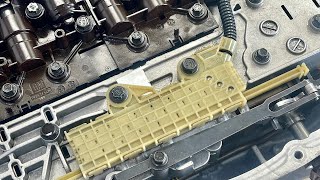
- Faulty Transmission Control Module (TCM) (Rare) — The computer module that processes the sensor's signal fails internally. This is a highly documented failure point on 2011-2019 Ford Focus and Fiesta models with the DPS6 transmission. 🎬 Watch: How to replace the TCM on a Ford Focus.
Symptoms

- Car won't start or only starts in Neutral — The computer requires a confirmed 'Park' or 'Neutral' signal to engage the starter. Without it, turning the key does nothing.
- Stuck in gear (Limp Mode) — The transmission defaults to a single gear (usually 3rd or 5th) to prevent internal damage from shifting blindly.
- Incorrect or blank gear indicator on dashboard — The PRNDL display on the instrument cluster flashes, goes blank, or highlights the wrong gear.
- Backup/Reverse lights fail — The reverse lights do not illuminate when shifting into Reverse, or they stay on constantly in all gears.
- Check Engine Light illuminates — The Malfunction Indicator Lamp turns on immediately when the computer detects the illogical gear signal.
Diagnostic Flowchart

Tap your situation to follow the diagnostic path that matches what you're seeing on this code.
Common Fixes & Costs
- Replace External Transmission Range Sensor — Parts: $30-$120, Labor: $100-$250, ~1.5 hr book time (Intermediate)
- Adjust Shifter Linkage Cable — Parts: $0, Labor: $75-$150, ~0.8 hr book time (DIY)
- Replace Internal Mode Switch (IMS) — Parts: $50-$150, Labor: $350-$700, ~3.5 hr book time (Professional)
- Repair Damaged Wiring or Connector — Parts: $15-$60, Labor: $125-$350, ~1.5 hr book time (Professional)
- Replace Transmission Control Module (TCM) — Parts: $200-$800, Labor: $150-$400, ~1.2 hr book time (Professional)
Used vs. New Parts: Buying Guide
When a used part is worth it: Only consider a used part for an external sensor if a new OEM replacement is prohibitively expensive. Never use a used internal mode switch; the labor cost to install it is too high to risk a premature failure.
Donor-vehicle mileage cap: roughly under 60000 miles for the part to have meaningful remaining life.
Donor quality checklist:
- Verify the part numbers match exactly.
- Inspect the electrical connector pins for green corrosion or burning.
- Ensure the mechanical rotating arm moves smoothly without excessive play.
Decision logic:
- If The part is an internal mode switch (IMS) requiring transmission pan removal → Always buy new OEM. The $350+ labor cost makes a used part a terrible financial risk.
- If The part is a Transmission Control Module (TCM) → Buy a new or professionally remanufactured unit. Used TCMs often carry the same factory defects that caused yours to fail.
- If The part is an external sensor and budget is tight → A used OEM part from a low-mileage salvage vehicle is an acceptable temporary fix.
Warranty tradeoff: Salvage yards offer 30-day warranties. New aftermarket sensors offer 1-year warranties. New OEM sensors offer 1-2 year warranties and guarantee exact fitment.
Worst-case if a used part fails: $700 (The cost of paying a shop to drop the transmission pan a second time if a used internal sensor fails).
What Happens If You Wait — Timeline
- 0-2 weeks: Check Engine Light illuminates. You may notice a slight delay before the reverse lights turn on, or you have to jiggle the shifter to get the key out of the ignition. (MPG impact: 0%% · Added cost: $0)
- 2-8 weeks: The car intermittently refuses to start in Park, forcing you to start it in Neutral. The transmission occasionally drops into limp mode, requiring a restart to clear. (MPG impact: 5%% · Added cost: $150 (Towing cost if stranded))
- 2-6 months: Limp mode becomes the default state. The transmission shifts violently into gear. The constant high hydraulic pressure begins tearing the friction material off the internal clutch packs. (MPG impact: 15%% · Added cost: $1000 (Internal valve body or clutch damage))
- 6+ months: Catastrophic transmission failure. The transmission slips completely, loses all forward gears, or physically breaks hard parts due to harsh engagements. (MPG impact: N/A% · Added cost: $3500 (Complete transmission replacement))
Cost of Not Fixing It
- Immediate: The vehicle refuses to start, leaving you stranded in a parking lot or driveway. (Added cost: $100-$250 (Towing fee))
- Weeks to Months: Driving in limp mode forces the transmission to operate at maximum line pressure, causing harsh, banging shifts that destroy internal clutches. (Added cost: $500-$1500 (Valve body or clutch pack replacement))
- 6+ Months: Complete catastrophic transmission failure due to prolonged operation with incorrect gear data and extreme hydraulic stress. (Added cost: $2500-$5000 (Full transmission rebuild or replacement))
Diagnosis Steps
- Scan Codes and Monitor Live Data
Connect an OBD-II scanner and view the Transmission Range Sensor PID. Slowly move the shifter through P, R, N, D. The scanner display must perfectly match the physical shifter position. Any delay or mismatch confirms a sensor, wiring, or linkage fault.
Tools: OBD-II Scanner with Live Data (Beginner) - Perform a Functional Test
Have a helper stand behind the vehicle. Shift into Reverse and verify the backup lights turn on. Next, attempt to start the engine in both Park and Neutral. If it only starts in one, the sensor is misadjusted or failing.
Tools: A helper (Beginner) - Check Shifter Cable Adjustment
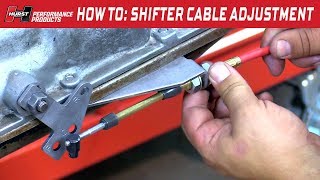
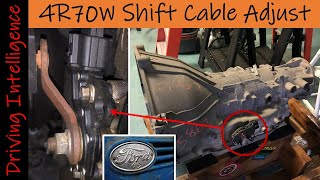
Inspect the cable connecting the interior shifter to the transmission lever. Ensure it is tight and moves the transmission lever fully into each detent. Adjust the cable according to the service manual if there is excessive play.
Tools: Basic hand tools (wrenches, sockets) (Intermediate) - Inspect Wiring and Perform a Wiggle Test
Visually inspect the wiring harness at the transmission. Look for melted insulation or corroded pins. While watching the live data on your scanner, vigorously wiggle the wiring harness. If the gear reading flickers, you have a broken wire or loose connector.
Tools: Flashlight, OBD-II Scanner (Intermediate) - PRO TIP: Test Sensor Reference Voltage
Disconnect the sensor. Turn the ignition ON (engine off). Use a multimeter to probe the reference wire from the computer. You must see a steady 5V or 12V signal (check your manual). Zero voltage indicates a broken wire or a dead TCM.
Tools: Multimeter, Vehicle-specific Wiring Diagram (Advanced) - PRO TIP: Test Sensor Output Signal
For GM vehicles, monitor the four IMS signal circuits (A, B, C, P) on an advanced scanner. They output High/Low patterns (e.g., Low-High-Low-Low for Reverse). If any circuit is stuck High or Low regardless of shifter position, the sensor is dead. For Ford, monitor the TR_FREQ PID; it must hold steady between 100-150 Hz.
Tools: Advanced Scan Tool, Service Manual Logic Table (Advanced) - Test Circuit Continuity
Disconnect the battery, the sensor, and the TCM. Use a multimeter set to Ohms to test each wire between the sensor and the computer for continuity. A reading of 'OL' confirms a broken wire.
Tools: Multimeter, Wiring Diagram (Advanced)
When This Code Triggers (Freeze-Frame Conditions)
- Vehicle Speed: 0 MPH (The code typically sets during an engine start attempt when the vehicle is stationary.)
- Engine RPM: 0 or <500 RPM (Cranking) (Captures the exact moment the computer denies the start request due to a missing Park/Neutral signal.)
- Transmission Range Sensor PID: Invalid, In-Gear, or No Signal (Shows the exact illogical data the sensor reported (e.g., reporting 'Drive' while the shifter is physically in 'Park').)
Related Codes
- P182E — GM-specific code for 'Internal Mode Switch Indicates Invalid Range.' P1915 sets when the start signal fails; P182E sets when the signal fails while driving. They almost always appear together.
- P0705 — The generic OBD-II code for a Transmission Range Sensor circuit malfunction. P1915 is simply the manufacturer-specific version of this exact same fault.
- P0700 — A generic request code. It means the Transmission Control Module found a fault (like P1915) and asked the main engine computer to turn on the Check Engine Light.
- P1825 — Another GM-specific code for an invalid IMS range. Diagnosed and repaired identically to P1915 and P182E.
Climate & Environmental Factors
- Road Salt and Moisture: External range sensors and their connectors sit low on the transmission, exposing them directly to road spray. Salt accelerates corrosion on the connector pins, causing signal dropouts.
- Extreme Heat Cycles: Internal mode switches are submerged in hot transmission fluid. Years of expanding and contracting degrade the plastic housing and internal wiring harness, leading to brittle fractures.
How to Talk to a Mechanic About This Code
Say this: "I have a P1915 code and my car is experiencing a no-start condition. I'd like to schedule a diagnostic to test the transmission range sensor circuit. Please check the sensor's live data, perform a wiggle test on the wiring, and verify the shifter cable adjustment before quoting a replacement part."
This prevents the shop from blindly firing the parts cannon. It forces the technician to rule out a $0 cable adjustment or a $50 wiring repair before charging you $600 to drop the transmission pan.
Avoid saying:
- 'My neutral safety switch is bad, replace it.' (You are diagnosing it yourself; if it's actually a wiring issue, you still pay for the sensor and the problem remains.)
- 'Just fix whatever is making it shift hard.' (Too vague, invites a massive diagnostic bill.)
Questions to ask before authorizing the repair:
- Did the live data on the scanner match the physical shifter position?
- Did you check the wiring harness for corrosion or broken pins?
- Is the sensor located inside or outside the transmission pan?
- Does this repair require programming a new module?
Where to Take It: Dealer vs Independent vs Chain
- Dealer:
Only use the dealer if your vehicle is under warranty or requires complex module programming.
Best for: Ford DPS6 transmission issues covered under extended warranty programs., Vehicles requiring a new Transmission Control Module (TCM) that needs factory software programming.
Downsides: Highest labor rates ($150-$250/hr)., Will only use expensive OEM parts. (Typical cost: +40% vs. baseline) - Independent Shop:
The best choice for 90% of P1915 repairs. Look for an independent shop with an ASE-certified transmission specialist.
Best for: Replacing external range sensors., Adjusting shifter cables and repairing wiring harnesses., Replacing internal mode switches (if they specialize in transmissions).
Downsides: May lack the factory software required to program a new TCM. (Typical cost: +0% vs. baseline) - Chain Shop:
Avoid. Chain shops are fine for brakes and oil changes, but P1915 requires dedicated electrical and transmission diagnostics.
Best for: Scanning the code for free.
Downsides: Technicians often lack the advanced electrical diagnostic skills required to test 5V reference circuits., Will rarely open a transmission pan to replace an internal switch. (Typical cost: -10% vs. baseline)
When to Walk Away From the Repair
If the repair cost exceeds 50% of the vehicle's private-party value, or if the transmission is already showing signs of severe internal damage (slipping, metal in fluid), do not authorize the repair.
- Car worth $3000, fix is $800: Borderline. If the car is in excellent condition otherwise, fix it. If it needs tires and brakes soon, sell it as a 'mechanic special.'
- Car worth $15000, fix is $650: Fix it. The repair is a small fraction of the vehicle's value and restores full reliability.
- Car worth $4000, fix is $3500: Walk away. If driving in limp mode destroyed the transmission and it needs a full rebuild, the cost equals the value of the car.
What Scan Tool You Need for This Code
Minimum: An OBD-II scanner that reads manufacturer-specific transmission codes and displays live data (specifically the Transmission Range Sensor PID).
A $20 code reader only shows generic engine codes. It cannot access the Transmission Control Module to show you what gear the sensor is actively reporting, making diagnosis impossible.
Budget: FOXWELL NT301 (~$70) — Reads transmission codes and displays live sensor data, allowing you to verify if the sensor's output matches the physical shifter position.
Mid-range: BlueDriver Pro (~$120) — Connects via Bluetooth to your phone. Offers full-system scanning and live data graphing, which is crucial for catching intermittent signal dropouts while driving.
Professional: Autel MaxiCOM MK808 (~$450) — Provides bidirectional control. You can command specific transmission solenoids and view manufacturer-specific logic (like GM's A/B/C/P signals). Required if you need to perform a transmission adaptive relearn after repairs.
Rent vs buy: Buy a midrange scanner. Auto parts stores scan codes for free, but they will not ride with you to monitor live data. A $120 scanner pays for itself by preventing a single $150 misdiagnosis fee at a shop.
How to Clear the Code After You Fix It
- Use an OBD-II scan tool to clear the P1915 code from the TCM and PCM.
- Perform a complete OBD-II drive cycle to allow the transmission monitors to run.
- Rescan the vehicle to confirm the code remains clear.
Drive cycle (~30 minutes): Start the engine cold and idle for 3 minutes. Drive in stop-and-go traffic for 10 minutes, shifting through all gears. Transition to a highway and cruise at a steady 55 mph for 10 minutes. Come to a complete stop and idle in Drive for 2 minutes before parking.
Readiness monitors affected: Comprehensive Component Monitor, Transmission
Before emissions retest: drive at least 50 miles to fully set monitors.
Watch out for:
- Disconnecting the battery clears the code but resets all emissions monitors to 'Not Ready,' causing an automatic smog test failure.
- Failing to properly align a new external sensor will cause the code to return immediately upon startup.
Will This Fail Emissions / State Inspection?
Yes — this code typically fails an OBD-II emissions inspection.
- California: An active P1915 code triggers an automatic smog check failure. The code must be cleared and the Transmission readiness monitor must read 'Ready' before re-testing.
- New York: The NYS DMV inspection includes a strict OBD-II scan. Any illuminated Check Engine Light results in an automatic failure.
- Texas: In emissions-testing counties (e.g., Harris, Dallas), an active P1915 code prevents the vehicle from passing the annual safety and emissions inspection.
Most Commonly Affected Vehicles
- Chevrolet Cruze, Equinox, Malibu, Silverado (2007-2017) — Models with 6T40/6T45/6L80 transmissions frequently suffer from Internal Mode Switch (IMS) failures, triggering P1915 and P182E together.
- GMC Acadia, Sierra, Terrain (2008-2017) — Shares the same transmission platforms as Chevrolet, experiencing identical internal switch failures resulting in no-start conditions.
- Ford Focus, Fiesta (2011-2019) — On the DPS6 PowerShift transmission, P1915 is a primary symptom of a failing Transmission Control Module (TCM). Ford extended warranties on this part under program 14M02.
- Hyundai Sonata, Elantra, Santa Fe (2009-2022) — Uses an external inhibitor switch. The plastic housing cracks, allowing moisture inside. Replacement is straightforward and inexpensive.
- Honda Civic, Accord (2001-2012) — P1915 specifically points to a fault in the backup light switch circuit, which is integrated into the external range sensor.
- Dodge Charger, Challenger (2011-2014) — P1915 is defined as 'Transmission Inhibited Remote Start.' The fault prevents the computer from verifying the car is in Park, disabling remote start.
- Mitsubishi Colt, Smart Forfour (2004-2012) — On automated manual transmissions, P1915 indicates a failure of the shift drum position sensor rather than a traditional PRNDL switch.
- Pontiac Grand Prix, G6 (2004-2009) — External neutral safety switch failures are common, leading to erratic shifting and dashboard gear indicator blackouts.
Manufacturer-Specific Notes
- General Motors: GM places the Internal Mode Switch inside the transmission pan on the valve body. Diagnosing it requires monitoring a specific 4-wire High/Low logic pattern on a scan tool. Replacement requires draining the fluid.
- Ford: On DPS6 transmissions, P1915 rarely means the sensor itself is bad. It almost always indicates the Transmission Control Module (TCM) has failed internally and stopped sending the 5V reference signal to the sensor.
- Volkswagen / Audi: P1915 is completely unrelated to the transmission. It indicates a 'Coolant pump relay short to positive,' requiring a totally different diagnostic path.
Real Owner Stories
2011 Chevy Cruze - Crank, No-Start Condition
The vehicle would crank strongly but refused to start. The owner replaced the battery and checked all fuel relays, assuming an engine issue.
What they tried:
- Replaced the battery and starter relay.
- Scanned the vehicle and found codes P1915 and P182E.
Outcome: The root cause was a failed Internal Mode Switch inside the 6T40 transmission. The computer was not receiving the 'Park' signal, so it disabled the fuel injectors. A shop replaced the IMS for $650, restoring normal starting.
Lesson: A 'crank, no-start' isn't always a fuel or spark problem. Modern transmissions dictate whether the engine is allowed to run. Always scan for transmission codes before replacing engine components.
2014 Ford Focus - Intermittent Limp Mode
The car intermittently lost power, got stuck in 3rd gear, and threw code P1915. The issue temporarily resolved after turning the car off and on.
What they tried:
- Replaced the external range sensor based on advice from an auto parts store.
- The problem returned two days later.
Outcome: The owner took the car to a Ford dealer. The actual failure was the Transmission Control Module (TCM) dropping the 5V reference signal to the sensor. The TCM was replaced for free under Ford's 14M02 extended warranty program.
Lesson: On Ford DPS6 transmissions, P1915 is almost always a TCM failure, not a sensor failure. Check your VIN for extended warranty coverage before spending money on parts.
How to Prevent This Code From Triggering
- Change transmission fluid and filter every 40,000 miles (Every 40,000 miles or 4 years.) — Clean fluid prevents the mechanical slider inside an Internal Mode Switch from binding. Degraded fluid leaves varnish deposits that glue the switch contacts together.
- Apply dielectric grease to external sensor connectors (Whenever the connector is unplugged for service.) — Seals out moisture and road salt, preventing the green corrosion that causes electrical resistance and signal dropouts.
- Inspect shifter linkage adjustment annually (Once a year or during routine oil changes.) — A loose cable puts constant mechanical strain on the sensor's internal plastic arm, causing it to snap prematurely. Keeping it tight ensures the sensor only moves when intended.
Frequently Asked Questions
What is the most common misdiagnosis for P1915?
A common mistake is immediately replacing the transmission range sensor without testing the circuit. Technicians often find the problem persists because the actual fault was a corroded connector or a misadjusted shifter cable. Always verify the sensor's live data first.
My car has P1915 and P182E. What's the difference?
On GM vehicles, P1915 specifically means the computer didn't see a 'Park' or 'Neutral' signal during engine startup. P182E is a broader code meaning the computer received an invalid gear signal at any time. Seeing both strongly points to a failing Internal Mode Switch.
Can a bad battery cause a P1915 code?
A weak battery causes low voltage throughout the electrical system, leading to unpredictable module communication errors. While not the direct cause of a P1915, it triggers false codes. Always ensure your battery outputs at least 12.4 volts before starting complex diagnostics.
What is the difference between a neutral safety switch and a transmission range sensor?
They are different names for the same component. 'Neutral Safety Switch' is an older term describing its function to prevent starting in gear. 'Transmission Range Sensor' is the modern term, as it now controls shift logic and reverse lights across all gears.
Can I fix the P1915 code myself?
You can easily fix a blown fuse, adjust a shifter cable, or replace an externally mounted range sensor with basic hand tools. However, if your vehicle uses an Internal Mode Switch located inside the transmission pan, leave the repair to a professional. Opening the transmission risks severe contamination and damage.
Will clearing the code fix the problem?
Clearing the code only erases the fault from the computer's memory and temporarily turns off the check engine light. The underlying physical or electrical problem remains. The code will return as soon as the computer runs its next self-test.
How do I know if the sensor is internal or external?
An external sensor mounts on the outside of the transmission case where the shift lever connects, making it easily visible. An internal sensor sits inside the transmission and requires removing the fluid pan to access. Search your specific year, make, and model online to confirm your sensor's location.
Why did my car get stuck in 'limp mode'?
Limp mode is a protective feature that locks the transmission into a single gear (usually 3rd or 5th) when the computer loses reliable gear data. This prevents catastrophic damage from shifting blindly. It allows you to drive to a safe location at reduced speeds.
Key Takeaways
- P1915 indicates a failure in the transmission range sensor circuit, which tells the computer whether the car is in Park, Reverse, Neutral, or Drive.
- Do not ignore a P1915 code; it frequently causes a 'crank, no-start' condition that will leave you stranded and require a $100-$250 tow.
- Always check the shifter cable adjustment and perform a $0 functional test of the reverse lights before buying a replacement sensor.
- Repair costs range from $0 for a simple cable adjustment to over $800 if the sensor is located inside the transmission pan.
Helpful Videos




The information in this article is provided for general reference and educational purposes only. Vehicle specifications, procedures, and part compatibility can vary by production date, trim level, and region. Always consult your vehicle's factory service manual and verify part numbers before purchasing or performing repairs. Safety-critical components such as airbags, seat belts, and braking systems should be installed by a qualified professional.
- 🎬 Helpful Videos
- What Does P1915 Mean?
- Can I Drive With P1915?
- Common Causes
- Symptoms
- Diagnostic Flowchart
- Common Fixes & Costs
- Used vs. New Parts: Buying Guide
- What Happens If You Wait — Timeline
- Cost of Not Fixing It
- Diagnosis Steps
- When This Code Triggers (Freeze-Frame Conditions)
- Related Codes
- Climate & Environmental Factors
- How to Talk to a Mechanic About This Code
- Where to Take It: Dealer vs Independent vs Chain
- When to Walk Away From the Repair
- What Scan Tool You Need for This Code
- How to Clear the Code After You Fix It
- Will This Fail Emissions / State Inspection?
- Most Commonly Affected Vehicles
- Manufacturer-Specific Notes
- Real Owner Stories
- 2011 Chevy Cruze - Crank, No-Start Condition
- 2014 Ford Focus - Intermittent Limp Mode
- How to Prevent This Code From Triggering
- Frequently Asked Questions
- What is the most common misdiagnosis for P1915?
- My car has P1915 and P182E. What's the difference?
- Can a bad battery cause a P1915 code?
- What is the difference between a neutral safety switch and a transmission range sensor?
- Can I fix the P1915 code myself?
- Will clearing the code fix the problem?
- How do I know if the sensor is internal or external?
- Why did my car get stuck in 'limp mode'?
- Key Takeaways
- 🎟️ Get 5% Off