

OBD-II Code P1882: Drivetrain, Engine, or Data Bus Circuit Malfunction
The Ultimate 2026 Guide: What P1882 Means, Why It Triggers, and How to Fix It—For Good.
- Identify your vehicle's specific P1882 definition first; it means a 4WD fault on a GM, a coolant sensor short on a Ford, and an ABS communication error on a VW.
- Inspect the wiring harness and connectors before buying parts, as chafed wires causing a short-to-ground are the root cause in over 50% of P1882 cases.
- For Ford vehicles, test the coolant level sensor signal wire with a multimeter; a 0V reading confirms a short in the harness, not a bad sensor.
- For VW models, do not replace transmission components; P1882 almost always requires diagnosing and replacing a failed ABS control module costing $550 to $1,500.
What Does P1882 Mean?
P1882 is a manufacturer-specific code with entirely different definitions based on your vehicle. For General Motors (GM), it indicates a failure in the 4WD front axle disconnect circuit. For Ford, it means the engine coolant level sensor circuit is shorted to ground. For Honda and Volkswagen, it points to transmission solenoid failures or missing ABS data bus communication.
Technical definition: The formal definition for P1882 varies by manufacturer. The most common are: * **General Motors (Chevrolet, GMC):** Drive/Axle Disconnect Solenoid Circuit Failure * **Ford:** Engine Coolant Level Switch Circuit Short To Ground * **Volkswagen:** Data Bus, Powertrain: Missing Message from ABS Control Module * **Honda:** Inhibitor Solenoid Circuit Malfunction (CVT Transmission) * **Toyota:** Right Front Wheel Speed Sensor Circuit Plausibility Failure * **BMW:** Transmission Gear Selection 2-3, High Input * **Saturn (VTi CVT):** Ratio Control Motor Circuit Malfunction
Can I Drive With P1882?
Yes, But With Caution. You can drive, but a key feature is disabled. For GM, 4WD is inoperative. For Ford, the coolant level warning is disabled; an unnoticed leak causes $2,000-$4,000 in engine overheating damage. For Honda or VW, driving with harsh shifting turns a $400 solenoid fix into a $3,500 transmission rebuild. Address the issue promptly to prevent severe secondary damage.
Common Causes

- Damaged or Corroded Wiring (Very Common) — This is the most frequent cause across all makes. Wires chafe against the chassis, break, or suffer damage from road debris, causing a short or open circuit. This directly affects the GM axle solenoid harness, the Ford coolant sensor harness, or Toyota wheel speed sensors.
- Failed Solenoid or Sensor (Common) — The component itself fails internally. GM front axle disconnect solenoids burn out, Ford coolant level switches develop internal short circuits, and Honda inhibitor solenoids fail to hold proper resistance.
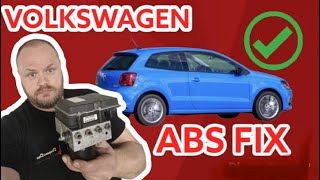
- Failed ABS Control Module (VW) (Common) — On Volkswagens, the Transmission Control Module (TCM) sets P1882 when it stops receiving CAN bus signals from the ABS module. The root cause is almost always a failed ABS module, not a transmission issue. 🎬 See this walkthrough on diagnosing and fixing Volkswagen ABS modules.
- Corroded Electrical Connector (Common) — Connectors exposed to the elements collect moisture and road salt. This corrosion creates high electrical resistance, blocking the signal and triggering the code.
- Faulty Control Module (TCCM, PCM, TCM) (Less Common) — If wiring and sensors test perfectly, the module interpreting the signal has failed. This includes the Transfer Case Control Module (TCCM) on GM or the Powertrain Control Module (PCM) on Ford.
- Internal CVT Transmission Failure (Saturn) (Less Common) — On 2002-2007 Saturn Vue models, P1882 indicates catastrophic internal transmission failure, specifically the drive belt or ratio control motor.
- Low or Contaminated Fluid (Rare) — On Honda or VW transmissions, severely degraded or low fluid causes solenoids to overheat and operate outside of their electrical parameters. 🎬 Watch: How to test and clean your Honda transmission solenoids.
Symptoms

- Check Engine Light is On — The primary dashboard indicator for all variations of P1882.
- Service 4WD Light On and 4WD Disabled — On GM vehicles, the 4WD system disables itself as a fail-safe, and the dashboard warning illuminates.
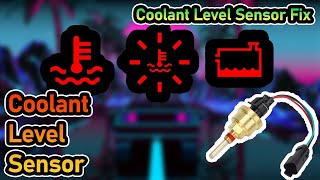
- Engine Coolant Warning Light On — On Ford vehicles, the coolant level light stays on constantly due to the short circuit, even if the reservoir is full. 🎬 Watch: How the coolant level sensor works and common fixes.
- ABS or Traction Control Light On — On Toyota or VW vehicles, the ABS and traction control systems disable themselves, triggering dashboard lights.
- Erratic Shifting or Stuck in Gear — On Honda, BMW, or VW models, the transmission shifts harshly, delays engagement, or enters a restricted 'limp mode'.
- Engine Starts and Immediately Stalls — On VW models, the immobilizer or safety systems shut the engine down 1-2 seconds after starting due to missing ABS data.
Diagnostic Flowchart
Tap your situation to follow the diagnostic path that matches what you're seeing on this code.
Common Fixes & Costs

- Repair Damaged Wiring Harness — Parts: $10-$30, Labor: $125-$250, ~1.5 hr book time (Intermediate)
- Replace Engine Coolant Level Sensor (Ford) — Parts: $30-$150, Labor: $100-$175, ~1.0 hr book time (DIY)
- Replace Front Axle Disconnect Solenoid (GM) — Parts: $100-$250, Labor: $150-$250, ~1.8 hr book time (Intermediate)
- Replace Transmission Inhibitor Solenoid (Honda) — Parts: $80-$250, Labor: $200-$400, ~2.5 hr book time (Advanced)
- Replace ABS Control Module (VW) — Parts: $400-$1200, Labor: $150-$300, ~2.2 hr book time (Professional)
Used vs. New Parts: Buying Guide
When a used part is worth it: Buy used for expensive electronic modules like a VW ABS unit or GM TCCM, provided the seller offers a warranty and the part numbers match exactly. Buy new aftermarket for mechanical parts like GM axle solenoids or Ford coolant reservoirs.
Donor-vehicle mileage cap: roughly under 100000 miles for the part to have meaningful remaining life.
Donor quality checklist:
- Match the OEM part number exactly; superseded numbers require dealer programming.
- Ensure the seller offers a minimum 30-day functional warranty.
- Avoid underbody parts from rust-belt donors due to corrosion.
Decision logic:
- If The part is a simple sensor or plastic reservoir (Ford) → Buy new aftermarket. The low cost and reliability outweigh the minimal savings of buying used.
- If The part is an expensive electronic module (VW ABS, GM TCCM) → Buy a used part with a matching number, or use a professional mail-in rebuild service for your original module.
- If The part is an internal transmission component (Honda solenoid) → Buy new OEM. The high labor cost to access the part makes installing a used component too risky.
Warranty tradeoff: Used parts carry a 30-90 day warranty. New aftermarket parts offer 1-year to lifetime warranties. OEM parts offer 12-month/12,000-mile warranties.
Worst-case if a used part fails: $800 if a used VW ABS module fails after installation, requiring you to pay labor and programming fees twice.
What Happens If You Wait — Timeline
- 0-2 weeks: GM: 4WD is disabled. Ford: 'Low Coolant' light on, but level is fine. VW/Honda: Check Engine Light on, occasional hard shift. (MPG impact: 0%% · Added cost: $0)
- 1-3 months: Ford: A real coolant leak starts but goes unnoticed. VW/Honda: Shifting becomes noticeably harsher, stressing internal components. (MPG impact: 0-2%% · Added cost: $50)
- 3-9 months: Ford: The unnoticed leak drains the system, causing engine overheating and a warped cylinder head. VW/Honda: Harsh shifting causes premature wear on internal transmission clutches. (MPG impact: 2-5%% · Added cost: $2000-$4000)
- 9+ months: Ford: Catastrophic engine failure from severe overheating. VW/Honda: Transmission suffers internal failure, leaving the vehicle immobile. (MPG impact: 5-15%% · Added cost: $4000-$8000)
Cost of Not Fixing It
- Immediate: GM: 4WD system is inoperative. Ford: No warning for a low coolant condition. VW/Honda: Erratic shifting or stuck in gear. (Added cost: $0)
- 1-6 months: Ford: A coolant leak goes unnoticed, warping the cylinder head. VW/Honda: Continued harsh shifting destroys internal clutch packs. (Added cost: $2,000-$4,000)
- 6+ months: Ford: Seized engine requiring full replacement. VW/Honda: Complete transmission failure leaving the vehicle stranded. (Added cost: $4,000-$8,000)
Diagnosis Steps
- Identify Your Vehicle's Specific Definition
Confirm exactly what P1882 means for your make and model. This dictates your entire diagnostic path (e.g., 4WD for GM, Coolant for Ford, ABS for VW).
Tools: OBD-II Scanner, Smartphone/Service Manual (Beginner) - Scan All Control Modules
Use a scanner capable of reading the TCM, ABS, and BCM. On a VW, finding code P1853 alongside ABS communication faults confirms an ABS module failure. On GM, finding C0374 confirms a front axle fault.
Tools: Professional OBD-II Scanner (Beginner) - Perform a Targeted Visual Inspection
Locate the relevant component (GM axle solenoid, Ford coolant sensor, Honda inhibitor solenoid). Inspect the wiring harness for chafing against metal brackets, broken wires, or melted insulation.
Tools: Flashlight (Beginner) - Inspect and Clean the Electrical Connector
Disconnect the component. Check for green corrosion or pushed-out pins. Clean the contacts with electrical cleaner, dry them, and apply dielectric grease before reconnecting.
Tools: Electrical Contact Cleaner, Small Brush, Dielectric Grease (Intermediate) - Test for a Short to Ground (Ford)
Disconnect the coolant level sensor. Turn the ignition ON. Backprobe the signal wire in the harness connector with a multimeter. A reading of 0V confirms the wire is shorted to ground. If it reads 5V or 12V, the wiring is good, and the sensor itself has failed.
Tools: Multimeter (Intermediate) - Test Solenoid Resistance (GM / Honda)
Disconnect the solenoid (GM axle actuator or Honda inhibitor). Measure resistance across the solenoid's pins. A GM actuator should read 7.8-8.8 Ohms. A Honda solenoid should read 11.7-21.0 Ohms. A reading of 0 Ohms (short) or O.L. (open) means the solenoid is dead and requires replacement.
Tools: Multimeter (Advanced) - Check CAN Bus Resistance (VW)
Disconnect the battery. At the OBD-II port, measure resistance between Pin 6 (CAN High) and Pin 14 (CAN Low). A healthy bus reads 60 Ohms. A reading of 120 Ohms means a terminating resistor (often in the ECU) is offline. An open reading indicates broken CAN wiring.
Tools: Multimeter, Vehicle Wiring Diagram (Professional)
When This Code Triggers (Freeze-Frame Conditions)
- Vehicle Speed: 0 mph (The fault is often detected immediately during the initial key-on electrical self-test before the vehicle moves.)
- System Voltage: 11.5-14.5V (Sets during normal operating voltage. However, voltage drops below 11V cause communication-related versions of this code on VWs.)
Related Codes
- C0374 — On GM vehicles, this chassis code appears alongside P1882. Both point to the exact same hardware failure in the front axle disconnect system.
- P1883 — On Ford vehicles, P1883 is a general coolant level circuit failure. P1882 specifically dictates a 'Short to Ground', narrowing your diagnostic focus to chafed wires touching metal.
- P1853 — On VW vehicles, seeing P1853 alongside P1882 guarantees the root cause is a faulty ABS module or CAN bus failure, not a transmission problem.
- P0117 / P0118 — These codes indicate a failure of the Coolant Temperature Sensor. P1882 is for the Coolant Level Sensor. Do not confuse the two; they are entirely different parts.
Climate & Environmental Factors
- Road Salt and Humidity (Rust Belt): Accelerates corrosion on exposed wiring harnesses and connectors, directly causing the short-to-ground failures that trigger P1882 on Ford and GM vehicles.
- Extreme Cold: Turns aged wire insulation brittle, causing it to crack and expose bare copper to the chassis, instantly triggering a short circuit.
How to Talk to a Mechanic About This Code
Say this: "I have a P1882 code. For my [Make], I know this relates to the [coolant level circuit / ABS communication / 4WD system]. I'd like to book a diagnostic appointment to test the wiring and confirm the specific failure."
This directs the technician to the correct system (engine vs. transmission vs. 4WD) and prevents them from wasting time on irrelevant diagnostics or suggesting an incorrect repair.
Avoid saying:
- 'My check engine light is on, can you look at it?'
- 'My car is acting weird, just fix it.'
- 'The internet said I need a new transmission.'
Questions to ask before authorizing the repair:
- For a Ford: Did you test the wiring harness for a short to ground before condemning the sensor?
- For a VW: Did you confirm a loss of communication with the ABS module?
- For a GM: Did you measure the resistance of the front axle solenoid?
Where to Take It: Dealer vs Independent vs Chain
- Dealer:
Recommended for VW owners or if the vehicle requires brand-specific module programming.
Best for: Vehicles under warranty, Volkswagen P1882, which requires ABS module coding and specialized software, Complex GM TCCM programming
Downsides: Highest labor rates., Will default to replacing entire assemblies rather than repairing wiring. (Typical cost: +50% vs. baseline) - Independent Shop:
Best overall choice for Ford and GM. For VW, ensure the shop specializes in German cars.
Best for: Out-of-warranty Ford and GM versions of P1882., Cost-sensitive repairs on older vehicles.
Downsides: May lack the expensive, specialized tools for VW ABS module coding. (Typical cost: +0% vs. baseline) - Chain Shop:
AVOID. The complexity and manufacturer-specific nature of this code guarantee a misdiagnosis at a chain shop.
Best for: Simple, unrelated maintenance like oil changes.
Downsides: High pressure to upsell., Very unlikely to correctly diagnose the nuanced VW communication issue. (Typical cost: -10% vs. baseline)
When to Walk Away From the Repair
If the estimated repair cost exceeds 50% of the car's private-party value, seriously consider selling or trading it in.
- Car worth $3000, fix is $2500: Walk away. This applies to a Saturn Vue where P1882 means a new transmission is needed.
- Car worth $8000, fix is $1200: Fix it. Replacing a VW ABS module is significant but restores a critical safety system well below the threshold.
- Car worth $5000, fix is $300: Fix it. A common repair like a GM axle solenoid or Ford sensor is a minor investment.
What Scan Tool You Need for This Code
Minimum: A scanner that reads manufacturer-specific codes for the Engine, Transmission, and ABS modules.
A generic $20 reader only shows 'P1882'. It cannot see the related ABS codes on a VW, leaving you blind to the actual source of the problem.
Budget: BlueDriver Pro (~$99) — Reads and clears codes from all modules (Engine, ABS, Transmission), allowing you to confirm if P1882 is accompanied by ABS faults.
Mid-range: Foxwell NT510 Elite (~$180) — Provides OE-level diagnostics for a specific car brand. It performs active tests on the VW ABS module or commands the GM 4WD system.
Professional: Autel MaxiCOM MK808 (~$450) — Offers full bidirectional control. You can send commands directly to components, like telling the GM axle solenoid to activate or cycling the VW ABS pump.
Rent vs buy: Buy a 'Budget' or 'Mid-Range' scanner. Renting a basic parts-store scanner will not provide the multi-module data required to diagnose P1882 correctly.
How to Clear the Code After You Fix It
- Perform the physical repair and secure all wiring.
- Reconnect the battery and ensure connectors are seated.
- Use an OBD-II scan tool to erase the DTCs from all modules.
- Perform a complete drive cycle to reset readiness monitors.
Drive cycle (~20 minutes): Start the engine cold. Idle for 3 minutes. Drive 15 minutes in mixed city/highway conditions, maintaining 55 mph for at least 5 minutes. Coast to a stop without braking once.
Readiness monitors affected: Comprehensive Component Monitor, Specific System Monitors (ABS, Transmission)
Before emissions retest: drive at least 50 miles to fully set monitors.
Watch out for:
- Disconnecting the battery clears the code but resets all emissions monitors, guaranteeing an automatic smog test failure.
- The code returns instantly if the short-to-ground in the wiring harness was not fully insulated.
Will This Fail Emissions / State Inspection?
Yes — this code typically fails an OBD-II emissions inspection.
- California: An active Check Engine Light is an automatic failure. You must complete a full drive cycle after repair to set readiness monitors before re-testing.
- New York: Vehicles with an illuminated Check Engine Light automatically fail the emissions portion of the NYS inspection.
- Texas: In emissions-testing counties, an illuminated Check Engine Light results in an automatic failure of the OBD-II test.
Most Commonly Affected Vehicles
- Chevrolet Trailblazer (2002-2009) — Prone to front axle disconnect solenoid failures and wiring harness chafing above the transmission.
- GMC Envoy (2002-2009) — Shares the GMT360 platform with the Trailblazer; suffers identical 4WD component failures.
- Ford Ranger (1998-2011) — Frequently logs P1882 due to the coolant level sensor wiring harness chafing against the frame rail or engine block.
- Ford Explorer (2002-2010) — The coolant level sensor, integrated into the expansion tank, fails internally and shorts to ground.
- Volkswagen Golf, Jetta, Passat (2005-2013) — Logs P1882 when the Transmission Control Module loses communication with a failing MK60 ABS module.
- Honda Civic (2001-2005) — CVT models trigger this code when the inhibitor solenoid circuit fails or falls out of resistance specifications.
- Saturn Vue (2002-2007) — On VTi CVT models, P1882 indicates catastrophic internal transmission failure requiring complete replacement.
- Toyota RAV4 (2006-2012) — Logs P1882 for a wheel speed sensor circuit plausibility failure, usually caused by damaged wiring at the wheel hub.
- Nissan Primastar (2002-2010) — Indicates a fault with the traction control actuator sensor or fuel pressure signal under load.
Manufacturer-Specific Notes

- General Motors: P1882 exclusively points to the 4WD system. The 'Service 4WD' light is your primary symptom. Never test a new front axle actuator by letting it hang by its wires; it must be threaded into the axle housing first to prevent internal over-travel damage.
- Ford: P1882 is entirely unrelated to the drivetrain. It points directly to an electrical short in the engine coolant level sensor circuit. The fault is usually the wiring harness shorting to the frame, not the sensor itself.
- Volkswagen: P1882 is a symptom, not the disease. The Transmission Control Module logs it because it lost communication with the ABS module. Diagnosis must start by checking the ABS system health.
- Saturn: On a Vue with the VTi transmission, P1882 is a death warrant for the CVT. It indicates a failure of the ratio control motor or belt, requiring a transmission replacement that often exceeds the vehicle's value.
Real Owner Stories
2003 GMC Sierra 1500 with 'Service 4WD' Light
The 'Service 4WD' light was on, and 4WD would not engage. Codes C0379 and P1882 were stored.
What they tried:
- Replaced the front axle actuator, but tested it by plugging it in while it hung by its wires.
- Replaced the transfer case encoder motor.
Outcome: Testing the new actuator while it was hanging overextended and destroyed it internally. Installing a second new actuator correctly into the axle housing before testing resolved the issue.
Lesson: Never test a new GM front axle actuator by letting it hang; it must be threaded into the axle housing first to prevent over-travel damage.
2007 VW Jetta with multiple warning lights
ABS, brake, and traction control lights were on. The speedometer failed. The scanner showed P1882 and a total loss of communication with the ABS module.
What they tried:
- Inspected all fuses.
- Verified power and ground at the ABS module connector.
Outcome: After confirming the wiring was good, the owner installed a used ABS module with a matching part number. This restored communication, cleared the codes, and fixed the speedometer.
Lesson: On a VW, P1882 accompanied by a loss of communication with the ABS module guarantees the ABS module has failed. It is not a transmission problem.
Ford Ranger with constant 'Low Coolant' light
The coolant warning light stayed on despite a full reservoir. The truck logged P1882 (Short to Ground).
What they tried:
- Disconnected the sensor and checked for continuity between the signal wire and the chassis ground.
Outcome: The multimeter showed zero Ohms, indicating a dead short in the wiring harness. The owner found a section of the harness rubbed bare against the frame rail. Taping the wire fixed the problem without buying a new sensor.
Lesson: Always test the Ford wiring harness for a short to ground before buying a new coolant sensor. The fault is usually in the harness.
How to Prevent This Code From Triggering
- Inspect and Protect Wiring Harnesses (Annually) — Chafed wiring is the primary cause of P1882. Securing loose harnesses with zip ties and wrapping them in split loom tubing prevents shorts to ground.
- Apply Dielectric Grease to Connectors (Anytime a connector is disconnected) — Seals electrical connectors against moisture and road salt, preventing the corrosion that blocks signals.
- Exercise the 4WD System (GM) (Monthly) — Engaging 4WD for a short distance lubricates the moving parts within the front axle disconnect actuator, preventing it from seizing.
Frequently Asked Questions
Why does P1882 have so many different meanings?
Codes starting with 'P1' are manufacturer-specific. Automakers assign these codes to their unique systems, which is why P1882 means a 4WD fault on a Chevy but a coolant sensor short on a Ford.
What is the most common misdiagnosis for P1882?
Replacing expensive parts without testing the wiring. Mechanics often replace the VW transmission, the Ford coolant sensor, or the GM axle solenoid when the actual fix is repairing a $10 chafed wire.
Can a bad ABS module cause a transmission code like P1882?
Yes, specifically on Volkswagen and Audi vehicles. The transmission relies on wheel speed data from the ABS module to shift correctly. If the ABS module dies, the transmission logs P1882.
Is it safe to drive with a P1882 code?
It depends on the vehicle. On a GM, you lose 4WD but can drive safely in 2WD. On a Honda or VW, driving with erratic shifting causes severe internal transmission damage and should be avoided.
How do I clear the P1882 code?
Use an OBD-II scanner to erase the code after completing the repair. If you clear it without fixing the underlying electrical short, the code returns the moment you turn the key.
What's the difference between a coolant level sensor and a coolant temperature sensor?
The level sensor (Ford P1882) is a simple switch that triggers a dashboard warning if fluid is low. The temperature sensor (P0117) tells the engine computer how hot the coolant is to adjust fuel and timing.
Key Takeaways
- Identify your vehicle's specific P1882 definition first; it means a 4WD fault on a GM, a coolant sensor short on a Ford, and an ABS communication error on a VW.
- Inspect the wiring harness and connectors before buying parts, as chafed wires causing a short-to-ground are the root cause in over 50% of P1882 cases.
- For Ford vehicles, test the coolant level sensor signal wire with a multimeter; a 0V reading confirms a short in the harness, not a bad sensor.
- For VW models, do not replace transmission components; P1882 almost always requires diagnosing and replacing a failed ABS control module costing $550 to $1,500.
Helpful Videos

The information in this article is provided for general reference and educational purposes only. Vehicle specifications, procedures, and part compatibility can vary by production date, trim level, and region. Always consult your vehicle's factory service manual and verify part numbers before purchasing or performing repairs. Safety-critical components such as airbags, seat belts, and braking systems should be installed by a qualified professional.
- 🎬 Helpful Videos
- What Does P1882 Mean?
- Can I Drive With P1882?
- Common Causes
- Symptoms
- Diagnostic Flowchart
- Common Fixes & Costs
- Used vs. New Parts: Buying Guide
- What Happens If You Wait — Timeline
- Cost of Not Fixing It
- Diagnosis Steps
- When This Code Triggers (Freeze-Frame Conditions)
- Related Codes
- Climate & Environmental Factors
- How to Talk to a Mechanic About This Code
- Where to Take It: Dealer vs Independent vs Chain
- When to Walk Away From the Repair
- What Scan Tool You Need for This Code
- How to Clear the Code After You Fix It
- Will This Fail Emissions / State Inspection?
- Most Commonly Affected Vehicles
- Manufacturer-Specific Notes
- Real Owner Stories
- 2003 GMC Sierra 1500 with 'Service 4WD' Light
- 2007 VW Jetta with multiple warning lights
- Ford Ranger with constant 'Low Coolant' light
- How to Prevent This Code From Triggering
- Frequently Asked Questions
- Why does P1882 have so many different meanings?
- What is the most common misdiagnosis for P1882?
- Can a bad ABS module cause a transmission code like P1882?
- Is it safe to drive with a P1882 code?
- How do I clear the P1882 code?
- What's the difference between a coolant level sensor and a coolant temperature sensor?
- Key Takeaways
- 🎟️ Get 5% Off