

P1870 on 1998-2002 Chevrolet S10: Transmission Slippage Causes and Fixes
On a 1998-2002 S10 with the 4L60-E transmission, code P1870 is almost always caused by a worn TCC regulator valve bore in the transmission valve body. This wear causes a hydraulic leak, preventing the torque converter clutch from locking up, which triggers the code and commands maximum line pressure. This results in harsh 1-2 shifts and can lead to transmission failure if not addressed. The most common and durable fix is to recondition the bore and install a valve body repair kit, which costs $3
- P1870 on a 1998-2002 S10 almost always points to a worn TCC regulator valve bore in the transmission valve body.
- Symptoms include a Check Engine Light and harsh shifting, particularly from 1st to 2nd gear.
- Do not ignore this code. While the initial fix can be relatively inexpensive in parts, continued driving will destroy the transmission.
- The correct fix is to install a valve body repair kit (e.g., Sonnax 77754-04K) or replace the valve body, not the entire transmission initially.
- This is a difficult DIY repair; professional service is strongly recommended.
What's Unique About the 1998-2002 Chevrolet S10
The 1998-2002 Chevrolet S10 uses the 4L60-E automatic transmission, which is notoriously prone to this specific issue. The root cause is a well-documented design flaw in the valve body: the steel TCC regulator valve constantly oscillates within its aluminum bore, causing the bore to wear out over time. This wear allows hydraulic pressure to leak, preventing the torque converter clutch from applying and holding correctly. Owner complaints filed with the NHTSA for this generation of S10 frequently mention code P1870 leading to costly transmission rebuilds or replacements, highlighting how a small valve body issue can cascade into a major failure if ignored.
Diagnostic Flowchart
Tap your situation to follow the diagnostic path that matches what you're seeing on this vehicle.
Symptoms You May Notice
- Check Engine Light or Service Engine Soon light is on.
- Harsh, firm, or jarring 1-2 upshift.
- Slipping sensation or RPM fluctuation while driving at steady highway speeds (around 55 MPH) as the TCC attempts to lock and fails.
- Transmission may be prevented from shifting into 4th gear (Overdrive).
- Possible shudder or stalling when shifting into reverse.
- In some cases, especially early on, no noticeable symptoms other than the Check Engine Light.
- Replacing the entire transmission. While this is the eventual outcome if the code is ignored, as seen in NHTSA complaints, the initial problem is often a repairable valve body. A full replacement or rebuild may not be necessary if the issue is caught early.
- Replacing only the TCC solenoid when the valve body bore is the real issue. If the bore is worn, a new solenoid will not be able to build the required pressure, and the code will return. Many forum users recommend doing the valve body kit regardless of the solenoid's condition.
- Replacing the valve body with another used, uncorrected one. This will likely lead to the same failure down the road. A remanufactured valve body with the bore sleeved or an aftermarket repair kit installed is the correct approach.
Most Likely Causes
- Worn TCC Regulator Valve Bore in Valve Body 🔴 High Probability The aluminum valve body is prone to wear from the constant oscillation of the steel TCC regulator valve. This is a fundamental design issue in the 4L60-E. The wear creates a gap that allows critical apply pressure for the torque converter clutch to leak to exhaust, preventing a solid lock-up.
How to confirm: This is difficult to confirm without disassembly. The wear in the bore is often microscopic and not visible to the naked eye but is significant enough to cause a hydraulic leak. Diagnosis is typically made by eliminating other causes (like the solenoid) first. If the solenoid is good, the bore is the presumed culprit.
Typical fix: Recondition the valve body bore and install an aftermarket TCC regulator and isolator valve kit. These kits include a new, often redesigned, valve and either a sleeve to repair the worn bore or a longer valve that rides in an unworn portion of the bore. Some simpler kits block the valve from modulating, making TCC lockup an on/off event. In some cases, a remanufactured valve body with these updates already installed is used.
Est. part cost: $30 - $100 - Failed TCC PWM (Pulse Width Modulated) Solenoid 🟡 Medium Probability This solenoid controls the application of the TCC. It can fail electrically (short or open circuit) or mechanically, with reports of the plastic snout becoming cracked and causing a pressure leak.
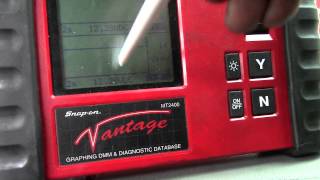
How to confirm: A technician can test the solenoid's resistance with a multimeter. While specifications vary slightly by year, it should generally be between 10-11 ohms at ~68°F/20°C for this era. A reading far outside this range, like an open circuit, indicates failure. It can also be commanded on with a bi-directional scan tool to check its function.
Typical fix: Replace the TCC PWM solenoid, which is accessible after removing the transmission oil pan. It is often replaced as a 'while you're in there' item during a valve body repair.
Est. part cost: $25 - $70 - Low or Contaminated Transmission Fluid ⚪ Low Probability
How to confirm: Check the transmission fluid level and condition with the engine running and transmission warm, after cycling through the gears. If the fluid is dark brown/black or smells burnt, it indicates excessive heat and clutch material, suggesting a more severe internal problem has already occurred.
Typical fix: Perform a transmission fluid and filter change. If the fluid is severely degraded, this is unlikely to solve the P1870 code by itself and indicates a larger issue requiring a rebuild.
Est. part cost: $50 - $150
Rare But Worth Checking
- Worn or Damaged Torque Converter: While a failing torque converter can cause this code, it's more often that the valve body issue causes the TCC to slip, which in turn overheats and damages the torque converter. One owner complaint noted a 'burned up' torque converter as the final result. A scan tool showing high TCC slip RPM after the valve body and solenoid have been addressed points to a damaged converter.
- Slipping 3-4 Clutches or 2-4 Band: The P1870 code specifically flags TCC slip, but if other components like the 3-4 clutches are slipping when the TCC is commanded on, it can also trigger the code. This indicates a more serious internal transmission problem requiring a rebuild. Finding excessive bronze bushing material or black clutch material in the pan is a key indicator of this level of failure.
- Cracked TCC Apply Valve in Pump: Less common than the valve body bore wear, the TCC apply valve located in the transmission pump can crack or stick, also preventing lockup. Some repair kits, like the Sonnax 77805E-K, address this specific valve. This is a more involved repair as it requires pump removal.
Diagnosis Steps
- Verify the code with an OBD-II scanner.
- Check the transmission fluid level and condition. Ensure the engine is running and the transmission is warm.
- Using an advanced scan tool like a GM Tech II, monitor the TCC slip speed in real-time while driving. When the TCC is commanded ON (usually above 45-50 MPH), the slip RPM should drop to 50 RPM or less. If it remains high (e.g., over 100 RPM) or fluctuates, the slip is confirmed.
- Inspect the transmission wiring harness and the main 20-pin connector for any damage, corrosion, or loose connections.
- Drop the transmission oil pan and inspect for excessive metal shavings or dark, burnt clutch material, which would indicate severe internal damage requiring a rebuild.
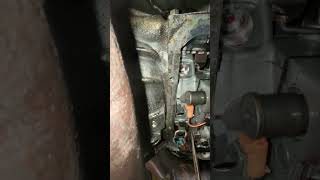
- With the pan off, test the resistance of the TCC PWM solenoid. It should be between 10 and 11 ohms at room temperature (68°F/20°C). Also inspect the solenoid's plastic snout for cracks. 🎬 See this step-by-step guide for replacing the TCC and shift solenoids.
- If the solenoid tests good and shows no visible damage, the next step is to inspect and repair the TCC regulator valve and bore within the valve body. This is the most likely culprit.
- Install a TCC valve repair kit (like the Sonnax 77754-04K or a TransGo SK 4L60E kit) or replace the valve body with a remanufactured unit that has the fix incorporated.
Parts You'll Likely Need
- TCC Regulator & Isolator Valve Kit — This is the most common and permanent fix. It repairs the worn valve body bore that causes the hydraulic leak and TCC slippage. The Sonnax kit uses a sleeve to restore the bore surface, while other kits may use different methods.
Trusted brands: Sonnax (77754-04K), TransGo (SK 4L60E), Teckpak / Fitzall (A74741QA for 2000-2003) 🎬 Watch: A helpful walkthrough for installing the Fitzall TCC repair kit.
Aftermarket price range: $30 - $80
Related Codes That Often Appear With This One
- P0894 — This code also means 'Transmission Component Slipping' and is often listed alongside P1870 in GM Technical Service Bulletins and repair literature. They point to the same fundamental problem of a detected slip during TCC engagement.
- P1860 — This code indicates an electrical circuit failure for the TCC PWM solenoid. If you have P1860, the problem is almost certainly the solenoid's wiring, the harness connector, or the solenoid itself, not a mechanical/hydraulic issue like a worn valve bore.
Technical Service Bulletins (TSBs) & Recalls
- PIP5340A / PIP5340: Instructs dealers to contact the GM Technical Assistance Center when encountering P1870 or P0894, indicating a known, complex issue.
- 01-07-30-030B: While not specifically for P1870, this TSB addresses the primary symptom of a harsh 1-2 shift in 4L60-E transmissions, attributing it to contamination causing valves to stick within the valve body.
Platform-Specific Known Issues
- The 4L60-E transmission in this S10 generation is highly susceptible to TCC regulator valve bore wear, making P1870 a very common code.
- GM issued TSBs #PIP5340 and #PIP5340A for this code, instructing dealers to contact the GM Technical Assistance Center, which indicates a known and potentially complex issue.
- Owner complaints to the NHTSA confirm the real-world impact, with one 2000 S10 owner reporting 'TRANSMISSION SLIPPING, TORQUE CONVERTER BURNED UP' after getting code P1870.
- A related TSB, #01-07-30-030B, addresses harsh 1-2 shifts on the 4L60-E, which is the primary symptom of P1870. It points to contamination causing valves to stick in the valve body, including the 1-2 accumulator valve.
Mechanic-Grade Diagnostic Values
- TCC PWM Solenoid Resistance — expected: 10-11 ohms at 68°F (20°C), or 13-15 ohms at 212°F (100°C).. Failure: A reading significantly outside this range, or an open/short circuit, indicates a failed solenoid.
- TCC Slip Speed (via Scan Tool) — expected: 50 RPM or less under light throttle when TCC is commanded ON.. Failure: Sustained slip speed over 100 RPM, or large fluctuations (e.g., 800+ RPM), confirms a TCC apply problem.
Scan Tool Commands That Help
- GM Tech II (or equivalent): TCC Enable / TCC Control Solenoid ON/OFF — This bidirectional command allows a technician to manually command the TCC solenoid ON and OFF while monitoring TCC slip speed and solenoid voltage drop. It is critical for confirming if the PCM is sending the signal and if the solenoid is attempting to function.
Wiring & Ground Locations
- Main 20-Way Transmission Connector — On the passenger side of the transmission case, it's the main round connector for all internal electronics.. To test the TCC PWM solenoid externally, you can check resistance between Pin E (Ignition Power) and Pin U (TCC PWM Solenoid Control) on the transmission side of the connector.
- Brake Switch Input to PCM — On some GM vehicles, this is a purple wire at the PCM (e.g., C1 Pin 33) that receives a signal from the brake pedal switch.. While not a direct cause of P1870, a faulty brake switch signal can prevent the TCC from locking up as intended, which could complicate diagnosis. The primary function of this wire is to unlock the torque converter when the brakes are applied.
Real Owner Repair Stories
- GMTNation forum user (Vehicle with 4L60E, 184,000 miles) — Persistent P1870 code and harsh shifts.
❌ Tried (didn't work) A complete transmission overhaul/rebuild., Reaming the TCC valve bore with a Sonnax kit.
✅ What actually fixed it Replacing the entire internal wiring harness, which included a new TCC solenoid, PWM solenoid, and pressure solenoid (force motor), finally resolved the P1870 code. - YouTube user 'Thejustynwithay' (2000 Chevrolet S10 with 4L60E) — P1870 code, no high gears, stuttering around 55 MPH, and stalling/slipping in reverse.
❌ Tried (didn't work) Initial attempts to remove the TCC valve retaining clip without applying opposing force to the valve itself.
✅ What actually fixed it Installing a Fitzall A74741QA TCC repair valve. The key to the repair was forcefully pushing the old valve out with a screwdriver while prying the retaining clip up, as the clip would not release without pressure on it. The new valve was installed without its included spring to function as an on/off valve rather than a modulating one. - YouTube user 'Automatic Transmission' (1998 Chevrolet Tahoe with 4L60E) — P1870 code, no TCC engagement.
❌ Tried (didn't work) A previous shop had already replaced the torque converter and installed a TCC isolator spring.
✅ What actually fixed it After confirming the PCM driver was working via scan tool tests, the technician dropped the pan and found the recently installed TCC solenoid had a cracked snout. Replacing only the faulty solenoid (which was part of a new harness) with a new one fixed the issue. This highlights that even new parts can be defective.
When the Usual Fixes Don't Work
- In one documented case, a vehicle that had a transmission rebuild, including a Sonnax ream kit for the TCC bore, continued to set a P1870 code. The ultimate fix was replacing the internal wiring harness, which contained the TCC solenoid, PWM solenoid, and pressure control solenoid. This suggests that even after addressing the primary mechanical wear point, an intermittent electrical failure in the harness or one of the other solenoids can still be the root cause.
OEM Part Supersession History
Varies by year→24227747 (ACDelco/GM)— Part consolidation and potential minor updates.
Heads up: The solenoid with part number 24227747 serves as the TCC PWM solenoid in 1996-and-up 4L60-E transmissions. In earlier 1993-1995 models, this same solenoid was used as the 3-2 downshift solenoid. It's crucial to verify application by year.
Model Year Variations Within This Range
- 1998-1999 vs 2000-2002: The Teckpak/Fitzall TCC valve repair kit has different part numbers for these year ranges. Kit A74741Q is for '96-'99 models, while kit A74741QA is a longer valve for '00-'03 models. The longer valve can be cut down to fit the earlier models if necessary. This suggests a slight change in the valve body casting or TCC valve design around the year 2000.
- Pre-1999: A GM Technical Service Bulletin (TSB #01-07-30-023A) recommended replacing the entire valve body for P1870 on transmissions built before January 15, 1999, indicating GM implemented a design change to the valve body itself to resolve the bore wear issue.
Helpful Videos


We Have This Part in Stock


The information in this article is provided for general reference and educational purposes only. Vehicle specifications, procedures, and part compatibility can vary by production date, trim level, and region. Always consult your vehicle's factory service manual and verify part numbers before purchasing or performing repairs. Safety-critical components such as airbags, seat belts, and braking systems should be installed by a qualified professional.
- Chevrolet S10:
- 🎬 Helpful Videos
- 🛍️ Shop This Part
- What's Unique About the 1998-2002 Chevrolet S10
- Diagnostic Flowchart
- Symptoms You May Notice
- Most Likely Causes
- Rare But Worth Checking
- Diagnosis Steps
- Parts You'll Likely Need
- Related Codes That Often Appear With This One
- Technical Service Bulletins (TSBs) & Recalls
- Platform-Specific Known Issues
- Mechanic-Grade Diagnostic Values
- Scan Tool Commands That Help
- Wiring & Ground Locations
- Real Owner Repair Stories
- When the Usual Fixes Don't Work
- OEM Part Supersession History
- Model Year Variations Within This Range
- 🎟️ Get 5% Off