

OBD-II Code P1861: Transmission Control System Fault
What P1861 means, why it triggers, and how to fix it
- Scan your vehicle with a tool capable of reading manufacturer-specific codes, as P1861 means 'Transfer Case Fault' on a Ford but 'TCC Solenoid Circuit' on a GM.
- Test the wiring harness and connector pins with a multimeter before spending $150 to $350 on a new transfer case motor or transmission solenoid.
- Stop driving immediately if your vehicle is stuck in 4WD on dry pavement to prevent $1,500 or more in transfer case and axle damage.
- Check your transmission fluid level and condition first; low or burnt fluid causes hydraulic pressure drops that trigger false electrical solenoid codes.
What Does P1861 Mean?

P1861 is a manufacturer-specific trouble code. The vehicle's Powertrain or Transmission Control Module sets this code when a sensor reading or circuit voltage in the transmission or 4WD transfer case falls outside the expected range.
Technical definition: The official SAE/OBD-II definition for P1861 varies significantly by manufacturer. Common definitions include: Ford/Citroen/Peugeot: 'Transmission Transfer Case Contact Plate D Short Circuit To Ground'; General Motors: 'TCC PWM Solenoid Circuit Electrical'; Volkswagen/Audi/Volvo: 'Throttle Position (TP) sensor Error Message from ECM'; BMW: '2-1 Shift Range Monitoring General Malfunction'; Mercedes-Benz: 'RL wheel speed of traction system implausible, CAN'; Honda: 'Drive Motor Control Module B Lost Communication With Engine Control Module (ECM)'.
Can I Drive With P1861?
Yes, But With Caution. Driving is not recommended. Continuing to drive causes severe transmission damage, unpredictable shifting, or stalling in traffic. If the code is related to a 4WD fault and the vehicle is stuck in 4WD, driving on dry pavement causes drivetrain binding and destroys the transfer case, adding thousands to repair costs. Drive directly to a repair shop immediately.
Common Causes


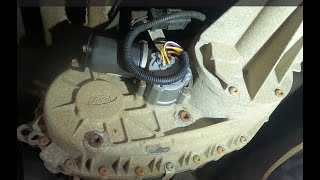
- Faulty Transfer Case Shift Motor or Sensor (Ford) (Very Common) — On 4WD vehicles, especially Fords, the electric motor that shifts the transfer case fails, or its integrated position sensor shorts out and reports a fault.
- Faulty TCC or Transmission Solenoid (GM) (Very Common) — Torque Converter Clutch (TCC) solenoids fail electrically or mechanically, preventing the transmission from locking the torque converter at highway speeds.
- Damaged or Corroded Wiring, Connectors, or Grounds (Common) — The wiring harness to the transmission or transfer case is exposed to heat and moisture. Broken wires, corroded connectors, or loose ground straps cause a complete loss of signal.
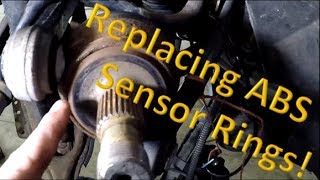
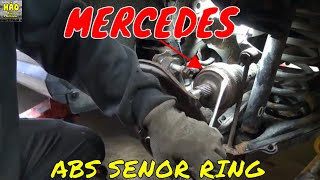
- Damaged ABS Reluctor Ring or Wheel Speed Sensor (Mercedes) (Common) — On makes like Mercedes-Benz, a cracked, rusted, or debris-covered reluctor ring on the axle causes an implausible wheel speed signal, even if the sensor itself is functional.
- Low or Dirty Transmission Fluid (Common) — Incorrect fluid levels or contaminated fluid causes hydraulic pressure drops, leading to erratic solenoid operation that triggers this code.
- Faulty or Clogged Transmission Oil Pump/Filter (Less Common) — A failing oil pump cannot generate the necessary hydraulic pressure for shifting. A clogged internal transmission filter restricts fluid flow, leading to similar pressure-related faults.
- Failing Transmission Control Module (TCM) or Powertrain Control Module (PCM) (Rare) — The control module itself fails internally. Consider this only after thoroughly testing all wiring, grounds, and sensors.
Symptoms

- Check Engine Light is On — The Malfunction Indicator Lamp (MIL) illuminates. A 'Service 4WD' light also appears on applicable vehicles.
- 4WD System Inoperative — On trucks and SUVs, the 4WD system gets stuck in one mode and refuses to engage or disengage.
- Harsh, Delayed, or No Shifting — The transmission shifts abruptly, hesitates between gears, or refuses to shift out of a specific gear.
- Vehicle Stalls When Coming to a Stop — If the torque converter clutch fails to disengage, the engine stalls as the vehicle stops, similar to forgetting to press the clutch in a manual car.
- Reduced Engine Power or Limp Mode — The vehicle's computer intentionally limits engine power or locks the transmission in a single gear to prevent further internal damage.
- Transmission Overheating — A malfunctioning TCC or hydraulic issue causes the transmission to generate excessive heat, indicated by a warning light or a burnt fluid smell.
- Unusual Noises — Whining, whirring, or grinding sounds emanate from the transmission or transfer case area.
Diagnostic Flowchart
Tap your situation to follow the diagnostic path that matches what you're seeing on this code.
Common Fixes & Costs
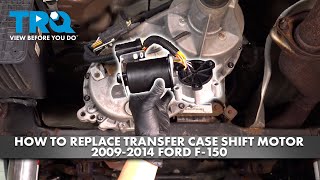
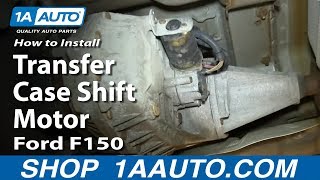
- Replace Transfer Case Shift Motor/Position Sensor — Parts: $150-$350, Labor: $150-$250, ~1.5 hr book time (Intermediate)
- Replace TCC or other Transmission Solenoid — Parts: $20-$100, Labor: $250-$450, ~2.5 hr book time (Intermediate)
- Replace Wheel Speed Sensor — Parts: $50-$150, Labor: $100-$180, ~1 hr book time (DIY)
- Repair or Replace Damaged Wiring/Connector — Parts: $10-$50, Labor: $120-$350, ~2 hr book time (Intermediate)
- Transmission Fluid and Filter Change — Parts: $50-$120, Labor: $150-$350, ~1.5 hr book time (DIY)
Used vs. New Parts: Buying Guide
When a used part is worth it: For purely mechanical parts like a transmission pan or a wiring connector pigtail, used is a cost-effective option. For common failure parts (solenoids, sensors, shift motors), buying new is mandatory.
Donor-vehicle mileage cap: roughly under 50000 miles for the part to have meaningful remaining life.
Donor quality checklist:
- Verify the exact part number matches; electronic components have several non-interchangeable versions.
- Ensure the donor vehicle was not scrapped due to a related 4WD system failure.
- Avoid parts from rust-belt vehicles, as corrosion is a primary cause of failure for external components.
Decision logic:
- If The part is a solenoid or sensor (e.g., TCC solenoid, wheel speed sensor) → Always buy new. The low cost of a new part ($20-$100) is not worth the risk of a premature failure and paying for labor a second time.
- If The part is a transfer case shift motor → Favor a new or professionally remanufactured unit. The integrated position sensor is the most common failure point, and its condition is unknown on a used part.
- If Vehicle is high mileage (>150k) and the budget is extremely tight → A used part is a gamble but serves as a temporary solution. Understand its remaining lifespan is unknown.
Warranty tradeoff: Used parts from a salvage yard typically offer a 30-90 day warranty covering only the part itself. New aftermarket parts carry a 1-year to limited lifetime warranty. New OEM parts offer a 1-2 year warranty.
Worst-case if a used part fails: $300-600 if a used part fails after installation, representing the repeated labor cost to diagnose and replace the part again.
What Happens If You Wait — Timeline
- 0-1 month: Code is set and Check Engine/Service 4WD light is on. Symptoms are minor or intermittent, such as a slight hesitation or a single failure to engage 4WD. (MPG impact: 0-5%% · Added cost: $0)
- 1-3 months: For TCC issues, a noticeable drop in MPG occurs as the converter fails to lock up. Shuddering becomes more frequent. For 4WD issues, the system becomes reliably inoperative. For wheel speed sensor issues, ABS/Traction control activates erratically. (MPG impact: 5-15%% · Added cost: $50-150 in wasted fuel)
- 3-6 months: Sustained TCC slippage overheats the transmission fluid, causing it to break down and lose its lubricating properties. This accelerates wear on clutches and damages the torque converter. Driving a 4WD-locked vehicle on dry pavement causes significant transfer case and axle stress. (MPG impact: 10-20%% · Added cost: $500 - $1,500 for torque converter replacement or transfer case repair.)
- 6+ months: Catastrophic failure. Burnt fluid and debris from the initial failure circulate throughout the transmission, destroying clutch packs, the valve body, and seals. A complete rebuild or replacement is required. (MPG impact: N/A (Vehicle likely undrivable)% · Added cost: $2,500 - $6,000+ for a replacement transmission.)
Cost of Not Fixing It
- 0-1 month: Reduced fuel economy (5-15%) due to TCC slip or incorrect gear selection. Annoying shifting behavior or stalling. (Added cost: Negligible, other than increased fuel cost.)
- 1-6 months: Continuous slippage generates excessive heat, leading to transmission fluid breakdown and torque converter damage. Continued driving on pavement in 4WD causes transfer case binding and wear. (Added cost: $500 - $1,500 for torque converter or transfer case repair.)
- 6+ months: Catastrophic transmission failure. Heat and debris from the initial failure circulate through the entire transmission, destroying clutches, seals, and the valve body. (Added cost: $2,500 - $6,000+ for a full transmission replacement or rebuild.)
Diagnosis Steps

- Scan for the Specific Code Definition
Use an advanced OBD-II scanner to read the code. You must get the manufacturer-specific definition for P1861, as this dictates the entire diagnosis (e.g., 'Transfer Case Contact Plate' vs. 'TCC Solenoid' vs. 'Wheel Speed Signal').
Tools: OBD-II Scanner (with manufacturer-specific definitions) (Beginner) - Visually Inspect Wiring and Connectors
Safely raise the vehicle and thoroughly inspect the wiring harness and connectors going to the transmission, transfer case, and wheel speed sensors. Look for chafed wires, loose connections, and corrosion. On Ford trucks, scrutinize the large connector in the driver's front wheel well.
Tools: Flashlight, Jack and Jack Stands (Intermediate) - Check Transmission Fluid
Check the transmission fluid level and condition. Low, dark, or burnt-smelling fluid indicates a hydraulic problem or overheating that requires immediate attention.
Tools: Rag, Owner's Manual (Beginner) - Command Component Activation with a Scan Tool
Use a bi-directional scan tool to command the suspect component to activate. For a GM TCC solenoid, command it ON/OFF to verify response. For a Ford transfer case motor, command it to shift between 2H and 4H. If the component ignores the command despite intact wiring, the component has failed.
Tools: Bi-Directional Scan Tool (Advanced) - Advanced Test (Ford): Transfer Case Contact Plate PID Monitoring
For Ford P1861, monitor the Transfer Case Control Module (TCCM) PIDs for the contact plates (PLATE_A, PLATE_B, PLATE_C, PLATE_D). Command the transfer case to shift. As the motor moves, the PID values must change from 'Open' to 'Closed'. If PLATE_D never changes state, the contact plate inside the shift motor assembly has failed.
Tools: Bi-Directional Scan Tool with Ford-Specific PIDs (Advanced) - Advanced Test (GM): TCC Solenoid Resistance Check
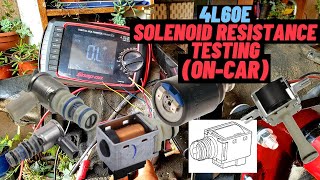
For GM P1861, test the TCC PWM solenoid. At the transmission connector, locate the pins for the brown wire and ground. Set your multimeter to Ohms (Ω). A good TCC PWM solenoid reads 10-15 ohms. An open circuit (infinite resistance) or a short (0-2 ohms) confirms a failed solenoid coil.
Tools: Digital Multimeter, Vehicle-Specific Wiring Diagram, Transmission Pinout Chart (Advanced) - Advanced Test (Mercedes): Wheel Speed Sensor Voltage Test
For Mercedes P1861, back-probe the left rear wheel speed sensor connector with a multimeter set to AC Volts. Safely raise the wheel and spin it by hand. A healthy sensor generates a small AC voltage that increases with wheel speed (starting around 0.5V AC at 60 RPM). No voltage indicates a bad sensor or wiring issue.
Tools: Digital Multimeter (with AC Volts), Jack and Jack Stands, Back-Probe Pins (Advanced) - Inspect Mechanical Components (Reluctor Rings)
For wheel speed sensor-related P1861 codes, remove the wheel speed sensor and visually inspect the reluctor/tone ring on the axle. Look for cracks, missing teeth, or heavy rust that disrupts the magnetic signal.
Tools: Basic Hand Tools (Intermediate) - Perform a Hydraulic/Mechanical Solenoid Test
If a suspected TCC or shift solenoid passes resistance tests, the failure is likely mechanical (sticking). Remove the solenoid and apply 12V power. You must hear a distinct 'click'. Apply low-pressure air (40 psi) to the solenoid's ports to confirm it opens and closes correctly when energized.
Tools: 12V Power Source, Low-Pressure Air Nozzle (Professional) - Check for Internal Mechanical Failure
If all electrical and sensor tests pass, the issue is internal to the transmission or transfer case, such as a stuck valve in the valve body or a mechanical failure in the shift mechanism. This requires professional disassembly.
Tools: Professional Diagnostic Tools (Professional)
When This Code Triggers (Freeze-Frame Conditions)
- Engine Coolant Temp: 175-210°F (The engine has reached full operating temperature.)
- RPM: 1500-2500 RPM (The engine is operating at a steady cruise, where torque converter lock-up is commanded.)
- Vehicle Speed: 45-65 mph (The vehicle is at a constant highway speed.)
- Engine Load: 20-50% (The engine is under a light to moderate load, not heavy acceleration or deceleration.)
Related Codes
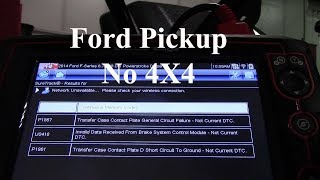
- P1867 — Appears with P1861 on Ford vehicles. P1861 points to a specific short in the transfer case sensor circuit, while P1867 indicates a general electrical failure in the contact plate assembly. If both are present, the transfer case shift motor assembly has failed.
- P1860 — On Mercedes-Benz, this is a direct companion to P1861. P1861 refers to the left rear wheel speed sensor, while P1860 refers to the right rear. Seeing both points to mismatched tire sizes or two separate sensor/wiring faults.
- P0741 — A generic code for 'Torque Converter Clutch Circuit Performance or Stuck Off.' If your P1861 code is the GM-specific 'TCC PWM Solenoid Circuit Electrical', you also see P0741. P1861 points to the electrical problem, while P0741 is the resulting performance issue.
- P1870 — A common code on GM vehicles meaning 'Transmission Component Slipping.' It appears with TCC-related electrical codes when a faulty solenoid prevents proper torque converter lockup, causing the transmission to slip.
Climate & Environmental Factors
- High Humidity / Road Salt (Rust Belt): Increases corrosion on wiring harnesses, connectors, and ground points. On Ford trucks, the large connector in the driver's side front wheel well is highly susceptible. On Mercedes-Benz vehicles, it accelerates the corrosion and failure of the ABS reluctor ring.
- Extreme Cold: Cold, thick transmission fluid exacerbates pre-existing hydraulic issues within the valve body or with sticky solenoids, triggering a pressure-related P1861 code on startup.
How to Talk to a Mechanic About This Code
Say this: "I have an OBD-II code P1861 and I know it's manufacturer-specific. On my [Ford/GM/Mercedes], I believe it points to the [transfer case motor/TCC solenoid circuit/left rear wheel speed sensor]. I'd like to schedule a diagnostic to confirm this specific issue before we discuss repairs."
This signals you are an informed customer. It directs the technician to the most likely cause, saving diagnostic time and preventing them from starting with a broad, expensive, and unnecessary system-wide check. It frames the conversation around confirming a specific fault, not open-ended exploration.
Avoid saying:
- 'My check engine light is on.' (Too vague, invites a costly fishing expedition).
- 'My transmission is acting weird, just fix it.' (Cedes all control and opens you up to upsells).
- 'A guy on the internet said to replace this part.' (Undermines the technician's expertise; instead, guide them with your research).
Questions to ask before authorizing the repair:
- For a GM: What was the resistance reading on the TCC solenoid, and did you test it at the main connector first?
- For a Ford: Did you monitor the transfer case PIDs on a scan tool? Did they fail to change from 'Open' to 'Closed'?
- For a Mercedes: Did you visually inspect the reluctor ring for cracks or rust, or just the sensor?
- Can you confirm the wiring harness between the component and the control module is intact?
- Is this estimate for a part replacement, or does it include further diagnostic time?
- What is the warranty on both the part and your labor for this specific repair?
Where to Take It: Dealer vs Independent vs Chain
- Dealer:
Best for: Vehicles under warranty., Complex diagnostics on German makes like Mercedes-Benz or BMW where specialized tools are required., When a known Technical Service Bulletin (TSB) or recall applies to the issue.
Downsides: Significantly higher labor rates and parts costs., Defaults to replacing a large assembly (like a whole valve body) when only a small component (a solenoid) has failed. (Typical cost: +50% vs. baseline) - Independent Shop:
Best overall fit. An experienced independent transmission or electrical specialist is the ideal choice for the most common P1861 failures on out-of-warranty vehicles. They see these issues frequently and diagnose them efficiently.
Best for: Out-of-warranty domestic vehicles (Ford, GM) with common P1861 faults., Shops that specialize in transmission or automotive electrical work., Cost-conscious owners who want a reliable repair without dealer prices.
Downsides: Quality and expertise vary widely; vetting the shop's reputation is critical., Lacks the expensive, manufacturer-specific scan tools needed for some advanced diagnostics. (Typical cost: +0% vs. baseline) - Chain Shop:
AVOID for diagnosis. Only use a chain if you have already confirmed a simple, external part is the cause and you are just paying for the installation. Do not rely on them to accurately diagnose the root cause of P1861.
Best for: Simple, clear-cut part replacements where the diagnosis is already 100% certain (e.g., replacing an external wheel speed sensor).
Downsides: Technician skill varies dramatically., High pressure to upsell services like unnecessary fluid flushes., Lacks the deep diagnostic expertise for a complex, make-specific code like P1861, leading to misdiagnosis or recommending a full transmission replacement. (Typical cost: -10% vs. baseline)
When to Walk Away From the Repair
If the estimated repair cost exceeds 40-50% of the car's private-party value (use Kelley Blue Book or Edmunds), it's time to seriously consider selling or trading in the vehicle.
- Car worth $5000, fix is $2800: Walk away. The repair cost is 56% of the car's value. This is a bad investment, especially if the shop is quoting a full transmission rebuild for a GM P1861. Get a second opinion focused only on the TCC solenoid before scrapping the car.
- Car worth $18000, fix is $800: Fix it. The repair cost is less than 5% of the vehicle's value. This is a clear-cut decision to repair.
- Car worth $3500, fix is $1500: Borderline. At 43% of the car's value, this is a tough call. If the rest of the vehicle is in excellent condition with no other known issues, the repair is justified. If other major maintenance is also due, walk away.
What Scan Tool You Need for This Code
Minimum: A scanner that reads manufacturer-specific trouble codes for the transmission (TCM), ABS, and transfer case (TCCM) modules. A generic engine-only code reader is not sufficient.
A $20 scanner only shows a generic 'P1861' code without the crucial manufacturer definition. It cannot tell you if the fault is in the transmission, 4WD system, or ABS. For this code, a basic reader is useless and leads to guessing at repairs.
Budget: FOXWELL NT301, MUCAR BT200 Max (~$50-90) — These read engine, transmission, ABS, and SRS codes, providing the specific definition you need to know where to start looking. Some, like the MUCAR, offer limited bi-directional tests via a smartphone app. This is the minimum entry point for a useful diagnosis.
Mid-range: Foxwell NT510 Elite, Autel MaxiCOM MK808/MK808Z (~$150-400) — This is the sweet spot for DIY diagnosis of P1861. These tools offer bi-directional control and view live manufacturer-specific PIDs. You command the GM TCC solenoid on/off, monitor the Ford transfer case contact plate PIDs, and graph wheel speed sensor data, which are the exact tests needed to confirm the failure before buying parts.
Professional: Autel MaxiCOM MK900BT, Launch X431 Series (~$450-1200) — Provides full professional-level diagnostics, including ECU coding, advanced actuation tests, and access to wiring diagrams and repair information directly on the tool. This is overkill for a single repair but a worthwhile investment for a serious enthusiast or someone managing multiple vehicles.
Rent vs buy: Rent for free from a parts store like O'Reilly Auto Parts to get the basic code, but their scanners fail to read the specific manufacturer definition. For P1861, the diagnostic process is iterative. Buying a mid-range tool is highly recommended, as it allows you to perform the necessary tests (like checking PIDs or commanding solenoids) that a rental tool cannot, saving you hundreds on a misdiagnosis.
How to Clear the Code After You Fix It
- Use an OBD-II scan tool to clear the diagnostic trouble codes.
- Ensure the fuel tank is between 30% and 70% full.
- Perform a complete drive cycle to allow the vehicle's readiness monitors to run.
Drive cycle (~30 minutes): Start with a cold soak (vehicle off for 8+ hours). Start the engine and idle for 2-3 minutes. Drive for 15-20 minutes with a mix of city (stop-and-go) and highway speeds. Include a period of steady-state cruising at 55-60 mph for at least 5 minutes. Allow the vehicle to cool down completely.
Readiness monitors affected: Transmission System, Comprehensive Component Monitor, Catalyst Monitor
Before emissions retest: drive at least 100 miles to fully set monitors.
Watch out for:
- Disconnecting the battery clears the code but resets all readiness monitors, guaranteeing an emissions test failure until a full drive cycle is completed.
- The code returns immediately if the underlying mechanical or electrical fault remains unrepaired.
- Some monitors require specific ambient temperatures to run, requiring several attempts at the drive cycle.
Will This Fail Emissions / State Inspection?
Yes — this code typically fails an OBD-II emissions inspection.
- California: An active Check Engine Light results in an automatic smog check failure. After repairs, a full drive cycle must be completed to set readiness monitors before a re-test is possible.
- New York: A vehicle with an illuminated Check Engine Light automatically fails the NYS vehicle inspection. For 2001+ vehicles, only one readiness monitor is allowed to be 'not ready'.
- Texas: In the 17 counties requiring emissions testing, an active P1861 code causes the vehicle to fail the OBD-II scan. For vehicles 2001 and newer, only one non-continuous monitor is permitted to be 'Not Ready'.
Most Commonly Affected Vehicles
- Ford F-150, F-250, Explorer, Expedition (2004-2020) — Almost always caused by a failed transfer case shift motor or the integrated position sensor. Often appears with code P1867. The motor part number differs for 2012-2014 and 2015+ F-150s.
- Chevrolet / GMC Silverado, Sierra, Tahoe, Suburban (1996-2012) — Commonly experiences P1861 due to failures in the TCC PWM solenoid circuit inside 4L60E/4L80E transmissions. Testing resistance at the main connector confirms a bad solenoid before dropping the pan.
- Mercedes-Benz Various models with 4MATIC (e.g., C-Class, E-Class, G-Class) (2005-2015) — Points to an implausible signal from the left rear wheel speed sensor. The cause is a faulty sensor, its wiring, or a damaged/corroded ABS reluctor ring on the axle.
- Honda Odyssey, Pilot, Ridgeline (2014-2019) — P1861 means 'Drive Motor Control Module B Lost Communication With ECM.' Similar symptoms like juddering are caused by deteriorated transmission fluid or injector issues.
- Hyundai / Kia Santa Fe, Sorento, Tucson (2010-2018) — Triggered by faults in the all-wheel-drive system, often stemming from a failed wheel speed sensor providing an invalid signal to the 4WD control module.
- BMW Various models (2002-2016) — The definition '2-1 Shift Range Monitoring General Malfunction' points to a problem with the 2-1 downshift, caused by a faulty solenoid in the valve body or a mechanical issue.
- Jaguar / Land Rover XF, Discovery, Range Rover Sport (2007-2019) — Points to hydraulic pressure control issues within the transmission, stemming from solenoids or the valve body.
- Volvo S60, XC90, V70 (2006-2016) — Related to an error message from the ECM regarding the throttle position sensor, indicating a communication issue or a faulty TP sensor.
Manufacturer-Specific Notes
- Ford: The code points to the 4WD system's transfer case contact plate/position sensor or the shift motor itself. Diagnosis involves testing the contact plate circuits by grounding them and watching for a change of state on a scan tool.
- General Motors (Chevy/GMC): Relates to the Torque Converter Clutch (TCC) Pulse Width Modulated (PWM) solenoid circuit inside the transmission. A simple resistance check at the external connector condemns the solenoid without dropping the pan.
- Mercedes-Benz: Indicates an 'implausible' signal from a rear wheel speed sensor over the CAN bus network. The issue is the sensor, its wiring, or a physically damaged reluctor ring on the axle, not the transmission itself.
- Chrysler/Jeep/Dodge: Means 'Invalid Data Received From Multi-Axis Acceleration Sensor Module,' pointing to a fault with the ABS or stability control system sensors, not a primary powertrain component.
Real Owner Stories
2008 Ford F-250 at 145K miles with 'Service 4x4' light
The 'Service 4x4' light came on, and the truck would not shift into 4WD. A scan revealed codes P1861 and P1867.
What they tried:
- Initially suspected a wiring issue due to corrosion common in the region.
- Tested the circuits from the TCCM to the motor connector and found them to be intact.
- Monitored PIDs while commanding a shift; saw no change in contact plate status.
Outcome: Replaced the transfer case shift motor (Motorcraft CL3Z-7G360-A). The repair cost $250 for the part and took 1.5 hours of DIY labor. The new motor resolved both codes and restored 4WD function.
Lesson: On Ford trucks, P1861 and P1867 together confirm a failed transfer case motor assembly. While wiring requires checking, the motor itself is the primary point of failure.
2005 GMC Sierra 1500 (4L60E) at 180K miles with harsh shifting
Vehicle experienced harsh 1-2 shifts, shuddering at highway speeds, and eventually threw code P1861. The check engine light was on.
What they tried:
- A shop initially quoted a full transmission rebuild for over $2,500.
- Owner decided to perform diagnostics first. Checked resistance of the TCC PWM solenoid at the 20-pin transmission connector and got an open circuit (infinite resistance).
- Dropped the transmission pan and replaced only the TCC PWM solenoid.
Outcome: The total cost was $45 for an ACDelco solenoid, plus $60 for a new filter, gasket, and Dexron VI fluid. The code cleared, and shifting performance returned to normal.
Lesson: A GM P1861 code is very often just a bad TCC solenoid. A simple resistance test at the external connector confirms this and saves thousands by avoiding an unnecessary transmission replacement.
2010 Mercedes C300 4MATIC at 95K miles with ABS/ESP lights
ABS, ESP, and Check Engine lights all illuminated simultaneously. The car went into limp mode with harsh shifting. Scanned codes P1861 and P1860.
What they tried:
- Replaced the left rear wheel speed sensor, as indicated by P1861. The code returned immediately.
- Inspected the wiring to the sensor and found no damage.
- Removed the sensor again and inspected the axle's reluctor ring through the sensor hole with a borescope.
Outcome: The reluctor ring was cracked and heavily corroded. Replacing the reluctor ring (requiring axle shaft removal) solved the problem. The part was inexpensive, but labor was 3 hours.
Lesson: On Mercedes, an 'implausible signal' code like P1861 is caused by the reluctor ring, not just the sensor. A visual inspection of the ring for rust or cracks is critical before replacing a sensor.
2011 Ford Ranger with intermittent 4WD failure
4WD would sometimes fail to engage, with a clicking sound from under the truck. No codes were present initially, but eventually, P1867 and P1861 appeared.
What they tried:
- The owner found a forum post suggesting the contact plate sensor inside the shift motor gets corroded.
- Removed only the sensor portion of the shift motor (three Torx screws), leaving the motor on the transfer case.
- Manually spun the internal shaft of the sensor multiple times to clean the contacts and redistribute the dielectric grease.
Outcome: Reassembled the sensor, cleared the codes, and the 4WD system began working perfectly again. The fix was free and took less than 30 minutes.
Lesson: For intermittent Ford 4WD issues with P1861/P1867, the position sensor just needs cleaning. Trying this free fix before buying a new motor saves significant time and money.
How to Prevent This Code From Triggering
- Change transmission fluid and filter per manufacturer schedule (Every 30,000 to 60,000 miles) — Clean fluid prevents solenoid passages from getting clogged with debris and sludge, which is a primary cause of sticking and electrical faults.
- Change transfer case fluid regularly (Every 30,000 miles) — Prevents premature wear on the gears and chain inside the transfer case, reducing stress on the shift motor and preventing metal shavings from causing issues.
- Periodically inspect and clean external wiring connectors (Every 1-2 years, especially in rust-belt areas) — Applying dielectric grease to the seals of connectors for the transmission and transfer case prevents moisture intrusion and corrosion, which cause short circuits and open circuits.
- Engage 4WD system periodically (Once a month for a short distance) — On 4WD vehicles, this lubricates the internal components of the transfer case and moves the shift motor, preventing the motor and sensors from seizing due to inactivity.
- Install an auxiliary transmission cooler (Recommended for vehicles that tow or operate under heavy load) — Heat is the #1 killer of transmissions. An external cooler keeps fluid temperatures stable, preventing fluid breakdown and protecting solenoids and clutches from heat-related failure.
Frequently Asked Questions
Can I fix P1861 myself?
You can fix P1861 yourself if the cause is a visible wiring issue or an accessible wheel speed sensor. However, most causes require dropping the transmission pan or performing complex electrical tests. Take the vehicle to a transmission specialist if basic visual inspections do not reveal the problem.
What happens if I ignore code P1861?
Ignoring this code causes severe internal transmission damage, leaves you stranded, or causes the vehicle to stall in traffic. If the vehicle is stuck in 4WD, driving on dry pavement causes catastrophic drivetrain binding.
Will clearing the code fix the problem?
No. Clearing the code only turns off the check engine light temporarily. The underlying fault remains, and the code returns as soon as the computer's self-test runs again, usually within one drive cycle.
What is the most common misdiagnosis for P1861?
On Ford trucks, a common mistake is replacing the transfer case shift motor without testing the wiring first, as a corroded wire mimics a failed motor. On GM vehicles, replacing the torque converter for a TCC code without first testing the TCC solenoid circuit is a costly error.
My car jerks and hesitates. Is P1861 the cause?
Low-speed hesitation and jerking are classic symptoms of a P1861 fault related to a torque converter clutch or wheel speed sensor issue. However, these symptoms also stem from engine misfires or fuel delivery problems. A proper scan is necessary to confirm the root cause.
Can bad transmission fluid really cause this code?
Yes. Old, burnt, or low fluid prevents the hydraulic system and solenoids from working correctly. The vehicle's computer detects this mechanical failure as an electrical or performance fault and triggers code P1861.
My 4WD isn't working and I have this code. What's the most likely cause?
On many trucks and SUVs, especially from Ford, P1861 points directly to a failed transfer case shift motor or its integrated position sensor. This is a highly documented failure point requiring motor replacement.
What does 'implausible signal' mean for a Mercedes-Benz P1861?
It means the signal from the left rear wheel speed sensor contradicts the data from the other three wheels. This occurs when the sensor fails, the wiring shorts out, or the magnetic tone ring on the axle cracks from rust.
Key Takeaways
- Scan your vehicle with a tool capable of reading manufacturer-specific codes, as P1861 means 'Transfer Case Fault' on a Ford but 'TCC Solenoid Circuit' on a GM.
- Test the wiring harness and connector pins with a multimeter before spending $150 to $350 on a new transfer case motor or transmission solenoid.
- Stop driving immediately if your vehicle is stuck in 4WD on dry pavement to prevent $1,500 or more in transfer case and axle damage.
- Check your transmission fluid level and condition first; low or burnt fluid causes hydraulic pressure drops that trigger false electrical solenoid codes.
Helpful Videos




The information in this article is provided for general reference and educational purposes only. Vehicle specifications, procedures, and part compatibility can vary by production date, trim level, and region. Always consult your vehicle's factory service manual and verify part numbers before purchasing or performing repairs. Safety-critical components such as airbags, seat belts, and braking systems should be installed by a qualified professional.
- 🎬 Helpful Videos
- What Does P1861 Mean?
- Can I Drive With P1861?
- Common Causes
- Symptoms
- Diagnostic Flowchart
- Common Fixes & Costs
- Used vs. New Parts: Buying Guide
- What Happens If You Wait — Timeline
- Cost of Not Fixing It
- Diagnosis Steps
- When This Code Triggers (Freeze-Frame Conditions)
- Related Codes
- Climate & Environmental Factors
- How to Talk to a Mechanic About This Code
- Where to Take It: Dealer vs Independent vs Chain
- When to Walk Away From the Repair
- What Scan Tool You Need for This Code
- How to Clear the Code After You Fix It
- Will This Fail Emissions / State Inspection?
- Most Commonly Affected Vehicles
- Manufacturer-Specific Notes
- Real Owner Stories
- 2008 Ford F-250 at 145K miles with 'Service 4x4' light
- 2005 GMC Sierra 1500 (4L60E) at 180K miles with harsh shifting
- 2010 Mercedes C300 4MATIC at 95K miles with ABS/ESP lights
- 2011 Ford Ranger with intermittent 4WD failure
- How to Prevent This Code From Triggering
- Frequently Asked Questions
- Can I fix P1861 myself?
- What happens if I ignore code P1861?
- Will clearing the code fix the problem?
- What is the most common misdiagnosis for P1861?
- My car jerks and hesitates. Is P1861 the cause?
- Can bad transmission fluid really cause this code?
- My 4WD isn't working and I have this code. What's the most likely cause?
- What does 'implausible signal' mean for a Mercedes-Benz P1861?
- Key Takeaways
- 🎟️ Get 5% Off