

OBD-II Code P1860: TCC PWM Solenoid Circuit Electrical Failure
What P1860 means, why it triggers, and how to fix it for good
- P1860 indicates a strict electrical failure—an open circuit, short to ground, or short to power—in the Torque Converter Clutch (TCC) solenoid circuit, not a mechanical transmission failure.
- Replace the $50 internal transmission wiring harness at the same time you replace the TCC solenoid, as both require dropping the transmission pan and share a high failure rate.
- Suspect a failing ignition switch immediately on 1995-2005 GM trucks if P1860 appears alongside other solenoid codes like P0753 or P0758, as a single power drop triggers them all.
- Stop driving the vehicle to prevent a $2,500 to $4,500 complete transmission rebuild; driving without TCC lockup generates extreme fluid heat that destroys internal seals and clutches within months.
- Test the circuit resistance at the external transmission connector first; a reading outside the normal 10-15 ohm range confirms the fault is inside the pan, saving hours of diagnostic labor.
What Does P1860 Mean?

P1860 means your car's main computer (PCM or TCM) detects an electrical problem with the Torque Converter Clutch (TCC) Pulse Width Modulated (PWM) solenoid circuit. This solenoid is a small, electronically controlled valve directing fluid flow to lock up the torque converter at cruising speeds. Lock-up creates a direct 1:1 mechanical connection between the engine and transmission, improving fuel efficiency and reducing heat. When the computer commands the solenoid ON or OFF and sees an incorrect voltage reading—an open circuit, a short to ground, or a short to power—it triggers the Check Engine Light and sets this code.
Technical definition: TCC PWM Solenoid Circuit Electrical / Transmission Transfer Case Contact Plate 'D' Short Circuit To Battery.
Can I Drive With P1860?

Yes, But With Caution. You can drive the vehicle short distances, but we strongly advise against it. Driving with a P1860 fault prevents torque converter lock-up, generating excessive transmission fluid heat. This causes rapid internal wear and catastrophic transmission failure requiring a $2,500 to $4,500 rebuild. If the solenoid fails 'stuck on', the engine stalls unexpectedly at stops, creating a severe safety risk in traffic.
Common Causes

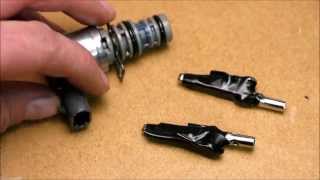
- Faulty TCC PWM Solenoid (Very Common) — The solenoid is the most frequent point of failure. 🎬 Watch: Troubleshooting and replacing the TCC PWM solenoid. The internal coil winding breaks (causing an open circuit) or shorts out, leading to incorrect resistance readings. It also fails mechanically by getting stuck open or closed from debris.
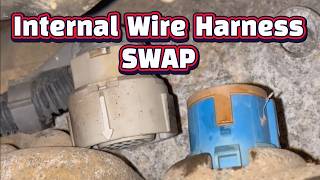
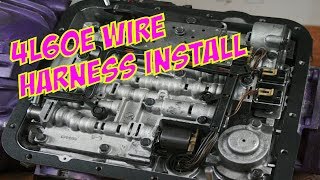
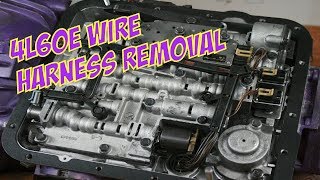
- Damaged Internal Transmission Wiring Harness (Common) — The internal transmission wiring harness sits constantly bathed in hot fluid. Over time, the insulation becomes brittle, cracks, and breaks, causing an open or short in the TCC solenoid circuit even if the solenoid itself functions perfectly. 🎬 See how to replace the internal transmission wiring harness.
- Damaged External Wiring or Connectors (Common) — The wires leading from the PCM to the main transmission case connector fray, corrode, or short due to heat, vibration, or physical damage. The main connector itself suffers from fluid or dirt contamination, causing a poor connection.
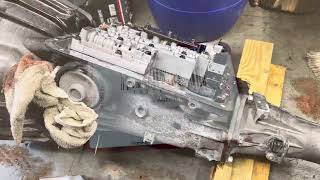
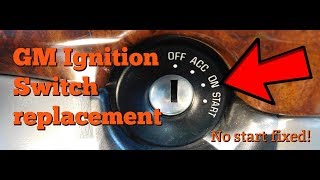
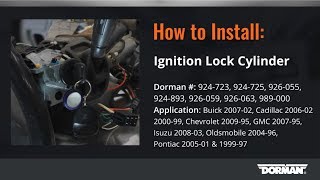
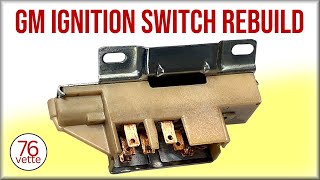
- Faulty Ignition Switch (Less Common) — On 1995-2005 GM vehicles, a failing ignition switch causes intermittent power loss to the transmission fuse. This starves the TCC solenoid and other solenoids of power, triggering P1860 alongside codes like P0753 or P0758. 🎬 Watch: Step-by-step guide to repairing a faulty GM ignition switch.
- Poor Ground Connection (Less Common) — A corroded, loose, or broken ground strap for the engine or transmission causes erratic electrical issues, including setting a P1860 code. The PCM relies on a solid ground to accurately control and monitor the solenoid circuit.
- Faulty Powertrain/Transmission Control Module (PCM/TCM) (Rare) — The computer module controlling the solenoid occasionally suffers a failed internal driver circuit. This is the least likely cause and requires ruling out all wiring, connectors, and the solenoid itself before replacement.
Symptoms

- Engine Stalling at Stops — If the torque converter clutch fails to disengage when you slow down (stuck on), the engine shudders violently and stalls as you come to a stop, creating a major safety hazard.
- Transmission Shudder or Slipping — You will feel a jerking or vibration (like driving over rumble strips) at highway speeds (40-60 mph). You also experience RPM fluctuations of 200-300 RPM without changing speed.
- Poor Fuel Economy — Without torque converter lock-up, the engine runs at a consistently higher RPM on the highway. This constant fluid slippage reduces gas mileage by 1-4 MPG.
- No Overdrive or Top Gear — As a protective measure, the PCM inhibits the shift into the highest gear (overdrive) when it detects a TCC fault, forcing the vehicle into 'limp mode'.
- Check Engine Light is On (also visible on scanner) — The computer illuminates the Malfunction Indicator Lamp (MIL) on your dashboard as soon as it detects the electrical fault for a set period, typically after one or two drive cycles.
- Transmission Overheating (also visible on scanner) — Without a locked torque converter, the transmission fluid constantly shears, generating excessive heat. This triggers a transmission overheat warning light and causes rapid, severe internal damage.
Diagnostic Flowchart
Tap your situation to follow the diagnostic path that matches what you're seeing on this code.
Common Fixes & Costs
- Replace TCC PWM Solenoid — Parts: $30-$80, Labor: $250-$450, ~2.5 hr book time (Intermediate)
- Replace Internal Transmission Wiring Harness — Parts: $50-$150, Labor: $250-$450, ~2.5 hr book time (Intermediate)
- Replace Ignition Switch — Parts: $40-$150, Labor: $100-$250, ~1.2 hr book time (DIY)
- Repair External Wiring or Connector — Parts: $10-$50, Labor: $150-$300, ~1.5 hr book time (Intermediate)
- Change Transmission Fluid and Filter — Parts: $60-$120, Labor: $150-$250, ~1.0 hr book time (DIY)
Used vs. New Parts: Buying Guide
When a used part is worth it: For a TCC solenoid or internal harness, buying used is not recommended. These are high-failure, low-cost electrical parts where labor is the main expense. A used part carries a high risk of premature failure.
Donor-vehicle mileage cap: roughly under 30000 miles for the part to have meaningful remaining life.
Donor quality checklist:
- For a used harness, verify there is no brittleness, cracking, or corrosion on the connectors.
- Match part numbers exactly, as harnesses and solenoids are specific to model years.
- Avoid parts from vehicles with high mileage or known transmission issues.
Decision logic:
- If The part is a solenoid or internal wiring harness → buy new. The part cost is low, and the risk of repeating a 2.5+ hour labor job is not worth the small savings.
- If The vehicle is old with high mileage and the budget is extremely tight → a used part from a low-mileage, accident-damaged donor is a gamble but may be considered.
- If The part is an external component like an ignition switch → a used OEM part is a reliable and cost-effective option.
Warranty tradeoff: Used parts from salvage yards typically offer a 30-90 day warranty, which may not reveal a heat-related intermittent failure. New aftermarket parts usually have a 1-year to limited lifetime warranty. OEM parts offer a 1-2 year warranty.
Worst-case if a used part fails: 300-600. If a used solenoid or harness fails after installation, you must pay for the labor a second time, plus the cost of another part.
What Happens If You Wait — Timeline
- 0-2 weeks: Check Engine Light illuminates with code P1860. Torque converter lock-up is disabled by the PCM. Most drivers notice no symptoms other than the light. (MPG impact: 0-5%% · Added cost: $0-25 in wasted fuel)
- 2 weeks - 3 months: Driver notices a consistent drop in highway fuel economy as the engine runs at higher RPMs. Transmission fluid temperature runs consistently hotter, beginning the process of fluid degradation. Possible intermittent shuddering at highway speeds. (MPG impact: 5-15%% · Added cost: $50-200 in wasted fuel)
- 3-9 months: Sustained overheating from the unlocked converter causes transmission fluid to darken and develop a burnt smell. Internal rubber seals harden and plastic components become brittle. The torque converter's clutch lining suffers damage from continuous slip. (MPG impact: 10-20%% · Added cost: $500-1500 (damage to torque converter, seals, and fluid now requires more than just a solenoid))
- 9+ months: Catastrophic transmission failure. Extreme, prolonged heat destroys clutch packs, warps metal components, and cooks seals. The transmission slips badly in all gears or fails to move entirely. A complete rebuild is the only option. (MPG impact: 20-30%+% · Added cost: $2500-4500+ (cost of a complete transmission rebuild))
Cost of Not Fixing It
- 0-1 month: Noticeable decrease in fuel economy (1-4 MPG), potential for shuddering or stalling at stops. (Added cost: 50-150)
- 1-6 months: Sustained high transmission fluid temperatures begin to break down the fluid and damage seals. The torque converter itself suffers internal damage from constant slippage. (Added cost: 500-1500)
- 6+ months: Catastrophic transmission failure. Extreme heat generated by the unlocked converter cooks internal components, requiring a complete transmission rebuild. (Added cost: 2500-4500+)
Diagnosis Steps
- Scan for All Codes & Review Live Data
Use an advanced OBD-II scanner to confirm P1860 and check for related codes (P0741, P1870, P0753, P0758). Monitor live data PIDs for 'TCC Slip Speed' and 'TCC Duty Cycle %'. When lock-up is commanded, slip speed should be near zero. If it consistently exceeds 75-100 RPM, it confirms a functional problem.
Tools: Advanced OBD-II Scanner (Beginner) - Pro Tip: Test Solenoid Circuit Resistance from Main Connector
Disconnect the main transmission connector. Using a multimeter set to Ohms (Ω), measure resistance between the TCC PWM solenoid power and ground pins (Pin E and Pin T on a GM 4L60E). A good reading is 10-15 ohms. An infinite reading (OL) means an open circuit, and near zero indicates a short circuit. If this fails, the problem is inside the transmission.
Tools: Digital Multimeter, Transmission Pinout Diagram (Intermediate) - Pro Tip: Check for Power and Ground at the Connector
With the transmission connector unplugged, turn the ignition to 'ON' (engine off). Use a multimeter to verify the power feed pin has 12V. Check the control wire from the PCM for shorts by measuring resistance between it and ground; it should show an open circuit (OL).
Tools: Digital Multimeter (Intermediate) - Inspect External Wiring and Connectors
Visually inspect the transmission's main electrical connector and the associated wiring harness. Look for damage, corrosion, chafing, or fluid contamination. Carefully wiggle the harness with the engine running to see if it triggers the fault.
Tools: Flashlight (Beginner) - Check Transmission Fluid
Check the transmission fluid level and condition. Dark brown/black fluid or a burnt smell indicates severe overheating that must be addressed, though it is a symptom of the failure rather than the direct electrical cause.
Tools: Shop towel, White paper towel (Beginner) - Advanced: Check for Specific Voltage Fault Conditions
Using a scan tool, see if the fault occurs when the PCM commands the solenoid ON or OFF. If commanded ON but voltage remains high, you have a short to power. If commanded OFF but voltage remains low, you have an open or short to ground.
Tools: Advanced OBD-II Scanner, Digital Multimeter (Advanced) - Drop the Transmission Pan
Drain the fluid and drop the transmission oil pan to access the solenoid and internal harness. Inspect the pan magnet for excessive metal shavings—large flakes indicate a severe mechanical failure requiring a rebuild.
Tools: Socket set, Drain pan, Gasket scraper, Torque wrench (Intermediate) - Test the Solenoid and Internal Harness Directly
Unplug the TCC solenoid and test its resistance directly. If the solenoid reads 10-15 ohms but the external connector reading was bad, the internal harness is faulty. If the solenoid reads open or shorted, the solenoid is the culprit.
Tools: Digital Multimeter (Intermediate) - Advanced Pro Tip: Analyze the PWM Waveform
For intermittent issues, backprobe the TCC solenoid control wire at the PCM with an oscilloscope. A good PWM signal is a square wave with a fixed frequency (typically 32Hz on a 4L60E). A flat line at 0V or 12V points to a wiring or PCM driver issue.
Tools: Oscilloscope, Backprobe Pins (Advanced)
When This Code Triggers (Freeze-Frame Conditions)
- Engine Coolant Temp: 180-210°F (The engine must be at normal operating temperature for the TCC to be commanded on.)
- RPM: 1500-2500 (The code sets during steady-state cruise when the PCM attempts to lock or unlock the converter.)
- Engine Load: 20-50% (Occurs under light to moderate throttle, not during heavy acceleration or deceleration.)
- Vehicle Speed: 40-65 mph (This is the typical speed range where the PCM commands torque converter lock-up in the top gears.)
Related Codes
- P1870 — This GM code for 'Transmission Component Slipping' is a mechanical symptom code. P1860 is a primary cause of P1870 because the electrical failure prevents the TCC from locking. Always diagnose and fix the P1860 electrical fault first.
- P0741 — 'TCC System Stuck Off'. This code means the computer commanded the TCC to lock but did not see the expected RPM drop. P1860 is a direct electrical cause for P0741. If you have P0741 without P1860, the cause is likely hydraulic.
- P0742 — 'TCC System Stuck On'. This is the opposite of P0741 and is caused by a shorted solenoid or a mechanically stuck valve. If P1860 is present, it suggests the circuit is shorted in a way that keeps the solenoid energized.
- P0753, P0758, P0785 — These are electrical fault codes for Shift Solenoids. If you see P1860 along with these codes, it strongly suggests a shared power or ground issue, most commonly a failing ignition switch.
Climate & Environmental Factors
- High Operating Temperature: Heat is the primary environmental factor accelerating failure. Hot transmission fluid makes the internal wiring harness insulation brittle and prone to cracking. Towing increases overall transmission heat, stressing electrical components and increasing the likelihood of solenoid coil failure.
- Humidity and Moisture: High humidity leads to corrosion on external connectors and ground points. On vehicles like the C5 Corvette, connectors located under the battery tray are susceptible to damage from battery acid fumes and moisture, causing intermittent P1860 codes.
- Cold Weather: Cold weather is not a direct cause of the P1860 electrical fault. However, cold, thick transmission fluid exacerbates pre-existing hydraulic issues or causes solenoids to act sluggishly.
How to Talk to a Mechanic About This Code
Say this: "I have a P1860 code on my vehicle and I'd like to schedule a diagnostic. I understand this is an electrical circuit code for the TCC solenoid. Can you please start by testing the circuit's resistance from the main transmission connector to determine if the fault is internal or external before dropping the pan?"
This signals to the shop that you're an informed customer. It directs them to perform the most efficient diagnostic test first, saving you money on labor by preventing them from immediately dropping the transmission pan if the fault is in the external wiring.
Avoid saying:
- 'My check engine light is on, can you just fix it?'
- 'The car is shifting weird, just do whatever you think is best.'
- 'I think I need a new transmission.'
Questions to ask before authorizing the repair:
- What was the ohm reading for the TCC solenoid circuit when tested at the external connector?
- If the pan needs to be dropped, will you test the solenoid and internal harness separately to confirm which part has failed?
- If the external wiring is the issue, what is your diagnostic process for tracing the short or open?
- For an older vehicle, do you recommend replacing both the solenoid and the internal harness at the same time?
- What is the parts and labor warranty for this repair?
Where to Take It: Dealer vs Independent vs Chain
- Dealer:
A safe but expensive option. Best reserved for warranty work or as a last resort if other shops can't diagnose the fault.
Best for: Vehicles still under powertrain warranty., Complex, intermittent electrical issues where a PCM failure is suspected., When manufacturer-specific TSBs point to a known software or wiring issue.
Downsides: Highest labor rates, often 1.5-2x more than independent shops., May default to replacing larger, more expensive assemblies rather than pinpointing a specific wire or connector. (Typical cost: +50% vs. baseline) - Independent Shop:
Best fit. A reputable independent transmission shop is the ideal choice for a P1860 repair, offering the best balance of expertise and value.
Best for: Out-of-warranty GM vehicles, where this code is extremely common., Shops with a good reputation for transmission work or electrical diagnostics., Cost-conscious owners who want a reliable repair without dealer prices.
Downsides: Quality and expertise vary widely. Look for ASE certifications and good local reviews., May not have access to the very latest manufacturer-specific diagnostic software for brand new models. (Typical cost: +0% vs. baseline) - Chain Shop:
Avoid. P1860 requires specific electrical diagnostic skills that are often beyond the scope of a typical chain repair shop.
Best for: Simple, routine maintenance like oil changes or brake jobs.
Downsides: Technician skill varies dramatically., Often lack the specialized knowledge for in-depth transmission or electrical diagnosis., May be quick to replace parts without proper testing, leading to unnecessary costs and repeat repairs. (Typical cost: -10% vs. baseline)
When to Walk Away From the Repair
If the estimated repair cost exceeds 40-50% of the car's private-party value, you should pause and consider your options.
- Car worth $5000, fix is $600: Fix it. This repair is well below the threshold and is critical for the vehicle's long-term health.
- Car worth $3000, fix is $1500: Borderline. The repair is 50% of the car's value. Get a second opinion. If the rest of the car is in great shape, it may be worth it. If it has other pending issues, consider selling as-is.
- Car worth $2000, fix is $2800: Walk away. The cost of not fixing it (a full transmission rebuild) has already happened. The repair cost exceeds the car's value.
What Scan Tool You Need for This Code
Minimum: A scanner that reads manufacturer-specific transmission codes and displays live transmission data, including TCC command status, TCC duty cycle %, and TCC slip RPM.
A basic $20 code reader only shows the P1860 code. It cannot show the live data needed to see if the computer is commanding the lock-up, if the solenoid is trying to respond, or how much the converter is slipping. This makes true diagnosis impossible.
Budget: BlueDriver Pro (~$90) — Reads and clears transmission codes, provides freeze-frame data, and graphs live data PIDs which include TCC slip and duty cycle depending on the vehicle. It is a good starting point for confirming symptoms.
Mid-range: Foxwell NT510 Elite / Launch Creader Elite for GM (~$150) — Provides crucial bidirectional control. This allows you to manually command the TCC solenoid ON and OFF from the scanner to test the circuit's integrity. It also offers full access to GM-specific live data.
Professional: Autel MaxiCOM MK808BT (~$450) — Offers comprehensive bidirectional control for all vehicle systems, extensive live data graphing, and a fast interface. This is a professional-level tool providing dealer-level diagnostic capabilities for pinpointing the fault quickly.
Rent vs buy: For P1860, free rental scanners at auto parts stores are insufficient as they lack live data and bidirectional functions. Buying a mid-range scanner with bidirectional control is a wise investment that pays for itself.
How to Clear the Code After You Fix It
- Use an OBD-II scan tool to clear the diagnostic trouble codes.
- Perform a complete GM drive cycle to allow readiness monitors to run.
- Check for pending or current codes after the drive cycle.
Drive cycle (~30 minutes): Start the vehicle from a cold start (coolant temp near ambient). Let it idle for 2-3 minutes. Drive in stop-and-go traffic with several light accelerations. Drive for 5-10 minutes at a steady highway speed between 50-60 MPH. Let the vehicle cool down completely.
Readiness monitors affected: Comprehensive Component Monitor (CCM), Catalyst (CAT) monitor, Evaporative (EVAP) System monitor
Before emissions retest: drive at least 50 miles to fully set monitors.
Watch out for:
- Disconnecting the battery clears the code but resets all readiness monitors to 'Not Ready', causing an automatic emissions test failure.
- The code returns immediately if the underlying electrical fault (open/short) was not properly repaired.
- Not allowing a full cold-soak before starting the drive cycle prevents certain monitors from running.
Will This Fail Emissions / State Inspection?
Yes — this code typically fails an OBD-II emissions inspection.
- California: An illuminated Check Engine Light is an automatic failure. All required readiness monitors must be set to 'Ready'. After a repair, a specific drive cycle must be completed before re-testing.
- New York: A vehicle with an illuminated Check Engine Light automatically fails the emissions portion of the NYS inspection. The OBD-II system is scanned for faults as part of the test.
- Texas: In counties requiring emissions testing, an active P1860 code and illuminated Check Engine Light result in an automatic failure of the OBD-II test.
Most Commonly Affected Vehicles
- Chevrolet Silverado / GMC Sierra (1995-2012) — Extremely common on models with the 4L60E or 4L80E transmission. Failures trace to the TCC solenoid, internal harness, or the ignition switch causing power loss.
- Chevrolet Camaro / Pontiac Firebird (1994-2002) — The 4L60E transmission in these rear-wheel-drive sports cars is a frequent source of P1860 codes due to a failed solenoid or internal harness degradation from heat.
- Cadillac DeVille / Seville (1996-2005) — Common on models with the 4T80-E transmission. The TCC solenoid is accessible through a side pan, but replacement is labor-intensive, sometimes requiring the subframe to be lowered.
- Chevrolet Blazer / GMC Jimmy / Oldsmobile Bravada (1996-2005) — These mid-size SUVs equipped with the 4L60E are highly susceptible. A faulty ignition switch is a well-documented cause for intermittent P1860 codes on these vehicles.
- Chevrolet Tahoe / GMC Yukon / Cadillac Escalade (1995-2006) — Sharing the same 4L60E/4L80E platform as the Silverado, these full-size SUVs experience identical failures of the TCC solenoid, internal harness, and ignition switch.
- Isuzu Rodeo / Honda Passport (1996-2002) — These SUVs use a GM-sourced 4L30-E transmission. P1860 points to the same TCC solenoid electrical fault as on native GM vehicles.
- Chevrolet Corvette (1997-2004) — The C5 Corvette with its rear-mounted 4L60E transaxle is susceptible to P1860. Check for corrosion in connectors C140 and C144 located under the battery tray.
- Buick Century / Regal / LeSabre (1995-2005) — Older front-wheel-drive GM sedans with transmissions like the 4T60-E and 4T65-E set this code typically due to solenoid or wiring harness failure.
Manufacturer-Specific Notes
- General Motors (Chevrolet, GMC, Buick, Cadillac, Pontiac): This code is extremely common on GM vehicles using the 4L60E/4L80E and 4T65E transmissions. TSB #01-07-30-023E notes that P1860 can be caused by a poor terminal crimp on the ignition power circuit feeding the transmission.
- General Motors (Chevrolet, GMC, Buick, Cadillac, Pontiac): No recalls have been issued for code P1860. The repair is considered a standard maintenance or wear-and-tear issue not covered under a specific warranty extension program.
- Honda: On native Honda vehicles (not rebadged models like the Passport), P1860 is an entirely different fault. It is typically defined as a CAN bus communication failure related to the fuel system, with no connection to the transmission.
- Volkswagen: On some VW models, P1860 refers to a 'Kick Down Switch Error Message From Engine Control,' which is related to the accelerator pedal position sensor and not the torque converter clutch.
- Isuzu: On models like the Rodeo and Trooper that use GM-sourced transmissions, P1860 has the same meaning as it does for GM: a TCC solenoid circuit fault. Diagnosis and repair procedures are identical.
Real Owner Stories
1998 Chevy K1500 with a 2002 Silverado 5.3L engine/ECM swap.
P1860 code appeared immediately after swapping in a used 4L60E transmission. The original transmission did not have this code. The truck would not stay in overdrive, forcing the driver to keep the selector in 3rd gear.
What they tried:
- Replaced the TCC solenoid and the valve position pressure switch.
- Verified the internal harness seemed fine.
- Confirmed they could manually command the TCC to lock using OBD-II software.
Outcome: The code persisted immediately after clearing. The issue was a wiring incompatibility between the 2002 ECM and the specific year of the used 4L60E.
Lesson: When swapping major components, internal wiring and solenoid specifications change by year. A P1860 appearing right after a swap points to a part mismatch or installation damage, not a new faulty part.
1999 C5 Corvette with 28k miles.
An intermittent P1860 code kept appearing over several months. There were no other codes present and no noticeable driving symptoms.
What they tried:
- Took it to a transmission shop to replace the TCC solenoid, but the code returned.
- Owner personally checked multiple engine grounds and electrical connections.
- Theorized the ignition switch might be failing.
Outcome: Forum advice pointed toward checking specific connectors (C140 and C144) known for corrosion on C5s. The owner found an open circuit that only appeared with heat and vibration.
Lesson: If a new solenoid doesn't fix P1860, do not replace it again. The problem is in the wiring. On a C5 Corvette, check under-battery connectors for corrosion before dropping the pan.
1996 Chevrolet Cheyenne with 220k miles.
While driving at 80 mph, the transmission made a 'thud' and the Check Engine Light came on. The truck was stuck in 'limp mode' and codes P0753, P0758, and P1860 appeared at once.
What they tried:
- A mechanic suggested a major electrical issue or control module failure.
- The owner tested the 10-amp transmission fuse in the dash and found it had no power.
- Shook the wires at the ignition switch, and the speedometer started working again.
Outcome: The owner confirmed a faulty ignition switch was the root cause. Jumpering power to the transmission fuse made all codes disappear. Replacing the ignition switch permanently fixed the truck.
Lesson: A sudden appearance of multiple transmission electrical codes rarely means all components failed. It points to a single common power supply problem, with the ignition switch being the prime suspect on 1990s-2000s GM trucks.
2001 Chevy S10 with P1860 and P1870 codes.
Vehicle had both an electrical fault code (P1860) and a mechanical slip code (P1870). The owner wanted to test components before dropping the transmission pan.
What they tried:
- Disconnected the PCM and measured the amperage draw of the TCC solenoid circuit directly.
- Verified a correct reading is 0.8 to 1.3 amps.
Outcome: The definitive advice was to diagnose and fix the P1860 electrical fault first. Fixing the solenoid causing P1860 resolved the P1870 code as well.
Lesson: When you have both P1860 (electrical) and P1870 (mechanical slip), treat the electrical code as the root cause. Do not chase the mechanical slip issue until the electrical circuit is 100% functional.
How to Prevent This Code From Triggering
- Perform regular transmission fluid and filter changes. (Every 30,000-60,000 miles for severe/normal use.) — Heat is the number one enemy of transmissions and electronics. Clean fluid maintains heat-dissipating properties, preventing the overheating that makes wiring insulation brittle and causes solenoid failure.
- Install an auxiliary (external) transmission cooler. (One-time installation, especially for vehicles that tow or live in hot climates.) — An external cooler provides significantly more cooling capacity than the stock radiator. Keeping fluid temperatures below 200°F dramatically extends the life of internal solenoids and wiring.
- Inspect and clean engine/transmission ground points. (Every 30,000 miles or during major service.) — The PCM relies on solid ground connections to accurately control solenoids. A corroded ground strap causes erratic voltage, leading to false codes and improper solenoid function.
- Avoid excessive heat-generating driving habits. (Daily habit.) — Rapid acceleration, constant stop-and-go traffic, and towing heavy loads generate extreme heat. Driving smoothly reduces the thermal stress that breaks down electrical components.
Frequently Asked Questions
What is a TCC solenoid and what does it do?
A TCC (Torque Converter Clutch) solenoid is an electronically controlled valve inside the transmission that directs fluid to lock the torque converter. This creates a direct 1-to-1 mechanical link between the engine and transmission at cruising speed. This link improves fuel efficiency and reduces heat.
I replaced the TCC solenoid, but the P1860 code came right back. What now?
If the code returns immediately, the problem is in the wiring. The most likely culprits are the internal transmission wiring harness, the external wiring, or a poor ground. You must perform resistance and continuity checks on the wiring to find the open or short.
Can a bad ignition switch really cause code P1860?
Yes, especially on GM vehicles from the 1990s and 2000s. A worn ignition switch causes a momentary loss of power to the transmission solenoid fuse. The computer sees this interruption as an electrical fault, setting P1860 alongside codes like P0753 and P0758.
What does torque converter shudder or slip feel like?
TCC shudder feels like driving over a rumble strip for a few seconds, typically at highway speeds between 40-60 mph under light throttle. Slipping feels like the engine RPMs are increasing, but the vehicle isn't accelerating proportionally.
Can I fix code P1860 myself?
Replacing the solenoid and internal harness is a manageable job for an experienced DIYer comfortable with draining transmission fluid and removing the oil pan. It is messy and takes 2-4 hours, requiring a good socket set and a torque wrench. Beginners should take the vehicle to a transmission specialist.
Will changing the transmission fluid fix a P1860 code?
No, changing the fluid will not fix a P1860 code. P1860 is a strict electrical fault code indicating an open or short circuit. Fresh fluid cannot repair a broken wire, a faulty electrical connection, or a failed solenoid coil.
Why did P1860 appear right after my transmission was rebuilt?
This happens due to a faulty new solenoid, damage to the internal wiring harness during reassembly, a bent pin in the main connector, or using the wrong part for your specific year. You must diagnose the issue starting with external connector resistance tests. If the resistance fails, the rebuilder is responsible.
How serious is code P1860?
It is moderately serious and requires immediate attention. Ignoring the code leads to severe transmission overheating and accelerated wear on internal components. The risk of the engine stalling when you come to a stop also makes it a significant safety concern.
Key Takeaways
- P1860 indicates a strict electrical failure—an open circuit, short to ground, or short to power—in the Torque Converter Clutch (TCC) solenoid circuit, not a mechanical transmission failure.
- Replace the $50 internal transmission wiring harness at the same time you replace the TCC solenoid, as both require dropping the transmission pan and share a high failure rate.
- Suspect a failing ignition switch immediately on 1995-2005 GM trucks if P1860 appears alongside other solenoid codes like P0753 or P0758, as a single power drop triggers them all.
- Stop driving the vehicle to prevent a $2,500 to $4,500 complete transmission rebuild; driving without TCC lockup generates extreme fluid heat that destroys internal seals and clutches within months.
- Test the circuit resistance at the external transmission connector first; a reading outside the normal 10-15 ohm range confirms the fault is inside the pan, saving hours of diagnostic labor.
Helpful Videos


The information in this article is provided for general reference and educational purposes only. Vehicle specifications, procedures, and part compatibility can vary by production date, trim level, and region. Always consult your vehicle's factory service manual and verify part numbers before purchasing or performing repairs. Safety-critical components such as airbags, seat belts, and braking systems should be installed by a qualified professional.
- 🎬 Helpful Videos
- What Does P1860 Mean?
- Can I Drive With P1860?
- Common Causes
- Symptoms
- Diagnostic Flowchart
- Common Fixes & Costs
- Used vs. New Parts: Buying Guide
- What Happens If You Wait — Timeline
- Cost of Not Fixing It
- Diagnosis Steps
- When This Code Triggers (Freeze-Frame Conditions)
- Related Codes
- Climate & Environmental Factors
- How to Talk to a Mechanic About This Code
- Where to Take It: Dealer vs Independent vs Chain
- When to Walk Away From the Repair
- What Scan Tool You Need for This Code
- How to Clear the Code After You Fix It
- Will This Fail Emissions / State Inspection?
- Most Commonly Affected Vehicles
- Manufacturer-Specific Notes
- Real Owner Stories
- 1998 Chevy K1500 with a 2002 Silverado 5.3L engine/ECM swap.
- 1999 C5 Corvette with 28k miles.
- 1996 Chevrolet Cheyenne with 220k miles.
- 2001 Chevy S10 with P1860 and P1870 codes.
- How to Prevent This Code From Triggering
- Frequently Asked Questions
- What is a TCC solenoid and what does it do?
- I replaced the TCC solenoid, but the P1860 code came right back. What now?
- Can a bad ignition switch really cause code P1860?
- What does torque converter shudder or slip feel like?
- Can I fix code P1860 myself?
- Will changing the transmission fluid fix a P1860 code?
- Why did P1860 appear right after my transmission was rebuilt?
- How serious is code P1860?
- Key Takeaways
- 🎟️ Get 5% Off