

OBD-II Code P1841: Transmission System Malfunction (Manufacturer-Specific)
The Ultimate Guide to P1841: What it means, why it triggers, and how to fix it on your Ford, Honda, Audi, and more.
- Identify your vehicle's specific P1841 definition before buying parts; it means a transfer case motor failure on Fords, a CVT sensor fault on Hondas, and a software mismatch on Audis.
- Test your battery and charging system first, as voltage drops below 12.4V frequently trigger false P1841 transmission codes.
- Expect repair costs to range from $120 for a Honda speed sensor replacement to over $2,500 for a dealer-programmed Audi Transmission Control Module.
- Stop driving immediately if your Ford is stuck in 4WD on dry pavement or your Honda exhibits severe CVT judder, as continuing causes $3,500+ in catastrophic driveline damage.
What Does P1841 Mean?

P1841 is a manufacturer-specific powertrain code indicating a critical fault within the transmission or drivetrain control system. Because it is a 'P1' code, its exact definition and failing component depend entirely on your vehicle's make and model. It universally signals an electrical short, mechanical failure, or software conflict involving a sensor, motor, or control module.
Technical definition: The SAE/ISO definition for P1841 is assigned by the manufacturer. Common definitions include 'Transmission Transfer Case Shift Motor Short Circuit To Ground' (Ford), 'CVT Speed Sensor Circuit Reverse Rotation Range/Performance' (Honda), 'Engine Control Module / Transmission Control Module Incompatible' (Audi/VW), and 'Pressure Control Solenoid A Circuit Low' (BMW).
Can I Drive With P1841?
No — Do Not Drive. Do not drive. For Ford, continuing to drive while stuck in 4WD on dry pavement causes thousands in drivetrain damage. For Honda, ignoring this code leads to catastrophic CVT failure, a $3,500-$8,000 repair. For Audi, the transmission enters limp mode or fails to engage a gear entirely, creating a serious safety hazard. Tow the vehicle to prevent escalating repair costs.
Common Causes

- Failed Transfer Case Shift Motor or CVT Sensor (Brand-Specific Hardware) (Very Common) — This is the most frequent cause. For Ford trucks, the transfer case shift motor fails internally or shorts to ground. For Honda, the CVT speed sensor fails to read reverse motion correctly. For Nissan, an internal transmission fluid pressure switch fails and sends implausible data to the computer.
- Control Module Software Incompatibility (Common For Audi Vw) — This is the primary cause for Audi and Volkswagen vehicles. The Engine Control Module (ECM) and Transmission Control Module (TCM) have incompatible software versions. This occurs immediately after a module is replaced with a non-matching part number, requiring specialized dealer programming to resolve.
- Wiring Damage, Connectors, and Water Intrusion (Common) — Damaged, corroded, or shorted wiring disrupts communication between sensors and modules. This frequently affects the transfer case motor harness on Fords exposed to road debris, or the rear differential pump motor connector on Acuras due to water intrusion (TSB 24-022).
- Degraded or Incorrect Transmission Fluid (Less Common) — Old, burnt, or incorrect fluid loses viscosity and frictional properties. In Hondas and Nissans, this causes the CVT belt to slip, creating a severe shudder that triggers speed and pressure sensor fault codes.
- Low System Voltage or Faulty Alternator (Uncommon) — A failing alternator producing excessive voltage (over 15V) or a dying battery dropping below 12V creates electrical noise. This confuses sensitive transmission electronics and triggers false P1841 codes, especially on Chevrolet and Honda models.
- Failed Transmission Control Module (TCM) (Rare) — The TCM itself fails internally due to cracked solder joints from heat cycles or processor failure. This is a last-resort diagnosis after verifying all wiring, sensors, and software compatibility.
Symptoms

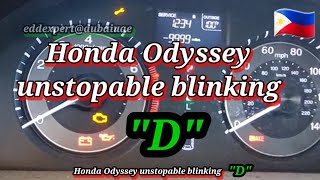
- Check Engine Light or Transmission Warning Light — A generic 'Check Engine' light, a gear icon, a 'Service 4WD' message (Ford), or a blinking 'D' light (Honda) 🎬 See what a blinking D light means for your Honda. illuminates on the dashboard.
- Inability to Shift Gears or Change Drive Modes — The vehicle gets stuck in a single gear (limp mode) or prevents you from switching between 2WD and 4WD.
- Erratic, Harsh, or Delayed Shifting — The transmission shifts abruptly, slams into gear, or slips. On Hondas, this manifests as a severe 'judder' or vibration during acceleration.
- Vehicle Will Not Move or Loss of Power — In severe cases, such as a snapped CVT belt or complete TCM failure, the vehicle fails to engage any gear or suddenly loses power while driving.
- Grinding or Whining Noises — A failing Ford transfer case motor makes a grinding noise when attempting to shift. A failing CVT produces a distinct whine that changes with engine RPM.
Diagnostic Flowchart
Tap your situation to follow the diagnostic path that matches what you're seeing on this code.
Common Fixes & Costs
- Replace Transfer Case Shift Motor (Ford)
— Parts: $150-$350, Labor: $100-$200, ~1.5 hr book time
(Intermediate)
: OEM
: OEM - Replace CVT Speed Sensor (Honda)
— Parts: $40-$150, Labor: $80-$150, ~1 hr book time
(DIY)
: OEM - Reprogram or Replace Transmission Control Module (Audi/VW)
— Parts: $1200-$2000, Labor: $250-$600, ~3.5 hr book time
(Professional)
: OEM - Repair Damaged Wiring or Connectors — Parts: $20-$60, Labor: $150-$400, ~2 hr book time (Intermediate)
- Replace Internal ATF Pressure Switch (Nissan)
— Parts: $80-$200, Labor: $300-$500, ~2.5 hr book time
(Professional)
: OEM
DIY vs Professional
- Replace Transfer Case Shift Motor (Ford) — Beginner: No
Tools: Socket set, ratchet, torque wrench, jack and jack stands. - Replace CVT Speed Sensor (Honda) — Beginner: Yes
Tools: 10mm and 12mm sockets, ratchet, extension. - Reprogram or Replace Transmission Control Module (Audi/VW) — Beginner: No
Tools: Professional diagnostic tools (VCDS, ODIS), battery voltage stabilizer.
Used vs. New Parts: Buying Guide
When a used part is worth it: For mechanical parts like a Ford transfer case motor, a used part from a low-mileage donor is a budget option, though new aftermarket units provide better warranties. For electronic modules like an Audi TCM, used parts are highly risky due to VIN-locking; use a mail-in repair service instead.
Donor-vehicle mileage cap: roughly under 70000 miles for the part to have meaningful remaining life.
Donor quality checklist:
- Verify the exact part number matches; electronic modules are not interchangeable.
- Avoid parts from rust-belt vehicles due to corroded electrical connectors.
- Always buy sensors new; the part is cheap and the labor is the main cost.
Decision logic:
- If The part is a sensor (e.g., Honda speed sensor) → Always buy new. The risk of a used part failing isn't worth the small savings.
- If The part is a complex electronic module (e.g., Audi TCM) → Prioritize a mail-in repair service for your original module to avoid programming nightmares.
- If The part is an electro-mechanical component (e.g., Ford transfer case motor) → A new aftermarket part offers the best balance of cost and warranty.
Warranty tradeoff: Salvage yard parts have a 30-90 day warranty. New aftermarket parts carry a 1-year to lifetime warranty. New OEM parts have a 1-2 year warranty.
Worst-case if a used part fails: $300-$800 if a used part fails, requiring you to pay for labor a second time plus another replacement part.
What Happens If You Wait — Timeline
- 0-1 month: Initial fault logged. Ford displays 'Service 4WD'. Honda flashes 'D' light. Audi displays CEL. Symptoms are minor or intermittent. (MPG impact: 0-2%% · Added cost: $0)
- 1-3 months: Symptoms become consistent. Ford 4WD is inoperative. Honda exhibits noticeable CVT judder. Driving a Ford stuck in 4WD on dry pavement binds the driveline. (MPG impact: 2-5%% · Added cost: $0-$400 (Tire wear, wasted fuel))
- 3-6 months: Component wear accelerates. Ford driveline binding stretches the transfer case chain. Honda continuous judder glazes CVT pulleys and damages the start clutch. (MPG impact: 5-10%% · Added cost: $500-$2,000 (Stretched transfer case chain, damaged CVT start clutch))
- 6+ months: Catastrophic failure. The Ford transfer case suffers major internal mechanical failure. The Honda CVT drive belt snaps, requiring a complete transmission replacement. (MPG impact: 10-25%% · Added cost: $3,500-$8,000+ (Full transfer case or CVT replacement))
Cost of Not Fixing It
- 0-1 Month: Risk of being stranded. Unpredictable shifting creates a safety hazard. Driving a Ford stuck in 4WD on dry pavement causes premature tire wear and driveline binding. (Added cost: $0-$500 (Tire wear, tow bill))
- 1-6 Months: Accelerated wear on internal components. Honda CVT judder damages the drive belt. Ford driveline binding damages the transfer case chain and gears. (Added cost: $1,500-$3,500 (Transfer case rebuild, partial CVT repair))
- 6+ Months: Catastrophic failure. The Honda CVT fails completely. The Ford transfer case shatters, potentially sending debris into the transmission. (Added cost: $3,500-$8,000+ (Complete transmission or transfer case replacement))
Diagnosis Steps
- Confirm the Manufacturer-Specific Definition
P1841 means something different for Ford, Honda, and Audi. Use a capable scanner to read the exact definition for your make and model before touching any tools.
Tools: OBD-II Scanner (Beginner) - Perform a System Health Check
Test the battery and charging system. Ensure battery voltage is above 12.4V (engine off) and charging is 13.7V-14.7V (engine on). Check transmission fluid level and condition. Burnt fluid indicates internal damage.
Tools: Multimeter, Rag (Beginner) - Inspect Wiring and Connectors
Locate the relevant component (transfer case motor, CVT speed sensor, TCM) and meticulously inspect its wiring harness. Look for chafing, melted wires, or corrosion inside the connectors.
Tools: Flashlight, Trim removal tools (Intermediate) - Check for Technical Service Bulletins (TSBs)
Search for TSBs related to P1841 for your specific year and model. Manufacturers frequently release software updates or extended warranties for known issues, such as Honda CVT judder.
Tools: Internet access (Intermediate) - Perform a Dynamic Driving Test (Honda Specific)
For a Honda P1841, drive in reverse at over 19 mph (30 km/h) for at least 5 seconds. If the code reappears immediately, it confirms a hard fault with the reverse rotation speed sensor or its circuit.
Tools: OBD-II Scanner with Live Data (Intermediate) - Test Component Circuits
Using a wiring diagram, test the suspected component's circuit. For a sensor, check for a 5V reference, ground, and signal voltage. For a Ford shift motor, check for power and ground when commanded on.
Tools: Multimeter, Vehicle-specific wiring diagram (Advanced) - Verify Control Module Software (Audi/VW)
Connect to the Engine Control Module (01) and Transmission Control Module (02). Compare their software part numbers. If mismatched, the modules are incompatible and require professional reflashing.
Tools: VCDS or equivalent professional scan tool (Professional)
When This Code Triggers (Freeze-Frame Conditions)
- Engine Coolant Temp: 170-210°F (77-99°C) (The code sets when the engine is at full operating temperature, as the TCM runs its self-tests under these conditions.)
- Vehicle Speed: Varies by fault (For Honda, it triggers above 19 mph in reverse. For Ford, it triggers during a 2WD-4WD shift attempt at low speed.)
- RPM: 1200-2500 RPM (Occurs during steady-state driving or light acceleration, not typically during heavy throttle.)
Related Codes
- P1867 — On Ford vehicles, P1867 (Transfer Case Contact Plate Failure) appears with P1841. Seeing both confirms the entire transfer case shift motor assembly requires replacement.
- P0700 — A generic code indicating the TCM requested the Check Engine Light. You must scan the TCM directly to find the underlying P1841 code.
- U0101 — Indicates 'Lost Communication with TCM'. Unlike P1841 where the module reports a specific fault, U0101 means the module is completely offline.
- P1855 — On Audi/VW, P1855 confirms the specific reason for the P1841 incompatibility is a software version mismatch between modules.
Climate & Environmental Factors
- High Humidity / Road Salt (Rust Belt): Accelerates wiring and connector failures due to corrosion. This destroys exposed Ford transfer case motor harnesses and seizes the retaining bolts on Honda speed sensors.
- Cold Weather: Exacerbates issues with degraded transmission fluid, causing harsher shifting and triggering pressure-related codes in Nissan CVTs.
How to Talk to a Mechanic About This Code
Say this: "I have a [Your Make] with a P1841 code. I understand this is a manufacturer-specific code and for my vehicle, it points to the [transfer case shift motor/CVT speed sensor/TCM software]. I'd like to schedule a diagnosis to confirm the specific failure before authorizing parts replacement."
This signals you are an informed customer. It directs their diagnostic process, saving time, and prevents them from suggesting unnecessarily large repairs, like a full transmission replacement for a Ford 4WD issue.
Avoid saying:
- 'Just fix whatever's wrong'
- 'My check engine light is on, can you look at it?'
- 'Whatever you recommend'
Questions to ask before authorizing the repair:
- For Ford: Did you test the shift motor and its wiring for power, ground, and signal?
- For Honda: Did you perform the reverse driving test and check for related TSBs?
- For Audi: Can you confirm this is a software mismatch by checking the ECM and TCM part numbers?
- What is the warranty on this specific repair, including parts and labor?
Where to Take It: Dealer vs Independent vs Chain
- Dealer:
Required for Audi/VW software issues. Recommended for any vehicle still under a powertrain warranty.
Best for: Vehicles under warranty, Recalls and TSBs, Complex software programming for Audi/VW models requiring proprietary tools (ODIS).
Downsides: Labor rates are 1.5-2x higher than independent shops., Dealers default to replacing entire assemblies rather than smaller components. (Typical cost: +50% vs. baseline) - Independent Shop:
Best choice for Ford and Honda repairs. For Audi/VW, choose only a trusted European specialist.
Best for: Out-of-warranty Ford (transfer case motor) and Honda (speed sensor) repairs., European specialists with diagnostic tools (VCDS) for Audi/VW.
Downsides: Quality varies widely., General shops lack the specific tools for Audi/VW programming. (Typical cost: +0% vs. baseline) - Chain Shop:
AVOID for diagnosing P1841. The risk of misdiagnosis is extremely high.
Best for: Simple maintenance like oil changes or tire rotations.
Downsides: Technicians lack specialized diagnostic skills for manufacturer-specific codes., High risk of misdiagnosis leading to unnecessary repairs. (Typical cost: -10% vs. baseline)
When to Walk Away From the Repair
If the estimated repair cost exceeds 50% of the car's private-party value, seriously consider selling or trading it in.
- Car worth $3500, fix is $2500: Walk away. The repair cost is over 70% of the car's value. This is common for an older Audi needing a dealer-installed TCM.
- Car worth $15000, fix is $600: Fix it. The repair for a Ford transfer case motor is a small fraction of the truck's value.
- Car worth $8000, fix is $4000: Borderline. This represents a potential Honda CVT replacement. Get a second opinion to confirm it's not a cheaper sensor fix before deciding.
What Scan Tool You Need for This Code

Minimum: A scanner that reads manufacturer-specific transmission codes (P1xxx, Cxxxx).
A basic $20 code reader only shows generic 'P0' codes. For P1841, you MUST read the manufacturer's specific definition to know what system is failing.
Budget: BlueDriver Pro (~$100) — Connects to your phone and reads enhanced, manufacturer-specific codes for the transmission, revealing the exact definition for your Ford, Honda, or Audi.
Mid-range: Foxwell NT510 Elite (~$180) — Offers live data from the TCM to watch sensor readings and provides basic bidirectional controls to test components like the Ford shift motor.
Professional: Autel MaxiCOM MK808S (~$350) — Provides full bidirectional control and reads detailed software part numbers from Audi/VW modules, which is critical for diagnosing incompatibility issues.
Rent vs buy: Free rental scanners from auto parts stores often CANNOT read manufacturer-specific codes. Buying a capable scanner like the BlueDriver is required to avoid misdiagnosis.
How to Clear the Code After You Fix It
- Ensure all repairs are complete and connectors are secure.
- Reconnect the battery if it was disconnected.
- Use an OBD-II scan tool to clear the P1841 code.
- Perform a complete drive cycle to reset readiness monitors.
Drive cycle (~30 minutes): A generic drive cycle includes a cold start, 3 minutes of idling, 15 minutes of mixed city driving, followed by 10 minutes of steady highway driving between 50-60 mph.
Readiness monitors affected: Comprehensive Component Monitor, Transmission
Before emissions retest: drive at least 100 miles to fully set monitors.
Watch out for:
- Clearing the code without fixing the underlying issue causes the code to return immediately.
- Disconnecting the battery resets all readiness monitors, causing an automatic emissions test failure until a full drive cycle is completed.
Will This Fail Emissions / State Inspection?
Yes — this code typically fails an OBD-II emissions inspection.
- California: An illuminated Check Engine Light from a P1841 code is an automatic test failure. A full drive cycle must be completed after repair.
- New York: Any active powertrain fault code, including P1841, results in an immediate OBD-II inspection failure.
- Texas: An active P1841 code fails the OBD-II inspection. A recently cleared code fails due to 'Not Ready' monitors.
Most Commonly Affected Vehicles
- Ford F-150, Expedition, Super Duty (2004-2018) — Experiences frequent failure of the electronic transfer case shift motor, setting P1841 alongside P1867.
- Honda Civic, CR-V, Accord, HR-V (2016-2025) — Prone to CVT speed sensor failures. American Honda extended the warranty on the CVT drive belt for some models to 7 years/150,000 miles.
- Audi A4, A6, Allroad (2001-2015) — Triggers P1841 exclusively due to incompatible software between the engine and transmission control modules after a replacement.
- Nissan Rogue, Pathfinder, Murano, Maxima (2014-2018) — Triggered by failing internal pressure switches or belt slippage. A class-action settlement extended transmission warranties for specific models.
- Land Rover Discovery Sport, Range Rover Evoque (2014-2016) — Stores P1841 for CAN bus monitoring faults, indicating communication errors between driveline modules.
- Chevrolet Optra (2004-2013) — Displays P1841 for 'Internal Mode Switch Circuit High Voltage', often caused by a faulty alternator voltage regulator.
- BMW 3-Series, 5-Series (E46, E39) (1998-2006) — Defines P1841 as 'Pressure Control Solenoid A Circuit Low', indicating a failed internal transmission solenoid.
- Acura TLX, MDX (2015-2020) — TSB 24-022 addresses corrosion in the rear differential pump motor connector that causes AWD system codes.
Manufacturer-Specific Notes

- Ford: P1841 is strictly a four-wheel-drive system issue. It indicates the transfer case shift motor is faulty or has a wiring short. Do not replace the transmission.
- Honda: P1841 means the computer receives an incorrect speed reading when the car is in reverse. This is usually a faulty $100 sensor, not a destroyed transmission.
- Audi / Volkswagen: P1841 is a software problem, not a hardware problem. It happens when a module is replaced with a non-matching part number. The fix is dealer programming.
- Nissan: While the code points to a pressure switch, it is a symptom of larger Jatco CVT failures. Check for extended warranty coverage before paying out of pocket.
Real Owner Stories
2016 Ford F-150 at 86,000 miles
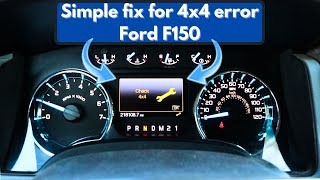
The 'Service 4x4' light appeared, and the truck was stuck in 2WD. Codes P1841 and P1867 were present.
What they tried:
- Inspected the wiring harness to the transfer case motor and found no visible damage.
- Attempted to clear the codes, but they returned immediately upon starting the truck.
Outcome: Replaced the entire transfer case shift motor assembly. The internal position sensor (P1867) and the motor's electrical circuit (P1841) had failed. The repair cost $300 for a new aftermarket part and took 1.5 hours of DIY labor.
Lesson: On Ford trucks, P1841 and P1867 appearing together confirm the transfer case shift motor assembly is dead. Replace the entire unit rather than attempting internal repairs.
2010 Honda Civic at 150,000 miles
The Check Engine Light illuminated and the 'D' indicator started blinking. The car intermittently entered failsafe mode.
What they tried:
- Took the car to a mechanic who tested the battery and charging system.
- Discovered the alternator was overcharging, putting out 16 volts and frying the battery.
Outcome: Paid $675 to replace the faulty alternator and battery. The over-voltage condition was confusing the TCM and triggering the blinking 'D' light. No transmission repairs were needed.
Lesson: A blinking 'D' light on a Honda indicates a transmission fault, but always test the battery and alternator first. Electrical noise triggers false transmission codes.
2007 Audi A4 B7 Convertible
The car would not shift correctly in 'D' but worked in manual mode. Codes P1841 and P1855 were stored after a recent transmission swap.
What they tried:
- Discovered the replacement transmission came from an Audi A4 Avant (station wagon).
- Verified the replacement TCM had different software than the original Engine Control Module expected.
Outcome: Hired a specialist to reflash the replacement TCM with the exact software part number required by the original car. The programming cost $350.
Lesson: For Audi/VW, P1841 is strictly a software mismatch problem. Never install a used module without verifying exact part numbers, as it requires expensive professional programming to function.
How to Prevent This Code From Triggering
- Change Honda/Nissan CVT fluid proactively (Every 30,000 miles) — Degraded CVT fluid loses its frictional properties, causing belt slip, overheating, and judder, which triggers sensor faults like P1841. Use only genuine OEM fluid.
- Engage Ford 4WD system periodically (Once a month for a short distance on dirt/gravel) — Lack of use causes the transfer case shift motor's internal contacts and gears to seize. Actuating the system keeps parts lubricated and moving freely.
- Ensure correct module programming during repairs (Audi/VW) (Any time an ECM or TCM is replaced) — P1841 is triggered by software incompatibility. Always use a professional shop that performs online coding to ensure the new module is accepted by the vehicle's immobilizer.
Frequently Asked Questions
Can I drive my car with a P1841 code?
No. Driving risks catastrophic drivetrain damage or sudden power loss. Ford owners stuck in 4WD will destroy their transfer case on dry pavement.
Why does the meaning of P1841 change for different cars?
Codes starting with 'P1' are manufacturer-specific. This allows automakers to assign codes to proprietary systems like Ford's 4WD or Honda's CVT.
How much does it cost to fix a P1841 code?
Costs range from $120 for a Honda speed sensor to $550 for a Ford transfer case motor. Audi TCM replacements require dealer programming and often exceed $2,500.
What are common mistakes when diagnosing P1841?
The biggest mistake is replacing parts without confirming the code's brand-specific definition. Another is ignoring the battery, as low voltage triggers false transmission codes.
Can a bad battery cause a P1841 code?
Yes. A weak battery or failing alternator provides unstable voltage to the Transmission Control Module. This triggers false communication and sensor faults.
What does CVT judder feel like and is it serious?
CVT judder feels like a severe shaking or vibration through the floorboards during acceleration. It indicates internal belt slippage and requires immediate fluid replacement or transmission repair.
Will clearing the code fix the problem?
No. The code returns immediately once the vehicle's computer detects the hardware or software fault during its next drive cycle.
Key Takeaways
- Identify your vehicle's specific P1841 definition before buying parts; it means a transfer case motor failure on Fords, a CVT sensor fault on Hondas, and a software mismatch on Audis.
- Test your battery and charging system first, as voltage drops below 12.4V frequently trigger false P1841 transmission codes.
- Expect repair costs to range from $120 for a Honda speed sensor replacement to over $2,500 for a dealer-programmed Audi Transmission Control Module.
- Stop driving immediately if your Ford is stuck in 4WD on dry pavement or your Honda exhibits severe CVT judder, as continuing causes $3,500+ in catastrophic driveline damage.
Helpful Videos



The information in this article is provided for general reference and educational purposes only. Vehicle specifications, procedures, and part compatibility can vary by production date, trim level, and region. Always consult your vehicle's factory service manual and verify part numbers before purchasing or performing repairs. Safety-critical components such as airbags, seat belts, and braking systems should be installed by a qualified professional.
- 🎬 Helpful Videos
- What Does P1841 Mean?
- Can I Drive With P1841?
- Common Causes
- Symptoms
- Diagnostic Flowchart
- Common Fixes & Costs
- DIY vs Professional
- Used vs. New Parts: Buying Guide
- What Happens If You Wait — Timeline
- Cost of Not Fixing It
- Diagnosis Steps
- When This Code Triggers (Freeze-Frame Conditions)
- Related Codes
- Climate & Environmental Factors
- How to Talk to a Mechanic About This Code
- Where to Take It: Dealer vs Independent vs Chain
- When to Walk Away From the Repair
- What Scan Tool You Need for This Code
- How to Clear the Code After You Fix It
- Will This Fail Emissions / State Inspection?
- Most Commonly Affected Vehicles
- Manufacturer-Specific Notes
- Real Owner Stories
- 2016 Ford F-150 at 86,000 miles
- 2010 Honda Civic at 150,000 miles
- 2007 Audi A4 B7 Convertible
- How to Prevent This Code From Triggering
- Frequently Asked Questions
- Can I drive my car with a P1841 code?
- Why does the meaning of P1841 change for different cars?
- How much does it cost to fix a P1841 code?
- What are common mistakes when diagnosing P1841?
- Can a bad battery cause a P1841 code?
- What does CVT judder feel like and is it serious?
- Will clearing the code fix the problem?
- Key Takeaways
- 🎟️ Get 5% Off