

OBD-II Code P1828: Transmission Transfer Case High to Low Clutch Relay Circuit Failure
What P1828 means, why it triggers, and how to fix it
- Code P1828 indicates an electrical failure in the relay circuit controlling your 4WD system's shift into 4-Low.
- A failed transfer case shift motor causes over 60% of P1828 codes, particularly on 1997-2008 Ford F-150s and Explorers.
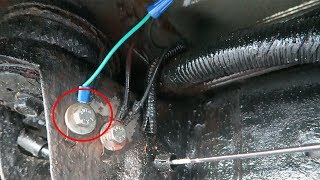
- On GM trucks, inspect and wire-brush the G103 frame ground beneath the driver's door before replacing any parts, as corrosion here disables the entire 4WD system.
- Check the 20A or 30A under-hood 'ATC' or 'TREC' fuses and swap the 4WD relay before spending $300 or more on a new shift motor.
What Does P1828 Mean?

P1828 indicates your vehicle's Powertrain Control Module (PCM) or Transfer Case Control Module (TCCM) detects an electrical open or short in the relay circuit controlling the 4WD transfer case shift motor. This specific fault isolates the circuit responsible for shifting from 4-High to 4-Low, which requires a counter-clockwise motor rotation on most domestic trucks.
Technical definition: The Society of Automotive Engineers (SAE) defines P1828 as 'Transmission Transfer Case High to Low Clutch Relay Circuit Failure.' On GM vehicles, the definition is functionally identical: 'Transmission Transfer Case Counter Clockwise Shift Relay Coil Circuit Failure.'
Can I Drive With P1828?
Yes, But With Caution. You can safely drive in two-wheel drive, but your 4WD system remains inoperative. Ignoring this issue—especially if the transfer case is stuck partially engaged—causes severe drivetrain binding that destroys the transfer case chain or transmission output shaft, adding $1,500 to $4,000 in collateral repair costs.
Common Causes

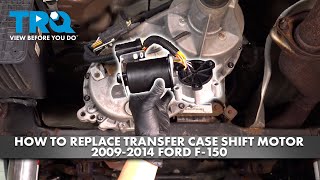
- Failed Transfer Case Shift Motor (Very Common) — The electric motor that physically shifts the transfer case gears 🎬 See this walkthrough on replacing a Ford transfer case shift motor. is the most frequent failure point. Internal components wear out, the motor burns out from overuse, or internal plastic gears strip, triggering an electrical fault.
- Blown Fuse or Failed 4WD Relay (Common) — A blown 20A or 30A fuse cuts power to the entire 4WD circuit, often acting as a symptom of a failing shift motor drawing too much current. Similarly, the control relay fails from age or heat damage, preventing power from reaching the motor.
- Corroded or Damaged Wiring and Grounds (Common) — Wiring and connectors exposed to road salt and debris develop shorts or open circuits. On GM trucks, a severely corroded ground wire bolted to the driver's side frame rail interrupts the entire circuit.
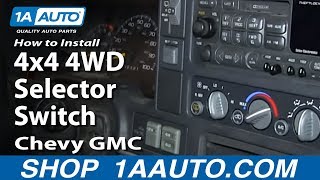
- Faulty 4WD Selector Switch (Common) — The dashboard switch used to select 4WD modes fails due to worn internal contacts or cracked solder joints on its printed circuit board, preventing the initial command from reaching the control module. 🎬 Watch: How to replace a faulty 4WD dashboard selector switch.
- Failed Transfer Case Control Module (TCCM) (Less Common) — The TCCM fails due to voltage spikes, water intrusion, or internal electronic faults, sending improper signals or no signal at all to the shift relays.
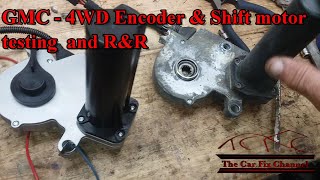
- Leaking Transfer Case Shift Shaft Seal (Less Common) — On GM models, the shift shaft seal leaks fluid directly into the encoder motor assembly. This fluid shorts out the internal encoder sensor, triggering circuit codes.
- Misaligned Transmission Range Sensor (Rare) — The 4WD system requires the transmission to be in Neutral to shift to 4-Low. If this sensor is misaligned, the TCCM never receives the 'Neutral' signal and refuses to command the shift.
Symptoms

- Check 4x4 / Service 4WD Light On — An illuminated warning light or message on your dashboard indicates a hard fault in the four-wheel-drive system.
- Unable to Shift 4WD Modes — The vehicle refuses to shift into 4-High or 4-Low, or becomes permanently stuck in one mode. The dashboard selector switch has no effect.
- 4WD Indicator Lights Flash Then Turn Off — The lights on the 4WD selector switch flash for a few seconds and go out. This indicates the control module detected a circuit fault during its self-test and aborted the shift.
- Clicking or Grinding Noises — You hear rapid clicking from the relays under the dash or grinding noises from the transfer case as the system unsuccessfully attempts to engage.
- Erratic Transmission Shifting (also visible on scanner) — A fault in the transfer case encoder circuit sends an incorrect position signal to the Transmission Control Module, causing harsh or incorrect gear changes.
Diagnostic Flowchart
Tap your situation to follow the diagnostic path that matches what you're seeing on this code.
Common Fixes & Costs
- Replace 4WD Relay or Fuse — Parts: $5 - $40, Labor: $0 - $60, ~0.2 hr book time (DIY)
- Replace Transfer Case Shift Motor
— Parts: $150 - $450, Labor: $100 - $300, ~1.0 hr book time
(Intermediate)
Ford F-150 (2004-2008): OEM
Chevrolet Silverado 1500 (2003-2007): OEM - Repair Damaged Wiring or Grounds — Parts: $10 - $60, Labor: $120 - $450, ~2.5 hr book time (Intermediate)
- Replace 4WD Selector Switch
— Parts: $50 - $150, Labor: $75 - $150, ~0.8 hr book time
(DIY)
Chevrolet Silverado (2003-2007, w/ NP8): OEM - Replace Transfer Case Control Module (TCCM)
— Parts: $250 - $500, Labor: $100 - $200, ~1.5 hr book time
(DIY)
Chevrolet Silverado (2003-2007): OEM
Used vs. New Parts: Buying Guide
When a used part is worth it: A used OEM transfer case shift motor from a low-mileage vehicle offers better longevity than cheap aftermarket brands.
Donor-vehicle mileage cap: roughly under 70000 miles for the part to have meaningful remaining life.
Donor quality checklist:
- Verify the donor vehicle's mileage and reason for being salvaged.
- Inspect the electrical connector for corrosion or damage.
- Match the part number exactly, including any specific options for your vehicle's transfer case model.
- Check for signs of external damage or leaking seals on the unit.
Decision logic:
- If The vehicle is newer or the price difference is minimal (<$100) → Buy a new OEM or high-quality aftermarket part for the longer warranty and guaranteed fit.
- If The vehicle is older (>150K miles) and the budget is the primary concern → A used OEM part is often a better bet than a new, budget-tier aftermarket part which may have a high failure rate.
- If The part is known for high failure rates across all brands → Prioritize a new part with the longest possible warranty.
Warranty tradeoff: Used parts from a salvage yard typically come with a 30-90 day warranty. Aftermarket new parts often have a 1-year to limited lifetime warranty. New OEM parts may offer a 2-3 year warranty, especially if installed by a dealer.
Worst-case if a used part fails: $250 - $500 if a cheap aftermarket motor fails shortly after installation.
What Happens If You Wait — Timeline
- 0-1 month: Code P1828 sets, and the 4WD system is completely inoperative. The vehicle remains safely drivable in 2WD. (MPG impact: 0%% · Added cost: $0)
- 1-6 months: If stuck partially between gears or locked in 4WD on dry pavement, drivetrain binding begins causing premature tire wear. (MPG impact: 1-5%% · Added cost: $50 - $250)
- 6-12 months: Sustained drivetrain binding stretches the transfer case chain and wears out U-joints. Grinding noises during turns become prominent. (MPG impact: 5-10%% · Added cost: $800 - $1,800)
- 12+ months: The stretched transfer case chain slips and breaks, cracking the housing and potentially destroying the transmission output shaft. (MPG impact: N/A% · Added cost: $2,500 - $5,000)
Cost of Not Fixing It
- Short-Term (0-3 months): Inoperable 4WD system. No immediate risk of collateral damage if the vehicle remains in 2WD. (Added cost: 0)
- Medium-Term (3-12 months): Severe drivetrain binding if stuck partially between gears or in 4WD on dry pavement, causing premature tire and U-joint wear. (Added cost: $200 - $800)
- Long-Term (12+ months): Catastrophic failure of the transfer case, including a stretched chain or broken gears, and potential damage to the transmission output shaft. (Added cost: $1,500 - $4,000)
Diagnosis Steps

- Check Fuses and Relays
Inspect all 4WD-related fuses in both the cabin and under-hood fuse boxes (often labeled TCCM, 4x4, or TREC). Swap the transfer case relay with an identical one, like the horn relay, to test for a failed relay.
Tools: Owner's Manual, Fuse Puller or Pliers (Beginner) - Visually Inspect Wiring and Grounds
Trace the wiring harness to the transfer case shift motor, looking for chafed wires or melted plastic. Unbolt, wire-brush, and re-secure the main 4WD system ground connection on the frame rail.
Tools: Flashlight, Safety Glasses, Wire Brush (Beginner) - Scan for Related Codes
Use an OBD-II scanner to check for companion codes. Codes like P1820 (Low to High Relay) or C0327 (Encoder Circuit) pinpoint whether the fault is in a shared power source or the position sensor.
Tools: OBD-II Scanner (Beginner) - Test the Shift Motor Directly
Disconnect the shift motor. Apply 12V power and ground directly to the motor's power pins using fused jumper wires. If the motor fails to run, replace it.
Tools: Multimeter, Fused Jumper Wires (Intermediate) - Test the Shift Motor Relay Circuit
Using a multimeter, check for constant battery voltage at the relay socket's power supply pin (Pin 30). Perform a voltage drop test on the ground side; a reading over 0.5 volts under load indicates a bad ground connection.
Tools: Multimeter, Wiring Diagram, Jumper Wires (Advanced) - Check Power and Ground at the TCCM
If the motor and relay circuits pass, verify the Transfer Case Control Module receives proper power and ground. Check for loose female terminals in the TCCM connector, a known GM failure point.
Tools: Multimeter, Wiring Diagram (Advanced) - Advanced: Check GM Encoder and Hyundai/Kia Sensor Voltages
For GM vehicles, use a scan tool to verify the Encoder Return Voltage is between 0.5V and 4.5V. For Hyundai/Kia, verify the AWD coupling pressure sensor signal voltage is above 0.25V.
Tools: Advanced Scan Tool, Multimeter, Wiring Diagram (Advanced)
When This Code Triggers (Freeze-Frame Conditions)
- DTC Set Condition: During 4WD mode change attempt (The TCCM runs a self-test on the relay circuit when a shift is commanded, setting the code instantly if a fault is detected.)
- Vehicle Speed: 0 mph (Shifting into 4-Low requires the vehicle to be stationary.)
- Transmission Range: Neutral (The TCCM requires a 'Neutral' signal to attempt a shift into 4-Low.)
- Battery Voltage: 11.5 - 14.5V (The code sets when the TCCM commands the relay but detects an improper voltage reading.)
Related Codes
- P1820 — Direct companion code for 'Low to High Shift Relay.' Having both codes indicates a failure in a shared component like the TCCM or main power fuse.
- P1867 — Indicates a failure in the transfer case contact plate (position sensor). A bad shift motor (P1828) triggers P1867 when the computer commands a shift but sees no position change.
- C0327 — GM-specific code for 'Encoder Circuit Malfunction.' Often caused by a leaking transfer case output seal contaminating the sensor, which overworks and fails the relay circuit (P1828).
- P1832 — Points to the front axle differential lock-up solenoid. If you hear the transfer case motor shift but the front wheels don't engage, suspect P1832 instead of P1828.
Climate & Environmental Factors
- Road Salt / High Humidity: Vehicles in the 'Salt Belt' suffer accelerated corrosion on exposed undercarriage electrical connectors and frame grounds, causing high resistance and open circuits.
- Cold Temperatures: Temperatures below 54°F (12°C) cause marginal electrical connections to fail and lubricants to thicken, increasing motor current draw and triggering the code.
How to Talk to a Mechanic About This Code
Say this: "I have a 'Service 4WD' light and a P1828 code. Please start by checking the 4WD fuses, relays, and the main frame ground before quoting a new shift motor."
Directs the technician's labor toward the most likely and cheapest fixes first, preventing immediate quotes for expensive parts.
Avoid saying:
- 'My 4x4 is broken, fix it.'
- 'My 'Service 4WD' light is on, can you look at it?'
- 'I think I need a new transfer case motor.'
Questions to ask before authorizing the repair:
- Did you check both under-hood and in-cabin fuses?
- Did you swap the 4WD relay?
- Did you clean the main 4WD ground?
- Did you test for power at the shift motor connector?
- If the TCCM needs replacement, does the new one require programming?
Where to Take It: Dealer vs Independent vs Chain
- Dealer:
Good, but expensive. Use as a second option if a software update is required.
Best for: Vehicles under warranty, Repairs that require a TCCM software update, Complex electrical issues on newer models
Downsides: Highest labor rates, May recommend replacing an entire assembly when a simpler wiring repair would suffice (Typical cost: +50% vs. baseline) - Independent Shop:
Best fit. Experienced independent technicians efficiently diagnose P1828 issues on common trucks.
Best for: Out-of-warranty vehicles, especially common domestic trucks, Diagnosing and repairing known issues like bad grounds or wiring faults
Downsides: Quality and electrical diagnostic skill can vary greatly., May not have access to the latest TSBs or OEM-level programming tools. (Typical cost: +0% vs. baseline) - Chain Shop:
AVOID. Chain shops frequently misdiagnose this code and recommend unnecessary expensive parts.
Best for: Simple, unrelated services like oil changes or tires.
Downsides: Technicians often lack the deep electrical diagnostic training required for this code., High pressure to sell parts can lead to misdiagnosis. (Typical cost: -10% vs. baseline)
When to Walk Away From the Repair
If the estimated repair cost exceeds 50% of the car's private-party value, consider selling the vehicle as-is.
- Car worth $7000, fix is $750: Fix it. The repair cost for a new shift motor and labor is well below the threshold.
- Car worth $4500, fix is $2800: Walk away. A worst-case scenario requiring a transfer case replacement is not economical for this vehicle's value.
- Car worth $5500, fix is $2500: Borderline. This repair is approaching the 50% threshold. Get a second opinion before authorizing the repair.
What Scan Tool You Need for This Code
Minimum: An OBD-II reader capable of accessing the Transfer Case Control Module (TCCM).
A basic $20 reader only checks engine codes and cannot see the P1828 code stored in the TCCM.
Budget: BlueDriver Pro (~$100) — Performs an all-system scan to read TCCM codes on Ford and GM vehicles.
Mid-range: Foxwell NT510 Elite (with GM or Ford software) (~$180) — Offers bi-directional control to command the shift motor directly from the scanner.
Professional: Autel MaxiCOM MK808 / MK808S (~$450-550) — Provides full bi-directional control and performs TCCM relearn procedures.
Rent vs buy: AutoZone loaner tools often cannot read TCCM codes. Buying a capable scanner is a better investment for this specific problem.
How to Clear the Code After You Fix It
- Fix the underlying electrical or mechanical fault.
- Use an OBD-II scan tool to clear the Diagnostic Trouble Code from the TCCM/PCM memory.
- With the vehicle in Park or Neutral, cycle the 4WD selector switch through all modes to confirm the repair is successful.
Drive cycle (~20 minutes): The 4WD system confirms the fix immediately upon use, but clearing the code resets emissions monitors, requiring a standard drive cycle.
Readiness monitors affected: Clearing any P-code resets all monitors.
Before emissions retest: drive at least 50 miles to fully set monitors.
Watch out for:
- Clearing the code without fixing the root cause results in the code returning instantly on the next 4WD shift attempt.
Will This Fail Emissions / State Inspection?
Yes — this code typically fails an OBD-II emissions inspection.
- California: An active P-code illuminating the Check Engine Light is an automatic failure. Permanent DTCs require a drive cycle to clear.
- New York: An illuminated Check Engine light results in an automatic failure.
- Texas: An active code turning on the MIL causes an automatic failure.
Most Commonly Affected Vehicles

- Ford F-150 (1997-2008) — Extremely common due to the design of the electronic shift-on-the-fly (ESOF) system. The 10th generation is particularly known for shift motor failures.
- Ford Explorer (1995-2010) — Shares the ESOF 4WD system design with the F-150, making it highly prone to identical shift motor and wiring failures.
- Chevrolet Silverado / Tahoe (2000-2013) — Notorious for 'Service 4WD' messages caused by a faulty dash selector switch, a corroded G103 frame ground, or a contaminated encoder position sensor.
- Ford Ranger (1997-2011) — The transfer case shift motor is a well-documented failure point, almost always accompanied by this specific circuit code.
- Ford Excursion (2000-2005) — Often appears alongside code P1820. Water intrusion into the Generic Electronic Module (GEM) from a leaking windshield is a frequent root cause.
- Kia Sorento / Sportage (2011-2016) — P1828 defines a 'Sensor ground short circuit.' TSBs require replacing the 4WD coupling pressure sensor or the entire coupling assembly.
- Hyundai Tucson (2011-2015) — Defined as 'Pressure Sensor for 4WD Signal Wire Short to Ground.' The code sets if the AWD coupling sensor voltage drops below 0.25V.
Manufacturer-Specific Notes
- Ford / Lincoln / Mercury: Almost exclusively related to the electronic shift-on-the-fly (ESOF) system, overwhelmingly caused by a failed transfer case shift motor.
- General Motors (GM): Defined as 'Counter Clockwise Shift Relay Coil Circuit Failure.' Corroded frame grounds (G103) and faulty dash switches are the primary culprits.
- Kia / Hyundai: Points to a short in the AWD coupling pressure sensor circuit, completely unrelated to a transfer case shift motor.
- Nissan: Relates to a line pressure switch in the 'AUTO' mode transfer case, caused by a faulty relay controlling the hydraulic pump.
- Volkswagen / Audi: Unrelated to the transfer case; indicates an electrical problem with 'Pressure Control Solenoid 4' inside the automatic transmission.
Real Owner Stories
2004 Chevy Silverado, 'Service 4WD' Light On
The 'Service 4WD' light appeared. When trying to engage 4-High, the indicator light blinked and the system failed to engage.
What they tried:
- Forum research suggested expensive possibilities like the transfer case motor.
- Checked the main ground connection under the driver's door.
- A closer inspection revealed a smaller, hidden ground wire within the loom had broken off its connector.
Outcome: Crimping a new connector and reattaching it to the frame ground restored the 4WD system instantly.
Lesson: Always inspect all related ground wires thoroughly; a single broken wire disables the entire system.
2001 Chevy Yukon, No Lights on 4WD Switch
The 4WD selector switch was completely dead, and the system was stuck in 2WD.
What they tried:
- Checked the in-cabin 15-amp '4WD' fuse, which was fine.
- Replaced the 4WD selector switch on the dash, which did not solve the problem.
- Discovered a second 20-amp fuse labeled 'ATC' in the under-hood fuse box.
Outcome: The 20-amp 'ATC' fuse under the hood was blown. Replacing it restored power entirely.
Lesson: Consult the owner's manual to locate all related fuses, especially those hidden in the under-hood power distribution center.
2005 Chevy Tahoe, Intermittent 'Service 4WD' Message
The 'Service 4WD' light appeared intermittently, and the switch changed modes on its own.
What they tried:
- Cleaned the two ground wire connections on the frame rail beneath the driver's door.
- Replaced the 4WD selector switch on the dash.
Outcome: Replacing the faulty dash selector switch resolved the erratic behavior.
Lesson: Erratic, ghost-shifting behavior points directly to a failing dash switch with cracked internal solder joints.
2001 Ford Excursion with P1828 and P1820
The 4WD system was inoperative, and a scan tool showed both P1828 and P1820.
What they tried:
- Checked all fuses and bench-tested the 4WD relays.
- Performed pinpoint tests at the gearmotor encoder assembly connector.
- Tests revealed no voltage from the Generic Electronic Module (GEM).
Outcome: The owner traced the issue to a failed GEM caused by water intrusion from a leaking windshield.
Lesson: Simultaneous high-to-low and low-to-high codes indicate a failure in a shared component, like the control module or main power fuse.
How to Prevent This Code From Triggering
- Engage the 4WD system at least once a month. (Monthly) — Cycling the system prevents the shift motor's internal gears and electrical contacts from seizing due to inactivity.
- Apply dielectric grease to exposed electrical connectors. (During under-vehicle service) — Prevents moisture and road salt from corroding the metal pins on the transfer case motor connector.
- Inspect and clean primary ground connections. (Every 1-2 years) — Removing the bolt, wire-brushing the contact surfaces, and re-securing the main 4WD ground prevents high-resistance faults.
- Wash the undercarriage after exposure to road salt. (After winter storms) — Removes corrosive salt and liquid brine before they destroy wiring, connectors, and ground points.
Frequently Asked Questions
Can I still drive my truck with a P1828 code?
Yes, it is safe to drive in two-wheel drive. You will not have access to 4-High or 4-Low. This presents a safety issue in slippery conditions or off-road.
What is the most common misdiagnosis for P1828?
Replacing the expensive transfer case shift motor without checking the basics. Technicians often find the true cause is a blown 30-amp under-hood fuse or a corroded frame ground.
My 4x4 light flashes for a few seconds then goes out. What does that mean?
This is a classic self-test failure. When you select 4WD, the control module checks the circuits and aborts the shift if it detects an electrical fault. The flashing light means the system tried to engage but failed due to an open or shorted circuit.
Will clearing the code fix the 4x4?
No. The computer detects the hard electrical fault again as soon as you try to use the 4WD system, returning the code immediately.
How do I know if it's the shift motor or the control module (TCCM)?
Test the circuit with a multimeter. If the TCCM sends the correct power and ground signals to the motor's relay but the motor doesn't work, the motor is bad. If no signal arrives, the problem is upstream.
Can a bad ground really stop the 4x4 from working?
Absolutely. A corroded ground connection acts as a roadblock, preventing the shift motor and relays from getting required power. On GM trucks, a single corroded frame ground causes most 'Service 4WD' issues.
What is the difference between P1828 and C0327?
P1828 is a generic code for a fault in the shift relay control circuit. C0327 is a GM-specific code for a fault in the transfer case encoder position sensor. A bad encoder sensor often causes the relay circuit to overheat and fail.
Is replacing the transfer case shift motor a DIY job?
Yes, for someone with moderate mechanical skill. The motor mounts externally on the transfer case with a few bolts and an electrical connector. You must ensure the new motor is properly aligned ('clocked') during installation.
Key Takeaways
- Code P1828 indicates an electrical failure in the relay circuit controlling your 4WD system's shift into 4-Low.
- A failed transfer case shift motor causes over 60% of P1828 codes, particularly on 1997-2008 Ford F-150s and Explorers.
- On GM trucks, inspect and wire-brush the G103 frame ground beneath the driver's door before replacing any parts, as corrosion here disables the entire 4WD system.
- Check the 20A or 30A under-hood 'ATC' or 'TREC' fuses and swap the 4WD relay before spending $300 or more on a new shift motor.
Helpful Videos

The information in this article is provided for general reference and educational purposes only. Vehicle specifications, procedures, and part compatibility can vary by production date, trim level, and region. Always consult your vehicle's factory service manual and verify part numbers before purchasing or performing repairs. Safety-critical components such as airbags, seat belts, and braking systems should be installed by a qualified professional.
- 🎬 Helpful Videos
- What Does P1828 Mean?
- Can I Drive With P1828?
- Common Causes
- Symptoms
- Diagnostic Flowchart
- Common Fixes & Costs
- Used vs. New Parts: Buying Guide
- What Happens If You Wait — Timeline
- Cost of Not Fixing It
- Diagnosis Steps
- When This Code Triggers (Freeze-Frame Conditions)
- Related Codes
- Climate & Environmental Factors
- How to Talk to a Mechanic About This Code
- Where to Take It: Dealer vs Independent vs Chain
- When to Walk Away From the Repair
- What Scan Tool You Need for This Code
- How to Clear the Code After You Fix It
- Will This Fail Emissions / State Inspection?
- Most Commonly Affected Vehicles
- Manufacturer-Specific Notes
- Real Owner Stories
- 2004 Chevy Silverado, 'Service 4WD' Light On
- 2001 Chevy Yukon, No Lights on 4WD Switch
- 2005 Chevy Tahoe, Intermittent 'Service 4WD' Message
- 2001 Ford Excursion with P1828 and P1820
- How to Prevent This Code From Triggering
- Frequently Asked Questions
- Can I still drive my truck with a P1828 code?
- What is the most common misdiagnosis for P1828?
- My 4x4 light flashes for a few seconds then goes out. What does that mean?
- Will clearing the code fix the 4x4?
- How do I know if it's the shift motor or the control module (TCCM)?
- Can a bad ground really stop the 4x4 from working?
- What is the difference between P1828 and C0327?
- Is replacing the transfer case shift motor a DIY job?
- Key Takeaways
- 🎟️ Get 5% Off