

OBD-II Code P1820: Manufacturer-Specific Drivetrain Fault
What P1820 means, why it triggers, and how to fix it on your specific vehicle
- Identify your manufacturer's specific definition first; P1820 means a $20 relay failure on a Ford, but a $150 range sensor failure on a GM.
- Search for Technical Service Bulletins (TSBs) before buying parts, as Kia and Hyundai have official bulletins (like CHA047) dictating exact actuator motor replacements for this code.
- Do not drive GM vehicles with this code if the transmission shifts harshly; the computer commands 200+ PSI of maximum line pressure, which destroys internal clutches within weeks.
- Swap the suspected 4WD relay with a known-good relay (like the horn relay) on Ford models to instantly confirm or rule out a $20 fix before replacing the $200 shift motor.
What Does P1820 Mean?

P1820 is a manufacturer-specific code, meaning its definition changes entirely depending on your vehicle's make. Most commonly, it points to an electrical fault in the 4WD transfer case control system. However, on GM vehicles, it indicates a failing internal mode switch (range sensor) that tells the computer which gear is selected. In other cases, it signifies an internal transmission solenoid failure or a CAN bus communication breakdown. You must identify the exact definition for your specific vehicle before attempting any diagnosis.
Technical definition: The SAE/ISO definition for P1820 varies by manufacturer. Common definitions include 'Transmission Transfer Case Clockwise Shift Relay Coil Circuit Failure' (Ford), 'Internal Mode Switch Circuit A Low' (General Motors), 'Pump for 4WD Motor High Overcurrent Detected' (Hyundai/Kia), 'Engine Speed Signal' (Nissan), and 'Pressure Control Solenoid 2 Short to Plus' (VW/Audi). In all instances, a control module detects an electrical fault (short, open, or high resistance) in a circuit responsible for a key drivetrain function.
Can I Drive With P1820?
Yes, But With Caution. You can drive, but with significant risks depending on your vehicle. On GM models, driving with harsh shifting causes internal transmission damage, leading to a $2,000-$4,000 rebuild. On other vehicles, disabled 4WD/AWD creates a safety risk in poor weather. Some GM and BMW models fail to start entirely if the computer cannot verify the transmission is in Park or Neutral. Diagnose and repair this promptly to avoid being stranded or causing high-cost secondary failures.
Common Causes

- Faulty Transfer Case Shift Relay (Ford) (Very Common) — On Ford models, a small relay controls the high-current transfer case shift motor. This relay is the most frequent failure point and must be tested before replacing the expensive shift motor.
- Defective Transmission Range Sensor (GM) (Very Common) — On GM vehicles with 4L60E/4L80E transmissions, this sensor informs the computer of the gear selector's position. An internal circuit fault triggers P1820, causing harsh shifting or a no-start condition.
- Failed AWD Actuator Motor (Kia/Hyundai) (Common) — On Kia and Hyundai AWD models, the electric motor on the rear differential coupling wears internally, drawing excessive current. This triggers an overcurrent fault documented in official manufacturer TSBs.
- Damaged or Corroded Wiring/Connectors (Common) — Drivetrain electrical harnesses are exposed to moisture and road salt. Broken wires, chafing, or corrosion-filled connectors cause shorts or open circuits across all makes.
- Failed Transfer Case Shift Motor (Common) — The electric motor that physically shifts the transfer case between 2WD and 4WD burns out or seizes from lack of use.
- Faulty Transmission Solenoid (Volkswagen/Audi) (Less Common) — On VW/Audi DSG/CVT transmissions, this code points to an electrical short in the N216 pressure control solenoid inside the mechatronic unit.
- Misadjusted Shifter Cable (GM) (Uncommon) — A stretched or misadjusted mechanical shifter cable prevents the transmission range sensor from aligning correctly with the actual gear position.
Symptoms

- Check Engine, Service 4WD, or AWD Light On — This is the first and sometimes only sign of a problem. A specific 'AWD' warning light is standard on affected Kia/Hyundai models.
- Inability to Switch Between 2WD and 4WD/AWD — The vehicle remains stuck in its current drive mode. Pressing the selector switch has no effect, and indicator lights flash before returning to the original state.
- Engine Will Not Crank or Start (GM) — If the transmission range sensor fails, it stops sending the required 'Park' or 'Neutral' signal to the engine computer, preventing the starter from engaging.
- Harsh, Erratic, or Delayed Shifting (GM) — The transmission shifts very hard ('banging' into gear) because the control module commands maximum line pressure as a protective measure against a faulty range sensor signal.
- PRNDL Display Incorrect or Blank — The gear position indicator on the dashboard goes blank, shows an error, or does not match the gear actually selected with the shifter.
- Freeze Frame Data Logged (scan-tool only — no driver-felt sign) — The ECU records a snapshot of sensor data like vehicle speed, engine RPM, and commanded state at the exact moment the fault occurred.
Diagnostic Flowchart
Tap your situation to follow the diagnostic path that matches what you're seeing on this code.
Common Fixes & Costs
- Replace Transfer Case Shift Relay (Ford) — Parts: $15-$40, Labor: $20-$50, ~0.2 hr book time (DIY)
- Replace Transmission Range Sensor (GM) — Parts: $30-$150, Labor: $100-$200, ~1.2 hr book time (Intermediate)
- Replace AWD Actuator Motor (Kia/Hyundai) — Parts: $250-$400, Labor: $200-$400, ~1.8 hr book time (Intermediate)
- Repair Damaged Wiring or Connectors — Parts: $10-$50, Labor: $120-$350, ~2.0 hr book time (Advanced)
- Replace Transfer Case Shift Motor — Parts: $180-$500, Labor: $150-$250, ~1.0 hr book time (Professional)
DIY vs Professional
- Replace Transfer Case Shift Relay (Ford) — Beginner:
Tools: None. - Replace Transmission Range Sensor (GM) — Beginner:
Tools: Socket set, wrenches, jack and jack stands. - Replace AWD Actuator Motor (Kia/Hyundai) — Beginner:
Tools: Socket set, wrenches, torque wrench, jack and jack stands, pry tools. - Repair Damaged Wiring or Connectors — Beginner:
Tools: Multimeter, wire strippers, crimpers, heat gun, soldering iron, wiring diagrams.
Used vs. New Parts: Buying Guide
When a used part is worth it: For purely mechanical components like a transfer case assembly from a low-mileage wreck, a used part is cost-effective. For electronic parts like a Range Sensor or AWD actuator motor, the savings do not justify the risk.
Donor-vehicle mileage cap: roughly under 60000 miles for the part to have meaningful remaining life.
Donor quality checklist:
- Verify the donor vehicle's mileage and reason for being salvaged.
- Match electronic part numbers exactly; superseded numbers may not interchange.
- Inspect transfer cases for cracked housings or leaky seals.
Decision logic:
- If The part is a simple electronic item like a relay → Buy new. It is inexpensive and guarantees reliability.
- If The part is an electro-mechanical actuator (e.g., shift motor, AWD actuator) → Buy new or remanufactured. Used units have unknown cycles and are a high failure risk.
- If The part is a Transmission Range Sensor → Buy new. It is a critical wear item and the labor to replace it is too high to risk a used part.
Warranty tradeoff: Used parts typically have a 30-90 day warranty covering only the part. New aftermarket parts carry a 1-year to limited lifetime warranty. New OEM parts offer a 1-2 year warranty.
Worst-case if a used part fails: 500-1500 if a used shift motor or range sensor fails after installation, requiring repeat labor costs.
What Happens If You Wait — Timeline
- 0-1 month: Code sets and 'Service 4WD' or Check Engine Light appears. For Ford/Kia, 4WD/AWD is disabled. For GM, shifting becomes firmer or a rare no-start occurs. (MPG impact: 0%% · Added cost: $0)
- 1-4 months: On GM vehicles, harsh 'banging' shifts become consistent. The no-start condition becomes frequent. On other makes, the issue remains a loss of 4WD function. (MPG impact: 0-2%% · Added cost: $0-$50 in wasted fuel)
- 4-12 months: On GM, constant high-pressure shifts cause internal damage. The 3-4 clutch pack wears prematurely. For wiring issues on other makes, corrosion spreads. (MPG impact: 2-5%% · Added cost: $2,000-$4,000 (Transmission rebuild needed for GM vehicles).)
- 12+ months: Catastrophic failure. On GM, the transmission fails completely, requiring full replacement. On other makes, an ignored wiring short damages the control module. (MPG impact: 5-10%% · Added cost: $4,000-$6,000 (Cost of a replacement transmission or new control module).)
Cost of Not Fixing It
- Immediate: Loss of 4WD/AWD capability, creating a safety risk in adverse weather. Potential for a no-start condition, leaving you stranded. (Added cost: 0)
- 1-6 months: On GM vehicles, driving with harsh shifting caused by maximum line pressure leads to premature wear on clutches and bands inside the transmission. (Added cost: 2000-4000)
- 6+ months: Complete internal transmission failure on affected GM models, requiring a full rebuild. On other models, an ignored wiring short damages the control module. (Added cost: 4000-8000)
Diagnosis Steps

- Verify Code and Manufacturer Definition
Use an OBD-II scanner to confirm P1820. Immediately research the exact meaning of P1820 for your vehicle's year, make, and model. Search for Technical Service Bulletins (TSBs) related to this code, as they outline known issues (e.g., Kia/Hyundai TSBs CHA047, TRA086).
Tools: OBD-II Scanner, Internet Access (Beginner) - Inspect Fuses and Relays
Consult the owner's manual to locate fuses related to the 4WD system and transmission. On Fords, the transfer case shift relay is the primary suspect and is located in the under-hood power distribution box.
Tools: Owner's Manual, Fuse Puller (Beginner) - Perform a Detailed Visual Inspection
Safely raise the vehicle and inspect the wiring harness going to the transfer case motor, transmission range sensor, or AWD coupling. Look for chafed wires, melted loom, and green corrosion inside connectors.
Tools: Flashlight, Safety Glasses, Jack and Jack Stands (Intermediate) - Pro Tip: Bench Test the Ford Shift Relay
Remove the suspect transfer case relay. Apply 12V power to terminals 85 and 86; you should hear a click. While energized, check for continuity (less than 1 ohm) between terminals 30 and 87. If there is no click or no continuity, replace the relay.
Tools: Multimeter, 12V Power Source (Advanced) - Pro Tip: Test GM Internal Mode Switch (IMS) Voltages
On a GM 4L60E/4L80E, access the IMS connector. With the key on, engine off, verify the TCM supplies correct voltages on the signal wires. P1820 relates to Circuit 'A'. A consistent 0V reading when the wiring diagram dictates 12V confirms a sensor or wiring fault.
Tools: Multimeter, Vehicle-Specific Wiring Diagram (Advanced) - Check Shifter Cable Adjustment (GM)
Ensure the shifter cable is properly adjusted. A misaligned cable prevents the IMS from correctly reporting gear position. If the engine cranks in Neutral but not in Park, the cable or sensor is misaligned.
Tools: Basic Hand Tools (Intermediate) - Test Circuit Power and Ground
Using a wiring diagram, check for power and ground at the connector of the suspect component (e.g., transfer case motor). Command the component to activate using a bi-directional scanner. If power and ground are present but the component fails to operate, the component is dead.
Tools: Multimeter, Bi-directional Scanner, Wiring Diagram (Advanced)
When This Code Triggers (Freeze-Frame Conditions)
- Vehicle Speed: Varies (Triggers at any speed, from 0 mph (during a gear shift attempt) to highway speeds, depending on the manufacturer's specific fault criteria.)
- Engine RPM: Varies (For GM range sensor faults, it occurs during the shift event. For Nissan communication faults, it logs during steady-state driving.)
- Gear Position: Any Gear (For GM, the fault logs when shifting into or out of a specific range. For Ford, it logs when the driver commands a 4WD mode change.)
- Commanded State: On/Active (The fault sets at the exact moment the control module attempts to energize a circuit (e.g., a relay or motor) and detects an unexpected voltage reading.)
Related Codes
- P1828 — On Ford vehicles, P1820 is the 'Clockwise Shift Relay' and P1828 is the 'Counter-Clockwise Shift Relay'. Seeing both strongly suggests a shared power, ground, or module issue rather than two simultaneously failed relays.
- P0705 — The generic code for 'Transmission Range Sensor Circuit Malfunction.' On GM vehicles, P1820 is the specific, manufacturer-defined version of P0705. Seeing P1820 confirms the diagnosis of a bad range sensor.
- U1000 — A CAN bus communication error. On Nissan vehicles, P1820 is almost always accompanied by U1000. You must diagnose the U1000 network failure first, as it is the root cause.
- P1815 — On VW/Audi, this code is for 'Pressure Control Solenoid 1'. Seen alongside P1820, it indicates a broader fault within the mechatronic unit affecting multiple solenoids.
Climate & Environmental Factors
- Road Salt / High Humidity: Extremely common in 'Salt Belt' regions. Salty water spray enters connectors along the chassis, causing severe corrosion. This increases resistance or creates short circuits, directly triggering P1820.
- Galvanic Corrosion: On Ford transfer cases, steel bolts in magnesium or aluminum housings create a galvanic reaction when exposed to road salt. This corrodes the housing, leading to fluid leaks and internal damage.
- Cold Weather: Cold temperatures make old plastic and wire insulation brittle, creating entry points for moisture. Electrical components also fail more frequently under the increased load of cold, thick fluids.
How to Talk to a Mechanic About This Code
Say this: "I have a P1820 code on my [Make, Model, Year]. I understand this is a manufacturer-specific code. For my Ford, please test the 4WD shift relay first. For my GM, please diagnose the transmission range sensor circuit. For my Kia, please inspect the AWD actuator motor per the TSB."
This signals you know the code has multiple meanings. It directs the technician to the most common, vehicle-specific failure point first, preventing them from replacing expensive parts unnecessarily.
Avoid saying:
- 'Just fix whatever's wrong'
- 'My check engine light is on, can you look at it?'
- 'Whatever you recommend'
Questions to ask before authorizing the repair:
- For my [Make], what specific component does P1820 point to?
- If it's a Ford, did you test the relay before quoting a shift motor?
- If it's a GM, did you check the shifter cable alignment before condemning the range sensor?
- If it's a Kia, are you replacing only the actuator motor per the TSB, or the entire coupling?
- If it's a Nissan, have you diagnosed the U1000 CAN bus fault first?
- Can you show me the test results that confirm the diagnosis?
Where to Take It: Dealer vs Independent vs Chain
- Dealer:
Best for: Vehicles under warranty., Complex manufacturer-specific issues like Nissan CAN bus faults or VW/Audi mechatronic repairs.
Downsides: Highest labor rates., May recommend replacing a large assembly when only a small component has failed. (Typical cost: +50% vs. baseline) - Independent Shop:
The best choice for common Ford and GM issues. For Kia/Hyundai, choose an indie aware of the TSB. For complex Nissan or VW faults, a dealer is safer.
Best for: Out-of-warranty vehicles with common, well-documented versions of P1820 (Ford, GM)., Cost-conscious owners who have vetted the shop's reputation.
Downsides: Quality and experience vary greatly., May lack specific diagnostic software for less common P1820 variants (Nissan, VW). (Typical cost: +0% vs. baseline) - Chain Shop:
AVOID for P1820 diagnosis. The manufacturer-specific nature of this code requires diagnostic depth outside the scope of chain shops.
Best for: Simple, unrelated maintenance like oil changes or tires.
Downsides: High risk of misdiagnosis and upselling on a complex code like P1820., Technician skill is highly variable and often not specialized. (Typical cost: -10% vs. baseline)
When to Walk Away From the Repair
If the estimated repair cost exceeds 40-50% of the car's Kelley Blue Book (KBB) private-party value, consider trading it in or selling it as-is.
- Car worth $3000, fix is $250: Fix it. This is a low-cost repair (e.g., Ford relay, GM sensor) well below the threshold.
- Car worth $8000, fix is $800: Fix it. A mid-range repair (e.g., Kia actuator motor) on a vehicle with decent value is a sound investment.
- Car worth $4500, fix is $3000: Walk away. A high-cost repair (e.g., VW mechatronic unit, or a GM transmission damaged by neglect) is not economical.
What Scan Tool You Need for This Code
Minimum: A scanner that reads manufacturer-specific codes for the transmission (TCM) and drivetrain modules, not just generic engine codes.
A $20 reader only tells you 'P1820' exists, but won't provide the manufacturer's definition. To diagnose it, you need live data from the specific sensor or circuit failing.
Budget: Autel AP200 / Topdon TopScan Lite (~$60) — These Bluetooth dongles pair with your phone and read manufacturer-specific codes from all modules. This is the minimum needed to get the correct P1820 definition.
Mid-range: Foxwell NT510 Elite / Autel MaxiCOM MK808S (~$160-360) — Provides full manufacturer-specific diagnostics plus bi-directional control. This lets you actively test components, like commanding the Ford 4WD relay to click.
Professional: Autel MaxiSys MS906 Pro / Launch X431 Series (~$800-1500) — Offers full OEM-level diagnostics, bi-directional control, and access to wiring diagrams directly on the tool. Professional-grade equipment for complex diagnoses.
Rent vs buy: Rent for free from an auto parts store to get the basic code, but their tools may not provide the critical manufacturer-specific definition. Buy a budget pick to properly self-diagnose this code.
How to Clear the Code After You Fix It
- Use an OBD-II scan tool to clear the Diagnostic Trouble Codes (DTCs).
- Perform a complete drive cycle to allow the system's readiness monitors to run.
- Re-scan for any pending or current codes to verify the fix.
Drive cycle (~20 minutes): A general drive cycle involves a cold start, a few minutes of idling, mixed city driving, and steady highway-speed driving. For 4WD systems, you must successfully shift into and out of all 4WD modes during the drive.
Readiness monitors affected: Comprehensive Component Monitor (CCM), Transmission-related monitors
Before emissions retest: drive at least 50 miles to fully set monitors.
Watch out for:
- Disconnecting the battery clears the code but resets all readiness monitors, guaranteeing an emissions test failure.
- The code returns immediately if the underlying electrical fault was not repaired.
- Forgetting to perform the specific action that triggers the fault (e.g., shifting into 4-Low) during the verification drive.
Will This Fail Emissions / State Inspection?
Yes — this code typically fails an OBD-II emissions inspection.
- California: An active Check Engine Light results in an automatic smog check failure. A complete drive cycle must be performed to set all readiness monitors before a retest.
- New York: A vehicle automatically fails the emissions portion of the NYS inspection if the Check Engine Light is on. Clearing the code right before the test results in a failure due to 'Not Ready' monitors.
- Texas: In the 17 counties requiring emissions testing, a vehicle fails the OBD-II scan if any emissions-related DTCs, including P1820, are present and the Check Engine Light is commanded on.
Most Commonly Affected Vehicles

- Ford F-150 / F-250 / F-350, Expedition (1997-2008) — Almost always caused by a failed transfer case shift relay (F85B-14B194-CA), not the shift motor itself. Codes P1820 and P1828 often appear together.
- Chevrolet / GMC Silverado / Sierra, Tahoe / Yukon (1996-2007) — Code points to the Internal Mode Switch (Transmission Range Sensor) on the 4L60E or 4L80E transmission. Causes harsh shifts and a no-start condition.
- Kia / Hyundai Sportage / Tucson, Sorento (2010-2016) — Indicates a failed AWD actuator motor (Part No. 47810-3B520). TSB TRA086 specifies replacing the motor and harness, not the entire coupling.
- Nissan Titan / Armada / Frontier / Xterra (2004-2015) — Definition is 'Engine Speed Signal'. This is a CAN bus communication fault, often accompanied by code U1000. Diagnose the network, not the speed sensor.
- Volkswagen / Audi Jetta, Golf, Passat, A3 (with DSG/CVT) (2005-2015) — Indicates 'Pressure Control Solenoid 2 (N216) - Short to Plus.' This is an internal fault in the transmission's mechatronic unit requiring a specialist.
- BMW Various models with SMG/Steptronic (2000-2010) — Relates to the Gear Selector Lever (GSL). Points to a problem with the shifter assembly or its communication with the transmission module.
Manufacturer-Specific Notes
- Ford: The problem is almost always the inexpensive shift relay under the hood, not the expensive shift motor. Swap the suspect relay with the horn relay to quickly confirm the diagnosis.
- General Motors (Chevy/GMC): The code points directly to the transmission range sensor. A failure causes both harsh shifting (due to max line pressure) and a no-start condition. Check shifter cable adjustment before replacing the sensor.
- Kia / Hyundai: This code exclusively means the AWD actuator motor on the rear coupling has failed due to overcurrent. The fix is replacing only the motor (Part No. 47810-3B520), not the entire expensive coupling assembly.
- Nissan: The definition 'Engine Speed Signal' is misleading. It is a communication error where the transfer case module isn't receiving the RPM signal over the CAN bus. Diagnose the U1000 network fault first.
- Volkswagen: The code indicates an internal electrical failure of a pressure control solenoid within the DSG or CVT mechatronic unit. This requires a transmission specialist.
Real Owner Stories
2001 Ford Excursion with 180K miles - 4WD Inoperative
Bought the truck with the 4WD not working. FORScan showed codes P1820 and P1828. The '4x4' and 'LOW' lights on the dash did not illuminate, and no motor sounds were heard.
What they tried:
- Checked all fuses, which were good. Bench-tested the two transfer case relays, which functioned correctly.
- Performed pinpoint tests and found no voltage at the relay socket when the 4WD switch was activated.
- Traced the wiring and discovered a broken wire between the Generic Electronic Module (GEM) and the relay socket.
Outcome: Owner repaired the open wire. This restored power to the relay coil circuit, allowing the GEM to control the transfer case motor. 4WD operation was restored.
Lesson: When both P1820 and P1828 are present on a Ford, the issue is often a shared wiring problem or GEM fault, not the relays themselves. Always test for power at the relay socket before replacing parts.
2013 Kia Sorento at 125K miles - AWD Light On
AWD warning light came on, accompanied by engine surges when driving uphill. A scan revealed code P1820. The vehicle operated in FWD only.
What they tried:
- Took the vehicle to a dealership, which quoted a high price to replace the entire AWD coupling.
- Owner researched Kia TSBs and found TSB CHA047, which addresses P1820 by replacing only the AWD actuator motor.
Outcome: The owner had an independent shop replace only the actuator motor. The repair cost was significantly less than the dealer's estimate and restored AWD function.
Lesson: For a P1820 on a 2011-2016 Kia/Hyundai, the problem is almost certainly the AWD actuator motor. Referencing TSB CHA047 saves you from an unnecessary replacement of the entire AWD coupling.
2003 Chevy Silverado 1500 - Harsh Shifting & No Start
Vehicle intermittently failed to crank. When it did run, it shifted extremely hard. The PRNDL display was blank. Code P1820 was stored.
What they tried:
- Suspected a bad starter or battery, but both tested good.
- A mechanic identified P1820, pointing to the Internal Mode Switch (IMS) on the 4L60E transmission.
- Checked the shifter cable adjustment, which was slightly off, but adjusting it did not resolve the issue.
Outcome: The Transmission Range Sensor was replaced. This fixed the no-start condition and the harsh shifting, as the TCM no longer defaulted to maximum line pressure.
Lesson: On GM trucks, P1820 is a classic sign of a failing range sensor. The symptoms blend a starting issue with a transmission performance issue. Don't condemn the starter or transmission; this sensor is the culprit.
How to Prevent This Code From Triggering
- Periodically engage all 4WD modes (Once every 1-3 months) — Cycling the transfer case shift motor prevents it from seizing due to lack of use and keeps internal gears lubricated.
- Apply dielectric grease to exposed connectors (During any underbody service or every 2-3 years) — Applying non-conductive dielectric grease to connector seals prevents moisture and road salt intrusion, a primary cause of circuit failures.
- Change transfer case fluid (Every 30,000-60,000 miles) — Clean fluid provides proper lubrication. Old fluid increases wear on gears, leading to mechanical binding that stresses the shift motor.
- Regularly wash the vehicle's undercarriage (Seasonally, especially after winter in 'Salt Belt' regions) — Washing away road salt reduces corrosive elements that attack wiring harnesses and metal housings.
- Perform regular transmission fluid/filter changes (Every 30,000 miles) — Clean fluid helps maintain proper hydraulic pressure and prevents solenoid issues, reducing the likelihood of complex failures.
Frequently Asked Questions
Can a low battery cause a P1820 code?
Yes. A weak battery causes low voltage across electrical systems, leading to unpredictable control module behavior. Always ensure your battery is fully charged before beginning complex electrical diagnosis.
On my Kia with P1820, does the whole AWD unit need to be replaced?
No. Kia and Hyundai issued TSBs specifying the cause is a failed actuator motor on the side of the AWD coupling. Replace only the motor (and sometimes its wiring harness), which is significantly cheaper than replacing the entire coupling.
How much does it cost to fix code P1820?
The cost varies dramatically by manufacturer. A Ford fix is often a $20 relay, a GM requires a $150 range sensor, and a Kia needs a $300 actuator motor. You must identify your vehicle's specific P1820 definition to estimate costs.
Is the transmission range sensor the same as the neutral safety switch?
Yes, these terms are used interchangeably. This component tells the computer which gear is selected and ensures the engine only starts in Park or Neutral.
On my Ford, how do I know if it's the relay or the shift motor?
The relay is a far more common failure. Swap the transfer case relay with an identical one from a non-critical system (like the horn) in the fuse box. If the 4WD works and the horn doesn't, the relay is bad.
What does P1820 mean on a BMW?
On BMWs, P1820 points to a fault in the Gear Selector Lever (GSL) assembly. It indicates an electrical issue with the shifter mechanism or its wiring, not an internal transmission fault.
Will clearing the code fix the problem?
No. Clearing the code only erases the message from the module's memory. The light returns as soon as the onboard diagnostic system detects the same electrical or mechanical fault.
Key Takeaways
- Identify your manufacturer's specific definition first; P1820 means a $20 relay failure on a Ford, but a $150 range sensor failure on a GM.
- Search for Technical Service Bulletins (TSBs) before buying parts, as Kia and Hyundai have official bulletins (like CHA047) dictating exact actuator motor replacements for this code.
- Do not drive GM vehicles with this code if the transmission shifts harshly; the computer commands 200+ PSI of maximum line pressure, which destroys internal clutches within weeks.
- Swap the suspected 4WD relay with a known-good relay (like the horn relay) on Ford models to instantly confirm or rule out a $20 fix before replacing the $200 shift motor.
Helpful Videos
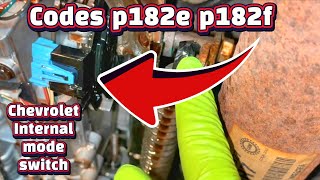

The information in this article is provided for general reference and educational purposes only. Vehicle specifications, procedures, and part compatibility can vary by production date, trim level, and region. Always consult your vehicle's factory service manual and verify part numbers before purchasing or performing repairs. Safety-critical components such as airbags, seat belts, and braking systems should be installed by a qualified professional.
- 🎬 Helpful Videos
- What Does P1820 Mean?
- Can I Drive With P1820?
- Common Causes
- Symptoms
- Diagnostic Flowchart
- Common Fixes & Costs
- DIY vs Professional
- Used vs. New Parts: Buying Guide
- What Happens If You Wait — Timeline
- Cost of Not Fixing It
- Diagnosis Steps
- When This Code Triggers (Freeze-Frame Conditions)
- Related Codes
- Climate & Environmental Factors
- How to Talk to a Mechanic About This Code
- Where to Take It: Dealer vs Independent vs Chain
- When to Walk Away From the Repair
- What Scan Tool You Need for This Code
- How to Clear the Code After You Fix It
- Will This Fail Emissions / State Inspection?
- Most Commonly Affected Vehicles
- Manufacturer-Specific Notes
- Real Owner Stories
- 2001 Ford Excursion with 180K miles - 4WD Inoperative
- 2013 Kia Sorento at 125K miles - AWD Light On
- 2003 Chevy Silverado 1500 - Harsh Shifting & No Start
- How to Prevent This Code From Triggering
- Frequently Asked Questions
- Can a low battery cause a P1820 code?
- On my Kia with P1820, does the whole AWD unit need to be replaced?
- How much does it cost to fix code P1820?
- Is the transmission range sensor the same as the neutral safety switch?
- On my Ford, how do I know if it's the relay or the shift motor?
- What does P1820 mean on a BMW?
- Will clearing the code fix the problem?
- Key Takeaways
- 🎟️ Get 5% Off