

OBD-II Code P1812: 4WD Selector Failure or Transmission Overheating
The Ultimate Guide to What P1812 Means, Why It Triggers, and How to Fix It for Good
- Identify your vehicle's manufacturer immediately: P1812 indicates a 4WD switch failure on Ford/Lincoln vehicles, but signals a critical transmission overheating condition on GM/Chevrolet models.
- Stop driving GM vehicles immediately when P1812 triggers to prevent a $3,500+ transmission rebuild caused by overheating fluid destroying internal clutches.
- Fix Ford P1812 codes by replacing the $40-$100 dashboard 4WD selector switch, which frequently fails due to broken internal plastic contacts.
- Use an advanced OBD-II scanner capable of reading the Transfer Case Control Module (TCCM) or Transmission Control Module (TCM), as generic $20 code readers cannot detect P1812.
- Inspect the wiring harness and ground connections for corrosion or chafing before replacing expensive modules, saving hundreds of dollars in misdiagnosed parts.
What Does P1812 Mean?

P1812 is a manufacturer-specific code with two entirely different meanings. For Ford, Lincoln, and Mercury vehicles, it indicates an electrical circuit failure related to the dashboard switch used to select 2WD or 4-wheel drive (4WD) modes. For General Motors (GM) brands like Chevrolet, GMC, Cadillac, and Saab, this code is a critical alert that your transmission fluid is dangerously hot, or that the sensor monitoring the fluid temperature has failed.
Technical definition: The formal definition of P1812 varies by manufacturer. The two most common are: * **Ford/Lincoln/Citroen/Peugeot:** Transmission 4-Wheel Drive Mode Select Circuit Failure. * **General Motors (Buick/Cadillac/Chevrolet/GMC)/Saab:** Transmission Fluid Overtemperature / Transmission Fluid Temperature (TFT) High.
Can I Drive With P1812?
Yes, But With Caution. Risk varies dramatically by manufacturer. On Ford vehicles, you lose 4WD function but can drive indefinitely without harming the powertrain. On GM vehicles, stop driving immediately. Continuing to drive with an overheating transmission destroys clutches and seals in under 20 miles, turning a $150 sensor repair into a $3,500+ transmission rebuild.
Common Causes

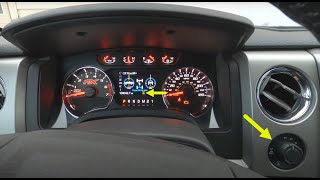
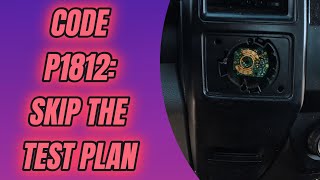
- Defective 4WD Mode Select Switch (Very Common) — (For 4WD Faults) The dashboard switch selecting 2H, 4H, and 4L is the most frequent culprit. 🎬 Watch: How to replace the 4WD switch without disassembling the dash. Internal contacts wear out or plastic mounting tabs break, causing an intermittent connection the TCCM flags as a circuit failure.
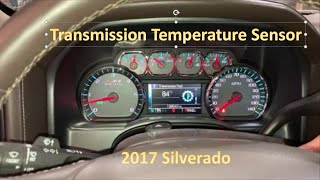
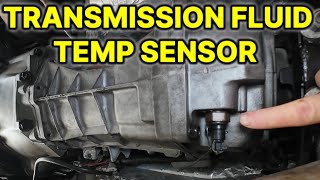
- Failed Transmission Fluid Temperature (TFT) Sensor (Common) — (For Overheating Faults) The sensor fails and sends a false high-temperature reading to the computer, even if the fluid is normal. It typically shorts internally (reading maximum temperature) or develops an open circuit (reading minimum temperature).
- Low or Burnt Transmission Fluid (Common) — (For Overheating Faults) Low fluid levels prevent proper cooling of internal parts. Old, degraded, or 'burnt' fluid loses its cooling properties and indicates excessive friction and heat.
- Damaged Wiring or Connectors (Common) — (For BOTH Faults) Wiring to the 4WD switch or transmission temperature sensor corrodes, frays, shorts to ground, or suffers rodent damage. This frequently occurs on under-vehicle harnesses exposed to road salt and debris.
- Blocked Transmission Cooler or Lines (Less Common) — (For Overheating Faults) The transmission fluid cooler or its lines clog with metallic debris or sludge, severely restricting flow and preventing proper cooling.
- Internal Transmission Failure (Rare) — (For Overheating Faults) Severe internal problems—such as slipping clutches, torque converter failure, or clogged hydraulic passages—generate immense friction and heat, causing rapid transmission overheating.
- Faulty Transfer Case Control Module (TCCM) (Rare) — (For 4WD Faults) The 4WD control module fails internally, preventing it from reading the mode select switch signal or commanding the transfer case motor.
- Poor Ground Connection (Less Common) — (For BOTH Faults) A corroded or loose ground wire for the TCCM or TCM causes erratic voltage readings and triggers false codes. Modules require a stable ground to interpret sensor signals accurately.
- Towing or Hauling Beyond Capacity (Less Common) — (For Overheating Faults) Exceeding the vehicle's rated towing or hauling capacity places extreme stress on the transmission. This generates excessive heat the stock cooling system cannot handle, causing an overtemperature condition.
- Software/Firmware Glitch (Rare) — (For BOTH Faults) The TCCM or TCM contains a software error that incorrectly sets a P1812 code. Check Technical Service Bulletins (TSBs) for recommended software updates or reflashes.
Symptoms

- Cannot Switch 4WD Modes — (For 4WD Faults) The primary symptom is being stuck in 2WD, 4WD High, or 4WD Low, with the system ignoring the selector switch.
- "Check 4x4" or Wrench Light on Dash — (For 4WD Faults) The instrument cluster displays a specific warning message related to the 4WD system, often immediately on startup.
- Check Engine or Transmission Temperature Light — (For Overheating Faults) A general Check Engine Light or a specific transmission temperature warning light illuminates on the dashboard.
- Burnt Smell or Smoke from Transmission — (For Overheating Faults) A strong, acrid, burning smell from under the vehicle indicates severely overheated transmission fluid. Extreme cases produce visible smoke.
- Delayed or No Gear Engagement — (For Overheating Faults) When extremely hot, the transmission experiences a long delay before engaging into Drive or Reverse, or fails to engage entirely.
- Flashing 4WD Indicator Light — (For 4WD Faults) The selected 4WD mode light flashes continuously, indicating a detected fault and a disabled system.
- Harsh Shifting or Limp Mode (also visible on scanner) — (For Overheating Faults) The transmission shifts very hard, slips, or enters a 'limp mode' with only one or two available gears to prevent further heat damage.
Diagnostic Flowchart
Tap your situation to follow the diagnostic path that matches what you're seeing on this code.
Common Fixes & Costs
- Replace 4WD Mode Select Switch — Parts: $30-$120, Labor: $75-$200, ~0.8 hr book time (DIY)
- Replace Transmission Fluid Temperature (TFT) Sensor — Parts: $25-$150, Labor: $250-$500, ~2.5 hr book time (Professional)
- Transmission Fluid and Filter Service — Parts: $70-$200, Labor: $150-$300, ~1.5 hr book time (Intermediate)
- Repair Damaged Wiring Harness — Parts: $15-$60, Labor: $200-$700+, ~3 hr book time (Professional)
- Replace Transfer Case Control Module (TCCM) — Parts: $150-$500, Labor: $100-$250, ~1 hr book time (Professional)
DIY vs Professional
- Replace 4WD Mode Select Switch (Ford) — Beginner:
Tools: ['Trim removal tool or small flathead screwdriver', 'Needle-nose pliers (for some models)'] - Replace Transmission Fluid Temperature (TFT) Sensor (GM) — Beginner:
Tools: ['Socket set and ratchet', 'Torque wrench', 'Drain pan', 'Gasket scraper', 'Transmission fluid pump or funnel', 'Jack and jack stands'] - Transmission Fluid and Filter Service — Beginner:
Tools: ['Socket set and ratchet', 'Torque wrench', 'Drain pan', 'Gasket scraper', 'Fluid pump or funnel', 'Jack and jack stands'] - Replace Transfer Case Control Module (TCCM) — Beginner:
Tools: ['Socket set or nut driver']
Used vs. New Parts: Buying Guide
When a used part is worth it: For the Ford 4WD switch, a used part makes sense if the new part is back-ordered or if you're on a very tight budget, as the failure is often mechanical and visually verifiable. For the TCCM, a used part is a gamble, as it may require programming that costs more than the part itself.
Donor-vehicle mileage cap: roughly under 100000 miles for the part to have meaningful remaining life.
Donor quality checklist:
- Verify the part number matches exactly.
- For switches, check for intact plastic tabs and a solid 'click' action.
- For modules (TCCM), ask if the donor vehicle had any electrical or 4WD issues.
Decision logic:
- If The part is the Ford 4WD switch (under $100 new) → Buy new. The cost savings for a used part are minimal and not worth the risk of it failing again soon.
- If The part is a TCCM and a used one is available from a low-mileage vehicle with the exact same part number → Consider used, but be prepared for potential programming costs. A new or remanufactured unit with a warranty is safer.
- If The part is the GM TFT sensor → Buy new. It is an inexpensive part, but the labor to access it is high. Using a new part minimizes the chance of having to do the job twice.
Warranty tradeoff: Used parts from a salvage yard typically have a 30-90 day warranty, if any. New aftermarket parts often have a 1-year to limited lifetime warranty. New OEM parts carry a 1-2 year warranty.
Worst-case if a used part fails: $200-$600 if a used part fails, primarily due to the cost of repeated diagnostic and installation labor.
What Happens If You Wait — Timeline
- Immediate and Indefinite: The 'Check 4x4' light illuminates, and the 4WD system is disabled. The vehicle remains stuck in 2WD. There is no mechanical harm or progression of failure. (MPG impact: 0%% · Added cost: $0. The only cost is the inconvenience of not having 4WD.)
- 0-50 miles after light on: Transmission temp light on (>260°F). Fluid begins to oxidize and form varnish. Transmission enters limp mode with harsh shifts to protect itself. (MPG impact: 0-5%% · Added cost: $0-$200 if you stop immediately. Damage is limited to the fluid itself and the root cause (e.g., bad sensor, clogged cooler).)
- 50-200 miles after light on: Fluid is burnt and loses lubricating properties. Internal seals harden and crack from heat, leading to pressure loss. Clutches start slipping. (MPG impact: 5-10%% · Added cost: $800-$1,500. A simple fix is no longer possible. At minimum, a new sensor, fluid flush, and new seals are required.)
- 200+ miles after light on: Catastrophic failure. Extreme heat destroys clutch packs and warps steel plates. The torque converter is damaged. Metal debris circulates throughout the valve body. (MPG impact: 10-25% (if it drives at all)% · Added cost: $3,500-$8,000+. The transmission is beyond repair and requires a complete rebuild or full replacement.)
Cost of Not Fixing It

- Immediate (Ford 4WD Fault): Loss of 4-wheel drive functionality. The vehicle is safe to drive in 2WD, but you will not have 4H or 4L available. This is a major inconvenience but does not cause further damage. (Added cost: 0)
- Immediate (GM Overheat Fault): Risk of catastrophic transmission failure. Continuing to drive causes rapid wear to clutches, seals, and bands. Ignoring the warning for even a few dozen miles turns a sensor issue into a complete transmission failure. (Added cost: $3,500-$8,000+)
- 1-3 Months (GM Overheat Fault): Guaranteed internal transmission damage. The fluid is burnt, losing all lubricating and cooling properties. Clutches are destroyed, and hard parts like the torque converter are permanently damaged. A full rebuild is unavoidable. (Added cost: $4,000-$8,000+)
Diagnosis Steps

- Confirm the Code's Meaning
Verify the code's definition for your specific vehicle. For Ford/Lincoln, diagnose a 4WD circuit fault. For GM/Chevy/Saab, diagnose a critical transmission overheat situation.
Tools: Vehicle ownership knowledge (Beginner) - Check Transmission Fluid (GM)
With the vehicle level and engine at operating temperature, check the fluid level. It must be within the crosshatch marks and bright red/pink. Low, brown, or burnt-smelling fluid confirms an overheating issue.
Tools: Rag, owner's manual (Beginner) - Inspect the 4WD Switch (Ford)
Physically inspect the 4WD selector knob. Wiggle and turn it. If it feels loose, cracked, or lacks a distinct 'click' in each position, the mechanical switch is broken.
Tools: Flashlight (Beginner) - Scan Live Data (Pro Tip)
Use an advanced scan tool to view live TFT sensor data on a cold engine. The TFT reading must match the Engine Coolant Temperature (ECT) within 5-7°F. An immediate extreme value (-40°F or 300°F+) confirms a bad sensor or wiring, not an overheating transmission. For Ford, verify the TCCM receives the switch position request.
Tools: OBD-II scan tool with live data capability (Intermediate) - Test the Ford 4WD Switch with a Multimeter
Disconnect the 4WD switch and measure resistance (Ω) between the center pins. Resistance must change predictably when turning the knob (e.g., 2004-2008 F-150: 2H ≈ 3.9k Ω, 4H ≈ 1.1k Ω, 4L ≈ 360 Ω). Infinite readings (OL) or missing 5V reference voltages indicate a defective switch or wiring.
Tools: Digital multimeter, Vehicle-specific service manual (Advanced) - Test the GM TFT Sensor Circuit
Monitor the TFT PID with a scan tool. Normal operating temperature is 175°F-212°F. Disconnect the sensor and measure resistance (typically ~3500 Ω at 68°F, decreasing to ~177 Ω at 212°F). Back-probe the signal wire at the TCM; voltage must decrease smoothly (0.5V to 4.5V range) as temperature rises.
Tools: Digital multimeter, Scan tool, Temperature/resistance chart (Advanced) - Inspect Wiring and Connectors
Visually inspect the wiring harness leading to the 4WD selector switch or the transmission temperature sensor. Look for chafing, melting, corroded connector pins, or rodent damage.
Tools: Flashlight, trim removal tools (Intermediate) - Use an Oscilloscope for Intermittent Faults
For stubborn Ford 4WD issues where static resistance tests pass, connect an oscilloscope. Wiggle the switch to reveal voltage dropouts or 'noise', proving intermittent mechanical failure.
Tools: Automotive oscilloscope (Advanced)
When This Code Triggers (Freeze-Frame Conditions)
- Transmission Fluid Temp (GM): 265-300°F+ (The code triggers when fluid temperature exceeds the manufacturer's maximum threshold (often 266°F) for a set period. Freeze frame shows an extreme temperature, representing either real heat or a false sensor reading.)
- Engine RPM: 1500-3000 RPM (GM overheating occurs under load (towing, climbing grades, extended highway driving). Ford 4WD faults occur at any RPM, often immediately at startup during the system self-check.)
- Vehicle Speed: Any or 40-70 mph (Ford 4WD faults log at 0 mph during startup. GM overheating faults log at sustained cruising speeds where the torque converter slips or operates under heavy load.)
- Engine Load: 20-70% (Overheating codes set when the engine and transmission work harder, increasing heat generation.)
Related Codes
- P0712 — Means 'Transmission Fluid Temperature Sensor Circuit Low'. On GM vehicles, this indicates a short to ground. If you have P0712, the fault is the sensor/wiring. P1812 is the result—the TCM flags an overheat because the shorted sensor reads a false maximum temperature.
- P0713 — Means 'Transmission Fluid Temperature Sensor Circuit High', indicating an open circuit (unplugged sensor or broken wire). The TCM sees this as an impossibly low temperature (-40°F). P1812 sets if the TCM's default strategy assumes an overheat condition as a precaution.
- P1867 — On Ford vehicles, this means 'Transfer Case Contact Plate General Circuit Failure'. It often appears with P1812. P1812 points to the switch in the cab, while P1867 points to the position sensor on the transfer case shift motor. Having both codes points to a wiring issue common to both components.
- P1832 — Another Ford-specific code for 'Transmission Transfer Case Differential Lock-Up Solenoid Circuit Failure'. This triggers alongside P1812 if a shift into 4WD fails. P1812 is about the driver's request (the switch), while P1832 is about the actuator (the solenoid).
Climate & Environmental Factors
- Hot Climates: For GM vehicles where P1812 indicates an overheat condition, high ambient temperatures significantly increase the likelihood of the code setting. The transmission cooling system has less of a temperature differential to work with, causing fluid temperatures to rise faster.
- Cold Climates / Rust Belt: For Ford vehicles with the 4WD circuit fault, regions using road salt see a higher incidence of this code. Salt and moisture accelerate corrosion on the wiring harness and connectors leading to the transfer case control module, causing shorts or open circuits.
How to Talk to a Mechanic About This Code
Say this: "For a Ford: "I have a P1812 code on my Ford and the 'Check 4x4' light is on. I'd like a diagnosis that focuses on testing the 4WD mode selector switch and its wiring circuit before inspecting more expensive parts like the transfer case motor." For a GM: "I have a P1812 code on my Chevy/GMC. I'd like a diagnosis that starts by viewing the live data from the Transmission Fluid Temperature sensor on a cold engine to check for a false reading before assuming the transmission has failed.""
This specific language signals to the shop that you've done your research. It directs them to the most common and cheapest failures first, preventing them from immediately quoting the most expensive repair.
Avoid saying:
- 'My 4WD isn't working, can you fix it?' (Too vague, invites expensive guesses)
- 'My transmission is acting up, I think it's shot.' (Invites agreement and a high quote)
- 'Just do whatever it takes to fix it.' (Gives the shop a blank check)
Questions to ask before authorizing the repair:
- For a Ford: Did you measure the resistance of the dash switch at each position? Did it match the specifications?
- For a GM: What did the transmission temperature sensor read on a cold start compared to the engine coolant and air temperature sensors?
- For a GM: Before authorizing a major repair, can you confirm the transmission cooler and lines are not blocked?
- Can you provide a written estimate that separates the cost of parts and labor?
- What is the warranty on this specific repair, for both the parts and your labor?
Where to Take It: Dealer vs Independent vs Chain
- Dealer:
Best for: Vehicles under warranty, Repairs that require module programming (like a TCCM replacement), Known issues covered by a manufacturer Technical Service Bulletin (TSB)
Downsides: Highest labor rates, May be quick to replace a whole module rather than diagnose a simpler wiring fault (Typical cost: +50% vs. baseline) - Independent Shop:
Best overall fit. For a Ford, most competent independent shops handle the switch or wiring easily. For a GM, seek an independent transmission specialist to ensure accurate diagnosis and avoid unnecessary rebuilds.
Best for: Out-of-warranty vehicles where cost is a concern, Common, well-documented problems like the Ford P1812 switch failure, Transmission specialists are ideal for the GM P1812 diagnosis
Downsides: Quality varies greatly; check reviews and look for ASE certifications, A general mechanic may lack the deep transmission knowledge for a tricky GM diagnosis (Typical cost: +0% vs. baseline) - Chain Shop:
AVOID for this code, especially the GM variant. The risk of being sold a $4,000+ transmission rebuild for what is likely a $500 sensor issue is extremely high.
Best for: Simple jobs like oil changes or brakes
Downsides: High pressure to upsell, technicians may be less experienced and work on commission, Very high risk of misdiagnosing this code, leading to unnecessary, expensive repairs (Typical cost: -10% vs. baseline)
When to Walk Away From the Repair
If the estimated repair cost exceeds 50% of your vehicle's current private-party value, seriously consider selling or trading it in rather than repairing it.
- Car worth $8000, fix is $350: Fix it. This is a minor repair cost on a vehicle with significant value, restoring full functionality.
- Car worth $6000, fix is $4500: Walk away from the quote. The repair costs 75% of the car's value. Get a second opinion from a transmission specialist to confirm a rebuild is truly needed. If the real fix is under $1,000, proceed. If not, sell the vehicle as-is.
- Car worth $3000, fix is $2500: Walk away. The repair cost is nearly the entire value of the vehicle. It is not economical to proceed.
What Scan Tool You Need for This Code
Minimum: A scanner capable of reading manufacturer-specific codes from the TCM and TCCM. For GM diagnosis, it MUST support viewing live data streams.
A cheap, generic $20 code reader only scans for engine codes (P0xxx). It cannot communicate with the transmission or 4WD modules where code P1812 is stored. It incorrectly shows 'No Codes Found', leaving you unable to diagnose the problem.
Budget: FORScan with ELM327 Adapter (Ford) / BlueDriver Pro (GM/Ford) (~$30-120) — FORScan is a powerful software for laptops that gives dealer-level access to all Ford modules to read codes like P1812. The BlueDriver is a Bluetooth dongle for smartphones that reads enhanced codes from the transmission and 4WD modules on both Ford and GM vehicles, and critically, displays live transmission fluid temperature data for GM diagnosis.
Mid-range: Foxwell NT510 Elite / Autel MaxiCOM MK808S (~$150-350) — These are handheld, tablet-style scanners offering full-system diagnostics, live data graphing for all modules, and some bidirectional controls. They are excellent for DIYers who want more power and a dedicated device.
Professional: Autel MK906BT / Launch X431 Series (~$500-1200) — Provides full bidirectional control to command components, advanced coding functions, and professional-level diagnostic capabilities. This is overkill for a single DIY repair but is standard equipment in professional shops.
Rent vs buy: Rent first. Auto parts stores like O'Reilly Auto Parts offer a loaner tool program where you can rent a more advanced scanner for free with a refundable deposit. Their scanners typically read transmission and ABS codes, which is what you need for P1812.
How to Clear the Code After You Fix It
- Use a capable OBD-II scan tool to clear codes from the TCCM or TCM.
- Disconnecting the battery for 30 minutes clears the code on older models but is not the preferred method.
- Perform a complete drive cycle to allow all system readiness monitors to run.
Drive cycle (~30 minutes): A general drive cycle includes a cold start (after sitting 8+ hours), 2-3 minutes of idling, followed by mixed city driving with several slow stops, and at least 5-10 minutes of steady highway speed (55-65 mph).
Readiness monitors affected: Comprehensive Component Monitor, Catalyst (CAT) Monitor, Evaporative (EVAP) System Monitor
Before emissions retest: drive at least 100 miles to fully set monitors.
Watch out for:
- Clearing codes with a basic scanner only clears them from the PCM, not the TCCM or TCM where P1812 is stored.
- Not performing a full drive cycle after repair results in failing an emissions test due to 'Not Ready' monitors.
- The code returns immediately if the root cause of the fault has not been properly repaired.
Will This Fail Emissions / State Inspection?
Yes — this code typically fails an OBD-II emissions inspection.
- California: An active Check Engine Light results in an automatic smog check failure. For 2010+ vehicles, a stored permanent code (PDTC) causes a failure even if the light is off. After repairs, a drive cycle of at least 200 miles and 15 warm-up cycles may be needed to clear the PDTC.
- New York: The annual safety inspection includes an OBD-II emissions test. Any active trouble code that illuminates the Check Engine Light causes the vehicle to fail the inspection.
- Texas: In the 17 counties requiring emissions testing, an active Check Engine Light is an automatic failure. If the code has been recently cleared, the test fails due to 'Not Ready' readiness monitors.
Most Commonly Affected Vehicles
- Ford F-150 (2004-2016) — Extremely prone to 4WD mode select switch failures. The 2004-2008 models are notorious for the plastic switch housing breaking, while later models suffer from internal contact wear.
- Ford F-250/F-350 Super Duty (2021-2022) — A specific service bulletin (SSM 50322) was issued for loose pins inside the 4WD mode select switch connector causing this code.
- Chevrolet Silverado (1999-2013) — Commonly sets the 'Transmission Fluid Overtemperature' code. On 4L60-E/4L80-E transmissions, the TFT sensor is inside the pan, making replacement labor-intensive.
- GMC Sierra (1999-2013) — Mechanically identical to the Chevrolet Silverado, it is susceptible to the same 'Transmission Fluid Overtemperature' issues from a faulty TFT sensor or actual overheating.
- Ford Explorer / Expedition (2002-2010) — Shares the same 4WD system architecture as the F-150 and is highly susceptible to P1812 caused by a failed dash-mounted selector switch.
- General Motors Vehicles with 4T65-E / 4L60-E Transmissions (1990-2009) — A vast number of GM front-wheel-drive and rear-wheel-drive cars, vans, and SUVs using these transmissions set P1812 for fluid overtemperature conditions.
- Saab 9-3, 9-5, 9-7X (1999-2009) — Using GM-sourced powertrains, these models log P1812. It typically indicates a transmission temperature issue, sometimes specifically defined as the TFT sensor circuit shorting to ground.
- Pontiac Grand Prix, Bonneville (1997-2008) — As part of the GM family with transmissions like the 4T65-E, these vehicles log P1812 for transmission fluid overtemperature, often due to a failed pressure control solenoid causing high friction.
Manufacturer-Specific Notes
- Ford / Lincoln: On these brands, P1812 almost exclusively means 'Transmission 4-Wheel Drive Mode Select Circuit Failure' and is not related to transmission temperature. The cause is overwhelmingly the dash switch.
- General Motors (Chevrolet, GMC, Cadillac, Buick): For these brands, P1812 is a critical 'Transmission Fluid Overtemperature' warning. It means the fluid has exceeded a preset limit (e.g., >266°F for over 6 minutes). This represents a real overheat or a sensor failure.
- Saab: As a former GM subsidiary, Saab uses P1812 to indicate a transmission temperature issue, often specifically defining it as the temperature sensor circuit being shorted to ground, which gives a false overheat reading.
- Ford: Ford has issued multiple service bulletins for this code. TSB 05-17-6 addresses intermittent P1812 on 2004-2005 F-150s from a faulty switch, while SSM 50322 targets 2021-2022 Super Duty trucks for loose pins in the switch connector.
Real Owner Stories
2011 Ford F-150 at 130K miles - The Classic Switch Failure
The 'Check 4x4' light came on, and the truck was stuck in 2WD. Turning the knob did nothing, and the indicator light for the selected mode would not illuminate.
What they tried:
- Checked all related fuses, which were fine.
- A mechanic initially suspected the expensive transfer case motor.
- Owner found forum posts describing the exact symptoms and pointing to the dash switch.
Outcome: Owner purchased a new OEM 4WD selector switch (Part #9L3Z-14B166-AA) for around $40. They replaced it themselves in 20 minutes by prying off the dash trim, unscrewing the old switch, and plugging in the new one. The 'Check 4x4' light went off, and 4WD function was fully restored.
Lesson: For a Ford P1812 with no 4WD engagement, the inexpensive dashboard switch is the most likely culprit, not the transfer case motor. Its plastic components often break internally, causing a circuit fault.
2007 Chevy Silverado at 155K miles - A Misdiagnosis Story
While towing a trailer up a grade, the transmission temperature warning light came on, and the truck went into limp mode with harsh shifting. Code P1812 was stored.
What they tried:
- A general repair shop checked the fluid, found it dark and smelled burnt, and immediately recommended a complete transmission rebuild for $4,500, assuming internal clutch failure.
Outcome: The owner got a second opinion from a transmission specialist. The specialist used a scan tool to watch live data and noted the TFT sensor reading was erratic. They dropped the pan and found the TFT sensor wiring inside the transmission had become brittle from age and was shorting out. They replaced the sensor (part of the manifold pressure switch assembly) and performed a fluid/filter service for a total of $600. The transmission returned to normal operation.
Lesson: On a GM P1812, don't automatically assume the worst. A faulty TFT sensor or its wiring sends a false overheat signal. Always use a scan tool to compare the TFT reading to other temperature sensors on a cold start before condemning the entire transmission.
2006 Ford F-250 Super Duty - The Unusual Wiring Cause
Intermittent 'Check 4x4' light and code P1812. Sometimes 4WD worked, other times it didn't. The switch felt fine and tested okay with a multimeter.
What they tried:
- Replaced the 4WD selector switch, but the problem persisted.
- Replaced the transfer case shift motor, but the problem still came back intermittently.
- Checked for TSBs and found SSM 50322 mentioning loose pins in the switch connector.
Outcome: The owner traced the wiring harness from the switch down through the firewall. They found a section of the harness under the truck, near the transfer case, that had rubbed against a frame member, wearing through the insulation on one of the wires for the selector switch circuit. Road salt and moisture caused corrosion and an intermittent short to ground. They repaired the damaged wire with a weatherproof butt connector and heat shrink tubing. The code did not return.
Lesson: If a new switch doesn't fix a Ford P1812, thoroughly inspect the wiring harness between the switch and the TCCM. Intermittent faults are often caused by wiring damage or corrosion in areas exposed to the elements.
How to Prevent This Code From Triggering
- Change transmission fluid and filter at recommended intervals (GM). (Every 30,000-60,000 miles (or more often if towing).) — Old, degraded fluid loses its ability to cool and lubricate, leading to increased friction, heat, and eventual overheating. Fresh fluid restores these properties.
- Install an auxiliary transmission cooler (GM). (Once, especially if you tow or live in a hot climate.) — The factory cooler gets overwhelmed by heavy loads. An external cooler adds significant cooling capacity, keeping fluid temperatures stable and preventing thermal breakdown.
- Apply dielectric grease to exposed electrical connectors (Ford). (During any related maintenance or every few years in rust-belt regions.) — Dielectric grease creates a moisture-proof barrier, preventing the corrosion in the 4WD switch or TCCM connectors that causes circuit faults.
- Regularly inspect and clean under-vehicle wiring harnesses. (Annually, especially in rust-belt climates.) — Road salt and debris damage wiring insulation, leading to shorts or open circuits. Catching and repairing abrasions early prevents failure.
- Avoid exceeding your vehicle's rated towing capacity (GM). (Every time you tow.) — Towing heavy loads puts immense strain on the torque converter and clutches, generating excessive heat the stock cooling system cannot handle.
Frequently Asked Questions
What does P1812 mean on my Ford F-150?
On a Ford F-150, P1812 signifies an electrical problem with the 4-wheel drive selector switch or its wiring. The computer cannot read your selected mode (2H, 4H, 4L) and disables the 4WD system as a precaution.
What does P1812 mean on my Chevy Silverado?
On a Chevy Silverado, P1812 is a serious transmission over-temperature warning. It means your transmission fluid is dangerously hot, or the temperature sensor is sending a false high reading. Stop driving immediately to prevent severe internal transmission damage.
Can a bad battery cause a P1812 code?
Yes. Low system voltage from a weak battery causes communication errors between control modules like the TCCM or TCM. This triggers false codes, including P1812, especially during engine cranking.
What is the most common misdiagnosis for P1812?
For Ford, mechanics often mistakenly replace the expensive transfer case shift motor instead of the cheap dashboard switch. For GM, shops may recommend a $4,000 transmission rebuild when the root cause is simply a failed $50 TFT sensor.
My basic scanner can't find code P1812, but my 'Check 4x4' light is on. Why?
Standard OBD-II scanners only read generic engine codes (P0xxx) from the PCM. P1812 is a manufacturer-specific code stored in the Transfer Case Control Module (TCCM) or Transmission Control Module (TCM). You need an advanced scan tool to read these specific modules.
Can low transmission fluid cause a P1812 code?
Yes. On GM vehicles where P1812 indicates overheating, low fluid is a primary cause. Without enough fluid to cool internal components, the transmission rapidly overheats under load and triggers the code.
I replaced the 4WD switch on my Ford and the P1812 code is still there. What now?
The problem lies in the wiring between the switch and the Transfer Case Control Module (TCCM), or the TCCM itself. Inspect the wiring harness for breaks or corrosion, and verify the TCCM has a clean ground connection. If wiring is intact, the TCCM requires replacement.
How do I reset the 'Check 4x4' light?
The light typically turns off once the underlying fault is repaired and the vehicle completes a drive cycle. You can also clear the code directly from the TCCM using an advanced scan tool. Disconnecting the battery for 30 minutes works on older models but is not recommended for modern vehicles.
Key Takeaways
- Identify your vehicle's manufacturer immediately: P1812 indicates a 4WD switch failure on Ford/Lincoln vehicles, but signals a critical transmission overheating condition on GM/Chevrolet models.
- Stop driving GM vehicles immediately when P1812 triggers to prevent a $3,500+ transmission rebuild caused by overheating fluid destroying internal clutches.
- Fix Ford P1812 codes by replacing the $40-$100 dashboard 4WD selector switch, which frequently fails due to broken internal plastic contacts.
- Use an advanced OBD-II scanner capable of reading the Transfer Case Control Module (TCCM) or Transmission Control Module (TCM), as generic $20 code readers cannot detect P1812.
- Inspect the wiring harness and ground connections for corrosion or chafing before replacing expensive modules, saving hundreds of dollars in misdiagnosed parts.
Helpful Videos

The information in this article is provided for general reference and educational purposes only. Vehicle specifications, procedures, and part compatibility can vary by production date, trim level, and region. Always consult your vehicle's factory service manual and verify part numbers before purchasing or performing repairs. Safety-critical components such as airbags, seat belts, and braking systems should be installed by a qualified professional.
- 🎬 Helpful Videos
- What Does P1812 Mean?
- Can I Drive With P1812?
- Common Causes
- Symptoms
- Diagnostic Flowchart
- Common Fixes & Costs
- DIY vs Professional
- Used vs. New Parts: Buying Guide
- What Happens If You Wait — Timeline
- Cost of Not Fixing It
- Diagnosis Steps
- When This Code Triggers (Freeze-Frame Conditions)
- Related Codes
- Climate & Environmental Factors
- How to Talk to a Mechanic About This Code
- Where to Take It: Dealer vs Independent vs Chain
- When to Walk Away From the Repair
- What Scan Tool You Need for This Code
- How to Clear the Code After You Fix It
- Will This Fail Emissions / State Inspection?
- Most Commonly Affected Vehicles
- Manufacturer-Specific Notes
- Real Owner Stories
- 2011 Ford F-150 at 130K miles - The Classic Switch Failure
- 2007 Chevy Silverado at 155K miles - A Misdiagnosis Story
- 2006 Ford F-250 Super Duty - The Unusual Wiring Cause
- How to Prevent This Code From Triggering
- Frequently Asked Questions
- What does P1812 mean on my Ford F-150?
- What does P1812 mean on my Chevy Silverado?
- Can a bad battery cause a P1812 code?
- What is the most common misdiagnosis for P1812?
- My basic scanner can't find code P1812, but my 'Check 4x4' light is on. Why?
- Can low transmission fluid cause a P1812 code?
- I replaced the 4WD switch on my Ford and the P1812 code is still there. What now?
- How do I reset the 'Check 4x4' light?
- Key Takeaways
- 🎟️ Get 5% Off