

OBD-II Code P1810: Transmission Fluid Pressure (TFP) Switch Malfunction
The Ultimate Guide to What P1810 Means, Why It Triggers, and How to Fix It
- The P1810 code triggers when the Powertrain Control Module receives an impossible gear signal from the Transmission Fluid Pressure (TFP) switch, most commonly failing on GM 4L60E transmissions.
- Do not drive more than 50 miles with an active P1810 code, as the computer defaults to maximum line pressure, causing harsh shifts that will destroy a $3,000 transmission.
- Before spending $300-$800 to replace the internal TFP switch, physically inspect the external transmission wiring harness for chafing, which perfectly mimics a failed switch on models like the Chevy Cobalt.
- Verify your vehicle's specific code definition before buying parts; on Ford and Nissan models, P1810 indicates a 4WD system electrical short, while on BMWs it points to an input speed sensor failure.
What Does P1810 Mean?

The P1810 code means your Powertrain Control Module (PCM) is receiving an impossible signal from the Transmission Fluid Pressure (TFP) switch. This switch tells the computer which gear you selected (Park, Reverse, Drive). The code triggers when the switch reports being in two gears at once, or reports a gear that contradicts the vehicle's current speed.
Technical definition: The SAE/OBD-II definition is "Transmission Fluid Pressure (TFP) Manual Valve Position Switch Circuit Malfunction." The PCM detects an invalid combination of signals from the TFP switch circuit for 60 consecutive seconds. The PCM compares the switch combination to a stored table of valid combinations; if the input is missing from the list, the code sets.
Can I Drive With P1810?

Yes, But With Caution. You can drive, but do not exceed 50 miles. When this fault is active, the Powertrain Control Module (PCM) commands maximum line pressure to prevent clutch slippage, causing harsh, banging shifts. Driving further turns a $300 TFP switch repair into a $3,000 transmission rebuild by shattering hard parts like the input drum.
Common Causes

- Faulty Transmission Fluid Pressure (TFP) Manifold Switch (Very Common) — The TFP switch is a plastic assembly inside the transmission oil pan. Its rubber diaphragms and seals degrade, tear, or become brittle over time, causing incorrect pressure readings or internal fluid leaks.
- Damaged or Corroded Wiring Harness (Common) — The wiring connecting the TFP switch to the PCM frays, shorts, or corrodes. Wires rub against hot engine components, melting the insulation and causing a short circuit to ground.
- Contaminated Transmission Fluid (Common) — Dirty fluid containing metal shavings or clutch debris clogs the small passages in the TFP switch, causing it to stick and send incorrect signals.
- Damaged Valve Body or Internal Leaks (Less Common) — If the valve body has clogged passages or cross-leaks between channels, it prevents the TFP switch from reading pressures correctly.
- Poor Vehicle Ground Connection (Uncommon) — A corroded ground connection from the battery to the chassis creates electrical noise, causing the PCM to misinterpret sensor data and trigger a false P1810.
- Outdated PCM Software (Uncommon) — On some models, a software glitch within the PCM triggers phantom codes. Manufacturers release Technical Service Bulletins (TSBs) requiring a PCM reprogram to resolve this.
Symptoms

- Check Engine Light is On — The PCM illuminates the Malfunction Indicator Lamp (MIL) after detecting the fault on two consecutive trips.
- Harsh, Banging Shifts — The computer defaults to maximum line pressure to protect the transmission, causing violent, jerky shifts.
- Transmission Stuck in One Gear (Limp Mode) — The transmission locks into 2nd or 3rd gear to prevent further damage, allowing you to limp to a safe location.
- Transmission Overheating (also visible on scanner) — Incorrect line pressures cause fluid temperatures to spike, leading to severe internal damage.
Diagnostic Flowchart

Tap your situation to follow the diagnostic path that matches what you're seeing on this code.
Common Fixes & Costs
- Replace Transmission Fluid Pressure (TFP) Manifold Switch — Parts: $40-$70, Labor: $250-$800, ~3.0 hr book time (Intermediate)
- Repair Damaged Wiring Harness — Parts: $20-$150, Labor: $150-$450, ~2.5 hr book time (Professional)
- Replace Transmission Fluid and Filter — Parts: $60-$120, Labor: $150-$250, ~1.5 hr book time (DIY)
- Replace Transmission Valve Body — Parts: $300-$800, Labor: $400-$1000, ~4.0 hr book time (Professional)
- Reprogram PCM — Parts: $0-$600, Labor: $150-$300, ~1.5 hr book time (Professional)
Used vs. New Parts: Buying Guide
When a used part is worth it: Never buy a used TFP manifold switch. The part fails due to wear on internal seals and electrical contacts. Given the low cost of a new switch ($40-$70) versus the high labor cost to install it, a new part is the only choice.
Donor-vehicle mileage cap: roughly under 20000 miles for the part to have meaningful remaining life.
Donor quality checklist:
- If buying a used valve body, verify the donor vehicle was not scrapped due to transmission failure.
- Match part numbers exactly; subtle year-to-year changes make parts incompatible.
- Avoid parts showing heavy sludge or burnt fluid.
Decision logic:
- If The required part is the TFP Manifold Switch → Always buy new. The part cost is minimal compared to the labor.
- If The required part is a complete valve body → A remanufactured valve body with a warranty is safer than a used salvage unit.
Warranty tradeoff: Salvage yards offer 30-day warranties. New aftermarket parts carry 1-year warranties. New OEM parts offer 1-2 year warranties.
Worst-case if a used part fails: $800 if a used TFP switch fails, requiring you to pay the labor cost a second time.
What Happens If You Wait — Timeline
- 0-50 miles: Check Engine Light illuminates. PCM defaults to maximum line pressure, causing harsh, banging shifts. The vehicle feels like it starts in the wrong gear. (MPG impact: 5%% · Added cost: $0)
- 50-500 miles: Hydraulic shock from max-pressure shifts accelerates wear on internal hard parts. The torque converter clutch disables, raising highway RPMs. Fluid temperature rises. (MPG impact: 10%% · Added cost: $100 in wasted fuel and degraded fluid.)
- 500-1,500 miles: Clutch packs glaze and burn from harsh engagement. The input drum repeatedly stresses and develops hairline cracks. Fluid smells burnt. (MPG impact: 15%% · Added cost: $1,000 for damaged clutch packs and solenoids.)
- 1,500+ miles: Catastrophic failure. The input drum shatters or clutch packs burn out completely. The transmission loses gears entirely. (MPG impact: 25%% · Added cost: $3,000 for a complete transmission rebuild.)
Cost of Not Fixing It
- Immediate (0-50 miles): Extremely harsh shifts as the PCM commands maximum line pressure. The vehicle locks into 2nd or 3rd gear (limp mode). (Added cost: $0)
- Short-Term (50-1,000 miles): Constant hard shifts cause accelerated wear on clutch packs and the input drum. Transmission fluid overheats and breaks down. (Added cost: $300 for fluid flush and solenoid replacement.)
- Long-Term (1,000+ miles): Catastrophic internal failure. The input drum cracks or clutch packs burn out from repeated hydraulic shock. (Added cost: $3,000 for a complete transmission rebuild.)
Diagnosis Steps
- Scan Codes and Analyze Live Data
Use an OBD-II scanner to view the TFP switch signals (Signal A, B, C) in the live data stream. Compare the 'on/off' status in each gear (P, R, N, D) to the service manual chart. An incorrect pattern confirms a switch or wiring fault.
Tools: OBD-II Scanner with Live Data (Beginner) - Check the Transmission Fluid
Check the fluid level and condition. It should be pinkish-red and not smell burnt. Brown, burnt-smelling fluid with metal flakes indicates catastrophic internal failure, rendering a TFP switch replacement useless.
Tools: Rag or paper towel (Beginner) - Inspect the External Wiring Harness
Visually inspect the wiring harness connecting to the transmission. Look for rubbing, melted insulation, or corroded pins. On Chevy Cobalts, check where the harness passes the oil filter housing for shorts.
Tools: Flashlight (Intermediate) - Test TFP Switch Logic with Live Data (Advanced)
Compare TFP switch states to the manufacturer's logic chart. For a 4L60E in Park, the PCM expects Signal A=OFF, B=ON, C=OFF. If shifting into Reverse shows an invalid combination, the fault is isolated to the switch or circuit.
Tools: OBD-II Scanner with Live Data, Service Manual (Advanced) - Drop the Transmission Pan and Inspect
Drain the fluid and remove the pan. Inspect the bottom for excessive metal shavings. Visually inspect the TFP switch and its connector for deteriorated rubber seals or physical damage.
Tools: Socket set, drain pan, rags (Intermediate) - Test Wiring Harness Continuity (Pro Tip)
Disconnect the battery, transmission connector, and PCM connector. Use a multimeter to check continuity on each TFP signal wire from the PCM to the transmission. An 'OL' reading indicates a broken wire. Test each wire against the chassis to check for shorts to ground.
Tools: Multimeter, wiring diagram (Advanced) - Ground Out Signal Wires at Connector (Pro Tip)
With the transmission unplugged and key on, monitor TFP live data. Use a fused jumper wire connected to ground to touch each signal pin at the harness. The scan tool signal should switch from 'High' to 'Low'. If it doesn't, the wire to the PCM is broken.
Tools: Scan tool, fused jumper wire (Advanced) - Test Solenoid Resistance
Measure resistance across the transmission pins. For a 4L60E at 68°F: Shift Solenoids = 20-40 Ohms; Pressure Control Solenoid = 3.5-8.0 Ohms. An 'OL' reading indicates a failed internal component.
Tools: Multimeter, service manual (Advanced)
When This Code Triggers (Freeze-Frame Conditions)
- Engine Coolant Temp: 175-210°F (The fault occurs on a cold start or after the engine is fully warmed up.)
- RPM: 500-2500 (The code sets when the engine runs above 500 RPM, either at idle or during steady cruise.)
- Vehicle Speed: 0-55 mph (Triggers at a standstill immediately after shifting from Park, or during driving when an invalid gear signal is detected.)
- System Voltage: 10-16V (The PCM runs this diagnostic test when system voltage is within the normal operating range.)
Related Codes
- P0700 — A generic code meaning the Transmission Control Module stored a fault. It always appears alongside P1810 and requires no separate diagnosis.
- P1811 — Indicates 'Maximum Adapt and Long Shift.' This is a mechanical performance issue caused by the electrical pressure faults triggering P1810.
- P1816 — Sets when the TFP switch signals Park/Neutral, but speed sensors show the vehicle is moving. Strongly points to a faulty TFP switch or valve body cross-leak.
- P1818 — Sets when the TFP switch indicates a drive gear, but the PCM detects no gear ratio. Commonly associated with wiring shorts or software glitches requiring a reflash.
Climate & Environmental Factors
- Cold Temperatures: P1810 symptoms are more pronounced in cold weather because thicker fluid and contracted electrical seals exacerbate marginal faults.
How to Talk to a Mechanic About This Code
Say this: "I have a P1810 code and harsh shifting. Before dropping the pan, please check the external wiring harness for chafing and verify the fluid condition. I want to diagnose this step-by-step rather than assuming it needs a rebuild."
This directs the technician to perform cost-effective diagnostic steps first, preventing them from jumping to a $3,000 rebuild for a simple wiring issue.
Avoid saying:
- 'My transmission is acting weird, can you fix it?'
- 'The check engine light is on, just do whatever it takes.'
- 'My car is jerking, I think I need a new transmission.'
Questions to ask before authorizing the repair:
- What did the live data from the TFP switch show when you shifted through the gears?
- Did you inspect the external wiring harness for damage?
- Was there excessive metal in the transmission pan?
- Can you show me the old part that failed?
Where to Take It: Dealer vs Independent vs Chain
- Dealer:
Take the vehicle to a dealer if it is under warranty or requires a PCM software update.
Best for: Vehicles under powertrain warranty., Complex electrical issues requiring a PCM software update.
Downsides: Highest labor rates., Quick to recommend full transmission replacement over targeted repairs. (Typical cost: +50% vs. baseline) - Independent Shop:
Best fit. A reputable transmission specialist offers the best balance of expertise and cost for diagnosing P1810.
Best for: Out-of-warranty vehicles., Transmission specialty shops with deep experience diagnosing 4L60E codes.
Downsides: General repair shops lack in-depth transmission experience and outsource the work. (Typical cost: +0% vs. baseline) - Chain Shop:
Avoid for P1810 diagnosis. Chain shops lack the specialized internal transmission knowledge required and often push unnecessary full rebuilds.
Best for: Simple fluid and filter changes.
Downsides: Technicians lack specialized internal transmission knowledge., High pressure to upsell to a full rebuild. (Typical cost: -10% vs. baseline)
When to Walk Away From the Repair
If the estimated repair cost exceeds 50% of the car's private-party value, sell or trade in the vehicle instead of repairing it.
- Car worth $5000, fix is $800: Fix it. This is a reasonable cost to keep a functional vehicle on the road.
- Car worth $4000, fix is $2800: Walk away. The repair cost is 70% of the car's value. The P1810 caused internal damage requiring a rebuild.
- Car worth $15000, fix is $3500: Borderline - Fix it, but only if the rest of the vehicle is in excellent condition.
What Scan Tool You Need for This Code
Minimum: An OBD-II scanner that reads transmission-specific live data PIDs.
A basic $20 code reader cannot show the live on/off status of the individual pressure switches (Signal A, B, C). This live data is essential to determine if the fault is the switch or the wiring.
Budget: BlueDriver Pro Scan Tool (~$100) — Connects to your smartphone via Bluetooth to display live transmission PIDs, allowing you to watch TFP switch states change as you shift.
Mid-range: Foxwell NT510 Elite (~$180) — A handheld scanner providing dealer-level diagnostics for one manufacturer. It reads live transmission data and accesses all vehicle modules.
Professional: Autel MaxiCOM MK808 (~$500) — Offers OE-level diagnostics for all systems. It provides full live data, graphing, and bidirectional controls to perform transmission quick-learn procedures.
Rent vs buy: Buy a budget-friendly scanner. Properly diagnosing P1810 requires watching live data over an extended period, making a loaner tool impractical.
How to Clear the Code After You Fix It
- Use an OBD-II scan tool to clear the DTC.
- Turn the ignition off for 60 seconds to power down the PCM and cancel default max line pressure.
- Perform a complete drive cycle to ensure the code does not return.
Drive cycle (~30 minutes): Start the engine cold and idle for 3 minutes. Drive in stop-and-go city conditions for 15 minutes, shifting through all gears. Drive for 10 minutes at a steady 55-65 mph. Allow the vehicle to cool down completely.
Readiness monitors affected: Comprehensive Component Monitor, Catalyst Monitor, Evaporative System Monitor, O2 Sensor Monitor
Before emissions retest: drive at least 100 miles to fully set monitors.
Watch out for:
- Disconnecting the battery clears the code but resets all readiness monitors to 'Not Ready', causing an automatic emissions failure.
- P1810 is a 'Type B' DTC; it will not reappear until the PCM detects the fault on two consecutive drive cycles.
- If a chafed wire is not repaired, the code returns immediately.
Will This Fail Emissions / State Inspection?
Yes — this code typically fails an OBD-II emissions inspection.
- California: An illuminated Check Engine Light is an automatic failure. After repair, drive 50-100 miles to set all OBD readiness monitors before re-testing.
- Texas: In emissions counties (Harris, Dallas), an active P1810 fails the inspection. You cannot renew registration until repaired.
Most Commonly Affected Vehicles
- Chevrolet Silverado 1500 (1999-2013) — Extremely common on 4L60E transmissions. TSB #99-07-30-013 introduced an updated TFP switch with a debris shield.
- GMC Sierra 1500 (1999-2013) — Shares the 4L60E transmission and identical TFP switch failure pattern as the Silverado.
- Chevrolet Tahoe / Suburban (2000-2014) — Highly susceptible to TFP switch failures leading to P1810.
- Chevrolet Cobalt (2005-2010) — P1810 is almost always caused by the transmission wiring harness rubbing against the oil filter housing and shorting to ground.
- Saturn Vue / Outlook (2004-2010) — Prone to wiring shorts and software glitches requiring a PCM reprogram per GM TSBs.
- Ford Escape / Explorer (2001-2007) — CRITICAL: On Ford, P1810 means '4-Wheel Drive Low Indicator Short Circuit.' Diagnosis focuses entirely on the 4WD switch and wiring.
- Nissan Frontier / Xterra (2005-2015) — CRITICAL: On Nissan, P1810 indicates a fault with the transfer case position sensor circuit, not the transmission valve body.
- BMW Various Models (E90, E60) (2004-2013) — CRITICAL: On BMWs, P1810 means 'Input Speed Sensor Circuit Malfunction,' requiring diagnosis of the mechatronic unit.
Manufacturer-Specific Notes
- General Motors: GM released TSB #99-07-30-013 for 1998-1999 vehicles, introducing an updated TFP switch (Part No. 24215111) with a protective shield to prevent debris contamination.
- Ford: P1810 means '4-Wheel Drive Low Indicator Short Circuit To Battery.' Diagnosis focuses on the 4WD system wiring, not internal transmission components.
- Nissan: P1810 indicates a problem with the '4WD Low switch.' Diagnosis targets the transfer case position sensor.
- BMW: P1810 points to an 'Input Speed Sensor Circuit Malfunction' located on the transmission's mechatronic unit.
Real Owner Stories
2007 Chevy Cobalt with P1810 and harsh shifting after a transmission replacement.
A shop installed a replacement transmission, but the car immediately threw a P1810 code and shifted violently.
What they tried:
- The owner took the car to a second mechanic for diagnosis.
- The mechanic inspected the transmission wiring harness.
- They found the harness routed incorrectly, rubbing through the insulation against the oil filter housing and shorting to ground.
Outcome: The mechanic repaired the damaged wires and secured the harness away from the housing. The P1810 code cleared permanently, and the transmission shifted normally.
Lesson: On a Chevy Cobalt, P1810 is frequently caused by a chafed wiring harness near the oil filter housing. Inspect this area before assuming the internal TFP switch failed.
1999 Chevy Corvette with P1810, slipping, and extreme overheating.
The car started slipping, shuddering, and the transmission temperature shot to 266°F. The P1810 code was active.
What they tried:
- The owner researched a TSB suggesting debris shorted the TFP switch.
- Before replacing the switch, the transmission failed completely.
Outcome: The transmission required a full rebuild. The P1810 code was a symptom, not the cause. Debris from failing internal hard parts contaminated the valve body and caused the TFP switch to send an incorrect signal.
Lesson: If P1810 appears alongside severe overheating, slipping, or metal in the fluid, the transmission is already failing mechanically. A new TFP switch will not fix it.
2003 Chevy Silverado with P1810 after installing a remanufactured transmission.
A remanufactured 4L60E transmission was installed, but the truck locked into second gear with a P1810 code.
What they tried:
- The mechanic watched the TFP switch logic on a scan tool; it was stuck reading 'Drive 2'.
- He replaced the new TFP switch with another new switch, but the problem persisted.
Outcome: The remanufacturer over-torqued the TFP switch bolts, crushing the sensor and causing an internal short. Installing a third switch with the correct 97 in-lbs torque fixed the issue permanently.
Lesson: If P1810 appears immediately after a repair, suspect an installation error like a pinched wire or an improperly torqued TFP switch.
How to Prevent This Code From Triggering
- Perform regular transmission fluid and filter changes. (Every 30,000-60,000 miles.) — Clean fluid prevents debris from contaminating and sticking the delicate pressure switches inside the TFP assembly.
- Install an external transmission cooler. (Once, especially for trucks used for towing.) — Heat breaks down fluid and degrades the rubber seals inside the TFP switch. An external cooler keeps temperatures stable.
- Inspect and secure wiring harnesses. (Every 10,000 miles.) — Vibration causes harnesses to rub against engine components, melting insulation and causing shorts that trigger P1810.
Frequently Asked Questions
Can I just clear the P1810 code and keep driving?
You can clear the code, but it will almost certainly return. This is a 'Type B' DTC, meaning the computer needs to see the fault on two consecutive driving cycles before turning the light back on. Ignoring it causes harsh shifting that destroys internal transmission parts.
My mechanic replaced the TFP switch, but the P1810 code came back. What now?
If a new TFP switch fails to fix the problem, the issue is in the wiring or the PCM. On cars like the Chevy Cobalt, the transmission harness often rubs against the engine block, causing an intermittent short. Other possibilities include a poor ground connection or a valve body cross-leak.
Is replacing the TFP switch a DIY job?
On a rear-wheel-drive truck with a 4L60E, replacing the switch is a manageable DIY job requiring you to drain the fluid and remove the oil pan. On a front-wheel-drive car like a Chevy Cobalt, the valve body is on the side, requiring extensive disassembly. Leave FWD replacements to a professional.
Can overfilling or underfilling transmission fluid cause P1810?
Yes, both contribute to this code. Low fluid causes the pump to suck in air, leading to erratic pressure. Significantly overfilling the transmission causes aeration and incorrect pressure readings.
What is the difference between P1810 and P1811?
P1810 is an electrical fault code meaning the PCM received an impossible combination of signals from the TFP switch. P1811 is a performance code indicating slow shifts. P1811 is a mechanical symptom caused by the electrical issues triggering P1810.
What is the GM TSB for P1810?
GM issued TSB #99-07-30-013 for many 1998-1999 vehicles because debris shorts out the TFP switch. The fix requires installing an updated switch (P/N 24215111) with a plastic shield to protect the delicate contacts. This upgraded part prevents future contamination.
I hear a clicking noise from my shifter when I press the brake, is this related?
Yes, the clicking noise is the brake-shift interlock solenoid. If it activates at unusual times with a P1810 code, it indicates a wider electrical issue like a bad ground. Inspect the main wiring harness and chassis ground connections immediately.
Key Takeaways
- The P1810 code triggers when the Powertrain Control Module receives an impossible gear signal from the Transmission Fluid Pressure (TFP) switch, most commonly failing on GM 4L60E transmissions.
- Do not drive more than 50 miles with an active P1810 code, as the computer defaults to maximum line pressure, causing harsh shifts that will destroy a $3,000 transmission.
- Before spending $300-$800 to replace the internal TFP switch, physically inspect the external transmission wiring harness for chafing, which perfectly mimics a failed switch on models like the Chevy Cobalt.
- Verify your vehicle's specific code definition before buying parts; on Ford and Nissan models, P1810 indicates a 4WD system electrical short, while on BMWs it points to an input speed sensor failure.
Helpful Videos
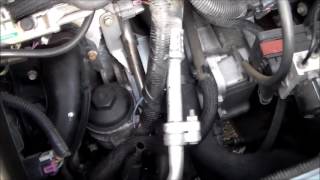

The information in this article is provided for general reference and educational purposes only. Vehicle specifications, procedures, and part compatibility can vary by production date, trim level, and region. Always consult your vehicle's factory service manual and verify part numbers before purchasing or performing repairs. Safety-critical components such as airbags, seat belts, and braking systems should be installed by a qualified professional.
- 🎬 Helpful Videos
- What Does P1810 Mean?
- Can I Drive With P1810?
- Common Causes
- Symptoms
- Diagnostic Flowchart
- Common Fixes & Costs
- Used vs. New Parts: Buying Guide
- What Happens If You Wait — Timeline
- Cost of Not Fixing It
- Diagnosis Steps
- When This Code Triggers (Freeze-Frame Conditions)
- Related Codes
- Climate & Environmental Factors
- How to Talk to a Mechanic About This Code
- Where to Take It: Dealer vs Independent vs Chain
- When to Walk Away From the Repair
- What Scan Tool You Need for This Code
- How to Clear the Code After You Fix It
- Will This Fail Emissions / State Inspection?
- Most Commonly Affected Vehicles
- Manufacturer-Specific Notes
- Real Owner Stories
- 2007 Chevy Cobalt with P1810 and harsh shifting after a transmission replacement.
- 1999 Chevy Corvette with P1810, slipping, and extreme overheating.
- 2003 Chevy Silverado with P1810 after installing a remanufactured transmission.
- How to Prevent This Code From Triggering
- Frequently Asked Questions
- Can I just clear the P1810 code and keep driving?
- My mechanic replaced the TFP switch, but the P1810 code came back. What now?
- Is replacing the TFP switch a DIY job?
- Can overfilling or underfilling transmission fluid cause P1810?
- What is the difference between P1810 and P1811?
- What is the GM TSB for P1810?
- I hear a clicking noise from my shifter when I press the brake, is this related?
- Key Takeaways
- 🎟️ Get 5% Off