

OBD-II Code P1784: Comprehensive Guide to Transmission Mechanical & Electrical Faults
What P1784 means, why it triggers, and how to fix it for good
- P1784 is a severe, manufacturer-specific transmission code that demands immediate repair to prevent a $4,000+ total transmission failure.
- The definition of P1784 varies drastically by brand, meaning a stuck valve body on a 2012 Mazda 3 or a failed electric oil pump on a 2023 Kia Hybrid.
- Always check your VIN for Technical Service Bulletins (TSBs) or safety recalls, as Hyundai and Kia have active, free replacement campaigns for the electric oil pump triggering this code.
- Stop driving immediately; continuing to drive in 'limp mode' burns out internal clutches and escalates a $500 solenoid repair into a $5,000 transmission rebuild.
What Does P1784 Mean?

P1784 is a manufacturer-specific OBD-II code signaling a critical problem within the automatic transmission's hydraulic or electronic control systems. Its meaning varies by brand: Ford indicates a mechanical failure in first and reverse gears, Mazda pinpoints a stuck valve within the valve body, Chrysler relates to the low-reverse pressure switch circuit, and Hyundai/Kia hybrids point to a fault with the Electric Oil Pump (EOP) system.
Technical definition: The formal SAE/OBD-II definition depends on the manufacturer. Ford: 'Transmission Mechanical Failure - First and Reverse'. Chrysler: 'Low-Reverse Pressure Switch Sense Circuit'. Mazda: 'Hi cut valve stuck off/R-3-5 cut valve stuck on'. Kia/Hyundai: 'EOP (Electric Oil Pump) 3-Phase Wiring Line Open'. Volkswagen: 'Shift Up Down Wire Open Short To Ground'.
Can I Drive With P1784?
No — Do Not Drive. Do not drive. This code indicates a significant transmission fault causing sudden, unpredictable shifting, complete loss of gear engagement, or getting stuck in 'limp mode'. Continuing to drive poses a serious safety risk and destroys internal clutches, turning a $500 component repair into a $5,000 transmission replacement.
Common Causes

- Failed Transmission Valve Body (Very Common) — On 2012-2013 Mazda 3s, this is the primary cause. The valve body directs hydraulic fluid, and internal failures are heavily documented in Mazda TSB 05-005/13.
- Failed Electric Oil Pump (EOP) or Wiring (Very Common) — On Hyundai and Kia hybrids, P1784 points directly to a failed electric oil pump or a chafed wiring harness shorting against an oil cooler hose clamp.
- Defective Transmission Solenoid Pack / Pressure Switch (Common) — On Chrysler, Dodge, and Mitsubishi vehicles, this code traces to a faulty low-reverse pressure switch integrated into the main solenoid pack assembly.
- Faulty Transmission Control Module (TCM) (Common) — The TCM manages transmission logic. Heat and vibration cause internal solder joints to crack, leading to communication loss and erratic shifting.
- Wiring Harness or Ground Issues (Less Common) — Damaged, corroded, or loose wiring to the transmission, TCM, or a poor Powertrain Control Module (PCM) ground interrupts communication and triggers false codes.
- Low or Contaminated Transmission Fluid (Less Common) — Low or dirty fluid drops hydraulic pressure, causing solenoids or valves to stick and function improperly.
- Sticking Internal Switching Valve (Less Common) — An intermittent P1784 code without noticeable shifting problems is often caused by a switching valve inside the valve body sticking intermittently.
- Internal Hydraulic Leakage (Rare) — Worn internal seals cause a loss of hydraulic pressure in a specific circuit (like the low-reverse clutch pack), preventing gear engagement and requiring a rebuild.
Symptoms

- Check Engine Light or AT Light On — Illumination of the check engine light or a dedicated automatic transmission (AT) warning light on the dashboard.
- Delayed or No Engagement in Drive or Reverse — Shifting from Park into Drive or Reverse results in a long delay or complete failure to engage, feeling like neutral.
- Vehicle Fails to Start or Move — In hybrid models with an EOP fault, the vehicle refuses to start or move as a safety precaution, displaying a 'Check Hybrid System' warning.
- Transmission Stuck in Gear (Limp Mode) (also visible on scanner) — The vehicle enters a 'fail-safe' mode, locking into a single gear (often 2nd or 3rd) to prevent further damage.
- Harsh or Erratic Shifting (also visible on scanner) — The transmission shifts roughly, unpredictably, with a noticeable bang, or at incorrect RPMs.
Common Fixes & Costs

- Replace Transmission Valve Body — Parts: $900-$1,500, Labor: $600-$1,000 (includes programming), ~4 hr book time (Professional)
- Replace Electric Oil Pump (EOP) or Repair Harness — Parts: $300-$500 (if not covered by recall), Labor: $300-$500, ~3 hr book time (Intermediate)
- Replace Transmission Solenoid Pack / Pressure Switch — Parts: $150-$250, Labor: $250-$450, ~2.5 hr book time (Intermediate)
- Replace Transmission Control Module (TCM) — Parts: $200-$500 (remanufactured), Labor: $200-$400 (includes programming), ~2 hr book time (Intermediate)
- Full Transmission Rebuild or Replacement — Parts: $2,000-$4,000, Labor: $1,000-$3,000, ~10 hr book time (Professional)
DIY vs Professional
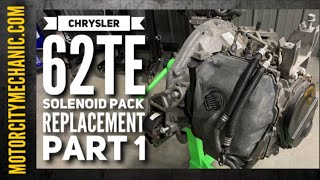
- Replace Transmission Solenoid Pack (Chrysler/Dodge 41TE) 🎬 Watch: Step-by-step guide to replacing the solenoid pack. — Beginner: No
Tools: Socket set, extensions, 1-inch socket, torque wrench, scraper, flashlight. - Replace Transmission Valve Body (Mazda SkyActiv) 🎬 See how to inspect and clean Mazda 3 solenoids. — Beginner: No
Tools: Socket set, torque wrench, RTV sealant, manufacturer-compatible scan tool for 'Initial Learning' procedure. - Replace Electric Oil Pump (Hyundai/Kia) — Beginner: No
Tools: Basic hand tools.
Used vs. New Parts: Buying Guide
When a used part is worth it: Buying used electronic or hydraulic parts (valve bodies, solenoid packs) is rarely recommended. They contain wear components that degrade with heat. A used part is likely close to failure.
Donor-vehicle mileage cap: roughly under 50000 miles for the part to have meaningful remaining life.
Donor quality checklist:
- Verify the exact OEM part number, as revisions exist.
- Ensure valve bodies come from the exact same vehicle model and year for programming compatibility.
- Demand a minimum 90-day warranty.
Decision logic:
- If The part is a complex assembly like a valve body or solenoid pack. → Buy new OEM or a quality remanufactured part to ensure updated software and fresh wear components.
- If The vehicle is over 15 years old with low value. → A low-mileage used part is a cost-effective gamble.
- If The part has a known high failure rate (e.g., Mazda valve body). → Only buy the updated new OEM part; used parts contain the original design flaw.
Warranty tradeoff: Used parts offer 30-90 day part-only warranties. New/remanufactured parts offer 1-3 year warranties that often include labor reimbursement.
Worst-case if a used part fails: $500-$1,500 in repeated labor costs if the used part fails after installation.
Cost of Not Fixing It
- 0-1 month: Intermittent harsh shifting and limp mode. Internal transmission wear begins as slipping occurs. (Added cost: Risk of a $150 tow bill.)
- 1-3 months: Failing solenoids cause clutches to burn out, contaminating fluid with debris and destroying seals. A component-level fix is no longer possible. (Added cost: $2,000-$3,500 (Escalates to a full transmission rebuild).)
- 3+ months: Catastrophic internal failure. Contaminated fluid destroys gearsets and the torque converter. The entire transmission must be replaced. (Added cost: $4,000-$7,000+ (Full transmission replacement).)
Diagnosis Steps
- Scan for All Codes
Use a TCM-compatible OBD-II scanner. A generic P0700 code almost always accompanies P1784. Document all U-series (communication) or P0-series codes, clear them, and see which return immediately.
Tools: OBD-II scanner (TCM compatible) (Beginner) - Check the Transmission Fluid
Verify the transmission fluid level and condition. Fluid must be at the correct level and free of dark discoloration, burnt smells, or metallic particles.
Tools: Gloves, rag, owner's manual (Beginner) - Research TSBs and Recalls
Search your VIN for Technical Service Bulletins (TSBs) and recalls. Manufacturers issue specific fixes, such as Mazda's TSB #05-005/13 for valve bodies or Kia's SC275 recall for EOP controllers.
Tools: Internet access, VIN (Beginner) - Inspect Wiring and Connectors
Visually inspect the wiring harness and connectors at the transmission case, TCM, and EOP (on hybrids). Look for chafing, corrosion, or loose connections.
Tools: Flashlight (Intermediate) - Live Data Analysis (Scan Tool)
Monitor transmission PIDs using an advanced scan tool. Compare desired vs. actual gear states, line pressure commands vs. actual pressure, and pressure switch status to pinpoint the faulty circuit.
Tools: Advanced scan tool with live data capability (Advanced) - Test Solenoids and Pressure Switches
Use a multimeter to test the resistance of transmission solenoids and pressure switches against manufacturer specifications. This often requires dropping the transmission pan.
Tools: Multimeter, vehicle-specific service manual (Advanced) - Pro Tip: Chrysler L-R Pressure Switch Circuit Test
For Chrysler/Dodge/Mitsubishi vehicles, unplug the main transmission control cable. Test resistance between pins 4 and 6 of the transmission-side connector. An out-of-spec reading confirms a failed solenoid/pressure switch assembly.
Tools: Multimeter, pin-out diagram (Advanced) - Pro Tip: Mazda Solenoid Resistance Check
On Mazda FW6A-EL transmissions, test solenoids at the TCM connector. Pressure Control solenoids should measure 5-7 Ohms; On/Off shift solenoids 11-14 Ohms. Out-of-spec readings require a full valve body replacement.
Tools: Multimeter, pin-out diagram (Advanced) - Professional Diagnosis
If DIY steps fail, take the vehicle to a transmission specialist. They use pressure gauges and oscilloscopes to check hydraulic integrity and definitively diagnose internal mechanical failures.
Tools: Advanced scan tool, pressure gauges, oscilloscope (Professional)
When This Code Triggers (Freeze-Frame Conditions)
- Transmission Fluid Temp: 150-200°F (The TCM runs self-tests at full operating temperature. Mazda faults often trigger specifically above 68°F.)
- Engine RPM: 1500-2500 RPM (Faults log during steady-state cruising or light acceleration, not typically at idle.)
- Vehicle Speed: 35-55 mph (Transmission diagnostic routines run during city or highway cruise conditions.)
- Gear Commanded: 3rd, 4th, or 5th gear (The code sets when the TCM commands a shift and does not see the expected electrical or hydraulic response.)
Related Codes
- P0700 — A generic request from the TCM to turn on the check engine light. P1784 is the specific fault; P0700 is just the messenger.
- P0780 — Means 'Shift Malfunction.' On Mazdas, P0780 and P1784 appear together, pointing to a failing valve body.
- P1738 — An 'Automatic Transaxle Internal Malfunction' code triggered by the same valve body issue as P1784 in Mazdas.
- P1775 — On Chrysler/Dodge vehicles, P1775 ('Solenoid Switch Stuck in Low/Reverse') frequently pairs with P1784, confirming a failed solenoid pack.
- U0100 / U0101 — Communication codes indicating a lost connection with the ECM or TCM. If present with P1784, the TCM itself is likely faulty.
Climate & Environmental Factors
- Cold Weather: Low temperatures thicken automatic transmission fluid (ATF), lowering hydraulic pressure. This exposes weak or sticking solenoids, causing intermittent codes that disappear as the vehicle warms up.
- High Heat & Vibration: Sustained engine heat and road vibrations degrade electronic components and crack solder joints inside transmission-mounted TCMs, causing complete failure.
How to Clear the Code After You Fix It
- Use a compatible OBD-II scan tool to erase P1784 and related codes.
- Perform a transmission-specific relearn procedure if required (e.g., for a new Mazda valve body).
- Complete a full drive cycle to allow readiness monitors to run self-tests.
Drive cycle (~30 minutes): From a cold start, idle for 3 minutes. Drive in stop-and-go traffic for 15 minutes. Accelerate onto a highway and maintain 55-60 mph for 10 minutes. Safely decelerate to a stop.
Readiness monitors affected: Comprehensive Component Monitor, Catalyst Monitor, Evaporative System Monitor
Before emissions retest: drive at least 100 miles to fully set monitors.
Watch out for:
- Clearing the code without replacing the part guarantees it will return.
- Disconnecting the battery erases adaptive memory, causing harsh shifting until the TCM relearns.
- Failing to perform a full drive cycle results in a 'Not Ready' status and an emissions test failure.
Will This Fail Emissions / State Inspection?
Yes — this code typically fails an OBD-II emissions inspection.
- California: An illuminated Check Engine Light from P1784 is an automatic failure. All readiness monitors must be 'Ready' to pass the re-test.
- New York: Any diagnostic trouble code that turns on the Check Engine Light results in an automatic failure.
- Texas: In emissions-testing counties, an active P1784 code with the MIL illuminated causes an OBD-II failure.
Most Commonly Affected Vehicles
- Mazda 3 (2012-2013) — Extremely common issue for 2.0L SkyActiv engines. The cause is almost always a failed valve body, addressed by Mazda TSB #05-005/13.
- Hyundai Sonata Hybrid, Tucson, Elantra, Kona (2011-2014, 2023-2024) — On early hybrids, P1784 points to the EOP system (TSB 14-HC-003). On 2023+ models, recall 246 addresses faulty EOP controllers posing a fire risk.
- Kia Optima Hybrid, Sportage, Soul, Seltos (2014, 2021-2024) — Triggered by the EOP. TSB PS316 notes the harness rubs on the oil cooler hose clamp. Recall SC275 covers the EOP controller on newer models.
- Chrysler / Dodge Town & Country, Grand Caravan, Durango, Dakota (1996-2007) — Defined as 'L-R Pressure Switch Sense Circuit'. The issue is a failed pressure switch inside the solenoid pack, often appearing with P1775.
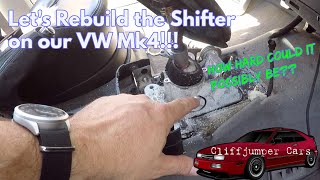
- Volkswagen Golf, Jetta, Passat (1999-2015) — Defined as 'Shift Up Down Wire Open Short To Ground,' pointing to a wiring issue in the shifter assembly 🎬 Watch: How to rebuild a Volkswagen shifter assembly. or a worn shifter cable bushing.
- Ford Windstar, Explorer, F-150 (1995-2008) — Defined as 'Transmission Mechanical Failure First And Reverse', indicating a serious internal breakage requiring a rebuild.
- Mitsubishi Eclipse, Galant (1997-1999) — Sharing Chrysler architecture, this points to the low-reverse solenoid or pressure switch assembly.
- Jeep Grand Cherokee (2005-2013) — Defined as 'WCM Time-out', indicating a communication loss with the Wireless Control Module rather than a transmission fault.
Manufacturer-Specific Notes
- Mazda: For 2012-2013 Mazda 3s, P1784 almost always means the valve body has failed. The repair requires an expensive, pre-programmed valve body and a final 'Initial Learning' procedure.
- Kia/Hyundai: P1784 is exclusively related to the electric oil pump (EOP) system. A major safety recall exists for 2023-2024 models due to fire risk. Check for open recalls before replacing parts.
- Dodge/Chrysler/Jeep: P1784 points to the 'Low-Reverse Pressure Switch Sense Circuit'. The fix is almost always a new solenoid pack, accessible from the top of the transmission.
- Ford/Lincoln/Mercury: The definition 'Transmission Mechanical Failure First And Reverse' indicates a true internal mechanical breakage requiring a transmission rebuild, not just a sensor replacement.
- Volkswagen: P1784 means 'Shift Up Down Wire Open Short To Ground.' Diagnosis focuses on the shifter assembly wiring and bushings rather than internal transmission components.
Frequently Asked Questions
Can I fix a P1784 code by changing the transmission fluid?
No. While checking the fluid is a valid first step, a simple fluid change will not fix the mechanical or electrical failure this code indicates. The root cause is a failed part.
Is it safe to drive with a P1784 code?
No. The transmission can fail to engage or shift into neutral unexpectedly, leaving you without power. Continuing to drive causes severe secondary damage to internal clutches.
How much does it cost to fix a P1784 code?
Costs vary widely by make. A Chrysler solenoid pack is $400-$700, a Mazda valve body is $1,500-$2,500, and a full Ford transmission rebuild exceeds $4,000.
Why does the P1784 code have different meanings for different cars?
P1xxx codes are manufacturer-specific. Carmakers use them to signal precise problems with their unique transmission designs, meaning it can be a valve body on a Mazda or an oil pump on a Kia.
What is 'limp mode' and why does P1784 cause it?
Limp mode is a protective feature where the TCM locks the transmission into a single gear (usually 2nd or 3rd). P1784 triggers it because the detected fault is severe enough that normal operation would destroy the transmission.
My car has a P1784 code but drives fine. What should I do?
Do not ignore it. The problem is intermittent, such as a sticking pressure switch or a chafing wire. The fault will become permanent, potentially leaving you stranded.
My mechanic wants to replace the whole transmission for a P1784. Is that necessary?
Not always. On Mazdas, Chryslers, and Hyundais, this code points to a specific, replaceable component like a valve body or solenoid pack. A full replacement is usually only necessary on Fords or if the transmission was driven extensively while failing.
Is a P1784 repair covered under warranty?
It depends on your vehicle. For newer Hyundai and Kia models, the EOP failure is covered by a safety recall at no cost. For other vehicles, it depends on your active powertrain warranty status.
Key Takeaways
- P1784 is a severe, manufacturer-specific transmission code that demands immediate repair to prevent a $4,000+ total transmission failure.
- The definition of P1784 varies drastically by brand, meaning a stuck valve body on a 2012 Mazda 3 or a failed electric oil pump on a 2023 Kia Hybrid.
- Always check your VIN for Technical Service Bulletins (TSBs) or safety recalls, as Hyundai and Kia have active, free replacement campaigns for the electric oil pump triggering this code.
- Stop driving immediately; continuing to drive in 'limp mode' burns out internal clutches and escalates a $500 solenoid repair into a $5,000 transmission rebuild.
Helpful Videos



The information in this article is provided for general reference and educational purposes only. Vehicle specifications, procedures, and part compatibility can vary by production date, trim level, and region. Always consult your vehicle's factory service manual and verify part numbers before purchasing or performing repairs. Safety-critical components such as airbags, seat belts, and braking systems should be installed by a qualified professional.
- 🎬 Helpful Videos
- What Does P1784 Mean?
- Can I Drive With P1784?
- Common Causes
- Symptoms
- Common Fixes & Costs
- DIY vs Professional
- Used vs. New Parts: Buying Guide
- Cost of Not Fixing It
- Diagnosis Steps
- When This Code Triggers (Freeze-Frame Conditions)
- Related Codes
- Climate & Environmental Factors
- How to Clear the Code After You Fix It
- Will This Fail Emissions / State Inspection?
- Most Commonly Affected Vehicles
- Manufacturer-Specific Notes
- Frequently Asked Questions
- Can I fix a P1784 code by changing the transmission fluid?
- Is it safe to drive with a P1784 code?
- How much does it cost to fix a P1784 code?
- Why does the P1784 code have different meanings for different cars?
- What is 'limp mode' and why does P1784 cause it?
- My car has a P1784 code but drives fine. What should I do?
- My mechanic wants to replace the whole transmission for a P1784. Is that necessary?
- Is a P1784 repair covered under warranty?
- Key Takeaways
- 🎟️ Get 5% Off