

OBD-II Code P1769: Transmission Solenoid Circuit Malfunction
The Ultimate Guide to P1769: What It Means, Why It Happens, and How to Fix It for Good
- P1769 is a manufacturer-specific electrical circuit code that most commonly indicates a failed transmission solenoid, which costs between $350 and $900 to replace.
- Never replace a solenoid without first checking the transmission fluid; on 2003-2012 Nissan and Infiniti models, a cracked radiator cooler mixes coolant with transmission fluid, requiring a $5,000+ replacement.
- Test the solenoid's electrical resistance with a multimeter before buying parts; a healthy Subaru TCC solenoid reads 12-13 ohms, while a reading near zero indicates a short circuit.
- Driving with a P1769 code for more than 50 miles risks catastrophic transmission failure, as erratic hydraulic pressure destroys the valve body and burns the clutch packs.
What Does P1769 Mean?

P1769 is a manufacturer-specific diagnostic trouble code (DTC) indicating an electrical circuit malfunction in a transmission solenoid. Solenoids are electronically controlled plungers that direct hydraulic fluid flow to enable smooth gear changes. When the Transmission Control Module (TCM) commands a specific solenoid and detects an incorrect electrical response, it logs P1769 and illuminates the Check Engine Light.
Technical definition: The definition of P1769 varies by manufacturer. For Nissan/Infiniti, it means 'High and Low Reverse Clutch Solenoid Valve Function'. For Subaru, it indicates a faulty 'Torque Converter Clutch (TCC) Duty Solenoid'. For Volkswagen/Audi, it means 'AG4 Transmission Torque Modulation Fault'. For Hyundai, it indicates a Transfer Case Control Module (TCCM) malfunction. For Fiat/Alfa Romeo 'Selespeed' transmissions, it points to a 'Pump Driving Relay Stuck'.
Can I Drive With P1769?
Yes, But With Caution. You can drive short distances (under 50 miles) to a repair shop, but it is a significant gamble. The transmission often shifts harshly, gets stuck in a single gear ('limp mode'), or fails to engage, creating a safety hazard. Continuing to drive for days causes a domino effect: overheating fluid degrades clutches, and erratic pressure damages the valve body. This turns a sub-$800 solenoid repair into a $5,000+ transmission replacement.
Common Causes

- Faulty transmission solenoid (Very Common) — The solenoid itself is the most frequent culprit. It fails electrically due to an internal short or open circuit in its coil windings, or mechanically when the internal plunger sticks.
- Low or dirty transmission fluid (Very Common) — Low fluid prevents the pump from creating enough pressure for solenoids to actuate. Old, burnt, or contaminated fluid causes solenoids to stick and clogs valve body passages.
- Broken solder joints on the TCM (Nissan/Infiniti) (Common) — On RE5R05A transmissions, pins connecting solenoids to the TCM are soldered directly to the circuit board. Heat and vibration crack these joints, creating an open circuit that triggers a false solenoid fault.
- Internal radiator/cooler failure (Nissan/Infiniti) (Common) — On Nissan/Infiniti RE5R05A transmissions (2003-2012), the internal radiator cooler cracks, mixing engine coolant with transmission fluid. This creates a destructive pink sludge that ruins solenoids, the valve body, and the TCM.
- Damaged wiring or connectors (Common) — The transmission wiring harness is exposed to extreme heat and vibration. Brittle wires break and connectors corrode, interrupting the electrical signal to the solenoid.
- Sticking transmission valve body (Less Common) — Sludge and debris from old fluid cause mechanical valves inside the valve body to stick, preventing proper fluid flow even when the solenoid functions correctly.
- Failed transmission pressure switches (Less Common) — On GM 6T70 transmissions, internal rubber diaphragms for pressure switches tear. The TCM interprets these pressure control faults as a solenoid failure.
- Faulty Transmission Control Module (TCM) (Less Common) — The TCM fails due to internal processing errors or damaged driver circuits. Internally mounted TCMs are highly susceptible to heat and vibration damage.
- Low system voltage (Rare) — A weak battery or failing alternator supplies unstable voltage to the TCM, causing erratic behavior and false solenoid circuit codes.
- Faulty Crankshaft Position Sensor (Rare) — A failing crankshaft position sensor sends erratic engine speed signals to the TCM, triggering limp mode and false transmission fault codes.
Symptoms

- Check Engine Light (or AT Light) is on — The TCM detects the fault and requests the Engine Control Module (ECM) to illuminate a warning light.
- Harsh, erratic, or delayed shifting — The vehicle slams into gear, hesitates for several seconds, or shifts at incorrect RPMs.
- Transmission stuck in one gear (Limp Mode) — The TCM locks the transmission into 2nd or 3rd gear to prevent further damage while allowing the vehicle to reach a safe location.
- Failure to engage a gear or move from a stop — The vehicle revs as if in neutral when put into Drive or Reverse.
- Engine stalling when coming to a stop — If the torque converter clutch (TCC) solenoid fails in the 'on' position, it keeps the engine directly coupled to the transmission, stalling the engine when the vehicle stops.
- Transmission slipping (also visible on scanner) — Engine RPMs flare up between shifts without a corresponding increase in vehicle speed, indicating clutches are not engaging properly.
- Transmission overheating (also visible on scanner) — Improper shifting and slipping clutches generate excessive friction, overheating the fluid and accelerating internal wear.
Diagnostic Flowchart
Tap your situation to follow the diagnostic path that matches what you're seeing on this code.
Common Fixes & Costs
- Replace the faulty transmission solenoid(s)
— Parts: $25 - $200, Labor: $350 - $900, ~2.5 hr book time
(Intermediate)
: OEM
: OEM - Drain and fill or flush the transmission fluid — Parts: $75 - $200, Labor: $150 - $400, ~0.8 hr book time (DIY)
- Repair or replace the external wiring harness — Parts: $50 - $250, Labor: $200 - $600, ~2 hr book time (Intermediate)
- Replace or repair the Transmission Control Module (TCM)
— Parts: $200 - $1200, Labor: $150 - $500, ~2.5 hr book time
(Professional)
: OEM - Replace the entire valve body assembly
— Parts: $500 - $1500, Labor: $800 - $2200, ~4.5 hr book time
(Professional)
: OEM - Rebuild or replace the entire transmission — Parts: $1500 - $4000, Labor: $2000 - $7000, ~12 hr book time (Professional)
Used vs. New Parts: Buying Guide
When a used part is worth it: For a complete valve body assembly on an older, lower-value vehicle, a used part from a low-mileage donor is a cost-effective solution.
Donor-vehicle mileage cap: roughly under 80000 miles for the part to have meaningful remaining life.
Donor quality checklist:
- Verify the part number matches exactly.
- Purchase from a reputable recycler offering a standard 90-day warranty.
- Confirm the donor vehicle's mileage is documented and it was scrapped for a non-transmission reason (e.g., collision).
Decision logic:
- If The failed part is a single, inexpensive solenoid on a common transmission → Buy a new aftermarket solenoid. The cost is low and reliability is high.
- If The vehicle is over 10 years old and the repair cost is high (e.g., full valve body) → A used part with a good warranty is a reasonable choice to keep the vehicle running without over-investing.
- If The part requires programming (like modern TCMs) or is a known high-failure item → Favor a new OEM or quality remanufactured part, as the labor to replace it again is too costly.
Warranty tradeoff: Used parts typically come with a 30-90 day parts-only warranty. Aftermarket new parts offer 1-year to limited lifetime warranties. Remanufactured valve bodies often carry a 1 to 3-year warranty that includes limited labor coverage.
Worst-case if a used part fails: $500-1500 if a used valve body fails after installation, requiring you to pay for labor a second time plus another part.
What Happens If You Wait — Timeline
- 0-1 month: Check Engine Light illuminates. You experience occasional harsh shifts, slight hesitation, or a shudder when the torque converter locks up (40-60 mph). (MPG impact: 0-5%% · Added cost: $0)
- 1-4 months: Shifting problems become frequent. The transmission enters 'limp mode' intermittently. Slipping between gears causes excess friction, overheating and degrading the transmission fluid. (MPG impact: 5-15%% · Added cost: $50-150 in wasted fuel. The original solenoid repair is still viable, but secondary damage risk increases.)
- 4-8 months: Catastrophic damage begins. Burnt fluid loses lubricating properties. Debris from slipping clutches clogs the filter and valve body, causing other solenoids to stick. The transmission overheats regularly. (MPG impact: 10-20%% · Added cost: $800 - $2,200. The initial solenoid failure contaminates the entire valve body, requiring an expensive replacement.)
- 8+ months: Total transmission failure. The clogged filter starves the pump, leading to a complete loss of hydraulic pressure. Clutch packs burn, gears score, and the torque converter is destroyed. (MPG impact: >20% (or vehicle is undriveable)% · Added cost: $3,500 - $10,000+. The transmission requires a complete rebuild or replacement.)
Cost of Not Fixing It
- 0-1 month: Decreased fuel economy (5-15%) due to inefficient shifting or lack of torque converter lockup. (Added cost: Negligible)
- 1-6 months: Increased transmission heat from slipping components degrades transmission fluid and wears clutch materials. A single bad solenoid causes other solenoids or valves to stick. (Added cost: $800 - $2,200 (Valve body becomes damaged from debris and requires replacement).)
- 6+ months: Catastrophic internal damage. Burnt fluid and excessive clutch debris clog the filter and oil pump, starving the transmission of lubrication. This leads to burnt clutches and a failed torque converter. (Added cost: $3,500 - $10,000+)
Diagnosis Steps

- Check Transmission Fluid Level and Condition
Ensure the fluid is at the correct level according to the owner's manual procedure. Note the color and smell. Healthy fluid is bright red with a neutral odor. Dark brown, burnt-smelling, or milky/pink fluid indicates a severe problem requiring immediate attention.
Tools: Rag, transmission dipstick (if equipped) (Beginner) - Scan for All Powertrain Codes
Use an OBD-II scanner to read codes from both the Engine (ECM) and Transmission (TCM) modules. Note all codes present, as accompanying codes like P0700 provide critical clues to the root cause.
Tools: OBD-II Scanner (Beginner) - Inspect External Wiring and Connectors
Perform a visual inspection of the main transmission wiring harness connector. Look for green corrosion, pushed-out pins, or physical damage to the wires. Trace the harness to find areas rubbing against the chassis or exhaust.
Tools: Flashlight, mirror (Intermediate) - Test the Solenoid Resistance at the Connector
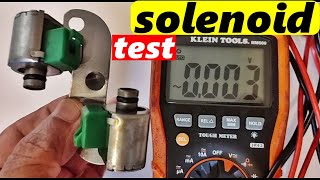
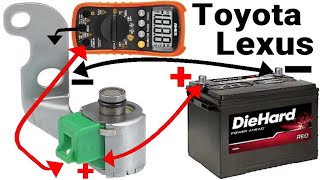
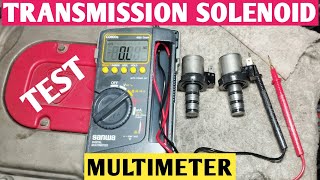
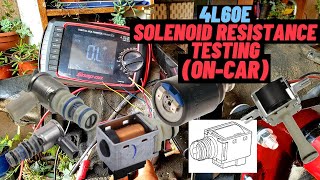
Identify the pins for the specific solenoid at the main transmission connector using a wiring diagram. Disconnect the harness and measure resistance between the pins with a multimeter. Most solenoids read between 5 and 40 ohms; infinity (OL) indicates an open circuit, while near zero indicates a short.
Tools: Multimeter, vehicle-specific wiring diagram (Advanced) - Command the Solenoid with a Bi-Directional Scan Tool
Use an advanced scan tool to bypass the TCM and directly command the suspect solenoid on and off. Listen for an audible 'click' and watch for a corresponding change in live pressure readings. No click or pressure change confirms a faulty solenoid or hydraulic blockage.
Tools: Advanced Bi-Directional Scan Tool (Professional) - Perform a Pinpoint Test at the TCM
Disconnect the TCM and measure the solenoid circuit resistance from the TCM connector. If resistance is correct here but incorrect at the transmission connector, the wiring between them is faulty. If the reading remains bad, the internal transmission harness or solenoid has failed.
Tools: Multimeter, vehicle-specific wiring diagram, pin-out chart for TCM (Advanced) - Quantitative Resistance Test (Subaru TR580/TR690)
Measure the resistance of the Subaru TCC solenoid. A healthy solenoid measures 12-13 ohms at 68°F. A failed solenoid reads 2-5 ohms or completely open (OL). Heat the solenoid to 200°F with a heat gun to expose intermittent open circuits.
Tools: Multimeter, heat gun, vehicle-specific wiring diagram (Advanced) - Quantitative Resistance Test (Nissan RE5R05A)
Measure resistance on Nissan RE5R05A solenoids. The High/Low Reverse, Input, Direct, TCC, and Line Pressure solenoids require 3.3 ohms. The Low Coast Brake solenoid requires 23 ohms.
Tools: Multimeter, vehicle-specific wiring diagram (Advanced) - Visually Inspect Internal Solder Joints (Nissan/Infiniti)
Remove the transmission pan and valve body on RE5R05A transmissions. Inspect the solder points where solenoid pins connect to the TCM board. Look for hairline cracks or dull, cold solder joints, and gently wiggle the connector pin to check for independent movement.
Tools: Basic hand tools, socket set, torque wrench, magnifying glass (Advanced) - Analyze Live Scan Tool Data
Monitor key Parameter IDs (PIDs) with a scan tool. Watch 'TCC Slip Speed'; it must be near 0 RPM when the converter locks. Observe 'TCC PWM Solenoid %'; a value climbing to 60-80% while slip remains near zero indicates the PCM is struggling to control the solenoid.
Tools: Advanced Scan Tool with Live Data (Professional) - Check for Power and Ground with an Oscilloscope
Graph the voltage signal to the solenoid in real-time using an oscilloscope. Look for a clean square wave pattern when the TCM commands the solenoid on. A noisy, erratic, or missing signal confirms a TCM driver circuit or wiring failure.
Tools: Oscilloscope, wiring diagram, back-probe pins (Professional)
When This Code Triggers (Freeze-Frame Conditions)
- Engine Coolant Temp: 180-200°F (The fault is most often detected when the vehicle is fully warmed up, as thermal expansion affects electrical connections and solenoid performance.)
- RPM: 1500-2500 (For TCC-related P1769 codes, the fault triggers at steady cruising RPM when the torque converter is commanded to lock up.)
- Engine Load: 20-50% (The code sets under light to moderate engine load, typical of steady-state highway driving, rather than during hard acceleration.)
- Vehicle Speed: 40-60 mph (This corresponds to conditions where the TCM commands torque converter lock-up or shifts into higher gears, revealing circuit issues.)
Related Codes
- P0700 — This is a generic 'handshake' code. The Engine Control Module (ECM) sets P0700 to indicate it received a fault request from the Transmission Control Module (TCM). It means 'look in the TCM for the real code,' which is P1769.
- P0741 — Indicates 'Torque Converter Clutch (TCC) Circuit Performance/Stuck Off.' While P1769 points to the TCC solenoid's electrical circuit, P0741 points to a mechanical/hydraulic problem. If the solenoid circuit tests good but the converter doesn't lock up, the problem is a stuck valve or failed TCC.
- P1757, P1759, P1764, P1767 — These are Nissan/Infiniti codes for other solenoids within the RE5R05A valve body. If multiple codes log simultaneously, it strongly indicates a global problem like a faulty TCM, cracked solder joints, or contaminated fluid, rather than multiple individual solenoids failing at once.
- P2764 — This is a generic SAE code for 'Torque Converter Clutch Pressure Control Solenoid Control Circuit Low.' It is functionally identical to the manufacturer-specific P1769 found on Subarus and requires the exact same electrical circuit diagnosis.
Climate & Environmental Factors
- High Humidity & Salty Climates: Regions with high humidity or road salt accelerate corrosion on external wiring harness connectors. Salt spray degrades metal contacts, increasing electrical resistance and triggering circuit fault codes like P1769.
- Extreme Cold: In very cold weather, transmission fluid becomes thicker. This increased viscosity slows the mechanical action of solenoids and valves, exacerbating underlying mechanical stickiness in a solenoid.
How to Talk to a Mechanic About This Code
Say this: "I have an OBD-II code P1769 and I am experiencing harsh shifting. I need a diagnostic. Please check the transmission fluid condition and level, then perform electrical resistance tests on the solenoid circuit before recommending major part replacements."
This signals to the shop that you understand P1769 is a circuit code requiring proper electrical diagnosis. It directs them toward a logical, cost-effective diagnostic path and discourages immediate upsells to a new transmission.
Avoid saying:
- 'My check engine light is on, can you just fix it?' (This is too vague and invites a shop to replace parts without proper diagnosis).
- 'I think I need a new transmission.' (Never diagnose the car for them; you may suggest a far more expensive repair than necessary).
- 'Just do whatever you think is best.' (This gives up all your consumer control).
Questions to ask before authorizing the repair:
- What was the condition of the transmission fluid? Was there any evidence of coolant contamination or excessive metal debris?
- What were the specific resistance (ohm) readings for the solenoid, and how do they compare to the manufacturer's specification?
- Did you test for power and ground at the transmission connector and the TCM connector to rule out a wiring issue?
- If you are recommending a valve body or transmission replacement, can you show me the specific test results proving the original solenoid and wiring are good?
- What is the warranty on this repair, does it cover both parts and labor, and is it nationwide?
Where to Take It: Dealer vs Independent vs Chain
- Dealer:
Recommended only if the vehicle is under warranty or has a complex, manufacturer-specific issue requiring proprietary programming tools.
Best for: Vehicles still under the powertrain warranty, as the repair may be covered., Complex, manufacturer-specific issues requiring proprietary programming tools., Repairs where you insist on only Original Equipment Manufacturer (OEM) parts.
Downsides: Highest labor rates, often 1.5x to 2x more than independent shops., May default to replacing large, expensive assemblies rather than repairing a smaller component. (Typical cost: +50% vs. baseline) - Independent Shop:
Best fit. A reputable, independent transmission-specialty shop has the expertise to diagnose the circuit correctly without the high overhead of a dealership.
Best for: Out-of-warranty vehicles where cost is a major factor., Finding a transmission specialist who diagnoses and rebuilds transmissions in-house., Common P1769 issues on brands like Subaru or Nissan, where fixes are well-documented.
Downsides: Shop quality and expertise vary widely; you must vet them through reviews and certifications., May not have the latest manufacturer-specific diagnostic tools for very new models. (Typical cost: +0% vs. baseline) - Chain Shop:
AVOID for P1769 diagnosis. The risk of misdiagnosis and being sold an expensive, unnecessary transmission replacement is very high.
Best for: Simple fluid changes. Be cautious of aggressive upsells for unnecessary flushes.
Downsides: Technician skill varies dramatically; they lack specialized knowledge for complex electrical diagnosis., Often operate on a commission-based model, leading to recommendations for unnecessary, expensive repairs. (Typical cost: -10% vs. baseline)
What Scan Tool You Need for This Code
Minimum: A scanner that reads manufacturer-specific transmission codes and displays live data from the Transmission Control Module (TCM).
A basic $20 code reader only shows the P1769 code. It cannot read crucial live data like solenoid command percentages, transmission fluid temperature, or TCC slip speed, which are essential for diagnosing the root cause.
Budget: Launch CR529 (~$40) — Provides basic code reading and clearing, freeze frame data, and I/M readiness status. It lacks the ability to read enhanced live transmission data needed for a full diagnosis.
Mid-range: Foxwell NT510 Elite (~$150) — Offers full-system diagnostics, including reading transmission-specific codes, viewing live data streams, and performing bidirectional tests to command components, which is crucial for testing a solenoid directly.
Professional: Autel MaxiCOM MK808S / MK808BT (~$450-600) — Offers full bidirectional control to activate individual solenoids. Crucially, it performs the transmission 'relearn' procedures required by many manufacturers after a solenoid or valve body replacement to ensure smooth shifting.
Rent vs buy: Renting a basic scanner from an auto parts store is only useful for confirming the code. Proper diagnosis requires viewing live data and bidirectional controls. Buying a midrange tool like the Foxwell NT510 Elite is a worthwhile investment.
How to Clear the Code After You Fix It
- Use an OBD-II scan tool to clear all diagnostic trouble codes from the ECM and TCM.
- Perform a transmission adaptive pressure relearn procedure using a scan tool with bi-directional controls.
- Perform a complete drive cycle to allow the vehicle's readiness monitors to reset.
Drive cycle (~30 minutes): From a cold start, let the engine idle for 2-3 minutes. Drive in stop-and-go traffic for 10-15 minutes, including several light-to-moderate accelerations. Drive for 10 minutes at a steady highway speed (50-60 mph). Allow the vehicle to cool down completely to ambient temperature.
Readiness monitors affected: Comprehensive Component Monitor (CCM), Catalyst Monitor, Evaporative System Monitor
Before emissions retest: drive at least 100 miles to fully set monitors.
Watch out for:
- Disconnecting the battery clears the code but erases all readiness monitors, guaranteeing an emissions test failure.
- The code returns immediately if the underlying electrical or mechanical fault is not properly repaired.
- Skipping the manufacturer relearn procedure results in harsh shifting even after a successful mechanical repair.
Will This Fail Emissions / State Inspection?
Yes — this code typically fails an OBD-II emissions inspection.
- California: An illuminated Check Engine Light results in an automatic failure. After repairs, the vehicle must complete a specific drive cycle to set all OBD-II readiness monitors before re-testing.
- New York: A vehicle automatically fails the NYS inspection if the Check Engine Light is on. Clearing the code right before the test results in a failure because readiness monitors show as 'Not Ready'.
- Texas: In the 17 counties requiring emissions testing, an illuminated Check Engine Light is an automatic failure. The OBD-II emissions test remains mandatory even though safety inspections were eliminated for non-commercial vehicles.
Most Commonly Affected Vehicles
- Subaru Outback, Forester, Crosstrek, Legacy (2010-2019) — Extremely common for failure of the torque converter clutch (TCC) solenoid in TR580 and TR690 CVT transmissions. Symptoms include shuddering and stalling when stopping. Solenoid resistance should be 12-13 ohms; a reading of 2-5 ohms indicates failure.
- Nissan Frontier, Pathfinder, Xterra, 350Z, Titan (2005-2012) — P1769 is a hallmark code for the RE5R05A transmission. The root cause is often coolant contamination from a cracked radiator cooler or broken solder joints on the internal TCM. Diagnosis must begin with a fluid check for contamination.
- Infiniti G35, FX35, QX56 (2003-2010) — Utilizes the problematic RE5R05A transmission. Highly susceptible to coolant contamination, cracked TCM solder joints, and solenoid circuit faults. Multiple solenoid codes appearing at once strongly points to a bad TCM or fluid contamination.
- Honda Accord, Odyssey, Pilot (2013-2017) — On many 6-speed automatic models, individual solenoids are integrated into a single 'secondary valve body' or 'solenoid pack'. A failure of one solenoid requires replacing the entire assembly.
- Chevrolet / GM Impala, Malibu, Equinox, Traverse (2010-2016) — On 6T70/6T75 transmissions, torn internal pressure switch diaphragms cause symptoms identical to a solenoid failure. This is a common misdiagnosis pitfall where mechanics replace the TCM or solenoids unnecessarily.
- Kia/Hyundai Optima, Sorento, Sonata, Elantra (2011-2018) — Frequently logged for shift solenoid malfunctions in 6-speed and 8-speed transmissions. On newer 8-speed models, replacing a solenoid requires using a scan tool to input the new solenoid's unique calibration data into the TCM.
- BMW 3-Series (E46, E90), 5-Series (E60) (2000-2012) — A failing crankshaft position sensor sends erratic RPM signals, causing limp mode. On ZF 6HP transmissions, old fluid and a worn sealing sleeve on the mechatronics unit are frequent causes of harsh shifting and fault codes.
- Ford Fusion Hybrid, C-Max Hybrid (2013-2018) — The HF35 eCVT transmission suffers complete failure if the fluid level drops, often due to a leaking axle seal. This low fluid state presents as various internal sensor and performance codes before total failure occurs.
- Fiat/Alfa Romeo Stilo, 147, 156, Grande Punto (2001-2010) — On 'Selespeed' automated manual transmissions, P1769 indicates a 'Pump Driving Relay Stuck' problem, related to the hydraulic pump that powers gear shifts rather than a traditional shift solenoid.
Manufacturer-Specific Notes

- Subaru: The P1769 code points to a failed torque converter lock-up solenoid, causing stalling when stopping. Subaru only sells the entire valve body assembly for over $800, but high-quality aftermarket single solenoids are widely available, making the repair much cheaper.
- Nissan/Infiniti: The internal transmission cooler inside the radiator cracks, mixing coolant with ATF. This acidic sludge destroys the valve body electronics and the internally-mounted TCM. If you have a P1769, immediately check the transmission fluid for a milky, pink appearance.
- Hyundai/Kia: On newer 8-speed transmissions (A8LF1), each new solenoid has a unique calibration data code printed on it. This data must be programmed into the Transmission Control Module using a factory-level scan tool for the transmission to shift correctly.
- Volkswagen/Audi: On older models with the AG4 automatic transmission, P1769 signifies an 'AG4 Transmission Torque Modulation Fault.' This indicates a general failure in hydraulic pressure regulation stemming from a worn pump, sticky valves, or internal leaks.
- Honda: American Honda extended the warranty on the CVT for some models due to premature belt deterioration (e.g., 2016-2020 HR-Vs are covered for 7 years/150,000 miles). Always check for applicable warranty extensions or TSBs before authorizing repairs.
Real Owner Stories
2013 Subaru Outback 3.6R with 5-speed Automatic
Owner experienced a jolt and RPM flare when accelerating lightly at speeds above 45 mph, followed by a persistent vibration similar to driving on rumble strips.
What they tried:
- A mechanic replaced a bad engine mount and drive shaft, which slightly reduced the vibration but did not solve the core problem.
- The mechanic then suggested a new transmission without a clear diagnostic path.
Outcome: The owner correctly suspected a torque converter shudder issue. Replacing the TCC solenoid resolved the vibration and RPM flare completely.
Lesson: Vibration and shuddering at cruising speeds are classic symptoms of a torque converter clutch (TCC) solenoid failure. Do not rule it out even if a mechanic suggests a full transmission replacement.
2005 Infiniti G35 Coupe with 80k miles
Immediately after a radiator replacement, the transmission went into limp mode, refusing to accelerate past 40 mph. Multiple codes appeared, including P1769, P1759, and U1000.
What they tried:
- A transmission shop diagnosed a bad valve body and recommended a new transmission.
- The owner suspected coolant contamination from the radiator job.
Outcome: The recent radiator failure caused coolant to mix with the transmission fluid, destroying the valve body and internal TCM. The presence of multiple solenoid codes at once pointed to a global failure, not individual solenoids.
Lesson: On Nissan/Infiniti vehicles, if transmission failure immediately follows a radiator issue, the root cause is coolant contamination. Check the transmission fluid for a milky, pink appearance before replacing any parts.
2009 Fiat Grande Punto with Selespeed Transmission
The car dropped into neutral and refused to select reverse. The diagnostic code was P1769, 'Pump Driving Relay Stuck'.
What they tried:
- The owner replaced the T09 and T10 relays, but the problem persisted.
- They disassembled and cleaned the high-pressure pump motor, with no effect.
Outcome: The actual cause was a failed hydraulic accumulator. The system registered the 'relay stuck' code because the failed accumulator couldn't hold pressure, causing the pump to run continuously. Replacing the accumulator solved the problem.
Lesson: On Fiat/Alfa Romeo Selespeed systems, code P1769 often points to a failed hydraulic accumulator rather than an electrical relay fault. Monitor system pressure with diagnostic software to confirm.
How to Prevent This Code From Triggering
- Change transmission fluid and filter regularly (Every 30,000 to 60,000 miles) — Clean fluid prevents the buildup of clutch debris that clogs tiny passages in solenoids and the valve body, maintaining proper hydraulic pressure and heat dissipation.
- Install an external transmission cooler (Once, especially if you tow or live in a hot climate) — An external cooler reduces fluid temperatures by 50-100°F, preventing fluid breakdown and protecting sensitive electronic components like solenoids and the TCM from heat-related failure.
- Adopt smooth driving habits (Daily habit) — Aggressive driving generates excess heat and causes abrupt pressure changes that wear out solenoids and clutches faster.
- Come to a complete stop before shifting from Reverse to Drive (Every time you shift direction) — Shifting while rolling puts immense stress on the drivetrain and solenoids, leading to premature mechanical failure.
- Check for software updates (TCM) (During routine service visits at a dealership) — Manufacturers release TCM software updates to improve shifting logic and prevent unnecessary wear on components like the torque converter clutch solenoid.
Frequently Asked Questions
Can I fix P1769 myself?
Yes, if you are an experienced DIYer and the faulty solenoid is accessible by dropping the transmission oil pan. The job requires draining fluid, removing the valve body, replacing the solenoid, and reassembling with precise torque specs. However, due to the high risk of contamination, many prefer professional repair.
What are the most common misdiagnosis pitfalls for P1769?
The biggest pitfall is immediately replacing the solenoid named in the code definition. The actual cause is frequently external, such as broken TCM solder joints, a bad crankshaft sensor, or simply low fluid from a leak. A full electrical diagnosis is crucial before buying parts.
Can a bad battery cause a P1769 code?
Yes, modern transmissions rely on stable voltage to operate correctly. A weak battery or failing alternator supplies low or erratic voltage to the TCM, triggering false solenoid circuit codes. Test your battery and charging system first if you experience shifting problems combined with slow engine cranking.
What's the difference between a transmission solenoid and a valve body?
The valve body is the hydraulic 'brain' of the transmission, consisting of a metal block with a labyrinth of fluid channels. Solenoids are the electronic triggers that bolt onto the valve body. The TCM sends an electrical pulse to a solenoid, which opens a valve to route fluid and engage a specific gear.
Should I replace all the solenoids at once?
If the transmission has over 150,000 miles, replacing all solenoids as a pack is smart preventative maintenance since they share the same wear. However, if multiple solenoid codes appear simultaneously, it is highly unlikely they all failed at once. In that case, look for a common electrical cause like a bad TCM or wiring harness.
Will clearing the code fix the problem?
No, clearing the code only erases the fault record temporarily. The TCM re-runs its diagnostic tests as soon as you drive. If the electrical fault remains, the Check Engine Light will illuminate again within a few minutes.
How much does it cost to fix P1769?
Costs vary widely depending on the root cause. A single solenoid replacement typically costs between $350 and $900, while repairing a bad TCM runs $800 to $1,700. If coolant contamination has destroyed the transmission, a full replacement costs $5,000 to over $10,000.
Do I need to perform a 'relearn' procedure after the repair?
Yes, performing a relearn procedure is highly recommended after replacing a solenoid, valve body, or TCM. This process, done with an advanced scan tool or specific driving cycle, resets the transmission's adaptive shift strategy. It allows the computer to learn the characteristics of the new parts for smooth shifting.
Key Takeaways
- P1769 is a manufacturer-specific electrical circuit code that most commonly indicates a failed transmission solenoid, which costs between $350 and $900 to replace.
- Never replace a solenoid without first checking the transmission fluid; on 2003-2012 Nissan and Infiniti models, a cracked radiator cooler mixes coolant with transmission fluid, requiring a $5,000+ replacement.
- Test the solenoid's electrical resistance with a multimeter before buying parts; a healthy Subaru TCC solenoid reads 12-13 ohms, while a reading near zero indicates a short circuit.
- Driving with a P1769 code for more than 50 miles risks catastrophic transmission failure, as erratic hydraulic pressure destroys the valve body and burns the clutch packs.
Helpful Videos




The information in this article is provided for general reference and educational purposes only. Vehicle specifications, procedures, and part compatibility can vary by production date, trim level, and region. Always consult your vehicle's factory service manual and verify part numbers before purchasing or performing repairs. Safety-critical components such as airbags, seat belts, and braking systems should be installed by a qualified professional.
- 🎬 Helpful Videos
- What Does P1769 Mean?
- Can I Drive With P1769?
- Common Causes
- Symptoms
- Diagnostic Flowchart
- Common Fixes & Costs
- Used vs. New Parts: Buying Guide
- What Happens If You Wait — Timeline
- Cost of Not Fixing It
- Diagnosis Steps
- When This Code Triggers (Freeze-Frame Conditions)
- Related Codes
- Climate & Environmental Factors
- How to Talk to a Mechanic About This Code
- Where to Take It: Dealer vs Independent vs Chain
- What Scan Tool You Need for This Code
- How to Clear the Code After You Fix It
- Will This Fail Emissions / State Inspection?
- Most Commonly Affected Vehicles
- Manufacturer-Specific Notes
- Real Owner Stories
- 2013 Subaru Outback 3.6R with 5-speed Automatic
- 2005 Infiniti G35 Coupe with 80k miles
- 2009 Fiat Grande Punto with Selespeed Transmission
- How to Prevent This Code From Triggering
- Frequently Asked Questions
- Can I fix P1769 myself?
- What are the most common misdiagnosis pitfalls for P1769?
- Can a bad battery cause a P1769 code?
- What's the difference between a transmission solenoid and a valve body?
- Should I replace all the solenoids at once?
- Will clearing the code fix the problem?
- How much does it cost to fix P1769?
- Do I need to perform a 'relearn' procedure after the repair?
- Key Takeaways
- 🎟️ Get 5% Off