

OBD-II Code P1764: Transmission Circuit Malfunction
What P1764 means, why it triggers, and how to fix it for your specific vehicle
- P1764 has completely different meanings by brand: it signals a failed Governor Pressure Sensor on Chrysler/Jeep, a Direct Clutch Solenoid on Nissan/Infiniti, and a CAN Bus wiring error on Hyundai/Kia.
- Before replacing a $150 solenoid, test the wiring and check for a cracked solder joint on the Transmission Control Module (TCM), which causes a large percentage of these failures on Nissan vehicles.
- Test components when hot using a heat gun; thermal expansion causes solenoids and TCM solder joints to fail at operating temperature while testing perfectly fine when cold.
- Driving more than 10 miles in 'limp mode' overheats the transmission, turning a $350 sensor replacement into a $3,500 complete transmission rebuild.
What Does P1764 Mean?

P1764 is a manufacturer-specific code. The Powertrain or Transmission Control Module (PCM/TCM) detected an electrical fault in a specific transmission solenoid or its circuit. This solenoid is an electronically controlled valve managing transmission fluid flow to control gear shifts or clutch pressure.
Technical definition: Because P1764 is manufacturer-specific, its official definition varies significantly: * **Chrysler, Dodge, Jeep:** "Governor Pressure Sensor Volts Too Low". The sensor signal dropped below 0.1 volts for 8.5 seconds, indicating a short circuit. * **Nissan, Infiniti:** "Direct Clutch Solenoid Valve Malfunction". The TCM commanded the solenoid to actuate but detected no electrical change in the circuit. * **Honda:** Fault within the A/T Clutch Pressure Control Solenoid assembly. * **Ford:** "Low and Reverse Brake Failsafe Valve Malfunction". * **Hyundai, Kia:** "CAN-LS Malfunction" or "ECU-ITM CAN ERROR". This is a communication network error 🎬 Watch: A mechanic explains how CAN-BUS communication errors work. on the CAN bus, not a transmission part failure. * **Volkswagen:** "Gearbox Temperature Monitoring Fault". Often triggered by fluid leaking into the main mechatronics electrical connector.
Can I Drive With P1764?

no_not_recommended. Driving is strongly discouraged. Your vehicle is locked in 'limp mode' with limited gears and poor acceleration, making it unsafe in traffic. Continuing to drive overheats the transmission, turning a $350 solenoid repair into a $3,500 rebuild due to burnt clutches and seals. Limp mode exists only to get you to the nearest safe location.
Common Causes

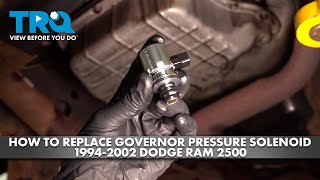
- Faulty Transmission Solenoid or Sensor (Very Common) — This is the primary cause. On Chrysler/Jeep, the governor pressure solenoid or sensor fails. 🎬 Watch: Step-by-step governor pressure sensor and solenoid replacement guide. On Nissan/Infiniti, the direct clutch solenoid fails. These parts short out electrically or stick mechanically, especially at high temperatures.
- Damaged Wiring or Poor Electrical Connections (Common) — The internal transmission wiring harness submerged in hot fluid, or the external connector, degrades over time. Wires become brittle, short to ground, or develop loose, corroded pins.
- Low, Dirty, or Incorrect Transmission Fluid (Common) — Low, old, or debris-filled fluid starves solenoids of hydraulic pressure and clogs their internal passages. Using non-OEM fluid alters hydraulic pressures and triggers codes.
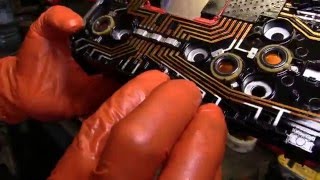
- Cracked Solder Joints on TCM (Common For Nissan) — On Nissan/Infiniti models with the RE5R05A transmission, a recurring P1764 code is frequently caused by a cracked solder pin on the Transmission Control Module 🎬 See how to diagnose and fix Nissan RE5R05A solenoid issues. (TCM) circuit board. This thermal failure separates when hot.
- Fluid Contamination in Electrical Connector (Uncommon But Known On Vw) — On Volkswagen DSG transmissions, fluid leaks past a seal and floods the main mechatronics electrical connector, shorting the temperature sensor signals.
- Faulty Transmission Control Module (TCM) (Less Common) — The computer controlling the transmission fails internally, sending incorrect or zero voltage signals to the solenoids.
- Internal Transmission Mechanical Failure (Rare) — Metal debris from a shredded clutch pack or bearing clogs the solenoid passages. Finding heavy metal shavings in the transmission pan confirms this.
- Low System Voltage (Rare) — A failing battery or corroded terminals drop system voltage, causing erratic TCM behavior and false solenoid codes.
Symptoms

- Transmission Stuck in Gear (Limp Mode) — The transmission locks into a single gear (usually 2nd or 3rd) to prevent internal damage. Acceleration from a stop is extremely sluggish.
- Check Engine Light On — The computer illuminates the Malfunction Indicator Lamp immediately upon detecting the voltage irregularity.
- Harsh, Delayed, or No Shifting — The vehicle bangs violently into Drive or Reverse, hesitates before engaging, or refuses to shift gears while driving.
- Engine Stalling When Stopping — A stuck torque converter clutch (TCC) solenoid fails to disengage the transmission from the engine, stalling the vehicle at red lights.
- Flashing Gear Indicator (VW/Audi) — The PRNDS indicator or a wrench symbol flashes on the dashboard, signaling a critical mechatronics fault.
Diagnostic Flowchart
Tap your situation to follow the diagnostic path that matches what you're seeing on this code.
Common Fixes & Costs
- Replace Governor Pressure Solenoid & Sensor (Chrysler/Jeep/Dodge) — Parts: $100-$200, Labor: $250-$400, ~2.5 hr book time (Intermediate)
- Replace Direct Clutch Solenoid (Nissan/Infiniti) — Parts: $50-$120, Labor: $250-$450, ~2.5 hr book time (Intermediate)
- Replace Transmission Fluid and Filter — Parts: $60-$150, Labor: $120-$200, ~1.5 hr book time (DIY)
- Repair TCM Solder Joints (Nissan/Infiniti) — Parts: $10-$30, Labor: $200-$400, ~3 hr book time (Advanced)
- Clean Mechatronics Connector and Refill Fluid (Volkswagen) — Parts: $20-$50, Labor: $100-$200, ~1.5 hr book time (Intermediate)
- Replace Transmission Wiring Harness — Parts: $150-$350, Labor: $300-$600, ~4 hr book time (Professional)
- Replace Transmission Control Module (TCM) — Parts: $400-$900, Labor: $200-$500, ~2.5 hr book time (Professional)
Used vs. New Parts: Buying Guide
When a used part is worth it: Buying used electronic parts like solenoids or sensors is never recommended due to high failure rates. Used parts only make sense when replacing the entire transmission assembly from a verified low-mileage donor vehicle.
Donor-vehicle mileage cap: roughly under 60000 miles for the part to have meaningful remaining life.
Donor quality checklist:
- Verify donor vehicle mileage and salvage reason.
- Match part numbers exactly; TCMs are rarely interchangeable between years.
- Ensure the used TCM does not require dealer-only programming.
Decision logic:
- If The part is a solenoid or sensor → Always buy new OEM or high-quality aftermarket. The labor cost to replace a failed used part outweighs any savings.
- If The part is a Transmission Control Module (TCM) → Use a professional remanufacturing service for your existing module or buy a remanufactured unit with a warranty.
Warranty tradeoff: Salvage yard parts offer 30-90 day warranties on the part only. New OEM or aftermarket parts carry 1-year to lifetime warranties.
Worst-case if a used part fails: $400-$800 to pay for labor and fluid a second time when the used part fails.
What Happens If You Wait — Timeline
- 0-1 month: Code P1764 sets. The vehicle enters 'limp mode,' locking into 2nd or 3rd gear. Acceleration is extremely poor. (MPG impact: 15-30%% · Added cost: $0)
- 1-3 months: Driving in limp mode overheats the transmission. Fluid breaks down and loses lubrication properties. A burning smell develops. (MPG impact: 15-30%% · Added cost: $200-$400 (Requires full fluid flush and seal inspection))
- 3-6 months: Extreme heat warps internal seals and burns clutch packs. Abrasive debris circulates, destroying the valve body and other solenoids. (MPG impact: N/A (Barely driveable)% · Added cost: $2,500-$4,000 (Requires complete transmission rebuild))
- 6+ months: Catastrophic failure. The transmission refuses to engage any gear. The vehicle is undriveable. (MPG impact: N/A% · Added cost: $3,500-$7,000 (Requires full replacement))
Cost of Not Fixing It
- Immediate: Vehicle is unsafe in traffic due to limp mode restricting acceleration and speed. (Added cost: 0)
- 1-3 months: Excessive heat buildup burns transmission fluid and damages clutch packs, turning a $350 repair into a major overhaul. (Added cost: $2500-$4000)
- 6+ months: Catastrophic transmission failure requiring a complete replacement. (Added cost: $3500-$7000)
Diagnosis Steps
- Scan for All Diagnostic Trouble Codes (DTCs)
Read all transmission, engine, and network codes. On Hyundai/Kia, P1764 is a CAN bus issue, making U-codes the priority. On Chrysler, P1762 alongside P1764 confirms a governor pressure circuit failure.
Tools: Advanced OBD-II Scanner (Beginner) - Check Fluid Level and Condition
Inspect the transmission fluid dipstick with the engine warm and running. Fluid must be bright red/pink. Dark, burnt-smelling, or metallic fluid indicates severe internal wear requiring a rebuild.
Tools: Rag/paper towel (Beginner) - Inspect External Wiring and Connectors
Disconnect the main wiring harness at the transmission case. Inspect for broken wires, green corrosion, or fluid intrusion. On VWs, check for fluid inside the mechatronics connector.
Tools: Flashlight (Beginner) - Test Solenoid Resistance at the Connector
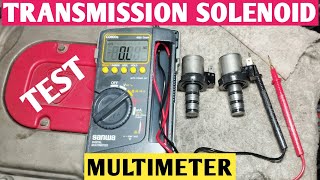
Unplug the transmission connector and measure the suspect solenoid's circuit resistance. A Nissan Direct Clutch Solenoid reads 3-9 ohms; a Chrysler governor solenoid reads 2.25-3.25 ohms. Infinite ohms means an open circuit; zero means a short.
Tools: Digital Multimeter, Vehicle-specific wiring diagram (Intermediate) - Analyze Live Scan Tool Data
Monitor the 'Governor Pressure' and 'Governor Sensor Voltage' PIDs. Pressure should be 0 PSI at a standstill. If voltage drops below 0.1V, the sensor or wiring is shorted.
Tools: Advanced OBD-II Scanner (Advanced) - Drop the Transmission Pan for Internal Inspection
Drain the fluid and remove the pan. Inspect the internal wiring harness and solenoid connectors. Check the pan magnet; fine gray paste is normal, but large metal shards indicate catastrophic mechanical failure.
Tools: Socket set, drain pan, new pan gasket, transmission fluid (Intermediate) - PRO TIP: Test the Solenoid When Hot
Solenoids fail intermittently when hot. Heat the solenoid with a heat gun while monitoring resistance. A stable cold reading that suddenly goes infinite (open) when heated confirms a thermal failure.
Tools: Digital Multimeter, Heat gun (Advanced) - PRO TIP: Perform a Voltage Drop Test
Test the power and ground circuits under load. Connect multimeter leads between the solenoid power wire and the positive battery terminal while the circuit is active. A reading above 0.5V indicates hidden wire resistance.
Tools: Digital Multimeter, T-pins (Advanced) - Inspect the TCM for Damage (Nissan/Infiniti)
Remove the TCM and inspect the circuit board under magnification. Look for cracked or burnt solder joints at the main connector pins. Resolder damaged pins to restore connection.
Tools: Socket set, Magnifying glass, Soldering iron (Advanced)
Related Codes
- P1762 — On Chrysler/Jeep, P1762 (Governor Pressure Sensor Offset) almost always accompanies P1764. P1764 is the electrical short; P1762 is the resulting irrational pressure reading. Replace the sensor and solenoid.
- P1757 / P1759 — On Nissan/Infiniti, these indicate a Front Brake Solenoid failure. Multiple solenoid codes simultaneously point to a failing TCM or main wiring harness rather than individual solenoid failures.
- P0700 — A generic code indicating the TCM has requested the Check Engine Light. It requires an advanced scanner to pull the specific P1764 transmission code hidden underneath.
- P2764 — Torque Converter Clutch Pressure Control Solenoid Circuit Low. Frequently confused with P1764, but P2764 is the standard code for Subaru CVT solenoid failures.
- U-Codes (e.g., U0100, U0140) — Network communication codes. If present alongside P1764, diagnose the U-codes first. A bad ground or voltage drop causes network failures that trigger false transmission codes.
Climate & Environmental Factors
- High Operating Temperature: P1764 frequently triggers only after the vehicle warms up or sits in stop-and-go traffic. This indicates a thermal failure where a solenoid coil or TCM solder joint expands and breaks electrical contact when hot.
- Moisture and Humidity: Water intrusion accelerates corrosion on external wiring connectors, causing voltage drops. On VW models, fluid wicking into the connector is exacerbated by environmental moisture.
How to Talk to a Mechanic About This Code
Say this: "State your make, model, code (P1764), and exact symptoms. Example: 'I have a 2005 Jeep Grand Cherokee with P1764, stuck in limp mode. I'd like a diagnostic to confirm if the governor pressure sensor or wiring has failed.' For Nissan: '...it only happens when hot. I need the direct clutch solenoid and TCM solder joints tested.'"
This proves you are an informed customer. It focuses the technician on the most likely manufacturer-specific causes, saving diagnostic time and preventing unnecessary upsells.
Avoid saying:
- 'My check engine light is on, can you look at it?' (Too vague; invites expensive, open-ended diagnostics).
- 'Just fix whatever is wrong.' (Gives the shop a blank check).
- 'My car is acting weird.' (Be specific: 'It bangs into gear' or 'It won't shift out of 2nd').
Questions to ask before authorizing the repair:
- What specific tests confirmed this part failed? (e.g., 'Did you measure solenoid resistance when hot?').
- Did you rule out a wiring harness short or a TCM failure?
- Can you provide a written estimate breaking down parts and labor?
- What is the warranty on these specific parts and labor?
Where to Take It: Dealer vs Independent vs Chain
- Dealer:
Use only if TCM programming is required or the vehicle is under warranty. Otherwise, too expensive.
Best for: Vehicles under warranty., Complex repairs requiring TCM programming., Volkswagen DSG mechatronics issues.
Downsides: Highest labor rates., Tendency to replace entire valve bodies rather than individual $50 solenoids. (Typical cost: +50% vs. baseline) - Independent Shop:
The best choice, provided you select a dedicated transmission specialist or a shop with proven expertise in your vehicle's brand.
Best for: Out-of-warranty vehicles., Shops specializing in transmission repair or your specific brand.
Downsides: General mechanics may misdiagnose the manufacturer-specific nuances of P1764 (especially on Hyundai/Kia). (Typical cost: +0% vs. baseline) - Chain Shop:
AVOID. This code requires specialized diagnostic equipment and manufacturer-specific knowledge.
Best for: Routine maintenance (oil, tires, brakes).
Downsides: Lack advanced diagnostic tools for transmission live data., High risk of misdiagnosing a $150 sensor as a $4,000 transmission failure. (Typical cost: -10% vs. baseline)
When to Walk Away From the Repair
If the total estimated repair cost exceeds 50% of the vehicle's private-party market value, seriously consider selling the vehicle.
- Car worth $3500, fix is $500: Fix it. This covers a standard solenoid/sensor replacement and makes economic sense.
- Car worth $3500, fix is $3500: Walk away. The repair (a full transmission rebuild) equals the car's value.
- Car worth $10000, fix is $1200: Fix it. A TCM replacement or complex wiring repair is expensive but justified on a $10,000 vehicle.
What Scan Tool You Need for This Code
Minimum: A scanner capable of reading manufacturer-specific transmission codes and displaying live data PIDs (like sensor voltage and pressure) from the TCM.
A $20 code reader only shows generic codes. It cannot display the live voltage data required to distinguish a bad sensor from a broken wire.
Budget: BlueDriver Pro or OBDLink MX+ (~$100) — Pairs with smartphone apps to access OEM-specific live data, essential for monitoring governor pressure voltage on Chrysler/Jeep.
Mid-range: Foxwell NT510 Elite or Innova 5610 (~$180) — Provides near dealer-level diagnostics, full system scanning, and transmission live data graphing.
Professional: Autel MaxiCOM MK808 (~$500) — Offers full bidirectional control. You can command individual solenoids to activate via the scanner to definitively isolate faults between the wiring, solenoid, or TCM.
Rent vs buy: Parts store rental scanners are too basic for this code. Buy a mid-range scanner if you DIY, or pay a transmission shop a 1-hour diagnostic fee.
How to Clear the Code After You Fix It
- Use an OBD-II scan tool to clear all DTCs.
- Perform a complete transmission drive cycle to allow the TCM to relearn.
- Check for pending codes after the drive cycle.
Drive cycle (~30 minutes): Start cold, idle for 3 minutes, drive in stop-and-go city traffic (25-35 mph) for 10 minutes, drive at steady highway speeds (55-60 mph) for 15 minutes, and coast to a stop.
Readiness monitors affected: Comprehensive Component Monitor, Transmission Control
Before emissions retest: drive at least 50 miles to fully set monitors.
Watch out for:
- Disconnecting the battery clears the code but erases readiness monitors, guaranteeing an emissions test failure.
- The code returns immediately if the underlying electrical fault is not fixed.
Will This Fail Emissions / State Inspection?
Yes — this code typically fails an OBD-II emissions inspection.
- California: An active Check Engine Light is an automatic failure. All readiness monitors must be 'Ready' before re-testing.
- New York: An illuminated MIL due to P1764 results in an immediate OBD-II inspection failure.
- Texas: In emissions-testing counties, an active P1764 code fails the OBD portion of the state inspection.
Most Commonly Affected Vehicles
- Jeep Grand Cherokee (1997-2004) — Extremely common failure of the governor pressure solenoid and sensor in 42RE/46RE transmissions. Replace both parts and the output speed sensor simultaneously.
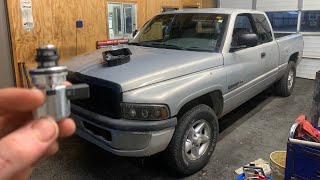
- Dodge Ram 1500/2500/3500 (2000-2008) — Prone to governor pressure sensor failure in 46RE/47RE/48RE transmissions. Always use OEM Mopar or high-quality Borg-Warner replacements.
- Dodge Dakota / Durango (2000-2003) — Shares the 42RE/44RE/46RE transmissions with the Ram and Grand Cherokee, suffering identical governor pressure circuit failures.
- Nissan Xterra / Frontier / Pathfinder (2005-2010) — Triggers P1764 due to a failing Direct Clutch Solenoid or cracked TCM solder joints in the RE5R05A transmission. Failures are highly heat-dependent.
- Infiniti G35 / FX35 (2004-2008) — Shares the RE5R05A transmission with Nissan. Inspect the TCM for bad solder joints before replacing the expensive valve body.
- Hyundai Tucson (2005-2009) — P1764 indicates a CAN Communication Error between the Engine Control Unit and the 4WD Control Unit. Do not replace transmission parts.
- Kia Sportage (2005-2010) — Identical to Hyundai; P1764 is an 'ECU-ITM CAN ERROR'. Diagnose the communication wiring between modules.
- Volkswagen Jetta / Golf / Passat (with DSG) (2010-2015) — Logs P1764 for a 'Gearbox Temperature Monitoring Fault' caused by fluid leaking into the mechatronics connector. Clean the connector thoroughly.
- Subaru Impreza / Outback / Forester (2010-2015) — Often confused with P2764 (Torque Converter Clutch Solenoid). If you have a Subaru CVT, verify the code is actually P2764, which requires replacing the TCC solenoid.
Manufacturer-Specific Notes
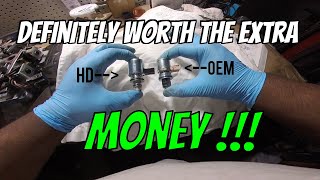
- Chrysler / Dodge / Jeep: The code guarantees a Governor Pressure Sensor/Solenoid issue. Always replace the solenoid, sensor, and output speed sensor together to avoid paying labor twice. Cheap aftermarket sensors fail within weeks; use Mopar or Borg-Warner.
- Nissan / Infiniti: Failures are heavily heat-dependent. Before buying a $1,200 valve body, remove the TCM and inspect the circuit board for cracked solder joints. Resoldering the pins fixes the issue permanently for under $30.
- Hyundai / Kia: P1764 is a CAN bus communication error, not a transmission fault. The diagnostic focus must be entirely on the wiring and connectors between the main ECU and the 4WD control unit.
- Volkswagen / Audi: On DSG models, P1764 relates to temperature monitoring. Transmission fluid wicks up the wiring harness into the mechatronics connector, shorting the pins. Cleaning the connector with electrical contact cleaner often resolves it.
Real Owner Stories
2004 Jeep Grand Cherokee - The Recurring Code
Check Engine Light illuminated with P1764. The owner replaced the governor pressure solenoid and sensor, but the code returned two weeks later.
What they tried:
- Replaced solenoid and sensor.
- Swapped old and new parts to isolate the failure.
- Discovered the code returned regardless of which parts were installed.
Outcome: The recurring code proved the issue was not the sensors themselves. The root cause was an intermittent wiring short in the 5-volt supply circuit leading to the PCM.
Lesson: If new sensors don't fix the code, stop replacing parts. The problem is in the wiring harness or the computer. Perform a voltage drop test on the circuits.
2005 Infiniti G35 - The Heat-Related Failure
The transmission locked into 4th gear (limp mode) with P1764, but only in stop-and-go traffic after the car was fully warmed up.
What they tried:
- Cleared the code, but it returned under warm, low-speed driving.
- Fixed a loose battery cable, which did not resolve the transmission issue.
Outcome: The heat-dependent nature of the failure pointed directly to a cracked solder joint on the Transmission Control Module (TCM). Resoldering the pins fixed the issue permanently.
Lesson: For Nissan/Infiniti, if P1764 appears only when the transmission is hot, suspect a thermal failure. Inspect the TCM for cracked solder joints before replacing the valve body.
2008 Hyundai Tucson - The 'Not a Transmission Problem' Case
Vehicle presented with P1764 but exhibited zero transmission shifting symptoms.
What they tried:
- Avoided replacing transmission solenoids based on generic code definitions.
Outcome: The owner correctly identified that on Hyundai/Kia, P1764 means 'ECU-ITM CAN ERROR'. The fix involved repairing a damaged communication wire between the ECU and the 4WD control unit.
Lesson: Always verify the specific definition of P1764 for your vehicle's manufacturer. On Hyundai/Kia, replacing transmission parts for this code is a complete waste of money.
How to Prevent This Code From Triggering
- Change transmission fluid and filter at recommended intervals (Every 30,000 to 60,000 miles.) — Clean fluid lubricates and cools solenoids. Old fluid allows debris to clog solenoid passages, causing them to stick and fail.
- Use only the manufacturer-specified transmission fluid (Every fluid change.) — Using incorrect fluid alters hydraulic pressures and destroys internal seals and solenoids.
- Install an auxiliary transmission cooler (One-time installation for towing or hot climates.) — Heat destroys transmissions and electronics. A cooler keeps fluid temperatures stable, protecting solenoids from thermal failure.
- Come to a complete stop before shifting from Drive to Reverse (Daily habit.) — Shifting while moving forces the transmission to act as a brake, shredding internal clutches and creating debris that destroys solenoids.
Frequently Asked Questions
Can low or dirty transmission fluid cause code P1764?
Yes. Solenoids require precise hydraulic pressure to function. Low or dirty fluid starves the solenoids or clogs their internal passages, causing them to stick and trigger the code.
I replaced the solenoid and the P1764 code came back. What now?
The problem is likely in the wiring or the computer. Perform a voltage drop test to find hidden resistance in the harness. On Nissan/Infiniti models, inspect the TCM for cracked solder joints.
What's the difference between P1764 and P2764?
P1764 is a manufacturer-specific code pointing to different solenoids depending on the brand. P2764 is a generic code specifically indicating a low circuit in the Torque Converter Clutch (TCC) solenoid, extremely common on Subaru CVTs.
My Hyundai/Kia has P1764 for a 'CAN Error'. What does that mean?
On these vehicles, P1764 indicates a communication failure on the Controller Area Network (CAN) between the main engine computer and the 4WD control unit. Do not replace transmission parts; diagnose the wiring linking these modules.
Can a bad battery cause transmission code P1764?
Yes. Modern transmissions require precise voltage signals to operate correctly. A weak battery or corroded terminals cause voltage drops that trigger false solenoid and communication codes.
How much does it cost to fix P1764?
A DIY solenoid replacement costs $100-$200 for parts and fluid. Professional replacement ranges from $350 to $650. If the root cause is widespread internal damage, a full transmission rebuild costs $2,500 to $5,000.
On my Jeep/Dodge, should I replace just the sensor or the whole solenoid pack?
Replace the governor pressure sensor, governor pressure solenoid, and output speed sensor simultaneously. The bulk of the cost is the labor to drop the transmission pan, so replacing all three prevents paying for that labor a second time.
What type of transmission fluid should I use?
Use only the exact fluid specified in your owner's manual, such as Mopar ATF+4 or Nissan Matic-S. Never use 'universal' fluids, as incorrect fluid alters hydraulic pressures and destroys internal seals.
Key Takeaways
- P1764 has completely different meanings by brand: it signals a failed Governor Pressure Sensor on Chrysler/Jeep, a Direct Clutch Solenoid on Nissan/Infiniti, and a CAN Bus wiring error on Hyundai/Kia.
- Before replacing a $150 solenoid, test the wiring and check for a cracked solder joint on the Transmission Control Module (TCM), which causes a large percentage of these failures on Nissan vehicles.
- Test components when hot using a heat gun; thermal expansion causes solenoids and TCM solder joints to fail at operating temperature while testing perfectly fine when cold.
- Driving more than 10 miles in 'limp mode' overheats the transmission, turning a $350 sensor replacement into a $3,500 complete transmission rebuild.
Helpful Videos



The information in this article is provided for general reference and educational purposes only. Vehicle specifications, procedures, and part compatibility can vary by production date, trim level, and region. Always consult your vehicle's factory service manual and verify part numbers before purchasing or performing repairs. Safety-critical components such as airbags, seat belts, and braking systems should be installed by a qualified professional.
- 🎬 Helpful Videos
- What Does P1764 Mean?
- Can I Drive With P1764?
- Common Causes
- Symptoms
- Diagnostic Flowchart
- Common Fixes & Costs
- Used vs. New Parts: Buying Guide
- What Happens If You Wait — Timeline
- Cost of Not Fixing It
- Diagnosis Steps
- Related Codes
- Climate & Environmental Factors
- How to Talk to a Mechanic About This Code
- Where to Take It: Dealer vs Independent vs Chain
- When to Walk Away From the Repair
- What Scan Tool You Need for This Code
- How to Clear the Code After You Fix It
- Will This Fail Emissions / State Inspection?
- Most Commonly Affected Vehicles
- Manufacturer-Specific Notes
- Real Owner Stories
- 2004 Jeep Grand Cherokee - The Recurring Code
- 2005 Infiniti G35 - The Heat-Related Failure
- 2008 Hyundai Tucson - The 'Not a Transmission Problem' Case
- How to Prevent This Code From Triggering
- Frequently Asked Questions
- Can low or dirty transmission fluid cause code P1764?
- I replaced the solenoid and the P1764 code came back. What now?
- What's the difference between P1764 and P2764?
- My Hyundai/Kia has P1764 for a 'CAN Error'. What does that mean?
- Can a bad battery cause transmission code P1764?
- How much does it cost to fix P1764?
- On my Jeep/Dodge, should I replace just the sensor or the whole solenoid pack?
- What type of transmission fluid should I use?
- Key Takeaways
- 🎟️ Get 5% Off