

OBD-II Code P1758: Transmission Solenoid Circuit Malfunction
What P1758 means, why it triggers, and the definitive guide to fixing it
- Code P1758 indicates a specific electrical open or short circuit in a transmission solenoid, not a guaranteed mechanical transmission failure.
- Inspect the external wiring harness and test the solenoid's resistance (typically 12-25 Ohms for Hondas) before buying any replacement parts.
- Driving more than 50 miles with this code active causes severe secondary damage, turning a $200 electrical fix into a $3,000+ transmission rebuild.
- On 2010-2014 Audi and VW models, P1758 specifically points to a cracked Mechatronics circuit board requiring a $1,500+ specialized repair.
- If a new solenoid does not clear the code instantly, perform a continuity test on the wiring harness to locate the actual break.
What Does P1758 Mean?

P1758 signifies the vehicle's Transmission Control Module (TCM) detected an electrical fault in a specific transmission solenoid circuit. This solenoid is an electronically-controlled valve directing transmission fluid to engage gears or operate the torque converter clutch. When the TCM commands the solenoid to actuate and detects an open circuit (no connection) or a short circuit (power routed incorrectly), it logs the P1758 code.
Technical definition: The official SAE/OBD-II definition varies by manufacturer but universally points to an electrical circuit malfunction. Common definitions include 'Torque Converter Clutch Solenoid Valve B Circuit Malfunction' (Honda/Acura) or 'Terminal 15 Voltage Supply Open Circuit' (Audi/VW). The code sets when the TCM detects an open or short circuit condition for as little as 200 milliseconds.
Can I Drive With P1758?
Yes, But With Caution. Driving is technically possible but strongly discouraged. Your transmission enters a 'limp mode' with harsh shifting and limited gears (often stuck in 2nd or 3rd). Continued driving for more than 50 miles causes cascading damage, such as burned clutches and contaminated fluid from excess friction. On Audi models, this code indicates a critical power loss where the transmission fails completely without warning. Ignoring this turns a $200 electrical repair into a $3,000+ transmission replacement.
Common Causes

- Damaged Wiring or Connectors (Very Common) — This is the most frequent cause. Wires leading to the solenoid fray, corrode, short to ground, or melt against exhaust components. Connector pins push out, break, or suffer fluid contamination, especially after recent engine work.
- Failed Transmission Solenoid (Very Common) — The solenoid fails electrically. The internal coil winding breaks, creating an open circuit (OL on a multimeter), or shorts out, preventing function even when receiving power.
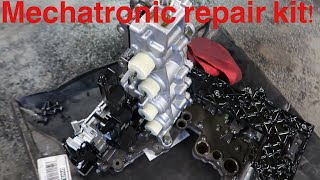
- Failed Mechatronics Unit Circuit Board (Audi/VW) (Common) — On modern Audis and Volkswagens with S-Tronic/DSG transmissions, the TCM is part of an internal 'Mechatronics' unit. 🎬 See how to repair a faulty Audi Mechatronics unit. A cracked internal printed circuit board (PCB) cuts power to the module, triggering a P1758 'Terminal 15' fault.
- Internal Transmission Harness Failure (Common) — The wiring harness located inside the hot transmission oil pan becomes brittle. The insulation cracks, leading to shorts, or fluid wicks up the harness to contaminate the main external connector.
- Faulty Transmission Control Module (TCM) (Less Common) — The internal driver circuit responsible for sending the power or ground signal to the specific solenoid burns out, causing the code to set even if the solenoid and wiring are perfectly fine.
- Blown Fuse or Faulty Relay (Rare) — A blown fuse or a failed relay cuts power to the entire transmission solenoid circuit, leading to this code.
Symptoms

- Check Engine Light On — The primary indicator that the Powertrain Control Module (PCM) or TCM stored a diagnostic trouble code.
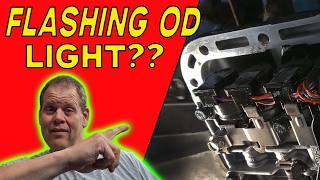
- Flashing Gear Indicator Light — Hondas and Acuras blink the 'D' or 'D4' light. 🎬 Watch: Troubleshooting the flashing D4 light and lock-up solenoid. Fords flash the Overdrive (O/D) light. This serves as a specific warning for a transmission fault.
- Vehicle Stuck in Limp Mode — The TCM intentionally locks the transmission into a single gear (usually 2nd or 3rd) to prevent further damage, resulting in poor acceleration and high RPMs at cruising speeds.
- Harsh or Erratic Shifting — The transmission slams into gear, hesitates, or shifts at incorrect times because the faulty solenoid fails to manage hydraulic pressure.
- 'Gearbox Malfunction' Warning Message — Common on Audi and VW models, a 'Gearbox Malfunction: you can continue to drive' message appears on the instrument cluster. Treat this as a critical warning.
- Poor Fuel Economy — When the transmission cannot shift into the correct gear or engage the torque converter lockup clutch, the engine runs at higher, less efficient RPMs.
Diagnostic Flowchart
Tap your situation to follow the diagnostic path that matches what you're seeing on this code.
Common Fixes & Costs
- Repairing Damaged Wiring or Connector — Parts: $10-$50, Labor: $150-$300, ~1.5 hr book time (Intermediate)
- Replacing the Transmission Solenoid
— Parts: $50-$200, Labor: $150-$500, ~2.5 hr book time
(DIY)
Honda Civic/Accord: OEM 28250-PLX-305 (Alt: Dorman 904-400, Rostra 52-0532)
Kia/Hyundai (A6GF1/A6MF1): OEM 46313-3B030 (Alt: Mopar (some interchange)) - Mechatronics Unit Repair/Replacement (Audi/VW)
— Parts: $400-$1,500, Labor: $1,000-$3,000, ~8 hr book time
(Professional)
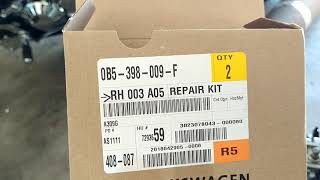
Audi (DL501/0B5 S-Tronic): OEM ['0B5398048D', '0B5398009F'] (Alt: Borgwarner 31000KIT) - Replacing the Transmission Control Module (TCM) — Parts: $250-$900, Labor: $150-$600, ~2 hr book time (Professional)
- Transmission Fluid and Filter Change — Parts: $50-$100, Labor: $150-$250, ~1.2 hr book time (DIY)
Used vs. New Parts: Buying Guide
When a used part is worth it: For externally-mounted solenoids on older vehicles, a used OEM part from a low-mileage donor is a cost-effective option.
Donor-vehicle mileage cap: roughly under 80000 miles for the part to have meaningful remaining life.
Donor quality checklist:
- Verify the donor vehicle was not scrapped due to transmission failure.
- Match the part number exactly.
- Source from a salvage yard offering a 30-day warranty.
Decision logic:
- If The solenoid is internal, requiring significant labor to access. → Buy a new OEM part. The risk of a used part failing and requiring repeat labor is too high.
- If The vehicle is newer or under 100k miles. → Favor a new OEM part to ensure longevity.
- If The vehicle is over 150k miles and the budget is tight. → A used OEM or new aftermarket part is an acceptable risk.
Warranty tradeoff: Used parts include a 30-day part-only warranty. New OEM parts offer the best guarantee of quality and fitment.
Worst-case if a used part fails: $300-$800 if a used internal solenoid fails, requiring you to pay for labor a second time.
What Happens If You Wait — Timeline
- 0-2 weeks: Code sets, Check Engine Light/Flashing 'D' light appears. Shifting becomes harsh or vehicle enters 'limp mode'. No permanent damage yet. (MPG impact: 5-15%% · Added cost: $0)
- 2 weeks - 3 months: Incorrect hydraulic pressure causes clutch packs to slip, generating excess heat. Transmission fluid darkens and acquires a burnt smell. (MPG impact: 10-20%% · Added cost: $50-$100 in wasted fuel.)
- 3-6 months: Sustained clutch slippage wears down friction material. Burnt, debris-filled fluid circulates, clogging the valve body. (MPG impact: 15-25%% · Added cost: $300-$850 for a transmission flush and valve body cleaning.)
- 6+ months: Catastrophic failure. Clutch packs are destroyed. The transmission requires a complete rebuild or replacement. (MPG impact: N/A - Vehicle may not be drivable% · Added cost: $3,000-$5,200+)
Cost of Not Fixing It
- 0-1 Month: Decrease in fuel economy due to limp mode. Increased engine wear from running at higher RPMs. Unpredictable shifting creates a safety hazard. (Added cost: $50-$150 in wasted fuel.)
- 1-6 Months: Transmission fluid overheats and degrades due to excessive clutch slippage. Accelerated wear on internal clutch packs begins. (Added cost: $200-$500 for a transmission flush, though underlying clutch damage is likely permanent.)
- 6+ Months: Catastrophic internal transmission damage. Debris from worn clutches clogs the valve body, requiring a complete rebuild. (Added cost: $3,000-$7,000+)
Diagnosis Steps

- Visual Inspection of Wiring and Connectors
Locate the suspect solenoid's electrical connector on the transmission case. Unplug it and inspect both sides for green corrosion, bent pins, and fluid contamination. Follow the harness looking for frayed wires or melting near exhaust components.
Tools: Flashlight, contact cleaner (Beginner) - Test Solenoid Resistance with a Multimeter
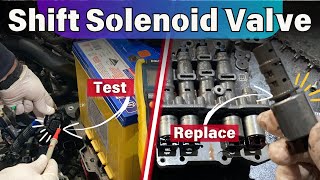
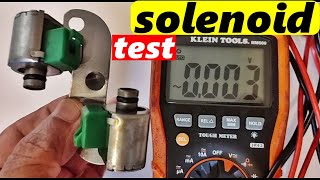
With the solenoid unplugged, set your multimeter to Ohms (Ω). Touch the probes to the two pins on the solenoid. Compare the reading to your vehicle's specification (e.g., 12-25 Ohms for Hondas). A reading of infinity (OL) means an open circuit; near zero means a short circuit. Both require replacement.
Tools: Multimeter (Intermediate) - Check for Power and Ground at the Connector
Turn the ignition key to 'ON' (engine off). Using a multimeter set to DC Volts, probe the pins on the harness-side connector. One pin must have battery voltage (12V) and the other serves as the TCM-controlled ground. For Audi P1758, checking for 12V at the 'Terminal 15' pin of the main connector is critical.
Tools: Multimeter, vehicle-specific wiring diagram (Advanced) - Test Harness Continuity from TCM to Solenoid
Disconnect the battery, then unplug both the TCM and the solenoid connector. Using a multimeter set to Ohms, check for continuity on the specific wire between the TCM connector and the solenoid connector. A reading of infinity (OL) confirms a broken wire.
Tools: Multimeter, vehicle-specific wiring diagram (Advanced) - Perform a Solenoid 'Click Test'
[PRO TIP] Briefly apply 12V from the car battery to the solenoid's pins using jumper wires. A functional solenoid makes an audible 'click'. No click means it is mechanically seized or the internal coil is completely dead.
Tools: 12V power source, jumper wires (Intermediate) - Check Transmission Fluid Level and Condition
Pull the dipstick (engine running in Park), wipe it, re-insert, and check the level. Fluid should be reddish-pink. While dirty fluid rarely causes an electrical circuit code directly, critically low or burnt fluid indicates severe secondary mechanical damage.
Tools: Rag or paper towel (Beginner) - Check for Voltage Drop in the Circuit
[PRO TIP] Connect the multimeter in parallel with the solenoid. With the circuit active, a healthy circuit shows less than 0.2V of drop. A higher reading indicates hidden corrosion or a damaged wire unable to carry current.
Tools: Multimeter with long leads (Advanced) - Analyze Live Data with a Scan Tool
[ADVANCED] Use a professional scan tool to monitor the solenoid's commanded state and current draw. If the TCM commands the solenoid on but the current remains at 0 mA, it confirms a hard circuit fault.
Tools: Professional OBD-II Scan Tool (Advanced) - Analyze the TCM Signal with an Oscilloscope
[PRO TIP] Back-probe the signal wire at the TCM to observe the electrical pattern. You should see a clean square wave. A missing or malformed waveform points directly to a faulty TCM driver circuit.
Tools: Oscilloscope, back-probe pins (Professional)
When This Code Triggers (Freeze-Frame Conditions)
- Engine Coolant Temp: 180-200°F (82-93°C) (The fault logs when the engine is fully warmed up and the TCM runs its complete diagnostic cycle.)
- RPM: 1500-2500 RPM (Occurs during steady-state cruise or light acceleration when the TCM commands a gear shift or torque converter lock-up.)
- Vehicle Speed: 35-55 mph (56-88 km/h) (Sets at highway speeds where higher gears and TCC lock-up engage.)
- Transmission Fluid Temperature: 150-220°F (65-104°C) (The TCM monitors fluid temperature and only runs specific solenoid diagnostic tests once the fluid reaches operating temperature.)
Related Codes
- P0700 — A generic code telling the engine computer to turn on the Check Engine Light because the TCM stored a fault. Focus all diagnostic efforts on P1758.
- P1768 — Indicates a fault in a different solenoid circuit. If both appear together, it strongly suggests a shared bad power feed or failing TCM.
- P0741 — Means 'Torque Converter Clutch Circuit Performance'. P1758 causes P0741 if the electrical circuit fails, but P0741 also triggers from mechanical sticking.
- P179E — On Audi/VW, this 'Drive Position Sensor Electrical Error' appearing alongside P1758 is a definitive sign of internal Mechatronics unit failure.
Climate & Environmental Factors
- Cold Weather: Low temperatures thicken transmission fluid, increasing hydraulic resistance. This causes sluggish shifts and makes old wiring insulation brittle and susceptible to cracking.
- High Humidity / Salt Belt Regions: Moisture and road salt accelerate corrosion at the main transmission connector, creating high resistance that directly causes electrical fault codes like P1758.
How to Talk to a Mechanic About This Code
Say this: "I have an OBD-II code P1758 and the transmission is shifting harshly. Please start by testing the specified solenoid circuit, including checking resistance at the solenoid and verifying power and ground at the connector, before recommending any major parts."
This directs the technician to perform a logical electrical diagnosis instead of immediately quoting a new transmission, establishing you as an informed customer.
Avoid saying:
- 'My transmission is slipping, I think it's failing.'
- 'My check engine light is on, can you just fix it?'
- 'Do whatever you think is best.'
Questions to ask before authorizing the repair:
- What were the results of the solenoid resistance (Ohm) test?
- Did you confirm there is 12-volt power and a good ground signal at the solenoid connector?
- Did you inspect the wiring harness for damage between the TCM and the solenoid?
- What is the warranty on this specific repair?
Where to Take It: Dealer vs Independent vs Chain
- Dealer:
Recommended for modern German vehicles or cars under warranty. Overkill for common failures on older out-of-warranty cars.
Best for: Vehicles under warranty or with a relevant recall/extended warranty (e.g., Audi Mechatronics)., Complex, manufacturer-specific versions of the code (e.g., Audi, BMW, VW) requiring specialized diagnostic tools.
Downsides: Highest labor rates, often 1.5-2x more than independent shops., Defaults to replacing large, expensive assemblies rather than repairing a smaller component. (Typical cost: +50% vs. baseline) - Independent Shop:
Best overall fit for most out-of-warranty vehicles, especially if you find a reputable transmission specialist.
Best for: Out-of-warranty vehicles where cost is a major factor., Finding a transmission specialist who offers component-level board repair.
Downsides: Quality varies widely; you must vet the shop's ASE certifications., General repair shops lack specific tools for complex transmission electronics. (Typical cost: +0% vs. baseline) - Chain Shop:
AVOID for initial diagnosis of complex electrical faults, as they push for expensive, unnecessary rebuilds.
Best for: Getting a second opinion or a basic code scan.
Downsides: High pressure to upsell to a full transmission rebuild without proper electrical diagnosis., Technicians lack specialized skills for in-depth module-level diagnostics. (Typical cost: -10% vs. baseline)
When to Walk Away From the Repair
If the estimated repair cost exceeds 50% of the car's private-party value, sell the car as-is.
- Car worth $3500, fix is $550: Fix it. The repair cost is a small fraction of the car's value.
- Car worth $8000, fix is $3500: Borderline. Get a second opinion and weigh the car's overall condition before proceeding.
- Car worth $2500, fix is $2800: Walk away. The repair cost is more than the car is worth.
What Scan Tool You Need for This Code

Minimum: An OBD-II reader that reads manufacturer-specific transmission codes and displays live data for transmission solenoids.
A basic $20 reader only shows the P1758 code. It cannot show the solenoid's electrical current or confirm if the TCM is sending the activation command.
Budget: BlueDriver Pro (~$100) — Reads transmission codes and graphs live data (commanded state vs. actual state) to confirm TCM activity.
Mid-range: Innova 5610 or Foxwell NT530 (~$180) — Adds bidirectional control, allowing you to manually command the solenoid 'on' and 'off' to perform a 'click test' without jumper wires.
Professional: Autel MaxiCOM MK808Z (~$450) — Provides full bidirectional control and special functions like transmission adaptations essential for Audi Mechatronics repairs.
Rent vs buy: Buy a midrange scanner with bidirectional control if you plan to diagnose the issue yourself. Auto parts stores scan codes for free but cannot perform bidirectional tests.
How to Clear the Code After You Fix It
- Use an OBD-II scan tool to clear the diagnostic trouble codes.
- Perform a complete drive cycle to allow the vehicle's computer to verify the repair.
Drive cycle (~30 minutes): Cold start (engine off 8+ hours). Idle 3 minutes. Drive in mixed traffic for 15 minutes with full stops. Accelerate to 55 mph for 10 minutes. Coast to a lower speed without braking. Shut off to cool down.
Readiness monitors affected: Comprehensive Component Monitor (CCM), Catalyst Monitor, Evaporative System (EVAP) Monitor
Before emissions retest: drive at least 100 miles to fully set monitors.
Watch out for:
- Clearing codes resets all readiness monitors to 'Not Ready', causing an automatic emissions test failure.
- The code returns immediately if the underlying electrical fault was not properly fixed.
Will This Fail Emissions / State Inspection?
Yes — this code typically fails an OBD-II emissions inspection.
- California: An active Check Engine Light is an automatic failure. After repair, all readiness monitors must be 'Ready' to pass.
- New York: An illuminated Malfunction Indicator Lamp for P1758 results in an immediate emissions test failure.
- Texas: The Check Engine Light must be off and required readiness monitors set to 'Ready' to pass the OBD inspection.
Most Commonly Affected Vehicles
- Honda Civic (1996-2005) — Extremely common. Points to the external lock-up solenoid 'B'. Presents with a flashing D4 light.
- Honda Accord (1994-2004) — Frequently logs P1758 due to a faulty external lock-up solenoid or its wiring.
- Acura TL / CL (1999-2003) — Shares transmission architecture with the Accord and is highly susceptible to the same solenoid failures.
- Kia / Hyundai Forte, Elantra, Soul (2011-2015) — Common on A6GF1 6-speed automatics. TSB #TSBTRA051R1 advises replacing the individual Shift Solenoid 'B'.
- Audi S4, S5, A5 (2010-2014) — P1758 means 'Terminal 15 Voltage Supply Open Circuit', indicating an internal Mechatronics unit circuit board failure.
- Ford Explorer, Ranger (2000-2011) — A flashing Overdrive (O/D) light is often caused by a failing Torque Converter Clutch (TCC) solenoid.
- Dodge / Jeep Grand Cherokee, Ram 1500 (1998-2004) — Commonly caused by a failed governor pressure solenoid or sensor.
- Mitsubishi Lancer, Outlander (2000-2010) — Specifically indicates a fault in the 'Low-Reverse Brake Shift Solenoid Valve System'.
Manufacturer-Specific Notes
- Honda / Acura: The flashing 'D4' light is the tell-tale sign. P1758 almost always points to the external lock-up solenoid 'B'. Resistance spec is 12-25 Ohms.
- Audi / Volkswagen: Defined as 'Terminal 15 Voltage Supply Open Circuit'. This is a known failure of the internal Mechatronics circuit board. Check for extended warranties (U49, U54).
- Kia / Hyundai: TSB #TSBTRA051R1 advises replacing the single failed solenoid rather than the entire valve body. Testing the correct solenoid (5.3 Ohms vs 10.5 Ohms) is critical.
- Mitsubishi: Points specifically to the 'Low-Reverse Brake Shift Solenoid Valve System', focusing diagnosis on Reverse engagement circuits.
Real Owner Stories
1997 Honda CR-V with flashing D4 light
Vehicle had a flashing D4 light and would not crank after a trip to the store. Codes P1758 and P0758 were present.
Outcome: Repairing the connector pin resolved the P1758 code. The issue was a simple bad connection, not a failed solenoid.
Lesson: Always start with a visual inspection of wiring and connectors. A broken wire or corroded pin is the most common cause for this code on older vehicles.
2011 Audi S4 at 64k miles with 'Gearbox Malfunction'
Owner experienced a 'Gearbox Malfunction' warning and limp mode. Two independent shops quoted $7,500 for a full Mechatronics replacement.
Outcome: The shop replaced the internal circuit boards for $2,500, permanently fixing the issue.
Lesson: For Audi P1758, seek a specialist who performs internal circuit board repairs to save thousands over a dealership's full unit replacement.
1999 Honda Civic with P1758 after transmission replacement
Immediately after a DIY transmission swap, the D4 light flashed and P1758 appeared instantly with the key in the 'ON' position.
Outcome: Fixing the damaged wire cleared the P1758 code.
Lesson: If a code appears instantly without the engine running, it is a 'hard fault' pointing to a purely electrical issue like a disconnected plug or broken wire.
How to Prevent This Code From Triggering
- Regularly change transmission fluid and filter (Every 30,000-60,000 miles) — Clean fluid lubricates and cools solenoids. Old fluid causes debris to clog solenoid passages, leading to overheating and mechanical failure.
- Use the correct type of transmission fluid (Every fluid change) — Incorrect fluid alters friction properties, causing poor performance and damaging internal seals and solenoids.
- Maintain the engine's cooling system (As per vehicle maintenance schedule) — An overheating engine causes the transmission to overheat, rapidly degrading fluid and damaging electrical components like solenoids.
Frequently Asked Questions
What is a transmission solenoid?
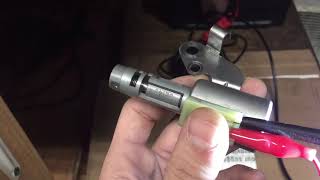
A transmission solenoid is a small, computer-controlled electro-hydraulic valve. It opens and closes to direct high-pressure transmission fluid, actuating the clutches to shift gears.
Can I fix P1758 myself?
Yes, if the fault is an externally mounted solenoid (common on older Hondas) or a visibly damaged wire. If the solenoid is inside the transmission oil pan or requires a Mechatronics repair, take it to a professional.
Will changing my transmission fluid fix a P1758 code?
No. P1758 is an electrical fault code indicating an open or short circuit. While dirty fluid causes mechanical sticking, it cannot repair a broken wire or a failed electrical coil inside the solenoid.
I replaced the solenoid, but the code came back immediately. What now?
If the code returns instantly upon turning the key, the problem is purely electrical and lies 'upstream' in the circuit. You must perform continuity tests on the wiring harness between the solenoid and the TCM.
My mechanic wants to replace the whole transmission. Is that necessary?
For a P1758 code alone, a full transmission replacement is almost never the correct first step. This code points to a specific electrical component or wiring issue that must be diagnosed first.
Why did the code appear right after I had other work done on my car?
Transmission wiring harnesses are often routed near other components and get disturbed during unrelated repairs. A connector may not be plugged back in securely, or an old wire broke during the process.
What is the difference between P1758 and other P17xx codes?
P17xx codes are manufacturer-specific transmission codes. While P1758 refers to 'Solenoid B' on one car, P1768 might be 'Solenoid A'. You must look up the exact definition for your specific vehicle.
Key Takeaways
- Code P1758 indicates a specific electrical open or short circuit in a transmission solenoid, not a guaranteed mechanical transmission failure.
- Inspect the external wiring harness and test the solenoid's resistance (typically 12-25 Ohms for Hondas) before buying any replacement parts.
- Driving more than 50 miles with this code active causes severe secondary damage, turning a $200 electrical fix into a $3,000+ transmission rebuild.
- On 2010-2014 Audi and VW models, P1758 specifically points to a cracked Mechatronics circuit board requiring a $1,500+ specialized repair.
- If a new solenoid does not clear the code instantly, perform a continuity test on the wiring harness to locate the actual break.
Helpful Videos


The information in this article is provided for general reference and educational purposes only. Vehicle specifications, procedures, and part compatibility can vary by production date, trim level, and region. Always consult your vehicle's factory service manual and verify part numbers before purchasing or performing repairs. Safety-critical components such as airbags, seat belts, and braking systems should be installed by a qualified professional.
- 🎬 Helpful Videos
- What Does P1758 Mean?
- Can I Drive With P1758?
- Common Causes
- Symptoms
- Diagnostic Flowchart
- Common Fixes & Costs
- Used vs. New Parts: Buying Guide
- What Happens If You Wait — Timeline
- Cost of Not Fixing It
- Diagnosis Steps
- When This Code Triggers (Freeze-Frame Conditions)
- Related Codes
- Climate & Environmental Factors
- How to Talk to a Mechanic About This Code
- Where to Take It: Dealer vs Independent vs Chain
- When to Walk Away From the Repair
- What Scan Tool You Need for This Code
- How to Clear the Code After You Fix It
- Will This Fail Emissions / State Inspection?
- Most Commonly Affected Vehicles
- Manufacturer-Specific Notes
- Real Owner Stories
- 1997 Honda CR-V with flashing D4 light
- 2011 Audi S4 at 64k miles with 'Gearbox Malfunction'
- 1999 Honda Civic with P1758 after transmission replacement
- How to Prevent This Code From Triggering
- Frequently Asked Questions
- What is a transmission solenoid?
- Can I fix P1758 myself?
- Will changing my transmission fluid fix a P1758 code?
- I replaced the solenoid, but the code came back immediately. What now?
- My mechanic wants to replace the whole transmission. Is that necessary?
- Why did the code appear right after I had other work done on my car?
- What is the difference between P1758 and other P17xx codes?
- Key Takeaways
- 🎟️ Get 5% Off