

OBD-II Code P1757: Transmission Solenoid & Circuit Fault Guide
What P1757 means, manufacturer-specific causes, and how to fix it for good
- Code P1757 is strictly manufacturer-specific; it means a cracked TCM solder joint on a Nissan, a failed governor pressure sensor on a Jeep, or a blown fuse on a VW.
- Nissan and Infiniti owners save over $2,000 by having a specialist re-solder the cracked TCM pin instead of replacing the entire transmission.
- Jeep and Dodge vehicles almost always require a new governor pressure sensor and solenoid set, a straightforward repair costing between $350 and $750.
- VW and Audi owners must check engine bay fuses SB15 and SB24 before authorizing expensive Mechatronics unit replacements, as a $5 blown fuse triggers this code.
- Driving more than 50 miles in limp mode overheats the transmission fluid, risking catastrophic clutch pack failure and adding up to $3,000 in secondary damage.
What Does P1757 Mean?

P1757 is a manufacturer-specific code indicating the vehicle's computer detected an electrical fault in a critical transmission control circuit. Its meaning depends entirely on your vehicle's make. It triggers when a key solenoid's electrical circuit is open, shorted, or sending an illogical signal back to the Transmission Control Module (TCM). This fault prevents proper gear changes and forces the transmission into a protective fail-safe mode.
Technical definition: The official SAE/OBD-II definition varies significantly by manufacturer. For Nissan/Infiniti, it is 'Front Brake Solenoid Circuit'. For Jeep/Chrysler/Dodge, it is 'Governor Pressure Above 3 PSI In Gear At 0 MPH'. For Hyundai, it means 'EMC PWM Out of Range', related to the 4WD system. For Volkswagen/Audi, it indicates 'Supply Voltage: Open Circuit' for the transmission module (Mechatronics). All definitions point to an electrical anomaly within a transmission-related control circuit.
Can I Drive With P1757?

Yes, But With Caution. You can drive a short distance, but the transmission enters 'limp mode,' locking into 3rd or 4th gear. This causes extremely poor acceleration and high engine RPMs at highway speeds, making it unsafe for normal driving. Drive directly to a repair shop, avoiding highways. Driving more than 50 miles overheats the fluid, risking catastrophic internal clutch pack failure and adding thousands to the repair bill.
Common Causes

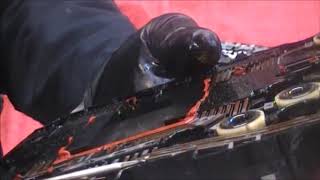
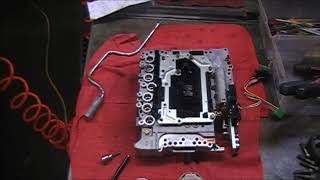
- Cracked Solder Joint on Transmission Control Module (TCM) (Very Common) — On Nissan and Infiniti vehicles with the RE5R05A transmission, the solder joint connecting the front brake solenoid pin to the TCM circuit board cracks from heat and vibration. This creates an open circuit, confirmed with a 'wiggle test' on the pin while checking continuity. 🎬 Watch: How to diagnose and fix the Nissan TCM solder joint.
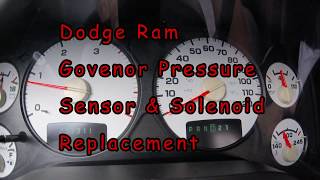
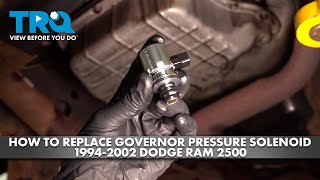
- Failed Governor Pressure Sensor or Solenoid (Very Common) — On Jeep, Dodge, and Chrysler vehicles with RE-series transmissions, the governor pressure sensor or its controlling solenoid fails. The sensor incorrectly reports hydraulic pressure when the vehicle is stopped, which the computer flags as an impossible situation. 🎬 See this step-by-step governor pressure sensor and solenoid replacement.
- Blown Fuse or Faulty Power Supply (VW/Audi) (Common) — On Volkswagen and Audi models, P1757 points directly to a loss of power to the entire transmission control module (Mechatronics unit). This is usually caused by a blown fuse or a corroded main power wire to the module. 🎬 Watch: How to locate and check VW/Audi transmission fuses.
- Low or Contaminated Transmission Fluid (Common) — Critically low fluid cannot provide the necessary pressure to operate hydraulic circuits. Fluid contaminated with water (from a failed radiator cooler) or excessive metal debris causes solenoids to stick or short out.
- Faulty Transmission Solenoid (Common) — The solenoid itself fails electrically. Its internal coil winding develops a short or an open circuit, preventing it from actuating and directing fluid flow as commanded by the TCM.
- Damaged Wiring or Connectors (Less Common) — The wiring harness between the TCM and the transmission becomes frayed, melted, or corroded. External connectors suffer water intrusion, and internal harnesses sustain damage during previous repairs.
- Poor Electrical Ground (Less Common) — A corroded transmission-to-chassis ground strap causes severe voltage drops and electrical noise. The TCM interprets this instability as a hard circuit fault.
- Failed Transmission Valve Body (Less Common) — The valve body is the hydraulic brain of the transmission. A cracked fluid passage, a stuck valve, or debris blockage causes pressure anomalies that the computer misinterprets as a solenoid electrical fault.
- Faulty 4WD Electric Magnetic Clutch (Hyundai) (Less Common) — On Hyundai AWD models, P1757 indicates a problem with the Electronic Magnetic Clutch (EMC) circuit. The 4WD control module detects an open or short in the clutch coil and disables the AWD system.
Symptoms
- Transmission Stuck in 'Limp Mode' — The transmission defaults to a single gear (usually 3rd or 4th) to prevent damage. The car feels extremely sluggish accelerating from a stop and has a limited top speed.
- Harsh or Abrupt Shifting — Before completely failing, the transmission exhibits harsh engagements into Drive or Reverse, or slams into gear during shifts as the faulty circuit intermittently connects.
- Inability to Shift Into Certain Gears — The vehicle refuses to shift into overdrive, causing the engine to run at excessively high RPMs on the highway, or fails to downshift when coming to a stop.
- Vehicle Does Not Move — In severe cases where multiple solenoids are affected or the valve body fails, the transmission fails to engage in Drive or Reverse. The engine revs, but the vehicle remains stationary.
- Check Engine Light is On (also visible on scanner) — The vehicle's computer detects a fault and illuminates the Malfunction Indicator Lamp (MIL). The 'A/T Check' or a flashing gear indicator light is often present.
- 4WD System Disabled (Hyundai) (also visible on scanner) — For affected Hyundai models, a '4WD' warning light illuminates, and the vehicle operates only in 2WD mode as a fail-safe.
Diagnostic Flowchart
Tap your situation to follow the diagnostic path that matches what you're seeing on this code.
Common Fixes & Costs
- Repair TCM Solder Joint (Nissan/Infiniti)
— Parts: <$20 (solder, wire, fluid), Labor: $400-$800, ~4.5 hr book time
(Advanced)
: OEM - Replace Governor Pressure Sensor & Solenoid (Jeep/Dodge)
— Parts: $100-$250, Labor: $250-$500, ~2.5 hr book time
(Intermediate)
: OEM
: OEM - Replace Blown Fuse and Repair Wiring (VW/Audi)
— Parts: <$20, Labor: $100-$400, ~1.5 hr book time
(Intermediate)
: OEM - Replace Transmission Fluid and Filter — Parts: $50-$150, Labor: $100-$300, ~1.2 hr book time (DIY)
- Replace Transmission Valve Body Assembly
— Parts: $500-$1500, Labor: $400-$1000, ~4.0 hr book time
(Professional)
: OEM - Replace 4WD Coupling Assembly (Hyundai)
— Parts: $400-$800, Labor: $200-$400, ~2.0 hr book time
(Intermediate)
: OEM
Used vs. New Parts: Buying Guide
When a used part is worth it: For Jeep/Dodge, never buy a used governor pressure sensor. For Nissan/Infiniti, a used valve body/TCM assembly from a low-mileage scrapped vehicle is a budget option, but carries significant risk.
Donor-vehicle mileage cap: roughly under 60000 miles for the part to have meaningful remaining life.
Donor quality checklist:
- Verify the donor vehicle's VIN to ensure TCM programming compatibility.
- For Nissan/Infiniti, confirm the donor vehicle's radiator did not fail to avoid coolant-contaminated parts.
- Match the part number exactly.
Decision logic:
- If The part is a simple sensor or solenoid (e.g., Jeep governor sensor) → Buy new OEM or high-quality aftermarket. Labor costs outweigh part savings.
- If The part is a complex assembly like a valve body/TCM → A professionally remanufactured unit is much safer than a used junkyard part.
- If The vehicle is older and has very low value → A used part is justifiable, but expect a shorter lifespan.
Warranty tradeoff: Used parts include a 30-90 day warranty covering the part only. Remanufactured parts include a 1-3 year warranty that includes labor coverage.
Worst-case if a used part fails: $500-$1200 if a used valve body fails, requiring a second labor charge and a new part.
What Happens If You Wait — Timeline
- 0-1 week: Code P1757 sets, Check Engine Light illuminates. Transmission enters limp mode, stuck in 3rd or 4th gear. Acceleration is dangerously slow. (MPG impact: 15-30%% · Added cost: $0)
- 1 week - 1 month (50-200 miles): Driving in limp mode forces non-optimal RPMs, overheating the transmission fluid and destroying its lubricating properties. (MPG impact: 15-30%% · Added cost: $150-$350 (Requires a full fluid flush on top of the original repair).)
- 1-3 months (200-1,000 miles): Burnt fluid allows internal clutch packs to slip and burn. Seals harden and crack from excessive heat. (MPG impact: 15-30%+% · Added cost: $800-$1,500 (Requires partial transmission rebuild to replace clutches and seals).)
- 3+ months (1,000+ miles): Catastrophic failure. Slipping clutches generate extreme heat and metal debris, destroying the valve body and torque converter. The vehicle stops moving. (MPG impact: N/A (Vehicle undrivable)% · Added cost: $2,500-$7,000+ (Requires complete transmission replacement).)
Cost of Not Fixing It
- Immediate (0-100 miles): Unsafe driving conditions due to limp mode, resulting in poor acceleration and high RPMs. (Added cost: Negligible)
- Short-Term (1-3 months / 100-1,000 miles): Excessive heat buildup degrades the transmission fluid, destroying its ability to lubricate. (Added cost: $150-$350 (Requires a transmission fluid flush))
- Long-Term (6+ months / 1,000+ miles): Catastrophic internal transmission damage. Overheated fluid leads to warped clutch plates and scored metal components, requiring a full rebuild. (Added cost: $2,500-$7,000+)
Diagnosis Steps

- Scan for All Powertrain & Transmission Codes
Use a professional-grade OBD-II scanner to read manufacturer-specific transmission codes. Note all codes present. A generic P0700 always accompanies P1757, and companion codes like P1759 (Nissan) or P1762 (Jeep) provide critical diagnostic direction.
Tools: OBD-II Scanner (with TCM access) (Beginner) - Check Transmission Fluid Level and Condition
With the engine warm and running in Park or Neutral, check the fluid. It must be bright red, not brown or black. A milky, pink appearance indicates coolant contamination from a failed radiator, requiring immediate transmission replacement.
Tools: Rag or paper towel (Beginner) - Inspect Fuses and System Voltage (VW/Audi)
For VW/Audi vehicles where P1757 means 'Supply Voltage Open Circuit', check all fuses related to the transmission (TCM, Mechatronics). Verify battery voltage is above 12.5V with the engine off and 13.2-14.5V running. Low voltage causes false electronic faults.
Tools: Multimeter, Fuse puller (Intermediate) - Monitor Live Data (Jeep/Dodge)
View live data for 'Desired Governor Pressure' and 'Actual Governor Pressure'. With the vehicle stopped in gear, 'Desired' must be 0 PSI. If 'Actual' shows above 3 PSI, the sensor is faulty or there is a hydraulic leak.
Tools: Advanced OBD-II Scanner (Advanced) - Test Solenoid Resistance at the TCM Connector
Disconnect the main harness connector at the transmission. Identify the pins for the suspect solenoid using a wiring diagram. Measure the resistance. For a Nissan RE5R05A, target 3.3 Ohms. An infinite reading (OL) confirms an open circuit.
Tools: Multimeter, Wiring diagram (Advanced) - Inspect the TCM Board (Nissan/Infiniti)
Drop the pan, remove the valve body, and open the TCM case. Inspect the solder joints for the solenoid pins under magnification. A hairline crack around a pin is the definitive failure. Confirm by wiggling the pin while testing continuity.
Tools: Socket set, Drain pan, Magnifying glass, Multimeter (Advanced) - Perform a Voltage Drop Test on Grounds
Set a multimeter to DC volts. Place the red lead on the negative battery terminal and the black lead on the transmission case. Crank the engine. A reading above 0.5V indicates a poor ground connection requiring replacement.
Tools: Multimeter with long leads (Advanced) - Test Jeep/Dodge Governor Pressure Sensor Voltage
Back-probe the Governor Pressure Sensor Signal wire at the transmission connector. With the key on and engine off, voltage must be approximately 0.6V. Voltage stuck high (>1.0V) at 0 MPH confirms a failed sensor.
Tools: Multimeter, T-pins, Wiring diagram (Advanced) - Check Nissan RE5R05A Solenoid Current
Monitor the current for the 'Front Brake Solenoid' via live data. When commanded on, current must read 0.6 to 0.8 amps. A reading of 0.0 amps confirms an open circuit, pointing directly to the cracked TCM solder joint.
Tools: Advanced OBD-II Scanner (Advanced) - Test the 4WD EMC Coil (Hyundai)
Disconnect the electrical connector at the 4WD coupling on the rear differential. Measure resistance between the two pins of the EMC coil. Target 2-5 Ohms. An infinite reading means the coil is open and requires replacement.
Tools: Multimeter, Service manual (Intermediate)
When This Code Triggers (Freeze-Frame Conditions)
- Engine Coolant Temp: 175-210°F (80-99°C) (The fault is detected when the vehicle reaches full operating temperature.)
- Vehicle Speed: 0 MPH (Jeep/Dodge) or 35-55 MPH (Nissan/Infiniti) (For Jeep/Dodge, the code sets when pressure is seen at a stop. For Nissan/Infiniti, the circuit fault is detected during a gear change at cruising speed.)
- RPM: 650-800 RPM (Jeep/Dodge) or 1500-2500 RPM (Nissan/Infiniti) (The trigger RPM corresponds with vehicle speed; idle for Jeep/Dodge, steady cruise for Nissan/Infiniti.)
- Gear Position: In Drive (D) (The fault triggers when the transmission is in a forward gear and the TCM actively controls hydraulic circuits.)
Related Codes
- P1759 — On Nissan/Infiniti, P1759 ('Front Brake Solenoid Function') always accompanies P1757. P1757 indicates the broken electrical circuit, while P1759 indicates the resulting functional failure. Seeing both guarantees a cracked TCM solder joint.
- P1762 — On Jeeps/Dodges, P1762 ('Governor Pressure Sensor Offset') pairs with P1757. P1762 means the sensor's baseline voltage is incorrect at rest, causing the computer to see false pressure. The two codes together guarantee a faulty governor pressure sensor.
- P0700 — A generic Transmission Control System Malfunction code set by the Engine Control Module (ECM). It acts as a master code to illuminate the Check Engine Light, signaling a specific fault like P1757 is stored in the TCM.
- P1751 / P1753 (Dodge) — On Dodge vehicles, P1757 pairs with P1751 or P1753, pointing to a wider mechanical issue within the valve body or throttle valve actuators rather than just the governor circuit.
Climate & Environmental Factors
- Heat Cycling: The primary cause of cracked solder joints on Nissan/Infiniti TCMs. Repeated expansion and contraction fatigues the solder, causing micro-cracks that sever the circuit.
- High Humidity / Road Salt (Rust Belt): Corrosion destroys electrical systems. Chassis ground straps and wiring harness connectors corrode, causing voltage drops that trigger P1757.
- Extreme Cold: Extreme cold thickens transmission fluid, placing severe strain on solenoids during initial startup. It also makes old wiring and plastic connectors brittle and prone to snapping.
How to Talk to a Mechanic About This Code
Say this: "I have a [Make/Model] with a P1757 code in limp mode. For Nissan/Infiniti: 'I need a quote to diagnose P1757, specifically checking for the cracked TCM solder joint before quoting a full valve body.' For Jeep/Dodge: 'I need a diagnostic for P1757, likely the governor pressure sensor. Quote me to replace both the sensor and solenoid with Mopar parts.' For VW/Audi: 'I have a P1757 supply voltage code. Confirm all related fuses and the main power wire are good before diagnosing the Mechatronics.'"
This language proves you researched the specific failure for your vehicle. It directs the shop toward the most cost-effective solution, preventing them from immediately quoting a $3,000 transmission replacement.
Avoid saying:
- 'My transmission is acting weird.'
- 'My check engine light is on, can you just fix it?'
- 'A guy online said it was a sensor, just change that.'
- 'Just do whatever you think is best.'
Questions to ask before authorizing the repair:
- For Nissan: Did you visually confirm a crack on the TCM board, or did the solenoid pin fail a continuity test?
- For Jeep: Did you confirm with a scanner that actual governor pressure is high when stopped in gear?
- Is the quoted price for a component repair or a full assembly replacement?
- What is the warranty on parts and labor for this specific repair?
Where to Take It: Dealer vs Independent vs Chain
- Dealer:
Use only for warranty work or if a new module requires dealer-exclusive programming.
Best for: Vehicles under warranty, Complex programming required after TCM or Mechatronics replacements, Recalls or TSB-related work
Downsides: Highest labor rates, Always replaces entire assemblies ($1500+) rather than performing component-level repairs ($600). (Typical cost: +50% vs. baseline) - Independent Shop:
Best overall fit. An experienced independent transmission specialist performs targeted, cheaper repairs instead of replacing entire units.
Best for: Out-of-warranty vehicles, Common issues like the Nissan TCM or Jeep governor sensor, Shops with excellent transmission repair reviews
Downsides: Quality varies widely; vet the shop carefully, Lack dealer-level tools for programming new modules (Typical cost: +0% vs. baseline) - Chain Shop:
AVOID. The manufacturer-specific nature of P1757 is beyond the scope of chain shops.
Best for: Simple jobs like fluid changes, brakes, or tires.
Downsides: Technicians lack deep transmission diagnostic experience, High pressure to upsell; guarantees misdiagnosis of P1757 as needing a full transmission rebuild (Typical cost: -10% vs. baseline)
When to Walk Away From the Repair
If the estimated repair cost exceeds 50% of the car's private-party value, seriously consider selling or trading in the vehicle.
- Car worth $5000, fix is $800: Fix it. This common repair is well below the 50% threshold.
- Car worth $4000, fix is $2500: Walk away. A $2500 quote means the shop is misdiagnosing or quoting a full transmission replacement. The cost is over 60% of the car's value.
- Car worth $2500, fix is $1500: Borderline. This repair is over 50% of the car's value. If the rest of the car is perfect, it is justifiable, but other age-related repairs are imminent.
What Scan Tool You Need for This Code
Minimum: A scanner that reads manufacturer-specific transmission codes (TCM). A basic engine-only reader only shows P0700.
A $20 scanner cannot access the TCM. For Jeep/Dodge, you must see live data for governor pressure. For Nissan, you must confirm the specific solenoid circuit fault.
Budget: Foxwell NT604 Elite / Innova 1000 (~$99) — Reads and clears transmission codes. This is the minimum required to identify the P1757 fault code from the TCM.
Mid-range: BlueDriver Pro / Foxwell NT510 Elite (~$120-180) — Provides access to live transmission data streams. Critical for Jeep/Dodge to watch the 'Actual Governor Pressure' data PID.
Professional: Autel MaxiCOM MK808S / Launch Creader CRP129X (~$450-600) — Offers full bidirectional control to perform active tests and access advanced data PIDs like solenoid amperage on a Nissan.
Rent vs buy: Auto parts stores offer free scanning, but their tools rarely read transmission-specific codes. Buying a midrange scanner is a mandatory investment for DIY diagnosis.
How to Clear the Code After You Fix It
- Use an OBD-II scan tool to clear all transmission and engine codes.
- For Nissan/Infiniti, perform the 'Accelerator Pedal Released Position Learning' and 'Idle Air Volume Learning' procedures if the battery was disconnected.
- Perform a complete drive cycle to allow the TCM to relearn shift adaptations.
Drive cycle (~20 minutes): Start with a cold engine. Idle for 2-3 minutes. Drive in stop-and-go traffic for 5 minutes. Accelerate to 55 MPH and hold for 3-5 minutes. Gently decelerate to 20 MPH without braking, then stop. Idle for one minute. Shut off the engine.
Readiness monitors affected: Comprehensive Component Monitor (CCM), Transmission-related monitors
Before emissions retest: drive at least 50 miles to fully set monitors.
Watch out for:
- Disconnecting the battery clears the code but resets all readiness monitors, guaranteeing an emissions test failure.
- The code returns immediately if the underlying electrical fault remains unfixed.
- Failing to perform manufacturer relearn procedures (especially Nissan) results in poor shifting even after a successful repair.
Will This Fail Emissions / State Inspection?
Yes — this code typically fails an OBD-II emissions inspection.
- California: An illuminated Check Engine Light guarantees a smog check failure. A full drive cycle must be completed after repair to set readiness monitors.
- New York: Any active Check Engine Light causes an automatic failure. Clearing the code right before the test results in a 'Not Ready' status, which also fails.
- Texas: In the 17 counties requiring emissions testing, an illuminated Check Engine Light is an automatic failure.
Most Commonly Affected Vehicles
- Infiniti G35, FX35, M35, M45, QX56 (2003-2009) — These models use the Jatco RE5R05A transmission, highly prone to a cracked solder joint on the TCM for the front brake solenoid.
- Nissan Xterra, Pathfinder, Frontier, Titan, Armada (2005-2015) — Equipped with the RE5R05A transmission, these vehicles suffer from the exact same TCM circuit board failure.
- Jeep Grand Cherokee (1997-2004) — Models with 42RE, 44RE, and 46RE transmissions frequently experience failures of the governor pressure sensor and solenoid.
- Dodge Ram 1500/2500, Dakota, Durango (1998-2007) — Utilize Chrysler RE-series transmissions sharing the same failure-prone governor pressure sensor design as Jeeps.
- Volkswagen Jetta, Golf, Passat, Atlas (2004-2020) — P1757 translates to 'Supply Voltage: Open Circuit', usually caused by a blown fuse (SB15 or SB24) or a wiring issue to the Mechatronics unit.
- Audi A4, A6 (2001-2007) — On Multitronic CVT models, P1757 indicates internal failure of the Transmission Control Module (TCM).
- Hyundai Veracruz (ix55), Santa Fe (2007-2012) — On AWD models, this code points to a fault in the Electronic Magnetic Clutch (EMC) circuit, reverting the vehicle to 2WD.
- Subaru Impreza, Outback, Forester (2012-2017) — Lineartronic CVTs log P1757 for internal valve body or solenoid failures, requiring dealer-level scan tools for diagnosis.
Manufacturer-Specific Notes

- Nissan/Infiniti: The cause is strictly a broken solder joint on the TCM. Unfamiliar shops quote full transmission replacements ($2000+). Specialists repair the board for under $800 by re-soldering the broken pin.
- Jeep/Dodge/Chrysler: The code means the computer sees transmission pressure when the vehicle is stopped. This isolates the problem directly to the governor pressure sensor and solenoid circuit, requiring a simple $350-$750 repair.
- Volkswagen/Audi: The 'Supply Voltage: Open Circuit' definition misleads mechanics into condemning the expensive Mechatronics unit. Always check the main power fuse (SB15 or SB24) and wiring harness integrity first.
- Hyundai: This code has nothing to do with shifting solenoids. The fault lies entirely in the 4WD coupling on the rear differential, requiring replacement of the electronic clutch assembly.
Real Owner Stories
2006 Nissan Xterra (~267k miles) - The Classic DIY Solder Fix
The transmission stuck in 4th gear on the highway, triggering limp mode and code P1757.
What they tried:
- The owner suspected the common TCM solder joint failure.
- They dropped the transmission pan, removed the valve body, and opened the TCM case.
- Visual inspection confirmed a broken pin on the solenoid connector inside the TCM.
- The owner soldered the broken pin back to its connection point, reinforcing it with wire.
Outcome: The DIY solder repair fixed the open circuit. The P1757 code cleared permanently, restoring normal shifting.
Lesson: For Nissan/Infiniti RE5R05A transmissions, P1757 is almost always a broken solder joint inside the TCM. A targeted repair saves thousands compared to replacing the entire valve body.
2001 Jeep Grand Cherokee - A Tale of Two Repairs
The vehicle threw codes P1757 and P1762, refusing to shift until reaching 4000 RPM.
What they tried:
- A transmission shop replaced the governor pressure solenoid and sensor for $500.
- This fixed the issue for two years and 20,000 miles.
- Two years later, P1757 returned alone without shifting symptoms, reappearing 10 minutes after being cleared.
Outcome: The initial sensor/solenoid replacement was the correct fix. The recurrence of only P1757 years later indicates an intermittent wiring issue or a new fault in the same circuit.
Lesson: On Jeeps, P1757 and P1762 together guarantee a failed governor pressure sensor/solenoid. Replace both parts simultaneously. If the problem returns, inspect wiring before replacing parts again.
2007 Infiniti M35x - The Misdiagnosis
The car suddenly downshifted into limp mode on the highway with code P1757.
What they tried:
- The owner disassembled the valve body and inspected the TCM but found no visible breaks.
- Assuming the solenoid was bad, they installed a remanufactured solenoid.
- The problem persisted.
Outcome: The owner wasted money replacing a good part. The issue was a hairline crack in the TCM they missed during visual inspection.
Lesson: Visual inspection is not enough. Test the solenoid's resistance and check for continuity at the TCM connector pins before and after the repair.
2000 Dodge Ram 1500 - When New Parts Fail
The truck threw code P1757 and stuck in high gear. The owner replaced the governor pressure sensor and solenoid, but symptoms remained.
What they tried:
- Replaced the governor pressure sensor and solenoid. No change.
- Tested the 8-pin connector at the transmission.
- Found the correct 5-volt supply on pin 2 but measured 44 ohms of resistance on the sensor ground circuit (pin 3).
Outcome: The root cause was high resistance in the ground wire, preventing the new sensor from functioning.
Lesson: If replacing the common-fail part doesn't work, the problem is in the supporting electrical circuit. Always check for proper voltage and ground at the connector before condemning another part.
How to Prevent This Code From Triggering
- Change transmission fluid and filter at recommended intervals (Every 30,000-60,000 miles) — Clean fluid maintains hydraulic properties and lubricates effectively, preventing solenoid sticking and valve body wear.
- Install an external transmission cooler (Nissan trucks/SUVs) (Once, as a proactive modification) — Bypasses the failure-prone internal radiator cooler, completely preventing coolant contamination that destroys solenoids and clutches.
- Clean and protect major electrical grounds (Every 2-3 years) — Corroded ground straps cause unstable voltages and electrical noise, confusing the TCM and triggering false codes.
- Allow the vehicle to warm up briefly before aggressive driving (Daily habit) — Warming the engine and fluid for 30-60 seconds improves circulation, reducing strain on cold fluid forced through small solenoid passages.
Frequently Asked Questions
A shop quoted me thousands for a new transmission for a P1757 code. Is that necessary?
For Nissan, Infiniti, Jeep, or Dodge, a full transmission replacement is rarely the correct fix for an isolated P1757 code. The issue is typically a cheaper component-level repair. Always get a second opinion from a transmission specialist.
Can I just clear the P1757 code and keep driving?
No. The code triggers from a hard electrical fault and returns immediately after the computer re-runs its self-test. Ignoring the problem is unsafe and causes expensive secondary damage.
I soldered the TCM pin on my Nissan, but the code came back. What now?
Re-inspect your solder work under magnification to ensure the connection is solid and not bridged. If the repair is good, test the solenoid's resistance directly (target: ~3.3 Ohms). If the solder repair fails multiple times, install a professionally remanufactured valve body/TCM assembly.
Will changing the transmission fluid fix a P1757 code?
No. While correct fluid is critical for transmission health, P1757 points to a specific electrical hardware fault like a broken wire or bad sensor. A fluid change alone cannot repair a broken electrical component.
Can a bad battery or ground cause code P1757?
Yes. A failing battery providing below 12.5V or a bad ground strap creates electrical noise. Both conditions confuse sensitive electronics like the TCM, causing false codes. Ensure the battery and main ground connections are perfect before starting major transmission work.
What transmission fluid should I use after the repair?
Using the exact manufacturer-specified fluid is mandatory. Nissan/Infiniti RE5R05A requires Nissan Matic-S, while Jeep/Dodge RE-series transmissions require ATF+4. Using incorrect fluid causes shifting problems and destroys internal clutches.
The code appeared right after I had other work done. Could it be related?
Yes. If the code appeared after engine or transmission work, a technician likely damaged a wiring harness, left a ground strap loose, or failed to seat a connector. Return to the shop and have them re-check all recently touched areas.
Key Takeaways
- Code P1757 is strictly manufacturer-specific; it means a cracked TCM solder joint on a Nissan, a failed governor pressure sensor on a Jeep, or a blown fuse on a VW.
- Nissan and Infiniti owners save over $2,000 by having a specialist re-solder the cracked TCM pin instead of replacing the entire transmission.
- Jeep and Dodge vehicles almost always require a new governor pressure sensor and solenoid set, a straightforward repair costing between $350 and $750.
- VW and Audi owners must check engine bay fuses SB15 and SB24 before authorizing expensive Mechatronics unit replacements, as a $5 blown fuse triggers this code.
- Driving more than 50 miles in limp mode overheats the transmission fluid, risking catastrophic clutch pack failure and adding up to $3,000 in secondary damage.
Helpful Videos



The information in this article is provided for general reference and educational purposes only. Vehicle specifications, procedures, and part compatibility can vary by production date, trim level, and region. Always consult your vehicle's factory service manual and verify part numbers before purchasing or performing repairs. Safety-critical components such as airbags, seat belts, and braking systems should be installed by a qualified professional.
- 🎬 Helpful Videos
- What Does P1757 Mean?
- Can I Drive With P1757?
- Common Causes
- Symptoms
- Diagnostic Flowchart
- Common Fixes & Costs
- Used vs. New Parts: Buying Guide
- What Happens If You Wait — Timeline
- Cost of Not Fixing It
- Diagnosis Steps
- When This Code Triggers (Freeze-Frame Conditions)
- Related Codes
- Climate & Environmental Factors
- How to Talk to a Mechanic About This Code
- Where to Take It: Dealer vs Independent vs Chain
- When to Walk Away From the Repair
- What Scan Tool You Need for This Code
- How to Clear the Code After You Fix It
- Will This Fail Emissions / State Inspection?
- Most Commonly Affected Vehicles
- Manufacturer-Specific Notes
- Real Owner Stories
- 2006 Nissan Xterra (~267k miles) - The Classic DIY Solder Fix
- 2001 Jeep Grand Cherokee - A Tale of Two Repairs
- 2007 Infiniti M35x - The Misdiagnosis
- 2000 Dodge Ram 1500 - When New Parts Fail
- How to Prevent This Code From Triggering
- Frequently Asked Questions
- A shop quoted me thousands for a new transmission for a P1757 code. Is that necessary?
- Can I just clear the P1757 code and keep driving?
- I soldered the TCM pin on my Nissan, but the code came back. What now?
- Will changing the transmission fluid fix a P1757 code?
- Can a bad battery or ground cause code P1757?
- What transmission fluid should I use after the repair?
- The code appeared right after I had other work done. Could it be related?
- Key Takeaways
- 🎟️ Get 5% Off