

OBD-II Code P1750: A Comprehensive Guide to Causes, Diagnosis, and Repair
The Ultimate Mechanic's Guide: What P1750 Means, Why It Triggers, and How to Fix It for Good
- P1750 is a manufacturer-specific code: on Toyota/Lexus it indicates a brake system failure, while on Honda, Nissan, and VW it points to transmission faults.
- For 1998-2007 Honda and Acura vehicles, cleaning the external clutch pressure control solenoid screens fixes P1750 for under $50 in parts.
- If you own a Toyota with P1750, stop diagnosing the transmission immediately and scan the ABS module for companion codes like C1241.
- Driving with an active P1750 code in limp mode for more than 50 miles overheats the transmission, turning a $300 solenoid repair into a $4,000 rebuild.
- On Nissan CVTs, P1750 strongly indicates a failing valve body, requiring a $1,200 to $2,300 replacement and dealer-level TCM reprogramming.
What Does P1750 Mean?

P1750 is a manufacturer-specific diagnostic trouble code (DTC) that usually indicates a mechanical or hydraulic fault within the automatic transmission, such as a stuck shift solenoid. However, its meaning varies drastically by carmaker. Crucially, on Toyota and Lexus vehicles, P1750 is a brake system error (ABS), not a transmission fault.
Technical definition: The SAE/ISO definition for P1750 depends entirely on the manufacturer. For Honda/Acura, it means 'Mechanical Problem in Hydraulic Control System of A/T Clutch Pressure Control Solenoid Valve'. For Toyota, it means 'Brake ECU Malfunction'. For Volkswagen, it indicates 'Power Supply Voltage Low Voltage' at the Transmission Control Module (TCM).
Can I Drive With P1750?
yes_but_not_recommended. You can drive short distances, but it is strongly advised against. The transmission often shifts harshly, gets stuck in a single gear (limp mode), or fails to shift entirely, creating a severe safety hazard. Driving more than 50 miles in limp mode overheats the transmission fluid, turning a $400 solenoid fix into a $4,000 transmission rebuild.
Common Causes

- Clogged Transmission Solenoid Screens (Honda/Acura) (Very Common) — Tiny metal shavings and clutch material clog the small mesh filter screens on the linear and clutch pressure control solenoids. This restricts fluid flow and is the primary cause of P1750 on Honda/Acura vehicles.
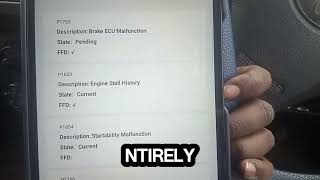
- Failed ABS Actuator or Wheel Speed Sensor (Toyota) (Very Common) — On Toyota vehicles, P1750 is triggered when the Engine Control Module receives an error signal from the ABS module. This is caused by a failing ABS actuator pump or a bad wheel speed sensor. 🎬 See common causes for Toyota Brake ECU malfunctions.
- Faulty Transmission Valve Body (Nissan) (Common) — The valve body is the transmission's hydraulic brain. On modern CVTs, particularly Nissans, internal passages clog or integrated solenoids fail, requiring complete valve body replacement. 🎬 Watch this step-by-step Nissan CVT valve body replacement.
- Failed Transmission Shift Solenoid (Common) — Solenoids fail electrically (open/shorted coil) or mechanically (sticking plunger), preventing proper gear changes. On Chrysler/Dodge vehicles, these are replaced as a single solenoid pack.
- Low, Dirty, or Incorrect Transmission Fluid (Common) — Degraded or low fluid cannot create the necessary hydraulic pressure for solenoids to actuate, causing them to stick. Burnt-smelling fluid indicates severe internal damage.
- Water-Damaged Transmission Control Module (VW/Audi) (Less Common) — On VW/Audi models, P1750 indicates low power supply voltage. This is caused by water leaking into the passenger footwell from clogged plenum drains, corroding the floor-mounted TCM.
- Faulty Range Position Switch (Less Common) — The neutral safety switch tells the computer which gear is selected. If misaligned, the computer receives conflicting signals about gear position versus hydraulic commands, triggering the code.
- Damaged Wiring or Corroded Connectors (Rare) — The transmission wiring harness can be damaged by heat or debris. Corroded connectors lead to poor electrical contact and intermittent solenoid operation.
Symptoms

- Transmission Stuck in Gear (Limp Mode) — The transmission locks into a single gear (usually 2nd or 3rd) to prevent damage, resulting in poor acceleration and high engine RPMs.
- Harsh, Delayed, or Erratic Shifting — The car slams into gear, hesitates before shifting, or shifts at unpredictable times.
- ABS, VSC, and Brake Warning Lights (Toyota Specific) — On Toyota models, braking system warning lights illuminate without any noticeable transmission shifting problems.
- Blinking 'D' Light (Honda/Acura Specific) — The 'D' or 'D5' drive indicator on the dashboard blinks, specifically signaling a transmission fault.
- Failure to Engage a Gear — The vehicle does not move when shifting from Park to Drive or Reverse.
- Reduced Fuel Efficiency — Inability to engage overdrive on the highway forces the engine to run at higher RPMs, decreasing fuel economy.
Diagnostic Flowchart
Tap your situation to follow the diagnostic path that matches what you're seeing on this code.
Common Fixes & Costs
- Clean Solenoid Screens and Replace Gaskets (Honda/Acura) — Parts: $20-$50, Labor: $100-$200, ~1.5 hr book time (DIY)
- Replace ABS Actuator/Pump Assembly (Toyota) — Parts: $800-$2500, Labor: $200-$500, ~3.5 hr book time (Professional)
- Replace Transmission Valve Body (Nissan) — Parts: $500-$1500, Labor: $400-$800, ~4.5 hr book time (Professional)
- Replace Transmission Shift/Pressure Control Solenoid — Parts: $80-$350, Labor: $150-$400, ~2.5 hr book time (Intermediate)
- Transmission Fluid and Filter Change — Parts: $70-$200, Labor: $120-$300, ~1.2 hr book time (DIY)
- Repair Wiring or Replace TCM (VW/Audi) — Parts: $50-$600, Labor: $200-$500, ~2.0 hr book time (Intermediate)
Used vs. New Parts: Buying Guide
When a used part is worth it: For major electronic components like a Toyota ABS actuator or a VW TCM, a used part from a low-mileage vehicle offers significant savings. Avoid used individual solenoids.
Donor-vehicle mileage cap: roughly under 80000 miles for the part to have meaningful remaining life.
Donor quality checklist:
- Verify the exact part number matches.
- Obtain the donor VIN to ensure it wasn't scrapped for a related failure.
- Ensure a 30-90 day warranty period.
Decision logic:
- If The part is an external solenoid under $150 new → Buy new. The minimal savings aren't worth the risk of premature failure.
- If The part is a high-cost assembly (ABS actuator) and the vehicle is over 150k miles → A tested, used part from a reputable salvage yard is a budget-conscious choice.
- If The part is known for high failure rates (Nissan CVT valve bodies) → Buy a new or professionally remanufactured part with a long warranty.
Warranty tradeoff: Used parts have a 30-90 day warranty covering the part only. New aftermarket parts offer 1-year warranties. OEM parts installed by a dealer carry a 12-month/12,000-mile warranty.
Worst-case if a used part fails: $500-1500 if a major used component fails, requiring repeat labor costs.
What Happens If You Wait — Timeline
- 0-1 month: Intermittent symptoms. Occasional harsh shifts or brief hesitation, especially when cold. The transmission remains fully functional most of the time. (MPG impact: 0-5%% · Added cost: $0-$50 in wasted fuel.)
- 1-4 months: Harsh shifting becomes consistent. The vehicle occasionally enters 'limp mode,' locking into a single gear. Increased friction overheats the transmission fluid. (MPG impact: 5-10%% · Added cost: $200-$400 for a required full fluid exchange and new solenoid.)
- 4-8 months: Vehicle frequently enters limp mode. Degraded fluid loses lubricating properties, causing accelerated wear on clutch packs. Whining noises or burnt smells develop. (MPG impact: 10-15%% · Added cost: $1,200-$2,500 for torque converter or internal clutch pack replacement.)
- 8+ months: Catastrophic failure. The transmission fails to engage any gear, slips severely, or grinds. The vehicle is undrivable. (MPG impact: 15-25%+% · Added cost: $3,000-$5,000+ for a complete transmission rebuild or replacement.)
Cost of Not Fixing It
- 0-1 month: Intermittent shifting problems, harsh engagement, and a 5-10% drop in fuel economy. (Added cost: Negligible, but symptoms worsen.)
- 1-6 months: Driving in limp mode generates excessive heat, degrading fluid and damaging clutch packs and the torque converter. (Added cost: $800-$2500 for internal component replacement.)
- 6+ months: Catastrophic transmission failure requiring a complete rebuild or replacement. (Added cost: $3000-$5000+)
Diagnosis Steps

- Verify the Code and Check All Modules
Use an OBD-II scanner to confirm P1750. Scan ALL modules (Engine, Transmission, ABS). A Toyota with P1750 will have companion ABS codes like C1241. A Honda might have P0740 or P1751.
Tools: OBD-II Scanner (with multi-system capability) (Beginner) - Diagnose Brake System (Toyota/Lexus ONLY)
If diagnosing a Toyota, ignore the transmission. Check for ABS codes like C1241 (Low Voltage) or wheel speed sensor codes. For C1241, test the battery and alternator first. For sensor codes, monitor live wheel speed data.
Tools: Advanced OBD-II Scanner, Multimeter (Advanced) - Clean External Solenoid Screens (Honda/Acura)
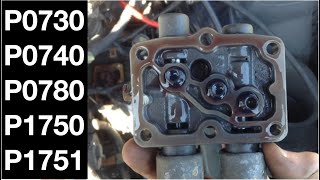
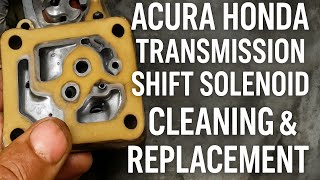
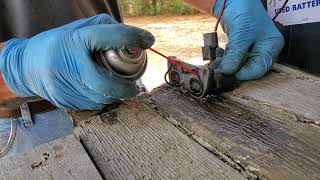
Remove the external linear and clutch pressure control solenoids (held by 10mm bolts). Clean the small cylindrical filters and screens with brake cleaner and compressed air. Replace the gaskets and reinstall.
Tools: Socket Set, Brake Cleaner, Compressed Air, New Gaskets (Intermediate) - Check Transmission Fluid Level and Condition
Verify the fluid is at the 'Full' mark, bright red/pink, and does not smell burnt. Dark brown fluid with a burnt odor indicates severe internal wear requiring a rebuild.
Tools: Rag, Gloves (Beginner) - Inspect External Wiring and TCM (VW/Audi)
Inspect the transmission wiring harness for melting or chafing. On VW/Audi models, pull back the passenger-side carpet to inspect the TCM for water intrusion and corrosion.
Tools: Flashlight, Trim Removal Tools (Intermediate) - Test Solenoid Resistance
Disconnect the suspect solenoid and touch multimeter probes to its pins. Compare the Ohms (Ω) reading to the service manual. Infinity (OL) indicates an open circuit; near zero indicates a short.
Tools: Multimeter, Vehicle-Specific Repair Manual (Advanced) - Perform a Solenoid Activation Test
Briefly apply power and ground to the removed solenoid's pins using a 9V battery. Listen for an audible 'click'. No click means the solenoid is mechanically seized.
Tools: 9V Battery, Jumper Wires (Advanced) - Analyze Live Data PIDs
Monitor transmission Parameter IDs (PIDs) like 'Solenoid Commanded Current' vs. 'Actual Current', or 'Commanded Gear' vs. 'Actual Gear'. A mismatch confirms a slip or shift failure.
Tools: Advanced Bi-Directional Scanner (Advanced) - Perform a Hydraulic Pressure Test
Connect pressure gauges to transmission test ports. Monitor hydraulic pressure while shifting gears to isolate faults to a specific circuit, valve body, or oil pump.
Tools: Transmission Pressure Gauge Set, Repair Manual (Professional)
When This Code Triggers (Freeze-Frame Conditions)
- Engine Coolant Temp: 180-205°F (82-96°C) (The code sets when the engine is fully warmed up and fluid viscosity is stable.)
- RPM: 1500-2800 RPM (Triggered during or just after a gear shift command under light to moderate acceleration.)
- Vehicle Speed: 30-55 mph (48-88 km/h) (Sets during steady-state cruising or when shifting in higher gears.)
Related Codes
- C1241 — On Toyota vehicles, C1241 ('Low Battery Positive Voltage') in the ABS module is the root cause for P1750. The problem is electrical (battery, alternator) or the ABS module itself.
- P0740 / P0741 — Points specifically to the Torque Converter Clutch (TCC) solenoid. If present alongside P1750, the fault is isolated to the TCC circuit.
- P1751 — On Honda/Acura vehicles, P1750 and P1751 are sister codes. Having both strongly suggests a failure in the dual linear solenoid pack.
Climate & Environmental Factors
- Cold Weather: Low temperatures increase transmission fluid viscosity. A weak solenoid struggles to actuate against thicker fluid, causing intermittent P1750 codes on cold starts.
- High Humidity / Water Intrusion: On VW/Audi vehicles, clogged windshield plenum drains cause rainwater to flood the passenger footwell, corroding the floor-mounted TCM and triggering the code.
- High Heat / Severe Use: Towing or aggressive driving accelerates fluid breakdown. Degraded fluid creates sludge that clogs solenoid screens and valve body passages.
How to Talk to a Mechanic About This Code
Say this: "I have a [Year/Make/Model] with a P1750 code. I know this is a manufacturer-specific issue. For my [Brand], the diagnostic should focus on the [ABS system / external solenoids / TCM / valve body]. I'd like to schedule a diagnostic to confirm."
This signals you are an informed consumer and guides the technician toward the most likely cause, preventing a default 'you need a new transmission' diagnosis.
Avoid saying:
- 'My check engine light is on, can you just fix it?'
- 'My car is shifting weirdly.'
- 'A guy on the internet said...'
Questions to ask before authorizing the repair:
- Did you scan all modules (ABS, TCM, ECM) and were there other codes?
- For Toyota: Did you test the battery before condemning the ABS actuator?
- For Honda: Did you inspect and clean the external solenoid screens first?
- What is the warranty on this specific repair?
Where to Take It: Dealer vs Independent vs Chain
- Dealer:
Recommended for Toyota/Lexus ABS issues and Nissan CVT repairs requiring reprogramming.
Best for: Vehicles under warranty., Complex issues requiring proprietary tools (Nissan CVT reprogramming, Toyota ABS bleeding).
Downsides: Significantly higher labor rates., Defaults to replacing large assemblies instead of repairing components. (Typical cost: +50% vs. baseline) - Independent Shop:
Best overall fit for Honda, Acura, and VW models. Ensure the shop specializes in transmissions.
Best for: Out-of-warranty vehicles., Common P1750 causes (Honda solenoid cleaning, VW TCM checks).
Downsides: May lack specialized tools for CVT calibration. (Typical cost: +0% vs. baseline) - Chain Shop:
AVOID. The complexity of this code guarantees misdiagnosis at a general chain shop.
Best for: Routine maintenance like oil changes.
Downsides: Inconsistent diagnostic capability., Lacks brand-specific knowledge for P1750. (Typical cost: -10% vs. baseline)
When to Walk Away From the Repair
If the estimated repair cost exceeds 50% of your car's private-party value, consider selling the vehicle instead of repairing it.
- Car worth $3500, fix is $2800: Walk away. The repair cost is 80% of the car's value.
- Car worth $10000, fix is $1800: Fix it. The repair cost is 18% of the car's value.
What Scan Tool You Need for This Code
Minimum: A scanner that reads codes from ALL vehicle systems: Engine (ECM), Transmission (TCM), and Anti-lock Brakes (ABS).
A basic $20 code reader only checks the engine module. It misses critical companion codes in the TCM or ABS module essential for diagnosing P1750.
Budget: Ancel BD310 or BlueDriver Pro (~$80) — Reads codes from engine, transmission, and ABS modules via smartphone.
Mid-range: XTool A30M or Autel MaxiCOM MK808 (~$200) — Offers full-system diagnostics and bi-directional controls to command solenoids or perform ABS bleeds.
Professional: Launch X431 series or Autel MS906 (~$600-1200) — Provides OEM-level diagnostics and module programming necessary for Nissan CVT valve bodies.
Rent vs buy: Auto parts stores lend basic readers, but they cannot read ABS or TCM modules. You must buy a full-system scanner for P1750.
How to Clear the Code After You Fix It
- Use a compatible OBD-II scan tool to clear DTCs from all modules (ECM, TCM, ABS).
- Perform the specific drive cycle recommended by the manufacturer to allow readiness monitors to run.
Drive cycle (~20 minutes): A generic drive cycle includes: a cold start, 3 minutes of idling, 15 minutes of mixed city/highway driving at 55 mph, and several stop-and-go periods.
Readiness monitors affected: Comprehensive Component Monitor, Transmission
Before emissions retest: drive at least 50 miles to fully set monitors.
Watch out for:
- Clearing the code without fixing the underlying problem causes the code to return quickly.
- Clearing the code resets readiness monitors to 'Not Ready', causing an automatic emissions test failure.
Will This Fail Emissions / State Inspection?
Yes — this code typically fails an OBD-II emissions inspection.
- California: An illuminated Check Engine Light is an automatic failure. A drive cycle of 50-100 miles is needed to set readiness monitors before a retest.
- Texas: An illuminated Check Engine Light is an automatic failure. The vehicle fails if readiness monitors are not set to 'Ready'.
Most Commonly Affected Vehicles
- Acura TL, CL, MDX (1999-2008) — P1750 is extremely common and often caused by clogged clutch pressure control solenoid screens. Cleaning the screens is a highly effective first repair step.
- Honda Accord, Odyssey, Pilot (1998-2007) — Frequently triggered by debris blocking external solenoid filters. Always check for a blinking 'D' light.
- Nissan Sentra, Altima, Rogue (2013-2019) — On CVT models, P1750 points to a failing valve body causing juddering. Requires valve body replacement and TCM reprogramming.
- Toyota Corolla, Prius, Yaris (2004-2018) — P1750 is an ABS/VSC system fault, not a transmission issue. Diagnosis must focus entirely on the ABS actuator and wheel speed sensors.
- Volkswagen Passat, Jetta (1999-2005) — P1750 means 'Power Supply Voltage Low', commonly caused by water flooding the passenger-side floorboard and corroding the TCM.
- Mitsubishi Eclipse, Galant, Lancer (2000-2006) — Sets a P1750 code for a faulty transmission solenoid pack or torque converter clutch solenoid, causing limp mode.
Manufacturer-Specific Notes
- Toyota: P1750 means 'Brake ECU Malfunction'. Stop transmission diagnosis and focus entirely on the ABS/VSC system. Look for ABS codes like C1241.
- Honda/Acura: A blinking 'D' or 'D5' light indicates a transmission fault. Always remove and clean the external linear and clutch pressure solenoid screens before replacing parts.
- Nissan: On CVTs, P1750 indicates valve body failure. Replacement requires a 'Write IP Characteristics' procedure using a dealer-level scan tool to calibrate the new unit.
- Volkswagen/Audi: The code means 'Power Supply Voltage Low'. Always check for water damage to the floor-mounted TCM caused by clogged windshield plenum drains.
- Hyundai/Kia: This code has multiple meanings, including Throttle Position Sensor error, wheel speed sensor fault, or damper clutch solenoid fault. A full system scan is mandatory.
Real Owner Stories
2003 Acura TL with 170k miles - Misdiagnosis Averted
Check Engine Light and TCS light illuminated with hesitation during acceleration. A dealership quoted $4,000 for a transmission replacement.
Outcome: The owner cleaned the transmission's external pressure control solenoid screens. This targeted the direct hydraulic fault, resolving the issue for $30 in gaskets and two hours of labor.
Lesson: On older Honda/Acura vehicles, always clean the external solenoid screens before accepting a transmission replacement quote. Clogged filters are the most common root cause.
2013 Toyota Corolla with 62k miles - The Wrong System
ABS and traction control lights illuminated intermittently. The dealership diagnosed a bad ABS module and quoted $2,550.
Outcome: The mechanic installed a refurbished ABS module for $670, fixing the ABS lights and clearing the P1750 code permanently.
Lesson: On a Toyota, P1750 is a brake system fault. Do not diagnose the transmission. The problem lies in the ABS actuator, and refurbished parts save thousands.
2004 VW Passat with Limp Mode - The Water Leak
The transmission entered limp mode. The owner suspected a faulty Transmission Control Module (TCM) due to a P1750 code.
Outcome: After drying the interior, the owner replaced the corroded TCM with a used eBay unit for $67, completely resolving the shifting issues.
Lesson: For VW/Audi vehicles, P1750 means 'Power Supply Voltage Low'. Always check the floor-mounted TCM for water damage before assuming internal transmission failure.
2015 Nissan Altima with CVT Judder
The car jerked aggressively between 40-60 mph. The owner pulled a P1750 code indicating 'CVT judder'.
Outcome: The cheap part was faulty, wasting time and money. The repair ultimately required a new OEM valve body and a dealer TCM reprogramming.
Lesson: On Nissan CVTs, P1750 points to a failing valve body. Avoid low-quality aftermarket parts and ensure the shop can perform the required TCM recalibration.
How to Prevent This Code From Triggering
- Change transmission fluid at regular intervals. (Every 30,000-60,000 miles.) — Clean fluid maintains correct hydraulic pressure and removes contaminants that clog solenoid screens and valve body passages.
- Clean plenum and A/C drains (VW/Audi specific). (Annually, before rainy seasons.) — Prevents rainwater from flooding the passenger footwell, which corrodes the floor-mounted TCM and causes the P1750 fault.
- Change brake fluid regularly (Toyota specific). (Every 2-3 years or 30,000 miles.) — Brake fluid absorbs moisture, corroding the internal components of the ABS actuator. Maintaining brake hydraulics prevents Toyota's P1750 ABS fault.
- Install an auxiliary transmission cooler. (One-time install for towing vehicles.) — Towing dramatically increases transmission temperature. A cooler reduces temperatures by 30-50%, preventing fluid breakdown and solenoid failure.
Frequently Asked Questions
Can I just change the transmission fluid to fix a P1750 code?
It is an unlikely fix. While new fluid restores hydraulic function in minor cases, it will not fix a failed solenoid or a completely clogged screen. It is a good maintenance step but rarely the complete solution.
What does the blinking 'D' light on my Honda/Acura mean?
A blinking 'D' light means the Transmission Control Module has detected a fault. It is the transmission equivalent of a Check Engine Light and is usually accompanied by a code like P1750.
My car has a P1750 code but shifts fine. What is wrong?
If you drive a Toyota, the code is for the brake system, so the transmission is unaffected. On other cars, the fault is intermittent; the computer detected a momentary pressure drop that you didn't feel.
Is it safe to drive with a P1750 code?
No. The transmission can suddenly enter 'limp mode' and lock in a low gear, creating a dangerous situation in traffic and causing severe internal overheating.
My mechanic says I need a new transmission for a P1750, but I drive a Toyota. What should I do?
Get a second opinion immediately. On Toyota vehicles, P1750 is a 'Brake ECU Malfunction' code, not a transmission code. The problem is almost certainly a faulty ABS actuator or wheel speed sensor.
How much does it cost to fix P1750?
Costs vary widely by manufacturer. Cleaning Honda solenoid screens costs $150-$250, while a Nissan CVT valve body replacement runs $1,200-$2,300. A Toyota ABS actuator replacement typically costs $1,500-$3,000.
What is the difference between P1750 and P0740?
P0740 points specifically to a fault in the Torque Converter Clutch (TCC) solenoid circuit. P1750 is a general hydraulic fault that could be caused by any shift solenoid. If both are present, the TCC solenoid is the primary suspect.
My car threw a P1750 code once when cold but drives fine now. Can I ignore it?
Do not ignore it. An intermittent code during cold weather is a classic early sign of a failing solenoid struggling against thick fluid. The problem will become more frequent and could leave you stranded.
Key Takeaways
- P1750 is a manufacturer-specific code: on Toyota/Lexus it indicates a brake system failure, while on Honda, Nissan, and VW it points to transmission faults.
- For 1998-2007 Honda and Acura vehicles, cleaning the external clutch pressure control solenoid screens fixes P1750 for under $50 in parts.
- If you own a Toyota with P1750, stop diagnosing the transmission immediately and scan the ABS module for companion codes like C1241.
- Driving with an active P1750 code in limp mode for more than 50 miles overheats the transmission, turning a $300 solenoid repair into a $4,000 rebuild.
- On Nissan CVTs, P1750 strongly indicates a failing valve body, requiring a $1,200 to $2,300 replacement and dealer-level TCM reprogramming.
Helpful Videos

The information in this article is provided for general reference and educational purposes only. Vehicle specifications, procedures, and part compatibility can vary by production date, trim level, and region. Always consult your vehicle's factory service manual and verify part numbers before purchasing or performing repairs. Safety-critical components such as airbags, seat belts, and braking systems should be installed by a qualified professional.
- 🎬 Helpful Videos
- What Does P1750 Mean?
- Can I Drive With P1750?
- Common Causes
- Symptoms
- Diagnostic Flowchart
- Common Fixes & Costs
- Used vs. New Parts: Buying Guide
- What Happens If You Wait — Timeline
- Cost of Not Fixing It
- Diagnosis Steps
- When This Code Triggers (Freeze-Frame Conditions)
- Related Codes
- Climate & Environmental Factors
- How to Talk to a Mechanic About This Code
- Where to Take It: Dealer vs Independent vs Chain
- When to Walk Away From the Repair
- What Scan Tool You Need for This Code
- How to Clear the Code After You Fix It
- Will This Fail Emissions / State Inspection?
- Most Commonly Affected Vehicles
- Manufacturer-Specific Notes
- Real Owner Stories
- 2003 Acura TL with 170k miles - Misdiagnosis Averted
- 2013 Toyota Corolla with 62k miles - The Wrong System
- 2004 VW Passat with Limp Mode - The Water Leak
- 2015 Nissan Altima with CVT Judder
- How to Prevent This Code From Triggering
- Frequently Asked Questions
- Can I just change the transmission fluid to fix a P1750 code?
- What does the blinking 'D' light on my Honda/Acura mean?
- My car has a P1750 code but shifts fine. What is wrong?
- Is it safe to drive with a P1750 code?
- My mechanic says I need a new transmission for a P1750, but I drive a Toyota. What should I do?
- How much does it cost to fix P1750?
- What is the difference between P1750 and P0740?
- My car threw a P1750 code once when cold but drives fine now. Can I ignore it?
- Key Takeaways
- 🎟️ Get 5% Off