

OBD-II Code P1745: A Comprehensive Guide to Transmission Control Malfunctions
The Ultimate Resource for Understanding, Diagnosing, and Fixing P1745
- P1745 definitions vary by brand: it signals a solenoid fault in Fords, a pressure counter limit in Chryslers, and a module communication error in Hyundais.
- Chrysler, Dodge, and Jeep vehicles require a bi-directional scanner to perform a 'Clear VLP Counters' reset after repairs; a standard code reader cannot clear P1745.
- The top three causes of P1745 across all makes are a failed transmission solenoid, contaminated transmission fluid, or a damaged wiring harness.
- Driving with P1745 locks the transmission in 2nd or 3rd gear (limp mode) and causes engine stalling at stops, requiring immediate repair to prevent a $2,500+ rebuild.
What Does P1745 Mean?

P1745 is a manufacturer-specific diagnostic trouble code (DTC), meaning its definition changes depending on your vehicle. For many Ford, Mazda, and Nissan vehicles, it points to a problem in the automatic transmission's control system, most commonly a fault with the torque converter clutch (TCC) solenoid or line pressure control solenoid. This system creates a direct mechanical link between the engine and transmission at highway speeds to improve fuel efficiency; this code means that process is failing. For Chrysler, Dodge, and Jeep, it is a unique informational code indicating a separate line pressure fault has been active for an extended period (e.g., 1000 shifts or 2000 miles), forcing the transmission into limp mode to prevent catastrophic damage.
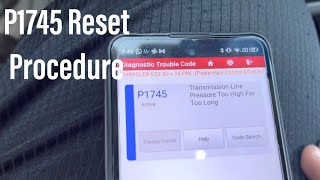
Technical definition: The official definition for P1745 varies significantly by car manufacturer. For Ford, Lincoln, and Mazda, it is 'Torque Converter Clutch Solenoid Inductive Signature Malfunction' or 'Line Pressure Solenoid System'. For Chrysler, Dodge, and Jeep vehicles with the 42RLE or 62TE transmission, it means 'Transmission Line Pressure Too High For Too Long'. For Honda, it indicates a '4th Clutch Transmission Pressure Switch Circuit Fault'. For Hyundai, it means 'Invalid Part Number Detected from 4WD ECU' or a 'K-Line Communication Fault'. For Toyota, it points to a 'Transmission Fluid Temperature Sensor No. 2' issue.
Can I Drive With P1745?

Yes, But With Caution. Do not drive for extended periods. When P1745 triggers 'limp mode,' your vehicle locks into a single gear (usually 2nd or 3rd), severely limiting speed and acceleration. Continuing to drive puts extreme strain on the transmission, causing overheating and rapid internal wear, turning a $300 solenoid issue into a full rebuild costing $2,500+. Prolonged high RPMs also damage the catalytic converter, adding $1,000+ to the repair bill. Limp mode is designed solely to get you safely to a repair shop within 30-50 miles.
Common Causes

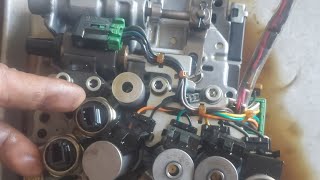
- Faulty Torque Converter Clutch (TCC) or Line Pressure Solenoid (Very Common) — The solenoid, an electronically controlled valve, is the most frequent point of failure. It fails electrically (short/open circuit) or becomes mechanically clogged with transmission fluid debris, causing it to stick open or closed.
- Low, Old, or Contaminated Transmission Fluid (Very Common) — Dirty, burnt, or low transmission fluid causes solenoid and shifting issues. Debris and sludge prevent the delicate parts inside the solenoid from moving freely, leading to overheating and abnormal pressure levels.
- Wiring or Connector Issues (Common) — The wiring harness or connectors leading to the transmission solenoids or the TCM become damaged, corroded, frayed, or shorted. This interrupts the signal from the computer, causing an immediate malfunction.
- Faulty Transmission Line Pressure Sensor (Common) — This sensor provides feedback to the TCM about the actual hydraulic pressure in the transmission. A faulty sensor sends incorrect data, leading the computer to believe the pressure is too high or low, triggering the code.
- System Voltage Issues (Common) — A low battery, failing alternator, or poor ground connection causes low system voltage. This leads to erratic behavior from electronic modules, including the TCM, triggering a P1745 code alongside voltage-related codes like P0562.
- Faulty Transmission Control Module (TCM) (Less Common) — The TCM controls the transmission. The module itself fails due to internal circuit board issues, software glitches, or poor electrical connections, causing it to send incorrect commands or set false codes.
- Worn Internal Torque Converter Clutch (Rare) — The clutch plates inside the torque converter wear out over time. When this happens, the converter cannot lock up properly even if the solenoid works correctly, triggering a fault.
Symptoms

- Transmission Goes into 'Limp Mode' — The vehicle's computer puts the transmission into a self-preservation mode, locking it into a single gear (often 2nd or 3rd). This results in poor acceleration and a low top speed.
- Harsh or Erratic Shifting — When the line pressure is incorrect or the TCC malfunctions, the transmission shifts very roughly, delays shifts, or slips between gears.
- Engine Stalls When Coming to a Stop — If the torque converter clutch gets stuck in the 'on' or locked position, it fails to disengage when you slow down. This is exactly like stopping a manual car without pressing the clutch, causing the engine to stall.
- Shudder or Vibration at Highway Speeds — A classic symptom for a TCC issue is a vibration that feels like driving over rumble strips, typically between 40-55 mph. This happens because the clutch tries to engage but slips and grabs instead of locking smoothly.
- Transmission Overheating — Prolonged high line pressure or clutch slippage generates excessive heat in the transmission fluid, leading to a burning smell and long-term damage to seals and internal components.
- Decreased Fuel Economy — If the clutch fails to lock up at highway speeds, the transmission slips more than it should. This forces the engine to work harder and burn more fuel.
- Check Engine Light is On — When the TCM or PCM detects the fault, it commands the Check Engine Light or Malfunction Indicator Lamp (MIL) to illuminate on your dashboard.
Diagnostic Flowchart
Tap your situation to follow the diagnostic path that matches what you're seeing on this code.
Common Fixes & Costs
- Clear VLP Counters with Bi-Directional Scanner (Chrysler/Dodge/Jeep) — Parts: $140-$200 (scanner purchase), Labor: $100-$200 (shop diagnostic fee), ~0.5 hr book time (Intermediate)
- Replace Torque Converter Clutch (TCC) or Solenoid Pack
— Parts: $150-$400, Labor: $400-$900, ~3.5 hr book time
(Professional)
Dodge/Chrysler (62TE): OEM [{'part_number': '68376696AA', 'brand': 'Mopar'}, {'part_number': '05078709AB', 'brand': 'Mopar'}] (Alt: {"part_number": "609-040", "brand": "Dorman (Reman.)"}, {"part_number": "T12432RK", "brand": "Cobra (Repair Kit)"})
Ford (5R55W/5R55S): OEM [{'part_number': '9L2Z-7G391-A', 'brand': 'Ford'}] (Alt: {"part_number": "F026001010", "brand": "Bosch"})
Nissan (Jatco RE0F10A/JF011E): OEM [{'part_number': '31941-1FX02', 'brand': 'Nissan (Valve Body Assy)'}] (Alt: {"part_number": "RE0F10A Valve Body", "brand": "Various"}) - Transmission Fluid and Filter Change — Parts: $75-$150, Labor: $150-$300, ~1.5 hr book time (Intermediate)
- Repair Damaged Wiring or Connectors — Parts: $20-$75, Labor: $150-$400, ~2 hr book time (Intermediate)
- Replace Transmission Control Module (TCM) — Parts: $300-$1000, Labor: $150-$350, ~1.5 hr book time (Professional)
- Transmission Rebuild — Parts: $1000-$2000, Labor: $1500-$3000, ~15 hr book time (Professional)
Used vs. New Parts: Buying Guide
When a used part is worth it: For a transmission solenoid pack or valve body, buying used is a high-risk strategy, only recommended when the vehicle is old, has very high mileage, and the budget is extremely tight.
Donor-vehicle mileage cap: roughly under 70000 miles for the part to have meaningful remaining life.
Donor quality checklist:
- Purchase from a reputable auto recycler that provides the mileage of the donor vehicle.
- Ensure the part number matches exactly, as variations are common.
- Ask about the warranty period (typically 30-90 days) and what it covers.
Decision logic:
- If The part is electronic or a known wear item like a solenoid → Strongly favor new OEM or high-quality aftermarket. The risk of premature failure with a used part is too high.
- If Vehicle is over 150K miles and you plan to replace it soon → A used part is a justifiable short-term gamble to keep the car running.
- If The cost of a new part is less than double the cost of a used part → Buy new. The longer warranty and guaranteed performance are worth the premium.
Warranty tradeoff: Used parts typically come with a 30-90 day warranty covering only the part itself. New aftermarket parts often have a 1-year to limited lifetime warranty. New OEM parts carry a 12-month manufacturer's warranty.
Worst-case if a used part fails: $500-1200. If a used solenoid pack fails after the warranty period, you pay for a new part plus the full labor cost a second time.
What Happens If You Wait — Timeline
- 0-1 month: Check Engine Light on. On Chrysler vehicles, limp mode engages immediately. For others, intermittent harsh shifts or a slight shudder at highway speeds is the only symptom. (MPG impact: 0-5%% · Added cost: $0)
- 1-3 months: Slipping and harsh shifting become more frequent. Transmission fluid begins to overheat, accelerating its breakdown. The vehicle begins stalling at stops if the TCC is sticking. MPG drop becomes noticeable. (MPG impact: 5-10%% · Added cost: $50-$150 in wasted fuel)
- 3-6 months: Sustained high pressure or slipping generates extreme heat, damaging internal seals and clutch packs. Debris from wearing parts contaminates the entire hydraulic system. A simple solenoid or fluid fix is no longer sufficient. (MPG impact: 10-15%% · Added cost: $500 - $1,500 (Valve body and/or clutch pack damage))
- 6+ months: Catastrophic failure. The transmission stops engaging gears altogether. Widespread internal damage requires a complete rebuild or replacement. Driving in limp mode for this long also damages the catalytic converter. (MPG impact: 15-25%+% · Added cost: $2,500 - $5,000+ (Full transmission rebuild))
Cost of Not Fixing It
- Immediate: Reduced fuel economy (5-15% drop) if the torque converter fails to lock up. Potential for engine stalling at stops, creating a safety hazard. (Added cost: $5-$15 per tank of gas)
- 1-3 months: Increased transmission fluid temperature due to slipping or high pressure. This heat breaks down the fluid and damages internal seals and clutches. (Added cost: $500 - $1500 (Valve body or clutch pack damage))
- 3-6+ months: Catastrophic transmission failure. Debris from the initial problem contaminates the entire system, requiring a full transmission rebuild. Driving in limp mode also causes catalytic converter damage. (Added cost: $2,500 - $5,000+ (Transmission rebuild and catalytic converter replacement))
Diagnosis Steps
- Scan for Codes and Review Freeze Frame Data
Use an OBD-II scanner to confirm P1745 is present and check for related codes (e.g., solenoids, sensors, or system voltage). On Chrysler products, look for primary codes like P0868 (Low Pressure) or P0944 (Loss of Prime) that triggered the P1745.
Tools: OBD-II Scanner (Beginner) - Check Transmission Fluid Level and Condition
With the engine running and the transmission warm, check the fluid level on the dipstick. It should be bright red and not smell burnt. Dark, brown, or black fluid indicates internal wear and contamination requiring immediate attention.
Tools: Rag, Gloves (Beginner) - Inspect External Wiring and Connectors
Visually inspect the wiring harness going to the transmission. Look for damage, corrosion, loose connections, or fluid contamination at the main transmission connector and the TCM. Pay close attention to areas where the harness rubs against the chassis.
Tools: Flashlight (Intermediate) - Live Data Analysis
Using a bi-directional scanner, monitor key performance indicators (PIDs). For Chrysler 62TE, compare 'Line Pressure Actual' and 'Line Pressure Desired'; they must closely match. For Nissan CVTs, check the 'Secondary Pulley Pressure Sensor' voltage at idle in Neutral (normal is 0.88 - 0.94 Volts). Deviations point to a hydraulic or sensor issue.
Tools: Bi-Directional Scan Tool (Advanced) - Test the Solenoid's Electrical Resistance
Drop the transmission pan to access the solenoid. Use a multimeter to measure resistance across the terminals. Compare the reading to the service manual. Ford TCC solenoids are often 20-30 ohms. Nissan Jatco CVT pressure solenoids are typically 5.3 Ω at 68°F. A reading of 0 ohms (short) or infinite ohms (open) confirms a bad solenoid.
Tools: Multimeter, Socket Set, Drain Pan, Service Manual (Advanced) - Perform a Voltage Drop Test
A solenoid tests good but malfunctions due to a poor connection. Set a multimeter to DC Volts. Connect the positive lead to the battery positive and the negative lead to the solenoid's power supply wire. With the key on, the reading must be less than 0.5 volts. Repeat for the ground side. Readings above 0.3 volts indicate excessive resistance.
Tools: Multimeter, Wiring Diagram (Advanced) - Command the Solenoid with a Bi-Directional Scanner
Command the TCC solenoid on and off while monitoring live data. While driving, watch the TCC slip RPM. When commanded on, the slip RPM must drop to near zero. If it doesn't, it confirms a problem with the solenoid, hydraulics, or the converter itself.
Tools: Bi-Directional Scan Tool (Advanced) - Perform a Transmission Line Pressure Test
Connect gauges to specific test ports on the transmission case to measure actual hydraulic pressure. On a Chrysler 41TE, static pressure should be around 120 PSI. Incorrect pressures confirm a problem with a pressure control solenoid, line pressure sensor, or oil pump.
Tools: Transmission Pressure Gauge Set, Service Manual (Professional) - Perform an Inductive Signature Test (Ford Specific)
Since the Ford definition is 'Inductive Signature Malfunction,' connect an oscilloscope to the TCC solenoid control wire. When commanded on, you must see a specific waveform: an initial spike, a flat 'pintle hump' as the valve moves, and a large inductive spike when turned off. A missing pintle hump confirms internal solenoid failure.
Tools: Oscilloscope, Service Manual (Professional)
When This Code Triggers (Freeze-Frame Conditions)
- Vehicle Speed: 35-55 mph (The code sets during steady-state highway cruising when the torque converter clutch is commanded to lock.)
- Engine Coolant Temp: 180-210°F (The engine must be at full operating temperature for the TCC lock-up sequence to initiate.)
- Engine RPM: 1500-2500 RPM (Occurs at a stable, cruising RPM without significant acceleration or deceleration.)
- Throttle Position / Engine Load: 20-50% (Triggered under light to moderate engine load and a steady throttle position, not during heavy acceleration or hill climbing.)
Related Codes
- P0868 — This code means 'Transmission Fluid Pressure Low'. On Chrysler/Dodge vehicles, this is the primary fault. P1745 is the secondary code set after operating with low pressure for too long. Fixing P0868 is the first step.
- P0741 — This code means 'TCC System Stuck Off'. The computer commanded the torque converter to lock, but it did not occur. This performance code often accompanies P1745 when the root cause is a mechanically stuck solenoid.
- P0740 — This is a generic code for 'TCC Solenoid Circuit Malfunction'. It points specifically to an electrical problem (open, short, bad ground) in the TCC solenoid circuit, often appearing alongside P1745.
- P0562 — This code means 'System Voltage Low'. It appears with P1745 if a failing battery or alternator causes the TCM to behave erratically and misinterpret sensor data, pointing to an electrical system problem.
Climate & Environmental Factors
- High Humidity: High humidity and moisture accelerate the corrosion of electrical connectors and wiring harnesses. This corrosion increases electrical resistance or causes short circuits, interrupting signals between the TCM and transmission solenoids.
- Cold Weather: Extremely cold temperatures increase the viscosity of transmission fluid. If the fluid is old or contaminated, this causes delayed or harsh shifting and puts extra strain on solenoids, making an existing intermittent problem more noticeable.
How to Talk to a Mechanic About This Code
Say this: "I have a [Your Vehicle's Make] with a P1745 code. I know this is a manufacturer-specific code. For my vehicle, I believe it's the secondary 'latch' code for a line pressure issue, and it requires a special scanner function to clear. I'd like to schedule a diagnostic to confirm the primary fault and I need to know if you have a scanner capable of performing the 'Clear VLP Counters' function after the repair."
This signals to the shop that you are an informed consumer. It directs them to the specific, known issue for your vehicle brand, prevents them from wasting time on incorrect diagnostic paths, and confirms they have the special equipment required for the complete repair.
Avoid saying:
- 'Just fix whatever's wrong'
- 'My check engine light is on, can you look at it?' (too vague — invites upsell)
- 'Whatever you recommend'
- 'I got a quote over the phone from another shop...' (This is a red flag and is often unreliable for complex jobs).
Questions to ask before authorizing the repair:
- For a Chrysler/Dodge: What was the primary pressure code (like P0868/P0869) that caused the P1745? What specific part failed to cause that?
- For a Ford/Mazda: Did you test the resistance of the TCC solenoid, and what was the reading? Did you inspect the wiring harness for damage?
- Will you show me the old parts that were replaced?
- What is the warranty on this specific repair, and does it cover both parts and labor?
Where to Take It: Dealer vs Independent vs Chain
- Dealer:
A safe but expensive option. They are guaranteed to have the correct diagnostic scanner for the Chrysler/Dodge reset procedure, but you pay a premium for it.
Best for: Vehicles still under powertrain warranty, Complex manufacturer-specific quirks (like the Hyundai communication fault version of P1745), When you can't find a trusted independent shop with the right tools.
Downsides: Significantly higher labor rates (1.5-2x)., May lack in-house transmission rebuild capabilities and simply outsource the work, adding their own markup., Defaults to replacing large, expensive assemblies rather than diagnosing a smaller, cheaper component. (Typical cost: +50% vs. baseline) - Independent Shop:
The best value, IF you choose the right shop. Prioritize an independent *transmission specialist* over a general mechanic. Before committing, you must ask if they have experience with the P1745 'latch' code on Chrysler products and if they have a scanner with the 'Clear VLP Counters' function.
Best for: Out-of-warranty vehicles where cost is a major factor., Shops that specialize specifically in transmission repair.
Downsides: Quality and expertise vary wildly. You must vet the shop's reputation and certifications (like ASE)., A general mechanic may not have the specific bi-directional scanner needed for the Chrysler P1745 reset, leading to a failed repair. (Typical cost: +0% vs. baseline) - Chain Shop:
AVOID for P1745 diagnosis and repair. The risk of being sold an expensive, unnecessary rebuild is extremely high. This code requires nuanced, specific diagnosis not well-suited to a high-volume, commission-based environment.
Best for: Simple, routine maintenance like oil changes or brake jobs.
Downsides: High pressure to upsell; a minor solenoid issue quickly turns into a recommendation for a full, unnecessary transmission rebuild., Technician skill and experience with complex internal transmission work is highly variable., Often use bait-and-switch tactics with low initial quotes. (Typical cost: -10% vs. baseline)
When to Walk Away From the Repair
If the estimated repair cost exceeds 40-50% of the car's private-party value, it's time to seriously consider selling or trading it in instead of repairing.
- Car worth $4500, fix is $3500: Walk away. The repair cost is ~78% of the vehicle's value. It is not financially sound to proceed.
- Car worth $8000, fix is $1200: Fix it. The repair cost is only 15% of the car's value, which is well below the threshold.
- Car worth $3000, fix is $1300: Borderline. At 43% of the car's value, the decision depends on other factors. If the car is otherwise in excellent condition with no other known issues, fixing it is reasonable. Get a second opinion before authorizing the repair.
What Scan Tool You Need for This Code
Minimum: For a Chrysler/Dodge/Jeep, a standard code reader is NOT enough. The minimum is a bi-directional scanner with Chrysler-specific software that includes the 'Clear Variable Line Pressure (VLP) Counters' special function.
A basic $20-$50 code reader sees the P1745 code but cannot clear it on a Chrysler product. The vehicle remains in limp mode even after a successful mechanical repair. You waste money and time, believing the repair failed.
Budget: OBDLink MX+ with JScan App (~$140) — This combination is highly recommended for DIY Chrysler owners. The JScan app (requires a license, ~$25) used with the OBDLink MX+ adapter accesses all modules and performs the critical 'Clear VLP Counters' and other relearn procedures.
Mid-range: CGSULIT SC530 (with Chrysler software) (~$150) — This is a standalone, handheld bi-directional scanner frequently cited by owners specifically for fixing the P1745 issue. It has the 'Clear VLP Counters' function in its special functions menu for Chrysler/Dodge/Jeep.
Professional: Autel MaxiCOM MK808 / Foxwell NT510 Elite (~$350-550) — These are full-featured, tablet-style bi-directional scanners. They provide access to all vehicle modules, live data streaming, and a wide range of special functions, including the necessary Chrysler transmission resets. They are overkill for a one-time fix but are a great investment for a serious DIYer.
Rent vs buy: You CANNOT rent the specific tool needed for the Chrysler P1745 reset. Auto parts stores rent basic code readers, which are insufficient for this job. If you have a Chrysler, Dodge, or Jeep with this code, you must either buy a capable scanner or pay a shop that has one.
How to Clear the Code After You Fix It
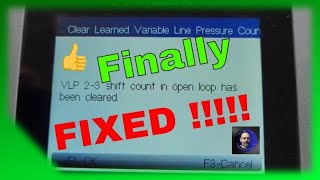
- For Chrysler/Dodge/Jeep: After fixing the primary fault, use a bi-directional scanner with the specific 'Clear Variable Line Pressure (VLP) Counters' function. A standard code clear will not work.
- For other makes: Use a standard OBD-II scan tool to erase the diagnostic trouble codes.
- Perform a complete OBD-II drive cycle to ensure the code does not return and to set emissions readiness monitors.
Drive cycle (~30 minutes): A general drive cycle involves: 1. A cold start (engine off for 8+ hours). 2. 2-3 minutes of idling. 3. 10-15 minutes of steady highway driving (55-60 mph). 4. 10 minutes of stop-and-go city driving with several idle periods.
Readiness monitors affected: Catalyst Monitor, Evaporative System (EVAP) Monitor, Oxygen (O2) Sensor Monitor
Before emissions retest: drive at least 100 miles to fully set monitors.
Watch out for:
- On Chrysler vehicles, failing to use the 'Clear VLP Counters' function leaves the vehicle in limp mode even after the mechanical repair is complete.
- Clearing the code without fixing the underlying issue causes the code to return quickly.
- Taking the vehicle for an emissions test immediately after clearing codes results in a 'Not Ready' failure.
Will This Fail Emissions / State Inspection?
Yes — this code typically fails an OBD-II emissions inspection.
- California: An illuminated Check Engine Light is an automatic failure of the smog check. After repairs, a complete drive cycle must be performed to set the OBD-II readiness monitors before a re-test.
- New York: A vehicle automatically fails the emissions portion of the NYS inspection if the Check Engine Light is on. Clearing the code just before the test results in a 'Not Ready' status, which also fails.
- Texas: In the 17 counties requiring emissions testing, an active Check Engine Light results in an automatic failure. The vehicle cannot be registered until repaired and passed.
Most Commonly Affected Vehicles
- Dodge / Chrysler / Jeep Journey, Town & Country, Grand Caravan, Dakota, Ram 1500 (2007-2018) — Vehicles with the 62TE or 42RLE transmission are notorious for setting P1745 for 'Line Pressure Too High'. This is a secondary 'latch' code triggering limp mode after a primary pressure fault (like P0868). It requires a specific scanner reset procedure ('Clear VLP Counters') after mechanical repair.
- Ford Explorer, Taurus, Focus, Windstar, F-150 (2002-2015) — These models, often with 5R55W/S or 4F27E transmissions, frequently experience TCC solenoid or line pressure solenoid failures leading to P1745. Diagnosis involves electrical tests of the solenoid pack.
- Nissan Altima, Maxima, Murano, Sentra (2004-2014) — These models experience P1745 related to a discrepancy between commanded and actual line pressure, pointing to a fault in the line pressure control solenoid. TSBs NTB17-034k and NTB22-021A address related CVT issues.
- Volkswagen Routan (2009-2014) — The VW Routan is a rebadged Chrysler Town & Country using the same 62TE transmission. It suffers from the identical P1745 'Line Pressure Too High' issue and requires the same 'Clear VLP Counters' reset procedure.
- Hyundai Santa Fe, Elantra, Sonata (2007-2017) — On Hyundai models, P1745 indicates an 'Invalid part number' from the 4WD ECU or a 'K-Line' communication error between modules, requiring network diagnosis rather than transmission repair.
- Mazda 3, 6, CX-7 (2006-2016) — Sharing platforms and transmission components with Ford, Mazda vehicles set P1745 for similar TCC or line pressure solenoid faults.
- Honda Accord, Civic, CR-V (2003-2013) — For Honda vehicles, P1745 points to a '4th Clutch Transmission Pressure Switch Circuit Fault', unrelated to line pressure or TCC.
- Toyota Various Models (2000-2010) — On certain Toyota vehicles, P1745 indicates an electrical problem with the No. 2 Transmission Fluid Temperature (TFT) sensor circuit.
Manufacturer-Specific Notes
- Chrysler / Dodge / Jeep / VW (Routan): P1745 means 'Line Pressure Too High For Too Long'. It is an informational 'latch' code triggering limp mode after the computer logs a set number of shifts or miles with an underlying pressure problem (like P0868). Even after fixing the root cause, this code is stored as 'permanent' and requires a bi-directional scan tool with a 'Clear Variable Line Pressure (VLP) counters' function to clear.
- Ford / Mazda: The code 'TCC Solenoid Inductive Signature Malfunction' points directly to an electrical or internal mechanical fault with the TCC solenoid. The TCM monitors the magnetic field build-up and collapse; if it's not perfect, the code sets. Diagnosis focuses on testing the solenoid with a multimeter or oscilloscope.
- Hyundai: P1745 indicates a communication or configuration issue, such as an 'Invalid part number' from the 4-Wheel Drive control unit (TCCU) or a 'K-Line' communication fault with the TCM. This requires diagnosing the communication network, not the transmission's hydraulics.
- Nissan: On models with Jatco CVTs, this code points to a failing line pressure control solenoid, often integral to the valve body. Due to wear and debris, replacing the entire valve body assembly is a common and effective fix.
- Honda / Acura: P1745 specifically indicates a problem in the 4th Clutch Transmission Pressure Switch circuit, requiring a different diagnostic path.
Real Owner Stories
2015 Dodge Grand Caravan at 140K miles - The Classic Misdiagnosis
Vehicle went into limp mode, stuck in one gear. Scan showed P1745 and P0869 (Line Pressure High).
What they tried:
- Owner replaced the solenoid pack, filter, and fluid. Cleared codes with a standard OBD-II reader.
- The P1745 code returned immediately on restart and the van remained in limp mode.
Outcome: After researching forums, the owner purchased a Chrysler-specific bi-directional scanner (CGSULIT SC530 for ~$150) and used the 'Clear VLP Counters' special function. This successfully cleared the 'permanent' P1745 code and restored normal shifting.
Lesson: On a Chrysler/Dodge with P1745, fixing the mechanical part is only half the battle. You MUST perform the 'Clear VLP Counters' reset with a capable scanner, or the vehicle will stay in limp mode. A standard code clear does not work.
2006 Ford Explorer at 115K miles - Solenoid and Wiring
Transmission was slipping and shifting harshly. The check engine light came on with a P1745-related code.
What they tried:
- The owner decided to replace the transmission solenoid pack, a common failure item on the 5R55S transmission.
- During the repair, they found the main electrical connector harness to the transmission was brittle and had a poor connection.
Outcome: Replaced the solenoid pack (Ford P/N 9L2Z-7G391-A) and repaired the wiring harness connector. After reassembly with a new filter and fluid, the codes were cleared and shifting performance returned to normal.
Lesson: For Ford's 'Inductive Signature' version of P1745, the solenoid is a prime suspect. Always inspect the related wiring harness and connectors when doing the job, as they are a frequent secondary point of failure.
2009 Dodge Caravan at 215K miles - The Unusual Cause
Vehicle was stuck in limp mode with a P1745 code ('Line Pressure Too High For Too Long').
What they tried:
- A shop replaced the solenoid pack and serviced the transmission, but the code returned.
- They ran a jumper wire to bypass the harness between the pressure sensor and the computer, but the code still returned.
- Finally, they suspected the computer itself.
Outcome: The shop replaced and reprogrammed the Powertrain Control Module (PCM). This finally resolved the P1745 code and the shifting issues.
Lesson: While solenoids and fluid are the most common causes, if you've addressed them and thoroughly checked the wiring with no success, the Transmission Control Module (TCM) or PCM is the root cause. This is an advanced diagnostic step and usually the last resort.
How to Prevent This Code From Triggering
- Change transmission fluid and filter regularly (Every 30,000-60,000 miles for standard driving) — Clean fluid prevents the buildup of sludge and debris that clogs solenoid passages and causes them to stick. It also maintains proper hydraulic pressure and cooling.
- Use only the manufacturer-specified transmission fluid (Every fluid change) — Using the wrong fluid causes chemical incompatibilities, damaging seals and causing incorrect friction properties, leading to solenoid and clutch failure.
- Install an auxiliary transmission fluid cooler (Once, especially for vehicles used for towing or in hot climates) — Heat is the #1 killer of transmissions. An external cooler keeps fluid temperatures stable, preventing premature fluid breakdown and protecting solenoids and clutches from heat damage.
- Periodically inspect transmission wiring (Annually or during oil changes) — Visually check the wiring harness leading to the transmission for rubbing, fraying, or corrosion at the connectors. Catching a potential short or open circuit early prevents a P1745 code.
Frequently Asked Questions
What is the most common misdiagnosis for P1745?
The single most common and costly mistake applies to Chrysler, Dodge, and Jeep vehicles. Mechanics replace the solenoid pack or transmission to fix a pressure code, but the vehicle remains in limp mode with P1745 active. You must clear this informational 'latch' code with a specific 'Clear VLP Counters' function on a bi-directional scanner after the repair.
Do I need a special scanner to clear code P1745?
For most vehicles, a standard scanner works, but Chrysler, Dodge, Jeep, and VW Routan require a specialized tool. You need a bi-directional scan tool with a 'Miscellaneous Functions' menu to 'Clear Variable Line Pressure (VLP) counters'. A basic $20 code reader cannot clear this permanent code.
Can a bad battery or alternator cause P1745?
Yes, a weak battery or failing alternator causes low system voltage, making the Transmission Control Module (TCM) act erratically. The TCM sets false codes or fails to control solenoids properly. If you also have a P0562 (System Voltage Low) code, diagnose the charging system before replacing transmission parts.
What is a 'VLP Counter' on a Chrysler/Dodge?
'VLP' stands for Variable Line Pressure. The TCM counts how many times the transmission shifts while a known pressure fault is present, triggering P1745 and limp mode when it reaches a limit (e.g., 1000 shifts). Resetting this counter with a bi-directional scan tool is mandatory to exit limp mode.
Is a transmission fluid change enough to fix P1745?
If the problem is caused by dirty or low fluid making a solenoid stick, a full fluid and filter change resolves the issue. However, if the solenoid has failed electrically or the wiring is damaged, new fluid will not fix it. Always check the fluid condition first.
Why does my car stall at stop signs with this code?
This happens when the torque converter clutch gets stuck in the locked position. The transmission remains mechanically locked to the engine as you slow down, preventing it from slipping. This overloads and stalls the engine, exactly like stopping a manual car without pressing the clutch pedal.
How much does it cost to fix code P1745?
Costs vary widely based on the root cause and vehicle make. A shop diagnostic and Chrysler VLP reset costs $100-$200, while a fluid change runs $225-$450. Replacing a solenoid pack costs $550-$1,300, and a full transmission rebuild exceeds $2,500.
Key Takeaways
- P1745 definitions vary by brand: it signals a solenoid fault in Fords, a pressure counter limit in Chryslers, and a module communication error in Hyundais.
- Chrysler, Dodge, and Jeep vehicles require a bi-directional scanner to perform a 'Clear VLP Counters' reset after repairs; a standard code reader cannot clear P1745.
- The top three causes of P1745 across all makes are a failed transmission solenoid, contaminated transmission fluid, or a damaged wiring harness.
- Driving with P1745 locks the transmission in 2nd or 3rd gear (limp mode) and causes engine stalling at stops, requiring immediate repair to prevent a $2,500+ rebuild.
Helpful Videos




The information in this article is provided for general reference and educational purposes only. Vehicle specifications, procedures, and part compatibility can vary by production date, trim level, and region. Always consult your vehicle's factory service manual and verify part numbers before purchasing or performing repairs. Safety-critical components such as airbags, seat belts, and braking systems should be installed by a qualified professional.
- 🎬 Helpful Videos
- What Does P1745 Mean?
- Can I Drive With P1745?
- Common Causes
- Symptoms
- Diagnostic Flowchart
- Common Fixes & Costs
- Used vs. New Parts: Buying Guide
- What Happens If You Wait — Timeline
- Cost of Not Fixing It
- Diagnosis Steps
- When This Code Triggers (Freeze-Frame Conditions)
- Related Codes
- Climate & Environmental Factors
- How to Talk to a Mechanic About This Code
- Where to Take It: Dealer vs Independent vs Chain
- When to Walk Away From the Repair
- What Scan Tool You Need for This Code
- How to Clear the Code After You Fix It
- Will This Fail Emissions / State Inspection?
- Most Commonly Affected Vehicles
- Manufacturer-Specific Notes
- Real Owner Stories
- 2015 Dodge Grand Caravan at 140K miles - The Classic Misdiagnosis
- 2006 Ford Explorer at 115K miles - Solenoid and Wiring
- 2009 Dodge Caravan at 215K miles - The Unusual Cause
- How to Prevent This Code From Triggering
- Frequently Asked Questions
- What is the most common misdiagnosis for P1745?
- Do I need a special scanner to clear code P1745?
- Can a bad battery or alternator cause P1745?
- What is a 'VLP Counter' on a Chrysler/Dodge?
- Is a transmission fluid change enough to fix P1745?
- Why does my car stall at stop signs with this code?
- How much does it cost to fix code P1745?
- Key Takeaways
- 🎟️ Get 5% Off