

OBD-II Code P1735: Transmission Component Malfunction
What P1735 means, why it triggers, and how to fix it
- P1735 points to a failed mechatronic clutch position sensor in VW/Audi vehicles, or a stuck shift solenoid in Honda models.
- Driving with P1735 is unsafe because the transmission will lock into a single gear or suddenly lose power in traffic.
- VW/Audi owners save over $1,500 by having an independent specialist repair the internal mechatronic sensors instead of paying a dealer for a full unit replacement.
- Diagnosing VAG vehicles requires an advanced scan tool like VCDS to verify negative pressure readings (e.g., -0.74 bar) from the failing clutch sensor.
- Replacing a mechatronic unit or sensor requires a mandatory software adaptation procedure; skipping this step causes immediate shifting failures and new codes like P175E.
What Does P1735 Mean?

P1735 is a manufacturer-specific code. In Volkswagen and Audi vehicles, it signals an electrical failure of a clutch position sensor inside the transmission's mechatronic unit. In Honda vehicles, it indicates a stuck shift solenoid or hydraulic control failure. In Hyundai models, it points to high voltage in the vehicle speed sensor circuit.
Technical definition: Because P1735 is a manufacturer-specific code, there is no single universal SAE/ISO definition. The most common definitions are: * **Volkswagen/Audi/Seat/Skoda (VAG):** Position Sensor for Clutch 1, Electrical Malfunction. * **Honda/Acura:** Problem in Shift Control System / Shift Malfunction G. * **Hyundai:** Vehicle Speed Sensor Reference Voltage High. * **Subaru/Nissan:** First Gear Switch Circuit Malfunction. * **General Motors:** 2-3 Shift Solenoid Valve Function.
Can I Drive With P1735?
No — Do Not Drive. Driving is highly discouraged. A sudden failure to accelerate when merging is a significant safety hazard. The transmission locks into a single gear or shifts erratically, making the vehicle unsafe. Continuing to drive causes secondary mechanical damage to clutch packs, adding thousands to the final repair bill.
Common Causes

- Failed Clutch Position Sensor (VAG Mechatronic Unit) (Very Common) — On Volkswagen, Audi, Skoda, and Seat vehicles with a 7-speed DSG transmission (DQ381, DQ500), the sensor monitoring Clutch 1 (odd gears) fails internally due to thermal stress and component degradation.
- Stuck or Failed Shift Solenoid (Honda/Acura/GM) (Common) — Shift solenoids are electronic valves directing hydraulic fluid to change gears. On Hondas and GMs, these solenoids fail electrically or stick open/closed, triggering the shift control fault.
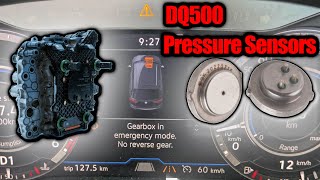
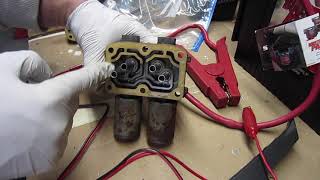
- Internal Mechatronic Circuit Board Failure (VAG) (Common) — The circuit board housing the clutch position sensors degrades over time. This hardwired failure interrupts the signal to the Transmission Control Module (TCM), logging P1735. 🎬 Watch: Step-by-step DIY repair guide for VAG mechatronic circuit boards.
- Contaminated Transmission Fluid & Metal Debris (Common) — Old, burnt fluid or accumulated metal shavings block hydraulic passages and disrupt magnetic sensors. On Hondas, this is the primary cause of stuck solenoids.
- Faulty Transmission Control Module (TCM) (Less Common) — Internal TCM circuit board failure or software corruption forces the computer to misinterpret sensor data, falsely triggering the code.
- Faulty Vehicle Speed Sensor (VSS) Circuit (Hyundai) (Rare) — On specific Hyundai models, this code points to a high voltage condition (>4.8V) in the VSS reference circuit, caused by a short in the wiring or a failing Transfer Case Control Unit. 🎬 Watch: How to replace a Hyundai vehicle speed sensor.
Symptoms

- Transmission in Limp Mode (Stuck in Gear / Loss of Reverse) — The transmission locks into a single gear (often 2nd) to prevent damage. VAG models lose all odd gears (1, 3, 5, 7) and frequently lose reverse gear entirely.
- Blinking 'D' (Drive) Indicator Light — On Honda and Acura vehicles, the 'D' on the gear selector display flashes continuously to warn the driver of an active transmission fault.
- Harsh, Jerky, or Delayed Shifting — The vehicle shudders or slams into gear because the TCM cannot regulate hydraulic pressure. Shifting from Park to Drive or Reverse takes noticeably longer.
- Complete Loss of Drive — The transmission fails to engage any gear, leaving the vehicle unable to move when pressing the accelerator.
- Erratic Sensor Readings in Live Data (scan-tool only — no driver-felt sign) — A scan tool shows the clutch position sensor sending impossible, negative, or out-of-range pressure values to the TCM.
Diagnostic Flowchart

Tap your situation to follow the diagnostic path that matches what you're seeing on this code.
Common Fixes & Costs
- Repair Mechatronic Unit (Replace Clutch Position Sensors) — Parts: $100-$300, Labor: $700-$1300, ~7.5 hr book time (Professional)
- Replace Transmission Shift Solenoid — Parts: $20-$120, Labor: $150-$450, ~3 hr book time (Intermediate)
- Transmission Fluid and Filter Change — Parts: $70-$200, Labor: $150-$300, ~1.5 hr book time (DIY)
- Replace Mechatronic Unit — Parts: $1500-$2800, Labor: $400-$800, ~4.5 hr book time (Professional)
- Software Update / Remote Programming — Parts: $0, Labor: $185-$250, ~1 hr book time (Professional)
Used vs. New Parts: Buying Guide
When a used part is worth it: A used mechatronic unit is never recommended due to VIN-specific 'Component Protection' programming. A rebuilt unit from a reputable specialist is the best alternative to buying new from a dealer.
Donor-vehicle mileage cap: roughly under 40000 miles for the part to have meaningful remaining life.
Donor quality checklist:
- Verify the rebuilder replaces both clutch position sensors with upgraded components.
- Ensure the rebuilder provides a multi-year or lifetime warranty.
- Confirm the rebuilt unit is 'plug and play' or includes remote programming support.
Decision logic:
- If The fault is confirmed to be the internal clutch position sensors. → Choose a specialist repair of your original unit. This is the most cost-effective solution.
- If The vehicle is under a VAG extended warranty (e.g., Warranty Key U54/U49). → Have the dealer replace the unit entirely under warranty.
- If The original unit is physically cracked or damaged. → Purchase a new OEM unit or a fully remanufactured unit from a specialist.
Warranty tradeoff: Used salvage parts carry no warranty and high failure risk. Aftermarket rebuilt units offer 1-year to lifetime warranties. OEM new units carry a 12-month/12,000-mile warranty.
Worst-case if a used part fails: $1500 (Repeat labor costs and replacement part if a poorly rebuilt unit fails).
What Happens If You Wait — Timeline
- 0-4 weeks: Intermittent 'Gearbox Malfunction' light appears when hot. Fault clears after restarting. No noticeable shifting issues. (MPG impact: 0%% · Added cost: $0)
- 1-3 months: Fault becomes frequent. Car enters limp mode but resets after cooling down. Slight hesitation during gear changes. (MPG impact: 0-2%% · Added cost: $150-$500 (for a tow))
- 3-6 months: Fault is permanent. Car is consistently in limp mode. Harsh, jerky shifting causes mechanical wear. (MPG impact: 5-10%% · Added cost: $800-$1500 (primary repair cost is unavoidable))
- 6+ months: Catastrophic failure. Severe slipping destroys clutch packs and flywheel, requiring full transmission replacement. (MPG impact: 10-25%% · Added cost: $2500-$6000)
Cost of Not Fixing It
- Immediate: The vehicle is unsafe. Sudden loss of power or inability to select gears leaves you stranded in intersections or on highways. (Added cost: $150-$500 (for towing))
- Weeks to Months: Driving with harsh shifts destroys the dual-clutch pack and flywheel due to extreme mechanical stress. (Added cost: $2000-$3500 (for clutch and flywheel replacement))
- Long-Term: Complete mechatronic failure sends metal debris into the gearbox, requiring a full transmission replacement. (Added cost: $6000-$9000)
Diagnosis Steps
- Scan for All Trouble Codes
Use an OBD-II scanner to read the TCM. Look for companion codes like P1736 (VAG Clutch 2 failure) or P0780 (Honda Shift Malfunction) to pinpoint the exact circuit.
Tools: OBD-II Scanner - Check Transmission Fluid Level and Condition
Check the transmission fluid dipstick or electronic level indicator. Fluid must be at the 'Full' mark and bright red. Drain a small amount through a strainer to check for metal debris, especially on Hondas.
Tools: Rag, Strainer, Gloves, Drain Pan - Live Data Sensor Check (VAG Models)
Using VCDS or ODIS, monitor live data for 'Clutch 1 pressure: actual value' with the ignition on and engine off. A healthy sensor reads between 0.00 and 0.03 bar. A static negative value (e.g., -0.74 bar) confirms an electrical sensor failure.
Tools: Advanced Diagnostic Scan Tool (VCDS, ODIS) - Test Solenoid Resistance (Honda/Acura/GM)
Disconnect the suspected shift solenoid and measure resistance across its pins. Honda/Acura solenoids specify 12-25 Ohms. GM 4T65E solenoids specify 19-31 Ohms. Readings outside these ranges confirm a dead solenoid coil.
Tools: Digital Multimeter, Service Manual - Check VSS Reference Voltage (Hyundai)
Use a multimeter to probe the reference wire at the Vehicle Speed Sensor connector (key on, engine off). A reading higher than 4.8V confirms a short in the circuit.
Tools: Digital Multimeter, Service Manual - Internal Mechatronic Inspection
Remove the transmission oil pan to access the mechatronic unit or valve body. Inspect for heavy metal sludge on magnetic sensors and verify internal wiring harness integrity.
Tools: Full Socket Set, Torque Wrench, Drain Pan - Post-Repair Basic Settings and Adaptation
After replacing VAG sensors or mechatronic units, execute the 'Basic Settings' procedure with a scan tool. This forces the TCM to relearn clutch engagement points. Skipping this causes immediate shifting failures and code P175E.
Tools: Advanced Diagnostic Scan Tool (VCDS, ODIS)
When This Code Triggers (Freeze-Frame Conditions)
- Transmission Fluid Temp: 90-110°C (194-230°F) (The fault appears after extended driving when the transmission is fully warmed up, exposing thermal stress failures in the sensor.)
- Engine RPM: 1500-2800 (Occurs during steady cruising or moderate acceleration when the transmission prepares for a shift.)
- Vehicle Speed: 30-85 mph (50-137 km/h) (Logs at various speeds, typically at the exact moment the TCM commands a gear change.)
- Gear: Any gear, often during a shift (Logs when the TCM detects the electrical malfunction in the clutch position sensor circuit just before a shift.)
Related Codes
- P1736 — On VAG vehicles, P1736 is the failure of the Clutch 2 position sensor (even gears). It appears alongside P1735 because both sensors are housed in the same failing mechatronic unit.
- P0700 — A generic gateway code set by the Engine Control Module indicating a fault exists in the Transmission Control Module. It requires scanning the TCM to reveal the actual P1735 code.
- P175E00 — Means 'Clutch 1 Unpredictable' on VAG DSGs. Appears after a P1735 repair if the mechanic fails to perform the mandatory software adaptation procedure.
- P0780 — On Hondas, P0780 (Shift Malfunction) appears alongside P1735 to confirm a mechanical or hydraulic failure in the shift control system.
Climate & Environmental Factors
- Operating Temperature: Temperature extremes expose the P1735 fault. A failing sensor's electrical properties drift out of specification when hot, causing the transmission to enter limp mode only after 30 minutes of driving.
How to Talk to a Mechanic About This Code
Say this: "I have a P1735 fault code and am losing odd gears. For my Audi, I understand this points to the mechatronic clutch position sensor. I'd like a diagnosis checking the live data from the clutch pressure sensors. For my Honda, I suspect a faulty shift solenoid and want you to test the solenoid circuits."
Directs the technician to the most likely cause, saving diagnostic time. For VAG owners, it opens the conversation to a 'mechatronic repair' instead of an expensive full replacement.
Avoid saying:
- 'My transmission is slipping, how much for a new one?'
- 'My check engine light is on, can you just fix it?'
- 'Just do whatever you think is best.'
Questions to ask before authorizing the repair:
- For VW/Audi: Can you confirm the sensor failed by showing me the out-of-range pressure values from the live data?
- For VW/Audi: Do you offer a mechatronic unit repair by replacing the sensors, or do you only replace the entire unit?
- For Honda: Did you test the resistance of the specific shift solenoid, and what was the reading?
- Will the mandatory post-repair 'Basic Settings' procedure be performed, and is it included in the quote?
Where to Take It: Dealer vs Independent vs Chain
- Dealer:
Recommended only if covered by warranty. Otherwise, an independent specialist is much more cost-effective.
Best for: Vehicles under powertrain warranty or extended warranty., Complex software programming issues requiring proprietary factory tools.
Downsides: Will recommend a full mechatronic unit replacement ($3,000+) instead of an affordable sensor repair., Highest labor rates. (Typical cost: +100% vs. baseline) - Independent Shop:
Excellent fit. Finding an independent shop offering 'mechatronic repair' saves thousands over a dealer.
Best for: Out-of-warranty vehicles where cost is a major factor., Shops specializing in European cars (VAG) or Japanese cars (Honda).
Downsides: Quality varies. Ensure the shop has specific experience with DSG transmissions. (Typical cost: +0% vs. baseline) - Chain Shop:
AVOID. This code requires specialized diagnostic capabilities beyond the scope of chain repair shops.
Best for: Simple maintenance like oil changes.
Downsides: Technicians lack specialized training for complex transmission diagnostics., High risk of misdiagnosis and unnecessary transmission replacement recommendations. (Typical cost: -10% vs. baseline)
When to Walk Away From the Repair
If the estimated repair cost exceeds 50% of the car's current private-party market value, consider selling the car as-is.
- Car worth $8000, fix is $4500: Walk away. The repair cost is over 55% of the car's value.
- Car worth $15000, fix is $1800: Fix it. The repair cost is 12% of the car's value and restores full function.
- Car worth $4000, fix is $1600: Borderline. Get a second opinion. If other major repairs are needed, walk away.
What Scan Tool You Need for This Code
Minimum: A scanner that reads manufacturer-specific transmission codes (TCM) and views live data streams.
A basic $20 reader only shows generic engine codes (P0700). It cannot display live clutch sensor data or perform the mandatory 'Basic Settings' adaptation.
Budget: OBDeleven Standard (VAG) / Foxwell NT510 Elite (~$80) — Reads specific transmission codes and live data. OBDeleven requires the Pro version for adaptations.
Mid-range: Ross-Tech VCDS (VAG) / Autel MK808 (~$200) — VCDS provides full access to live data and the critical 'Basic Settings' function for DSG relearn.
Professional: Launch X431 Series / Autel MaxiSYS (~$500-1500) — Offers full bidirectional control, guided functions for DSG basic settings, and software updates.
Rent vs buy: Auto parts stores loan basic readers that cannot diagnose this code. Pay a specialist shop for diagnostic time rather than buying an advanced tool for a one-time repair.
How to Clear the Code After You Fix It
- Use an advanced OBD-II scan tool to clear all fault codes from the TCM and ECM.
- For VAG DSG repairs, execute the 'Basic Settings' adaptation procedure using VCDS or ODIS.
- Perform a relearn drive cycle to allow the transmission to adapt to the new components.
Drive cycle (~30 minutes): Start the vehicle cold. Drive through all gears (upshifts and downshifts) under light to moderate throttle. Include 10 minutes of steady highway speeds and 10 minutes of stop-and-go city driving to calibrate clutch engagement.
Readiness monitors affected: Transmission Component Monitor, Comprehensive Component Monitor (CCM)
Before emissions retest: drive at least 50 miles to fully set monitors.
Watch out for:
- Clearing the code without fixing the hardware causes the code to return immediately.
- Skipping the VAG 'Basic Settings' adaptation causes new fault codes (P175E) and severe shifting problems.
- Using aftermarket transmission fluid causes immediate clutch slipping and long-term damage.
Will This Fail Emissions / State Inspection?
Yes — this code typically fails an OBD-II emissions inspection.
- California: P1735 causes an automatic smog check failure. The illuminated Check Engine Light is an instant fail, and readiness monitors will not set.
- New York: The NYS inspection includes an OBD-II scan. Active transmission faults illuminating the MIL result in immediate failure.
- Texas: In emissions-testing counties, an illuminated Check Engine Light due to P1735 fails the OBD portion of the inspection.
Most Commonly Affected Vehicles
- Audi A3, S3, Q3, TT (2015-2023) — Uses DQ381/DQ500 7-speed DSG transmissions prone to mechatronic clutch position sensor failure.
- Volkswagen Golf (GTI, R), Tiguan, Passat, Arteon, Jetta (2015-2023) — Uses affected DSG transmissions suffering from the common clutch position sensor fault.
- SEAT / Cupra Leon, Ateca (2017-2023) — Utilizes the DQ381 mechatronics and is highly susceptible to P1735/P1736 faults.
- Skoda Octavia, Kodiaq, Superb (2017-2024) — Uses affected DSG transmissions and frequently logs P1735 codes.
- Honda Element (2003-2006) — P1735 indicates a stuck solenoid or valve in the shift control system.
- Honda Civic (2001-2005) — Experiences general shift system malfunctions triggering P1735.
- Hyundai Terracan (2001-2006) — P1735 points to high voltage in the vehicle speed sensor circuit or Transfer Case Control Unit.
- Nissan Sentra, Altima (2000-2008) — P1735 defines a 'First Gear Switch Circuit Malfunction'.
- General Motors (Chevrolet, Pontiac) Malibu, Impala, Grand Prix (1997-2008) — On 4T65E transmissions, P1735 indicates a failed 2-3 shift valve or solenoid.
Manufacturer-Specific Notes
- Volkswagen Auto Group (VW, Audi, Seat, Skoda): Dealerships quote $3,000+ to replace the entire mechatronic unit. Independent specialists repair the unit by replacing just the faulty internal sensors for under $1,500. Check for extended warranties under Warranty Keys U54 or U49.
- Honda / Acura: P1735 is a catch-all code for shifting problems. Diagnostics require checking Shift Solenoids B, C, E and draining the fluid to check for metal debris.
- Nissan: Nissan uses P1735 for 'First Gear Switch Circuit Malfunction'. Do not confuse it with C1735, which is a Body Control Module communication error causing no-start conditions.
- Hyundai: P1735 points to high voltage in the vehicle speed sensor reference circuit. The fault is usually in the wiring harness or Transfer Case Control Unit, not the transmission internals.
Real Owner Stories
2018 Audi A3 at 60k miles with intermittent 'Gearbox Malfunction' light.
After an hour of driving in traffic, the car lost odd gears. After cooling down for 20 minutes, the error disappeared and the car drove normally.
Outcome: The specialist diagnosed P1735 and confirmed the clutch 1 sensor failed under thermal stress. They repaired the mechatronic unit for $1,500, saving the owner from a $4,000 dealer replacement quote.
Lesson: Intermittent gearbox faults appearing when hot are classic signs of a failing mechatronic sensor. Fix it before it fails completely.
2010 Honda Fit with 123k miles and a flashing 'D' light.
The 'D' indicator flashed, the transmission would not engage, and the check engine light illuminated.
Outcome: Plugged the connector back in securely and cleared the codes. The transmission worked perfectly. Cost: $0.
Lesson: A flashing 'D' light on Hondas signals a transmission fault. Always check electrical connectors first, especially after recent under-hood work.
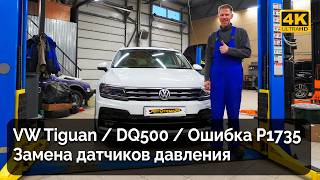
2017 VW Tiguan with DQ500 DSG, sudden limp mode and P1735/P1736 codes.
The gearbox went into limp mode, losing odd gears and reverse.
Outcome: The DIY repair failed due to poor soldering. The owner paid €2100 to a professional service to fix the botched repair.
Lesson: Mechatronic sensor replacement is a high-risk DIY job. Poor soldering causes incorrect pressure readings. Leave this to professionals.
How to Prevent This Code From Triggering
- Perform regular transmission fluid and filter changes. (Every 40,000 miles for VAG DSG; every 30,000 miles for Honda.) — Clean fluid prevents contaminated oil from causing electronic or hydraulic failures in the mechatronic unit or solenoids.
- Perform a '3x drain and fill' on Honda transmissions. (Every 30,000 miles.) — High-pressure flushes dislodge debris that clogs solenoids. The 3x drain-and-fill safely replaces old fluid.
- Install an auxiliary transmission cooler. (Once, if towing or in hot climates.) — Reduces operating temperature, extending the life of solenoids and the TCM.
- Use the parking brake correctly before shifting to Park. (Every time you park.) — Places vehicle weight on the brake, not the transmission's parking pawl, reducing internal stress.
Frequently Asked Questions
Can I just clear the P1735 code and keep driving?
No. The code returns immediately because the underlying hardware has failed. Ignoring it causes severe transmission damage and leaves you stranded.
Is a P1735 code expensive to fix?
It depends on the vehicle. A Honda solenoid replacement costs $150-$450, while a VW/Audi mechatronic repair at a specialist runs $1,000-$1,800. Dealership mechatronic replacements often exceed $3,000.
What is a mechatronic unit?
It is the electro-hydraulic control center of a DSG transmission. It combines the computer (TCM), sensors, and hydraulic valves into a single module inside the gearbox.
Will changing the transmission fluid fix a P1735 code?
A fluid change fixes the issue on Hondas if dirty fluid caused a solenoid to stick. On VW/Audi vehicles, a sensor has already failed electrically, so new fluid will not solve the problem.
Why did my car lose only the odd (1, 3, 5, 7) gears?
VW/Audi DSG transmissions use two separate clutches. P1735 indicates the sensor for Clutch 1 (odd gears) failed, prompting the computer to disable those gears for safety.
What's the difference between a mechatronic repair and replacement?
A replacement swaps the entire $2,500+ unit for a new one. A repair involves a specialist opening your existing unit and replacing only the failed sensors, saving you thousands.
Key Takeaways
- P1735 points to a failed mechatronic clutch position sensor in VW/Audi vehicles, or a stuck shift solenoid in Honda models.
- Driving with P1735 is unsafe because the transmission will lock into a single gear or suddenly lose power in traffic.
- VW/Audi owners save over $1,500 by having an independent specialist repair the internal mechatronic sensors instead of paying a dealer for a full unit replacement.
- Diagnosing VAG vehicles requires an advanced scan tool like VCDS to verify negative pressure readings (e.g., -0.74 bar) from the failing clutch sensor.
- Replacing a mechatronic unit or sensor requires a mandatory software adaptation procedure; skipping this step causes immediate shifting failures and new codes like P175E.
Helpful Videos

The information in this article is provided for general reference and educational purposes only. Vehicle specifications, procedures, and part compatibility can vary by production date, trim level, and region. Always consult your vehicle's factory service manual and verify part numbers before purchasing or performing repairs. Safety-critical components such as airbags, seat belts, and braking systems should be installed by a qualified professional.
- 🎬 Helpful Videos
- What Does P1735 Mean?
- Can I Drive With P1735?
- Common Causes
- Symptoms
- Diagnostic Flowchart
- Common Fixes & Costs
- Used vs. New Parts: Buying Guide
- What Happens If You Wait — Timeline
- Cost of Not Fixing It
- Diagnosis Steps
- When This Code Triggers (Freeze-Frame Conditions)
- Related Codes
- Climate & Environmental Factors
- How to Talk to a Mechanic About This Code
- Where to Take It: Dealer vs Independent vs Chain
- When to Walk Away From the Repair
- What Scan Tool You Need for This Code
- How to Clear the Code After You Fix It
- Will This Fail Emissions / State Inspection?
- Most Commonly Affected Vehicles
- Manufacturer-Specific Notes
- Real Owner Stories
- 2018 Audi A3 at 60k miles with intermittent 'Gearbox Malfunction' light.
- 2010 Honda Fit with 123k miles and a flashing 'D' light.
- 2017 VW Tiguan with DQ500 DSG, sudden limp mode and P1735/P1736 codes.
- How to Prevent This Code From Triggering
- Frequently Asked Questions
- Can I just clear the P1735 code and keep driving?
- Is a P1735 code expensive to fix?
- What is a mechatronic unit?
- Will changing the transmission fluid fix a P1735 code?
- Why did my car lose only the odd (1, 3, 5, 7) gears?
- What's the difference between a mechatronic repair and replacement?
- Key Takeaways
- 🎟️ Get 5% Off