

OBD-II Code P1726: Engine Speed or Throttle Problem
What P1726 means, why it triggers, and how to fix it
- Verify your manufacturer's specific definition for P1726 before buying parts, as it means 'Electric Throttle Control System' on a Nissan but 'UD Hydraulic Pressure Switch Circuit' on a Chrysler.
- Clean the electronic throttle body first, as carbon buildup causing a stuck throttle plate is responsible for over 80% of P1726 codes on Nissan and Ford vehicles.
- Perform a mandatory 'Idle Air Volume Learning' procedure after cleaning or replacing the throttle body on Nissan and Infiniti models to restore the idle speed to the factory 650-750 RPM range.
- Diagnose vacuum leaks using an automotive smoke machine before replacing electronic sensors, as unmetered air frequently causes the high idle (1500+ RPM) that triggers this code.
What Does P1726 Mean?

P1726 is a manufacturer-specific OBD-II code, meaning its definition changes depending on your vehicle. Most commonly, it indicates the PCM detected a problem with engine speed control, often related to the electronic throttle system. The PCM sees engine RPM is not decreasing when commanded, or receives conflicting signals from the throttle and pedal sensors. On Nissans, it points to the Electric Throttle Control System; on Fords, it means 'Insufficient Engine Speed Decrease During Self Test'.
Technical definition: There is no universal SAE definition for P1726. The meaning is assigned by the vehicle manufacturer. Common definitions include: - **Ford/Lincoln/Mercury**: 'Insufficient Engine Speed Decrease During Self Test' - **Nissan/Infiniti**: 'Electric Throttle Control System' or 'Delivered Torque Signal Malfunction' - **Land Rover/Jaguar**: 'Malfunction of Excessive Engine Speed' - **Chrysler/Dodge/Jeep**: 'UD Hydraulic Pressure Switch Circuit' (Transmission code) - **Hyundai**: 'TPS/APS Input-Loss of Signal' or 'Lost Communication With FICM' - **Kia**: 'Engine Overspeed' or 'Low Speed CAN Communication Bus Performance' - **Volkswagen/Audi**: 'Wheel Speed Signal 4 Range / Performance' (ABS code)
Can I Drive With P1726?
Yes, But With Caution. You can drive, but do not do so for extended periods. Your car will likely have a high idle, poor acceleration, or suddenly enter a low-power 'limp mode,' which is unsafe in traffic. The engine might stall shortly after starting. Continuing to drive with this fault causes an incorrect air-fuel mixture, permanently damaging the catalytic converter over time—a repair costing over $1,500. Limit driving and diagnose promptly.
Common Causes


- Dirty or Failing Electronic Throttle Body (ETB) (Very Common) — Carbon buildup is the primary cause, making the throttle plate stick and preventing it from closing. This keeps engine RPMs too high. The internal electronics, motor, or integrated Throttle Position Sensor (TPS) can also fail, leading to erratic behavior.
- Vacuum Leaks (Common) — Cracked vacuum hoses, a faulty PCV valve, or a bad intake manifold gasket allows unmetered air into the engine. This extra air leans out the air-fuel mixture and forces the engine to idle higher than expected, triggering the code.
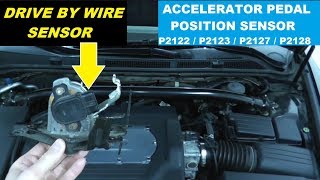
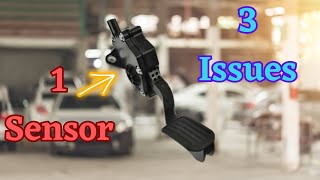
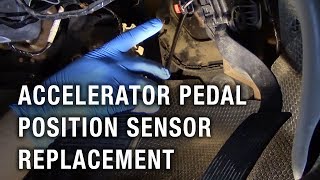
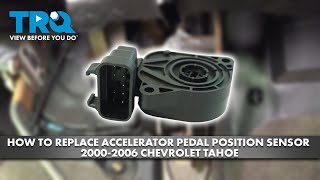
- Faulty Accelerator Pedal Position (APP) Sensor 🎬 Watch: How to test and replace the accelerator pedal sensor. (Common) — This sensor tells the computer how far you are pressing the gas pedal. If it sends an erratic signal, the computer receives conflicting information and sets this code to prevent unintended acceleration.
- Wiring or Connector Issues (Less Common) — Damaged, corroded, or loose wiring pins in the connectors for the throttle body, APP sensor, or MAF sensor cause intermittent signal drops. This is a frequent point of failure in high-humidity environments.
- Fouled or Faulty EGR Valve (Less Common) — Particularly on Ford trucks with diesel engines, a carbon-fouled or stuck-open EGR valve disrupts airflow and prevents RPMs from dropping correctly during the self-test.
- Faulty Mass Airflow (MAF) Sensor (Less Common) — A dirty or failing MAF sensor sends incorrect airflow readings to the computer. This causes the engine to run lean or rich, leading to an unstable idle that mimics a throttle body problem.
- Low Battery Voltage or Poor Grounds (Rare) — A weak battery or corroded ground connections cause erratic behavior and communication faults between modules. Low voltage leads to incorrect sensor readings and falsely triggers a P1726 code.
- CAN Bus Communication Fault (Rare) — On vehicles where P1726 relates to signal loss (Hyundai, Kia), the problem is a fault in the Controller Area Network (CAN) bus wiring, preventing the engine, transmission, and 4WD modules from communicating.
Symptoms

- Check Engine Light is On — The Malfunction Indicator Lamp (MIL) illuminates on your dashboard. The light flashes if a severe misfire is detected.
- High or Erratic Idle — The engine idles much faster than normal (1500-2000 RPM), or surges up and down without pedal input.
- Poor or No Acceleration (Limp Mode) — The vehicle hesitates, feels sluggish, or does not respond when you press the gas pedal as the computer enters a protective 'limp mode'.
- Engine Stalls at Idle — The engine starts but dies within seconds unless the accelerator is pressed. This happens when a dirty throttle body cannot maintain the correct idle position.
- Unintended Acceleration or Difficulty Slowing Down — The engine RPMs stay high even after you take your foot off the gas, making it difficult to slow the vehicle down and increasing braking distances.
- Cruise Control Inoperative — Because the electronic throttle control system is integral to cruise control, a P1726 fault disables the cruise control system entirely.
Diagnostic Flowchart
Tap your situation to follow the diagnostic path that matches what you're seeing on this code.
Common Fixes & Costs
- Clean or Replace Electronic Throttle Body — Parts: $150 - $850, Labor: $100 - $250, ~1.2 hr book time (Intermediate)
- Repair Vacuum Leak (Hose or Gasket) — Parts: $10 - $100, Labor: $100 - $300, ~1.5 hr book time (DIY)
- Replace Accelerator Pedal Position Sensor — Parts: $70 - $300, Labor: $50 - $170, ~0.7 hr book time (DIY)
- Repair Wiring or Connectors — Parts: $5 - $50, Labor: $150 - $400, ~2 hr book time (Advanced)
- Replace Exhaust Gas Recirculation (EGR) Valve — Parts: $150 - $400, Labor: $100 - $250, ~2.5 hr book time (Intermediate)
- Replace Powertrain Control Module (PCM) — Parts: $800 - $1,700, Labor: $100 - $200, ~1.5 hr book time (Advanced)
DIY vs Professional
- Clean or Replace Electronic Throttle Body — Beginner:
Tools: Socket set, screwdrivers, throttle body cleaner, soft cloths, torque wrench. - Repair Vacuum Leak — Beginner:
Tools: Flashlight, pliers, screwdriver. An automotive smoke machine is highly recommended. - Replace Accelerator Pedal Position Sensor — Beginner:
Tools: Basic socket set or screwdrivers. - Replace EGR Valve — Beginner:
Tools: Socket set with extensions and swivels, torque wrench, gasket scraper, penetrating oil. - Replace Powertrain Control Module (PCM) — Beginner:
Tools: Socket set, specialized scan tool for programming.
Used vs. New Parts: Buying Guide
When a used part is worth it: A used OEM electronic throttle body (ETB) from a low-mileage vehicle is a cost-effective option for older vehicles where a new part is discontinued or prohibitively expensive.
Donor-vehicle mileage cap: roughly under 70000 miles for the part to have meaningful remaining life.
Donor quality checklist:
- Verify the donor vehicle was not scrapped due to engine or electrical failure.
- Inspect the part for corrosion, physical damage, or excessive carbon buildup.
- Match the part number exactly, as visually identical parts have different internal programming.
Decision logic:
- If Vehicle is less than 10 years old and the new part is under $400 → Buy a new OEM or reputable aftermarket part for better reliability and warranty.
- If Vehicle is over 10 years old and budget is a primary concern → A used part is a reasonable choice, but accept the risk of a shorter lifespan.
- If The specific ETB model has a known high failure rate → Favor a new part, as a used one is prone to the exact same failure.
Warranty tradeoff: Used parts typically come with a 30-90 day warranty covering the part only. New aftermarket parts offer a 1-year to limited lifetime warranty. Labor is never covered.
Worst-case if a used part fails: 400-800 if a used part fails shortly after the warranty period, requiring a second replacement part plus repeat labor costs.
What Happens If You Wait — Timeline
- 0-1 month: Check Engine Light is on. Idle is slightly high (900-1100 RPM) or occasionally surges when coming to a stop. No other major symptoms are consistently present. (MPG impact: 3-5%% · Added cost: $20-50 in wasted fuel)
- 1-3 months: Idle becomes consistently high (1200-1800 RPM), making the car harder to slow down. The engine stalls when started cold. 'Limp mode' triggers intermittently, causing sudden power loss. (MPG impact: 5-15%% · Added cost: $50-150 in wasted fuel. Increased wear on brake pads from fighting the high idle.)
- 3-6 months: A consistently incorrect air-fuel mixture from a vacuum leak or stuck throttle overheats the catalytic converter. The vehicle runs poorly, with noticeable hesitation. (MPG impact: 15-25%% · Added cost: $1200-2800 as the catalytic converter becomes permanently damaged and requires replacement.)
- 6+ months: Catastrophic failure of the catalytic converter occurs. Uncontrolled high RPMs put sustained stress on the transmission and internal engine components, accelerating wear. (MPG impact: 25%+% · Added cost: $2000-4500+ for replacement of the catalytic converter plus potential transmission or engine damage.)
Cost of Not Fixing It
- 0-1 month: Reduced fuel economy, unpredictable throttle response, and potential for stalling or entering limp mode. (Added cost: 50-100)
- 1-6 months: A consistently high idle or incorrect air-fuel mixture overheats the catalytic converter, leading to internal damage. (Added cost: 1200-2800)
- 6+ months: Sustained stress on the engine and transmission from uncontrolled RPMs accelerates wear on internal components. (Added cost: 1500-4000+)
Diagnosis Steps
- Read Codes and Review Freeze Frame Data
Use an OBD-II scanner to confirm P1726 is present and check for related codes (e.g., P2101, P0725). Freeze frame data shows the engine's condition (RPM, vehicle speed, throttle position) at the exact moment the fault occurred.
Tools: OBD-II Scanner (Beginner) - Perform a Thorough Visual Inspection
Check for cracked, disconnected, or collapsed vacuum hoses. Inspect the air intake tube for rips. Examine wiring harnesses going to the throttle body, APP sensor, and MAF sensor for damage or corrosion.
Tools: Flashlight, Inspection Mirror (Beginner) - Clean the Electronic Throttle Body
Remove the air intake tube. Use a dedicated throttle body cleaner and a soft cloth to clean carbon from the throttle plate and bore. Have a helper turn the key to 'ON' (engine off) and press the gas pedal to open the plate. Do NOT force the plate open manually.
Tools: Screwdriver/Ratchet Set, Throttle Body Cleaner, Soft Cloth (Intermediate) - Perform an Idle Relearn Procedure
After cleaning the throttle body, many vehicles (especially Nissan/Infiniti) require an 'idle relearn' procedure to recalibrate the system. If not performed, the idle remains high or erratic.
Tools: Vehicle-specific instructions, bi-directional scan tool (Intermediate) - Check for Vacuum Leaks with a Smoke Machine
A smoke machine fills the intake system with high-density smoke under low pressure. Smoke pours out of any leak point, such as a cracked hose or bad gasket. This is the most reliable way to find unmetered air leaks.
Tools: Automotive Smoke Machine (Intermediate) - Analyze Live Sensor Data (APP & TPS)
Monitor Accelerator Pedal Position (APP) and Throttle Position Sensors (TPS) on a scan tool. APP readings must change smoothly from 0% to 100% as you press the pedal, and TPS readings must follow. Glitches or non-correlation point to a faulty sensor.
Tools: Advanced OBD-II Scanner (Advanced) - Check Fuel Trims for Vacuum Leaks
Monitor Short-Term (STFT) and Long-Term (LTFT) Fuel Trims at idle. If LTFT is consistently above +10%, the PCM is compensating for unmetered air from a vacuum leak.
Tools: Advanced OBD-II Scanner (Advanced) - Test APP and TPS Circuit Voltages
Back-probe the sensor wires with a multimeter (key on, engine off). The APP and TPS must show a low voltage at rest (0.5-1.0V) and increase smoothly to a high voltage (4.0-4.8V). The 5V reference signal from the PCM must be stable.
Tools: Multimeter, Wiring Diagram, T-pins (Advanced) - Test Mass Airflow (MAF) Sensor Reading
Monitor the MAF sensor PID at a stable, warm idle. The reading should be between 2-7 grams/second (g/s) depending on engine size (multiply displacement in liters by 1.8). A significantly lower reading points to a vacuum leak after the MAF sensor.
Tools: Advanced OBD-II Scanner (Advanced) - Test Throttle Actuator Motor Resistance
Disconnect the throttle body connector. Measure the resistance between the two terminals for the throttle actuator motor. A normal reading is 2 to 15 Ohms. Infinity (OL) indicates an open circuit; near zero indicates a short.
Tools: Multimeter, Wiring Diagram (Advanced)
When This Code Triggers (Freeze-Frame Conditions)
- Engine Coolant Temp: 180-210°F (82-99°C) (The engine is fully warmed up and in closed-loop fuel control.)
- Engine RPM: 1200-2500 RPM (The fault sets during deceleration when the PCM expects RPM to drop but it does not.)
- Vehicle Speed: 25-60 mph (40-97 km/h) (Occurs during city or highway driving when throttle adjustments are frequent.)
- Throttle Position: < 5% (The code triggers when the driver lifts their foot off the accelerator, but engine RPM remains unexpectedly high.)
Related Codes
- P2101 — Throttle Actuator Control Motor Circuit Range/Performance. Appears with P1726 because it directly relates to a problem with the electronic throttle body's motor. P1726 is the symptom; P2101 is the specific component fault.
- P0725 — Engine Speed Input Circuit Malfunction. Logged by the Transmission Control Module (TCM) when it doesn't receive a reliable engine speed signal from the PCM due to the erratic idle caused by P1726.
- P0826 — Up and Down Shift Switch Circuit. Appears with P1726 on Nissans when CAN communication issues between the engine and transmission modules disrupt multiple functions.
- P2111 / P2112 — Throttle Actuator Control System is Stuck Open or Stuck Closed. If you have P2111, the computer confirms the throttle plate is physically stuck open, which directly explains the P1726 symptom.
Climate & Environmental Factors
- Cold Weather: Extreme cold makes plastic vacuum lines and intake components brittle, increasing the likelihood of them cracking and causing vacuum leaks.
- High Humidity / Moisture: Humid environments accelerate corrosion on the electrical connectors for the throttle body, APP sensor, and MAF sensor, leading to intermittent signal loss.
- High Altitude: Air is less dense at high altitudes, naturally lowering MAF sensor readings. A marginal MAF sensor is pushed outside its expected operating range, triggering a fault code.
How to Talk to a Mechanic About This Code
Say this: "I have a [Your Make/Model] with a P1726 code and a high idle. I know this is a manufacturer-specific code. I'd like to schedule a diagnostic to determine if the cause is a vacuum leak, a dirty throttle body, or an electrical issue before any parts are replaced."
This signals that you understand the code's complexity and directs the shop to perform a proper diagnosis rather than jumping to an expensive part replacement. It establishes you as an informed customer.
Avoid saying:
- 'My check engine light is on, can you just fix it?'
- 'My car is idling funny, just replace the throttle body.'
- 'A guy at the parts store said it's a transmission code.'
Questions to ask before authorizing the repair:
- Did you confirm the specific cause? Was it a vacuum leak, the throttle body itself, or something else?
- If it's a vacuum leak, can you show me the smoke test results?
- If it's the throttle body, did you try cleaning it first or is it electronically failed?
- If a part is being replaced, is an idle relearn procedure required and is that included in the labor cost?
Where to Take It: Dealer vs Independent vs Chain
- Dealer:
Best for unusual definitions of P1726 or if the vehicle is still under warranty. For common Ford/Nissan throttle issues, they are a reliable but expensive option.
Best for: Vehicles under warranty, Complex manufacturer-specific definitions (e.g., Chrysler transmission or Hyundai CAN bus faults), Repairs requiring PCM programming or access to proprietary software
Downsides: Higher labor rates, often 1.5-2x more than independent shops., Defaults to replacing an entire assembly when a smaller component or cleaning suffices. (Typical cost: +50% vs. baseline) - Independent Shop:
Best fit for the most common causes of P1726. A reputable independent shop with ASE-certified technicians diagnoses this cost-effectively.
Best for: Out-of-warranty vehicles with common P1726 definitions (e.g., Nissan/Ford throttle issues), Owners seeking a better value and a direct relationship with the technician
Downsides: Diagnostic capability varies; ensure they have tools like a smoke machine and a bi-directional scanner., Less experience with very new models or rare code definitions. (Typical cost: +0% vs. baseline) - Chain Shop:
High risk. They replace parts but are less likely to accurately diagnose a vacuum leak, wiring problem, or perform a necessary relearn procedure. Avoid for complex diagnostic codes like P1726.
Best for: Simple, routine maintenance like oil changes and tires.
Downsides: Technician skill and diagnostic equipment are inconsistent., Business model incentivizes quick part replacements over thorough diagnosis. (Typical cost: -10% vs. baseline)
When to Walk Away From the Repair
If the estimated repair cost exceeds 40-50% of the car's Kelley Blue Book (KBB) private-party value, pause and consider alternatives like selling the car as-is.
- Car worth $4000, fix is $1100: Borderline. A $1,100 throttle body replacement is about 28% of the car's value. Get a second opinion to confirm a cheaper fix isn't possible before authorizing.
- Car worth $12000, fix is $1100: Fix it. The repair cost is well below the threshold and is a reasonable investment to maintain a valuable vehicle.
- Car worth $2500, fix is $1100: Walk away. The repair cost is nearly 45% of the vehicle's value. Sell it as-is or scrap it.
What Scan Tool You Need for This Code
Minimum: A scanner that reads manufacturer-specific code definitions and displays live sensor data.
A basic $20 code reader only shows 'P1726,' which is useless as the definition changes by brand. You need to see live data for the Accelerator Pedal Position (APP) and Throttle Position (TPS) sensors, as well as fuel trims, to properly diagnose the issue.
Budget: BlueDriver Pro (~$100) — Reads manufacturer-specific codes, provides freeze-frame data, and allows graphing of live data like APP vs. TPS and fuel trims to distinguish between a bad sensor and a vacuum leak.
Mid-range: Foxwell NT510 Elite / Autel MaxiCOM MK808 (~$150-400) — Adds bi-directional control. These tools command a mandatory 'Idle Relearn Procedure' after servicing the throttle body on brands like Nissan, which a basic scanner cannot do.
Professional: Autel MaxiSys MS906 / Launch X431 Series (~$900-1500) — Offers full OE-level bidirectional functions, including advanced coding and programming for replacing modules like the PCM or TCM.
Rent vs buy: For P1726, buying is better. Diagnosis is a process (scan, clean, scan again, relearn). A budget pick like BlueDriver is more practical than multiple trips to rent a basic reader. If a relearn is needed, a mid-range tool is a worthwhile investment.
How to Clear the Code After You Fix It
- Use an OBD-II scan tool to clear the P1726 code and related fault codes.
- Perform a vehicle-specific Idle Relearn Procedure if the throttle body was cleaned or replaced.
- Complete a full OBD-II drive cycle to allow readiness monitors to run.
Drive cycle (~30 minutes): A generic drive cycle includes a cold start, 2-3 minutes of idling, 10-15 minutes of mixed city/highway driving (including steady speeds around 55 mph), and several stop-and-go periods.
Readiness monitors affected: Catalyst Monitor, Evaporative System (EVAP) Monitor, Oxygen (O2) Sensor Monitor
Before emissions retest: drive at least 50 miles to fully set monitors.
Watch out for:
- Not performing the required idle relearn procedure after throttle body service, leading to a persistent high idle.
- Taking the vehicle for an emissions test before the readiness monitors complete their checks, resulting in an automatic failure.
- Clearing the code without fixing the underlying issue, causing the code to return promptly.
Will This Fail Emissions / State Inspection?
Yes — this code typically fails an OBD-II emissions inspection.
- California: An illuminated Check Engine Light from code P1726 is an automatic failure. A full drive cycle must be completed to set all readiness monitors before the vehicle passes the smog check.
- New York: The NYS DMV inspection includes an OBD-II scan. An active P1726 code causes the vehicle to fail the emissions portion of the inspection.
- Texas: In counties requiring emissions testing, an active P1726 code and illuminated MIL results in an inspection failure.
Most Commonly Affected Vehicles
- Nissan Altima, Maxima, Rogue, Sentra, Versa, Titan (2005-2016) — Extremely common. Means 'Electric Throttle Control System'. A dirty throttle body is the primary cause, and an idle relearn procedure is mandatory after service.
- Infiniti G35, G37, M35, QX56 (2005-2015) — Shares the same 'Electric Throttle Control System' definition and causes as Nissan. The idle relearn procedure is critical.
- Ford F-Series, E-Series, Explorer, Edge, Fusion (2004-2018) — Definition is 'Insufficient Engine Speed Decrease During Self Test'. Triggered by a sticking throttle body, vacuum leak, or a fouled EGR valve.
- Hyundai Tucson, Santa Fe, Terracan (2003-2012) — Means 'TPS/APS Input-Loss of Signal', pointing to a communication error between the Engine Control Module (ECM) and the 4WD Control Module (TCCU).
- Kia Sportage, Sorento (2008-2012) — Definition is 'Engine Overspeed' or 'Low Speed CAN Communication Bus Performance', indicating a network problem rather than a throttle issue.
- Land Rover / Jaguar Range Rover, Discovery, LR2, Evoque (2010-2015) — Defines P1726 as 'Malfunction of Excessive Engine Speed'. Caused by split intake manifolds or a sticking throttle body, resulting in a 'Restricted Performance' warning.
- Chrysler / Dodge / Jeep Various with 41TE or 42RLE automatic transmissions (2007-2014) — Means 'UD Hydraulic Pressure Switch Circuit.' It is a transmission-specific fault. Diagnosis must focus on the transmission valve body, solenoids, and wiring.
- Volkswagen / Audi Jetta, Passat, A4, and others (2005-2015) — Means 'Wheel Speed Signal 4 Range / Performance,' related to the ABS and traction control systems. It is not an engine or throttle code.
Manufacturer-Specific Notes
- Ford: The definition is 'Insufficient Engine Speed Decrease During Self Test.' During a Key-On-Engine-Running (KOER) diagnostic check, the computer commanded the throttle closed, but the engine's RPM did not drop below a 1600 RPM threshold.
- Nissan / Infiniti: An idle relearn procedure is mandatory after cleaning or replacing the throttle body. Failure to perform the relearn results in a persistent high or erratic idle. The procedure is done manually with a stopwatch and a specific sequence of pedal presses.
- Chrysler / Dodge / Jeep: P1726 has a completely different meaning: 'UD Hydraulic Pressure Switch Circuit.' This is a transmission-related code. Diagnosis focuses on the transmission's internal hydraulic circuits and valve body.
- Hyundai / Kia: P1726 means 'TPS/APS Input-Loss of Signal' or points to a CAN communication failure between the engine and 4WD control modules. The problem is electrical or network-related, not a mechanical part failure.
Real Owner Stories
2006 Nissan Altima 3.5 SE at 116K miles
The Service Engine Soon light had been on for three months. The car ran fine, but the code reader at an auto parts store showed P1726.
What they tried:
- The owner was concerned it was a major transmission issue and planned to go to a dealership.
Outcome: Forum members identified the code as 'Electronic Throttle Control System' and suggested the throttle body itself was the likely problem, not the transmission. The common fix is cleaning or replacing the throttle body.
Lesson: On Nissans, P1726 is flagged as a 'transmission' code by generic scanners because the faulty throttle signal affects the TCM, but the root cause is the electronic throttle system.
2004 Nissan Maxima 3.5 SE at 130K miles
The car started but immediately stalled unless the gas pedal was pressed to keep it running. A scanner showed a code related to the 'Electronic throttle control actuator'.
What they tried:
- The owner posted on a forum seeking advice before attempting any repairs.
Outcome: The recommended first step was to clean the throttle body. This is the most common cause of the 'start and stall' symptom. If cleaning fails, the next step is replacement, followed by an idle relearn procedure.
Lesson: A 'start and stall' symptom is a classic sign of a dirty throttle body that cannot maintain the correct idle position. Cleaning it is a cheap and effective first diagnostic step.
2011 Ford F-150 5.0L with multiple codes
After a no-start condition was temporarily fixed by replacing a fuel pump fuse, the truck ran very rough and threw multiple codes, including EGR, MAF, and cam actuator faults.
What they tried:
- The owner suspected the MAF sensor or Fuel Pump Driver Module (FPDM) due to the suspicious fuse.
Outcome: The symptoms of rough running and multiple circuit warnings are common when a primary electrical fault occurs. Forum advice pointed towards checking the fuel filter, fuel pressure, and coil packs, as a single failing component or a bad ground causes the PCM to report numerous unrelated faults.
Lesson: When P1726 appears with a large number of other electrical codes, suspect a systemic issue like a failing fuel pump, a bad ground, or a damaged wiring harness rather than a single faulty sensor.
2006 Hyundai Tucson V6
The vehicle presented with code P1726, but symptoms were related to inconsistent 4WD engagement, not engine performance.
What they tried:
- Technicians followed the Hyundai-specific diagnostic procedure.
Outcome: The code definition for this Hyundai is 'TPS/APS Input-Loss of Signal' between the engine computer (ECM) and the 4WD control module (TCCU) via the CAN bus. The fault was traced to a poor connection in the CAN communication line.
Lesson: Always verify the manufacturer-specific definition. On Hyundai/Kia models, P1726 is a communication network code related to the 4WD system, and has nothing to do with a mechanical throttle body.
How to Prevent This Code From Triggering
- Clean the Electronic Throttle Body (Every 50,000-75,000 miles, or when the air filter is replaced.) — Removes carbon and grime buildup that causes the throttle plate to stick, which is the primary cause of P1726. A clean throttle bore ensures smooth airflow.
- Inspect Vacuum Hoses (Every oil change or 10,000 miles.) — Checking for cracks, brittleness, or loose connections prevents vacuum leaks. Unmetered air forces the engine to idle high, directly triggering the code.
- Use High-Quality Fuel with Detergents (Every fill-up, if possible.) — Top-tier gasolines contain detergents that reduce carbon deposits throughout the fuel and intake system, lowering the chance of buildup on the throttle plate.
- Apply Dielectric Grease to Key Connectors (Once, or whenever connectors are disconnected.) — Applying dielectric grease to the seals of the throttle body and APP sensor connectors prevents moisture intrusion and corrosion, which cause intermittent signal loss.
- Maintain Proper Battery Voltage and Ground Connections (Check battery health annually.) — Low system voltage causes electronic modules to behave erratically and set false codes. Ensuring the battery provides at least 12.4V prevents phantom electrical issues.
Frequently Asked Questions
Is it safe to drive with code P1726?
It is not recommended for long distances. The vehicle frequently enters limp mode, causing a sudden loss of power that is dangerous in traffic. A sticking throttle also makes it difficult to slow the car down.
What is the most common misdiagnosis for P1726?
The most common misdiagnosis is replacing the electronic throttle body without ruling out vacuum leaks. Another critical mistake is ignoring the manufacturer's specific definition, leading to engine repairs on a Chrysler where P1726 is actually a transmission fault.
Can a bad battery cause a P1726 code?
Yes. A weak battery causes low voltage to modules and sensors, leading to incorrect readings and communication errors that falsely trigger a P1726 code. Always ensure the battery provides at least 12.4V with the engine off before diagnosing electronic faults.
How much does it cost to fix a P1726 code?
A simple vacuum hose replacement costs under $150, while cleaning the throttle body runs $100-$200. A full electronic throttle body replacement at a shop ranges from $500 to $1,100 depending on the vehicle.
Can I fix code P1726 myself?
Replacing a vacuum hose, cleaning the throttle body, or swapping the accelerator pedal sensor are DIY-friendly tasks. However, diagnosing the exact cause requires a bi-directional scanner. Stop DIYing and visit a shop if you need to replace a PCM or perform a mandatory idle relearn.
My Nissan has code P1726. What should I do first?
Thoroughly clean the electronic throttle body, as carbon buildup is the most frequent culprit. After cleaning, you must perform the idle relearn procedure for the engine to idle correctly. If cleaning fails, replace the throttle body.
What is an idle relearn procedure and do I need to do it?
An idle relearn teaches the car's computer how to control the idle speed after servicing the throttle body. Nissan and Infiniti vehicles strictly require this procedure to run correctly after a repair. Skipping it guarantees a persistent high or erratic idle.
Can P1726 cause my car not to start?
It rarely causes a complete no-start condition. It frequently causes a 'start and stall' symptom, where the engine fires up but immediately dies unless you apply the gas pedal. This happens because the throttle cannot maintain the correct idle position.
Why does my car show a transmission code with P1726?
The Transmission Control Module (TCM) relies on an accurate engine speed signal from the PCM to shift correctly. A P1726 fault creates an erratic engine speed signal, forcing the TCM to log a fault code like P0725 because it cannot get a reliable reading.
My car went into 'Restricted Performance' mode. Is this related to P1726?
Yes, on Land Rover and Jaguar vehicles, a P1726 'Excessive Engine Speed' fault directly triggers the 'Restricted Performance' warning. The vehicle enters this limp mode to protect the engine from damage due to uncontrolled RPMs.
Key Takeaways
- Verify your manufacturer's specific definition for P1726 before buying parts, as it means 'Electric Throttle Control System' on a Nissan but 'UD Hydraulic Pressure Switch Circuit' on a Chrysler.
- Clean the electronic throttle body first, as carbon buildup causing a stuck throttle plate is responsible for over 80% of P1726 codes on Nissan and Ford vehicles.
- Perform a mandatory 'Idle Air Volume Learning' procedure after cleaning or replacing the throttle body on Nissan and Infiniti models to restore the idle speed to the factory 650-750 RPM range.
- Diagnose vacuum leaks using an automotive smoke machine before replacing electronic sensors, as unmetered air frequently causes the high idle (1500+ RPM) that triggers this code.
Helpful Videos

![NISSAN Electronic Throttle Body [ETB] | EASY RE-LEARN Procedure](https://img.youtube.com/vi/hUlGxqylpCs/mqdefault.jpg)

The information in this article is provided for general reference and educational purposes only. Vehicle specifications, procedures, and part compatibility can vary by production date, trim level, and region. Always consult your vehicle's factory service manual and verify part numbers before purchasing or performing repairs. Safety-critical components such as airbags, seat belts, and braking systems should be installed by a qualified professional.
- 🎬 Helpful Videos
- What Does P1726 Mean?
- Can I Drive With P1726?
- Common Causes
- Symptoms
- Diagnostic Flowchart
- Common Fixes & Costs
- DIY vs Professional
- Used vs. New Parts: Buying Guide
- What Happens If You Wait — Timeline
- Cost of Not Fixing It
- Diagnosis Steps
- When This Code Triggers (Freeze-Frame Conditions)
- Related Codes
- Climate & Environmental Factors
- How to Talk to a Mechanic About This Code
- Where to Take It: Dealer vs Independent vs Chain
- When to Walk Away From the Repair
- What Scan Tool You Need for This Code
- How to Clear the Code After You Fix It
- Will This Fail Emissions / State Inspection?
- Most Commonly Affected Vehicles
- Manufacturer-Specific Notes
- Real Owner Stories
- 2006 Nissan Altima 3.5 SE at 116K miles
- 2004 Nissan Maxima 3.5 SE at 130K miles
- 2011 Ford F-150 5.0L with multiple codes
- 2006 Hyundai Tucson V6
- How to Prevent This Code From Triggering
- Frequently Asked Questions
- Is it safe to drive with code P1726?
- What is the most common misdiagnosis for P1726?
- Can a bad battery cause a P1726 code?
- How much does it cost to fix a P1726 code?
- Can I fix code P1726 myself?
- My Nissan has code P1726. What should I do first?
- What is an idle relearn procedure and do I need to do it?
- Can P1726 cause my car not to start?
- Why does my car show a transmission code with P1726?
- My car went into 'Restricted Performance' mode. Is this related to P1726?
- Key Takeaways
- 🎟️ Get 5% Off