

OBD-II Code P1724: Transmission Speed Signal Error
What P1724 means, why it triggers, and how to fix it
- Code P1724 has no universal definition; it means 'Incorrect Gear 4 Ratio' on a Ford, but indicates a 'Starter Interlock Short' on a Volkswagen.
- For Audi and VW models, check Technical Service Bulletins (TSBs) before replacing parts, as TSB 2033653 fixes this code with a simple $150-$350 software update.
- On 2010-2017 Subaru CVTs, P1724 strongly indicates a failed valve body requiring an $800-$1,200 OEM replacement, but check for 10-year/100,000-mile warranty extensions first.
- Never replace a $150 speed sensor without first using a multimeter to verify the wiring harness has a solid 5V or 12V reference signal and a clean ground.
What Does P1724 Mean?

P1724 means your Powertrain Control Module (PCM) or Transmission Control Module (TCM) detects a problem with the speed signals inside your automatic transmission. The computer sees a disagreement between how fast different internal parts are spinning or between engine speed and output speed. This code is highly manufacturer-specific, meaning its exact definition changes entirely depending on your car's brand.
Technical definition: A manufacturer-specific code indicating a fault in the transmission's rotational speed sensors, control circuits, or gear ratios. For Ford, it means 'Gear 4 Incorrect Ratio'. For Subaru, it relates to the 'Automatic Transmission Turbine 2 Speed Signal Circuit'. For Audi, it indicates 'Control Module Malfunctioning' or 'Signal for Immobilizer, Short Circuit to Ground'. For Volkswagen, it means 'Starter Interlock Circuit Short to Ground'. For Hyundai, it points to an 'Automatic Transmission Control Relay' fault.
Can I Drive With P1724?
yes_but_not_recommended. You can drive a short distance, but it is strongly discouraged. The transmission often shifts harshly, gets stuck in a single gear ('limp mode'), or fails to engage, creating a significant safety hazard. Continuing to drive escalates a minor sensor issue into catastrophic transmission failure, turning a $350 repair into a $4,000+ rebuild. Have the vehicle diagnosed immediately.
Common Causes

- Failed Transmission Speed Sensor (Very Common) — The transmission uses input and output speed sensors to monitor internal rotational speeds. One of these sensors has failed or its tone ring is damaged, sending an incorrect, erratic, or dead signal to the computer. 🎬 Watch: 5 signs of a bad speed sensor and replacement costs.
- Damaged Wiring or Corroded Connectors (Common) — Wiring harnesses and connectors for the speed sensors are exposed to harsh undercarriage conditions. Chafed wires, road salt corrosion, or water intrusion interrupt the 5V reference signal or ground path to the computer.
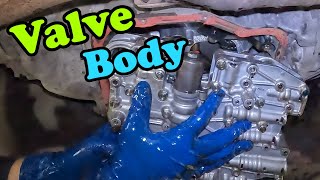
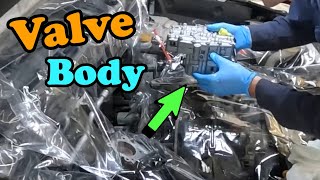
- Faulty Transmission Valve Body or Solenoid (Common) — The valve body directs hydraulic fluid to change gears. A stuck solenoid or clogged passage prevents a gear from engaging properly, leading to the incorrect speed ratio detected by the computer. This is the primary cause for Subaru CVTs. 🎬 See this step-by-step Subaru CVT valve body replacement guide.
- Low or Contaminated Transmission Fluid (Common) — Low fluid or fluid full of debris causes the transmission clutches to slip. This mechanical slipping creates a mismatch in speed sensor readings, triggering the code.
- Outdated TCM Software (Less Common) — The Transmission Control Module (TCM) has a software glitch causing overly sensitive diagnostics. On many Audi and VW models, an outdated software version triggers this code erroneously even when no hardware is broken.
- Faulty Automatic Transmission Control Relay (Less Common) — On vehicles like Hyundai, a dedicated relay supplies power to the transmission control system. Internal relay failure or corrosion interrupts power, triggering the fault code.
- Internal Mechanical Transmission Failure (Rare) — A worn-out clutch pack, slipping band, or damaged CDF drum (common on Ford 10R80) prevents the transmission from holding a gear, causing severe slippage and a speed ratio error.
Symptoms

- Harsh or Erratic Shifting — The transmission slams into gear, shifts at the wrong times, or slips between gears. This is often more pronounced in cold weather before the fluid warms up.
- Transmission Stuck in 'Limp Mode' — The transmission defaults to a single gear (usually 2nd or 3rd) to prevent further damage, resulting in sluggish acceleration and high RPMs at highway speeds.
- Inaccurate or Dead Speedometer — If the code relates to the output speed sensor, the speedometer stops working, fluctuates wildly, or shows an incorrect speed.
- Delayed or No Gear Engagement — The vehicle hesitates significantly before engaging Drive or Reverse, or fails to engage a gear entirely.
- Poor Fuel Economy — Incorrect shift timing forces the engine to operate outside its optimal RPM range, causing a noticeable 10-20% decrease in fuel efficiency.
- Check Engine Light is On (also visible on scanner) — The Malfunction Indicator Lamp (MIL) illuminates immediately. A dedicated transmission warning light (gear symbol) also activates on many European models.
Diagnostic Flowchart
Tap your situation to follow the diagnostic path that matches what you're seeing on this code.
Common Fixes & Costs
- Replace Transmission Speed Sensor — Parts: $25-$150, Labor: $125-$300, ~1.5 hr book time (DIY)
- Update TCM/PCM Software — Parts: $0, Labor: $150-$350, ~1.5 hr book time (Professional)
- Replace Transmission Valve Body — Parts: $800-$2,800, Labor: $400-$1,200, ~4.5 hr book time (Professional)
- Perform Transmission Fluid and Filter Change — Parts: $75-$250, Labor: $150-$300, ~1.5 hr book time (DIY)
- Repair Wiring Harness or Connector — Parts: $10-$50, Labor: $200-$600, ~3.0 hr book time (Intermediate)
- Replace Automatic Transmission Control Relay — Parts: $15-$60, Labor: $50-$150, ~0.2 hr book time (DIY)
- Replace or Reprogram TCM/PCM — Parts: $500-$2,200, Labor: $150-$400, ~2.5 hr book time (Professional)
DIY vs Professional
- Replace Transmission Speed Sensor — Beginner:
Tools: Socket set, wrench, jack and jack stands, drain pan. - Replace Automatic Transmission Control Relay — Beginner:
Tools: None, or a small trim removal tool. - Perform Transmission Fluid and Filter Change — Beginner:
Tools: Socket set, drain pan, funnel, torque wrench, fluid pump. - Repair Wiring Harness or Connector — Beginner:
Tools: Multimeter, wire strippers, wire cutters, heat shrink connectors, wiring diagrams. - Replace Transmission Valve Body — Beginner:
Tools: Extensive socket/wrench set, torque wrench, service manual, pristine clean work area. - Update TCM/PCM Software — Beginner:
Tools: Manufacturer-specific diagnostic interface and a subscription to the manufacturer's service network.
Used vs. New Parts: Buying Guide
When a used part is worth it: For a high-cost component like a Subaru CVT Valve Body, a used part is never recommended. The failure rate of used or aftermarket units is notoriously high. A used part only makes sense for external sensors or relays if the budget absolutely prohibits a new part.
Donor-vehicle mileage cap: roughly under 50000 miles for the part to have meaningful remaining life.
Donor quality checklist:
- Verify the exact OEM part number matches; superseded parts have critical updates.
- Obtain the VIN of the donor car to check its history for transmission issues.
- Avoid parts from high-mileage vehicles, as solenoids have the same wear as the failed unit.
Decision logic:
- If The part is a Subaru CVT valve body. → Buy a new OEM part. Savings from a used unit are not worth the high risk of repeat failure and paying labor twice.
- If The part is an external speed sensor or relay. → Used is acceptable from a reputable salvage yard, but new aftermarket parts are inexpensive enough to be the better choice.
- If The part is a Transmission Control Module (TCM). → A used part works, but MUST be reprogrammed for your vehicle's VIN using specialized tools.
Warranty tradeoff: Used parts typically have a 30-90 day warranty. New aftermarket parts carry a 1-year to limited lifetime warranty. New OEM parts offer the best guarantee of quality and fitment.
Worst-case if a used part fails: $800-$1500 if a used valve body fails after installation, requiring diagnostic time, a replacement part, and labor a second time.
What Happens If You Wait — Timeline
- 0-1 month: Code P1724 sets. Check Engine Light illuminates. Shifting is slightly harsher than normal or symptoms are intermittent. (MPG impact: 0-5%% · Added cost: $0-$50 in wasted fuel.)
- 1-3 months: Erratic shifting becomes frequent. The transmission hesitates or slips occasionally. Incorrect hydraulic pressures generate excess heat, accelerating fluid breakdown. (MPG impact: 5-10%% · Added cost: $50-$250 in wasted fuel and accelerated fluid degradation.)
- 3-6 months: Slipping is constant. Transmission fluid turns dark and smells burnt. Excessive heat warps steel plates and burns friction material off clutch packs. Limp mode engages frequently. (MPG impact: 10-20%% · Added cost: $300-$800 as internal clutch packs and seals are damaged, escalating a sensor issue into an internal transmission problem.)
- 6+ months: Catastrophic failure. Clutch packs are completely worn out. Metal shavings contaminate the entire hydraulic system, including the valve body and torque converter. The vehicle loses the ability to move. (MPG impact: 20%+% · Added cost: $3,000-$7,000 for a complete transmission rebuild or replacement.)
Cost of Not Fixing It
- Short-Term (0-3 months): Erratic shifting, poor fuel economy (5-15% drop), and potential to be stranded in 'limp mode'. The vehicle is unsafe in traffic. (Added cost: $50-$200 in wasted fuel.)
- Medium-Term (3-9 months): Continued slipping generates excessive heat, degrading transmission fluid and destroying internal seals and clutch packs. (Added cost: $250-$800 for a transmission fluid flush and solenoid replacement.)
- Long-Term (9+ months): Catastrophic internal transmission failure. Burnt fluid and worn clutches lead to a complete loss of gear engagement. (Added cost: $3,000-$7,000+ for a complete transmission rebuild or replacement.)
Diagnosis Steps

- Read the Trouble Codes & Check TSBs
Use an OBD-II scanner to confirm P1724 and check for related codes from the TCM and ABS modules. Search for Technical Service Bulletins (TSBs) for your specific VIN. Manufacturers like Audi issue software updates that are the primary fix for this code.
Tools: OBD-II Scanner, Internet access (Beginner) - Check Transmission Fluid Level and Condition
Ensure the transmission fluid is at the correct level according to the manufacturer's procedure. Check the fluid's color and smell; dark brown, black, or burnt-smelling fluid indicates severe internal wear. Metallic particles signal catastrophic damage.
Tools: Gloves, Rag, Dipstick (if applicable), Infrared Thermometer (Beginner) - Analyze Live Sensor Data
Using a scanner with live data, monitor the Input Speed Sensor (ISS), Output Speed Sensor (OSS), and ABS Wheel Speed Sensors while driving. The ISS must correlate with engine RPM, and the OSS must match the vehicle speed. Look for signal dropouts or erratic readings.
Tools: Advanced OBD-II Scanner (Intermediate) - Inspect Wiring and Connectors
Visually inspect the wiring harness going to the transmission, focusing on the speed sensors and the main transmission connector. Look for chafing, melting, corrosion, or loose connections. For Audi/VW, check for water ingress in the plenum chamber.
Tools: Flashlight, Mirror (Intermediate) - Test the Speed Sensor Circuit Voltage
Disconnect the sensor's electrical connector. Turn the ignition 'ON' (engine off). Set a multimeter to DC Volts. Probe the reference wire and a known good ground; it must read 5V or 12V. Probe the ground wire and the positive battery terminal; it must read battery voltage. No voltage indicates a wiring or TCM fault.
Tools: Multimeter, Vehicle-specific wiring diagram (Advanced) - Test Sensor & Solenoid Resistance
With the component disconnected, set a multimeter to Ohms (Ω). Probe the two pins on the speed sensor or suspect solenoid. The reading must fall within the manufacturer's specified range (typically 200-1,500 Ohms for sensors, 12-15 Ohms for solenoids). 'OL' (Open Loop) indicates a failed component.
Tools: Multimeter, Service Manual with specifications (Advanced) - Test the Control Relay and Circuit
For Hyundai or VW where the code points to a control relay, locate it in the fuse box. Swap it with an identical relay (e.g., the horn relay). If the problem moves, the relay is bad. If not, use a multimeter to check for power and ground at the relay socket.
Tools: Multimeter, Service Manual (Intermediate)
When This Code Triggers (Freeze-Frame Conditions)
- Engine Coolant Temp: 180-210°F (82-99°C) (The engine is fully warmed up, ensuring the system is in closed-loop operation.)
- Engine RPM: 1,800-2,500 RPM (The fault sets during steady-state cruising, not during hard acceleration or deceleration.)
- Vehicle Speed: 45-65 mph (72-105 kph) (Occurs at highway speeds when the transmission is in a higher gear and a speed ratio mismatch becomes obvious to the computer.)
- Engine Load: 25-55% (Happens under light to moderate throttle, such as maintaining speed on a flat road, where unexpected slipping is not anticipated by the TCM.)
Related Codes
- P0720 — Indicates an electrical fault in the Output Speed Sensor (OSS) circuit. P1724 sets because the faulty signal from the OSS is illogical. If you have P0720, it is the root cause of P1724.
- P0715 — Points to an electrical fault in the Input Speed Sensor (ISS) circuit. A faulty ISS signal directly causes the P1724 speed comparison error. Diagnose P0715 first.
- P0730 — A generic code for 'Incorrect Gear Ratio'. If both are present, it confirms the computer is detecting severe mechanical slippage.
- P2764 — On Subaru, this code for the Torque Converter Clutch (TCC) Solenoid Circuit is common alongside P1724. A faulty TCC solenoid is the root cause of the valve body failure triggering P1724.
Climate & Environmental Factors
- Cold Temperatures: Cold weather thickens transmission fluid, leading to delayed shifting on a cold start. This increased hydraulic resistance exposes underlying weaknesses or causes pressure deviations that trigger a speed signal error code.
- High Humidity and Road Salt: Salt is a powerful electrolyte that dramatically accelerates corrosion. Moisture and salt seep into connectors, causing corrosion on copper pins. This increases electrical resistance, creating a weak signal that triggers P1724.
How to Talk to a Mechanic About This Code
Say this: "I have an OBD-II code P1724 and I'd like to schedule a diagnostic. I know this is a manufacturer-specific code, so please start by checking for any Technical Service Bulletins for my VIN to rule out a software update. If no TSBs apply, please focus on analyzing the live data from the transmission speed sensors."
This signals you understand the code's complexity. It directs the shop to the cheapest fixes first (software) and guides them toward data-driven diagnosis instead of just replacing parts.
Avoid saying:
- 'My transmission is acting weird, can you fix it?'
- 'My check engine light is on, just do whatever it takes.'
- 'I think I need a new transmission.'
Questions to ask before authorizing the repair:
- If a software update is recommended: 'Does a specific TSB for my vehicle call for this update to fix P1724?'
- If a speed sensor replacement is recommended: 'Did you see the sensor's signal drop out or go erratic on a live data graph?'
- If a valve body is recommended: 'Have you confirmed my vehicle is not covered by the CVT warranty extension? Is the replacement part a new OEM unit?'
- If a wiring repair is recommended: 'Can you show me where the wiring is damaged and explain how you will seal the repair from moisture?'
- What is the warranty on this specific repair, in both months and miles?
Where to Take It: Dealer vs Independent vs Chain
- Dealer:
Recommended first stop for German makes (Audi/VW) and CVT-equipped Japanese makes (Subaru/Nissan) due to common software fixes and warranty extensions.
Best for: Audi, VW, Subaru, or Nissan vehicles, to check for software updates and warranty extensions., Vehicles still under the powertrain warranty., Complex internal transmission work requiring manufacturer-specific tools.
Downsides: Highest labor rates., Often recommends replacing a large assembly when only a smaller component failed. (Typical cost: +50% vs. baseline) - Independent Shop:
Excellent choice for sensors, wiring, or relays on Ford or Hyundai vehicles. For Subaru, ensure they use new OEM valve bodies. For Audi/VW, verify they can perform software updates.
Best for: Out-of-warranty vehicles, especially domestic (Ford) and Korean (Hyundai) brands., Diagnosing and replacing common failures like speed sensors, relays, and wiring.
Downsides: Quality varies widely; a general mechanic lacks deep transmission knowledge., Lacks proprietary software flashing tools for brands like Audi/VW. (Typical cost: +0% vs. baseline) - Chain Shop:
AVOID for P1724 diagnosis and repair. The risk of misdiagnosis or an expensive upsell is very high.
Best for: Getting a second opinion on a code reading (often free).
Downsides: Technician skill is highly variable., High pressure to upsell; incorrectly diagnoses a sensor issue as needing a full transmission rebuild., Lacks specialized tools for complex transmission diagnostics. (Typical cost: -10% vs. baseline)
When to Walk Away From the Repair
If the estimated repair cost exceeds 40-50% of the car's private-party value, seriously consider selling the car as-is or trading it in.
- Car worth $4000, fix is $2200: Walk away. The repair cost is over 50% of the car's value.
- Car worth $15000, fix is $450: Fix it. This is a minor repair relative to the vehicle's value.
- Car worth $3000, fix is $3500: Walk away immediately. The repair costs more than the car is worth.
What Scan Tool You Need for This Code
Minimum: A scanner that reads manufacturer-specific transmission codes and displays live data streams for the Input and Output Speed Sensors.
A $20 code reader only shows 'P1724' without the crucial manufacturer definition. It cannot display the live sensor data needed to see if a sensor is failing.
Budget: BlueDriver Pro (~$100) — Connects to your phone via Bluetooth. Reads transmission codes and graphs live data from the transmission speed sensors to help spot glitches.
Mid-range: Foxwell NT510 Elite (~$180) — A handheld scanner providing dealer-level access to read specific TCM codes and perform advanced functions and resets for one specific car brand.
Professional: Autel MaxiCOM MK808S (~$450) — A diagnostic tablet offering bi-directional control to command solenoids and relays directly. Provides comprehensive live data graphing and supports transmission relearns.
Rent vs buy: If this is a one-time repair, auto parts stores have loaner programs where you borrow a capable scanner for free. Buy a scanner only if you do your own diagnostics regularly.
How to Clear the Code After You Fix It
- Use an OBD-II scan tool to clear the diagnostic trouble codes (DTCs).
- Perform a complete transmission drive cycle to allow the computer to relearn shift points.
- Check for pending codes after the drive cycle to ensure the fault has not returned.
Drive cycle (~30 minutes): Start the engine cold and idle for 3 minutes. Drive in stop-and-go city traffic for 15 minutes, including several complete stops. Accelerate onto a highway and drive at a steady 50-60 mph for 10 minutes. Safely pull over and idle in Drive, then Reverse, for 30 seconds each. Let the vehicle cool down completely.
Readiness monitors affected: Comprehensive Component Monitor (CCM), Transmission Control Module
Before emissions retest: drive at least 50 miles to fully set monitors.
Watch out for:
- Disconnecting the battery clears the code but resets all readiness monitors, guaranteeing an emissions test failure.
- The code returns immediately if the underlying mechanical or electrical fault is not repaired.
- Valve body or TCM replacements require a specific relearn procedure using a dealer-level scan tool.
Will This Fail Emissions / State Inspection?
Yes — this code typically fails an OBD-II emissions inspection.
- California: An illuminated Check Engine Light is an automatic failure. A stored Permanent Diagnostic Trouble Code (PDTC) causes a failure even if the light is off.
- New York: Any active trouble code that illuminates the Malfunction Indicator Lamp (MIL), such as P1724, results in an automatic inspection failure.
- Texas: In the 17 counties requiring emissions testing, an active P1724 code with the Check Engine Light on causes the vehicle to fail the OBD portion of the inspection.
Most Commonly Affected Vehicles
- Audi A4, A5, A6, S4, S5 (2010-2013) — Frequently caused by a software glitch. TSB 2033653/1 addresses P172400 on A4/A5/A6 with an ECM software update. TSB 2027363 addresses P1724 on S4/S5 models with a TCM software update. Water ingress in the plenum chamber also causes electrical shorts.
- Ford Explorer, Mustang, F-150 (2002-2010, 2018-2023) — The code points to 'Incorrect Gear 4 Ratio'. On 5R55 transmissions, this is caused by worn servo bores. On newer 10R80 transmissions, it signals a failing CDF clutch drum assembly.
- Subaru Impreza, Outback, Forester, Crosstrek (2010-2017) — Commonly linked to failures in the CVT valve body. Technicians strongly recommend replacing the entire valve body with a new OEM part. Subaru extended the CVT warranty on many models to 10 years / 100,000 miles.
- Nissan Altima, Rogue, Sentra, Versa, Murano, Maxima (2012-2019) — Often related to other speed sensor codes and points to internal CVT issues. Multiple class-action settlements resulted in extended warranties (e.g., 84 months/84,000 miles). Check for warranty coverage before paying for repairs.
- Hyundai Elantra, Santa Fe, Sonata (2004-2016) — Triggered by a faulty Automatic Transmission Control Relay, which supplies power to the transmission solenoids. This is a simple, inexpensive relay to replace.
- Volkswagen Passat, Jetta, GTI (2008-2016) — Defined as 'Starter Interlock Circuit Short To Ground'. This is an electrical fault caused by a bad relay, wiring short, or faulty ignition switch, not a mechanical transmission error.
- BMW Various models with ZF transmissions (2006-2015) — Defined as a generic 'Transmission electronic unit - internal error', pointing towards a fault within the Mechatronic unit itself.
- Peugeot/Citroën C4, 308 (2007-2015) — Indicates a 'Fault with the signal for the position of the gearbox actuator'. Points to a problem with the automated gear selection mechanism.
Manufacturer-Specific Notes

- Ford: The definition 'Gear 4 Incorrect Ratio' is specific. Diagnosis focuses on why the transmission slips in fourth gear. On 5R55 transmissions, suspect worn servo bores; on 10R80 transmissions, suspect the CDF clutch drum.
- Audi / Volkswagen: Frequently caused by a software issue, not hardware. TSB 2033653/1 and TSB 2027363 update control module software to fix overly sensitive diagnostics. Always check for TSBs before replacing parts.
- Subaru: Almost always a sign of a failing CVT valve body. The recommended fix is replacing the entire valve body assembly with a new OEM part. Check for coverage under Subaru's 10-year / 100,000-mile CVT warranty extension.
- Nissan: An early indicator of widespread CVT issues. Nissan settled multiple class-action lawsuits, resulting in warranty extensions for many models to 84 months/84,000 miles. Check for applicable warranty extensions before authorizing repairs.
Real Owner Stories
2015 Subaru Forester with 60K miles
Dashboard lit up with warning lights. Dealer diagnosed a P1724-family code and quoted $2,200 for a valve body replacement.
What they tried:
- Owner replaced the single faulty AWD solenoid for $55.
- Had a transmission shop perform a fluid drain and fill for $155.
- Performed the CVT relearn procedure at home using a Bluetooth scanner.
Outcome: The car drove normally with no codes immediately after the repair. The owner saved over $1,900, though aftermarket solenoid longevity remains a risk.
Lesson: For Subarus, the valve body is the common failure point. While replacing the entire OEM unit is the safest repair, advanced DIYers successfully replace just the failed solenoid for a fraction of the cost.
2013 Audi A4 with no driving issues
Transmission warning light came on, and a scan revealed code P172400 ('Control Module Malfunctioning'). The car drove perfectly with no harsh shifting.
What they tried:
- The owner took the vehicle to an Audi dealer for diagnosis.
Outcome: The dealer found TSB 2033653/1, stating the code is caused by overly sensitive diagnostic software. They performed a software update, permanently resolving the issue.
Lesson: On Audi and VW models, P1724 is frequently a 'ghost' code caused by a software glitch. Always check for TSBs before replacing expensive parts.
2015 Ford Explorer with 'Incorrect Gear 4 Ratio'
Check Engine Light came on with code P1724. The driver noticed occasional harsh shifting into 4th gear and hesitation at highway speeds.
What they tried:
- Mechanic checked the transmission fluid, which was slightly dark but not burnt.
- Live data analysis showed the output speed sensor signal dropping out intermittently.
- Mechanic replaced the Output Speed Sensor (OSS).
Outcome: Replacing the OSS resolved the shifting issues and the code did not return. Total repair cost was under $400.
Lesson: For Ford's 'Incorrect Gear Ratio' definition, a failing speed sensor is a common cause. Diagnosing with live data to watch sensor signals prevents unnecessary internal transmission repairs.
How to Prevent This Code From Triggering
- Change transmission fluid at recommended intervals. (Every 30,000 to 60,000 miles.) — Clean fluid lubricates moving parts, cools the transmission, and provides necessary hydraulic pressure. Degraded fluid leads to overheating, the number one cause of transmission failure.
- Use dielectric grease on electrical connectors. (Whenever a connector is disconnected.) — Creates a barrier that seals out moisture and oxygen, preventing the corrosion that causes electrical faults in sensor and relay circuits.
- Install an auxiliary transmission cooler. (One-time installation for towing or hot climates.) — Excessive heat breaks down transmission fluid and damages internal components. An auxiliary cooler lowers operating temperatures, extending transmission life.
- Regularly inspect and clean undercarriage wiring. (Annually or after winter in snowy climates.) — Road salt and grime accumulate on wiring harnesses, leading to corrosion and short circuits. Washing the undercarriage prevents electrical issues before they start.
Frequently Asked Questions
What are the most common mistakes when diagnosing P1724?
The biggest mistake is replacing a speed sensor without testing the circuit first. Use a multimeter to verify the sensor has power and ground. Secondly, use a scanner's live data to compare the transmission output speed signal with the ABS wheel speed sensor signals.
My Audi has a P1724 code but drives perfectly fine. What should I do?
For many 2010-2013 Audi models, this code is triggered by overly sensitive software in the engine or transmission control module, with no actual hardware fault present. Audi released Technical Service Bulletins (like TSB 2033653/1) to fix this with a software update. Contact a dealer to see if your vehicle requires this flash before replacing parts.
My Subaru has code P1724. Does that mean I need a new transmission?
Not necessarily. On Subarus with CVT transmissions, P1724 is most commonly caused by a failed valve body, not the entire transmission. Replacing the valve body is a significant repair but costs thousands less than a full transmission replacement.
Can a bad battery or electrical issue cause a P1724 code?
Yes, especially on Volkswagen and Audi models where P1724 is defined as 'Starter Interlock Circuit Short to Ground.' This is purely an electrical fault caused by a weak battery, a bad starter relay, a faulty ignition switch, or a wiring short. It is completely unrelated to the transmission's mechanical function.
What is the difference between a transmission Input Speed Sensor (ISS) and an Output Speed Sensor (OSS)?
The Input Speed Sensor (ISS) measures the speed of the transmission's input shaft connected to the engine. The Output Speed Sensor (OSS) measures the speed of the shaft sending power to the wheels. The TCM constantly compares these two signals to verify the correct gear ratio and detect slippage.
Can I fix code P1724 myself?
Replacing an external speed sensor or a plug-in relay is often a DIY-friendly repair requiring basic hand tools. However, if the cause is an internal valve body, complex wiring short, or requires a proprietary software update, you must take it to a professional.
How much does it cost to fix P1724?
Costs vary dramatically by manufacturer and root cause. A simple relay costs $20-$60, a dealer software update runs $150-$350, and a speed sensor replacement averages $150-$450. Major repairs like a Subaru valve body replacement cost $1,200-$2,800.
Will clearing the code fix the problem?
No. Clearing the code only temporarily erases the error message from the module's memory. The code returns as soon as the computer runs its diagnostic self-test and detects the fault again, usually within a few minutes of driving.
Key Takeaways
- Code P1724 has no universal definition; it means 'Incorrect Gear 4 Ratio' on a Ford, but indicates a 'Starter Interlock Short' on a Volkswagen.
- For Audi and VW models, check Technical Service Bulletins (TSBs) before replacing parts, as TSB 2033653/1 fixes this code with a simple $150-$350 software update.
- On 2010-2017 Subaru CVTs, P1724 strongly indicates a failed valve body requiring an $800-$1,200 OEM replacement, but check for 10-year/100,000-mile warranty extensions first.
- Never replace a $150 speed sensor without first using a multimeter to verify the wiring harness has a solid 5V or 12V reference signal and a clean ground.
Helpful Videos


The information in this article is provided for general reference and educational purposes only. Vehicle specifications, procedures, and part compatibility can vary by production date, trim level, and region. Always consult your vehicle's factory service manual and verify part numbers before purchasing or performing repairs. Safety-critical components such as airbags, seat belts, and braking systems should be installed by a qualified professional.
- 🎬 Helpful Videos
- What Does P1724 Mean?
- Can I Drive With P1724?
- Common Causes
- Symptoms
- Diagnostic Flowchart
- Common Fixes & Costs
- DIY vs Professional
- Used vs. New Parts: Buying Guide
- What Happens If You Wait — Timeline
- Cost of Not Fixing It
- Diagnosis Steps
- When This Code Triggers (Freeze-Frame Conditions)
- Related Codes
- Climate & Environmental Factors
- How to Talk to a Mechanic About This Code
- Where to Take It: Dealer vs Independent vs Chain
- When to Walk Away From the Repair
- What Scan Tool You Need for This Code
- How to Clear the Code After You Fix It
- Will This Fail Emissions / State Inspection?
- Most Commonly Affected Vehicles
- Manufacturer-Specific Notes
- Real Owner Stories
- 2015 Subaru Forester with 60K miles
- 2013 Audi A4 with no driving issues
- 2015 Ford Explorer with 'Incorrect Gear 4 Ratio'
- How to Prevent This Code From Triggering
- Frequently Asked Questions
- What are the most common mistakes when diagnosing P1724?
- My Audi has a P1724 code but drives perfectly fine. What should I do?
- My Subaru has code P1724. Does that mean I need a new transmission?
- Can a bad battery or electrical issue cause a P1724 code?
- What is the difference between a transmission Input Speed Sensor (ISS) and an Output Speed Sensor (OSS)?
- Can I fix code P1724 myself?
- How much does it cost to fix P1724?
- Will clearing the code fix the problem?
- Key Takeaways
- 🎟️ Get 5% Off