

P1720 on 2014-2017 Jeep Cherokee: Output Speed Rationality, Causes, and Fixes
On 2014-2017 Jeep Cherokees, particularly those with the 'Active Drive II' 4WD system, code P1720 almost always indicates a failing Power Transfer Unit (PTU) due to worn internal splines. This is a well-documented, widespread issue acknowledged by FCA with TSBs and a warranty extension. The only reliable fix is a complete PTU replacement, which is a costly and labor-intensive repair.
- P1720 on a 2014-2017 Cherokee is a serious code that almost always points to a failed Power Transfer Unit (PTU), not a simple sensor issue.
- This is a known manufacturing defect acknowledged by Jeep through multiple TSBs (21-014-23).
- Do not drive the vehicle, as the failure can cause a sudden loss of power or prevent the vehicle from staying in Park.
- The only reliable fix is to replace the entire PTU assembly, a very expensive repair.
- Before paying for repairs, contact a Jeep dealer with your VIN to check for eligibility under the extended warranty program for this specific issue.
What's Unique About the 2014-2017 Jeep CHEROKEE

The KL generation Cherokee with the 'Active Drive II' 4WD system (Sales Code DK4) is uniquely susceptible to this issue. The root cause is rarely the sensors themselves, but a catastrophic mechanical failure within the Power Transfer Unit (PTU). The splines connecting the transmission output shaft to the PTU's input shaft wear down prematurely and strip, causing a complete loss of mechanical connection. When this happens, the transmission output shaft can spin freely (or at a very different speed) from the front axle and wheels, creating the speed mismatch that the computer flags as P1720. FCA has acknowledged this design or manufacturing defect with multiple Technical Service Bulletins (TSBs) and a significant warranty extension for this specific failure.
Diagnostic Flowchart

Tap your situation to follow the diagnostic path that matches what you're seeing on this vehicle.
Symptoms You May Notice

- Check Engine Light (Malfunction Indicator Lamp) is on.
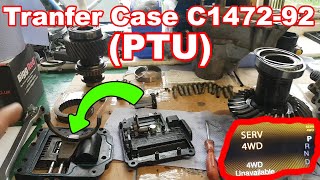
- "Service 4WD" message on the dashboard.
- Grinding, whining, or banging noise from the front of the vehicle that changes with speed.
- Vehicle may not move at all, despite the engine running and being in gear.
- Sudden loss of power while driving.
- Vehicle may jerk, bind, or shudder, especially when accelerating from a stop or during turns.
- A strong burning smell, sometimes compared to propane or gear lube, indicating overheating fluid from extreme friction. 🎬 See a real-world example of these symptoms and safety info.
- Replacing the output speed sensor or wheel speed sensors without diagnosing the PTU. Because the code definition points to sensors, mechanics unfamiliar with this specific Jeep issue may replace sensors first, only for the code to return because the underlying mechanical problem (the PTU) was not addressed. This wastes time and money.
- Assuming the issue is with the 9-speed transmission itself. While the ZF 9HP transmission has had its own share of problems and recalls, the P1720 code on this platform is almost exclusively tied to the PTU attached to it, not the transmission's internal components.
Most Likely Causes

- Worn Input Splines / Failed Power Transfer Unit (PTU) 🔴 High Probability A known design or manufacturing defect causes premature wear on the splines connecting the transmission output shaft to the PTU. This is most prevalent in models with the 'Active Drive II' (two-speed PTU) system. The wear completely severs the mechanical link between the transmission and the front wheels.
How to confirm: A technician will find P1720 often accompanied by P215C. Live data will show the transmission output speed sensor reading erratically or not at all, while wheel speed sensors read normally. A grinding noise is a strong indicator. The definitive confirmation is physical inspection of the stripped splines upon PTU removal.
Typical fix: Complete replacement of the Power Transfer Unit (PTU) assembly with an updated part. The new PTU typically comes pre-filled with fluid and includes a new actuator motor. The technician must also clear all DTCs and perform a test drive to verify the repair.
Est. part cost: $1700-$2500 - Failed Output Speed Sensor ⚪ Low Probability
How to confirm: Use a diagnostic scan tool to monitor the output speed sensor data stream. If the signal is erratic, drops out, or is nonexistent while the vehicle is moving (and the PTU is known to be good), the sensor is likely faulty. This is an uncommon cause for this specific code on this vehicle.
Typical fix: Replace the output speed sensor located on the transmission or transfer case.
Est. part cost: $50-$150 - Wiring or Connector Issue ⚪ Low Probability General wear and tear, heat exposure from the nearby exhaust, or damage can affect the wiring harness for the speed sensors. A 2016 recall for the ZF 9-speed transmission cited issues with improper wiring harness crimps causing similar symptoms.
How to confirm: Visually inspect the wiring harnesses and connectors for the output speed sensor and wheel speed sensors. Check for chafing, melting, corrosion, or loose connections. A multimeter can be used to test for continuity and proper voltage at the sensor connector.
Typical fix: Repair or replace the damaged section of wiring or the faulty connector.
Est. part cost: $20-$100
Rare But Worth Checking
- Faulty Wheel Speed Sensor or ABS Module: This is a very rare cause for P1720 alone. A faulty wheel speed sensor or ABS module would almost certainly trigger additional ABS-specific codes (like C-codes) and illuminate the ABS and traction control warning lights. However, an intermittent failure could theoretically contribute to the rationality check failing.
- Powertrain Control Module (PCM) or Transmission Control Module (TCM) Fault: Module failure is extremely rare. This should only be considered after all other possibilities, especially the common PTU failure, have been exhaustively ruled out. A software flash or update is sometimes required after other repairs.
Diagnosis Steps
- Scan the vehicle for all DTCs in all modules (Engine, Transmission, ABS). Note if P215C is also present, as this strongly points to the known PTU issue.
- Using a capable scan tool, monitor the live data for the transmission output speed sensor and all four wheel speed sensors while driving (if possible and safe).
- Observe the readings. A classic sign of PTU failure is seeing the wheel speed sensors report speed accurately while the transmission output speed sensor reads 0 RPM or is highly erratic.
- Listen for any grinding, whining, or binding noises from the front drivetrain area during operation. A metallic grinding noise is a tell-tale sign of spline failure.
- Inspect the wiring and connectors for the output speed sensor and wheel speed sensors for any visible damage, corrosion, or looseness.
- Given the high probability on this vehicle, if sensor readings are irrational and grinding noises are present, the diagnosis is almost certainly a mechanical PTU failure as described in TSB #21-014-23.
- Confirm the PTU failure through physical inspection of the stripped input splines 🎬 Watch: Can you fix a failed PTU yourself? upon removal of the unit.
Parts You'll Likely Need
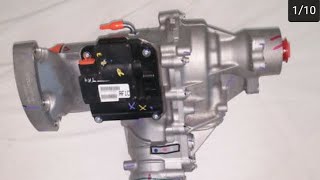
- Power Transfer Unit (PTU)
(OEM #68333255AF)— This is the component that fails. The official fix per Jeep's TSB is to replace the entire assembly with an updated part. This part number is for the two-speed PTU ('Active Drive II') and supersedes previous versions like 68333255AE, AD, AC, AB, and AA.
Trusted brands: Mopar
OEM price range: $1700-$2100
Related Codes That Often Appear With This One
- P215C-00 — This code, 'Output Shaft Speed Wheel Speed Correlation,' is functionally identical to P1720 and is triggered by the same PTU spline failure. TSB #21-014-23 explicitly lists both P1720 and P215C as the primary diagnostic codes for this issue.
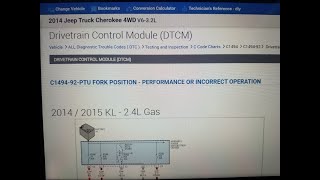
- C1415-92, C1440-64, C1496-92, C1499-92 — These are C-codes (Chassis codes) that are often stored in the Drivetrain Control Module (DTCM) or Rear Driveline Module (RDM) alongside P-codes in the PCM. They relate to motor position, clutch performance, or other errors within the 4WD system and often point to the same root PTU or related driveline failures.
Technical Service Bulletins (TSBs) & Recalls
- 21-014-23: 'Power Transfer Unit (PTU) Broken Input Spline XJ1 Warranty Extension' - This is the primary TSB identifying P1720 and P215C as symptoms of PTU spline wear and directing replacement of the PTU. It also specifies the 15-year/unlimited mile warranty extension.
- 21-017-21: The original TSB, now superseded by 21-014-23, which also identified the P1720 code with PTU failure.
Platform-Specific Known Issues
- A known defect causes the splines between the differential input and the transmission output shaft to wear out, leading to these codes.
- FCA (Chrysler) issued Technical Service Bulletin #21-014-23 (superseding #21-017-21) which details this exact problem and instructs technicians to replace the PTU assembly. It applies to KL Cherokees with Active Drive II (Sales Code DK4) built between April 14, 2014 and October 10, 2016.
- A warranty extension, code XJ1, was issued for this specific problem, extending coverage to 15 Years/Unlimited Miles for some vehicles. An earlier letter mentioned 8 years/150,000 miles. Owners must check their VIN with a dealer to confirm coverage, as there are reports of denials.
- Owner complaints filed with the NHTSA confirm this is a widespread issue, with some owners struggling to get the repair covered even with the known TSBs and warranty extension.
Mechanic-Grade Diagnostic Values
- Power Transfer Unit (PTU) Fluid Type — expected: 75W-90 Synthetic Gear Oil meeting Mopar specifications.. Failure: Fluid that is dark, smells burnt, or contains metallic particles ('glitter') indicates internal damage.
- Power Transfer Unit (PTU) Fluid Capacity — expected: Approximately 0.7 Liters (700 ml).. Failure: Low fluid level indicates a leak, which can lead to overheating and catastrophic failure.
Scan Tool Commands That Help
- wiTECH (Dealer Scan Tool): Reprogram PTU, RDM, and DTCM — As per TSB 21-015-15 for vehicles built on or before Dec 25, 2014, experiencing specific symptoms like being stuck in 4WL or with DTCs C1499-92/C1496-92. Note that a simple mechanical PTU replacement for spline failure does not typically require a reflash.
- wiTECH or equivalent professional scan tool: PROXI Alignment — This procedure is required after replacing certain control modules, such as the Drivetrain Control Module (DTCM), to ensure all modules on the vehicle's network can communicate correctly. Failure to perform a PROXI alignment can cause a flashing odometer and other system malfunctions.
Wiring & Ground Locations
- Transmission Control Module (TCM) — Mounted on the right side of the transmission assembly in the engine bay.. The TCM processes data from the output speed sensor. While rarely the cause, its location is important for any advanced electrical diagnosis.
- Drivetrain Control Module (DTCM) / Transfer Case Control Module — Located underneath the front passenger seat, attached to the seat frame.. The DTCM controls the PTU and 4WD system. It's a key module for diagnosing related C-codes. Replacement requires a PROXI alignment.
- Front ABS Wheel Speed Sensor Connector — At each front wheel hub.. These connectors provide the wheel speed data that is compared against the transmission output speed. The pigtail uses two 18-gauge wires.
Real Owner Repair Stories
- YouTube - '2014 Jeep Cherokee PTU and RDM/RDU issues' (2014 Jeep Cherokee with 82k miles) — "Service 4WD" light was on. Codes C1440-64 and C1415-92 were present in the DTCM.
❌ Tried (didn't work) Replacing the Power Transfer Unit (PTU) with a new part. The code C1415-92 returned after replacement.
✅ What actually fixed it A dealer diagnosed a faulty Rear Driveline Unit (RDU). The owner found the hydraulic portion of the RDU was low on fluid. The final fix was replacing the RDU's hydraulic pump and refilling the fluid, then performing a manual bleed procedure. - Reddit r/KLCherokee user Guilty_Scientist_978 (2019 Jeep Cherokee Trailhawk) — A noise that sounded like a bad wheel bearing, followed by the PTU leaking fluid with metal shavings.
❌ Tried (didn't work) Initial diagnosis pointed towards a wheel bearing.
✅ What actually fixed it The PTU was replaced at a local transmission/4x4 shop for a total cost of $3,384.40. It was confirmed with a Jeep dealer that no computer reflash was necessary after the replacement.
OEM Part Supersession History
68333255AA, 68333255AB, 68333255AC, 68333255AD, 68333255AE, RL333255AE (reman)→68333255AF— Part has been updated multiple times by the manufacturer, likely to improve durability and address the spline wear defect.
Heads up: While physically interchangeable, using an older part number is not recommended as it will likely have the original design defect. Always use the latest superseded part number for repair.
Model Year Variations Within This Range
- 2014-2017: Vehicles are equipped with either a one-speed PTU (Active Drive I) or a two-speed PTU (Active Drive II / Trailhawk). The two-speed unit is more complex and expensive. The primary spline failure issue is most documented on the two-speed units.
- Vehicles built on or before Dec 25, 2014: A specific software issue could cause the vehicle to get stuck in 4WD Low. TSB 21-015-15 instructs technicians to reprogram the PTU, RDM, and DTCM modules using wiTECH to resolve this specific condition.
Helpful Videos
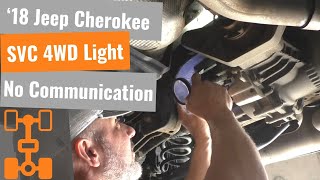
We Have This Part in Stock



The information in this article is provided for general reference and educational purposes only. Vehicle specifications, procedures, and part compatibility can vary by production date, trim level, and region. Always consult your vehicle's factory service manual and verify part numbers before purchasing or performing repairs. Safety-critical components such as airbags, seat belts, and braking systems should be installed by a qualified professional.
- Jeep CHEROKEE:
- 🎬 Helpful Videos
- 🛍️ Shop This Part
- What's Unique About the 2014-2017 Jeep CHEROKEE
- Diagnostic Flowchart
- Symptoms You May Notice
- Most Likely Causes
- Rare But Worth Checking
- Diagnosis Steps
- Parts You'll Likely Need
- Related Codes That Often Appear With This One
- Technical Service Bulletins (TSBs) & Recalls
- Platform-Specific Known Issues
- Mechanic-Grade Diagnostic Values
- Scan Tool Commands That Help
- Wiring & Ground Locations
- Real Owner Repair Stories
- OEM Part Supersession History
- Model Year Variations Within This Range
- 🎟️ Get 5% Off