

OBD-II Code P1720: Vehicle Speed Signal Error
What P1720 means, why it triggers, and how to fix it, focusing on its most common application in Nissan and Infiniti vehicles.
- Code P1720 triggers when the engine computer detects a speed mismatch between the ABS wheel sensors and the transmission output sensor for more than a few seconds.
- Replacing a faulty $50-$150 ABS wheel speed sensor fixes P1720 in over 70% of cases, but a worn wheel hub bearing will destroy the new sensor's signal if not checked.
- Driving with P1720 disables your ABS and traction control immediately, while the resulting harsh transmission shifts can cause $3,000+ in internal damage within 9 months.
- Always scan for companion 'C' codes (like C1103) before buying parts, as these pinpoint exactly which of the 4 wheels has the failing sensor or wiring circuit.
- On 2014-2017 Jeep Cherokees, P1720 indicates a catastrophic Power Transfer Unit (PTU) spline failure requiring a $2,500+ repair, completely unrelated to the standard Nissan sensor issue.
What Does P1720 Mean?

P1720 means your car's main computer (ECM) receives conflicting vehicle speed data. It compares the speed signal from the anti-lock brake system (ABS) with the signal from the transmission control module (TCM). When these signals mismatch, the ECM triggers the code. This guide focuses on Nissan and Infiniti, where this code is most prevalent.
Technical definition: On Nissan and Infiniti vehicles, the official definition is 'Vehicle Speed Sensor - A/T Output.' The Engine Control Module (ECM) receives two speed signals via the CAN bus: one from the ABS control unit and another from the Transmission Control Module (TCM). The ECM sets P1720 when it detects a significant discrepancy between these two signals.
Can I Drive With P1720?
Yes, But With Caution. You can drive, but expect harsh shifting and an inoperative speedometer. It is unsafe for long-term driving because it disables ABS and traction control, significantly increasing stopping distances. Driving with this active causes premature transmission wear from erratic shifting, potentially resulting in a $3,000-$5,000 rebuild.
Common Causes

- Faulty ABS Wheel Speed Sensor (Very Common) — One of the four wheel speed sensors fails or sends an erratic signal. The ABS module uses these sensors to calculate vehicle speed, making a single bad sensor the most frequent trigger.
- Failing Wheel Hub Bearing Assembly (Common) — Modern vehicles integrate the magnetic reluctor ring (tone ring) into the wheel hub bearing. If the bearing develops excessive play or the ring corrodes, it produces an erratic signal and triggers P1720, even with a perfect sensor.
- Damaged Wiring or Connectors (Common) — Wires leading to a wheel speed sensor or between main computer modules (ABS, TCM, ECM) are frayed, corroded, or loose. Road salt frequently causes this communication breakdown.
- Mismatched or Improperly Inflated Tires (Less Common) — Different-sized tires or severely low air pressure causes one wheel to spin at a different rate. The ABS computer flags this difference, creating a conflict with the expected transmission output speed.
- Faulty ABS Actuator / Control Unit (Less Common) — The ABS control module fails to process wheel speed sensor signals or cannot send a valid speed signal onto the CAN bus.
- Low Battery Voltage or Bad Ground (Less Common) — Insufficient system voltage or a poor ground connection to the ECM, TCM, or ABS causes unpredictable communication errors.
- Faulty Transmission Control Module (TCM) (Rare) — The transmission's computer sends an incorrect speed signal or fails to communicate on the CAN network. This is a known failure point on certain Infiniti models.
- Faulty Instrument Cluster (Rare) — On certain makes like Ford, P1720 points to a malfunction in the vehicle speed circuit related to the instrument cluster failing to process the speed signal.
Symptoms

- Check Engine Light is On — The Malfunction Indicator Lamp (MIL) illuminates on your dashboard.
- ABS, VDC/TCS, or Slip Light is On — The warning light for the Anti-lock Brake System (ABS) or Traction Control illuminates simultaneously.
- Erratic or Harsh Transmission Shifting — The transmission shifts harshly, delays shifts, or gets stuck in one gear because it lacks an accurate speed signal to execute shifts.
- Inoperative or Inaccurate Speedometer — The speedometer stops working entirely, bounces erratically, or shows an incorrect speed.
- Vehicle Enters Limp Mode — The computer activates a fail-safe mode, severely limiting engine power and vehicle speed to prevent damage.
- Reduced Fuel Economy — Inaccurate speed data prevents the engine and transmission from operating efficiently, decreasing gas mileage.
Diagnostic Flowchart

Tap your situation to follow the diagnostic path that matches what you're seeing on this code.
Common Fixes & Costs
- Replace a Faulty Wheel Speed Sensor — Parts: $40 - $250, Labor: $80 - $150, ~1 hr book time (DIY)
- Replace Wheel Hub Bearing Assembly — Parts: $150 - $450, Labor: $250 - $550, ~2.5 hr book time (Intermediate)
- Repair Damaged Wiring or Connectors — Parts: $10 - $60, Labor: $150 - $500, ~2 hr book time (Intermediate)
- Replace the ABS Control Module — Parts: $800 - $1500, Labor: $150 - $250, ~2 hr book time (Professional)
- Reprogram or Replace TCM/ECM — Parts: $500 - $1200, Labor: $100 - $200, ~1.5 hr book time (Professional)
- Correct Tire Pressure or Replace Mismatched Tires — Parts: $0 - $1000+, Labor: $0, ~0.1 hr book time (DIY)
DIY vs Professional
- Replace a Faulty Wheel Speed Sensor — Beginner:
Tools: Jack, jack stands, socket set, torque wrench, penetrating oil. - Repair Damaged Wiring or Connectors — Beginner:
Tools: Multimeter, wire strippers, soldering iron or quality crimp tool, heat shrink tubing, protective wire loom. - Replace Wheel Hub Bearing Assembly — Beginner:
Tools: Large socket for axle nut, breaker bar, torque wrench, hub puller or slide hammer, sledgehammer. - Replace the ABS Control Module — Beginner:
Tools: Socket set, line wrenches for brake lines, scan tool with programming capabilities.
Used vs. New Parts: Buying Guide
When a used part is worth it: For common fixes like wheel speed sensors and hub bearings, buying used is not recommended due to low new part costs and high failure risks. A used ABS or TCM module from a low-mileage vehicle is cost-effective but requires exact part number matching and professional programming.
Donor-vehicle mileage cap: roughly under 60000 miles for the part to have meaningful remaining life.
Donor quality checklist:
- For electronic modules, match the part number exactly. Do not rely on model year alone.
- Avoid wheel bearings/hubs from vehicles in rust-belt regions.
- Verify the return policy and warranty period (typically 30-90 days).
Decision logic:
- If The part is a wheel speed sensor → Buy new. The cost is low and it is a primary wear item.
- If The part is a wheel hub bearing assembly → Strongly prefer new. A used hub has unknown wear, and the labor to replace it again is significant.
- If The part is an expensive electronic module (ABS, TCM) and budget is a major concern → A used part from a reputable salvage yard is viable, but factor in the cost of professional programming.
Warranty tradeoff: Used parts typically come with a 30-90 day warranty. New aftermarket parts often carry a 1-year to lifetime warranty. New OEM parts carry a 1-year manufacturer warranty.
Worst-case if a used part fails: 400-800 if a used hub or module fails after installation, due to repeated labor and purchasing another part.
What Happens If You Wait — Timeline
- 0-1 month: Code sets, Check Engine and ABS/TCS lights illuminate. Transmission shifts harshly intermittently. Speedometer drops out. Safety systems (ABS/TCS) are disabled. (MPG impact: 0-5%% · Added cost: $0)
- 1-4 months: Harsh shifting becomes frequent, causing significant drivability issues. Incorrect shift pressures begin accelerating wear on transmission clutch packs and solenoids. (MPG impact: 5-10%% · Added cost: $50-150 in wasted fuel and minor transmission wear)
- 4-9 months: Vehicle frequently enters limp mode. Noticeable transmission slipping or flaring occurs. Internal wear progresses, risking valve body or solenoid pack failure. (MPG impact: 10-15%% · Added cost: $800-1500)
- 9+ months: Catastrophic internal transmission damage occurs. Constant abuse from incorrect hydraulic line pressure leads to burned clutches, requiring a complete rebuild. (MPG impact: 15-25%% · Added cost: $3000-5000)
Cost of Not Fixing It
- Short-Term (0-3 months): Driving is unsafe. ABS and traction control are disabled, increasing stopping distances. Erratic shifting causes poor drivability and a drop in fuel economy. (Added cost: 0)
- Medium-Term (3-12 months): Continued harsh shifting puts significant stress on transmission clutches, bands, and internal components, causing accelerated wear. (Added cost: 500-1500)
- Long-Term (12+ months): Catastrophic internal transmission damage is likely. Constant incorrect shift commands lead to burned clutches, requiring a complete transmission rebuild. (Added cost: 3000-5000)
Diagnosis Steps
- Scan for All Trouble Codes
Use an OBD-II scanner capable of reading ABS and Transmission modules. ABS codes (like C1101-C1108) pinpoint a specific wheel sensor circuit, while U1000 suggests a network problem.
Tools: OBD-II Scanner (with ABS/CAN capability) (Beginner) - Monitor Live Wheel Speed Data
View the live data stream for all four wheel speed sensors while driving straight above 10 MPH. The sensor that reads differently, drops to zero, or is erratic is the fault source.
Tools: Advanced OBD-II Scanner (Intermediate) - Visually Inspect Wiring and Wheel Bearings
Raise the vehicle and inspect the suspect sensor's wiring for chafing or corrosion. Grasp the tire at 12 and 6 o'clock and wiggle it; play or grinding indicates a bad wheel bearing and compromised reluctor ring.
Tools: Flashlight, Jack and Jack Stands (Intermediate) - Inspect Tires and Check Pressure
Verify all four tires match the door jamb sticker size and are correctly inflated. A significantly different-sized tire triggers this code.
Tools: Tire pressure gauge (Beginner) - Test a Passive (2-Wire) Sensor
Disconnect the sensor and measure resistance (typically 800-1700 ohms). Switch to AC Volts and spin the wheel hub; you should see >100mV increasing with speed. No reading indicates a failed sensor.
Tools: Multimeter, Service Manual (Advanced) - Test an Active (3-Wire) Sensor
Turn ignition ON. Probe the harness connector for a 5V/12V reference, ground (<0.1V), and signal. Reconnect and back-probe the signal wire while turning the wheel; voltage must pulse between high and low states.
Tools: Multimeter, Service Manual, Back-probe pins (Advanced) - Test CAN Bus Communication
Disconnect the battery. Measure resistance between Pin 6 (CAN-H) and Pin 14 (CAN-L) on the OBD-II port. A healthy network reads ~60 ohms. 120 ohms indicates a break; 0 ohms indicates a short.
Tools: Multimeter, Service Manual (Advanced) - Use an Oscilloscope for Definitive Analysis
Connect an oscilloscope to the sensor's signal wire. A distorted, missing, or noisy wave pattern definitively confirms a fault in the sensor or reluctor ring.
Tools: Oscilloscope (Professional)
When This Code Triggers (Freeze-Frame Conditions)
- Vehicle Speed: 25-55 mph (Triggers during steady-state cruising when the computer has sufficient time to compare conflicting speed signals.)
- Engine RPM: 1500-2500 RPM (Correlates with steady cruising speed; the discrepancy rarely triggers during hard acceleration.)
- Engine Load: 20-50% (Sets under light to moderate engine load, consistent with maintaining a constant speed on a level road.)
- Engine Coolant Temp: 175-210°F (The vehicle is at full operating temperature, as the diagnostic check runs continuously after warmup.)
Related Codes
- U1000 — A CAN communication circuit code. If present with P1720, the problem is a network failure (wiring break, bad ground, failing module), not a single sensor.
- C1101 - C1108 — Nissan-specific codes for individual wheel speed sensor circuits (e.g., C1103 = FR RH SENSOR-1). These point directly to the faulty wheel circuit.
- P1715 — Input Speed Sensor code. On Nissan CVTs, seeing P1715 and P1720 together strongly suggests the fault lies within the transmission's internal sensors or valve body.
- P0500 — Generic OBD-II code for 'Vehicle Speed Sensor A Malfunction.' Reinforces that the vehicle's primary speed reading is compromised.
Climate & Environmental Factors
- Cold Climates / Road Salt: Road salt and brine act as a powerful electrolyte, drastically accelerating corrosion. This attacks wheel speed sensor wiring and the metal reluctor ring on the wheel hub, leading to an unreadable signal.
- High Humidity / Water Ingress: Moisture penetrates aging connector seals or cracks in wiring insulation, leading to short circuits or high resistance in the wheel speed sensor circuit.
How to Talk to a Mechanic About This Code
Say this: "I have a P1720 code with the ABS light on and the transmission is shifting harshly. I'd like a diagnostic that starts by checking for any specific 'C' codes and monitoring the live data from all four wheel speed sensors."
This signals you've done research and directs the technician to the most efficient diagnostic starting point, preventing a costly transmission-focused diagnosis.
Avoid saying:
- 'My transmission is acting up.'
- 'My check engine light is on, can you look at it?'
- 'Just fix whatever's wrong.'
Questions to ask before authorizing the repair:
- Did you see a fault with a specific wheel speed sensor in the live data?
- If the sensor reading was good, did you check the wheel bearing for play?
- If it's a wiring issue, can you show me where the damage is?
- What is the warranty on the parts and labor for this repair?
Where to Take It: Dealer vs Independent vs Chain
- Dealer:
Recommended for Jeep Cherokee or if complex module programming is required. Otherwise, an independent shop is more cost-effective.
Best for: Vehicles still under warranty., Jeep Cherokee (KL) models, due to the specific PTU failure and extended warranty., Complex diagnostics involving CAN bus issues or module programming.
Downsides: Highest labor rates., May recommend replacing an entire expensive assembly when a wiring repair suffices. (Typical cost: +50% vs. baseline) - Independent Shop:
Best fit for the most common P1720 scenarios (sensor, wiring, hub) on typical vehicles like Nissan and Infiniti.
Best for: Out-of-warranty Nissan/Infiniti vehicles where the cause is a common wheel speed sensor or hub bearing failure., Customers wanting flexible repair options (e.g., wiring repair vs. harness replacement).
Downsides: Quality varies; ensure the shop has modern diagnostic tools capable of reading live ABS data., May lack access to the latest manufacturer TSBs. (Typical cost: +0% vs. baseline) - Chain Shop:
Acceptable for a straightforward wheel speed sensor replacement, but AVOID for initial diagnosis or complex causes.
Best for: Simple, clear-cut wheel speed sensor replacement after you have already confirmed the diagnosis yourself.
Downsides: Technician skill varies dramatically; may lack advanced diagnostic experience., High pressure to upsell common services. (Typical cost: -10% vs. baseline)
When to Walk Away From the Repair
If the estimated repair cost exceeds 40-50% of the car's private-party value, consider selling or trading it in.
- Car worth $4500, fix is $2500: Walk away. A repair cost of 55% of the car's value for a Jeep PTU replacement is not a sound investment.
- Car worth $12000, fix is $800: Fix it. A wheel bearing replacement at less than 7% of the vehicle's value is a clear-cut repair.
- Car worth $3000, fix is $1500: Borderline. The repair is 50% of the car's value. Get a second opinion and consider the car's overall health.
What Scan Tool You Need for This Code
Minimum: A scanner that can read and graph live data from the ABS module.
A basic $20 code reader only shows the P1720 code. It cannot see individual wheel speed sensor readings, which is the most critical diagnostic step.
Budget: BlueDriver Pro (~$99) — Connects to a smartphone app to read enhanced codes (ABS) and display live data for all four wheel speed sensors.
Mid-range: Foxwell NT510 Elite (~$180) — A dedicated handheld unit providing manufacturer-specific diagnostics, robust live data graphing, and bi-directional controls.
Professional: Autel MaxiCOM MK808 / MK906BT (~$500-1200) — Provides full-system, professional-level diagnostics with advanced features like topology mapping and bi-directional control.
Rent vs buy: AutoZone's 'Loan-A-Tool' program allows you to pay a deposit for a tool and get a full refund upon return. They often have advanced scanners available that read ABS data.
How to Clear the Code After You Fix It
- Fix the underlying mechanical or electrical fault.
- Use an OBD-II scan tool to formally clear P1720 and related codes from all modules (ECM, TCM, ABS).
- Perform a complete drive cycle to allow readiness monitors to run and confirm the fix.
Drive cycle (~20 minutes): Start the engine and idle for 2-3 minutes. Drive in stop-and-go city traffic, including full stops. Accelerate to highway speeds (55+ mph) and maintain a steady speed for 5 minutes. Safely stop and idle for another minute before shutting down.
Readiness monitors affected: Comprehensive Component Monitor, Catalyst Monitor, Evaporative System Monitor
Before emissions retest: drive at least 50 miles to fully set monitors.
Watch out for:
- Disconnecting the battery clears the code but resets all readiness monitors to 'Not Ready', causing an automatic emissions failure.
- If the root cause is not properly fixed, the code returns as soon as the diagnostic test runs again during the drive cycle.
Will This Fail Emissions / State Inspection?
Yes — this code typically fails an OBD-II emissions inspection.
- California: An illuminated Check Engine Light results in an automatic smog check failure. Clearing the code resets monitors, requiring a drive cycle of 50-100 miles before a retest.
- New York: A vehicle automatically fails the emissions portion of the NYS inspection if the Check Engine Light is on. A full drive cycle must be completed after repairs.
- Texas: In counties requiring emissions testing, an illuminated Check Engine Light is an automatic failure. The vehicle must be driven to reset readiness monitors before passing.
Most Commonly Affected Vehicles
- Nissan Altima (2007-2018) — Extremely common. Often related to a failing wheel speed sensor or ABS control unit.
- Nissan Sentra (2007-2019) — Frequently reported. TSB NTB17-082 for 2013-2017 models suggests a TCM software update may resolve issues accompanied by transmission judder.
- Nissan Maxima (2004-2018) — A known issue typically pointing to a wheel speed sensor. The output speed sensor connector is sometimes left disconnected after other service.
- Infiniti G35 / G37 (2007-2015) — Causes limp mode and harsh shifting. While wheel speed sensors are a cause, failure of the Transmission Control Module (TCM) itself is a known issue.
- Nissan Rogue (2008-2020) — A common fault with causes related to ABS sensors, wiring, and communication with the CVT.
- Jeep Cherokee (KL) (2014-2017) — CRITICAL: P1720 indicates a severe mechanical issue caused by worn splines between the transmission and Power Transfer Unit (PTU). Addressed in TSB 21-017-21 REV. A.
- Subaru Impreza WRX/STI, Outback (2006-2011) — On STi models, P1720 indicates a CAN communication error with the Driver Controlled Center Differential (DCCD), not a standard wheel speed sensor fault.
- Ford Escape, Focus (2008-2012) — P1720 is a generic 'Vehicle Speed (Meter) Circuit Malfunction', pointing to the instrument cluster, the VSS on the transmission, or its wiring.
Manufacturer-Specific Notes
- Nissan / Infiniti: This code specifically indicates a mismatch between the ABS speed signal and the transmission speed signal. The root cause is almost always in the ABS system (sensor, hub, wiring).
- Jeep: On 2014-2017 Cherokees, P1720 points to a mechanical failure of the Power Transfer Unit (PTU) due to worn input splines. This is covered by TSB 21-017-21 REV. A and a warranty extension.
- Subaru: P1720 on an STi indicates a CAN communication error with the Driver Controlled Center Differential (DCCD) system, often from mismatched modules after a swap.
- Ford / Lincoln: P1720 is a generic 'Vehicle Speed (Meter) Circuit Malfunction' pointing to an issue with the speedometer circuit, VSS on the transmission, or instrument cluster.
Real Owner Stories
2013 Nissan Altima - The Classic Sensor Fix
Owner reported Check Engine, ABS, and Traction Control lights came on simultaneously. The speedometer worked intermittently, and the transmission shifted harshly at 110,000 miles.
What they tried:
- Scanned codes and found P1720.
- Monitored live data from the wheel speed sensors while driving.
- The front right wheel speed sensor reading was erratic and dropped to zero, while the other three were stable.
Outcome: Replaced the front right wheel speed sensor (OEM part 47910-3TA0A) in 45 minutes. After clearing codes, all warning lights extinguished and shifting returned to normal. Total cost: $150.
Lesson: Using a scanner that reads live ABS data is the fastest way to pinpoint the exact faulty sensor, saving time and preventing unnecessary parts replacement.
2009 Infiniti G37x - Misdiagnosis Leads to Frustration
At 78,000 miles, the car exhibited extremely harsh shifts, feeling like the brakes were stabbed during highway acceleration.
What they tried:
- A shop replaced the driver-side front wheel speed sensor, but P1720 returned.
- Further inspection revealed significant play in the driver-side front wheel bearing.
- The reluctor ring, part of the hub assembly, was compromised, providing a bad signal to the new sensor.
Outcome: Replacing the entire front wheel hub assembly resolved the issue permanently. The total cost was higher due to the initial misdiagnosis.
Lesson: If replacing a wheel speed sensor doesn't fix P1720, inspect the wheel bearing and its integrated reluctor ring. A bad bearing ruins the signal even with a brand new sensor.
2015 Jeep Cherokee - A Severe Mechanical Failure
Owner experienced a sudden loss of power and a grinding noise, followed by the Check Engine Light with code P1720. The vehicle would not move.
What they tried:
- Towed the vehicle to a dealership due to the severity of symptoms.
- Dealership diagnosed a mechanical failure within the Power Transfer Unit (PTU).
Outcome: The splines connecting the transmission to the PTU stripped. This known issue is covered by Jeep TSB 21-017-21 REV. A and an extended warranty. The PTU was replaced under warranty, saving a $2,500+ repair bill.
Lesson: On a Jeep Cherokee (KL), P1720 is a sign of a severe mechanical PTU failure. Stop driving immediately and tow it to a dealer, referencing the TSB and extended warranty.
How to Prevent This Code From Triggering
- Regularly wash vehicle undercarriage, especially in winter (Monthly during winter in salt-belt regions) — Removes corrosive road salt that attacks wheel speed sensor wiring, connectors, and the metal reluctor ring on the wheel hub.
- Apply dielectric grease to wheel speed sensor connectors (Whenever brakes are serviced or tires are rotated) — Creates a moisture-proof barrier that prevents water from entering the connector, stopping corrosion and short circuits.
- Address noisy wheel bearings immediately (As soon as grinding or humming noises are heard from a wheel) — A failing wheel bearing develops excessive play, damaging the integrated magnetic reluctor ring and triggering P1720.
- Maintain a healthy battery and clean terminal connections (Annually, before winter) — Low system voltage causes unpredictable communication errors between the ECM, TCM, and ABS modules, leading to false codes.
Frequently Asked Questions
Can I fix a P1720 code myself?
If the cause is a bad wheel speed sensor or damaged wiring, it is a straightforward DIY repair. However, replacing a seized wheel hub can be difficult. Faulty ABS modules or internal transmission failures require professional tools.
Is P1720 a transmission problem or a brake problem?
It is a communication problem that usually starts in the brake system. The ABS system provides speed data to the transmission, so a bad wheel sensor causes transmission shifting symptoms.
What is the first thing I should check for a P1720 code?
Scan for all codes in every module. A specific ABS code (like a 'C' code) tells you exactly which wheel circuit is failing, saving significant diagnostic time.
How much does it cost to fix P1720?
Costs range from $120-$400 for a wheel speed sensor to $400-$1000 for a wheel hub bearing. Replacing an ABS module costs $950-$1750. On Jeep Cherokees, the specific PTU repair often exceeds $2,500 but may be covered by an extended warranty.
I replaced the wheel speed sensor but the code came back. What now?
First, inspect the wheel bearing for play, as a damaged reluctor ring ruins the signal. Second, thoroughly check the sensor's wiring harness for hidden breaks or corrosion. If both pass, test the ABS module and CAN network.
Will clearing the code fix the problem?
No. Clearing the code only erases the fault record. The Check Engine Light returns as soon as the computer detects the signal mismatch again, usually within minutes of driving.
Can a bad battery cause a P1720 code?
Yes. A weak battery causes low voltage, disrupting communication between modules and generating false codes like P1720. Always ensure your battery is healthy before diagnosing complex electronic faults.
Can a bad alignment cause a P1720 code?
A bad alignment itself will not cause P1720. However, mismatched tire sizes or severely low tire pressure causes differences in wheel rotation speed, triggering the code.
Key Takeaways
- Code P1720 triggers when the engine computer detects a speed mismatch between the ABS wheel sensors and the transmission output sensor for more than a few seconds.
- Replacing a faulty $50-$150 ABS wheel speed sensor fixes P1720 in over 70% of cases, but a worn wheel hub bearing will destroy the new sensor's signal if not checked.
- Driving with P1720 disables your ABS and traction control immediately, while the resulting harsh transmission shifts can cause $3,000+ in internal damage within 9 months.
- Always scan for companion 'C' codes (like C1103) before buying parts, as these pinpoint exactly which of the 4 wheels has the failing sensor or wiring circuit.
- On 2014-2017 Jeep Cherokees, P1720 indicates a catastrophic Power Transfer Unit (PTU) spline failure requiring a $2,500+ repair, completely unrelated to the standard Nissan sensor issue.
Helpful Videos
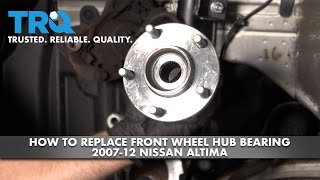
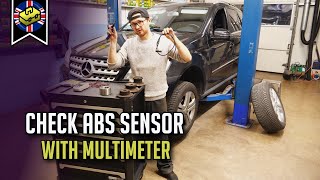
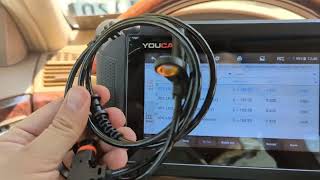

The information in this article is provided for general reference and educational purposes only. Vehicle specifications, procedures, and part compatibility can vary by production date, trim level, and region. Always consult your vehicle's factory service manual and verify part numbers before purchasing or performing repairs. Safety-critical components such as airbags, seat belts, and braking systems should be installed by a qualified professional.
- 🎬 Helpful Videos
- What Does P1720 Mean?
- Can I Drive With P1720?
- Common Causes
- Symptoms
- Diagnostic Flowchart
- Common Fixes & Costs
- DIY vs Professional
- Used vs. New Parts: Buying Guide
- What Happens If You Wait — Timeline
- Cost of Not Fixing It
- Diagnosis Steps
- When This Code Triggers (Freeze-Frame Conditions)
- Related Codes
- Climate & Environmental Factors
- How to Talk to a Mechanic About This Code
- Where to Take It: Dealer vs Independent vs Chain
- When to Walk Away From the Repair
- What Scan Tool You Need for This Code
- How to Clear the Code After You Fix It
- Will This Fail Emissions / State Inspection?
- Most Commonly Affected Vehicles
- Manufacturer-Specific Notes
- Real Owner Stories
- 2013 Nissan Altima - The Classic Sensor Fix
- 2009 Infiniti G37x - Misdiagnosis Leads to Frustration
- 2015 Jeep Cherokee - A Severe Mechanical Failure
- How to Prevent This Code From Triggering
- Frequently Asked Questions
- Can I fix a P1720 code myself?
- Is P1720 a transmission problem or a brake problem?
- What is the first thing I should check for a P1720 code?
- How much does it cost to fix P1720?
- I replaced the wheel speed sensor but the code came back. What now?
- Will clearing the code fix the problem?
- Can a bad battery cause a P1720 code?
- Can a bad alignment cause a P1720 code?
- Key Takeaways
- 🎟️ Get 5% Off