

P1715 on 2017-2018 Nissan Sentra: CVT Input Speed Sensor Causes and Fixes
On a 2017-2018 Nissan Sentra, code P1715 indicates a serious internal problem with the Continuously Variable Transmission (CVT), not just a faulty sensor. It is almost always accompanied by code P0776. The most common fix is an expensive replacement of the entire CVT assembly, often costing over $4,000, as dictated by Nissan's own diagnostic procedures.
- P1715 on a 2017-2018 Sentra is a severe code that almost always signals a major internal CVT problem, not a simple sensor issue.
- This code is frequently accompanied by P0776. Diagnosis and repair should follow the procedure in Nissan TSB NTB18-077C.
- The two possible repairs are a full CVT replacement (if the belt is damaged) or a valve body replacement (if the belt is OK), both of which are expensive and complex jobs.
- Do not waste money replacing only the input speed sensor or performing a fluid flush if symptoms are already present; the underlying mechanical damage requires a more substantial repair.
What's Unique About the 2017-2018 Nissan SENTRA

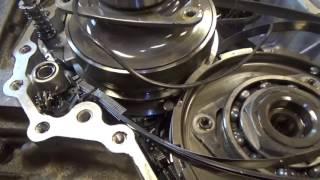
The 2017-2018 Sentra uses a Jatco-supplied RE0F11A (also known as JF015E or CVT7) transmission that is known for premature failures. 🎬 Watch: The real reason these Nissan CVTs fail so early. Unlike many vehicles where a speed sensor code suggests a simple sensor replacement, on this platform, P1715 is a classic indicator that the CVT's internal steel push belt is slipping or has begun to fail. This generates metal debris and causes the speed discrepancy the sensor detects. Nissan has issued Technical Service Bulletin NTB18-077C, which provides a specific diagnostic procedure to follow when P1715 is present with P0776, confirming this is a recognized failure pattern.
Diagnostic Flowchart
Tap your situation to follow the diagnostic path that matches what you're seeing on this vehicle.
Symptoms You May Notice
- Hesitation or a delay during acceleration.
- Lack of power, especially when trying to get on the highway or go uphill.
- Vehicle juddering, shaking, or shuddering.
- Engine RPMs rise without a corresponding increase in vehicle speed (slipping).
- Whining or grinding noise from the transmission.
- Vehicle enters 'limp mode' with severely reduced power.
- Check Engine Light is on.
- Replacing only the input speed sensor. The code is a symptom of a mechanical problem the sensor is detecting, not a failure of the sensor itself.
- Performing a transmission fluid flush. If symptoms like slipping or hesitation are already present, the mechanical damage is done, and a fluid change will not fix it. A user on NICOclub Forums with P1715 and P0776 noted that a fluid change did not resolve the issue, and the transmission was likely 'toast'.
Most Likely Causes

- Internal CVT Failure (Stretched or Damaged Drive Belt) 🔴 High Probability The steel push belt inside the Jatco RE0F11A CVT is a known weak point that can stretch, slip, or delaminate from wear. This causes a speed discrepancy between the pulleys that triggers P1715, often with P0776.
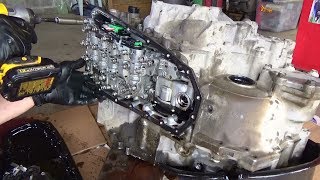
How to confirm: A technician will follow TSB NTB18-077C, which involves removing the CVT oil pan and valve body to inspect the drive belt with a borescope for visible damage (scuffing, delamination). 🎬 See a teardown and failure analysis of the CVT belt. Dark, burnt, or metallic CVT fluid is also a strong indicator. For warranty claims, Nissan requires a continuous video of 15 seconds or less showing the belt damage and the vehicle's VIN plate.
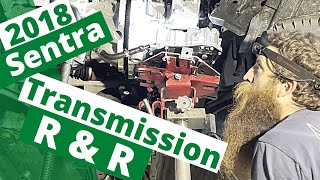
Typical fix: Complete replacement of the CVT assembly with a remanufactured unit is the most common 🎬 Watch: Step-by-step walkthrough of a Sentra CVT removal and installation. and recommended repair per the TSB.
Est. part cost: $2900-$4500 - CVT Control Valve Body Failure 🟡 Medium Probability Solenoids in the valve body can fail or get clogged with metallic debris from a deteriorating CVT belt. This causes incorrect hydraulic pressure, leading to belt slip and triggering codes P1715 and P0776.
How to confirm: This is typically diagnosed when code P0776 is present with P1715. The TSB diagnostic procedure will lead to a valve body replacement if the CVT belt is inspected with a borescope and found to be intact.
Typical fix: Replacement of the CVT control valve body assembly and reprogramming the TCM.
Est. part cost: $880-$1600
Rare But Worth Checking
- Faulty Input Speed Sensor or Wiring: While the code points to the sensor, it is almost never the root cause on this vehicle. Replacing only the sensor is a common misdiagnosis that will not fix the underlying mechanical issue. A Reddit user with a similar Nissan vehicle and P1715 code was initially hopeful it was just the sensor, but the dealer confirmed a failed CVT requiring replacement, which is the typical outcome. A wiring issue is possible but far less common than internal CVT failure.
Diagnosis Steps

- Scan the ECM and TCM for all stored trouble codes. Confirm if P1715 appears with P0776, as this is the specific combination addressed by Nissan TSBs.
- Check the level and condition of the CVT fluid. Look for a dark, burnt color or the presence of metallic particles, which indicates severe internal wear.
- Consult Nissan TSB NTB18-077C. This bulletin provides the specific diagnostic flow chart for this exact issue.
- Following the TSB, a technician will remove the transmission oil pan and control valve (valve body).
- Using a borescope (like Nissan tool J-51951), inspect the CVT drive belt for any signs of damage, delamination, or scuffing.
- If the belt is damaged, the TSB directs the replacement of the entire CVT assembly. For warranty purposes, a short video of the damage and VIN is required.
- If the belt appears undamaged upon inspection, the TSB directs the replacement of the valve body assembly.
- After the repair (either CVT or valve body replacement), the TCM must be reprogrammed and various learning procedures must be performed using a Nissan-compatible scan tool like CONSULT-III plus.
Parts You'll Likely Need

- Continuously Variable Transmission (CVT) Assembly
(OEM #31020-X428E (supersedes 31020-X428D), 31020-X427E)— This is the most common fix, as the P1715 code usually indicates catastrophic failure of the internal CVT drive belt, and replacement is the prescribed fix in TSB NTB18-077C.
Trusted brands: Nissan OE Remanufactured
OEM price range: $2900-$4500
Aftermarket price range: $2500-$3800 - CVT Control Valve Body
(OEM #31705-X428D, 31705-04X7A)— If the CVT belt is not damaged, TSB NTB18-077C specifies replacing the valve body to resolve the hydraulic control issue that triggers codes P1715 and P0776.
Trusted brands: Nissan OE
OEM price range: $881-$1588
Aftermarket price range: $700-$1200
Related Codes That Often Appear With This One
- P0776 — This code for 'Pressure Control Solenoid B Performance/Stuck Off' is very commonly found with P1715. TSB NTB18-077C directly addresses this combination, pointing to either a faulty valve body or a failed CVT assembly as the root cause.
- P17F0, P17F1 — These codes for CVT judder can also appear, as they relate to the same internal wear and belt/pulley problems that trigger P1715.
Technical Service Bulletins (TSBs) & Recalls

- NTB18-077C: 'MIL ON WITH DTC P0776, P1715 AND MAY HAVE HESITATION AND/OR LACK OF POWER'. This is the primary document for diagnosing and repairing this specific issue. It outlines the belt inspection and replacement flowchart. [⭐ MANUFACTURER TSB — highest authority] Bulletin #NTB18-077C
- NTB18-077: An earlier version of the same bulletin, confirming the issue has been documented by Nissan for some time. [⭐ MANUFACTURER TSB — highest authority] Bulletin #NTB18-077
Platform-Specific Known Issues
- The 2017-2018 Sentra is subject to Nissan Technical Service Bulletin NTB18-077C, which was created specifically to address the combination of DTCs P1715 and P0776, along with symptoms of hesitation and lack of power. [⭐ MANUFACTURER TSB — highest authority] Bulletin #NTB18-077C
- Many owners on forums report that this code appears and quickly leads to a complete transmission failure, often requiring a full replacement.
- A user on Reddit with a 2016 Rogue (which has a similar CVT and issue) reported getting code P1715 with hesitation and slipping. The dealer ultimately diagnosed a bad CVT requiring replacement, and the owner sought 'Goodwill assistance' from Nissan for the costly repair.
- A thread on NICOclub Forums for a 2013 Altima with P1715 and P0776 confirms the grim diagnosis. A technical expert noted that out of 68 documented cases with this code combination, 54 required a full transmission replacement.
Mechanic-Grade Diagnostic Values
- Primary Speed Sensor (PRI SPEED SEN) Frequency — expected: Approximately 880 Hz. Failure: A signal that deviates significantly from the target frequency under the specified condition.
- Primary Speed Sensor (PRI SPEED SEN) Live Data vs. Engine Speed — expected: The PRI SPEED SEN value should approximately match the engine speed.. Failure: A significant difference between the primary speed sensor reading and the engine speed signal.
Scan Tool Commands That Help
- Nissan CONSULT-III plus: WRITE IP CHARA - REPLACEMENT AT/CVT — This is a mandatory step after replacing the entire CVT assembly or the control valve body. It writes the unique factory calibration data, often supplied on a CD with the new part, to the Transmission Control Module (TCM). Failure to perform this will result in improper transmission operation.
- Nissan CONSULT-III plus: CONFORM CVTF DETERIORTN — This function resets the CVT fluid degradation counter to zero. It must be performed after replacing the CVT fluid, valve body, or the entire transmission assembly to ensure the TCM's adaptive strategies are based on fresh data.
- Nissan CONSULT-III plus: CLUTCH POINT LEARNING — This procedure is required after replacing the control valve body, but not after replacing the entire CVT assembly. It allows the TCM to learn the new clutch engagement points. If skipped, the vehicle may not move when put into gear.
- Nissan CONSULT-III plus: Select Learning (Drive / Reverse Learning) — Performed after a valve body replacement and Clutch Point Learning, this procedure involves shifting between Neutral, Drive, and Reverse multiple times to help the TCM adapt to the new hydraulic controls.
Wiring & Ground Locations
- Main Transmission Ground Cable — The main ground cable runs from the negative battery terminal. It has an eyelet for a ground bolt on the transmission case and a second 'pass-through' eyelet for a ground bolt on the vehicle body.. A poor ground connection at the transmission case can cause erratic sensor readings and communication issues with the TCM, potentially contributing to fault codes. Ensuring this connection is clean and tight is a fundamental electrical check.
- Valve Body Bolts — On the CVT control valve body, accessible after removing the transmission oil pan.. TSB NTB18-077 specifies that only bolts marked with the number '7' on the head should be removed to detach the valve body. Removing the wrong bolts can cause internal transmission components to become misaligned, complicating the repair. This is a critical instruction for any technician performing the borescope inspection or valve body replacement.
- Main Cabin Grounds M57 / M61 — According to wiring diagrams, M57 is located on the left side of the dash and M61 is at the right end of the dash.. The TCM and its related circuits are grounded through chassis grounds. Corrosion or looseness at these main interior ground points can affect the TCM's operation and its ability to correctly interpret sensor data, although it's a less common cause than the mechanical failure itself.
Real Owner Repair Stories
- Reddit user on r/Nissan (2015 Nissan Altima with 120k miles) — Struggling and dropping gears during acceleration, Check Engine Light with codes P1715 and P0776.
❌ Tried (didn't work) Owner considered a fluid change, but the repair shop advised against it.
✅ What actually fixed it The shop diagnosed a failing transmission and recommended a full replacement for $6,000. They confirmed the input speed sensor's signal 'wave pattern' was good, ruling out the sensor itself and pointing to internal mechanical failure. The owner declined the repair due to cost. This story confirms the diagnostic pattern where the sensor is functional but the transmission is condemned. - NICOclub Forums Technical Expert (Data from 68 cars (various Nissan models, including 2013 Altima) with P1715 and P0776) — General 'weirdness' while driving, leading to the code combination.
❌ Tried (didn't work) A fluid change was noted as rarely being a fix once symptoms are present.
✅ What actually fixed it The expert cited data from Identifix showing that out of 68 cases with this code pair, 54 required a complete transmission replacement. Only one was fixed with a valve body replacement, and 13 were resolved with a fluid change (likely before severe damage occurred). This provides strong statistical evidence that the most probable outcome is a full CVT replacement. - Reddit user on r/Nissan (2016 Nissan Rogue with 80k miles) — Hesitation, delayed acceleration, followed by slipping to the point the vehicle was unsafe to drive.
❌ Tried (didn't work) Owner was hopeful for a simple sensor replacement.
✅ What actually fixed it The dealer confirmed a 'bad CVT' that needed to be replaced. The final resolution was the owner pursuing 'Goodwill assistance' from Nissan to contribute to the expensive repair, confirming the sensor code led to a transmission replacement diagnosis.
Model Year Variations Within This Range
- 2017-2018: There is a critical difference based on the engine. The Sentra Turbo (MR16DDT engine) uses a RE0F10D CVT, which is specifically mentioned in TSB NTB18-077. The standard Sentra (1.8L MRA8DE engine) uses the RE0F11A (JF015E) CVT. While both CVTs suffer from the same failure mode (belt slip causing P1715/P0776), they are different transmission models with non-interchangeable parts. It is crucial to identify the engine to order the correct CVT assembly or valve body.
Helpful Videos
We Have This Part in Stock

The information in this article is provided for general reference and educational purposes only. Vehicle specifications, procedures, and part compatibility can vary by production date, trim level, and region. Always consult your vehicle's factory service manual and verify part numbers before purchasing or performing repairs. Safety-critical components such as airbags, seat belts, and braking systems should be installed by a qualified professional.
- Nissan SENTRA:
- 🎬 Helpful Videos
- 🛍️ Shop This Part
- What's Unique About the 2017-2018 Nissan SENTRA
- Diagnostic Flowchart
- Symptoms You May Notice
- Most Likely Causes
- Rare But Worth Checking
- Diagnosis Steps
- Parts You'll Likely Need
- Related Codes That Often Appear With This One
- Technical Service Bulletins (TSBs) & Recalls
- Platform-Specific Known Issues
- Mechanic-Grade Diagnostic Values
- Scan Tool Commands That Help
- Wiring & Ground Locations
- Real Owner Repair Stories
- Model Year Variations Within This Range
- 🎟️ Get 5% Off