

P1715 on 2015-2017 Nissan JUKE: Input Speed Sensor Fault Causes and Fixes
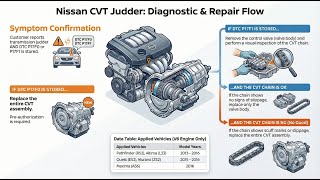
On a 2015-2017 Nissan JUKE, code P1715 almost always indicates a serious internal failure of the CVT transmission, not a bad sensor. The most common fix is a complete transmission replacement, which is very expensive. This is a known issue covered by Nissan Technical Service Bulletin NTB20-091A, which provides a diagnostic flowchart for when this code appears with others like P0776 or P17F0.
- P1715 on your JUKE is a severe code that almost always means the CVT is failing internally.
- Do NOT simply replace the input speed sensor; this will be a waste of money and will not fix the car.
- The most important diagnostic step is checking the CVT fluid for dark, burnt, or metallic conditions.
- The most likely repair is a full CVT replacement, which is a very costly procedure.
- Reference Nissan TSB NTB20-091A, as it specifically covers this known issue for your vehicle.
What's Unique About the 2015-2017 Nissan JUKE
The Nissan JUKE from this period uses a Jatco-supplied Continuously Variable Transmission (CVT), specifically the RE0F10D (also known as Jatco JF016E) for the 1.6L Turbo engine. This family of CVTs is known for a specific failure pattern where the internal steel push belt fails. Code P1715 is a very common indicator that the belt is slipping, stretching, or beginning to shred. Unlike many other vehicles where a speed sensor code points to a simple sensor swap, on the JUKE, it's a strong warning of an impending, and often catastrophic, transmission failure. Nissan acknowledged this pattern by issuing Technical Service Bulletin (TSB) NTB20-091A, which groups P1715 with other codes (P0776, P0841, P17F0, etc.) 🎬 See what these common Nissan CVT codes really mean. and points towards a required transmission repair or replacement. [26, ⭐ MANUFACTURER TSB — highest authority]
Diagnostic Flowchart
Tap your situation to follow the diagnostic path that matches what you're seeing on this vehicle.
Symptoms You May Notice
- Hesitation or shuddering during acceleration, sometimes called 'the judder'.
- Vehicle feels like it lacks power or has delayed acceleration.
- Engine RPMs fluctuate erratically or are unusually high for the vehicle speed.
- Vehicle enters 'limp mode' (fail-safe mode) with severely reduced speed.
- A complete loss of forward movement, especially after the transmission warms up.
- Flashing 'Auto' or 'Sport' light on the dashboard.
- Whining or grinding sounds from the transmission area.
- Replacing the input speed sensor. Sources overwhelmingly state this will not fix the underlying mechanical failure that is the true cause of the code. A Reddit user with a 2016 Rogue and a P1715 code confirmed their dealer diagnosed a bad CVT requiring full replacement, not just a sensor.
Most Likely Causes
- Internal CVT Failure (Worn or Damaged Drive Belt) 🔴 High Probability The Jatco CVT used in this model is known for issues with its steel push belt, which can stretch, slip, or break over time due to heat and stress. This slippage creates a speed mismatch between the primary and secondary pulleys, triggering the P1715 code.
How to confirm: Check the CVT fluid for a dark, burnt appearance and the presence of metallic debris on the drain plug magnet or in the pan. A definitive diagnosis requires a technician to follow TSB NTB20-091A, which involves removing the valve body and using a borescope to visually inspect the condition of the CVT belt for scoring or damage. [26, ⭐ MANUFACTURER TSB — highest authority]
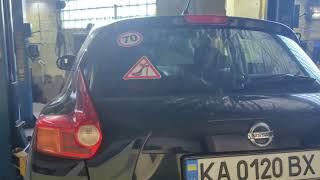
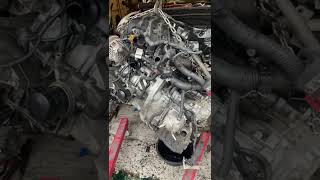
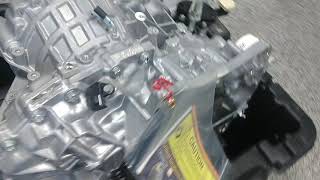
Typical fix: Complete replacement of the CVT assembly with a remanufactured unit 🎬 Watch this walkthrough of a Nissan Juke CVT replacement. is the most common and recommended repair if belt damage is found.
Est. part cost: $3500-$5500 - Faulty CVT Control Valve Body 🟡 Medium Probability Metallic debris from a failing CVT belt can travel through the fluid and clog or damage the sensitive solenoids and passages within the valve body, causing incorrect hydraulic pressure. This can lead to belt slip or trigger pressure-related codes alongside P1715.
How to confirm: This is typically diagnosed by following the TSB NTB20-091A flowchart. If a borescope inspection shows the CVT belt is intact (no scoring/damage), but other codes like P0776 or P0841 are present, the TSB directs the technician to replace the valve body. [26, ⭐ MANUFACTURER TSB — highest authority]
Typical fix: Replacement of the CVT valve body assembly and reprogramming the Transmission Control Module (TCM). The valve body kit often includes a new internal strainer and gaskets. [26, ⭐ MANUFACTURER TSB — highest authority]
Est. part cost: $900-$1500 - Low or Contaminated CVT Fluid ⚪ Low Probability CVT overheating, a common issue, can degrade the fluid prematurely, reducing its hydraulic properties and leading to accelerated wear.
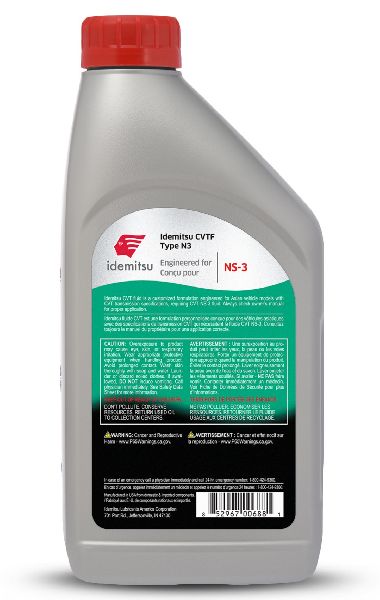
How to confirm: Check the CVT fluid level and condition. The fluid should be at the correct level and have a translucent green or blue color (Nissan NS-3), not dark brown or black with a burnt smell. The 2015+ Juke does not have a traditional transmission dipstick; checking the level involves a specific procedure using a fill plug and overflow tube.
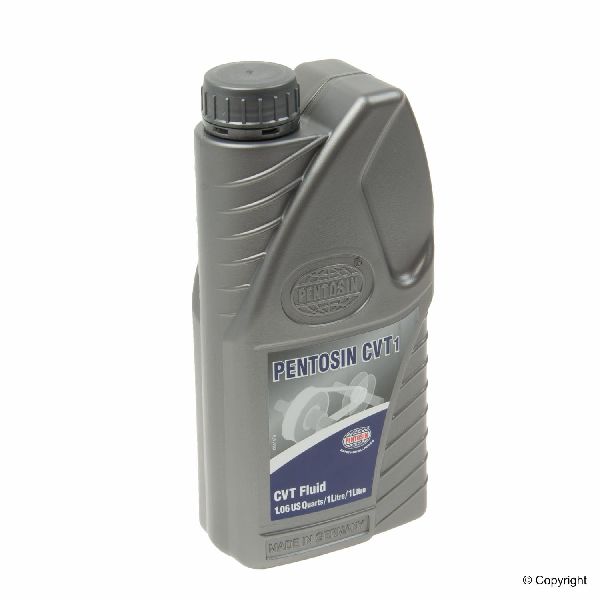
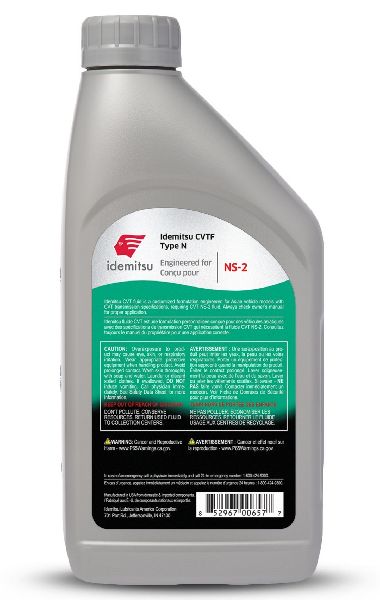
Typical fix: Perform a CVT fluid drain and fill using only the specified Nissan NS-3 CVT fluid. This is unlikely to be a permanent fix if internal damage has already occurred and is more of a preventative measure.
Est. part cost: $100-$250
Rare But Worth Checking
- Faulty Input Speed Sensor: This is almost never the actual cause for this specific vehicle and code pattern. Replacing the sensor without diagnosing the underlying mechanical issue is a common misdiagnosis and will not fix the problem. The TSB (NTB20-091A) notes that if P1715 is the *only* code stored, the bulletin does not apply, but this scenario is uncommon. [26, ⭐ MANUFACTURER TSB — highest authority]
- Wiring Harness or Connector Issue: An open or short in the CAN communication line between the TCM and ECM could theoretically cause this code, but it is far less common than mechanical CVT failure. Diagnosis should only proceed to wiring checks after mechanical and hydraulic issues have been ruled out per the TSB.
Diagnosis Steps
- Verify the code with a professional-grade scanner like Nissan CONSULT.
- Check for any accompanying DTCs, especially those listed in TSB NTB20-091A (P17F0, P17F1, P0776, P2813, P0841). The TSB repair flow chart only applies if one of these is present with P1715. [26, ⭐ MANUFACTURER TSB — highest authority]
- Inspect the level and condition of the CVT fluid. Look for a dark, burnt color or visible metal particles on the drain plug magnet.
- If fluid is contaminated or multiple TSB codes are present, proceed with the diagnostic procedure in TSB NTB20-091A. [26, ⭐ MANUFACTURER TSB — highest authority]
- This involves removing the transmission oil pan and valve body to create access for a borescope. [26, ⭐ MANUFACTURER TSB — highest authority]
- Use a borescope (like Nissan tool J-51951) to inspect both sides of the CVT drive belt for scoring, scratches, or other damage while rotating the wheels. [26, ⭐ MANUFACTURER TSB — highest authority]
- If the belt is damaged, the transmission sub-assembly (or the entire transmission) requires replacement. [26, ⭐ MANUFACTURER TSB — highest authority]
- If the belt appears intact, the TSB directs the replacement of the control valve body assembly. [26, ⭐ MANUFACTURER TSB — highest authority]
- After either repair, the TCM must be reprogrammed and relearn procedures must be performed using a Nissan-specific scan tool.
Parts You'll Likely Need
- Continuously Variable Transmission (CVT) Assembly
(OEM #31020-3VX6D (AWD), 31020-3VX4C (FWD) - Note: Part numbers can be year/model specific, always verify with VIN.)— This is the required fix if a borescope inspection reveals damage to the internal drive belt, which is the most common root cause.
Trusted brands: Nissan (OEM Remanufactured)
OEM price range: $4000-$5500
Aftermarket price range: $3100-$4800 - CVT Control Valve Body
(OEM #3170E-28X0B (2WD), 3170E-28X9D (AWD) - Part numbers from TSB NTB20-091A. [26, ⭐ MANUFACTURER TSB — highest authority])— If the CVT belt is not damaged per the TSB inspection, the fault is isolated to the hydraulic control system, requiring valve body replacement. [26, ⭐ MANUFACTURER TSB — highest authority]
Trusted brands: Nissan (OEM), Hitachi
OEM price range: $1200-$1500
Aftermarket price range: $900-$1200
Related Codes That Often Appear With This One
- P0776 — Pressure Control Solenoid 'B' Performance/Stuck Off. This code is frequently seen with P1715 and is listed in TSB NTB20-091A, indicating a related hydraulic control issue within the CVT valve body. [26, 34, ⭐ MANUFACTURER TSB — highest authority]
- P0841 — Transmission Fluid Pressure Sensor/Switch 'A' Circuit Range/Performance. Also listed in TSB NTB20-091A, this points to a problem with the hydraulic pressure, often caused by internal debris or valve body failure. [26, ⭐ MANUFACTURER TSB — highest authority]
- P17F0, P17F1 — CVT Judder codes. These are also included in TSB NTB20-091A and are direct indicators of a mechanical problem (belt/pulley wear) within the CVT. [26, 39, ⭐ MANUFACTURER TSB — highest authority]
- P2813 — Pressure Control Solenoid 'G' Performance. Another pressure-related code listed in TSB NTB20-091A, further confirming a hydraulic control fault within the valve body. [26, ⭐ MANUFACTURER TSB — highest authority]
Technical Service Bulletins (TSBs) & Recalls
- NTB20-091A: The primary TSB for this issue. It provides a detailed diagnostic flow chart for 2015-2017 Juke models with P1715 and other codes, involving a borescope inspection of the CVT belt to determine if the valve body or the entire transmission needs replacement. [26, ⭐ MANUFACTURER TSB — highest authority]
Platform-Specific Known Issues
- The 2015-2017 Nissan JUKE is subject to Technical Service Bulletin NTB20-091A, which directly addresses DTC P1715 when it appears with other specific codes (P0776, P0841, P17F0, etc.), pointing to a known pattern of CVT failure requiring either a valve body or full transmission replacement. [26, ⭐ MANUFACTURER TSB — highest authority]
- Some owners outside of the warranty period have reported receiving 'Goodwill Assistance' from Nissan to help cover the high cost of CVT replacement, though this is handled on a case-by-case basis and is not guaranteed.
Scan Tool Commands That Help
- Nissan CONSULT-III plus: Erase/Write Calibration Data (or 'WRITE IP CHARA') — This is a mandatory procedure after replacing the entire CVT assembly or the control valve body. It writes the unique calibration data from a disc/QR code provided with the new part to the TCM to ensure proper operation.
- Nissan CONSULT-III plus: Clutch Point Learning — Required after replacing the control valve body or the TCM. It allows the TCM to learn the clutch engagement points. The vehicle may not move if this procedure is skipped.
- Nissan CONSULT-III plus: Select Learning (Drive / Reverse Learning) — Required after replacing the CVT assembly, valve body, or TCM. It involves shifting between Neutral, Drive, and Reverse multiple times to help the TCM adapt.
- Nissan CONSULT-III plus: CONFORM CVTF DETERIORTN — This function resets the CVT fluid life counter in the TCM. It must be performed after a fluid change, valve body replacement, or transmission replacement to prevent premature fluid degradation warnings.
Wiring & Ground Locations
- Transmission Harness Connector — The main harness connector is located on the side of the CVT assembly. Specific pinouts for the speed sensors and solenoids are detailed in the factory service manual.. While rarely the cause, damage or corrosion at this connector could disrupt the input speed sensor signal. A visual inspection is warranted before condemning the transmission, though the TSB procedure should be prioritized.
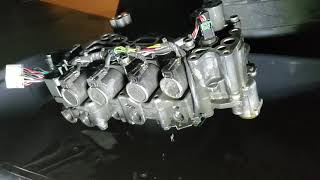
- TCM (Transmission Control Module) — In the Jatco RE0F10D, the TCM is integrated with the valve body assembly inside the transmission oil pan.. Because the TCM is internal, a failure often necessitates replacing the entire valve body assembly. It is not a separately serviceable part in most cases.
Real Owner Repair Stories
- Reddit user on r/Nissan (2016 Nissan Rogue (uses a similar CVT and has the same failure pattern)) — Hesitation and delayed acceleration, which quickly progressed to slipping where the vehicle was unsafe to drive.
❌ Tried (didn't work) The owner initially hoped it was just the input speed sensor as suggested by the code P1715.
✅ What actually fixed it The dealer diagnosed a bad CVT that required complete replacement. The owner noted this was the expected outcome based on forum research and was considering scrapping the car due to the high repair cost, but was also exploring 'Goodwill Assistance' from Nissan. - YouTube video from a repair shop (Nissan Juke with P1715 and P0846) — Car drives intermittently; it will drive for a while, then stop moving once it gets hot.
❌ Tried (didn't work) The technician states that in these cases, attempting to repair a transmission full of metal shavings is not cost-effective.
✅ What actually fixed it The diagnosis involved dropping the transmission pan and inspecting the fluid and magnets. The video shows significant metallic sludge ('shavings') on the magnets and in the pan, confirming catastrophic internal failure. The recommended fix was to replace the CVT with a used unit from a reputable source that offers a warranty, as this is faster and often more reliable than a rebuild in these severe cases.
OEM Part Supersession History
31705-28X9B→3170E-28X0B— Part number update for the 2WD Valve Body Assembly Kit.31935-1XF01→31935-1XF0D— Part number update for the primary/input revolution sensor.
Heads up: While this part is available, replacing it alone is almost never the correct fix for a P1715 on this vehicle when other TSB-related codes are present.
Model Year Variations Within This Range
- 2015-2017: Unlike earlier models, the 2015+ Juke features an external CVT fluid cartridge filter located in a four-bolt housing on the side of the transmission, near the oil filter. Earlier models had this filter in a different location. This is a critical service item that is sometimes missed.
Helpful Videos


We Have This Part in Stock


The information in this article is provided for general reference and educational purposes only. Vehicle specifications, procedures, and part compatibility can vary by production date, trim level, and region. Always consult your vehicle's factory service manual and verify part numbers before purchasing or performing repairs. Safety-critical components such as airbags, seat belts, and braking systems should be installed by a qualified professional.
- Nissan JUKE:
- 🎬 Helpful Videos
- 🛍️ Shop This Part
- What's Unique About the 2015-2017 Nissan JUKE
- Diagnostic Flowchart
- Symptoms You May Notice
- Most Likely Causes
- Rare But Worth Checking
- Diagnosis Steps
- Parts You'll Likely Need
- Related Codes That Often Appear With This One
- Technical Service Bulletins (TSBs) & Recalls
- Platform-Specific Known Issues
- Scan Tool Commands That Help
- Wiring & Ground Locations
- Real Owner Repair Stories
- OEM Part Supersession History
- Model Year Variations Within This Range
- 🎟️ Get 5% Off