

P1715 on 2013-2018 Nissan Altima: Input Speed Sensor Fault and CVT Failure Guide
Code P1715 indicates an Input Speed Sensor fault in the CVT. However, this is almost always a symptom of a failing CVT drive belt, not just a bad sensor. The most common fix is a complete CVT replacement, which can cost several thousand dollars. In some specific cases outlined by TSBs for earlier models, a valve body replacement may be the prescribed fix if the belt is intact.
- P1715 on a 2013-2018 Altima is a serious code that usually signals a major internal CVT failure, not just a bad sensor.
- Do not simply replace the input speed sensor; this will not fix the underlying problem.
- The most likely symptoms are hesitation, lack of power, and eventually, a complete loss of movement.
- Proper diagnosis requires inspecting the CVT fluid and internal components (like the drive belt) for metal debris and damage.
- The most common and recommended repair is a full replacement of the CVT assembly.
What's Unique About the 2013-2018 Nissan ALTIMA

The fifth-generation (L33) Nissan Altima relies exclusively on a Jatco-supplied Continuously Variable Transmission (CVT), primarily the JF016E (RE0F10D) for the 2.5L engine. These CVTs are known to have reliability issues, particularly with the internal steel push belt. Code P1715 is a very common indicator that this belt is slipping and/or failing, generating metallic debris that contaminates the fluid and damages sensors and the valve body. Unlike many other vehicles where a speed sensor code means a simple sensor swap, on this Altima, it's a strong warning of impending, catastrophic transmission failure that often requires a specific, TSB-guided diagnostic approach.
Diagnostic Flowchart

Tap your situation to follow the diagnostic path that matches what you're seeing on this vehicle.
Symptoms You May Notice

- Hesitation or stumbling during acceleration.
- Noticeable lack of power.
- Delayed acceleration response from a stop.
- Sensation of the transmission slipping, sometimes with RPM spikes.
- Inability to 'shift' into higher gear ratios, causing high RPMs at cruising speed.
- Vehicle entering 'limp mode' with severely reduced power.
- A whining or grinding noise from the transmission, which gets worse with acceleration.
- Complete loss of forward movement.
- Check Engine Light is on.
- Replacing only the Input Speed Sensor. This is the most common misdiagnosis. It treats the symptom, not the cause. The new sensor will likely fail or the code will return because the root problem is the failing CVT shedding metal debris or a faulty valve body.
- Performing a transmission fluid flush/change. While old, burnt fluid is a symptom, simply changing the fluid on a transmission that is already throwing codes P1715 and P0776 is highly unlikely to fix the issue, as mechanical damage has likely already occurred.
Most Likely Causes

- Failing or Damaged CVT Drive Belt 🔴 High Probability The steel push belt inside the Jatco CVT used in these Altimas is a known failure point. Over time, it can wear, stretch, or delaminate, causing it to slip on the pulleys. This slippage generates metal fragments and a signal mismatch that triggers P1715.
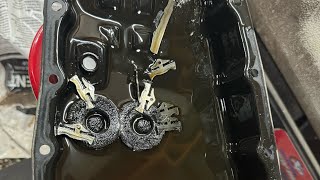
How to confirm: A technician must follow the procedure in TSBs like NTB16-110Q, which involves dropping the transmission oil pan and using a borescope (endoscope) to visually inspect the CVT belt for scuffing 🎬 Watch: What a failing CVT belt looks like under a borescope., gouges, or missing striations. Finding fine metallic dust in the dark, burnt-smelling fluid or larger metal shavings on the pan magnets is also a strong confirmation.
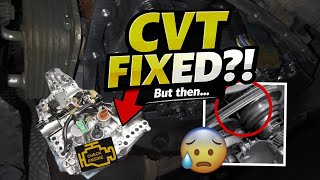
Typical fix: If belt damage is confirmed via borescope inspection, replacement of the entire CVT assembly with a remanufactured unit 🎬 Watch: A complete guide to removing and replacing the Altima CVT. is the only approved repair.
Est. part cost: $3500-$5500 - Failed CVT Control Valve Body 🟡 Medium Probability If the CVT belt is not the primary failure, debris in the fluid or solenoid failure within the valve body can cause incorrect hydraulic pressure, leading to the P1715 code, often paired with P0776. This is a common failure path.
How to confirm: This is the diagnosis if a borescope inspection per the relevant TSB shows the CVT belt is in good condition (no scuffing or damage). The diagnosis is made by ruling out belt failure.
Typical fix: Replacement of the CVT control valve assembly. TSBs NTB15-086i and NTB16-110Q specifically direct technicians to replace only the valve body if the belt inspection is OK. 🎬 See this walkthrough on replacing the CVT valve body and solenoids.
Est. part cost: $800-$1200
Rare But Worth Checking
- Failed Input Speed Sensor: While the sensor itself can fail electrically, it's rarely the root cause. It's more often damaged by debris from a failing CVT belt or its signal is simply a symptom of the mechanical slip. Replacing only the sensor without addressing the underlying mechanical issue will likely result in the code returning quickly.
- Damaged Wiring or Connectors: An open or short in the wiring harness between the sensor and the TCM can trigger the code, but this is uncommon compared to the mechanical CVT failure. A technician would check for this after ruling out mechanical issues.
- Faulty Transmission Control Module (TCM): In very rare instances, the TCM itself may be the source of the fault, but all other possibilities, especially mechanical CVT failure and valve body issues, must be ruled out first.
Diagnosis Steps
- Scan the vehicle for all stored trouble codes in the ECM and TCM. Note if P1715 is present alone or with other codes like P0776 or P17F1.
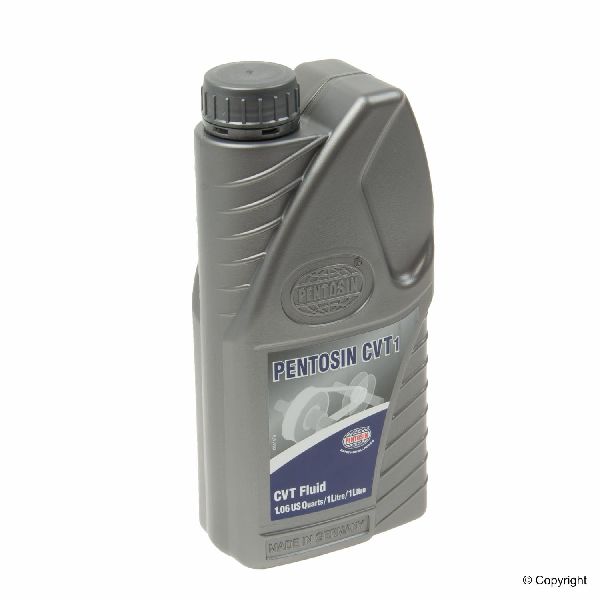
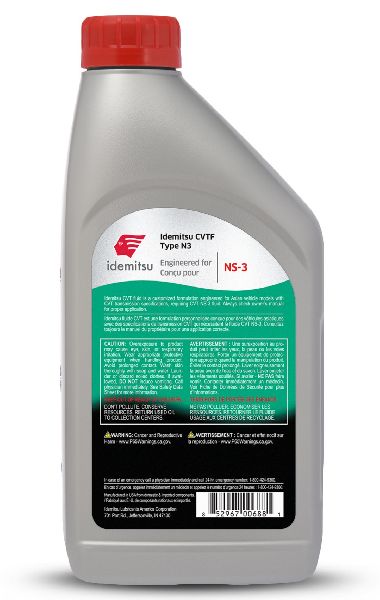
- Check the condition and level of the CVT fluid (Nissan NS-3). Look for a burnt smell or a dark, black, metallic appearance, which indicates severe mechanical wear.
- Consult the appropriate Nissan Technical Service Bulletin. For P1715 combined with P0776, refer to TSBs like NTB15-086i or NTB16-110Q.
- Follow the TSB diagnostic flowchart. This typically requires removing the transmission oil pan and control valve (valve body).
- Using an essential tool borescope (Tech Cam J-51951), visually inspect the CVT drive belt for signs of slippage, scuffing, or damage. This is the critical step.
- If belt damage (scuffing, gouges) is confirmed, the CVT assembly must be replaced.
- If the belt appears to be in good condition, the TSB directs the replacement of the CVT control valve assembly.
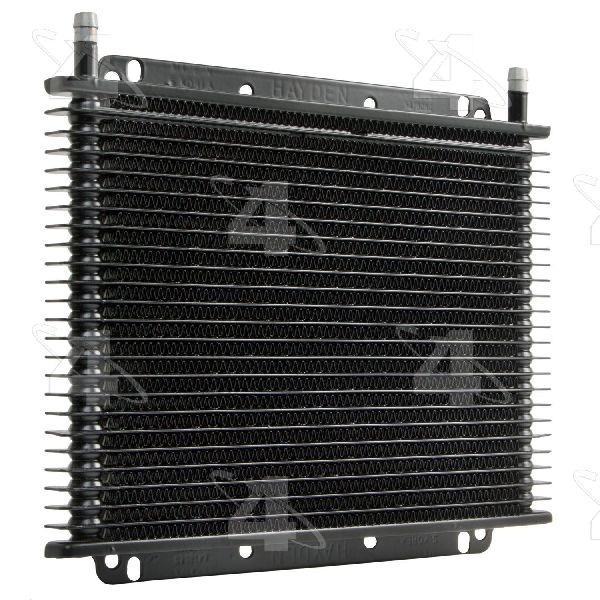
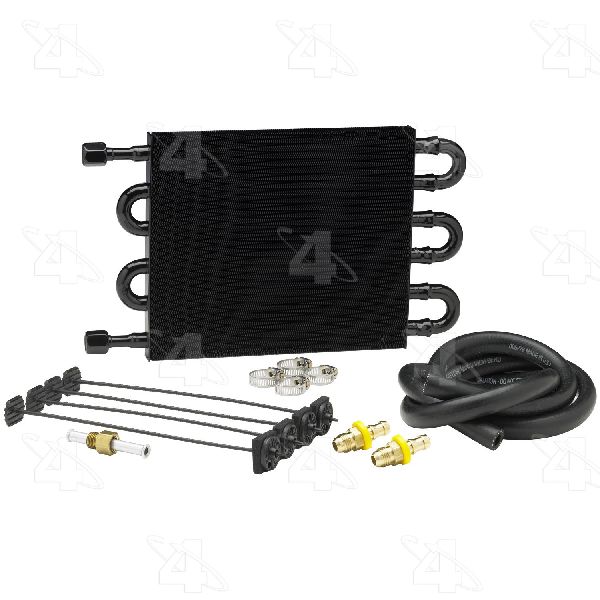
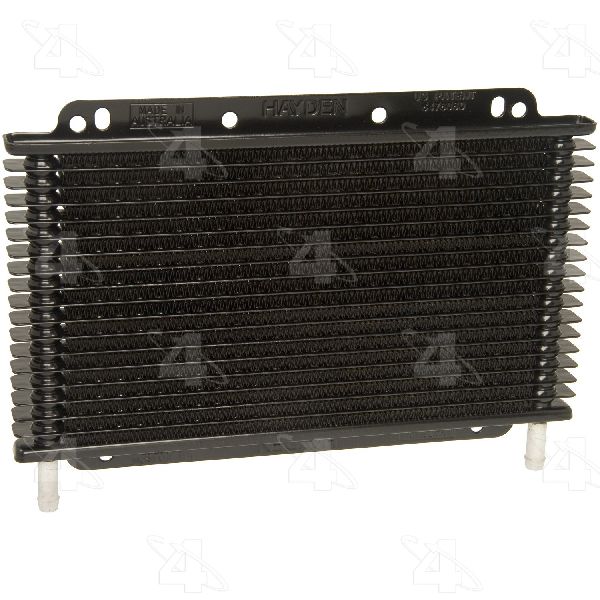
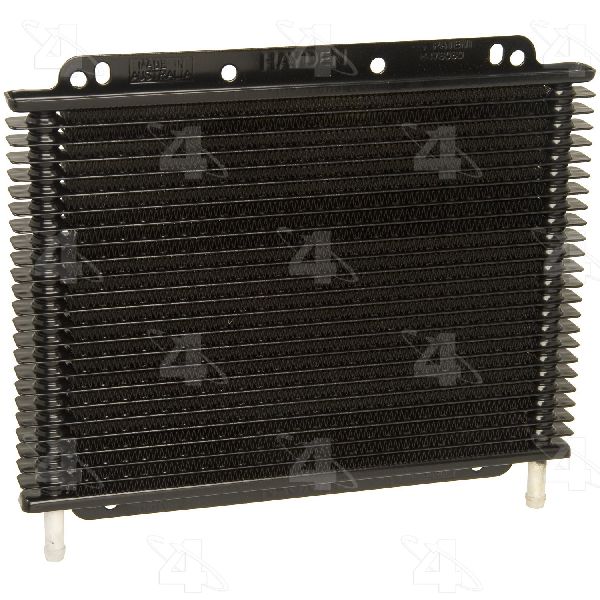
- After replacement of either the CVT or valve body, the CVT fluid cooler must be flushed and TCM reprogramming may be required.
Parts You'll Likely Need
- Continuously Variable Transmission (CVT) Assembly (Remanufactured)
(OEM #3102M-3VX0CRE (or superseding numbers like 3102M-3VX0CRA))— This is the required fix if the CVT belt shows any signs of slippage or damage. It is the most common definitive repair for the P1715 code when accompanied by physical evidence of internal failure.
Trusted brands: Nissan (OEM Remanufactured)
OEM price range: $3600-$5500
Aftermarket price range: $3500-$4500 (Remanufactured from suppliers like LKQ or AutoZone). - CVT Control Valve Body Assembly
(OEM #31705-28X0B)— This is the prescribed repair by Nissan TSBs when codes like P1715/P0776 are present, BUT the CVT belt passes a borescope inspection.
Trusted brands: Nissan (OEM)
OEM price range: $800-$1200
Aftermarket price range: $500-$900
Related Codes That Often Appear With This One
- P0776 — Pressure Control Solenoid 'B' Performance/Stuck Off. This code is frequently stored with P1715 and is mentioned in multiple Nissan TSBs (NTB15-086i, NTB16-110Q). This combination almost always points to either a failed valve body or a slipping CVT belt, and technicians are directed to follow a specific diagnostic path to determine which component to replace.
- P17F0 / P17F1 — CVT Judder. These codes indicate a problem with the torque converter clutch or belt slippage. TSBs NTB15-084b and NTB15-015g detail a diagnostic path where P17F0 leads to CVT replacement, while P17F1 requires a belt inspection to decide between valve body or full CVT replacement.
- P0841 — Transmission Fluid Pressure Sensor/Switch 'A' Circuit. This indicates a problem with fluid pressure readings, often a consequence of internal mechanical failure or valve body issues, and is grouped with P1715 in TSBs like NTB16-110Q.
- U1000 — CAN Communication Circuit Fault. This network code can sometimes appear alongside P1715, indicating a communication problem between modules, which can be a secondary effect of the primary transmission fault or a related wiring issue.
Technical Service Bulletins (TSBs) & Recalls
- NTB16-110Q: A key bulletin for 2013-2017 Altimas that groups P1715 with P0776, P0841, and others. It provides a detailed diagnostic flowchart that hinges on a borescope inspection of the CVT belt to decide between valve body or full CVT re
Platform-Specific Known Issues
- The Jatco JF016E CVT used in this Altima generation has a well-documented history of premature failure, often between 60,000 and 120,000 miles.
- Due to class-action lawsuits, Nissan extended the original CVT warranty for many vehicles, including the 2013-2016 Altima. The warranty was extended from 5 years/60,000 miles to 7 years/84,000 miles, whichever comes first. Some other models received extensions to 10 years/120,000 miles. Owners should always check with a Nissan dealer with their VIN to confirm if any warranty extension applies to their specific vehicle, even if the original warranty has expired.
Mechanic-Grade Diagnostic Values
- CVT Fluid Temperature for Level Check — expected: 35°C - 45°C (95°F - 113°F). Failure: An incorrect fluid level check will result if the temperature is outside this range.
Hidden / Shadow Codes Worth Checking
- P17F0: CVT Judder (T/M Inspection). This code may be stored instead of the P1715/P0776 combination on vehicles that have had the PC490 recall (TCM reprogram) performed. It serves as a more direct indicator of impending transmission failure. (see via Standard OBD-II scanner or Nissan CONSULT.)
Scan Tool Commands That Help
- Nissan CONSULT-III+: WRITE IP CHARA - REPLACEMENT AT/CVT — This is mandatory after replacing the entire CVT assembly or just the valve body. It writes the unique factory calibration data from a supplied CD or downloaded file to the TCM to ensure proper operation.
- Nissan CONSULT-III+: CLUTCH POINT LEARNING — This procedure must be performed after replacing the valve body. Failure to do so may result in the vehicle not moving when placed in gear.
- Nissan CONSULT-III+: Select Learning (Drive / Reverse Learning) — This procedure is required after either a valve body or full CVT assembly replacement to calibrate shift engagement.
- Nissan CONSULT-III+: Conform CVT deterioration — This function is used to erase the degradation level data recorded by the TCM when replacing the CVT assembly.
Wiring & Ground Locations
- Valve Body Bolts — On the CVT control valve body, accessible after removing the transmission oil pan.. Nissan TSBs specify that only bolts marked with the number '7' on the head should be removed to detach the valve body for inspection or replacement. Removing incorrect bolts can complicate the procedure.
- JF016E vs JF017E Valve Body Connector — The main electrical connector on the valve body assembly.. The JF016E (RE0F10D) used in the Altima has a gray connector, while the similar JF017E has a green connector. Visually confirming the connector color is a critical step to ensure the correct replacement valve body is ordered and installed.
Real Owner Repair Stories
- NICOclub Forums user 'twinsig' (2013 Nissan Altima 2.5L with 140,000 miles) — Vehicle experienced 'weirdness' while driving. Codes P0776 and P1715 were stored.
❌ Tried (didn't work) A complete CVT fluid and filter service was performed, but the codes and symptoms returned shortly after.
✅ What actually fixed it The owner, following advice, used a borescope to inspect the CVT belt as per the TSB. The inspection revealed the belt had almost no striations left and visible gouges. The definitive diagnosis was a failed CVT assembly requiring complete replacement.
OEM Part Supersession History
31705-28X0A→31705-28X0B, 31705-28X2B— Part revisions and updates by Nissan/Jatco for the JF016E valve body.
Heads up: Always verify the correct part number using the vehicle's VIN. While these numbers are often interchangeable for the 2013-2018 Altima 2.5L, programming with the correct calibration file is essential for function. Ensure the replacement part is for a JF016E (gray connector), not a JF017E (green connector).
Model Year Variations Within This Range
- 2016-2018: These facelift models feature updated CVT programming with 'D-Step Shift Logic,' which simulates the feel of a traditional automatic transmission. This makes them distinct from the 2013-2015 models and can affect the driver's perception of transmission behavior.
- 2013-2015: These earlier models of the generation are more frequently cited for premature CVT failure and were the primary focus of class-action lawsuits regarding the transmission.
Helpful Videos

We Have This Part in Stock

The information in this article is provided for general reference and educational purposes only. Vehicle specifications, procedures, and part compatibility can vary by production date, trim level, and region. Always consult your vehicle's factory service manual and verify part numbers before purchasing or performing repairs. Safety-critical components such as airbags, seat belts, and braking systems should be installed by a qualified professional.
- Nissan ALTIMA:
- 🎬 Helpful Videos
- 🛍️ Shop This Part
- What's Unique About the 2013-2018 Nissan ALTIMA
- Diagnostic Flowchart
- Symptoms You May Notice
- Most Likely Causes
- Rare But Worth Checking
- Diagnosis Steps
- Parts You'll Likely Need
- Related Codes That Often Appear With This One
- Technical Service Bulletins (TSBs) & Recalls
- Platform-Specific Known Issues
- Mechanic-Grade Diagnostic Values
- Hidden / Shadow Codes Worth Checking
- Scan Tool Commands That Help
- Wiring & Ground Locations
- Real Owner Repair Stories
- OEM Part Supersession History
- Model Year Variations Within This Range
- 🎟️ Get 5% Off