

OBD-II Code P1711: Transmission Fluid Temperature Sensor Performance
What P1711 means, why it triggers, and how to fix it
- P1711 is a manufacturer-specific code; on Fords it means a faulty transmission temperature sensor, while on Chevrolets it indicates a failed pressure switch.
- Do not drive with an active P1711 code; operating in 'limp mode' with incorrect hydraulic pressures causes irreversible clutch damage requiring a $3,000+ rebuild within months.
- On 2011-2014 Ford F-150s and 2009-2022 Hyundais, the required fix is replacing the internal transmission lead frame or wiring harness, costing $500 to $900.
- Diagnose this code by comparing the Transmission Fluid Temperature (TFT) and Engine Coolant Temperature (ECT) live data on a cold engine using an advanced OBD-II scanner.
What Does P1711 Mean?

The Powertrain Control Module (PCM) detected an irrational reading from the Transmission Fluid Temperature (TFT) sensor during a self-test. The fluid is registering as significantly hotter or colder than expected. This incorrect data forces the PCM to miscalculate shift points and line pressure, causing harsh shifting and potential internal damage.
Technical definition: Transmission Fluid Temperature (TFT) Sensor Out of Self-Test Range. The PCM determined the TFT sensor's signal fell outside expected temperature parameters during a key-on or running self-test, indicating a circuit or sensor fault.
Can I Drive With P1711?
Yes, But With Caution. Do not drive long distances. The transmission enters a protective 'limp mode' that limits gears and speed to prevent immediate failure. Ignoring this code causes severe transmission overheating, turning a $500 sensor repair into a $3,500 transmission rebuild. Prolonged driving in limp mode also damages the catalytic converter, adding up to $1,500 to the repair bill.
Common Causes

- Faulty Internal Transmission Lead Frame or Wiring Harness (Very Common) — On many Ford, Hyundai, and Kia models, the TFT sensor is permanently integrated into a plastic lead frame inside the oil pan. This assembly becomes brittle from heat and fails, requiring complete replacement.
- Faulty Transmission Fluid Temperature (TFT) Sensor (Very Common) — The standalone sensor degrades from millions of heat cycles. Its internal thermistor breaks down, sending erratic or stuck voltage signals to the PCM.
- Damaged Wiring or Corroded Connectors (Common) — External wiring harnesses fray or short against the chassis. Moisture intrusion corrodes connector pins, interrupting the 5-volt reference signal between the sensor and the PCM.
- Low or Contaminated Transmission Fluid (Common) — Low fluid exposes the sensor to air, skewing readings. Burnt fluid contaminated with clutch material causes actual overheating that pushes the sensor out of range.
- Internal Transmission Malfunction (Less Common) — Failing valve bodies or slipping clutches generate excessive heat, triggering the code as a secondary symptom of mechanical failure.
- Faulty Powertrain Control Module (PCM) (Rare) — Rarely, the computer responsible for reading the sensor's data fails and misinterprets a valid sensor signal. Rule out all wiring and sensor issues before replacing the PCM.
Symptoms

- Check Engine Light is On — The Malfunction Indicator Lamp (MIL) illuminates immediately when the PCM stores the fault code.
- Limp Mode Activation — The vehicle locks into a single gear (usually 2nd or 3rd) to prevent catastrophic damage, severely limiting acceleration and top speed.
- Harsh or Delayed Shifting — The transmission shifts abruptly or 'hunts' for gears because the PCM uses incorrect temperature data to calculate hydraulic pressure.
- Transmission Overheating — The transmission overheats without triggering a dashboard temperature warning, often accompanied by a burning fluid smell.
- No-Start in Cold Conditions — On specific models like the Lincoln Town Car, a sensor erroneously reading -40°F alters cold-start fuel trims, preventing the engine from starting.
Diagnostic Flowchart

Tap your situation to follow the diagnostic path that matches what you're seeing on this code.
Common Fixes & Costs
- Replace Internal Transmission Wiring Harness or Lead Frame
— Parts: $100-$300, Labor: $400-$700, ~3.5 hr book time
(Professional)
Ford F-150 (2011-2014, 6R80): OEM AL3Z-7G276-D (Alt: Standard Motor Products T42004)
Hyundai/Kia (2011-2016, A6MF1/A6GF1): OEM 46307-3B650 (Alt: Teckpak T211446A) - Replace Transmission Fluid Temperature (TFT) Sensor — Parts: $30-$80, Labor: $150-$300, ~2 hr book time (Intermediate)
- Repair Damaged Wiring or Connectors — Parts: $20-$50, Labor: $150-$300, ~2.5 hr book time (Intermediate)
- Transmission Fluid and Filter Change — Parts: $60-$150, Labor: $100-$250, ~1.5 hr book time (DIY)
- Full Transmission Rebuild or Replacement — Parts: $2000-$4000, Labor: $1000-$2000, ~12 hr book time (Professional)
DIY vs Professional
- Transmission Fluid and Filter Change — Beginner: Yes
Tools: Socket set, drain pan, fluid pump, torque wrench, new fluid and filter. - Replace External TFT Sensor — Beginner: No
Tools: Socket set, drain pan, torque wrench, new sensor. - Repair Damaged External Wiring — Beginner: No
Tools: Multimeter, wire strippers, crimpers, heat shrink tubing, soldering iron. - Replace Internal Harness or Lead Frame — Beginner: No
Tools: Torx socket set, inch-pound torque wrench, drain pan, fluid pump, service manual.
Used vs. New Parts: Buying Guide
When a used part is worth it: Never buy used internal electronic components like lead frames or wiring harnesses. They fail from heat and age, making salvage parts a massive liability.
Donor-vehicle mileage cap: roughly under 20000 miles for the part to have meaningful remaining life.
Donor quality checklist:
- Match the OEM part number exactly, including superseded versions.
- Verify the donor vehicle was not scrapped for a transmission-related issue.
Decision logic:
- If The part is an internal lead frame or wiring harness. → Buy new OEM. The labor cost to drop the valve body is too high to risk a used part.
- If The part is a complete transmission assembly. → A low-mileage used unit is viable, but a remanufactured unit with a warranty is safer.
Warranty tradeoff: Used parts carry 30-day warranties that do not cover labor. New OEM parts carry manufacturer warranties that guarantee longevity.
Worst-case if a used part fails: $700 to repeat the labor when a used internal harness fails.
What Happens If You Wait — Timeline
- 0-1 month: Check Engine Light illuminates. Shifting becomes slightly harsh. Vehicle occasionally enters limp mode but resets upon restart. (MPG impact: 5%% · Added cost: $0)
- 1-4 months: Limp mode activates frequently. Incorrect line pressures cause accelerated wear on clutch packs and seals. (MPG impact: 10%% · Added cost: $500)
- 4-8 months: Fluid burns from chronic overheating. The transmission slips severely on takeoff. The torque converter sustains damage. (MPG impact: 20%% · Added cost: $1,500)
- 8+ months: Catastrophic internal failure. Clutches burn out and the valve body warps. The transmission requires a complete rebuild. (MPG impact: N/A% · Added cost: $3,500+)
Cost of Not Fixing It
- 0-1 Month: Erratic shifting, poor fuel economy, and unpredictable limp mode activation. (Added cost: $50 in wasted fuel.)
- 1-6 Months: Incorrect hydraulic pressures cause accelerated wear on clutch packs and seals. Fluid burns from chronic overheating. (Added cost: $500 for a fluid flush and minor seal repairs.)
- 6+ Months: Catastrophic internal transmission failure requiring a complete rebuild or replacement. (Added cost: $3,500+ for a rebuilt transmission.)
Diagnosis Steps
- Scan for Other Trouble Codes
Use an OBD-II scanner to read all stored codes. Generic codes like P0712 (Circuit Low) or P0713 (Circuit High) point directly to a sensor circuit issue, while solenoid codes indicate a broader internal problem.
Tools: OBD-II Scanner (Beginner) - Compare Temperature Readings with Live Data
With a cold engine left overnight, view live data. The TFT and Engine Coolant Temperature (ECT) must match ambient temperature within 5°F. A TFT reading of -40°F indicates an open circuit.
Tools: Advanced OBD-II Scanner with Live Data (Intermediate) - Check Transmission Fluid Level and Condition
Check the transmission fluid dipstick or fill plug. Fluid must be at the 'Full' mark, bright red, and lack a burnt odor. Dark, burnt fluid indicates severe overheating.
Tools: Rag, fluid dipstick or fill plug tools (Beginner) - Inspect External Wiring and Connectors
Visually inspect the wiring harness going to the transmission's main connector. Look for frayed wires, melting near the exhaust, or corrosion on the pins.
Tools: Flashlight, safety glasses (Intermediate) - Check for Reference Voltage and Ground
With the key on (engine off) and the sensor unplugged, probe the connector. One pin must have a 5-volt reference signal from the PCM, and the other a solid ground. Missing voltage indicates a wiring or PCM fault.
Tools: Multimeter (Advanced) - Test Sensor Signal Voltage
Back-probe the TFT signal wire. Voltage must drop smoothly as the transmission warms up (e.g., 3.5V cold to 1.0V hot). Voltage stuck at 5.0V is an open circuit; stuck at 0V is a short to ground.
Tools: Multimeter, back-probe pins (Advanced) - Test the TFT Sensor's Resistance
Measure the sensor's internal resistance in Ohms and compare it to the manufacturer's temperature chart. Infinite resistance means an open circuit; zero resistance means a shorted sensor.
Tools: Multimeter, vehicle-specific repair manual (Advanced) - Perform a Harness 'Wiggle Test'
With the engine running and a scan tool graphing TFT voltage, manipulate the wiring harness. Voltage spikes or dropouts confirm an intermittent wiring fault.
Tools: Advanced OBD-II Scanner with Live Data Graphing (Advanced)
When This Code Triggers (Freeze-Frame Conditions)
- Engine Coolant Temp: 170-210°F (Vehicle fully warmed up after driving.)
- Vehicle Speed: 40-55 mph (Steady highway cruise speed.)
- RPM: 1500-2500 (Stable RPM during cruise, not accelerating or decelerating.)
- Transmission Fluid Temp (TFT): Out of Expected Range (The PCM expected the TFT to match the ECT after warm-up but registered an abnormally high or low value.)
Related Codes
- P0711 — The generic equivalent for 'TFT Sensor Circuit Range/Performance.' Sets when the sensor reading does not warm up with the engine.
- P0712 — Indicates 'TFT Sensor Circuit Low Input.' The PCM sees voltage near zero, interpreting it as extremely high temperature due to a short to ground.
- P0713 — Indicates 'TFT Sensor Circuit High Input.' The PCM sees voltage near 5V, interpreting it as extremely low temperature (-40°F) due to an open circuit.
- P0714 — Indicates 'TFT Sensor Circuit Intermittent.' Flags an unstable signal dropping in and out due to a loose connection or frayed wire.
Climate & Environmental Factors
- High Ambient Heat: Accelerates the degradation of plastic internal wiring harnesses, causing them to become brittle and crack. This is the primary cause of failure in Hyundai and Kia models.
- Extreme Cold: A failing sensor reading an erroneously low temperature (-40°F) alters the PCM's cold-start fuel logic, causing a no-start condition in freezing weather.
- Humidity and Road Salt: Moisture penetrates external transmission connectors, corroding pins and increasing circuit resistance until the signal drops out.
How to Talk to a Mechanic About This Code
Say this: "I have a [Year/Make/Model] with a P1711 code and it is stuck in limp mode. I know this code is manufacturer-specific. I'd like to schedule a diagnostic that starts with comparing the transmission fluid temperature to the engine coolant temperature on a cold start before we discuss replacing any parts."
This proves you understand the code's complexity and directs the mechanic to the correct first diagnostic step, preventing them from blindly replacing parts.
Avoid saying:
- 'My check engine light is on, can you just fix it?'
- 'I think it's the transmission sensor, just replace it.'
- 'Just do whatever you think is best.'
Questions to ask before authorizing the repair:
- Did you confirm the fault by comparing the TFT and ECT sensor readings on a cold engine?
- Did you test the external wiring for the 5-volt reference and ground before condemning the internal harness?
- Are you using an OEM part or aftermarket, and what is the warranty on both parts and labor?
- Does your shop have specific experience dropping the valve body to replace this internal harness?
- Can I get a written estimate breaking down parts, labor, and fluids?
Where to Take It: Dealer vs Independent vs Chain
- Dealer:
Recommended only if the vehicle is under warranty or a known service program.
Best for: Vehicles under warranty or covered by Ford's 19N01 Customer Satisfaction Program., Complex electronic issues requiring proprietary diagnostic tools.
Downsides: Highest labor rates, often double that of independent shops., Tendency to recommend replacing the entire transmission rather than performing targeted internal repairs. (Typical cost: +50% vs. baseline) - Independent Shop:
A transmission specialty shop is the BEST choice for this code, offering the ideal balance of expertise and cost.
Best for: Out-of-warranty vehicles requiring internal transmission work., Transmission specialty shops with deep experience replacing lead frames and valve bodies.
Downsides: General mechanics may lack the expertise to perform internal transmission repairs safely., Requires careful vetting through reviews. (Typical cost: +0% vs. baseline) - Chain Shop:
AVOID. Chain shops lack the expertise required to safely drop a valve body and replace an internal harness.
Best for: Routine maintenance like oil changes and brake pads.
Downsides: Technicians lack specialized training for complex internal transmission diagnostics., Often refuse the job or outsource it to a specialty shop while adding a markup. (Typical cost: -10% vs. baseline)
When to Walk Away From the Repair
If the estimated repair cost exceeds 50% of the car's private-party market value, sell or trade in the vehicle.
- Car worth $6000, fix is $1400: Fix it. The cost to replace a lead frame is well below the threshold and restores a critical function.
- Car worth $3000, fix is $1800: Borderline. Get a second opinion. If the rest of the car is pristine, repair it; otherwise, consider selling.
- Car worth $4000, fix is $3500: Walk away. The transmission requires a full rebuild, and the cost equals the value of the car.
What Scan Tool You Need for This Code
Minimum: An OBD-II scanner that displays LIVE DATA for transmission fluid temperature (TFT).
A basic $20 code reader cannot display live data. Without live data, you cannot compare the transmission temperature to the engine coolant temperature, making accurate diagnosis impossible.
Budget: BlueDriver Pro Scan Tool (~$100) — Pairs with a smartphone to display live data streams, allowing you to confirm if the TFT sensor is reading incorrectly at startup.
Mid-range: Foxwell NT809BT (~$350) — Provides full system diagnostics, reads manufacturer-specific transmission codes, and offers robust live data graphing.
Professional: Autel MaxiCOM MK808 (~$450) — Provides dealer-level diagnostics, advanced bidirectional controls to test solenoids, and detailed data graphing essential for finding intermittent wiring faults.
Rent vs buy: Rent a scanner from an auto parts store only if it supports LIVE DATA viewing. Otherwise, buy the budget pick to ensure you can properly diagnose the sensor.
How to Clear the Code After You Fix It
- Use an OBD-II scan tool to clear all Diagnostic Trouble Codes (DTCs).
- Ensure the fuel tank is between 15% and 85% full.
- Perform a complete OBD-II drive cycle to reset readiness monitors.
Drive cycle (~30 minutes): Cold start and idle for 3 minutes. Drive in stop-and-go traffic for 15 minutes. Cruise at a steady 55 mph for 10 minutes. Allow the vehicle to cool down completely.
Readiness monitors affected: Comprehensive Component Monitor (CCM), Catalyst Monitor, Evaporative System (EVAP) Monitor
Before emissions retest: drive at least 100 miles to fully set monitors.
Watch out for:
- Clearing codes resets all readiness monitors to 'Not Ready,' causing an automatic emissions test failure.
- The EVAP monitor requires specific ambient temperatures and multiple cold starts to set.
Will This Fail Emissions / State Inspection?
Yes — this code typically fails an OBD-II emissions inspection.
- California: An illuminated Check Engine Light is an automatic failure. It takes over 100 miles of driving to complete the EVAP drive cycle before a re-test.
- New York: Active P1711 codes fail the NYVIP OBD-II scan. Disconnecting the battery resets readiness monitors, which also triggers a failure.
Most Commonly Affected Vehicles
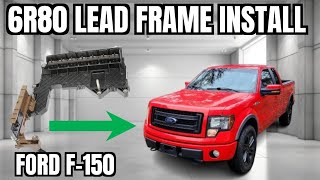
- Ford F-150, Explorer, Focus, Mustang (2002-2014) — Extremely common on 2011-2014 F-150s with the 6R80 transmission. Caused by a faulty molded lead frame. Ford issued Customer Satisfaction Program 19N01 extending the warranty to 10 years/150,000 miles.
- Hyundai Sonata, Elantra, Tucson, Santa Fe (2009-2022) — Very common on A6-series transmissions. The internal wiring harness (OEM P/N 46307-3B650) becomes brittle and fails.
- Kia Sorento, Optima, Soul (2011-2020) — Shares powertrains with Hyundai and experiences identical internal wiring harness failures.
- Land Rover Range Rover (L322), Discovery (2003-2009) — On ZF transmissions, the TFT sensor is integrated into the internal wiring harness sleeve, requiring complete replacement.
- Lincoln Town Car, Navigator (1998-2011) — Shares Ford transmissions and suffers from identical TFT sensor and lead frame issues.
- Mazda Tribute, B-Series, CX-7 (2001-2011) — Utilizes Ford-based transmissions and is susceptible to identical sensor and wiring failures.
- Chevrolet / GMC Silverado, Tahoe, Sierra (2001-2009) — P1711 on Allison transmissions means 'Pressure Switch E Circuit Low', indicating a faulty pressure switch manifold, NOT a temperature sensor.
- Jaguar S-Type, XF, XJ (2002-2018) — Equipped with ZF transmissions that experience failures of the internal harness sleeve containing the temperature sensor.
Manufacturer-Specific Notes

- Ford / Lincoln / Mazda: Defined as 'TFT Sensor Out Of Self Test Range.' The fault is almost always the molded lead frame assembly. Check for extended warranty coverage under Program 19N01.
- GMC / Chevrolet: Defined as 'Pressure Switch E Circuit Low' or 'TCC Pressure Control Solenoid Stuck Off.' Points to a pressure switch manifold, not the TFT sensor.
- Chrysler / Dodge / Jeep: Defined as 'Incorrect Transmission Clutch Applied - Test 2.' Points to an internal mechanical or hydraulic issue, not a temperature sensor.
- Hyundai / Kia: The root cause is almost always the entire internal transmission wiring harness (P/N 46307-3B650), which becomes brittle from heat and fluid exposure.
- Volkswagen / Audi: Defined as 'Wheel Speed Signal 1 Range / Performance.' Relates to the ABS system and has no connection to the transmission.
Real Owner Stories
2013 Ford F-150 at 140K miles
While driving on the highway, the transmission suddenly downshifted into 1st gear, causing the tires to screech. The wrench light illuminated and the truck went into limp mode.
What they tried:
- Checked Ford's Customer Satisfaction Program 19N01 but was 9 months outside the 10-year warranty window.
Outcome: An independent shop replaced the molded lead frame assembly for $1,450. The repair permanently resolved the dangerous downshifting.
Lesson: Sudden downshifts on affected Fords are the classic sign of lead frame failure. Do not ignore it, as it creates a severe safety hazard at highway speeds.
2012 Hyundai Sonata at 100K+ miles
Check engine light illuminated with codes P1711 and P0713. The transmission was stuck in 3rd gear and shifting was harsh.
What they tried:
- Attempted to buy a standalone sensor, but discovered it is integrated into the internal wiring harness.
Outcome: A transmission shop replaced the internal wiring harness (OEM Part # 46307-3B650) for $950, resolving all codes and restoring normal shifting.
Lesson: On modern Hyundai/Kia vehicles, the entire internal harness becomes brittle and fails. Replacing an external sensor is impossible; the internal harness is the true fix.
1998 Lincoln Town Car with cold start issues
The vehicle refused to start or ran extremely rough when ambient temperatures dropped below 45°F. The check engine light showed P1711.
What they tried:
- Visited two shops that failed to diagnose the issue because the car started perfectly once warmed up inside the garage.
Outcome: A technician found the TFT sensor reading -40°F, which altered the PCM's cold-start fuel strategy. Replacing the sensor fixed the code and the starting issue.
Lesson: A wildly inaccurate transmission temperature reading forces the engine computer to miscalculate fuel delivery, causing unexpected engine performance issues.
How to Prevent This Code From Triggering
- Change transmission fluid and filter regularly (Every 30,000-60,000 miles) — Clean fluid maintains cooling properties. Degraded fluid causes overheating, which embrittles plastic internal harnesses and triggers P1711.
- Use only the manufacturer-specified fluid type (Every fluid change) — Using incorrect fluid alters shift pressures and causes clutch slipping, generating excessive heat that destroys internal sensors.
- Install an auxiliary transmission cooler (Once, for vehicles used for towing) — An auxiliary cooler drops fluid temperatures by 20°F, doubling the lifespan of the transmission fluid and internal electronic components.
- Avoid exceeding towing capacity (Daily habit) — Heavy towing generates extreme heat that the stock cooling system cannot dissipate, rapidly degrading the lead frame and sensors.
Frequently Asked Questions
Can I just clear the P1711 code and keep driving?
No. Clearing the code forces the computer to reset, but the code returns within a few drive cycles. Ignoring the root cause leads to incorrect hydraulic pressures and expensive internal transmission damage.
What is the biggest misdiagnosis mistake for P1711?
Assuming P1711 means a bad temperature sensor across all brands. On a Ford, it indicates a sensor issue, but on a Chevrolet, it points to a pressure switch, and on a VW, a wheel speed sensor. Always verify the manufacturer-specific definition before buying parts.
On my Ford F-150, is it the sensor or the lead frame?
On 2011-2014 F-150s, the TFT sensor is permanently integrated into the molded lead frame. Sudden downshifts to 1st gear are the hallmark symptom of this lead frame failing. Ford issued Customer Satisfaction Program 19N01 extending the warranty for this exact issue.
Why does my car get stuck in one gear with a P1711 code?
This is a protective 'limp mode' activated by the transmission control module. When the computer loses accurate temperature data, it defaults to a single safe gear (usually 3rd) to prevent clutch damage. It allows you to drive slowly to a repair shop.
Is replacing a TFT sensor or internal harness a DIY job?
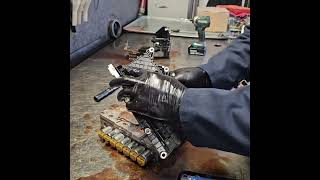
Replacing an external sensor is a manageable DIY task. However, replacing an internal lead frame requires dropping the transmission pan and valve body, risking severe hydraulic contamination. Take the vehicle to a transmission specialty shop for internal harness repairs.
Can a P1711 code cause my car not to start?
Yes, but it is rare. On older models like the Lincoln Town Car, a failed sensor reading -40°F forces the engine computer to flood the engine with fuel. This incorrect cold-start strategy prevents ignition in cold weather.
Why does the code have different meanings for different car brands?
Codes starting with 'P1' are manufacturer-specific, unlike generic 'P0' codes. Automakers assign their own definitions to P1 codes to cover proprietary systems. This is why P1711 means a temperature sensor fault on a Ford but a clutch application error on a Dodge.
Key Takeaways
- P1711 is a manufacturer-specific code; on Fords it means a faulty transmission temperature sensor, while on Chevrolets it indicates a failed pressure switch.
- Do not drive with an active P1711 code; operating in 'limp mode' with incorrect hydraulic pressures causes irreversible clutch damage requiring a $3,000+ rebuild within months.
- On 2011-2014 Ford F-150s and 2009-2022 Hyundais, the required fix is replacing the internal transmission lead frame or wiring harness, costing $500 to $900.
- Diagnose this code by comparing the Transmission Fluid Temperature (TFT) and Engine Coolant Temperature (ECT) live data on a cold engine using an advanced OBD-II scanner.
Helpful Videos

The information in this article is provided for general reference and educational purposes only. Vehicle specifications, procedures, and part compatibility can vary by production date, trim level, and region. Always consult your vehicle's factory service manual and verify part numbers before purchasing or performing repairs. Safety-critical components such as airbags, seat belts, and braking systems should be installed by a qualified professional.
- 🎬 Helpful Videos
- What Does P1711 Mean?
- Can I Drive With P1711?
- Common Causes
- Symptoms
- Diagnostic Flowchart
- Common Fixes & Costs
- DIY vs Professional
- Used vs. New Parts: Buying Guide
- What Happens If You Wait — Timeline
- Cost of Not Fixing It
- Diagnosis Steps
- When This Code Triggers (Freeze-Frame Conditions)
- Related Codes
- Climate & Environmental Factors
- How to Talk to a Mechanic About This Code
- Where to Take It: Dealer vs Independent vs Chain
- When to Walk Away From the Repair
- What Scan Tool You Need for This Code
- How to Clear the Code After You Fix It
- Will This Fail Emissions / State Inspection?
- Most Commonly Affected Vehicles
- Manufacturer-Specific Notes
- Real Owner Stories
- 2013 Ford F-150 at 140K miles
- 2012 Hyundai Sonata at 100K+ miles
- 1998 Lincoln Town Car with cold start issues
- How to Prevent This Code From Triggering
- Frequently Asked Questions
- Can I just clear the P1711 code and keep driving?
- What is the biggest misdiagnosis mistake for P1711?
- On my Ford F-150, is it the sensor or the lead frame?
- Why does my car get stuck in one gear with a P1711 code?
- Is replacing a TFT sensor or internal harness a DIY job?
- Can a P1711 code cause my car not to start?
- Why does the code have different meanings for different car brands?
- Key Takeaways
- 🎟️ Get 5% Off