

OBD-II Code P1707: Park/Neutral Position Circuit Fault
What P1707 means, why it triggers, and how to fix it
- Code P1707 indicates the vehicle's computer cannot verify if the transmission is in Park or Neutral, which actively prevents the engine from starting.
- Because P1707 is manufacturer-specific, its meaning changes by brand; it flags a bad Transmission Range Sensor on a Honda, but a Transfer Case fault on a Ford.
- Test your battery voltage first, as a drop below 12.4V during startup frequently triggers this code by interrupting the sensor's 5-volt reference signal.
- Replacing the Transmission Range Sensor resolves the issue in most cases, costing between $170 and $400 for parts and labor at an independent shop.
What Does P1707 Mean?

P1707 means the Powertrain Control Module (PCM) cannot determine if the transmission is in Park, Neutral, or another gear. The computer requires this signal as a mandatory safety check before starting the engine and to manage smooth shifting. Because P1707 is a manufacturer-specific code, its exact definition and the affected component vary widely by car brand.
Technical definition: P1707 is a manufacturer-specific code with no single SAE/ISO definition. Common definitions include 'Transfer Case Neutral or Park/Neutral Indication Circuit Malfunction' (Jaguar, Land Rover), 'Neutral Position Sensor B Circuit Low Voltage' (Honda, Acura), 'Torque Reduction Signal Circuit Malfunction' (Suzuki), 'Transfer Case Neutral Indicator Hard Fault Present' (Jeep, Ford), and 'AT AWD Solenoid Valve Circuit Malfunction' (Subaru).
Can I Drive With P1707?
Yes, But With Caution. You can physically drive, but the risks are significant. The vehicle often refuses to start, shifts harshly, gets stuck in one gear (limp mode), or starts in gear, causing unexpected lurching. Driving in limp mode for more than a few miles causes excessive heat and internal transmission wear, leading to expensive repairs. Address this immediately to avoid being stranded.
Common Causes

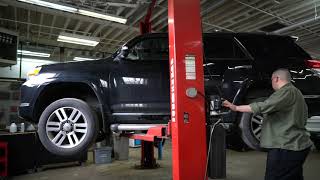
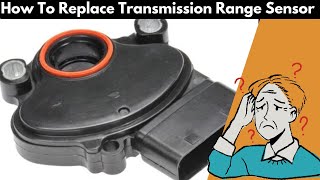
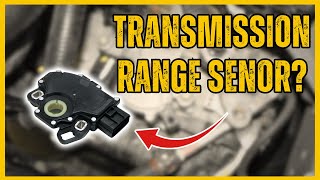
- Faulty Transmission Range Sensor (TRS) (Very Common) — This sensor, also called a Neutral Safety Switch, tells the computer which gear is selected. It is the most frequent cause of P1707, failing from internal wear, 🎬 See how to replace a transmission range sensor in 3 minutes. moisture intrusion, or heat damage over time.
- Damaged Wiring, Connectors, or Fuses (Very Common) — Wires and plugs connecting the TRS are exposed to heat, moisture, and vibration. A frayed wire, corroded pin, or blown circuit fuse interrupts the 5-volt reference signal and triggers the code.
- Misadjusted Sensor or Shift Linkage (Common) — The sensor must align perfectly with the gear shift lever. If the sensor or the linkage connecting it to the shifter loosens or falls out of alignment, it sends incorrect gear signals. This frequently happens after recent transmission work.
- Weak Battery or Poor Ground Connection (Common) — A dying battery drops system voltage below 12.4V during startup, causing erratic signals from the TRS. A corroded engine ground strap creates electrical interference that mimics a failed sensor.
- Faulty Transfer Case Component (4x4 Vehicles) (Less Common) — On many Ford and Jeep vehicles, P1707 points specifically to a fault in the transfer case neutral indicator circuit, not the main transmission range sensor. This indicates a bad sensor or shift motor on the transfer case itself.
- Low or Incorrect Transmission Fluid (Less Common) — On Land Rover models in sub-15°F (-10°C) weather, degraded fluid becomes too thick for the park pawl to disengage correctly, triggering code P1707-77.
- Faulty Powertrain or Transmission Control Module (PCM/TCM) (Rare) — The control module itself rarely fails. However, on VW/Audi models, P1707 indicates a failed internal Mechatronic unit, and on Land Rovers, a P1707-72 indicates an internal TCM short.
Symptoms

- Check Engine Light On — The computer activates the Malfunction Indicator Lamp (MIL) the moment it detects the circuit fault.
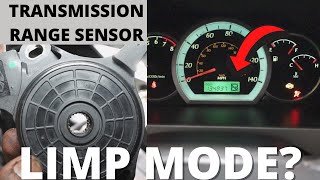
- Stuck in Gear (Limp Mode) or Harsh Shifting — The transmission shifts abruptly, delays engagement, or locks into a single gear (usually 2nd or 3rd) to prevent internal damage.
- Incorrect Dashboard Gear Indicator — The PRNDL light on the dashboard goes blank or displays a gear that does not match the physical shifter position.
- 4WD or Transfer Case Warning Lights — On 4x4 vehicles, this code disables the transfer case (preventing shifts into 4-Low) and illuminates a 4WD system warning light.
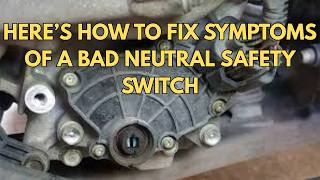
- Engine Won't Start or Cranks in Wrong Gear — The engine refuses to start in Park, but starts immediately when shifted to Neutral. In older vehicles, it dangerously allows the engine to crank while in Drive or Reverse. 🎬 Watch: Common symptoms and fixes for a bad neutral safety switch.
Diagnostic Flowchart
Tap your situation to follow the diagnostic path that matches what you're seeing on this code.
Common Fixes & Costs
- Replace Transmission Range Sensor (TRS) — Parts: $50-$150, Labor: $120-$250, ~1.5 hr book time (Intermediate)
- Adjust Shift Linkage or Sensor — Parts: $0, Labor: $50-$150, ~0.8 hr book time (DIY)
- Repair Damaged Wiring or Connectors — Parts: $5-$20, Labor: $125-$375, ~2.0 hr book time (Advanced)
- Replace Transfer Case Shift Motor/Sensor — Parts: $150-$400, Labor: $150-$300, ~2.5 hr book time (Intermediate)
- Replace Transmission Control Module (TCM) / Mechatronic Unit — Parts: $500-$2000, Labor: $150-$500, ~3.0 hr book time (Professional)
Used vs. New Parts: Buying Guide
When a used part is worth it: Buying a used Transmission Range Sensor is rarely worth the minimal savings. The labor to install it is the main cost, and a used part carries a high risk of early failure. Used parts only make sense when replacing a complete TCM or Mechatronic unit, where a remanufactured module saves thousands.
Donor-vehicle mileage cap: roughly under 50000 miles for the part to have meaningful remaining life.
Donor quality checklist:
- Verify the part number exactly.
- Inspect the electrical connector for corrosion, bent pins, or cracks.
- Avoid parts from vehicles in flood-prone regions.
Decision logic:
- If The part is an external Transmission Range Sensor → Buy a new OEM or high-quality aftermarket part. The cost savings of a used part do not justify the repeat labor risk.
- If The part is a complete TCM or Mechatronic unit → Purchase a professionally remanufactured unit with a warranty to save money over a new OEM unit.
Warranty tradeoff: Salvage yard parts offer a 30-day warranty on the part only. New aftermarket parts carry a 1-year warranty. New OEM parts offer a 1-year warranty.
Worst-case if a used part fails: $300 if a used sensor fails, requiring you to pay for a second repair job.
What Happens If You Wait — Timeline
- 0-2 weeks: Check Engine Light illuminates. The car occasionally hesitates to start in Park, requiring a shift to Neutral. (MPG impact: 0%% · Added cost: $0)
- 2 weeks - 3 months: The no-start issue becomes frequent. The transmission shifts harshly or delays engagement. The vehicle intermittently enters 'limp mode'. (MPG impact: 10%% · Added cost: $100 (Wasted fuel, potential towing fee))
- 3-6 months: The vehicle is permanently stuck in 'limp mode' (2nd or 3rd gear). Driving causes the transmission to overheat, accelerating wear on internal clutches. (MPG impact: 20%% · Added cost: $500 (Towing plus initial internal transmission wear))
- 6+ months: Sustained limp mode operation destroys the transmission. Clutches burn out and seals fail. The initial sensor fix becomes a major transmission rebuild. (MPG impact: 25%% · Added cost: $3000 (Transmission rebuild/replacement))
Cost of Not Fixing It
- Immediate: The vehicle refuses to start, leaving you stranded. In rare cases, it starts in gear and lurches unexpectedly, posing a severe safety risk. (Added cost: $100-$200 (Towing))
- 0-1 month: If the car enters 'limp mode,' continued driving causes excessive heat and wear on the transmission clutches. Fuel economy drops by 10-20%. (Added cost: $50-$100 (Wasted fuel))
- 1-6 months: Driving in limp mode destroys the transmission, turning a $200 sensor repair into a complete transmission rebuild. (Added cost: $2500-$5000 (Transmission replacement))
Diagnosis Steps

- Verify Codes and Battery Health
Use an OBD-II scanner to confirm P1707 and check for related codes (like P0851 on Hondas). Note any two-digit suffixes on Land Rover/Jaguar models. Next, test the battery with a multimeter; it must read at least 12.4V with the engine off. Low voltage causes false P1707 codes.
Tools: OBD-II Scanner, Multimeter (Beginner) - Test Starting in Park vs. Neutral
Attempt to start the engine in Park. If it fails, hold the brake, shift to Neutral, and try again. If the vehicle starts in Neutral but not Park, the Transmission Range Sensor is faulty or misadjusted.
Tools: None (Beginner) - Visually Inspect Sensor, Wiring, and Fuses
Check the fuse box for blown transmission control fuses. Locate the TRS on the outside of the transmission. Inspect the wiring harness for frayed wires, melted insulation, or corroded connector pins. Wiggle the connector to see if the dashboard gear indicator flickers.
Tools: Flashlight, Fuse puller (Beginner) - Check Sensor Adjustment
The sensor features slotted mounting holes for alignment. If the linkage was recently serviced, it is likely misaligned. Loosen the mounting bolts and align the neutral marks on the sensor body with the transmission shaft per the service manual.
Tools: Basic hand tools, feeler gauge (some models) (Intermediate) - [PRO TIP] Analyze Live Data
Connect an advanced scan tool and view the 'TR Sensor State' or 'Gear Position' PID. Slowly move the shifter through P-R-N-D. The data must show an immediate, clean switch for each position. Erratic or delayed readings confirm a bad sensor.
Tools: Advanced OBD-II Scanner with Live Data (Advanced) - [PRO TIP] Test the Sensor Circuit
Disconnect the sensor and turn the ignition ON. Use a multimeter to verify a 5V reference signal at the harness connector. If 5V is missing, the wiring harness has an open/short, or the PCM is faulty. If 5V is present, the sensor itself is dead.
Tools: Multimeter, vehicle-specific wiring diagram (Advanced) - [PRO TIP] Quantitative Voltage Test (Honda)
For Honda P1707, probe the Neutral Position Sensor 4P connector. You must see exactly 5.0V on the reference wire. If the voltage is correct but the code persists, replace the sensor. If voltage is low, trace the harness back to the PCM.
Tools: Multimeter, vehicle-specific wiring diagram (Advanced) - [PRO TIP] Quantitative Resistance Test (Ford)
For Ford P1707, disconnect the transfer case neutral indicator switch. Measure resistance across the terminals. In Neutral, resistance must be near 0 Ω (continuity). Out of Neutral, it must be infinite (OL). Replace the switch if it fails this test.
Tools: Multimeter, basic hand tools (Advanced)
When This Code Triggers (Freeze-Frame Conditions)
- Gear Selector Position: P or N (The fault logs during engine start-up when the computer checks the gear position for safety.)
- System Voltage: < 11.8V (A low voltage reading confirms a weak battery or charging system issue as the root cause, rather than a faulty sensor.)
- Vehicle Speed: 0 mph (Because this fault relates to the Park/Neutral switch, it triggers exclusively when the vehicle is stationary.)
- Engine RPM: 0 or Cranking (The code sets just before the starter engages or during cranking as the PCM performs safety checks.)
Related Codes
- P0705 — P0705 is the generic SAE code for 'Transmission Range Sensor Circuit Malfunction.' P1707 is the manufacturer-specific version. If you only have P1707, it may point to a transfer case (Ford) or AWD solenoid (Subaru) instead of the primary range sensor.
- P0851 — On Hondas, P1707 means the 'B' circuit has low voltage, while P0851 means the 'A' circuit has low voltage. If both codes appear simultaneously, the entire sensor assembly has failed.
- U0402 — Means 'Invalid Data Received From TCM.' On Land Rovers, the P1707 fault causes the TCM to send confusing data over the network, triggering U0402. Fixing the P1707 root cause automatically resolves U0402.
Climate & Environmental Factors
- Extreme Cold: On Land Rover models with the 8-speed ZF transmission, temperatures below 15°F (-10°C) cause the fluid to thicken, preventing the park pawl from disengaging and triggering code P1707-77.
- High Humidity and Road Salt: Moisture and salt accelerate corrosion on the exterior TRS connector pins. This corrosion creates high electrical resistance, blocking the 5V reference signal and triggering the code.
How to Talk to a Mechanic About This Code
Say this: "I have a P1707 code on my vehicle and it won't start in Park. I'd like to book a diagnostic appointment. Please start by checking the battery, grounds, and sensor alignment before recommending a part replacement. What is your diagnostic fee?"
This signals you are an informed consumer. You provided the specific code, know it has simple causes, and established a clear diagnostic path, preventing the shop from jumping to expensive conclusions.
Avoid saying:
- 'My check engine light is on, can you look at it?'
- 'My car is acting weird.'
- 'Just fix whatever is wrong.'
Questions to ask before authorizing the repair:
- Did you check the live data from the range sensor to see if it reports gear positions correctly?
- (For Land Rover) Did you confirm the Emergency Park Release Lever is fully latched?
- (For Ford 4x4) Did you rule out the transfer case neutral indicator circuit?
- Can you provide a detailed breakdown of parts and labor costs?
Where to Take It: Dealer vs Independent vs Chain
- Dealer:
Best for: Vehicles under warranty., Complex, manufacturer-specific quirks like VW/Audi Mechatronic faults., Repairs requiring proprietary software for programming new modules.
Downsides: Highest labor rates, typically 1.5x-2x more than independent shops., Favors replacing large, expensive assemblies over repairing smaller components. (Typical cost: +50% vs. baseline) - Independent Shop:
Best fit for most scenarios. A reputable independent shop offers the best balance of expertise and value for common P1707 causes.
Best for: Most out-of-warranty P1707 repairs on common vehicles (Honda, Ford, Hyundai)., Straightforward fixes like a sensor replacement, wiring repair, or linkage adjustment.
Downsides: Quality varies greatly; vetting the shop is crucial., May lack specialized tools for complex cases (e.g., Jaguar, Subaru AWD). (Typical cost: +0% vs. baseline) - Chain Shop:
Avoid for initial diagnosis. Acceptable only for a simple, pre-diagnosed sensor swap.
Best for: Simple part replacements AFTER a confident diagnosis has already been made elsewhere.
Downsides: High pressure to upsell; significant risk of being sold an unnecessary transmission rebuild., Technician skill level is inconsistent. (Typical cost: -10% vs. baseline)
When to Walk Away From the Repair
If the estimated repair cost exceeds 50% of the car's current private-party value, pause and reconsider. For vehicles over 10 years old, lower this threshold to 40%.
- Car worth $5000, fix is $350: Fix it. This is a standard repair well below the threshold.
- Car worth $7000, fix is $2500: Borderline. The cost is 35% of the car's value. Get a second opinion before authorizing a TCM replacement.
- Car worth $3000, fix is $2000: Walk away. The repair cost is 67% of the car's value and is not a sound investment.
What Scan Tool You Need for This Code
Minimum: A scanner that reads codes from the Transmission Control Module (TCM) and displays live data PIDs, specifically the gear selector position.
A basic $20 code reader only tells you P1707 exists. It cannot read manufacturer-specific suffixes (e.g., Land Rover's P1707-72) or show live sensor data required to determine if the sensor is faulty or misaligned.
Budget: BlueDriver Pro (~$100) — Reads transmission codes and displays live data on your smartphone, allowing you to watch the gear position sensor's output.
Mid-range: Foxwell NT510 Elite (~$200) — Reads critical fault code suffixes for Land Rover/Jaguar and performs special functions like the 'Basic Setting' required for a VW DSG Mechatronic unit.
Professional: Autel MaxiCOM MK808S (~$500) — Offers full bidirectional control to command individual transmission solenoids, which is mandatory for diagnosing Subaru P1707 faults.
Rent vs buy: Free loaner scanners from auto parts stores are too basic for a full P1707 diagnosis. Buying a mid-range scanner is a highly valuable investment for this code.
How to Clear the Code After You Fix It
- Reconnect the battery if disconnected during repair.
- Use an OBD-II scan tool to clear P1707 and any related codes.
- Perform a complete drive cycle to reset the vehicle's readiness monitors.
Drive cycle (~20 minutes): A normal drive of 20 minutes including a cold start, stop-and-go city driving, and a brief period of steady highway speed (55 mph) confirms the fix and resets related monitors.
Readiness monitors affected: Comprehensive Component Monitor
Before emissions retest: drive at least 50 miles to fully set monitors.
Watch out for:
- Clearing the code without fixing the underlying problem causes the code to return immediately.
- Disconnecting the battery clears the code but resets all readiness monitors, resulting in an automatic emissions test failure.
- Failing to properly align the new sensor during installation causes the code to reappear instantly.
Will This Fail Emissions / State Inspection?
Yes — this code typically fails an OBD-II emissions inspection.
- California: An illuminated Check Engine Light results in an automatic failure. After repair, a drive cycle must be completed to set readiness monitors before re-testing.
- New York: The NYS DMV inspection includes an OBD-II scan. An active P1707 code causes an automatic failure.
- Texas: In emissions-testing counties, an illuminated Check Engine Light is an automatic failure. Drive 50 miles after clearing the code to reset monitors before inspection.
Most Commonly Affected Vehicles
- Land Rover LR4, Range Rover, Range Rover Sport (2010-2018) — Extremely prone to P1707-72 (actuator stuck) due to an unlatched Emergency Park Release Lever, and P1707-77 (no drive in cold) due to thick transmission fluid.
- Honda Civic, HR-V (2016-2021) — Commonly logs P1707 for a 'Neutral Position Sensor B Circuit Low Voltage' fault, requiring a sensor replacement on the 10th generation Civic platform.
- Ford F-150, Expedition, Explorer (2004-2014) — On 4x4 models, P1707 means 'Transfer Case Neutral Indicator Hard Fault Present,' disabling the 4WD system. Frequently triggered after using the transfer case neutral tow mode.
- Subaru Outback, Legacy (2005-2009) — P1707 indicates an 'AT AWD Solenoid Valve Circuit Malfunction.' This disables all-wheel-drive and causes a binding feeling in tight turns.
- Hyundai Elantra, Sonata, Santa Fe (2011-2018) — Prone to inhibitor switch (TRS) failure. Covered under Hyundai Technical Service Bulletin 17-AT-005.
- Volkswagen Tiguan, Passat, GTI (with DSG) (2009-2017) — On DSG automatic transmissions, P1707 indicates a failure of the internal Mechatronic control unit, requiring an expensive replacement.
Manufacturer-Specific Notes
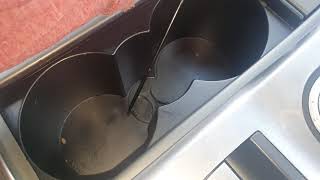
- Land Rover / Jaguar: P1707-72 is caused by the emergency park release lever under the cupholder not being fully latched down (TSB SSM72039). P1707-77 is a cold-weather issue fixed by a transmission service with an updated fluid pan (TSB LTB00685NAS1).
- Honda / Acura: The code specifically points to the 'B' circuit for the neutral position sensor having low voltage. Diagnosis requires verifying a 5-volt reference signal at the sensor connector.
- Volkswagen / Audi: On Direct-Shift Gearbox (DSG) vehicles, P1707 (VAG code 18115) points to an internal 'Interference in Mechatronic Module,' requiring a costly module replacement rather than an external sensor.
- Ford: On 4x4 trucks, P1707 means 'Transfer Case Neutral Indicator Hard Fault Present,' pointing to an issue in the 4WD transfer case motor, not the main transmission shifter.
- Subaru: P1707 indicates an 'AT AWD Solenoid Valve Circuit Malfunction.' The primary symptom is the disabling of the AWD system and a binding feeling during sharp turns, rather than a starting issue.
Real Owner Stories
2014 Land Rover LR4 stuck in Park
Vehicle would not shift out of Park. 'Transmission Fault' message appeared on the dash. The P1707-72 code was present.
What they tried:
- Suspected a major transmission failure.
- Used the emergency park release to get the vehicle into Neutral for towing.
Outcome: The owner discovered Land Rover TSB SSM72039. The Emergency Park Release Lever under the cupholder was not fully latched down. Pushing the lever down firmly solved the problem instantly at zero cost.
Lesson: On a Land Rover with P1707-72, always check the Emergency Park Release Lever first. It is a free fix that prevents an unnecessary trip to the dealer.
2017 Honda Civic won't start, P1707 and P0851 present
Car wouldn't start, check engine light was on. Scanned codes showed P1707 (Neutral Position Sensor B Circuit Low) and P0851 (Neutral Position Sensor A Circuit Low).
What they tried:
- Checked the battery, which was healthy.
- Inspected the wiring harness connector for visible damage.
Outcome: The presence of both codes simultaneously pointed to a failure of the entire Transmission Range Sensor assembly. The sensor was replaced for $250 at an independent shop, resolving the issue.
Lesson: When multiple related codes appear for the same component, it strongly indicates the component itself has failed, rather than a single wire.
2014 Jaguar XF gets 'Gearbox Fault' after fluid service
Immediately after a transmission fluid service, the car displayed a 'Gearbox Fault', the rotary shifter stuck, and code P1707 logged.
What they tried:
- Re-checked the fluid level.
- Cycled the emergency park release lever multiple times.
Outcome: The issue was caused by an improper shutdown sequence during the fluid service, confusing the TCM. A Jaguar-specific diagnostic tool reset the transmission adaptations, fixing the car with no parts required.
Lesson: After any transmission service, P1707 indicates a software or procedural issue rather than a hardware failure. A misaligned sensor or confused control module is the likely culprit.
How to Prevent This Code From Triggering
- Perform regular transmission fluid changes. (Every 30,000-60,000 miles.) — Clean fluid lubricates the internal shift linkage connected to the sensor and prevents overheating. Degraded fluid leads to erratic shifting and component failure.
- Clean and protect electrical connectors. (Every 2-3 years in harsh climates.) — Disconnecting the TRS, cleaning it with contact cleaner, and applying dielectric grease prevents corrosion, which is a primary cause of signal failure.
- Come to a complete stop before shifting from Drive to Reverse. (Daily habit.) — Shifting while moving puts severe stress on the shift linkage and range sensor, causing mechanical wear and knocking the sensor out of alignment.
Frequently Asked Questions
Can I fix P1707 myself?
Yes, if the cause is a weak battery, bad ground, misadjusted sensor, or loose connector, it is DIY-friendly. Replacing the sensor requires intermediate skills and basic hand tools. Stop DIY and consult a professional if you suspect a wiring short or a failed control module.
What is the difference between P1707 and P0705?
P0705 is a generic SAE code for a 'Transmission Range Sensor Circuit Malfunction' applying to all vehicles. P1707 is a manufacturer-specific code that points to the same fault on some cars, but completely different systems (like a Subaru AWD solenoid) on others. Always diagnose P1707 based on your specific vehicle make.
What are the most common misdiagnosis mistakes for P1707?
A common mistake is replacing the Transmission Range Sensor without testing the battery, as low voltage frequently triggers false codes. On Land Rovers, failing to check the Emergency Park Release Lever is a classic, costly error. On Fords, mechanics often replace the main transmission sensor when the fault actually lies in the transfer case.
Can a bad battery cause code P1707?
Yes. A weak battery causes system voltage to drop during startup, creating electrical interference. This prevents the PCM from receiving a clear 5-volt signal from the Transmission Range Sensor, triggering P1707. Always test the battery and alternator before replacing transmission parts.
What is a Neutral Safety Switch?
A Neutral Safety Switch is another name for the Transmission Range Sensor (TRS) or inhibitor switch. Its primary job is preventing the engine from starting unless the transmission is in Park or Neutral. This critical safety function stops the car from lurching forward when you turn the key.
How much does it cost to fix code P1707?
Replacing the transmission range sensor costs between $170 and $400 at an independent repair shop. Diagnosing and repairing a wiring issue typically costs $125 to $375 in labor. Complex repairs, like replacing a VW Mechatronic unit, easily exceed $2,000.
Will clearing the code fix the problem?
No. Clearing the code only turns off the check engine light temporarily. The code returns immediately upon starting the car or shifting gears if the underlying electrical or mechanical fault remains.
My Land Rover has P1707 and is stuck in Park. What should I do first?
Before calling a tow truck, check the Emergency Park Release Lever under the center console cupholder. Push the red strap or lever down firmly until it clicks and locks. This zero-cost fix resolves the common P1707-72 fault documented in Land Rover service bulletins.
Key Takeaways
- Code P1707 indicates the vehicle's computer cannot verify if the transmission is in Park or Neutral, which actively prevents the engine from starting.
- Because P1707 is manufacturer-specific, its meaning changes by brand; it flags a bad Transmission Range Sensor on a Honda, but a Transfer Case fault on a Ford.
- Test your battery voltage first, as a drop below 12.4V during startup frequently triggers this code by interrupting the sensor's 5-volt reference signal.
- Replacing the Transmission Range Sensor resolves the issue in most cases, costing between $170 and $400 for parts and labor at an independent shop.
Helpful Videos


The information in this article is provided for general reference and educational purposes only. Vehicle specifications, procedures, and part compatibility can vary by production date, trim level, and region. Always consult your vehicle's factory service manual and verify part numbers before purchasing or performing repairs. Safety-critical components such as airbags, seat belts, and braking systems should be installed by a qualified professional.
- 🎬 Helpful Videos
- What Does P1707 Mean?
- Can I Drive With P1707?
- Common Causes
- Symptoms
- Diagnostic Flowchart
- Common Fixes & Costs
- Used vs. New Parts: Buying Guide
- What Happens If You Wait — Timeline
- Cost of Not Fixing It
- Diagnosis Steps
- When This Code Triggers (Freeze-Frame Conditions)
- Related Codes
- Climate & Environmental Factors
- How to Talk to a Mechanic About This Code
- Where to Take It: Dealer vs Independent vs Chain
- When to Walk Away From the Repair
- What Scan Tool You Need for This Code
- How to Clear the Code After You Fix It
- Will This Fail Emissions / State Inspection?
- Most Commonly Affected Vehicles
- Manufacturer-Specific Notes
- Real Owner Stories
- 2014 Land Rover LR4 stuck in Park
- 2017 Honda Civic won't start, P1707 and P0851 present
- 2014 Jaguar XF gets 'Gearbox Fault' after fluid service
- How to Prevent This Code From Triggering
- Frequently Asked Questions
- Can I fix P1707 myself?
- What is the difference between P1707 and P0705?
- What are the most common misdiagnosis mistakes for P1707?
- Can a bad battery cause code P1707?
- What is a Neutral Safety Switch?
- How much does it cost to fix code P1707?
- Will clearing the code fix the problem?
- My Land Rover has P1707 and is stuck in Park. What should I do first?
- Key Takeaways
- 🎟️ Get 5% Off