

OBD-II Code P1706: Park/Neutral Position Switch Malfunction
What P1706 means, why it triggers, and how to fix it
- Code P1706 indicates a failure in the Park/Neutral Position (PNP) switch circuit, which directly disables the starter motor and prevents the engine from cranking in Park.
- Attempt a 10-minute switch adjustment or check for a disconnected reverse light switch before spending $200+ on a replacement sensor, as these free fixes resolve over 30% of P1706 codes.
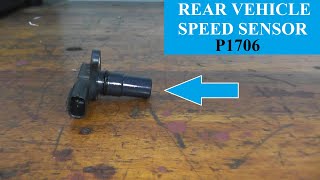
- Verify your manufacturer's specific definition for P1706; while it means a bad PNP switch on a Nissan or Honda, it indicates a failed rear vehicle speed sensor on a Subaru.
- Look for 3 primary symptoms to confirm a P1706 fault: the engine only starting in Neutral, a flickering 'D' light on the dashboard, or completely non-functional reverse lights.
What Does P1706 Mean?

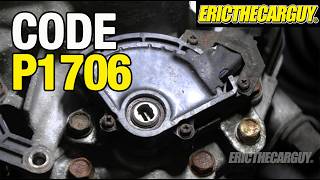
P1706 is a manufacturer-specific code indicating your car's computer (PCM or TCM) is receiving an invalid signal from the Park/Neutral Position (PNP) switch. This switch, also called a transmission range sensor (TRS), tells the computer which gear you selected (Park, Reverse, Neutral, Drive). When the signal is open, shorted, or irrational, the computer disables the starter, disables reverse lights, or triggers erratic automatic transmission shifting.
Technical definition: The official SAE/OBD-II definition for P1706 varies significantly by manufacturer. For Nissan, it is 'Park/Neutral Position (PNP) Switch Circuit Malfunction.' For Subaru, it means 'AT Vehicle Speed Sensor Circuit Malfunction (Rear Wheel).' For Ford, it is 'High Vehicle Speed Observed in Park.' For Acura and Honda, it is defined as 'A/T Transmission Range Switch Circuit No Gear Inputs' or 'Open in Transmission Range Switch Circuit.' This guide focuses on the most common meaning related to the Park/Neutral Position Switch circuit.
Can I Drive With P1706?
Yes, But With Caution. You can drive, but it is not recommended for long distances. The primary risk is the engine failing to start in Park or Neutral, leaving you stranded. A more significant safety hazard is the engine starting while in gear, creating a risk of the vehicle rolling unexpectedly. While this fault rarely causes immediate transmission damage, ignoring it increases electrical stress on the transmission control system and masks other developing problems. A simple adjustment fix becomes a more expensive sensor replacement if neglected.
Common Causes

- Defective Park/Neutral Position (PNP) Switch (Very Common) — The internal electrical contacts of the switch wear out, get contaminated, or corrode over time, sending an open or incorrect signal to the computer.
- Misadjusted PNP Switch (Common) — If the switch is not perfectly aligned with the transmission's manual shift shaft, it sends the wrong signal for the selected gear. This happens frequently after a transmission repair or replacement.
- Unplugged Reverse Light Switch (Manual Transmissions) (Common) — On manual transmission vehicles (especially Nissan), mechanics frequently forget to reconnect the reverse light switch after a clutch replacement. The ECU monitors this circuit, and an open connection triggers P1706.
- Damaged or Corroded Wiring/Connectors (Common) — The wiring harness and connector for the PNP switch sit on the transmission case, exposed to road grime and moisture. This causes corrosion, broken wires, or loose pins, resulting in an open circuit.
- Worn or Damaged Shift Linkage (Less Common) — Excessive play in the gear shifter cable or worn bushings prevents the transmission's manual shaft from rotating the PNP switch to the correct position, causing a mismatch between the selected gear and the sensor's reading.
- Blown Fuse (Less Common) — The PNP switch circuit is protected by a fuse. If this fuse blows due to a short circuit, the switch loses power and fails to send a signal to the computer.
- Faulty Transmission Control Module (TCM) or Powertrain Control Module (PCM) (Rare) — The computer module responsible for interpreting the signal from the PNP switch fails. This is an expensive and uncommon cause considered only after ruling out all other possibilities.
Symptoms

- Engine Won't Start or Cranks Intermittently — The vehicle fails to start in Park but starts in Neutral, or fails to crank at all. The computer requires a valid 'Park' or 'Neutral' signal to enable the starter motor.
- Gear Indicator on Dash is Incorrect or Off — The 'P', 'R', 'N', or 'D' light on the dashboard fails to illuminate, flickers, or shows the wrong gear. This proves the computer is receiving the incorrect position signal.
- Reverse Lights Don't Work — The PNP switch activates the reverse lights. If the switch is faulty, misadjusted, or unplugged, the backup lights fail to turn on when shifting into Reverse.
- Check Engine Light is On — The vehicle's computer illuminates the Malfunction Indicator Lamp (MIL) upon detecting a persistent fault in the PNP switch circuit.
- Erratic or Harsh Transmission Shifting — The transmission shifts harshly, delays shifts, or selects the wrong gear because the TCM receives incorrect information about the driver's selected gear.
Diagnostic Flowchart
Tap your situation to follow the diagnostic path that matches what you're seeing on this code.
Common Fixes & Costs
- Adjusting the PNP Switch — Parts: $0, Labor: $75-$150, ~0.8 hr book time (Intermediate)
- Reconnecting the Reverse Light Switch (Manual Transmissions) — Parts: $0, Labor: $0-$75, ~0.1 hr book time (DIY)
- Replacing the Park/Neutral Position (PNP) Switch / Transmission Range Sensor
— Parts: $50-$180, Labor: $100-$270, ~1.5 hr book time
(Intermediate)
Nissan Altima/Maxima (2002-2006): OEM 31918-8E002 (Alt: {"brand": "Hitachi", "part_number": "TRS0004", "price_comparison": "Slightly less expensive than OEM"}, {"brand": "WVE/NTK", "part_number": "NS-319", "price_comparison": "Often more affordable"})
Honda Accord/Pilot (2003-2007): OEM 28900-P6H-013 (Alt: {"brand": "Standard Motor Products (Intermotor)", "part_number": "NS-287", "price_comparison": "Competitive with OEM"}, {"brand": "Dorman", "part_number": "926-983", "price_comparison": "Generally a budget-friendly option"})
Subaru Outback/Forester (Rear VSS, not PNP): OEM 31947-AA111 (varies by year) (Alt: {"brand": "Denso", "part_number": "Varies", "price_comparison": "Often the OEM supplier, similar price"}, {"brand": "Walker Products", "part_number": "240-91038", "price_comparison": "Typically less expensive"}) - Cleaning or Repairing the PNP Switch Connector and Wiring — Parts: $10-$30, Labor: $115-$270, ~2 hr book time (Intermediate)
- Replacing a Blown Fuse — Parts: $1-$5, Labor: $0-$20, ~0.1 hr book time (DIY)
Used vs. New Parts: Buying Guide
When a used part is worth it: For a common, externally mounted Transmission Range Sensor (TRS/PNP switch), a used part from a reputable salvage yard is a cost-effective option for vehicles over 150,000 miles where budget is the primary concern.
Donor-vehicle mileage cap: roughly under 100000 miles for the part to have meaningful remaining life.
Donor quality checklist:
- Verify the donor vehicle's mileage; lower is always better.
- Inspect the connector pins on the used part for any signs of green or white corrosion.
- Ensure the part number matches exactly, as variations exist within the same model year.
Decision logic:
- If The vehicle is under 10 years old or has under 100,000 miles → Buy a new OEM or high-quality aftermarket part. The cost difference is not worth the risk of repeat labor.
- If The vehicle is over 150,000 miles and the new OEM part exceeds $150 → A used part is a reasonable choice, but it has a significantly shorter lifespan.
- If The original part failed due to internal wear (most common) → Favor a new part. A used one has similar internal wear and fails sooner.
Warranty tradeoff: Used parts typically include a 30-90 day warranty. New aftermarket parts carry a 1-year to limited lifetime warranty. New OEM parts usually have a 1-year warranty.
Worst-case if a used part fails: $150-$350 if a used part fails after the warranty period, requiring a second replacement (part cost + repeat labor).
What Happens If You Wait — Timeline
- 0-1 month: Code P1706 is stored. The Check Engine Light is on. Symptoms are intermittent, like having to jiggle the shifter to start the car, or the 'D' light flickering occasionally. (MPG impact: 0-2%% · Added cost: $0)
- 1-4 months: The no-start issue becomes frequent, leaving you stranded. Erratic shifting becomes noticeable as the TCM receives incorrect gear signals, causing premature wear on transmission clutches. (MPG impact: 2-5%% · Added cost: $50-$150 in wasted fuel and potential towing fees.)
- 4-9 months: A persistent open or short circuit places continuous electrical stress on the Transmission Control Module (TCM). A simple adjustment degrades into a mandatory switch replacement. The risk of starting in gear increases. (MPG impact: 3-8%% · Added cost: $200-$450 (Switch replacement cost))
- 9+ months: The risk of voltage spikes from a damaged circuit causing failure in the TCM driver increases significantly. A failed TCM turns a sub-$400 repair into a major expense. (MPG impact: 5-10%% · Added cost: $500-$1500+ (Potential TCM replacement cost))
Cost of Not Fixing It
- Immediate: Inability to start the vehicle, leaving you stranded. Unexpected starting in gear causes an accident risk. (Added cost: $100-$300 (Towing))
- 1-3 months: Continued erratic shifting places additional stress on transmission clutches and solenoids. A simple switch adjustment degrades into a required switch replacement. (Added cost: $200-$450 (Cost to replace switch vs. adjusting it))
- 6+ months: Ignoring a persistent electrical fault leads to stress on the Transmission Control Module (TCM). TCM failure is a severe and expensive repair. (Added cost: $500-$1500+)
Diagnosis Steps

- Scan for Other Codes
Use an OBD-II scanner to read all stored codes. P1706 is often accompanied by P0700, P0705, P0707, or P0708, which pinpoint the exact nature of the circuit fault.
Tools: OBD-II Scanner (Beginner) - Test Starter in Park and Neutral
Attempt to start the engine in Park, then in Neutral. If the car starts in Neutral but not in Park (or vice-versa), the PNP switch is out of adjustment or failing.
Tools: None (Beginner) - Check the Switch Adjustment
With the ignition on (engine off), slowly move the gear selector through each position. Watch the dashboard indicator lights. If you must wiggle the shifter to get the correct light ('P', 'R', 'N', 'D') to appear, the switch requires adjustment.
Tools: None (Intermediate) - Visually Inspect the Switch, Connector, and Wiring
Locate the PNP switch on the transmission housing. Inspect the electrical connector for corrosion, pushed-out pins, or moisture. On manual Nissans, verify the reverse light switch is plugged in.
Tools: Flashlight, Jack and Jack Stands (Intermediate) - Check the Related Fuse
Consult your owner's manual to locate the fuse for the transmission control system or starting circuit. Remove the fuse and visually inspect the internal filament for breaks.
Tools: Owner's Manual, Fuse Puller or Pliers (Beginner) - Test Shifter Linkage
Have a helper move the gear shifter while you observe the linkage at the transmission. Look for excessive play or worn bushings where the cable connects to the manual lever. Worn components prevent the switch from fully engaging.
Tools: Helper, Jack and Jack Stands (Intermediate) - Pro Tip: Test Circuit Voltage with a Multimeter
Back-probe the PCM connector using a wiring diagram. With the key on, check for voltage on the specific pin for each gear position (e.g., terminal D9 for Drive, D6 for Reverse). A lack of voltage in a specific gear confirms an open circuit or a bad internal switch contact.
Tools: Digital Multimeter, Vehicle-Specific Wiring Diagram, Back-probe Kit (Advanced) - Pro Tip: Test PNP Switch Continuity/Resistance
Disconnect the PNP switch connector. Using a multimeter set to Ohms (Ω), test continuity between the pins as specified in the service manual. An open circuit (OL) or high resistance in a selected gear indicates a faulty switch.
Tools: Digital Multimeter, Vehicle-Specific Service Manual (Advanced) - Pro Tip: Analyze Live Data with a Scan Tool
Use an advanced scan tool to view live data from the TCM. Look for the PID displaying the selected gear. As you move the shifter, this PID must accurately reflect the gear position. Erratic or unchanging values confirm a sensor circuit fault.
Tools: Advanced OBD-II Scan Tool (Advanced) - Pro Tip: Analyze Sensor Waveform with an Oscilloscope (Subaru)
For Subaru models where P1706 indicates a rear vehicle speed sensor fault, connect an oscilloscope to the sensor's signal wires at the TCM. While driving, look for a clean square wave or AC sine wave. A missing or noisy pattern indicates a faulty sensor.
Tools: Automotive Oscilloscope, Vehicle-Specific Wiring Diagram, Jack and Jack Stands (Advanced)
When This Code Triggers (Freeze-Frame Conditions)
- Engine Coolant Temp: 175-215°F (80-102°C) (The fault logs when the engine reaches normal operating temperature.)
- Vehicle Speed: 0 mph (The code sets when shifting into or out of Park/Neutral, or during a start-up attempt while stationary.)
- Engine RPM: 0 or 600-800 RPM (Occurs during the key-on, engine-off state when the circuit is first checked, or at idle RPM just after starting.)
- Gear Selector Position: P, R, N, D (The code sets when the computer detects an irrational signal for the selected gear, such as seeing an open circuit when expecting a 'Drive' signal.)
Related Codes
- P0705 — Indicates a general 'Transmission Range Sensor Circuit Malfunction.' P1706 is the manufacturer-specific version of this code. If both are present, the root cause is in the TRS/PNP switch system.
- P0700 — A general transmission control system fault. It acts as a 'request' from the TCM to the main engine computer to turn on the Check Engine Light. P0700 tells you a more specific code, like P1706, is stored.
- P0707 — Specifies 'Transmission Range Sensor Circuit Low Input.' The voltage signal is below the expected range, pointing to a short to ground in the signal wire.
- P0708 — Specifies 'Transmission Range Sensor Circuit High Input.' The voltage signal is above the expected range, indicating an open circuit or a short to power. Some manufacturers use P1706 to mean an open circuit, making it identical in diagnosis to P0708.
Climate & Environmental Factors
- High Humidity / Road Salt: Moisture and salt are primary contributors to the corrosion of the PNP switch's external connector and internal contacts. Regions with heavy road salt use see a higher failure rate due to accelerated corrosion.
- Extreme Cold: In very cold weather, the grease inside the PNP switch thickens, and plastic components become brittle. This causes intermittent contact failures, leading to a no-start condition that disappears as the engine bay warms up.
- Extreme Heat: Sustained high temperatures from the transmission and exhaust accelerate the degradation of the switch's internal plastic components and wiring insulation, leading to premature failure.
How to Talk to a Mechanic About This Code
Say this: "I have a check engine light with a P1706 code. My symptoms are [mention your specific symptoms, e.g., 'the car only starts in neutral,' 'the reverse lights don't work,' or 'the D light is flickering']. I'd like to schedule a diagnostic. Can you please check the switch adjustment, wiring, and connector before recommending a full replacement of the transmission range sensor?"
This signals you understand the common, cheaper fixes for P1706. It directs the mechanic to perform a thorough diagnosis rather than immediately replacing the most expensive part. Mentioning your specific vehicle make (e.g., 'It's a manual Nissan' or 'It's a Subaru') is critical.
Avoid saying:
- 'My check engine light is on, can you look at it?'
- 'Just replace the P1706 sensor.'
- 'The internet said it was the neutral safety switch.'
Questions to ask before authorizing the repair:
- Did you confirm if it is a failed switch, a misadjustment, or a wiring/connector problem?
- If it is a Subaru, did you diagnose the rear vehicle speed sensor, not the PNP switch?
- If it is a manual Nissan, did you check if the reverse light switch was simply unplugged?
- What is the warranty on the parts and labor for this repair?
Where to Take It: Dealer vs Independent vs Chain
- Dealer:
Best for: Vehicles still under powertrain warranty, Subaru models, where P1706 has a unique meaning (rear speed sensor) that other shops misdiagnose., Complex electrical issues where access to manufacturer-specific wiring diagrams is essential.
Downsides: Significantly higher labor rates, sometimes 1.5-2x that of an independent shop., Defaults to replacing the switch assembly rather than attempting a cheaper adjustment or connector cleaning. (Typical cost: +40% vs. baseline) - Independent Shop:
Best overall fit for most common vehicles. An experienced independent mechanic is familiar with this code and performs the diagnosis efficiently without the high cost of a dealer.
Best for: Most common vehicles (Honda, Nissan, Ford, Chevy) where P1706 is a well-known issue., Out-of-warranty vehicles where balancing cost and quality is important., Simple fixes like a switch adjustment or replacement.
Downsides: Quality varies greatly; vet the shop through online reviews and check for ASE certifications., Lacks specialized knowledge for manufacturer quirks (like on a Subaru). (Typical cost: +0% vs. baseline) - Chain Shop:
Use with caution. Acceptable for a straightforward switch replacement if you are certain that is the problem, but AVOID for initial diagnosis due to the risk of misdiagnosis or being oversold.
Best for: Reading the code for free (some locations offer this)., Simple part replacement if you have already diagnosed the issue yourself.
Downsides: Technician skill varies dramatically., High pressure to upsell services; avoids the nuanced diagnosis required (e.g., adjustment vs. replacement)., Fails to correctly diagnose manufacturer-specific variations of the code. (Typical cost: -10% vs. baseline)
When to Walk Away From the Repair
If the estimated repair cost exceeds 40-50% of the car's private-party value (check Kelley Blue Book), seriously consider whether the investment is worthwhile.
- Car worth $3000, fix is $400: Fix it. This is a common and relatively inexpensive repair critical for vehicle operation and safety.
- Car worth $4000, fix is $1500: Walk away. This cost suggests a worst-case scenario, like a failed TCM diagnosis. Get a second opinion, but it is not worth sinking this much into an older car for this issue.
- Car worth $10000, fix is $450: Fix it. The repair cost is a small fraction of the vehicle's value and is necessary for its function.
What Scan Tool You Need for This Code
Minimum: A scanner that reads and clears codes and displays live data from the Transmission Control Module (TCM).
A basic $20 code reader only gives you the P1706 code. It fails to show the live data PID for the transmission range, which is crucial for confirming if the switch sends the correct signal for each gear. Without live data, you are guessing.
Budget: BlueDriver Pro OBD2 Scanner (~$99) — Connects to your smartphone via Bluetooth. The app reads and clears transmission codes and displays live data for the transmission range sensor, allowing you to see if the computer recognizes the gear you selected.
Mid-range: Foxwell NT510 Elite (~$199) — This handheld unit offers brand-specific software (e.g., for Honda, Nissan, Subaru) providing deeper access. It shows live transmission data and offers bi-directional controls to test components.
Professional: Autel MaxiCOM MK808S / MK808BT (~$400-600) — Provides full-system diagnostics with extensive live data graphing and bi-directional control. You command specific tests and view manufacturer-specific data with great detail, making it easy to distinguish a wiring fault from a component failure.
How to Clear the Code After You Fix It
- Use an OBD-II scan tool to clear the diagnostic trouble codes (DTCs).
- Disconnect the negative battery terminal for 15 minutes to clear codes (note: this resets radio presets and learned idle values).
- Perform a complete drive cycle to allow the vehicle's readiness monitors to run and confirm the fix.
Drive cycle (~20 minutes): Start with a cold engine (sit for 8+ hours). Idle for 3 minutes. Drive a mix of stop-and-go city traffic and steady highway speeds (55 mph for 5+ minutes) to allow the computer to run its self-tests.
Readiness monitors affected: Comprehensive Component Monitor, Catalyst Monitor
Before emissions retest: drive at least 50 miles to fully set monitors.
Watch out for:
- Clearing the code with a scanner without performing a drive cycle fails to set the readiness monitors required for an emissions test.
- The code returns immediately if the underlying mechanical or electrical fault (bad switch, misadjustment, wiring issue) remains unfixed.
Will This Fail Emissions / State Inspection?
Yes — this code typically fails an OBD-II emissions inspection.
- California: A P1706 code constitutes an automatic failure. All readiness monitors must be 'Ready' for the test to proceed, which remains blocked until the fault is repaired and a full drive cycle is completed.
- New York: An active Check Engine Light with code P1706 results in an immediate emissions test failure.
- Texas: In the 17 Texas counties requiring emissions testing, an active P1706 code causes the vehicle to fail the OBD-II portion of the inspection.
Most Commonly Affected Vehicles
- Nissan Altima, Maxima, Sentra (2002-2012) — Extremely common on these models. Caused by a failed transmission range sensor (TRS) or corrosion in the connector.
- Nissan Micra, Note, Xterra (Manual) (2002-2015) — On manual transmission versions, P1706 is frequently triggered by the reverse light switch being left unplugged after a clutch replacement.
- Subaru Impreza, Outback, Forester (2005-2012) — P1706 means 'AT Vehicle Speed Sensor Circuit Malfunction (Rear Wheel).' Symptoms include being stuck in 1st gear and torque bind. The fix is replacing the rear speed sensor.
- Honda Accord, Pilot, Civic (2001-2008) — These vehicles log P1706 for a faulty or misadjusted transmission range switch. A flickering 'D' or 'D4' light is a classic symptom. A simple adjustment often resolves the issue.
- Acura TL, CL, MDX, Integra (1998-2005) — Acura models set P1706 for an 'Open in Transmission Range Switch Circuit.' A known issue involves a loose control shaft where the switch mounts.
- Ford Fusion, Focus (2006-2012) — Triggers P1706 for an open circuit in the transmission range sensor. On other Ford models, the code means 'High Vehicle Speed Observed in Park,' pointing to a logic conflict.
- Chevrolet Silverado, Malibu, Cruze (2004-2016) — P1706 indicates a fault within the Park/Neutral Position Switch circuit, affecting starting, gear indication, and reverse lights.
- Mazda 3, 6, CX-9 (2006-2014) — Susceptible to P1706 due to failures in the transmission range sensor or its wiring, presenting symptoms similar to Ford and Nissan vehicles.
Manufacturer-Specific Notes
- Nissan: On manual transmission models, check the reverse light switch first. It being unplugged after a clutch service is a very common cause of P1706 and is a free fix. On automatic models, corrosion in the main TRS connector is the frequent culprit.
- Subaru: P1706 on a Subaru does NOT refer to the Park/Neutral switch. It specifically points to a failure of the rear automatic transmission vehicle speed sensor. Symptoms include getting stuck in first gear or experiencing torque bind during turns.
- Ford: The meaning of P1706 varies wildly on Fords. It means 'High Vehicle Speed Observed in Park,' indicating a logic fault between sensors, or on different models, it is completely unrelated, such as an issue with the blind spot monitoring system.
- Honda / Acura: A flickering 'D' or 'D4' light is a tell-tale sign of a P1706 issue. Before replacing the switch, attempt an adjustment. The switch is held by two bolts in slotted holes, allowing for slight rotation to restore proper contact.
Real Owner Stories
2003 Honda Pilot with 180K+ miles
Check Engine Light came on with code P1706. The 'D' (Drive) indicator light on the dashboard flickered or failed to light up when shifting into drive, especially when cold. The owner had to jiggle the shifter to get the light to appear.
What they tried:
- The owner suspected a misadjustment because the transmission was replaced previously.
Outcome: The owner accessed the switch on the side of the transmission, loosened the mounting bolts, and slightly rotated it. After a small adjustment, all gear indicator lights worked correctly and the code resolved. Total cost: $0.
Lesson: On Hondas, a flickering 'D' light with P1706 points to a misadjusted switch. Always try a minor adjustment first, especially if transmission work was done recently, as it is a free fix.
2002 Nissan Altima (Manual Transmission)
The Check Engine Light came on with code P1706, and the reverse lights stopped working. This was confusing because it is a manual transmission.
What they tried:
- The owner diagnosed the issue by correlating the P1706 code and the non-functional backup lights.
Outcome: The problem was a failed reverse light switch (which Nissan calls a 'neutral position switch' on manual models). The internal contacts were heavily corroded. Replacing the switch fixed the reverse lights and cleared the code.
Lesson: On manual Nissans, P1706 is almost always caused by the reverse light switch circuit. Check if the switch is unplugged (common after clutch service) or if it failed due to corrosion.
2002 Honda Accord with 160K miles
The car displayed codes P0700 and P1706. Symptoms included the 'D4' light blinking and trouble shifting at highway speeds.
What they tried:
- The owner considered replacing the Transmission Control Module (TCM) due to the P1706 definition but sought advice first.
Outcome: Forum advice identified that P0700 is a general code, and P1706 points directly to the transmission range switch. The blinking 'D' light is a classic symptom of this switch failing. The fix was replacing the neutral safety switch, not the TCM.
Lesson: Do not misinterpret a general P0700 code as a failed TCM. The accompanying code (P1706) points to the actual faulty component, which is a much cheaper sensor.
Subaru Outback
Vehicle triggered a P1706 code and was stuck in first gear, with torque bind during turns.
What they tried:
- Initial diagnosis incorrectly pointed towards the Park/Neutral Position switch based on generic OBD-II definitions.
Outcome: On Subaru models, P1706 specifically indicates a malfunction in the rear vehicle speed sensor circuit, not the PNP switch. Replacing the rear speed sensor on the transmission resolved the shifting issue.
Lesson: The definition of P1706 is highly manufacturer-specific. For a Subaru, ignore advice about PNP switches and focus entirely on the rear vehicle speed sensor to avoid misdiagnosis.
How to Prevent This Code From Triggering
- Apply Dielectric Grease to Connectors (During any transmission service or part replacement) — Applying dielectric grease to the PNP switch electrical connector seal keeps out moisture and road salt, preventing pin corrosion that leads to open circuits.
- Regularly Wash Vehicle Undercarriage (Monthly, especially in winter (Rust Belt)) — Washing away road salt from the transmission area prevents the buildup of corrosive materials that degrade the PNP switch's plastic housing and wiring insulation.
- Address Transmission Fluid Leaks Promptly (As needed) — Transmission fluid degrades the rubber seals and wiring insulation of the PNP switch. Fixing leaks from axle seals or pan gaskets protects nearby electrical components.
- Ensure Shifter Linkage is in Good Condition (Inspect every 60,000 miles) — Worn shifter cable bushings create play in the linkage, preventing the transmission shaft from rotating the PNP switch into its precise position. Replacing worn bushings prevents misdiagnosis.
Frequently Asked Questions
What is a Park/Neutral Position Switch?
It is a critical safety sensor mounted on the transmission that tells your car's main computer which gear is selected. Its primary jobs are allowing the engine to start only in Park or Neutral and informing the transmission how to shift correctly.
Can a bad PNP switch prevent my car from starting?
Yes. If the switch fails to send a valid 'Park' or 'Neutral' signal to the computer, the computer disables the starter relay to prevent the car from starting in gear.
Is it safe to drive with code P1706?
Short-term driving is possible but not advised. The biggest risks are being stranded when the car refuses to start, or the safety hazard of the car starting in gear.
What are common misdiagnosis mistakes with P1706?
A frequent mistake is immediately replacing the PNP switch without checking for simpler causes. On manual Nissans, the cause is often a disconnected reverse light switch after a clutch job. On Hondas, the switch usually just needs a minor adjustment rather than a full replacement.
My car has a manual transmission, why am I getting a 'Park/Neutral' code?
The engine computer monitors the reverse light switch circuit as part of the transmission controls. If this switch is faulty, has a wiring problem, or is left unplugged, the computer sees an open circuit and logs it as a P1706 fault.
How do you adjust a Park/Neutral Position Switch?
Loosen the mounting bolts, place the car in Neutral or Park, and rotate the switch slightly until the alignment marks on the switch body line up with the mark on the transmission shaft. Then retighten the bolts.
Can a weak battery cause a P1706 code?
A weak or failing battery causes widespread electrical issues in modern vehicles. Low system voltage leads to communication errors between modules or causes sensors to send irrational data, triggering a P1706. Some diagnostic procedures for P1706 require a minimum battery voltage of 9V for the test to be valid.
Where is the Park/Neutral Position Switch located?
It is mounted on the exterior of the transmission housing, right where the gear shift cable connects to a shaft that enters the transmission.
Key Takeaways
- Code P1706 indicates a failure in the Park/Neutral Position (PNP) switch circuit, which directly disables the starter motor and prevents the engine from cranking in Park.
- Attempt a 10-minute switch adjustment or check for a disconnected reverse light switch before spending $200+ on a replacement sensor, as these free fixes resolve over 30% of P1706 codes.
- Verify your manufacturer's specific definition for P1706; while it means a bad PNP switch on a Nissan or Honda, it indicates a failed rear vehicle speed sensor on a Subaru.
- Look for 3 primary symptoms to confirm a P1706 fault: the engine only starting in Neutral, a flickering 'D' light on the dashboard, or completely non-functional reverse lights.
Helpful Videos

The information in this article is provided for general reference and educational purposes only. Vehicle specifications, procedures, and part compatibility can vary by production date, trim level, and region. Always consult your vehicle's factory service manual and verify part numbers before purchasing or performing repairs. Safety-critical components such as airbags, seat belts, and braking systems should be installed by a qualified professional.
- 🎬 Helpful Videos
- What Does P1706 Mean?
- Can I Drive With P1706?
- Common Causes
- Symptoms
- Diagnostic Flowchart
- Common Fixes & Costs
- Used vs. New Parts: Buying Guide
- What Happens If You Wait — Timeline
- Cost of Not Fixing It
- Diagnosis Steps
- When This Code Triggers (Freeze-Frame Conditions)
- Related Codes
- Climate & Environmental Factors
- How to Talk to a Mechanic About This Code
- Where to Take It: Dealer vs Independent vs Chain
- When to Walk Away From the Repair
- What Scan Tool You Need for This Code
- How to Clear the Code After You Fix It
- Will This Fail Emissions / State Inspection?
- Most Commonly Affected Vehicles
- Manufacturer-Specific Notes
- Real Owner Stories
- 2003 Honda Pilot with 180K+ miles
- 2002 Nissan Altima (Manual Transmission)
- 2002 Honda Accord with 160K miles
- Subaru Outback
- How to Prevent This Code From Triggering
- Frequently Asked Questions
- What is a Park/Neutral Position Switch?
- Can a bad PNP switch prevent my car from starting?
- Is it safe to drive with code P1706?
- What are common misdiagnosis mistakes with P1706?
- My car has a manual transmission, why am I getting a 'Park/Neutral' code?
- How do you adjust a Park/Neutral Position Switch?
- Can a weak battery cause a P1706 code?
- Where is the Park/Neutral Position Switch located?
- Key Takeaways
- 🎟️ Get 5% Off