

OBD-II Code P1701: Transmission Control System Malfunction
What P1701 means, why it triggers, and how to fix it
- P1701 is a manufacturer-specific code that requires looking up your exact brand; it means 'Reverse Engagement Error' on Fords but 'TCM Power Supply Malfunction' on Nissans.
- Over 80% of P1701 triggers stem from electronic failures like a dead Transmission Control Module (TCM), a blown 10A fuse, or a failing alternator, rather than internal mechanical damage.
- Driving with an active P1701 code risks sudden 'limp mode' engagement, locking the transmission in 2nd or 3rd gear and creating a severe safety hazard at highway speeds.
- Always test the TCM's 12V power and ground pins with a multimeter before authorizing a $1,000+ module replacement, as a $5 blown fuse or corroded ground wire mimics a total module failure.
What Does P1701 Mean?

P1701 is a manufacturer-specific code with definitions that change based on your car's brand. On Ford, Lincoln, and Mazda vehicles, it signals a 'Reverse Engagement Error,' indicating a faulty transmission range sensor. On Nissan and Infiniti, it points to a 'TCM Power Supply Malfunction,' meaning the transmission control module lacks stable power. For Audi and Volkswagen, it means 'Transmission Control Unit Locked,' a security feature activated after replacing a module without dealer programming. On other makes, it links to the cruise control system (Subaru) or a faulty Throttle Position Sensor (Hyundai).
Technical definition: P1701 lacks a universal SAE definition. Common manufacturer-specific meanings include: 'Reverse Engagement Error' (Ford/Lincoln/Mazda), 'Transmission Control Module (TCM) Power Supply Malfunction' (Nissan/Infiniti), 'Transmission Control Unit Locked' (Audi/VW), 'Cruise Control Set Signal Circuit Malfunction' (Subaru), 'Throttle Position Sensor Circuit Malfunction' (Hyundai), and 'Transmission MIL Request Circuit' (Chevrolet/GM).
Can I Drive With P1701?
Yes, But With Caution. You can drive short distances, but it is highly discouraged. The transmission often shifts harshly, gets stuck in one gear ('limp mode'), or shifts unpredictably, posing a significant safety risk in traffic. Continuing to drive with harsh shifting stresses mechanical components, risking a $2,500+ transmission rebuild. If the engine fails to start or the vehicle sticks in a high gear, you will be stranded. Get the vehicle inspected immediately.
Common Causes

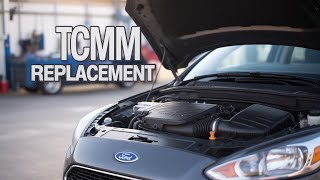
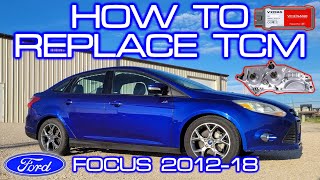
- Faulty Transmission Control Module (TCM) (Very Common) — The TCM controls the automatic transmission. It fails from internal circuit board issues, water damage, or electrical shorts, making it the most frequent cause of P1701 across major brands. 🎬 Watch: How to locate and replace a Ford Focus TCM.
- Blown Fuse or Faulty Relay (Common) — A blown fuse or a bad relay in the TCM's power supply circuit cuts power to the module, directly causing the P1701 code on brands like Nissan. Always check fuses before assuming a complex failure.
- Damaged or Corroded Wiring/Connectors (Common) — The wiring harness connecting the TCM to the vehicle's main computer (ECM) and sensors frays, shorts, or corrodes. This interrupts communication and power, triggering the code.
- Weak Battery, Faulty Alternator, or Poor Grounds (Common) — The TCM requires stable voltage. A weak battery, a failing alternator providing intermittent voltage, or a corroded TCM ground wire mimics complete module failure.
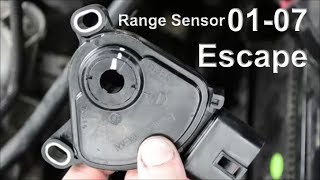
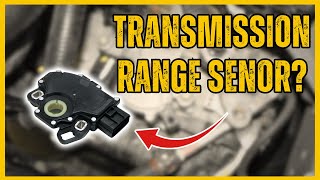
- Faulty Transmission Range Sensor (TRS) (Common) — Also known as a neutral safety switch, this sensor tells the TCM which gear is selected. If it fails, the TCM gets conflicting data, triggering a P1701 on Ford and Mazda vehicles.
- Low, Dirty, or Incorrect Transmission Fluid (Less Common) — While P1701 is an electrical code, low or degraded transmission fluid causes internal hydraulic issues that indirectly lead to engagement errors triggering the code.
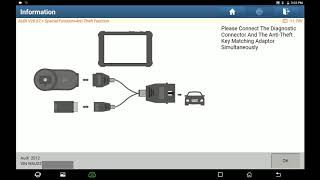
- Improper Component Replacement/Programming (Less Common) — On Audi, VW, and BMW, replacing the mechatronics unit or TCM without programming it to the vehicle's immobilizer system 🎬 See how to unlock an Audi/VW transmission control unit. causes a 'Transmission Control Unit Locked' fault.
- Faulty Internal Valve Body or Shift Solenoids (Rare) — A malfunctioning shift solenoid or a clogged passage within the transmission valve body prevents a gear from engaging correctly, triggering a 'Reverse Engagement Error'.
- Faulty Throttle Position Sensor (TPS) (Rare) — On older Hyundai models, P1701 specifically links to a malfunction in the Throttle Position Sensor circuit, as the TCM relies on TPS data to determine shift points.
Symptoms

- Check Engine Light is On — The Malfunction Indicator Lamp (MIL) or a dedicated transmission warning light illuminates on the dashboard.
- Transmission Stuck in Gear or Limp Mode — The transmission locks into a single gear (often second or third) to prevent damage, resulting in poor acceleration and high RPMs at highway speeds.
- Harsh or Delayed Shifting — The transmission slams into gear, hesitates, or shifts erratically. Drivers often feel a distinct 'punch' during acceleration.
- Engine Won't Start — A faulty transmission range sensor prevents the vehicle from recognizing Park or Neutral, disabling the starter as a safety measure.
- Battery and Brake Warning Lights On (Nissan) — On Nissan models, P1701 appears alongside battery and brake warning lights, indicating a faulty alternator is providing intermittent voltage.
- Reduced Fuel Efficiency — When the transmission shifts poorly or sticks in a low gear, the engine works harder, decreasing fuel economy by 5-15%.
- Cruise Control Inoperative — On Subaru models where this code relates to the cruise control system, the cruise control cannot be activated or disengages unexpectedly.
Diagnostic Flowchart
Tap your situation to follow the diagnostic path that matches what you're seeing on this code.
Common Fixes & Costs
- Replace Blown Fuse — Parts: $1-$5, Labor: $0-$50, ~0.1 hr book time (DIY)
- Clean or Repair Ground Connection — Parts: $5-$20, Labor: $75-$200, ~0.5 hr book time (DIY)
- Replace Transmission Control Module (TCM)
— Parts: $200-$1200+, Labor: $150-$400 (plus programming, which can be $100-$300), ~2.5 hr book time
(Professional)
Ford Focus (2012-2018): OEM AE8Z-7Z369-F (Alt: Dorman 609-030 (Remanufactured))
Nissan Rogue (2013-2015): OEM 310F6-1VA1A, 31036-JM60A (Alt: Various remanufacturers (e.g., FS1, Module Experts))
Audi A4/Q5 (2008-2018): OEM Varies by VIN (Mechatronics Unit Assembly) (Alt: Specialized rebuild services (e.g., UpFix, Mecha-Tronic)) - Replace Transmission Range Sensor (TRS)
— Parts: $25-$150, Labor: $100-$250, ~2 hr book time
(Intermediate)
Ford Ranger (1997-2011): OEM F7LZ-7F293-AB (Alt: Dorman 511-100, Standard Motor Products NS-129) - Repair Damaged Wiring or Connectors — Parts: $10-$50, Labor: $150-$600+, ~3 hr book time (Intermediate)
- Replace Alternator — Parts: $250-$600, Labor: $150-$350, ~2 hr book time (Intermediate)
DIY vs Professional
- Replace Blown Fuse — Beginner: Yes
Tools: Fuse puller, needle-nose pliers - Clean or Repair Ground Connection — Beginner: Yes
Tools: Socket set, wire brush, sandpaper, contact cleaner - Replace Transmission Range Sensor (TRS) — Beginner: No
Tools: Socket set, wrenches, multimeter, vehicle-specific alignment tool - Repair Damaged Wiring — Beginner: No
Tools: Multimeter, wire cutters/strippers, soldering iron, heat shrink tubing, wiring diagrams - Replace Alternator — Beginner: No
Tools: Socket set, serpentine belt tool, wrenches - Replace Transmission Control Module (TCM) — Beginner: No
Tools: Socket set, wrenches, advanced bi-directional scan tool for programming
Used vs. New Parts: Buying Guide
When a used part is worth it: A used TCM is a budget-conscious option for vehicles over 150,000 miles where a new module exceeds 20% of the car's value.
Donor-vehicle mileage cap: roughly under 80000 miles for the part to have meaningful remaining life.
Donor quality checklist:
- Part number must be an exact match.
- Verify the donor vehicle was not scrapped due to a transmission-related failure.
- Avoid parts from flood-damaged or high-corrosion vehicles.
Decision logic:
- If Vehicle is an Audi/VW with Component Protection → Avoid used parts. A used module is 'locked' and cannot be programmed to your car without specialized dealer tools, negating cost savings.
- If Part requires programming (most modern cars) → Factor in the cost of programming ($100-$300) by a dealer or specialist shop. A used part may not be programmable.
- If The part has a very high failure rate (e.g., Ford Focus DPS6 TCM) → Favor a new or remanufactured part with design improvements. A used part likely has the same inherent defect.
Warranty tradeoff: Used parts from a salvage yard typically offer a 30-90 day warranty on the part only. New aftermarket parts offer 1-year to limited lifetime warranties. New OEM parts carry a 12-month/12,000-mile warranty.
Worst-case if a used part fails: $500-$1000. If a used TCM fails after installation, you pay for diagnostic and labor costs again ($300-$600), plus another replacement part.
What Happens If You Wait — Timeline
- 0-1 month: Check Engine Light is on. You notice occasional, minor shifting hesitation or a slight 'jerk' when accelerating. Symptoms are intermittent. (MPG impact: 0-5%% · Added cost: $0)
- 1-3 months: Shifting becomes noticeably harsher and more frequent. The transmission enters 'limp mode' (stuck in one gear) intermittently, posing a safety risk in traffic. (MPG impact: 5-15%% · Added cost: $50-$150 in wasted fuel.)
- 3-6 months: The vehicle is frequently in limp mode, making highway driving difficult. Continued harsh shifting puts significant stress on transmission mounts and driveshaft components. (MPG impact: 15-25%% · Added cost: $300-$800 (Potential damage to transmission mounts, other electronics).)
- 6+ months: The electronic fault causes secondary mechanical damage. Constant stress wears out internal clutches and bands. The vehicle fails to start or refuses to engage any gear, leaving you stranded. (MPG impact: N/A (Vehicle may be undrivable)% · Added cost: $2500-$5000+ (Cost of transmission rebuild due to cascaded mechanical failure).)
Cost of Not Fixing It
- 0-1 month: Unpredictable shifting creates an immediate safety risk. Inefficient shifting or limp mode reduces fuel economy by 5-15%. You risk being stranded if the transmission refuses to engage a gear. (Added cost: Negligible, besides fuel cost.)
- 1-6 months: Continued harsh shifting places excessive stress on transmission mounts, driveshafts, and internal clutch packs. If caused by a faulty alternator, unstable voltage damages other electronic modules. (Added cost: $300-$1500 (Potential damage to other electronics or transmission mounts).)
- 6+ months: The cumulative stress from harsh engagements and slipping leads to worn clutches and bands, requiring a complete transmission rebuild. (Added cost: $2500-$5000+ (Cost of a transmission rebuild or replacement).)
Diagnosis Steps

- Scan for All Codes
Use an OBD-II scanner to read codes from all modules. Codes related to specific sensors (like P0705) or communication (U-codes) provide critical context for diagnosing P1701.
Tools: OBD-II scanner (Beginner) - Inspect Fuses and Relays
Locate the fuse box using your owner's manual. Visually inspect all fuses labeled for the transmission (TCM, AT, etc.). Replace blown fuses with the exact same amperage. This is the most common fix for Nissan's P1701.
Tools: Owner's manual, fuse puller or needle-nose pliers (Beginner) - Check the Transmission Fluid
On vehicles with a dipstick, check the fluid level and condition. Fluid should be pinkish-red and not smell burnt. Low or dark fluid indicates an internal problem requiring attention.
Tools: Rag (Beginner) - Inspect Wiring and Connectors
Visually inspect the wiring harness going to the TCM and the transmission. Look for frayed wires, corrosion on connector pins, or loose connections. Pay close attention to critical ground wires.
Tools: Flashlight (Intermediate) - Test TCM Power and Ground at the Connector (Pro Tip)
Using a wiring diagram, identify the power and ground pins on the TCM connector. With the key on, use a multimeter to verify power pins receive ~12V and ground pins have less than 0.1 ohms of resistance to the chassis. A 0V reading points to a wiring issue; high resistance indicates a bad ground.
Tools: Multimeter, vehicle service manual/wiring diagram (Advanced) - Perform a Voltage Drop Test (Pro Tip)
Place the red multimeter lead on the TCM's ground pin and the black lead on the negative battery terminal. With the key on, the reading must be less than 0.2 volts. A higher reading proves the ground connection is restricting current flow.
Tools: Multimeter, vehicle service manual (Advanced) - Check Alternator Output and AC Ripple
With the engine running, verify battery voltage is stable between 13.2 and 14.8 volts. Using a multimeter with an AC ripple function, check for AC voltage at the battery terminals. An AC reading above 0.5V indicates failing alternator diodes, which creates 'dirty' power that disrupts the TCM.
Tools: Multimeter with AC ripple function (Advanced) - Test the Transmission Range Sensor (TRS)
If a TRS fault is suspected (common on Ford), test its circuits with a multimeter. Check for correct voltage and resistance at the sensor's connector as you move the gear shifter through each position, looking for clear value changes.
Tools: Multimeter, vehicle service manual (Advanced) - Analyze Live Sensor Data
Monitor live data from the transmission's input/output speed sensors and the gear position reported by the TRS. If speed sensors report consistent RPMs but gear engagement is erratic, the TCM is misinterpreting valid signals, pointing to internal failure.
Tools: Advanced bi-directional scan tool (Professional)
When This Code Triggers (Freeze-Frame Conditions)
- Ignition Voltage: 10.5V - 15.0V (The fault is checked when voltage is within normal operating range.)
- Engine RPM: > 400 RPM (The code sets when the engine is running, not just during key-on.)
- Transmission Fluid Temp: > 32°F (0°C) (The self-test for this fault runs only after the transmission fluid warms slightly.)
- Gear Selector Position: D or R (The error is detected during or immediately after a shift into a drive gear or reverse.)
Related Codes
- P0700 — A general transmission fault code. The TCM requests the ECM to turn on the check engine light, storing P0700. P1701 is the specific code you need to diagnose; P0700 is just the messenger.
- P0705 — Means 'Transmission Range Sensor Circuit Malfunction.' If you have P1701 and P0705 together, the problem is almost certainly the range sensor or its wiring.
- P0826 — Means 'Up and Down Shift Switch Circuit.' Appearing with P1701 on Nissans, it strengthens the diagnosis of a widespread electrical issue like a bad ground or failing TCM.
- U0101 — Means 'Lost Communication with TCM.' If present with P1701 on a Nissan, it strongly suggests the TCM is not powering on, pointing directly to fuses, power, and ground circuits.
Climate & Environmental Factors
- High Heat: Prolonged exposure to high ambient temperatures, especially for TCMs mounted directly on the transmission case, accelerates the degradation of internal solder joints and causes premature failure.
- Humidity and Salt: Moisture and road salt penetrate poorly sealed connectors, causing corrosion on pins. This increases electrical resistance and causes intermittent power signals that trigger P1701.
- Extreme Cold: Extreme cold causes materials to contract, worsening existing cracks in solder joints on the TCM's circuit board and making wiring insulation brittle.
- Vibration: Constant vehicle vibration over many years cracks solder joints on the TCM's internal circuit board, leading to intermittent connections and unpredictable shifting.
How to Talk to a Mechanic About This Code
Say this: "I have a P1701 code on my [Your Car's Make/Model]. I'd like to schedule a diagnostic. Based on my research, this is often a TCM power supply or sensor issue, not an internal transmission failure. Please start by checking the TCM's power, grounds, and related fuses before recommending a module replacement."
This signals you are an informed customer. It directs the technician to perform critical, low-cost electrical checks first, preventing a rush to replace the expensive TCM.
Avoid saying:
- 'My transmission is acting weird.'
- 'Just fix the P1701 code.'
- 'My car is jerky, I think I need a new transmission.'
Questions to ask before authorizing the repair:
- What specific diagnostic steps did you perform to isolate the cause?
- Did you test the TCM's power and ground circuits, and what were the voltage readings?
- Have you checked for any available software updates or Technical Service Bulletins (TSBs) first?
- For an Audi/VW, if the TCM is replaced, how will you handle the Component Protection programming?
- What is the warranty on the recommended parts and labor?
Where to Take It: Dealer vs Independent vs Chain
- Dealer:
Recommended for German brands or warranty work. A necessary choice if 'Component Protection' is the issue, as independent shops lack the required tools.
Best for: Vehicles under warranty (including extended TCM/CVT warranties from Ford/Nissan)., Audi, VW, or BMW vehicles where 'Component Protection' removal and programming are required., Complex cases requiring manufacturer-specific software (Ford IDS, Audi ODIS).
Downsides: Highest labor rates and parts costs., Often defaults to expensive module replacement without thoroughly checking wiring. (Typical cost: +50% vs. baseline) - Independent Shop:
Best value for non-programming fixes. Choose a well-vetted shop specializing in electrical diagnostics and ask if they can test TCM power/grounds.
Best for: Out-of-warranty Ford, Nissan, or Hyundai vehicles., Diagnosing common causes like a bad alternator, faulty ground wire, or failed Transmission Range Sensor.
Downsides: Must have advanced diagnostic tools and experience with transmission electronics., May not be able to program a new TCM, requiring a second trip to a dealer. (Typical cost: +0% vs. baseline) - Chain Shop:
AVOID for initial diagnosis. Only use them for simple part swaps after a proper diagnosis has been made elsewhere.
Best for: Checking or replacing a battery or alternator if it's identified as the root cause.
Downsides: Technicians lack specialized training for complex electronic diagnostics., High risk of misdiagnosis, often leading to unnecessary transmission replacement recommendations. (Typical cost: -10% vs. baseline)
When to Walk Away From the Repair
If the P1701 repair estimate exceeds 50% of your car's private-party market value, sell the car as-is or trade it in.
- Car worth $4000, fix is $2200: Walk away. The repair cost is over half the car's value. It's not a sound financial decision.
- Car worth $15000, fix is $1800: Fix it. The repair cost is a small fraction of the car's value and restores its reliability.
- Car worth $3000, fix is $800: Borderline. If the rest of the car is in excellent shape and you plan to keep it for several years, the repair is justified. Get a second opinion.
What Scan Tool You Need for This Code
Minimum: A scanner that reads manufacturer-specific codes for the Transmission Control Module (TCM) and displays live data for transmission sensors.
A basic $20 code reader only shows a generic P0700 code. It cannot access the specific P1701 code stored in the TCM or view the live data needed to find the root cause.
Budget: BlueDriver Pro (~$90) — Reads and clears enhanced codes from the TCM. Displays live data for transmission fluid temperature and relevant PIDs to diagnose sensor issues. Cannot perform programming.
Mid-range: Foxwell NT510 Elite (~$180) — Offers OE-level diagnostics for a specific car brand. Reads transmission codes, views live data, and performs bidirectional functions like transmission adaptation resets after a repair.
Professional: Autel MaxiCOM MK808S (~$500) — Provides full system diagnostics with bidirectional control. Performs active tests on transmission solenoids, initiates relearn procedures, and resets adaptation values.
Rent vs buy: Buying at least a budget-level scanner like the BlueDriver is recommended for proper initial diagnosis. If your repair requires a 'relearn' procedure, a mid-range tool is a worthwhile investment.
How to Clear the Code After You Fix It
- Reconnect battery (if disconnected for repair)
- Use an OBD-II scan tool to clear all diagnostic trouble codes
- Perform a transmission adaptive learning drive cycle
Drive cycle (~20 minutes): Warm vehicle to normal operating temperature. Perform 3-5 sets of gear engagements (N-D, N-R) while stopped with the brake applied, waiting 3 seconds in each gear. Then, perform several series of gentle upshifts from a stop to highway speed at light, medium, and heavy throttle to allow the TCM to relearn shift points.
Readiness monitors affected: Comprehensive Component Monitor, Catalyst Monitor, Evaporative System Monitor
Before emissions retest: drive at least 100 miles to fully set monitors.
Watch out for:
- Clearing the code does not fix the underlying mechanical or electrical issue.
- Attempting a relearn procedure before the transmission fluid is at normal operating temperature causes incorrect learning.
- Going for an emissions test immediately after clearing codes results in a 'Not Ready' failure. Drive for 50-100 miles first.
Will This Fail Emissions / State Inspection?
Yes — this code typically fails an OBD-II emissions inspection.
- California: A P1701 code is an automatic smog check failure. CARB regulations require all readiness monitors to be set to 'Ready' for the test to proceed.
- New York: The NYS DMV vehicle inspection includes an OBD-II scan. An illuminated MIL from a P1701 code results in an immediate inspection failure.
- Texas: In the 17 Texas counties requiring emissions testing, an illuminated Check Engine Light is an automatic failure. In safety-only counties, the underlying drivability issue causes a failure.
Most Commonly Affected Vehicles
- Ford Focus (2012-2018) — Extremely common on models with the DPS6 PowerShift transmission. Points to the failure-prone TCM, which was subject to class-action lawsuits and extended warranties.
- Nissan Altima, Rogue, Murano (2008-2015) — Commonly experiences P1701 due to TCM power supply issues caused by internal TCM failure, wiring problems, or a failing alternator providing unstable voltage.
- Audi / Volkswagen A4, A5, Q5, Golf, A3 (2008-2018) — On DSG/S-Tronic transmissions, P1701 means 'Transmission Control Unit Locked.' This activates after replacing a mechatronics unit without proper online programming using dealer software (ODIS).
- Ford Ranger, Fiesta, Taurus (1995-2011) — Frequently reports P1701 related to the transmission range sensor (TRS) circuit, causing a 'Reverse Engagement Error'.
- Hyundai Santa Fe, Sonata (2001-2006) — P1701 points to a faulty Throttle Position Sensor (TPS) or a communication circuit failure between the TCM and ECM.
- Honda Civic (2022-2024) — Indicates a 'Reverse light switch malfunction,' where the Powertrain Control Module (PCM) detects the switch is stuck in the 'on' position.
- BMW E70 X5, various E-series/F-series (2007-2018) — Replacing a transmission control module triggers a P1701-equivalent fault if the new unit is not properly coded to the vehicle's immobilizer system.
- Mazda Tribute, B-Series (2001-2008) — Co-developed with Ford, these share the 'Reverse Engagement Error' definition, typically pointing to a faulty Transmission Range Sensor.
Manufacturer-Specific Notes
- Ford / Lincoln / Mazda: The code points to a 'Reverse Engagement Error,' usually caused by a faulty Transmission Range Sensor (TRS). On Focus and Fiesta models, it indicates a notoriously faulty TCM covered by extended warranties.
- Nissan / Infiniti: P1701 means 'TCM Power Supply Malfunction.' The root cause is often a bad ground, blown fuse, failing alternator, or complete TCM failure. Nissan extended CVT warranties on many models.
- Audi / Volkswagen: Translates to 'Transmission Control Unit: Locked.' It appears when a new or used TCM is installed but not programmed to the vehicle's anti-theft system, requiring dealer-level ODIS software.
- Subaru: Unrelated to the transmission, P1701 indicates a 'Cruise Control Set Signal Circuit Malfunction.' The cruise control is disabled, but the car drives normally.
Real Owner Stories
2008 Nissan Altima with 150K+ miles
Check Engine Light came on with codes P1701 and P0826. The main symptom was a noticeable 'punch' or jerk when accelerating from a stop.
Outcome: Forum advice pointed towards a bad battery, failing alternator, or the TCM. Testing the battery and alternator at an auto parts store revealed a failing alternator. Replacing it fixed the issue.
Lesson: For Nissan's P1701, always investigate the entire power supply system (battery, alternator, fuses, grounds) before condemning the TCM. A simple electrical issue is a frequent and much cheaper root cause.
2013 Ford Focus with DPS6 Transmission
The car intermittently lost power, failed to start, or would not engage a gear. The check engine light was on, and the 'PRNDL' gear indicator flashed.
Outcome: The TCM was replaced and reprogrammed by the dealership. Ford's extended warranty (up to 10 years/150,000 miles) covered the cost of the repair.
Lesson: If you have a 2012-2018 Ford Focus or 2011-2016 Fiesta with transmission issues, check for open recalls and TSBs. The TCM is a known failure point, and the repair may be covered outside the standard warranty.
2014 Nissan Murano with multiple warning lights
The battery and brake warning lights illuminated, the transmission got stuck in limp mode, and the battery needed jump-starting. The vehicle stored a P1701 code.
Outcome: Replacing the failing alternator provided a stable 14-volt supply, resolving the transmission issues, clearing the P1701 code, and extinguishing the warning lights.
Lesson: On Nissans, P1701 is a direct symptom of a failing alternator providing unstable power. If you see P1701 with battery/brake lights, test the alternator's output and AC ripple before assuming the TCM is bad.
How to Prevent This Code From Triggering
- Perform periodic transmission fluid changes (Every 30,000-60,000 miles (or per manufacturer's recommendation)) — Clean fluid lubricates components, dissipates heat, and prevents contaminant buildup that clogs solenoids, reducing stress on the entire system controlled by the TCM.
- Maintain a healthy battery and charging system (Annually (test battery and alternator)) — The TCM requires stable voltage. A weak battery or failing alternator causes voltage drops or 'dirty' power (AC ripple) that corrupts the TCM's software or causes permanent damage.
- Protect wiring and connectors with dielectric grease (During any repair involving electrical connectors) — Applying non-conductive dielectric grease to connector seals creates a barrier against moisture and road salt, preventing corrosion on the pins for the TCM and its sensors.
- Install manufacturer software updates for the TCM/PCM (When available (check during routine service)) — Manufacturers release software updates to fix bugs causing poor shifting behavior or false diagnostic codes, preventing issues that mimic hardware failure.
- Avoid driving through deep water (As a daily habit) — Submerging electronic components forces moisture past seals and into connectors, leading to short circuits and corrosion that cause module failure.
Frequently Asked Questions
Can I fix P1701 myself?
Simple fixes like replacing a blown fuse, cleaning battery terminals, or cleaning a TCM ground connection are DIY-friendly. However, replacing a TCM or tracing a wiring fault requires specialized diagnostic tools and programming knowledge, making it a job for professionals.
What are the most common misdiagnosis mistakes for P1701?
The biggest mistake is immediately replacing the Transmission Control Module (TCM) without testing its power and ground circuits. On Nissans, a blown fuse, bad ground, or faulty alternator is a common cause. On Audis, replacing the TCM without access to dealer programming tools will not fix the issue.
Will clearing the code fix the problem?
No. Clearing the code only turns the check engine light off temporarily. The code and symptoms return until the underlying hardware or electrical problem is repaired.
Can a bad alternator cause a P1701 code?
Yes. On certain Nissan models, a failing alternator providing intermittent voltage (AC ripple over 0.5V) triggers a P1701 code, often accompanied by battery and brake warning lights.
How much does it cost to diagnose the P1701 code?
Most repair shops charge a diagnostic fee ranging from $100 to $200. This fee covers the initial scan and inspection and is sometimes applied toward the final repair cost.
Does P1701 mean I need a new transmission?
Not usually. This code points to an electronic or control system problem, not a major internal mechanical failure. The fix focuses on a faulty module, sensor, or wiring rather than a complete transmission rebuild.
What is 'Component Protection' on an Audi or VW?
Component Protection is an anti-theft feature that 'locks' a new or used control module if installed in a different vehicle, setting the P1701 code. Only a dealer or specialist with ODIS software can unlock the module and adapt it to the car.
Why did the code appear after I replaced my battery?
Disconnecting the battery causes the TCM to throw a code upon reconnection if the power supply is unstable. Ensure battery terminals are clean and tight, as loose connections create unstable voltage that triggers the code.
Key Takeaways
- P1701 is a manufacturer-specific code that requires looking up your exact brand; it means 'Reverse Engagement Error' on Fords but 'TCM Power Supply Malfunction' on Nissans.
- Over 80% of P1701 triggers stem from electronic failures like a dead Transmission Control Module (TCM), a blown 10A fuse, or a failing alternator, rather than internal mechanical damage.
- Driving with an active P1701 code risks sudden 'limp mode' engagement, locking the transmission in 2nd or 3rd gear and creating a severe safety hazard at highway speeds.
- Always test the TCM's 12V power and ground pins with a multimeter before authorizing a $1,000+ module replacement, as a $5 blown fuse or corroded ground wire mimics a total module failure.
Helpful Videos






The information in this article is provided for general reference and educational purposes only. Vehicle specifications, procedures, and part compatibility can vary by production date, trim level, and region. Always consult your vehicle's factory service manual and verify part numbers before purchasing or performing repairs. Safety-critical components such as airbags, seat belts, and braking systems should be installed by a qualified professional.
- 🎬 Helpful Videos
- What Does P1701 Mean?
- Can I Drive With P1701?
- Common Causes
- Symptoms
- Diagnostic Flowchart
- Common Fixes & Costs
- DIY vs Professional
- Used vs. New Parts: Buying Guide
- What Happens If You Wait — Timeline
- Cost of Not Fixing It
- Diagnosis Steps
- When This Code Triggers (Freeze-Frame Conditions)
- Related Codes
- Climate & Environmental Factors
- How to Talk to a Mechanic About This Code
- Where to Take It: Dealer vs Independent vs Chain
- When to Walk Away From the Repair
- What Scan Tool You Need for This Code
- How to Clear the Code After You Fix It
- Will This Fail Emissions / State Inspection?
- Most Commonly Affected Vehicles
- Manufacturer-Specific Notes
- Real Owner Stories
- 2008 Nissan Altima with 150K+ miles
- 2013 Ford Focus with DPS6 Transmission
- 2014 Nissan Murano with multiple warning lights
- How to Prevent This Code From Triggering
- Frequently Asked Questions
- Can I fix P1701 myself?
- What are the most common misdiagnosis mistakes for P1701?
- Will clearing the code fix the problem?
- Can a bad alternator cause a P1701 code?
- How much does it cost to diagnose the P1701 code?
- Does P1701 mean I need a new transmission?
- What is 'Component Protection' on an Audi or VW?
- Why did the code appear after I replaced my battery?
- Key Takeaways
- 🎟️ Get 5% Off