

OBD-II Code P1700: Transmission Control System Malfunction
The Ultimate Guide to What P1700 Means, Why It Triggers, and How to Fix It for Good
- P1700 is a generic alert requiring an advanced OBD-II scanner to pull the specific, actionable fault codes hidden inside the Transmission Control Module (TCM).
- Driving more than 50 miles with a P1700 code and harsh shifting risks turning a $200 sensor repair into a $4,000 complete transmission replacement.
- Always check your transmission fluid level and condition first; low or burnt fluid is responsible for nearly 30% of transmission-related fault codes.
- Search for manufacturer Technical Service Bulletins (TSBs) before buying parts, as vehicles like the 2011-2016 Ford Focus have extended 10-year warranties specifically for TCM failures.
What Does P1700 Mean?

P1700 means your car's Transmission Control Module (TCM) detected a fault and requested the Engine Control Module (ECM) to illuminate the check engine light. This code is a generic alert confirming a problem exists, but it does not specify the failing part. You must use an advanced scanner to retrieve the specific secondary codes stored in the TCM to pinpoint the exact issue.
Technical definition: Transmission Control Module (TCM) Requested MIL Illumination.
Can I Drive With P1700?
Yes, But With Caution. You can drive short distances, but it risks severe internal transmission damage. Expect poor performance like harsh shifting, getting stuck in one gear ('limp mode'), or reduced power. Driving more than 50 miles under these conditions turns a minor sensor repair into a $3,000-$8,000 complete transmission replacement. Get it diagnosed immediately.
Common Causes

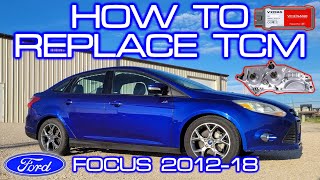
- Faulty Transmission Control Module (TCM) (Very Common) — The TCM fails due to internal circuit board cracks from vibration, software corruption, or failure of its power supply circuit. It sends incorrect signals or ceases communication entirely. 🎬 Watch: Understanding Ford Focus TCM failure and common symptoms.
- Low or Burnt Transmission Fluid (Common) — Fluid that is old, dirty, or below the recommended level causes overheating, incorrect hydraulic pressure, and internal mechanical friction, which the TCM detects as a serious fault.
- Damaged Wiring or Corroded Connectors (Common) — The wiring harness connecting the TCM to the transmission's sensors and solenoids is vulnerable to fraying, short-circuits, or corrosion. This interrupts critical communication.
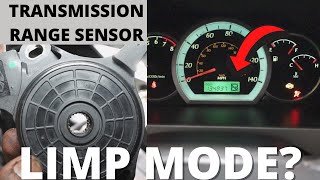
- Faulty Transmission Range Sensor (TRS) (Common) — This sensor informs the TCM of the selected gear (Park, Reverse, Drive). A malfunction confuses the TCM, causing no-start conditions, incorrect gear commands, or erratic shifting.
- Failing Transmission Solenoids (Less Common) — Solenoids are electro-hydraulic valves that direct fluid flow to execute gear shifts. If a shift or pressure control solenoid fails, the TCM detects the mechanical error and sets a code.
- Internal Mechanical Failure (Less Common) — Wear and tear on internal components like clutch packs, bands, or the torque converter causes slipping or delayed engagement. The TCM detects this by comparing engine speed to transmission output speed.
Symptoms

- Harsh, Erratic, or Delayed Shifting — The transmission slams into gear, hesitates noticeably before shifting, or shifts at inappropriate engine speeds.
- Transmission Stuck in Limp Mode — To prevent damage, the TCM forces the transmission into a single gear (usually 2nd or 3rd). This results in poor acceleration and an inability to shift.
- Vehicle Will Not Start — If the fault lies with the Transmission Range Sensor (TRS), the vehicle fails to recognize it is in 'Park' or 'Neutral,' preventing the engine from cranking. 🎬 Watch: How to replace a transmission range sensor yourself.
- Gear Indicator on Dash is Incorrect or Flashing — The gear selected on the shifter does not match what is displayed on the instrument cluster, or the indicator lights flash, indicating a communication error.
- Check Engine Light is On (also visible on scanner) — The primary symptom. P1700 is a direct request from the TCM to activate the check engine light. A dedicated transmission warning light also illuminates on some vehicles.
Diagnostic Flowchart

Tap your situation to follow the diagnostic path that matches what you're seeing on this code.
Common Fixes & Costs
- Replace Transmission Control Module (TCM)
— Parts: $300-$1200, Labor: $200-$500, ~2.5 hr book time
(Professional)
: OEM - Transmission Fluid and Filter Change — Parts: $75-$200, Labor: $150-$350, ~1.5 hr book time (Intermediate)
- Replace Transmission Range Sensor (TRS)
— Parts: $50-$175, Labor: $150-$300, ~1.2 hr book time
(DIY)
: OEM - Repair or Replace Damaged Wiring/Connectors — Parts: $20-$400, Labor: $250-$1500, ~3.5 hr book time (Professional)
- Replace Faulty Transmission Solenoid
— Parts: $100-$400, Labor: $300-$700, ~3 hr book time
(Professional)
: OEM
DIY vs Professional
- Transmission Fluid and Filter Change — Beginner:
- Replace Transmission Range Sensor (TRS) — Beginner:
- Repair or Replace Damaged Wiring/Connectors — Beginner:
- Replace Transmission Control Module (TCM) — Beginner:
Used vs. New Parts: Buying Guide
When a used part is worth it: For a Transmission Control Module (TCM), a used or remanufactured unit is a practical choice for older vehicles where a new OEM part is prohibitively expensive. A used TCM from a low-mileage vehicle is a good value if the part number matches exactly.
Donor-vehicle mileage cap: roughly under 80000 miles for the part to have meaningful remaining life.
Donor quality checklist:
- Verify the donor vehicle was not scrapped due to transmission or electrical failure.
- Match the OEM part number EXACTLY. Superseded parts are often incompatible.
- Purchase from a salvage yard offering a 30-90 day warranty to protect against dead-on-arrival parts.
Decision logic:
- If Vehicle is under 8 years old or has low mileage (<80k) → Favor a new or remanufactured TCM to ensure longevity and secure a longer warranty.
- If Vehicle is over 10 years old and budget is the primary concern → A used TCM is a reasonable risk, provided the part number matches and it can be programmed to your vehicle.
- If The TCM requires complex vehicle-specific programming → A remanufactured unit from a specialist who pre-programs it to your VIN is the best choice, reducing installation headaches.
Warranty tradeoff: Used parts typically come with a 30-90 day functional warranty. Remanufactured TCMs carry a 1-year to lifetime warranty. New OEM parts installed by a dealer have a 1-2 year warranty.
Worst-case if a used part fails: $400-$800, which includes repeat labor for installation and programming, plus the cost of another replacement module.
What Happens If You Wait — Timeline
- 0-1 month: Check engine light is on with code P1700. You experience occasional hesitation or a slightly harder-than-normal shift. The car remains fully drivable. (MPG impact: 0-5%% · Added cost: $0-$50 in wasted fuel.)
- 1-4 months: Symptoms become consistent. Shifting is harsh or delayed. The transmission slips (engine RPMs flare up between shifts). The underlying issue causes inefficient operation and increased internal friction. (MPG impact: 5-15%% · Added cost: $200-$500. Accelerated wear on clutch packs begins.)
- 4-8 months: The TCM forces the transmission into 'limp mode' (stuck in 2nd or 3rd gear) to prevent catastrophic damage. The transmission overheats, and the fluid smells burnt. Driving is severely compromised. (MPG impact: 15-25%+% · Added cost: $800-$1,800. The original fault causes secondary damage, requiring expensive valve body replacement due to contamination.)
- 8+ months: Catastrophic internal failure. Worn clutches and bands generate debris that clogs the filter and fluid passages, starving the transmission of pressure. The vehicle fails to move in Drive or Reverse. (MPG impact: N/A (Vehicle is undrivable)% · Added cost: $3,000-$8,000+. Requires a complete transmission rebuild or replacement.)
Cost of Not Fixing It
- 0-1 month: Decreased fuel economy (5-15%), unpredictable shifting, and potential to be stranded if the vehicle enters limp mode. (Added cost: Negligible, aside from increased fuel costs.)
- 1-6 months: Continued harsh shifting causes accelerated wear on internal transmission components like clutch packs and bands. This turns a simple sensor fix into an expensive valve body repair. (Added cost: $800-$1,800)
- 6+ months: Catastrophic internal transmission failure. Worn clutches generate excessive heat and debris, destroying hard parts like gears and the torque converter. The vehicle stops moving altogether. (Added cost: $3,000-$8,000+)
Diagnosis Steps

- Scan for TCM-Specific Trouble Codes
Use an advanced OBD-II scanner capable of accessing the Transmission Control Module (TCM). P1700 is a generic pointer; the crucial diagnostic information lies in the secondary codes stored in the TCM (e.g., P07xx, P17xx, U-codes).
Tools: Advanced OBD-II Scanner (Beginner) - Check Transmission Fluid Level and Condition
With the engine warm and running in Park or Neutral, check the transmission fluid. It must be bright red, clear, and have a neutral smell. Brown, black, or burnt-smelling fluid indicates internal wear or overheating.
Tools: Rag, Gloves (Beginner) - Check for Technical Service Bulletins (TSBs)
Search for TSBs related to the P1700 code for your specific make, model, and year. Manufacturers frequently release bulletins with updated diagnostic procedures or known software fixes for this exact code.
Tools: Smartphone or Computer (Beginner) - Test the Transmission Range Sensor (TRS)
With the ignition on (engine off), slowly move the gear shifter through each position. The gear indicator on the dashboard must correspond precisely. Attempt to start the engine in 'Neutral' and 'Drive'. It must only crank in 'Park' and 'Neutral'.
Tools: None (Intermediate) - Inspect Wiring and Grounds
Thoroughly inspect the wiring harness connected to the transmission case and the TCM. Look for frayed wires, loose connectors, and fluid contamination. Check the main engine-to-chassis ground straps.
Tools: Flashlight (Intermediate) - Verify Power and Ground at the TCM Connector
Identify the power and ground pins on the TCM connector. Check for battery voltage (12.6V) at the power pins. Check for resistance between the ground pins and the negative battery terminal. A reading under 1 Ohm indicates a good ground.
Tools: Digital Multimeter, Vehicle-Specific Wiring Diagram (Advanced) - Perform a CAN Bus Network Health Check
If U-series codes are present, check CAN bus integrity. With the battery disconnected, measure resistance between CAN High and CAN Low pins at the OBD-II port (pins 6 and 14). A healthy network reads exactly 60 Ohms.
Tools: Digital Multimeter (Advanced) - Test Implicated Sensors or Solenoids
Based on the specific DTCs found in Step 1, test the implicated sensor or solenoid. Measure resistance across the component's terminals. Shift solenoids typically read 10-30 Ohms. Compare readings to the manufacturer's exact specifications.
Tools: Digital Multimeter, Vehicle-Specific Service Manual (Advanced) - Test Throttle Position Sensor (Subaru Specific)
On 2000-2008 Subarus, back-probe the TPS signal wire. Voltage must be 0.45V-0.55V with the throttle fully closed, increasing smoothly to 4.5V-4.7V at wide-open throttle. Any voltage jumps indicate a faulty sensor.
Tools: Digital Multimeter with Back-Probes (Advanced)
When This Code Triggers (Freeze-Frame Conditions)
- Engine Coolant Temp: 180-210°F (Vehicle is at full operating temperature.)
- RPM: 1200-2800 RPM (During a gear shift event or when cruising at a steady speed.)
- Engine Load: 25-70% (Under moderate acceleration or maintaining speed on a slight incline.)
- Vehicle Speed: 25-60 mph (The fault is logged during city or highway driving when the TCM compares engine speed to output speed.)
Related Codes
- P0700 — The generic SAE equivalent of P1700. Both mean the TCM detected a fault and requested the check engine light. They are diagnostically identical and serve as a signpost to check for specific codes in the TCM.
- P1701 — Indicates a 'Reverse Engagement Error.' If you see P1701 with P1700, shift diagnostic focus heavily toward the transmission range sensor, shifter mechanism, or reverse gear hydraulic circuit.
- P1702 — Points to an intermittent malfunction in the Transmission Range Sensor (TRS) circuit. Suggests a problem not present all the time, such as a loose wire or a failing sensor that acts up when hot.
- U-Series Codes (e.g., U0101, U0100) — Signify communication problems between modules. Seeing U0101 (Lost Communication with TCM) alongside P1700 proves the problem is electrical—likely in the wiring or CAN bus network—rather than a mechanical transmission fault.
Climate & Environmental Factors
- Road Salt / De-Icing Agents: A primary environmental cause in cold climates. Salty water spray enters wiring harnesses and connectors, causing severe corrosion. This creates high resistance in critical sensor lines to the TCM, triggering P1700.
- High Humidity: Moisture finds its way into non-sealed electrical connectors over time, accelerating corrosion on the pins and leading to intermittent signal loss between modules.
- Extreme Cold: Cold temperatures cause transmission fluid to become thick, delaying hydraulic pressure buildup and causing harsh shifting on startup. This exacerbates underlying issues like old fluid or weak solenoids.
How to Talk to a Mechanic About This Code
Say this: "I have a check engine light and my scanner shows a P1700 code. I need to schedule a diagnostic appointment to retrieve the specific secondary codes from the Transmission Control Module."
This signals that you understand P1700 is a generic code and the real problem is in the TCM. It directs the technician to the correct first step and reduces the chance of them suggesting a generic, expensive fix.
Avoid saying:
- 'My check engine light is on, can you just fix it?'
- 'I think I need a new transmission.'
- 'Just do whatever you think is best.'
Questions to ask before authorizing the repair:
- What specific fault codes did you find in the Transmission Control Module (TCM)?
- Did you check wiring, grounds, and fluid condition before condemning the part?
- Is there a Technical Service Bulletin (TSB) for this issue on my vehicle?
- If the fix is a module replacement, is programming required and is that included in the quote?
- What is the warranty on the parts and labor for this specific repair?
Where to Take It: Dealer vs Independent vs Chain
- Dealer:
Recommended. The dealer is the safest choice for a P1700 due to the high likelihood of needing manufacturer-specific software for diagnosis and programming.
Best for: Vehicles under warranty., Known manufacturer-specific issues covered by TSBs or recalls (e.g., Ford Focus TCM, Nissan CVT judder)., Repairs requiring complex, vehicle-specific programming of a new TCM.
Downsides: Highest labor rates., Defaults to replacing a whole module when a wiring repair suffices. (Typical cost: +50% vs. baseline) - Independent Shop:
Good, but you MUST vet the shop. Ask if they have dealer-level diagnostic tools and experience with transmission module programming for your specific car brand.
Best for: Out-of-warranty vehicles where the cause is a known, common failure (e.g., range sensor, speed sensor)., Shops that specialize in transmission repair or electrical diagnostics.
Downsides: Lacks the latest manufacturer-specific scan tools or software subscriptions for programming new modules. (Typical cost: +0% vs. baseline) - Chain Shop:
AVOID for diagnosis. The risk of an incorrect and expensive misdiagnosis is very high. P1700 requires specialized expertise beyond the scope of most chain shops.
Best for: Not recommended for P1700 diagnosis.
Downsides: Technicians lack specialized diagnostic training for complex transmission codes., High pressure to sell parts leads to misdiagnosis., Lacks the necessary tools to program a new TCM. (Typical cost: -10% vs. baseline)
When to Walk Away From the Repair
If the estimated repair cost exceeds 50% of your car's private-party value, seriously consider selling or trading it in.
- Car worth $4000, fix is $2200: Walk away. The repair cost is over 50% of the car's value. It is not a sound financial decision.
- Car worth $12000, fix is $1500: Fix it. The repair cost is well under the threshold and restores the vehicle's function and value.
- Car worth $3000, fix is $800: Borderline, but likely worth fixing. The repair cost is significantly less than buying a replacement vehicle.
What Scan Tool You Need for This Code
Minimum: A scanner that reads and clears codes from the Transmission Control Module (TCM). A basic engine-only code reader is NOT sufficient.
A $20 code reader only shows the P1700 code from the engine computer. It CANNOT see the specific, essential fault codes stored in the transmission computer, leaving you completely blind to the actual problem.
Budget: Mucar BT200 Max or XTool A30D (~$80) — Bluetooth dongles that pair with your smartphone. They provide full system diagnostics, allowing you to read the crucial codes from the TCM.
Mid-range: Foxwell NT630 Plus or Autel AutoLink AL629 (~$150) — Handheld scanners that read and clear codes from the Engine, ABS, SRS, and Transmission systems. They provide live data streaming to monitor sensor inputs.
Professional: Autel MaxiCOM MK808S or Launch Creader Elite (~$500) — Provides full bidirectional control to test solenoids and actuators, offers access to manufacturer-specific codes, and includes special functions like TCM relearns.
Rent vs buy: For a one-time diagnosis, AutoZone's Loan-A-Tool program offers scanners that read transmission codes (like the Autel AL629). This is a free service with a refundable deposit. Buy a scanner only if you plan to do your own diagnostics regularly.
How to Clear the Code After You Fix It
- Reconnect the battery if it was disconnected for the repair.
- Use an advanced OBD-II scan tool to access the TCM and clear all transmission-specific codes. Clearing the P1700 from the ECM is not sufficient.
- Perform a complete drive cycle to allow the vehicle's readiness monitors to run.
Drive cycle (~30 minutes): Start the vehicle from a cold start. Let it idle for 3 minutes. Drive in mixed city conditions for 15 minutes, including several moderate accelerations. Drive for 10 minutes at a steady highway speed (55-65 mph). Allow the vehicle to cool down completely.
Readiness monitors affected: Comprehensive Component Monitor, Catalyst Monitor, EVAP System Monitor
Before emissions retest: drive at least 100 miles to fully set monitors.
Watch out for:
- Using a basic code reader that only clears the ECM code, leaving the fault active in the TCM.
- Not fixing the root cause; the code returns immediately upon the next diagnostic cycle.
- Disconnecting the battery clears codes but resets all readiness monitors, causing an automatic emissions test failure.
Will This Fail Emissions / State Inspection?
Yes — this code typically fails an OBD-II emissions inspection.
- California: An active check engine light from a P1700 code is an automatic smog check failure. After repairs, all readiness monitors must be set to 'complete' before a retest passes. You must drive 100-200 miles to complete the drive cycles.
- New York: The NYS DMV emissions inspection includes an OBD-II scan. Any active check engine light results in an automatic failure.
- Texas: In counties where emissions testing is required, a vehicle fails the inspection if the check engine light is on for any reason.
Most Commonly Affected Vehicles
- Nissan Altima, Rogue, Sentra, Versa (2013-2019) — Extremely common on CVT models. Often related to TCM software, overheating, or internal wear causing 'judder'. TSB NTB19-076A addresses related codes (P17F0, P17F1) that frequently accompany P1700.
- Ford Focus, Fiesta (2011-2016) — Strongly associated with the problematic DPS6 dual-clutch transmission. Indicates a failing TCM or clutch actuator. Covered by Ford Customer Satisfaction Program 19N08, extending TCM coverage to 10 years/150,000 miles.
- Subaru Outback, Forester, Impreza (2000-2008) — P1700 is specifically defined as 'Throttle Position Sensor Circuit Malfunction (A/T)'. The TCM compares the TPS signal to engine speed, and a mismatch triggers the code. Diagnosis requires checking TPS voltage.
- Chrysler/Dodge/Jeep 300, Charger, Grand Cherokee (2004-2014) — Indicates a fault within the TCM or a communication failure on the CAN bus network. On the Grand Cherokee, it links to governor pressure sensor codes (e.g., P1764).
- Hyundai/Kia Elantra, Sonata, Optima (2011-2022) — Often defined as 'Transmission Gear Position Switch Circuit Malfunction,' pointing directly to issues with the transmission range switch or associated wiring harness.
- General Motors Cruze, Impala, Silverado (2005-2018) — The code definition is exclusively 'TCM Requested MIL Illumination.' It serves purely as a placeholder, instructing the technician to retrieve detailed transmission codes stored in the TCM.
Manufacturer-Specific Notes
- General Motors: P1700 almost exclusively means 'Transmission Control Module (TCM) Requested MIL Illumination.' It carries no diagnostic value on its own and simply confirms you must scan the TCM for actual fault codes.
- Nissan: On CVT models, P1700 is a precursor to severe, judder-related codes like P17F0 or P17F1. These are 'hard codes' that cannot be cleared until a specific TCM recalibration or valve body replacement is performed.
- Subaru: In 2000-2008 Subarus, this code is specifically defined as a 'Throttle Position Sensor Circuit Malfunction.' A faulty TPS triggers P1700 even if the transmission is perfectly healthy.
- Ford: On vehicles with the DPS6 dual-clutch transmission (2011-2016 Focus/Fiesta), this code is a hallmark of a failing TCM. These issues are covered by extensive warranty extensions.
Real Owner Stories
2014 Ford Focus - The Infamous DPS6 Transmission
Car with 93k miles suddenly started shifting poorly, lost reverse gear, and the check engine light came on with code P090C (a related TCM code). After sitting, the problem temporarily vanished but soon returned.
What they tried:
- Owner correctly identified the symptoms as a classic Transmission Control Module (TCM) failure common to the DPS6 transmission.
- Took the car to a Ford dealer and specifically asked them to check the TCM against known recalls and warranty extensions.
Outcome: The dealership confirmed the faulty TCM was covered under Ford's extended warranty (Customer Satisfaction Program 19N08 covers the TCM for 10 years/150,000 miles). The part was replaced at no cost to the owner.
Lesson: If you have a 2011-2016 Ford Focus or Fiesta, P1700 is almost certainly a TCM failure. Check for warranty extensions before paying for an $800+ repair.
2004 Subaru Forester 2.5X - The Misleading Transmission Code
Owner bought a used Forester which soon developed a flashing 'AT OIL TEMP' light, starting issues, and rough idle when put in gear. Codes P1700, P0122, and P0123 were present.
What they tried:
- Replaced the Idle Air Control valve based on an initial code, which didn't fix the main issue.
- Mechanic forums correctly identified that on this era of Subaru, P1700 specifically means 'Throttle Position Sensor Circuit Malfunction'.
Outcome: The problem was not the transmission, but a faulty Throttle Position Sensor (TPS) sending incorrect voltage signals to the TCM. The fix was replacing and adjusting the TPS to output 0.5V at closed throttle.
Lesson: On 2000-2008 Subarus, P1700 is a specific code for the TPS. Always check the manufacturer-specific definition before assuming a transmission-internal fault.
2010 Ford Focus - Simple Sensor, Big Symptoms
While accelerating from a stop, the speedometer wouldn't move until the car hit 13 mph, at which point the transmission shifted hard into 2nd gear and a wrench light appeared. Code P1700 was stored.
What they tried:
- Initial online research suggested generic transmission failure or internal debris.
- Further diagnosis revealed the specific cause was a faulty transmission speed sensor.
Outcome: The owner replaced the transmission speed sensor. The part cost $60 and was a DIY-friendly repair. This completely resolved the shifting issues and the code.
Lesson: Harsh shifting and limp mode feel like catastrophic failure, but are often caused by a single, inexpensive sensor providing bad data. Diagnose based on secondary codes, not just P1700.
2013 Nissan Altima - CVT Judder and TSBs
Owner experienced a 'judder' or shake when slowing to a stop, a common complaint on Nissan CVTs. The check engine light came on with P1700 and the more specific 'judder' code P17F1.
What they tried:
- A generic code reader only showed P1700. An advanced scanner pulled the P17F1 from the TCM.
- Research pointed to Nissan Technical Service Bulletin (TSB) NTB19-076A, addressing this exact issue.
Outcome: The TSB dictates a specific repair path: a TCM software update, a valve body replacement, or a full CVT replacement. These are 'hard codes' that won't clear until the proper repair and recalibration are done.
Lesson: For Nissan CVTs, P1700 is a companion to judder-related codes. Always search for TSBs, as the manufacturer has a specific repair procedure that must be followed.
How to Prevent This Code From Triggering
- Perform regular transmission fluid and filter changes. (Every 30,000-60,000 miles.) — Clean fluid lubricates moving parts, removes wear debris, and maintains proper hydraulic pressure. Old, burnt fluid is the primary cause of overheating, solenoid failure, and internal component wear.
- Protect electrical connectors from corrosion. (During any related maintenance or every 2-3 years in harsh climates.) — Applying dielectric grease to the pins of the main transmission harness connector and TCM connector seals out moisture and road salt, preventing electrical faults that trigger communication codes.
- Come to a complete stop before shifting from Drive to Reverse. (Daily habit.) — Shifting while the vehicle is moving forces the transmission bands and clutches to act as brakes, causing extreme wear on internal components that the TCM eventually detects as a performance fault.
- Maintain the engine's cooling system. (Per manufacturer's schedule.) — The transmission shares its cooling system with the engine via a cooler in the radiator. An overheating engine directly overheats the transmission, breaking down fluid and destroying seals.
Frequently Asked Questions
Can a weak battery cause a P1700 code?
Yes. A weak battery provides insufficient voltage to the TCM during engine startup, causing communication glitches and setting false diagnostic codes. Test and charge your battery before starting transmission diagnostics.
What is the most common misdiagnosis for P1700?
The most frequent mistake is immediately replacing the Transmission Control Module (TCM) without a full diagnosis. The actual cause is often a cheaper fix like a corroded ground wire, a loose connector, or low transmission fluid.
What's the difference between P1700 and P0700?
They mean the exact same thing: the TCM found a problem. P0700 is a generic SAE code used by all manufacturers, while P1700 is a manufacturer-specific code. Both require scanning the TCM for secondary codes.
I cleared the P1700 code, but it came right back. Why?
Clearing the code only erases the fault log; it does not fix the underlying mechanical or electrical problem. The TCM re-runs its diagnostic tests and immediately triggers the light when it detects the active fault.
How much does it cost to fix a P1700 code?
Costs range from $50 for a fluid top-off to over $1,700 for a new programmed TCM. A common repair like replacing a transmission range sensor averages $200 to $475.
Why do I need a special scanner for a P1700 code?
Basic $20 code readers only communicate with the engine computer. You need an advanced bi-directional scanner to read the essential secondary fault codes stored in the transmission computer.
Can I replace the TCM myself?
No. In modern vehicles, a new TCM requires programming to your specific VIN using dealer-level software. Without this programming, the new module will not function.
Key Takeaways
- P1700 is a generic alert requiring an advanced OBD-II scanner to pull the specific, actionable fault codes hidden inside the Transmission Control Module (TCM).
- Driving more than 50 miles with a P1700 code and harsh shifting risks turning a $200 sensor repair into a $4,000 complete transmission replacement.
- Always check your transmission fluid level and condition first; low or burnt fluid is responsible for nearly 30% of transmission-related fault codes.
- Search for manufacturer Technical Service Bulletins (TSBs) before buying parts, as vehicles like the 2011-2016 Ford Focus have extended 10-year warranties specifically for TCM failures.
Helpful Videos


The information in this article is provided for general reference and educational purposes only. Vehicle specifications, procedures, and part compatibility can vary by production date, trim level, and region. Always consult your vehicle's factory service manual and verify part numbers before purchasing or performing repairs. Safety-critical components such as airbags, seat belts, and braking systems should be installed by a qualified professional.
- 🎬 Helpful Videos
- What Does P1700 Mean?
- Can I Drive With P1700?
- Common Causes
- Symptoms
- Diagnostic Flowchart
- Common Fixes & Costs
- DIY vs Professional
- Used vs. New Parts: Buying Guide
- What Happens If You Wait — Timeline
- Cost of Not Fixing It
- Diagnosis Steps
- When This Code Triggers (Freeze-Frame Conditions)
- Related Codes
- Climate & Environmental Factors
- How to Talk to a Mechanic About This Code
- Where to Take It: Dealer vs Independent vs Chain
- When to Walk Away From the Repair
- What Scan Tool You Need for This Code
- How to Clear the Code After You Fix It
- Will This Fail Emissions / State Inspection?
- Most Commonly Affected Vehicles
- Manufacturer-Specific Notes
- Real Owner Stories
- 2014 Ford Focus - The Infamous DPS6 Transmission
- 2004 Subaru Forester 2.5X - The Misleading Transmission Code
- 2010 Ford Focus - Simple Sensor, Big Symptoms
- 2013 Nissan Altima - CVT Judder and TSBs
- How to Prevent This Code From Triggering
- Frequently Asked Questions
- Can a weak battery cause a P1700 code?
- What is the most common misdiagnosis for P1700?
- What's the difference between P1700 and P0700?
- I cleared the P1700 code, but it came right back. Why?
- How much does it cost to fix a P1700 code?
- Why do I need a special scanner for a P1700 code?
- Can I replace the TCM myself?
- Key Takeaways
- 🎟️ Get 5% Off