

OBD-II Code P1698: No Communication from Transmission Control Module
The Ultimate 2026 Guide: What P1698 Means, Why It Triggers, and How to Fix It for Good
- Inspect the 2 main data bus wires and powertrain ground straps before replacing any modules, as P1698 is an electrical communication failure, not a mechanical transmission defect.
- Look for the 'No Bus' message on your digital odometer, which confirms a network crash on Chrysler, Dodge, and Jeep vehicles built between 1997 and 2004.
- Limit driving to less than 5 miles if the transmission is locked in 2nd or 3rd gear, as sustained limp-mode driving overheats the fluid and destroys internal clutches.
- Test the 5-volt reference circuit at the Throttle Position Sensor, because a single shorted sensor can crash the entire communication network and trigger a false P1698.
- Verify your vehicle's specific manufacturer definition, as P1698 means a transmission communication failure on a Jeep, but indicates an immobilizer key fault on a Kia.
What Does P1698 Mean?

P1698 is a manufacturer-specific diagnostic trouble code (DTC) signifying a critical communication breakdown. On Chrysler, Dodge, and Jeep vehicles, the Powertrain Control Module (PCM) is not receiving required data signals from the Transmission Control Module (TCM). These computers constantly 'talk' over the vehicle's data network (CCD or PCI bus) to coordinate engine speed with transmission shifting. When this link severs, the PCM logs P1698.
Technical definition: No CCD/J1850 Bus Messages Received from the Transmission Control Module (TCM). This manufacturer-specific code, prevalent on Chrysler, Dodge, and Jeep vehicles, indicates the PCM lost its communication link with the TCM. On makes like Kia, Hyundai, or Volkswagen, this code means an immobilizer key issue or steering wheel electronics fault.
Can I Drive With P1698?
Yes, But With Caution. You can drive, but it is strongly discouraged. The transmission defaults to 'limp mode,' locking into 2nd or 3rd gear and capping speeds at 35-40 mph. Driving in limp mode overheats the transmission, destroying internal clutches and seals—a repair costing thousands. You also risk sudden stalling or a no-start condition. Diagnose the issue immediately to avoid being stranded or causing catastrophic mechanical failure.
Common Causes

- Damaged, Corroded, or Loose Data Bus Wiring (Very Common) — The data bus wires (CCD or PCI bus) connecting the modules fray, corrode, or disconnect. This is the most frequent cause, resulting from age, engine vibration, heat exposure, or damage during previous repairs.
- Poor Powertrain Ground Connections (Very Common) — A loose, corroded, or broken ground strap for the PCM, TCM, or instrument cluster halts all communication. These grounds are located on the firewall, inner fender, or near the engine dipstick tube.
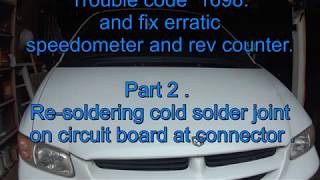
- Faulty Instrument Cluster or Shared Network Module (Common) — On Chrysler/Dodge/Jeep vehicles, the instrument cluster, ABS, and climate control share the data bus. Bad solder joints on the cluster's main connector or an internal short in the ABS module corrupts the entire network, causing P1698 and a 'no bus' message.
- Faulty Control Module (TCM or PCM) (Common) — The TCM or PCM fails internally due to electrical surges, heat damage, or age-related component degradation, stopping message transmission. The PCM is less likely to fail than the TCM and should be the last component suspected.
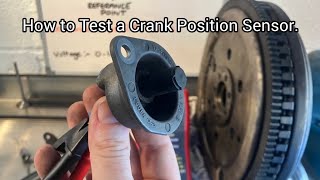
- Shorted 5-Volt Sensor (e.g., Crankshaft Position Sensor) (Less Common) — A failing Crankshaft Position Sensor (CPS) shorts out the 5-volt reference circuit it shares with other sensors. To protect itself, the PCM shuts down communication, triggering P1698. 🎬 See this detailed guide on testing for a shorted sensor.
- Low Battery Voltage or Failing Alternator (Rare) — Unstable or low voltage from a dying battery or a faulty alternator causes unpredictable behavior in electronic modules, leading to communication errors.
- Improperly Installed Aftermarket Electronics (Rare) — An aftermarket remote starter, alarm, or stereo incorrectly tapped into the vehicle's wiring interferes with the data bus and severs module communication.
Symptoms

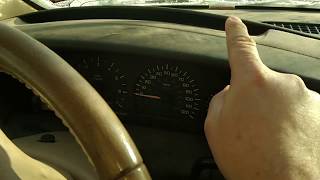
- Erratic or Dead Gauges ('No Bus' Message) — The speedometer and tachometer drop to zero or behave erratically. The digital odometer displays a 'no bus' message, a classic indicator of this network fault on Chrysler products.
- Transmission Stuck in Limp Mode — The transmission locks into a single gear (usually 2nd or 3rd) and shifts harshly because it lacks engine data from the PCM.
- Engine Stalls or Will Not Start — The engine cranks but fails to start, or stalls intermittently while driving due to the severed communication link.
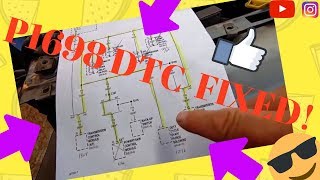
- Check Engine Light Illuminated — The PCM triggers the Check Engine Light immediately upon detecting the communication loss. 🎬 Watch: A real-world example of diagnosing and fixing code P1698.
- Multiple Dashboard Warning Lights — Because multiple modules share the network, a bus failure triggers the airbag, ABS, and brake warning lights simultaneously.
Diagnostic Flowchart

Tap your situation to follow the diagnostic path that matches what you're seeing on this code.
Common Fixes & Costs
- Cleaning or Repairing Ground Connections — Parts: $1-$10, Labor: $75-$150, ~1.0 hr book time (DIY)
- Repairing Damaged Wiring or Connectors — Parts: $10-$50, Labor: $150-$600, ~3.0 hr book time (Intermediate)
- Repairing or Replacing the Instrument Cluster — Parts: $189-$600, Labor: $100-$250, ~1.5 hr book time (Intermediate)
- Replacing the Transmission Control Module (TCM) — Parts: $200-$800, Labor: $150-$450, ~1.5 hr book time (Professional)
- Replacing the Powertrain Control Module (PCM) — Parts: $500-$900, Labor: $100-$200, ~1.2 hr book time (Professional)
Used vs. New Parts: Buying Guide
When a used part is worth it: Used modules from salvage yards are viable for older vehicles (>15 years) if the part number matches exactly. Many older Jeep modules are plug-and-play without dealer programming.
Donor-vehicle mileage cap: roughly under 120000 miles for the part to have meaningful remaining life.
Donor quality checklist:
- Match the OEM part number exactly, not just the model and year.
- Verify the donor vehicle's VIN for compatibility.
- Ensure a 30-90 day warranty.
- Avoid flood-damaged vehicles prone to hidden corrosion.
Decision logic:
- If The vehicle is newer (post-2005) and requires VIN programming → Buy a new or professionally remanufactured unit guaranteed to be programmable.
- If The vehicle is older (>15 years) and budget is tight → A used part with a matching number and warranty is an acceptable risk.
- If The fault is a known design flaw (e.g., Caravan cluster solder joints) → Buy a remanufactured unit that corrects the original flaw.
Warranty tradeoff: Used parts offer 30-90 day part-only warranties. Remanufactured parts offer 1-year to lifetime warranties. New OEM parts carry 1-2 year warranties.
Worst-case if a used part fails: $300-$800 if a used module fails, requiring a second replacement and repeat labor.
What Happens If You Wait — Timeline
- 0-1 month: Check Engine Light illuminates. Gauges flicker or display 'no bus'. Vehicle occasionally hesitates or shifts hard. (MPG impact: 0-5%% · Added cost: $0)
- 1-3 months: Vehicle frequently enters 'limp mode' (stuck in 2nd/3rd gear). Stalling and no-start events make the vehicle unsafe. (MPG impact: 10-20%% · Added cost: $50-$150 in wasted fuel and towing fees.)
- 3-6 months: Driving in limp mode overheats the transmission fluid, destroying its protective properties and accelerating seal wear. (MPG impact: 10-20%% · Added cost: $200-$500 for a mandatory transmission fluid and filter service.)
- 6+ months: Sustained overheating glazes clutch packs and destroys seals. The transmission slips or fails completely. An electrical fault caused a mechanical failure. (MPG impact: N/A (Vehicle undrivable)% · Added cost: $2,500-$5,000+ for a complete transmission rebuild.)
Cost of Not Fixing It
- Immediate (0-1 Month): Vehicle stuck in 'limp mode' (35-40 mph max). High risk of stalling or no-start conditions in traffic. (Added cost: Negligible, but high risk of being stranded.)
- 1-6 Months: Driving in limp mode overheats the transmission, breaking down fluid and damaging internal seals. (Added cost: $200-$500 for a transmission service if caught early.)
- 6+ Months: Catastrophic transmission failure from sustained overheating, requiring a complete rebuild. (Added cost: $2,500-$5,000+ for a remanufactured transmission.)
Diagnosis Steps
- Check the Battery and Charging System
Ensure the battery holds at least 12.4 volts and terminals are clean. With the engine running, use a multimeter to verify the alternator charges at 13.5 to 14.5 volts. Unstable voltage crashes module communication.
Tools: Multimeter (Beginner) - Inspect Powertrain Ground Connections
Locate the main ground connections for the engine block, chassis, PCM, and TCM (often on the inner fender or firewall). Remove them, clean contact surfaces to bare metal with a wire brush, and tighten securely. A bad ground is the leading cause of P1698.
Tools: Socket set, wire brush (Beginner) - Inspect PCM and TCM Fuses
Check all fuses related to the PCM, TCM, and instrument cluster in both fuse panels. On 1997-2001 Jeep Cherokee XJ models, Fuse #11 in the passenger kick panel notoriously blows, cutting power to the TCM.
Tools: Fuse puller, test light (Beginner) - Perform a 'Wiggle Test' on Wiring Harnesses
With the key 'On', manipulate the wiring harnesses leading to the PCM and TCM. Watch the dashboard gauges. If wiggling a specific section causes the gauges to flicker or the 'no bus' message to toggle, you found a broken or shorted wire.
Tools: Flashlight (Intermediate) - Isolate Potentially Faulty Modules
Unplug the instrument cluster, ABS module, radio, and climate control module one by one. Try to start the vehicle or observe the gauges after each. If communication restores after unplugging a specific module, that module is shorting the bus.
Tools: Basic hand tools, trim removal tools (Intermediate) - Test CCD Bus Circuit Resistance
Disconnect the battery and unplug the PCM and TCM connectors. Measure the resistance of the CCD Bus (-) wire and CCD Bus (+) wire between the PCM and TCM connectors. Resistance must be under 5 ohms. Higher readings indicate an open circuit in the bus wiring.
Tools: Multimeter, vehicle-specific wiring diagram (Advanced) - Test CCD Bus Voltage at the DLC
With modules connected and key 'On', check voltage on the data bus wires at the Diagnostic Link Connector (DLC) pins 3 and 11. You should see a fluctuating voltage averaging 2.5 volts. A steady 0V indicates a short to ground; 5V or 12V indicates a short to power.
Tools: Multimeter (Advanced) - Check for Switched 12V Power at the TCM (Jeep XJ Specific)
On 1997-2001 Jeep Cherokees, unplug the TCM connector. Probe pin 26 (Dark Blue/White wire) with the key 'On'. You must have 12+ volts. No voltage means a broken wire between the fuse box and TCM.
Tools: Multimeter, vehicle-specific wiring diagram (Advanced) - Test the 5-Volt Reference Circuit
With key 'On', check the 5-volt reference wire at the Throttle Position Sensor. It must read a steady 5.0 volts. If lower than 4.5V, unplug sensors sharing this reference (Crankshaft, Camshaft) one by one. If voltage jumps back to 5V, the last unplugged sensor is shorted.
Tools: Multimeter, vehicle-specific wiring diagram (Advanced) - Check Terminating Resistor Value
With the battery disconnected, measure total bus resistance at the DLC between Pins 3 and 11. A healthy bus reads approximately 60 ohms. A 120-ohm reading means a terminating module (PCM or Cluster) is disconnected or failed. Near 0 ohms means the bus wires are shorted together.
Tools: Multimeter (Advanced)
When This Code Triggers (Freeze-Frame Conditions)
- Engine Coolant Temp: 180-200°F (82-93°C) (The code sets when the engine is fully warmed up and operating in closed-loop.)
- RPM: Idle (500-850) or Cruise (1500-2500) (The communication fault triggers at idle or steady-state cruising when modules expect consistent data packets.)
- Vehicle Speed: Any, often 35-55 mph (The fault appears during steady highway driving or manifests immediately as a no-start condition (0 mph).)
- System Voltage: 13.5-14.5 Volts (The code sets when system voltage is normal, ruling out a dead battery as the immediate cause.)
Related Codes
- P0700 — P0700 means the TCM requested the Check Engine Light. P1698 explains *why* you can't read the specific transmission fault—the communication line is down. Fix P1698 first.
- P1694 — Logged by the TCM, meaning 'No CCD Message from PCM'. If both P1698 and P1694 are present, it confirms a broken data bus wire between the modules.
- U0101 — The modern CAN bus equivalent of P1698, meaning 'Lost Communication with TCM'. The diagnostic approach (checking power, grounds, and bus wires) remains identical.
- U0141 — Means 'Lost Communication with Body Control Module (BCM)'. A faulty BCM shorts the shared data bus, indirectly causing P1698.
Climate & Environmental Factors
- Extreme Cold: Temperatures below 15°F (-10°C) make plastic wire insulation brittle. Engine vibration cracks these wires, triggering intermittent P1698 codes.
- High Humidity / Road Salt: Humid climates and winter road salt accelerate corrosion on chassis grounds and PCM/TCM connector pins, creating high resistance that fails communication.
- High Heat: Sustained engine bay heat softens wire insulation. Harnesses routed near exhaust components chafe easily, shorting the CCD bus wiring.
How to Talk to a Mechanic About This Code
Say this: "I have a P1698 code and my odometer says 'no bus'. I know this is a communication failure. I need a diagnostic appointment to test the power, grounds, and data bus wiring for the PCM and TCM before we assume any computer has failed."
It proves you understand the common causes are electrical, directing the technician to perform a logical diagnosis instead of immediately quoting a $900 module replacement.
Avoid saying:
- 'My transmission is broken.'
- 'My check engine light is on, can you just fix it?'
- 'I think I need a new computer.'
Questions to ask before authorizing the repair:
- Did you test the power and ground circuits directly at the module's connector?
- Did you test the data bus wires for correct voltage and resistance between the modules?
- If replacing a module, is the required programming cost included in this quote?
Where to Take It: Dealer vs Independent vs Chain
- Dealer:
Best for: Vehicles under warranty, Newer vehicles requiring proprietary software (FCA WiTECH) for module programming.
Downsides: Highest labor rates., Technicians often replace expensive modules rather than trace intermittent wiring faults. (Typical cost: +50% vs. baseline) - Independent Shop:
Best fit. A reputable electrical shop focuses on finding the root wiring cause, saving you massive parts costs.
Best for: Out-of-warranty vehicles, especially older Jeeps and Dodge trucks., Shops specializing in automotive electrical diagnostics.
Downsides: Diagnostic skill varies. You must verify their electrical diagnostic expertise. (Typical cost: +0% vs. baseline) - Chain Shop:
AVOID. P1698 requires network expertise not found at general service chain shops.
Best for: Not recommended.
Downsides: Lacks specialized network diagnostic training and bi-directional tools., High risk of misdiagnosis and unnecessary computer replacements. (Typical cost: -10% vs. baseline)
When to Walk Away From the Repair
If the estimated repair cost for P1698 exceeds 50% of your car's private-party market value, sell the vehicle as-is.
- Car worth $4000, fix is $1800: Walk away. The repair is 45% of the vehicle's value, which is too high for an older vehicle with potential secondary transmission damage.
- Car worth $8000, fix is $500: Fix it. This repair is well below the threshold and restores full function.
- Car worth $2500, fix is $1200: Walk away. The repair cost is nearly half the car's value.
What Scan Tool You Need for This Code
Minimum: A scanner capable of reading manufacturer-specific 'enhanced' codes for Chrysler/Dodge/Jeep to access the TCM and ABS modules.
A basic $20 reader only shows P1698 from the PCM. It cannot reveal if the TCM stored P1694, a critical clue for diagnosing bus failures.
Budget: BlueDriver Pro + App (~$99) — Reads enhanced codes from the TCM, ABS, and other modules, revealing if other systems are offline.
Mid-range: Foxwell NT510 Elite (with Chrysler software) (~$180) — Provides all-system diagnosis and bi-directional control to perform active tests, pinpointing module responsiveness.
Professional: Autel MaxiCOM MK808S (~$450) — Offers full bi-directional control, complete network scanning, and resets transmission adaptive values after repair.
Rent vs buy: Buy. Parts store rental tools are too basic for network diagnostics. You MUST buy a scanner with enhanced capabilities to trace a P1698 fault.
How to Clear the Code After You Fix It
- Reconnect the battery.
- Use an OBD-II scan tool to clear P1698 and related codes from all modules.
- Perform a complete drive cycle to reset readiness monitors.
Drive cycle (~30 minutes): 1) Cold start and idle for 5 minutes. 2) Drive at a steady 40-60 mph for 8 minutes. 3) Stop and idle for 3 minutes. 4) Drive above 20 mph for 2 minutes. 5) Turn off and sit for 10 minutes.
Readiness monitors affected: Comprehensive Component Monitor, Misfire Monitor, Catalyst (CAT) Monitor, Evaporative (EVAP) System Monitor
Before emissions retest: drive at least 100 miles to fully set monitors.
Watch out for:
- Disconnecting the battery clears the dashboard light but fails the emissions test by resetting readiness monitors.
- The code returns immediately if the root cause (corroded wire, bad ground) was not repaired.
- Failing to complete the specific drive cycle leaves monitors 'Not Ready'.
Will This Fail Emissions / State Inspection?
Yes — this code typically fails an OBD-II emissions inspection.
- California: An illuminated Check Engine Light automatically fails the smog check. A full drive cycle must set all readiness monitors before re-testing.
- New York: The NYVIP3 inspection fails any vehicle with an active P1698. Clearing the code is insufficient; readiness monitors must be set.
- Texas: An illuminated Check Engine Light is an automatic failure in emissions counties. Drive 50-100 miles after repairs to reset monitors before re-inspection.
Most Commonly Affected Vehicles
- Jeep Cherokee (XJ) (1997-2001) — Extremely common due to aging wiring, failing instrument clusters, and blown Fuse #11 cutting TCM power.
- Dodge Ram 1500/2500 (1998-2002) — Prone to this code from CCD bus wiring failures, faulty PCMs, and notoriously poor factory PCM grounds.
- Dodge Dakota (1998-2003) — Frequently experiences P1698 and 'no bus' messages due to bad wiring, poor grounds, or a failing TCM on 4.7L V8 models.
- Chrysler / Dodge Town & Country / Grand Caravan (1998-2003) — Failing solder joints on the instrument cluster connector disrupt bus communication. Striking the dashboard temporarily restores connection.
- Jeep Grand Cherokee (WJ) (1999-2004) — Suffers from wiring harness chafing near the transmission. A broken wire in the main transmission plug is a common cause.
- Kia / Hyundai Optima, Accent, Sonata (2010-2019) — On these vehicles, P1698 means 'Invalid Transponder' (immobilizer key issue), completely unrelated to the transmission.
- Volkswagen Golf, Passat (2005-2013) — P1698 means 'Check DTC Memory of Steering Wheel Electronics', pointing to cruise control or steering angle sensor faults.
- Ford Various Models (1996-2008) — Defines P1698 as 'Lost Communication With Reverse Status', pointing to transmission gear position sensor issues.
Manufacturer-Specific Notes
- Chrysler/Dodge/Jeep: The instrument cluster frequently shorts the CCD bus, causing P1698 and a 'no bus' message. Firmly striking the dashboard temporarily restores gauges, confirming bad cluster solder joints.
- Chrysler/Dodge/Jeep: A failing Crankshaft Position Sensor shorts the 5-volt reference line, causing the PCM to shut down communication and log P1698.
- Chrysler/Dodge/Jeep: 2nd Gen Dodge Ram Cummins trucks require a 'ground mod' to fix notoriously weak factory PCM grounds causing intermittent 'no bus' issues.
- Kia/Hyundai: P1698 means 'Invalid Transponder'. It is an anti-theft immobilizer issue requiring key and antenna coil diagnostics, not transmission work.
- All: No major active recalls exist specifically for P1698, as it indicates a broad electrical fault rather than a single defective part.
Real Owner Stories
1999 Jeep Cherokee XJ with 180K miles - The 'Easy' Fix
Experienced intermittent 'no bus', erratic gauges, P1698, and occasional stalling.
What they tried:
- Suspected a bad PCM.
- Disconnected PCM and TCM connectors, cleaned pins with contact cleaner, and re-seated firmly.
- Cleaned the main battery ground and engine-to-chassis ground strap.
Outcome: The 'no bus' error disappeared and P1698 never returned. The issue was a slightly corroded connector pin, fixed for under $10.
Lesson: Always clean and tighten battery terminals, ground straps, and computer connectors before buying expensive modules.
2001 Dodge Ram 2500 Cummins - A Misdiagnosis Story
Truck showed 'no bus', dead gauges, and P1698. Owner assumed the high-mileage PCM failed.
What they tried:
- Purchased and installed a refurbished PCM for $400.
- The problem persisted exactly as before.
Outcome: The owner discovered the notoriously poor PCM ground design on 2nd Gen Rams. Running a new, dedicated ground wire from the PCM directly to the battery negative permanently solved the issue.
Lesson: The PCM is usually the victim, not the culprit. Modules cannot communicate without perfect power and ground.
1999 Chrysler Town & Country - The Unusual Root Cause
Van cranked but wouldn't start. Gauges were dead with P1698. Stranded, the owner hit the dashboard in frustration.
What they tried:
- Firmly hit the top of the dashboard above the instrument cluster.
- Gauges flickered to life and the van started normally.
Outcome: The problem was bad solder joints on the instrument cluster circuit board. The permanent fix was removing the cluster and reflowing the solder on the connector pins.
Lesson: A fault in a shared module (like the instrument cluster) crashes the entire network, causing communication codes between the engine and transmission.
How to Prevent This Code From Triggering
- Clean and Protect Key Ground Connections (Every 2 years or 30,000 miles) — Corrosion on ground straps creates high resistance, starving modules. Cleaning contact points to bare metal prevents electrical gremlins.
- Apply Dielectric Grease to Critical Connectors (When connectors are disconnected for service) — Prevents moisture intrusion and pin corrosion in the PCM and TCM connectors, a primary cause of intermittent communication failures.
- Secure Wiring Harnesses (Annually) — Engine vibration causes unsecured harnesses to chafe against hot or sharp metal, shorting the data bus wires. Zip ties prevent this damage.
- Use a Battery Tender for Stored Vehicles (For storage longer than two weeks) — Low battery voltage causes modules to log false communication codes upon startup. A tender ensures stable voltage.
Frequently Asked Questions
Can I fix P1698 myself?
If the cause is a simple bad ground, a blown fuse, or a dirty connector, a DIY fix is highly cost-effective. However, diagnosing a wiring harness break or confirming a bad computer module requires specialized tools like a bi-directional scanner and multimeter. Stop DIY and consult an automotive electrical specialist if basic ground and fuse checks do not resolve the issue.
My gauges went dead and the odometer says 'no bus'. Is this related to P1698?
Yes, this is a classic symptom that goes hand-in-hand with code P1698 on Dodge, Chrysler, and Jeep vehicles. It indicates the instrument cluster is not receiving data from the PCM. This points to the same core communication network failure triggering the code.
I replaced the PCM/TCM, but the code came back. What now?
This is a common and expensive misdiagnosis indicating the problem is not the module itself. You must diagnose the module's 'lifelines' by checking all power feeds, ground connections, and data bus wiring integrity. The fault likely lies in a broken wire or another module (like the instrument cluster) shorting out the network.
Can a bad sensor cause a P1698 communication code?
Yes, a failing Crankshaft Position Sensor (CPS) frequently shorts the 5-volt reference signal on Chrysler products. To protect itself, the PCM shuts down, cutting off communication to the TCM and logging P1698. Always test the 5V reference circuit before replacing expensive computer modules.
The code appeared after I replaced my battery. What should I do?
A brief voltage interruption during a battery swap sometimes sets a temporary communication code. Clear the code with a scanner and see if it returns. If it does, the old battery likely masked an underlying alternator or wiring issue that the new battery's stable voltage now exposes.
Why does my transmission seem stuck in second or third gear with this code?
This is 'limp mode,' a fail-safe activated when the TCM loses communication with the PCM and cannot receive shift commands. The transmission defaults to a single gear (usually 2nd or 3rd) to let you drive to a safe location without causing immediate internal damage. You must restore communication to regain normal shifting.
The code P1698 appeared after I did an engine or transmission swap. What did I do wrong?
The most likely causes are a pinched wiring harness, a forgotten ground strap, or a connector that is not fully seated. It also occurs if the PCM from the old engine was not reprogrammed for the new setup. Retrace your steps and inspect the main harness where it crosses the firewall or engine block.
Key Takeaways
- Inspect the 2 main data bus wires and powertrain ground straps before replacing any modules, as P1698 is an electrical communication failure, not a mechanical transmission defect.
- Look for the 'No Bus' message on your digital odometer, which confirms a network crash on Chrysler, Dodge, and Jeep vehicles built between 1997 and 2004.
- Limit driving to less than 5 miles if the transmission is locked in 2nd or 3rd gear, as sustained limp-mode driving overheats the fluid and destroys internal clutches.
- Test the 5-volt reference circuit at the Throttle Position Sensor, because a single shorted sensor can crash the entire communication network and trigger a false P1698.
- Verify your vehicle's specific manufacturer definition, as P1698 means a transmission communication failure on a Jeep, but indicates an immobilizer key fault on a Kia.
Helpful Videos

The information in this article is provided for general reference and educational purposes only. Vehicle specifications, procedures, and part compatibility can vary by production date, trim level, and region. Always consult your vehicle's factory service manual and verify part numbers before purchasing or performing repairs. Safety-critical components such as airbags, seat belts, and braking systems should be installed by a qualified professional.
- 🎬 Helpful Videos
- What Does P1698 Mean?
- Can I Drive With P1698?
- Common Causes
- Symptoms
- Diagnostic Flowchart
- Common Fixes & Costs
- Used vs. New Parts: Buying Guide
- What Happens If You Wait — Timeline
- Cost of Not Fixing It
- Diagnosis Steps
- When This Code Triggers (Freeze-Frame Conditions)
- Related Codes
- Climate & Environmental Factors
- How to Talk to a Mechanic About This Code
- Where to Take It: Dealer vs Independent vs Chain
- When to Walk Away From the Repair
- What Scan Tool You Need for This Code
- How to Clear the Code After You Fix It
- Will This Fail Emissions / State Inspection?
- Most Commonly Affected Vehicles
- Manufacturer-Specific Notes
- Real Owner Stories
- 1999 Jeep Cherokee XJ with 180K miles - The 'Easy' Fix
- 2001 Dodge Ram 2500 Cummins - A Misdiagnosis Story
- 1999 Chrysler Town & Country - The Unusual Root Cause
- How to Prevent This Code From Triggering
- Frequently Asked Questions
- Can I fix P1698 myself?
- My gauges went dead and the odometer says 'no bus'. Is this related to P1698?
- I replaced the PCM/TCM, but the code came back. What now?
- Can a bad sensor cause a P1698 communication code?
- The code appeared after I replaced my battery. What should I do?
- Why does my transmission seem stuck in second or third gear with this code?
- The code P1698 appeared after I did an engine or transmission swap. What did I do wrong?
- Key Takeaways
- 🎟️ Get 5% Off