

OBD-II Code P1689: Control Module Communication Error
What P1689 means, why it triggers, and how to fix it
- P1689 is a manufacturer-specific communication error that disables your vehicle, most commonly caused by a frayed wire, corroded connector, or a loose ground strap.
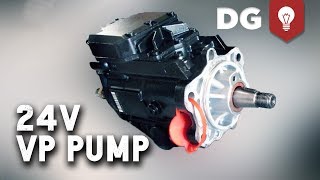
- On 1998.5-2002 Dodge Ram Cummins trucks, P1689 almost always indicates a failing VP44 injection pump or its connector, requiring a $1,600 to $2,800 repair.
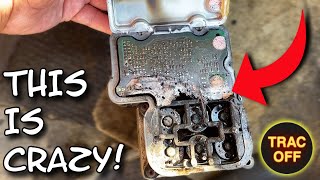
- For 1999-2006 GM trucks, this code points to a traction control communication failure, which is often permanently fixed by a $150 mail-in EBCM solder repair.
- Never replace a $1,000+ engine computer (PCM/ECM) without first using a multimeter to verify battery voltage, ground integrity, and wire continuity at the module's connector.
What Does P1689 Mean?

P1689 is a manufacturer-specific code indicating a communication breakdown between two of your car's computers. The main engine computer (ECM or PCM) has lost its connection with another critical module. Depending on your vehicle, this is the injection pump computer, the traction control module, the electronic throttle body, or the immobilizer system. A critical data exchange necessary for proper vehicle operation has failed.
Technical definition: The official SAE J2012 definition for P1689 is manufacturer-specific. Common definitions include 'No Communication Between ECM & Injection Pump Module' (Dodge), 'Traction Control Delivered Torque Output Circuit' (GM), 'Electronic Throttle Body Monitor Failure' (Jaguar), 'Electronic Throttle Control Monitor Torque Calculation Error' (BMW), and 'Immobilizer - No Response from Smartra' (Hyundai/Kia).
Can I Drive With P1689?
Yes, But With Caution. Driving is not recommended if the engine stalls, has severe power loss, or won't start. If only the traction control light is on and the engine runs normally, drive cautiously to a repair shop. Continuing to drive in 'limp mode' for an extended period damages components like the transmission or catalytic converter, adding $800 to $2,500 to the final repair bill. Limit driving to a short trip to a repair facility.
Common Causes

- Damaged Wiring or Corroded Connectors (Very Common) — The wires connecting the computer modules fray, pinch, or corrode over time. This is the most frequent cause, especially at the main connector for the VP44 injection pump on Dodge Cummins trucks.
- Failed Injection Pump Control Module (FPCM/PSG) (Common) — On diesel trucks like the 1998-2002 Dodge Ram, the electronics on the VP44 injection pump fail from heat and vibration, permanently stopping communication with the main engine computer.
- Poor Ground Connection (Common) — Vehicle computers rely on solid ground connections to the chassis. A loose, corroded, or broken ground strap causes unpredictable electrical drops and communication errors.
- Blown Fuse or Faulty Relay (Common) — A blown fuse or a bad relay powering the affected module cuts off communication instantly and triggers this code.
- Low System Voltage (Less Common) — A weak battery, failing alternator, or a bad starter drawing excessive current causes system voltage to drop below 10 volts during startup, preventing modules from initializing and communicating.
- Faulty Aftermarket Performance Module/Tuner (Less Common) — Aftermarket performance chips that plug into the vehicle's wiring harness fail or develop poor connections, interrupting communication between the ECM and other modules.
- Water Intrusion (Rare) — Aggressively power washing the engine bay forces water into critical connectors, shorting communication lines until they are fully dry.
- Failed Powertrain Control Module (PCM/ECM) (Rare) — The main computer is usually the last part to fail. While the PCM itself is sometimes the source of the communication error, all wiring and power causes must be ruled out first.
Symptoms

- Engine Stalls or Won't Start — The engine cranks but does not fire up, or starts and immediately dies. This is highly common with fuel system or immobilizer faults.
- Severe Loss of Power (Limp Mode) — The vehicle enters 'limp mode,' with very slow acceleration and a low top speed, often limited to 2,000 RPM.
- No Response from Throttle — The accelerator pedal becomes completely unresponsive, a condition known as 'dead pedal'.
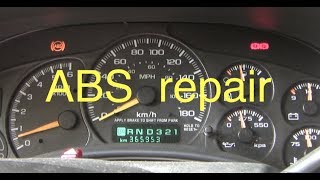
- Traction Control or Stability System Light On — On GM vehicles, this code relates directly to the traction control system, illuminating the warning light. 🎬 See how to diagnose and fix GM traction control light issues.
- Rough or Unstable Idle — The engine runs erratically, surges, or has a bouncing idle while parked.
- Check Engine Light On (also visible on scanner) — This is the most common and often the first sign of a problem.
Diagnostic Flowchart
Tap your situation to follow the diagnostic path that matches what you're seeing on this code.
Common Fixes & Costs
- Repairing wiring harness or replacing connector pigtail — Parts: $20-$150, Labor: $200-$800, ~2.5 hr book time (Intermediate)
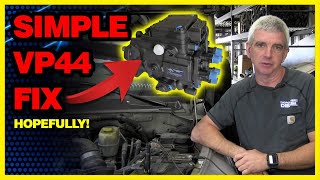
- Replacing the VP44 Injection Pump (Dodge Cummins) — Parts: $1,200-$2,000, Labor: $400-$800, ~4.5 hr book time (Professional)
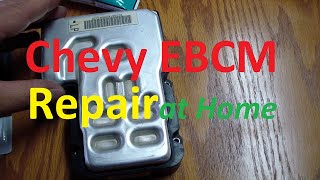
- Repairing or Replacing the EBCM (GM) — Parts: $150-$250, Labor: $600-$900, ~1.5 hr book time (Intermediate)
- Replacing a faulty fuse or relay — Parts: $5-$30, Labor: $0-$50, ~0.1 hr book time (DIY)
- Immobilizer reset or key reprogramming (Hyundai/Kia) — Parts: $0-$100, Labor: $0-$250, ~1.2 hr book time (Professional)
- Replacing the Powertrain Control Module (PCM/ECM) — Parts: $800-$1,500, Labor: $100-$300, ~1.5 hr book time (Professional)
Used vs. New Parts: Buying Guide
When a used part is worth it: For electronic modules like an EBCM or PCM, a used part from a reputable salvage yard with a warranty is a cost-effective option for older vehicles. It is critical to match part numbers exactly.
Donor-vehicle mileage cap: roughly under 100000 miles for the part to have meaningful remaining life.
Donor quality checklist:
- Verify the donor vehicle's VIN to ensure compatibility and check for outstanding recalls.
- Avoid parts from flood-damaged or 'salt belt' vehicles due to high corrosion risk.
- Get a functional warranty of at least 90 days.
- For a VP44 pump, a used part is a major gamble; buy a professionally remanufactured unit.
Decision logic:
- If The part is a high-failure item with known wear components (like the VP44 pump). → Buy a new or premium remanufactured part with a warranty.
- If The vehicle is over 150K miles and the budget is the primary concern. → A used module with a warranty is acceptable, but be prepared for a shorter lifespan.
- If The part requires programming to the vehicle (PCM, Immobilizer, some EBCMs). → Factor in the cost of programming; buying a pre-programmed unit or using a mail-in cloning service is simpler.
Warranty tradeoff: Used parts typically offer a 30-90 day warranty. New aftermarket parts come with a 1-year to limited lifetime warranty. Remanufactured VP44 pumps have warranties from 1 to 3 years.
Worst-case if a used part fails: $500-$1200 if a used electronic module fails after installation, requiring repeat labor costs plus another replacement part.
What Happens If You Wait — Timeline
- 0-1 month: Intermittent P1689 code appears, often after a hot soak. May have a companion code like P1693. No noticeable symptoms, or a very slight, momentary hesitation. (MPG impact: 0%% · Added cost: $0)
- 1-3 months: (Dodge Cummins Scenario) The lift pump begins to fail. Fuel pressure drops below 10 PSI under load. The truck experiences intermittent 'dead pedal,' stumbling, or surging. The P1689 code becomes more frequent. (MPG impact: 3-8%% · Added cost: $50-$150 in wasted fuel and initial diagnostic fees.)
- 3-6 months: Continued operation with low fuel pressure overheats the electronics on the VP44. The truck exhibits 'hot-start' issues: starts fine cold but requires long cranking times when warm. The P1689 code is permanent. (MPG impact: 10-15%% · Added cost: $400-$600 (Cost of a new lift pump is unavoidable, but the VP44 is also damaged).)
- 6+ months: Catastrophic failure. The internal electronics of the VP44 are fried, or mechanical parts seize from lack of lubrication. The truck stalls and will not restart. (MPG impact: 100% (vehicle is disabled)% · Added cost: $1,800-$2,800 (Cost of a remanufactured VP44 pump and labor, on top of the original lift pump issue).)
Diagnosis Steps

- Check For Other Codes
Use an OBD-II scanner to check for companion codes. On Dodge vehicles, P1689 is often accompanied by P1693. On GM, you see C0287. Note all codes and check freeze frame data.
Tools: OBD-II Scanner (Beginner) - Check Battery and Grounds
Ensure the battery is fully charged (12.4V+ with engine off) and terminals are clean. While cranking, voltage must not drop below 10.0V. Inspect and clean the main engine and chassis ground straps.
Tools: Wrench Set, Wire Brush, Digital Multimeter (Beginner) - Inspect Fuses and Relays
Check the fuse box for blown fuses or faulty relays related to the PCM, ECM, FPCM, or fuel pump. Swap a suspect relay with a known good one of the same type (like the horn relay) to test its function.
Tools: Owner's Manual, Fuse Puller (Beginner) - Visually Inspect Wiring Harness
Carefully inspect the wiring harness and connectors between the main computer and the suspected module. Look for chafed wires, melted plastic, green corrosion, or bent pins.
Tools: Flashlight (Intermediate) - [PRO TIP] Test Module Power and Ground at the Connector
Identify the power and ground pins on the connector of the non-communicating module. With the key on, use a multimeter to verify battery voltage at the power pin and check for less than 0.1V between the ground pin and the battery's negative terminal. No power indicates a bad relay or fuse.
Tools: Digital Multimeter, Vehicle-Specific Wiring Diagram (Advanced) - [PRO TIP] Check Communication Wires for Integrity
Disconnect the battery, ECM, and suspect module. Use a multimeter set to Ohms (Ω) to test the communication wires. Check for continuity end-to-end (should be < 1.0 Ω). Check each wire for a short to ground and a short to power (should show OL). A reading of 5 ohms or more indicates high resistance.
Tools: Digital Multimeter, Vehicle-Specific Wiring Diagram (Advanced) - [ADVANCED] Check CAN Bus Termination Resistance
With the battery disconnected, measure the resistance between the CAN High and CAN Low pins on the OBD-II port (Pins 6 and 14). A healthy network reads approximately 60 Ohms. A reading of 120 Ohms indicates a missing terminating resistor or a broken bus.
Tools: Digital Multimeter, OBD-II Pinout Diagram (Advanced) - [ADVANCED] Check Fuel Supply Pressure (Dodge VP44)
A failing lift pump starving the VP44 for fuel is a primary cause of failure. Connect a fuel pressure gauge to the test port. At idle, pressure should be 14-15 PSI. Under wide-open throttle, pressure must not drop below 10 PSI.
Tools: Fuel Pressure Gauge Kit (Advanced) - Scope Test the Communication Signal (Professional)
Backprobe the communication line at the ECM. On a GM vehicle, the 'Delivered Torque' signal from the EBCM should be a 128 Hz square wave. A flat line, excessive noise, or a distorted waveform indicates a wiring or module failure.
Tools: Automotive Oscilloscope, Backprobe Pins (Professional) - Isolate the Faulty Module
If all wiring, power, and grounds are confirmed good, the module itself is the culprit. This requires specialized diagnostic tools or swapping with a known-good part for confirmation.
Tools: Advanced Scan Tool, Specific Test Equipment (Professional)
When This Code Triggers (Freeze-Frame Conditions)
- Engine Coolant Temp: 170-210°F (Fully warmed up at operating temperature.)
- RPM: 1100-1500 (Low RPM or just above idle, often when symptoms like 'dead pedal' occur.)
- Engine Load: 20-40% (Light to moderate load, such as steady cruising or light acceleration.)
- Vehicle Speed: 30-55 mph (Steady state or city/highway cruise speeds when the fault occurs intermittently.)
Related Codes
- P1693 — On Dodge Cummins vehicles, this is a 'companion code' stored in the ECM. It acts as a flag to tell the technician that a fault code (like P1689) is stored in the separate injection pump module.
- U-Codes (e.g., U0101, U0121) — P1689 is a manufacturer-specific code for a dedicated communication line. U-codes are standardized network codes. If you have P1689 and multiple U-codes, it suggests a broader network-wide issue like a bad terminating resistor.
- C0265 / C0287 — On GM vehicles, these are companion codes in different modules for the same fault. P1689 is set in the PCM, while C0265 or C0287 is set in the EBCM when it has an issue with the torque signal circuit.
- P0230 / P0215 — On diesel trucks, P0230 is for the fuel transfer pump primary circuit, and P0215 is for the injection pump control circuit. They appear with P1689 if a single electrical failure cuts power to both systems.
Climate & Environmental Factors
- Heat Soak: On Dodge Cummins trucks, the electronics on the VP44 injection pump are sensitive to heat. After a long drive, heat soaks into the pump, causing solder joints to fail, leading to a no-start condition until the truck cools completely.
- Cold Weather: In cold climates, wiring and plastic connectors become brittle and crack during service. For GM vehicles, cold causes micro-fractures in the EBCM solder joints to contract and lose connection.
- Humidity and Corrosion (Salt Belt): Regions using road salt see a higher incidence of P1689. Salt and moisture accelerate corrosion on wiring harnesses, connectors, and critical ground points, introducing high resistance that causes communication faults.
How to Talk to a Mechanic About This Code
Say this: "I have a P1689 code on my [Vehicle Year, Make, Model] and I'd like to schedule a diagnostic. It's a communication error, so please start by verifying power, ground, and wiring integrity between the ECM and the [Injection Pump/EBCM/Immobilizer] before recommending any module replacement."
This signals you've done research and directs the technician to perform a proper electrical diagnosis first, which is the most common and cheapest point of failure. It prevents them from immediately quoting an expensive module replacement.
Avoid saying:
- 'Just fix my check engine light.'
- 'My truck is stalling, I think I need a new computer.'
- 'Do whatever you think is best.'
Questions to ask before authorizing the repair:
- Did you find the failure in the wiring, or did the module fail a power/ground test?
- Can you show me the corroded connector or damaged wire?
- What were the specific voltage and resistance readings on the communication lines?
- If you're recommending a module replacement, how did you rule out the wiring harness?
- What is the warranty on both the part and your labor for this repair?
Where to Take It: Dealer vs Independent vs Chain
- Dealer:
Best for: Vehicles under warranty., Complex immobilizer or programming-related issues (common on Hyundai/Kia/BMW)., When manufacturer-specific diagnostic tools are required.
Downsides: Highest labor rates., May prefer to replace a whole wiring harness rather than repair a single wire., Less likely to suggest cost-saving options like remanufactured parts or mail-in module repairs. (Typical cost: +50% vs. baseline) - Independent Shop:
Best fit for most scenarios, especially for common Dodge and GM faults. Seek out a specialist (diesel, GM, etc.) or a shop known for electrical diagnostics.
Best for: Out-of-warranty vehicles where cost is a factor., Common P1689 issues on specific models (e.g., a diesel specialist for a Dodge VP44, or a GM specialist for an EBCM)., Getting a second opinion on a dealer's diagnosis.
Downsides: Quality and expertise vary widely. Must find a shop with strong electrical diagnostic skills and ASE certifications., May not have the expensive, specialized tools for programming new modules on all makes. (Typical cost: +0% vs. baseline) - Chain Shop:
AVOID for P1689 diagnosis. This code requires a level of diagnostic expertise not typically found at chain repair shops.
Best for: Simple jobs like battery replacement, which can sometimes cause this code.
Downsides: Generally not equipped or trained for complex electrical or network communication diagnostics., High risk of misdiagnosis leading to replacement of unnecessary parts., Technician skill varies dramatically from location to location. (Typical cost: -10% vs. baseline)
When to Walk Away From the Repair
If the estimated repair cost exceeds 50% of the car's private-party value, you should seriously consider selling or trading in the vehicle.
- Car worth $6000, fix is $3200: Walk away. The repair cost is over 50% of the vehicle's value. You are likely to face other age-related repairs soon.
- Car worth $15000, fix is $2500: Fix it. The repair cost is well below the 50% threshold and restores a significant function of the vehicle.
- Car worth $3000, fix is $1800: Walk away. A repair costing 60% of the car's value is not a sound financial decision on an older vehicle.
What Scan Tool You Need for This Code
Minimum: A scanner that can read manufacturer-specific codes (not just generic OBD-II) and display live data. For P1689, you must be able to identify the specific module that is not communicating.
A $20 generic code reader will only give you the 'P1689' code, which is useless by itself. It won't tell you if it's a GM traction control issue or a Hyundai immobilizer fault, leading you to guess and waste money.
Budget: BlueDriver Pro (~$100) — Reads manufacturer-specific codes for most brands to properly define P1689. It also shows live data and freeze frame data, which is crucial for seeing what was happening when the code was set.
Mid-range: Autel MaxiCOM MK808S / Foxwell NT510 Elite (~$350) — Provides bidirectional control (active tests). This is critical for P1689, as it allows you to command relays, fans, and other actuators to test circuits directly from the scan tool, helping you differentiate a wiring problem from a module problem.
Professional: Autel MaxiPRO MP808 / Launch X431 Series (~$500-1200) — Offers full bidirectional control, module coding, and sometimes topology mapping to visually see the entire vehicle network and which modules are offline. This is the professional's choice for quickly diagnosing complex communication faults.
How to Clear the Code After You Fix It
- Reconnect battery if disconnected for repair.
- Use an OBD-II scan tool to clear all diagnostic trouble codes (DTCs).
- Perform a complete drive cycle to allow readiness monitors to run.
Drive cycle (~30 minutes): Start the engine from a cold soak (sit for 8+ hours). Idle for 2-3 minutes. Drive in stop-and-go city traffic for 10-15 minutes, including several normal accelerations and full stops. Drive at a steady highway speed (55-65 mph) for 10-15 minutes. Let the vehicle idle for 1-2 minutes before shutting off.
Readiness monitors affected: Comprehensive Component Monitor (CCM), EVAP System Monitor, Catalyst Monitor
Before emissions retest: drive at least 100 miles to fully set monitors.
Watch out for:
- Simply disconnecting the battery clears the code but resets all readiness monitors, leading to an automatic emissions test failure.
- The code returns immediately if the underlying electrical or hardware fault has not been properly repaired.
- Some monitors, like the EVAP monitor, require the fuel level to be between 1/4 and 3/4 full to run.
Will This Fail Emissions / State Inspection?
Yes — this code typically fails an OBD-II emissions inspection.
- California: An illuminated Check Engine Light results in an automatic Smog Check failure. After repairs, a full drive cycle must be completed to set the readiness monitors before a retest.
- New York: A vehicle fails the mandatory OBD-II emissions inspection if the Check Engine Light is on.
- Texas: In counties requiring emissions testing, an illuminated Check Engine Light is an automatic failure. After clearing the code, you must drive 50-100 miles to reset the readiness monitors.
Most Commonly Affected Vehicles

- Dodge Ram 2500/3500 (1998.5-2002) — Extremely common due to failures of the VP44 injection pump's electronics and wiring harness. The 1998.5-1999 models have unique wiring color differences compared to 2000-2002 models.
- Chevrolet / GMC Silverado, Tahoe, Suburban, Express (1999-2006) — Commonly relates to a communication fault between the PCM and the Electronic Brake Control Module (EBCM) for the traction control system.
- Chrysler/Dodge/Jeep Various (Grand Caravan, PT Cruiser, Grand Cherokee) (1998-2012) — On gasoline models, the code points to an electrical issue in the fuel pump relay circuit where the PCM isn't seeing the expected feedback signal.
- Hyundai / Kia Various (Accent, Elantra, Rio, Sorento) (2005-2016) — Indicates a problem with the immobilizer system. The engine cranks but will not start because the key's transponder is not recognized by the SMARTRA module.
- BMW Various (3-Series, 5-Series, M3) (2006-2013) — The definition is 'Electronic Throttle Control Monitor Level 2/3 Torque Calculation Error,' pointing to a fault within the DME (engine computer) or the electronic throttle body.
- Jaguar S-Type, X-Type, XJ (2002-2008) — Frequently associated with a failure of the electronic throttle body assembly, which contains its own control module.
- Volkswagen Jetta TDI, Golf TDI (2009-2014) — Indicates the Transmission Control Module (TCM) received an implausible signal from the Body Control Module (BCM). May not have symptoms and is sometimes a low-priority fault.
- MINI Cooper (2007-2013) — The definition is 'Lost Communication With All Terrain Control Module', pointing to a network communication issue related to the DSC module.
Manufacturer-Specific Notes
- Dodge (Cummins): This code almost always points to the VP44 injection pump or its wiring. A common failure point is the wiring harness connector right at the pump, which can be replaced separately from the whole engine harness.
- General Motors (Chevrolet/GMC): The code indicates the PCM detected an incorrect voltage on the 'Delivered Torque' signal wire from the EBCM. Depending on the year, the EBCM sends a 5V or 12V reference, making circuit testing year-dependent.
- Chrysler/Jeep (Gasoline): For gasoline models, P1689 points to a problem in the fuel pump relay circuit, indicating the PCM is not seeing the correct electrical feedback when it tries to turn on the fuel pump.
- Hyundai/Kia: This code means the immobilizer's SMARTRA unit has locked. The fix is often as simple as leaving the ignition in the 'ON' position (engine off) for one hour without disconnecting the battery to allow the module to reset.
- BMW: Relates to a 'Torque Calculation Error' within the DME (engine computer). The recommended service action is to first try updating the DME software, as logic errors are fixed with new programming.
- Jaguar: Triggered by an internal fault in the electronic throttle body, which contains its own control module that must communicate with the main ECM.
Real Owner Stories
2001 Dodge Ram 2500 stalling on the road
Truck intermittently stalled while driving or failed to start. Codes P1689 and P1693 were present. The owner had already replaced the VP44 injection pump and the APPS (throttle sensor) to no avail.
What they tried:
- Replaced VP44 injection pump.
- Replaced APPS (Accelerator Pedal Position Sensor).
- Checked wiring harnesses and connections.
- Swapped fuel pump relay with a known good one.
Outcome: The issue was traced to a loose ground wire for the ECM. The ground had pulled out of its crimp terminal at the passenger side battery, causing an intermittent connection. Re-securing the ground wire resolved the stalling and cleared the codes.
Lesson: Always check basic electrical integrity—fuses, relays, and especially ground connections—before replacing expensive components. A bad ground mimics the symptoms of a major module failure.
1999 Dodge Ram 2500 with P1689 and no throttle response above 1500 RPM
The truck started and idled fine, but the engine would not rev past 1500 RPM, stuck in a severe limp mode. The only code was P1689.
What they tried:
- Attempted to test wiring continuity but was confused by wire color discrepancies between model years.
- Replaced fuel filter, which introduced a hard-starting issue due to air in the system.
- Tested lift pump pressure, which was low (10 PSI static, dropping to 5 PSI while cranking).
Outcome: The owner swapped the fuel pump relay with another relay as a quick test, and performed the 'W-T Ground Wire Mod' for the VP44 pump to add a redundant ground. The combination of low lift pump pressure and electrical issues was the cause, not a primary VP44 failure.
Lesson: Don't get fixated on one potential cause. P1689 is triggered by the power supply, the ground connection, or the communication wire itself. Be aware that wiring diagrams have small discrepancies between model years.
2001 Chevy Silverado with intermittent P1689 and Traction Control light
The truck randomly triggered the 'Traction Off' light and set a P1689 code in the PCM. There were no other drivability symptoms. The issue was intermittent, happening for days and then disappearing.
What they tried:
- Suspected a wiring issue between the PCM and the EBCM (Electronic Brake Control Module).
- Researched issues with the EBCM's internal solder joints failing from heat and vibration.
Outcome: The owner removed the EBCM and sent it to a mail-in repair service. The service reflowed the solder joints on the circuit board for $150. After reinstalling the repaired module, the code and traction light issue were permanently resolved.
Lesson: For GM vehicles, P1689 is very commonly an internal EBCM failure. Instead of buying a new module for $600+, a cost-effective and DIY-friendly option is to use a mail-in repair service to fix the original part.
2001 Dodge Ram 24v with P1689 after power washing the engine bay
After power washing the engine, the owner let the engine bay air dry for 6 hours. Upon starting the truck, the check engine light came on with codes P1689 and P1693. The truck started and idled normally.
What they tried:
- Suspected water intrusion into a connector that had not fully dried.
- Planned to perform a fuel pressure test to ensure the lift pump and VP44 were still healthy.
Outcome: The cause was moisture in a critical connector. The owner disconnected the battery, used compressed air to blow out the connectors, and allowed for additional drying time, which resolved the code.
Lesson: Avoid using high-pressure water in the engine bay, as it forces moisture past weather seals on critical electrical connectors. If you must wash the engine, use low pressure and cover sensitive electronics.
How to Prevent This Code From Triggering
- Install an aftermarket lift pump (Dodge Cummins) (Proactively, especially on high-mileage trucks) — The factory lift pump is a known weak point. Its failure starves the VP44 injection pump of fuel. An upgraded FASS or AirDog pump provides consistent fuel pressure, preventing VP44 failure.
- Install a fuel pressure gauge (Dodge Cummins) (One-time installation, monitor daily) — This is the single best way to monitor the health of your lift pump. If pressure drops below 10 PSI under load, the lift pump needs attention before it damages the expensive VP44 pump.
- Apply dielectric grease to critical connectors (Anytime a connector is disconnected for service) — Dielectric grease seals connectors from moisture, oxygen, and salt, preventing corrosion. Applying it to the VP44, EBCM, and ECM connectors prevents high-resistance connections.
- Periodically clean and check main ground connections (Every 30,000 miles or annually) — All modules rely on a clean, solid path to ground. Corrosion or looseness at the main battery-to-chassis and ECM ground points causes intermittent electrical issues.
- Add a redundant ground wire to the VP44 (Dodge Cummins) (One-time modification) — Known as the 'W-T Ground Wire Mod,' this adds a dedicated ground wire from the VP44's grounding stud to the chassis or battery negative, bypassing issues in the factory harness.
Frequently Asked Questions
What are the most common misdiagnosis mistakes for P1689?
The biggest mistake is immediately replacing an expensive computer like the ECM or injection pump without performing basic electrical checks. Technicians frequently find the true cause is a bad ground, a corroded connector, or a chafed wire. Always verify power, ground, and wire continuity first.
Why does P1689 have so many different meanings?
Codes starting with 'P1' are manufacturer-specific, meaning they are not standardized across all car brands. Each automaker assigns P1689 to a different system, which is why it points to a fuel pump on a Dodge, traction control on a Chevy, and an immobilizer on a Hyundai.
Can I fix P1689 myself?
Simple fixes like checking fuses, swapping relays, and cleaning ground connections are highly DIY-friendly. However, diagnosing wiring issues with a multimeter or replacing computer modules that require dealership programming requires advanced skills. If basic electrical checks pass, take the vehicle to a specialist.
Will clearing the code make the problem go away?
No. Clearing the code turns the check engine light off temporarily, but it returns as soon as the computer runs its self-test and detects the communication failure. You must fix the underlying hardware or wiring problem.
My scanner showed P1689 and P1693. What does that mean?
On a Dodge Cummins, P1689 means the injection pump isn't communicating with the engine computer. P1693 is simply a companion code the engine computer sets to alert you that a fault is stored in the pump's computer. Both codes point to the exact same communication breakdown.
I got this code after washing my engine. What should I do?
High-pressure water likely forced moisture into a critical electrical connector. Disconnect the battery and allow the engine bay to dry completely for several hours. Use compressed air to gently blow out connectors at the injection pump and ECM before reconnecting power.
Can a bad battery or alternator cause code P1689?
Yes. A weak battery, failing alternator, or a starter drawing excessive current causes system voltage to drop significantly during cranking. If voltage drops below 10 volts, control modules fail to initialize correctly, triggering communication errors like P1689.
What does it mean if P1689 is intermittent?
An intermittent P1689 code is typically caused by a loose connection, an internally broken wire, or a failing module sensitive to heat and vibration. These are difficult to diagnose and require wiggling wires or tapping on modules while monitoring live scanner data to pinpoint the fault.
Key Takeaways
- P1689 is a manufacturer-specific communication error that disables your vehicle, most commonly caused by a frayed wire, corroded connector, or a loose ground strap.
- On 1998.5-2002 Dodge Ram Cummins trucks, P1689 almost always indicates a failing VP44 injection pump or its connector, requiring a $1,600 to $2,800 repair.
- For 1999-2006 GM trucks, this code points to a traction control communication failure, which is often permanently fixed by a $150 mail-in EBCM solder repair.
- Never replace a $1,000+ engine computer (PCM/ECM) without first using a multimeter to verify battery voltage, ground integrity, and wire continuity at the module's connector.
Helpful Videos


The information in this article is provided for general reference and educational purposes only. Vehicle specifications, procedures, and part compatibility can vary by production date, trim level, and region. Always consult your vehicle's factory service manual and verify part numbers before purchasing or performing repairs. Safety-critical components such as airbags, seat belts, and braking systems should be installed by a qualified professional.
- 🎬 Helpful Videos
- What Does P1689 Mean?
- Can I Drive With P1689?
- Common Causes
- Symptoms
- Diagnostic Flowchart
- Common Fixes & Costs
- Used vs. New Parts: Buying Guide
- What Happens If You Wait — Timeline
- Diagnosis Steps
- When This Code Triggers (Freeze-Frame Conditions)
- Related Codes
- Climate & Environmental Factors
- How to Talk to a Mechanic About This Code
- Where to Take It: Dealer vs Independent vs Chain
- When to Walk Away From the Repair
- What Scan Tool You Need for This Code
- How to Clear the Code After You Fix It
- Will This Fail Emissions / State Inspection?
- Most Commonly Affected Vehicles
- Manufacturer-Specific Notes
- Real Owner Stories
- 2001 Dodge Ram 2500 stalling on the road
- 1999 Dodge Ram 2500 with P1689 and no throttle response above 1500 RPM
- 2001 Chevy Silverado with intermittent P1689 and Traction Control light
- 2001 Dodge Ram 24v with P1689 after power washing the engine bay
- How to Prevent This Code From Triggering
- Frequently Asked Questions
- What are the most common misdiagnosis mistakes for P1689?
- Why does P1689 have so many different meanings?
- Can I fix P1689 myself?
- Will clearing the code make the problem go away?
- My scanner showed P1689 and P1693. What does that mean?
- I got this code after washing my engine. What should I do?
- Can a bad battery or alternator cause code P1689?
- What does it mean if P1689 is intermittent?
- Key Takeaways
- 🎟️ Get 5% Off