

P1682 on 2007-2010 Saturn Outlook: Ignition Circuit Fault, No-Start, and Fixes
On a 2007-2010 Saturn Outlook, code P1682 is almost always caused by poor electrical connections or a cracked internal trace in the underhood fuse block. This can cause a no-start, stalling, or a dead battery. The fix involves repairing the fuse block by soldering a jumper wire or replacing the entire unit, which can be a complex but manageable DIY repair.
- P1682 on a Saturn Outlook almost always points to a problem with the underhood fuse block, not the ignition switch or battery.
- Symptoms are severe and include stalling or a no-start condition, requiring immediate attention.
- A simple first step is to swap the 'RUN/CRNK' relay with another identical relay.
- Wiggling the RUN/CRNK relay while trying to start the car is a key diagnostic trick for this specific problem.
- Check for water leaks from the sunroof drains, as this is a known cause of fuse block corrosion on these vehicles.
What's Unique About the 2007-2010 Saturn OUTLOOK
The Saturn Outlook and its GM Lambda platform siblings (GMC Acadia, Buick Enclave, Chevrolet Traverse) are notoriously prone to issues with the underhood fuse block. Over time, the internal metal traces (thin copper plates) can develop micro-cracks from heat cycles and vibration. This specific weakness, often affecting the circuit for the Run/Crank relay, is the number one cause of P1682 on these vehicles, a fact supported by numerous owner experiences and manufacturer technical service bulletins.
Diagnostic Flowchart
Tap your situation to follow the diagnostic path that matches what you're seeing on this vehicle.
Symptoms You May Notice
- Engine will not start (cranks but won't fire)
- Engine stalls intermittently, sometimes after warming up
- Check Engine Light is on
- "Service Stabilitrak" or "Traction Control Off" messages may appear
- "Reduced Power Mode" message may appear
- Battery drain or "Battery Saver Active" message
- Engine continues to run after the key is removed
- Humming or clicking noise from the fuse box area
- Replacing the battery or alternator without diagnosing the electrical system. While a no-start can be a battery issue, P1682 points specifically to a circuit discrepancy that is usually not caused by a weak battery alone, though a failing battery can sometimes set false codes.
- Replacing the ignition switch first. While the switch can be a cause, the fuse block issue is far more common on this specific vehicle, and should be investigated first to save time and money.
Most Likely Causes
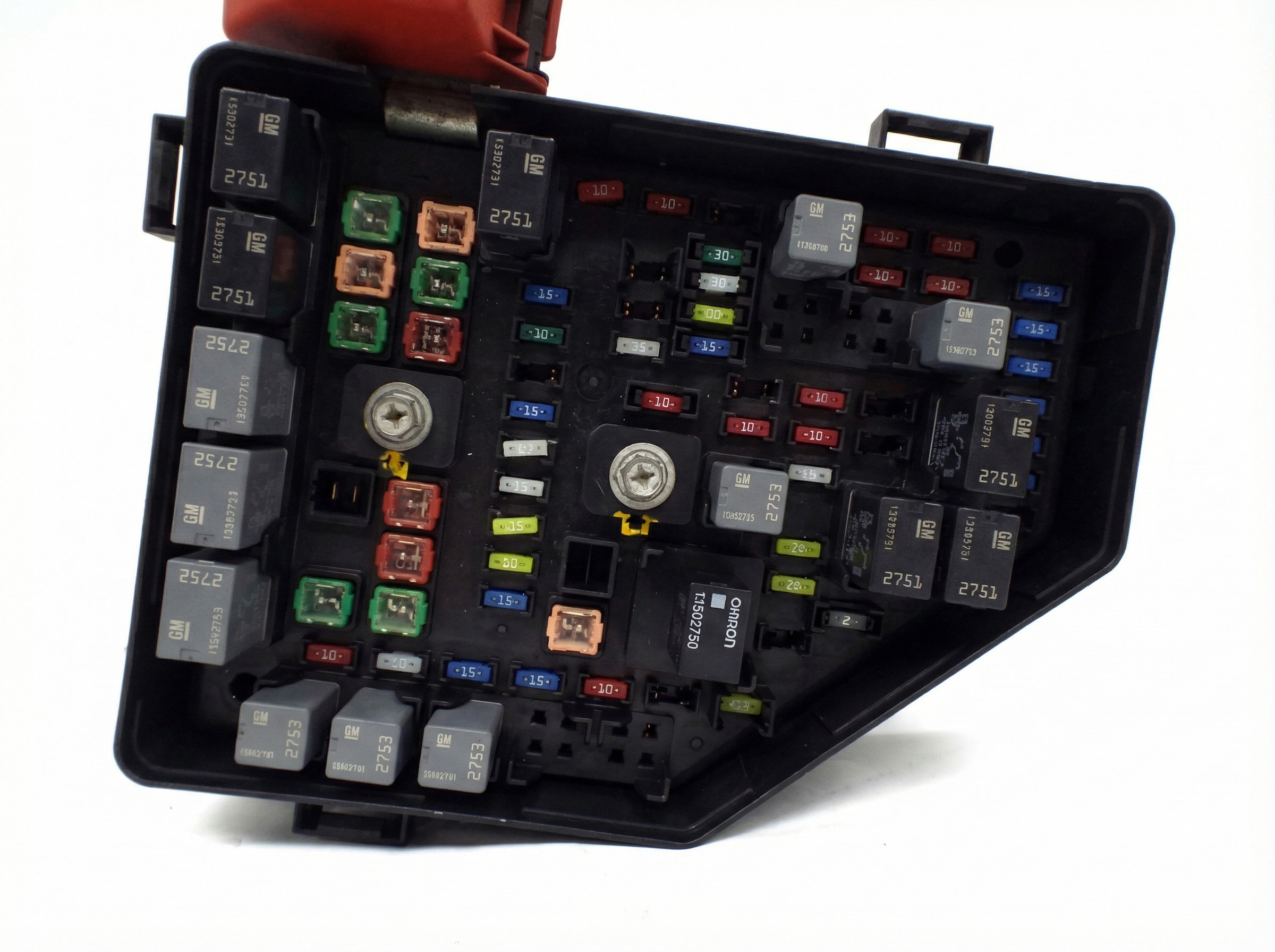
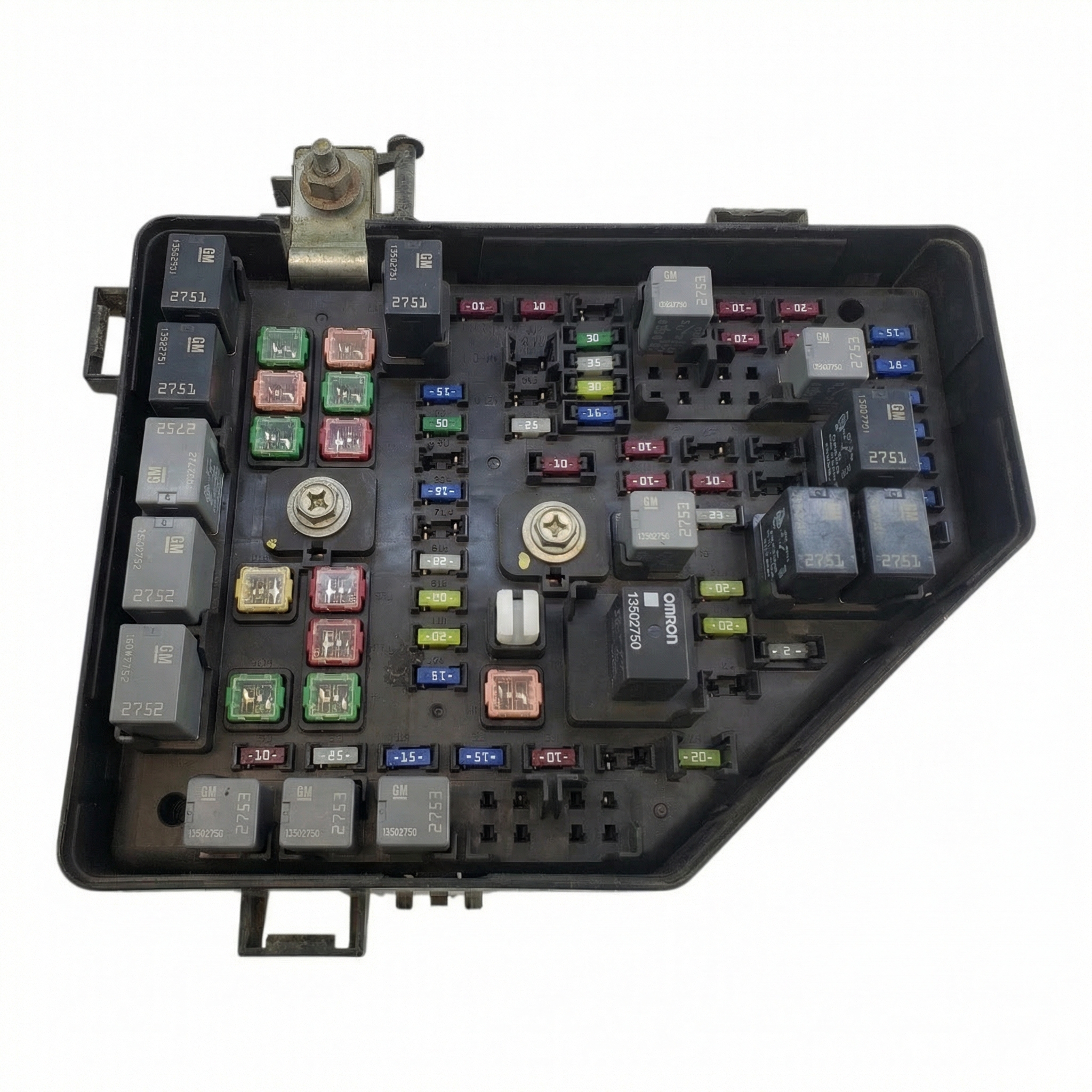
- Loose or Damaged Terminals / Cracked Trace in Underhood Fuse Block 🔴 High Probability This is a well-documented weak point on the GM Lambda platform. Heat and vibration cause a thin internal copper trace that connects the Run/Crank relay to the ECM circuit to crack, creating an open or intermittent connection. This is specifically mentioned in GM TSBs #PIT4649B and #PIT4649D as the likely cause. In other cases, the female terminals in the fuse block that grip the relay pins can spread apart, causing a poor connection. Additionally, the main bolts securing the harness connectors to the bottom of the fuse block can loosen, creating intermittent contact.
How to confirm: With the battery disconnected, remove the Run/Crank relay and inspect its terminals and the corresponding slots in the fuse block for looseness, corrosion, or signs of overheating. Wiggling the relay while trying to start the engine can sometimes temporarily restore the connection and confirm the issue. For a definitive diagnosis, the fuse block must be removed and disassembled by drilling out the plastic rivets holding it together. The internal circuit board can then be inspected for a visible crack in the copper trace leading from the relay's pin socket. Also, check the tightness of the bolts that secure the large electrical connectors to the underside of the fuse block.
Typical fix: The most robust DIY repair is to solder a jumper wire (typically 18-20 gauge) across the cracked trace on the internal circuit board to permanently bypass the break. If a relay socket terminal is spread open, it can sometimes be carefully bent back to create a tighter connection. If the block is corroded from water intrusion (often from clogged sunroof drains) or the damage is extensive, the entire fuse block assembly must be replaced. Some owners have fixed the issue simply by tightening the main connector bolts on the underside of the fuse block, sometimes with added Loctite.
Est. part cost: $150-$400 for a new fuse block, <$5 for solder and wire. - Faulty Run/Crank Relay 🟡 Medium Probability
How to confirm: Swap the Run/Crank relay with an identical, known-good relay from a non-essential system (like the horn or rear defogger). If the car starts and runs properly, the original relay was faulty.
Typical fix: Replace the faulty relay. This is an inexpensive and easy first step in diagnosis.
Est. part cost: $10-$30 - Faulty Ignition Switch ⚪ Low Probability While less common than the fuse block, ignition switch failure can also cause P1682, sometimes manifesting as the engine failing to shut off when the key is removed.
How to confirm: This requires using a multimeter to test for correct voltage output on the different circuits coming from the ignition switch in each key position. Accessing the switch for testing requires removing the lower dash and steering column trim panels.
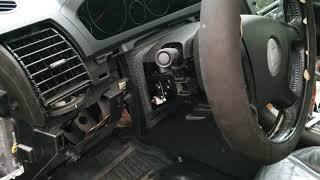
Typical fix: Replace the ignition switch. This is a more involved repair than a relay swap but less so than a fuse block replacement. 🎬 See this walkthrough for replacing the ignition switch
Est. part cost: $40-$100
Rare But Worth Checking
- Water Intrusion into Fuse Block: The Saturn Outlook is known for clogged sunroof drain tubes, which can cause water to leak down the A-pillar and directly onto the interior or underhood fuse block, causing corrosion and multiple electrical failures, including P1682. A Reddit user confirmed their P1682 was caused by a corroded fuse box from this known leak.
- Faulty Engine Control Module (ECM): This is very rare. Before condemning the ECM, all other possibilities (fuse block, relays, wiring) must be exhaustively ruled out. An ECM failure will often be accompanied by other communication codes (e.g., U-codes).
Diagnosis Steps
- Read all stored fault codes with an OBD-II scanner. If P0689 is present with P1682, the likelihood of a fuse block issue is very high. Diagnose P0685, P0689, or P0690 first if they are present.
- Using a scan tool, observe the 'Ignition 1 Voltage' and 'EC Ignition Relay Feedback Signal' parameters with the key on, engine off. The voltage difference between these two readings should not exceed 3 volts. If a large discrepancy is seen, this confirms the fault condition.
- Check all fuses related to the ignition and ECM. Pay close attention to the RUN/CRNK and ECM-related fuses.
- Locate the RUN/CRNK relay in the underhood fuse block. Swap it with a known-good, identical relay (e.g., the horn relay) and attempt to start the vehicle.
- If the problem persists, have an assistant try to start the engine while you gently wiggle the RUN/CRNK relay. If the engine starts or stumbles, this strongly indicates poor terminal tension or a cracked trace within the fuse block.
- Inspect the fuse block for any signs of water damage, corrosion, or melted plastic, especially around the relays. Check for clogged sunroof drains if water is suspected.
- If the above steps do not isolate the issue, the next logical step for this platform is to remove and disassemble the underhood fuse block. Drill out the plastic rivets on the underside and separate the layers to visually inspect the internal copper traces for hairline cracks, particularly the one connected to the RUN/CRNK relay socket.
- If the fuse block is confirmed to be good, use a multimeter to check for B+ voltage at the appropriate terminals for the two ignition circuits at the ECM connector. A wiring diagram is essential for this step. Specifically, check for battery voltage at Pin 19 (Pink wire) and Pin 36 (Yellow wire) of the ECM's X1 connector.
- If all wiring, relays, and the fuse block are confirmed to be good, the ignition switch itself should be tested for proper operation.
Parts You'll Likely Need
- Underhood Fuse Block
(OEM #25856249 (for 2007-2008 models, verify with VIN as other numbers like 20757040 may apply depending on options))— This is the most common failure point for P1682 on this platform due to internal terminal and circuit board issues.
Trusted brands: ACDelco (GM Genuine), Dorman
OEM price range: $250-$400
Aftermarket price range: $150-$300 - Run/Crank Relay — The relay itself can fail internally and is an easy, inexpensive part to replace as a primary diagnostic step.
Trusted brands: ACDelco, Bosch, Standard Motor Products
OEM price range: $20-$40
Aftermarket price range: $10-$25
Related Codes That Often Appear With This One
- P0689 — This code for 'Engine Controls Relay Feedback Circuit Low Voltage' often appears with P1682 because they are both related to the same relay and circuit within the problematic fuse block. Seeing both codes together makes a fuse block failure extremely likely.
- C0561 — This code for 'System Disabled' often relates to the Stabilitrak/Traction Control system. The system can be disabled by the ECM as a precaution when a critical powertrain fault like P1682 is detected.
Technical Service Bulletins (TSBs) & Recalls
- PIT4649B: Service Engine Soon MIL With P1682 And/Or Battery Draw And/Or No Start.
- PIT4649D: Diagnostic Tip - Service Engine Soon MIL With DTC P1682 - Battery Draw - No Start
Platform-Specific Known Issues
- A GM class-action lawsuit was filed concerning defective fuse blocks on related platforms (Enclave, Traverse, Acadia) causing stalling and electrical issues associated with code P1682.
- Technical Service Bulletin #PIT4649B and its later revision #PIT4649D were issued by GM specifically to address P1682 accompanied by a battery draw or no-start condition, pointing technicians toward a potential fuse block issue.
- Clogged sunroof drains are a known issue that can lead to water leaking directly onto the fuse block, causing corrosion and this specific fault code.
- The specific failure inside the fuse block is often a hairline crack in a thin copper trace on the internal printed circuit board, which requires disassembly to see and repair.
Mechanic-Grade Diagnostic Values
- Voltage difference between 'Ignition 1 Voltage' and 'EC Ignition Relay Feedback Signal' on a scan tool. — expected: Less than 3 volts.. Failure: A voltage difference greater than 3 volts for more than 1 second will set the code.
- Resistance of ignition voltage circuit wiring or fuse block trace. — expected: Less than 5-6 Ohms.. Failure: A resistance of 6 Ω or greater in the circuit or underhood fuse block can cause the DTC to set.
- Voltage at ECM Connector X1, Pin 19 (Pink wire) — expected: Battery Positive Voltage (B+) with key ON.. Failure: Low or no voltage indicates an open/high resistance in the Ignition 1 Voltage circuit from the powertrain relay.
- Voltage at ECM Connector X1, Pin 36 (Yellow wire) — expected: Battery Positive Voltage (B+) with key in RUN/CRANK.. Failure: Low or no voltage indicates an open/high resistance in the Ignition Voltage circuit from the run/crank relay.
Wiring & Ground Locations
- ECM Connector X1, Pin 19 — At the Engine Control Module (ECM), located in the left front corner of the engine compartment.. This pin, with a Pink wire, is the 'Ignition 1 Voltage' input from the powertrain relay. It's one of the two circuits the ECM compares.
- ECM Connector X1, Pin 36 — At the Engine Control Module (ECM), located in the left front corner of the engine compartment.. This pin, with a Yellow wire, is the 'Ignition Voltage' input from the run/crank relay. It's the second of the two circuits the ECM compares.
- Underhood Fuse Block Connector X3, Terminal 51 — On the underside of the underhood fuse block.. A GM Preliminary Information document (PIT5643) for later model years identifies this specific terminal as having loose tension and causing arcing, leading to P1682 and P0689. While the terminal number may vary, this points to a known failure point in the main connectors under the fuse block.
- G301 — Behind the left kick panel inside the cabin.. This is a major ground point for various interior modules and data lines. A poor ground here can cause a variety of difficult-to-diagnose electrical issues.
Real Owner Repair Stories
- Reddit user bduroxhwr (2008 Saturn Outlook XR) — Engine remained on after key was removed (P1682), followed by transmission pressure switch codes (P0872/P0877) and ABS disabled code (C0561).
❌ Tried (didn't work) Mechanic could not replicate the P1682 fault initially., Planned to replace transmission sensors based on other codes.
✅ What actually fixed it The owner inspected the fuse box and found it was 'super corroded' from a known water leak issue. The vehicle was ultimately scrapped due to the extent of the issues, but the fuse box was confirmed as the source of the P1682 problem. - YouTube channel 'Fixing things and making stuff' (2013 Chevrolet Traverse LTZ (Lambda platform twin)) — Intermittent P1682, traction control off, ABS off, reduced power, and engine stalling in the road.
❌ Tried (didn't work) Replacing the ignition and powertrain relays did not solve the problem.
✅ What actually fixed it The owner replaced the entire underhood fuse block. He notes the problem went away for four years after the first replacement, and when it returned, a second fuse block replacement fixed it again. He attributes the failure to loose internal 'stabbing connections' within the fuse block. - YouTube channel 'The Lo-fi Mofo' (Pontiac G6 (similar GM electrical design)) — Intermittent crank-no-start with code P1682.
❌ Tried (didn't work) Bench testing the original relay showed continuity., Cleaning grounds.
✅ What actually fixed it Upon inspecting the fuse block while inserting a new relay, the owner discovered the female terminal sockets for the relay were spread apart, causing a poor, intermittent connection. Squeezing the terminals back together to ensure a tight grip on the relay pins solved the problem. - HVAC Mechanic YouTube comment (GM Vehicle (unspecified)) — Intermittent P1682.
❌ Tried (didn't work) Battling the code for months.
✅ What actually fixed it The cause was loose bolts that hold the main wire plug connectors to the bottom of the fuse box. The owner removed the fuse box, inspected connections, and reinstalled the bolts with Loctite to secure them.
OEM Part Supersession History
15927724, 15927725, 25784721, 25784722, 25856250→25856249— Part consolidation and potential design revision for the underhood fuse block.
Heads up: Part 25856249 is listed for 2007-2008 models. Options like HID headlamps or tow packages can affect which specific fuse block is correct. Always verify the part number with the vehicle's VIN.
Helpful Videos
![P1682 Ignition 1 switch circuit 2 [SOLVED]](https://img.youtube.com/vi/KZFTjjczhPg/mqdefault.jpg)
We Have This Part in Stock





The information in this article is provided for general reference and educational purposes only. Vehicle specifications, procedures, and part compatibility can vary by production date, trim level, and region. Always consult your vehicle's factory service manual and verify part numbers before purchasing or performing repairs. Safety-critical components such as airbags, seat belts, and braking systems should be installed by a qualified professional.
- Saturn OUTLOOK:
- 🎬 Helpful Videos
- 🛍️ Shop This Part
- What's Unique About the 2007-2010 Saturn OUTLOOK
- Diagnostic Flowchart
- Symptoms You May Notice
- Most Likely Causes
- Rare But Worth Checking
- Diagnosis Steps
- Parts You'll Likely Need
- Related Codes That Often Appear With This One
- Technical Service Bulletins (TSBs) & Recalls
- Platform-Specific Known Issues
- Mechanic-Grade Diagnostic Values
- Wiring & Ground Locations
- Real Owner Repair Stories
- OEM Part Supersession History
- 🎟️ Get 5% Off