

P1682 on 2015-2017 GMC Acadia: Ignition Voltage Fault, Stalling, and Fixes
On a 2015-2017 GMC Acadia, code P1682 is almost always caused by a poor connection in the underhood fuse block, leading to engine stalling or a no-start condition. The issue is a well-documented failure at pin 51 of the X3 connector. The fix involves repairing the specific terminal with a kit (GM P/N 84757974) or replacing the entire fuse block (e.g., GM P/N 23436803), with parts costing between $30 for a terminal kit and $450 for a new fuse block.
- P1682 on a 2015-2017 Acadia is a critical code indicating a power supply issue to the engine computer, which can cause dangerous stalling.
- The most likely cause is a burnt or corroded terminal (pin 51) in the X3 connector under the main fuse box in the engine bay.
- Always inspect the underside of the fuse block before replacing other parts like the ignition switch.
- This issue is often accompanied by code P0689; seeing both codes together strongly points to the fuse block problem.
- Due to the risk of stalling, the vehicle should not be driven until this issue is repaired.
What's Unique About the 2015-2017 Gmc ACADIA

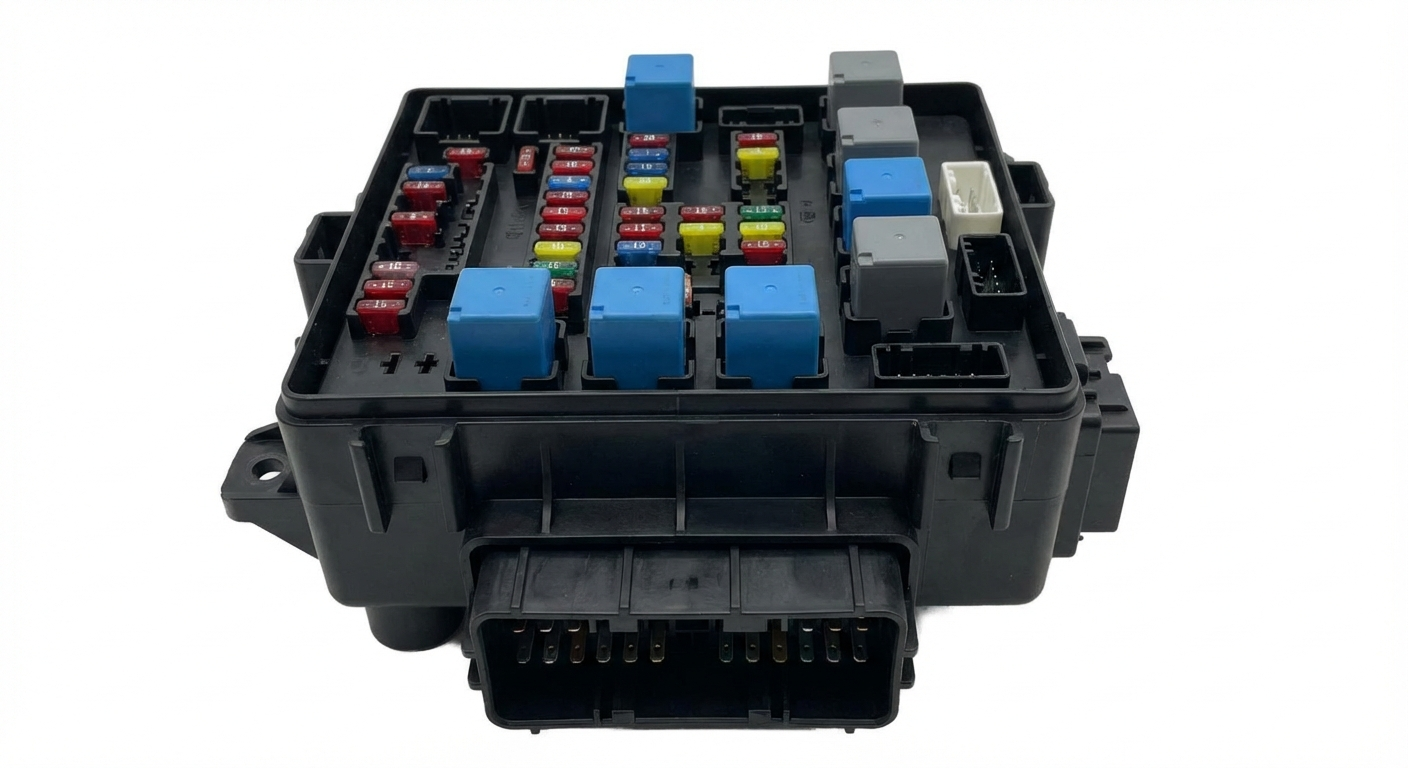
The first-generation Acadia (through 2016 and the 2017 'Limited') and its GM Lambda platform siblings (Buick Enclave, Chevy Traverse, Saturn Outlook) are notorious for an electrical issue within the Underhood Bussed Electrical Center (UBEC), also known as the fuse box. The design can allow for poor terminal tension or fretting corrosion, specifically at pin 51 of the large X3 connector, which supplies ignition voltage to the ECM. This known issue is so prevalent that GM has issued multiple Technical Service Bulletins (TSBs) that point directly to this as the root cause for P1682, often accompanied by P0689.
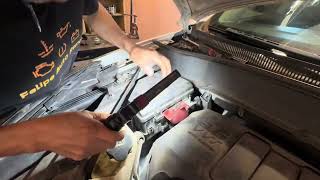
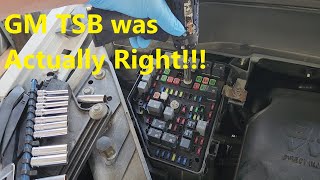
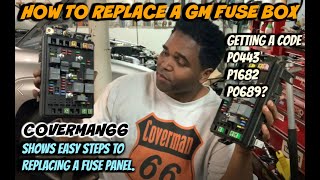
🎬 Watch: Diagnosing a stalling Acadia with P0689 and P1682 codes.Diagnostic Flowchart
Tap your situation to follow the diagnostic path that matches what you're seeing on this vehicle.
Generation note: The 2015-2017 year range covers two distinct generations. The first generation (2015-2016) and the 2017 Acadia 'Limited' are widely documented to have the fuse block terminal issue described in TSB #19-NA-276. The second generation began with the fully redesigned 2017 model. While the P1682 code can occur on any vehicle, the common fuse block failure is primarily associated with the first-generation Lambda platform.
Symptoms You May Notice
- Engine stalls while driving, often intermittently
- Reduced Engine Power message on the dash
- Engine cranks but will not start
- Check Engine Light is on
- Intermittent no-start condition
- Traction Control and/or ABS warning lights may appear with the stall
- Battery drain (as noted in TSB #PIT4649D)
- Replacing the ignition switch without first inspecting the underhood fuse block.
- Replacing the battery or alternator, as the root cause is a voltage discrepancy, not necessarily low overall voltage.
- Replacing only the relays when the underlying issue is the fuse block terminal connection itself.
Most Likely Causes
- Poor Connection in Underhood Fuse Block (UBEC) 🔴 High Probability This is a well-documented failure point on the GM Lambda platform. TSB #19-NA-276 specifically identifies poor terminal tension at pin 51 of the X3 connector in the fuse block as the cause. Fretting corrosion from micro-vibrations leads to high resistance, arcing, and intermittent voltage loss to the ECM.
How to confirm: Disconnect the battery. Remove the underhood fuse block and inspect the underside. Look for signs of burning, melting, or a dark arc spot on the male pin at cavity 51 of the large X3 connector. TSB #PIT5643 suggests using a cell phone camera to zoom in, as the arc spot can be very small.
Typical fix: If the fuse block pin is not severely melted, the primary fix is to replace the female terminal in the harness connector with a new terminated lead (pigtail) and clean the male pin on the fuse block. If the fuse block itself is melted or damaged, the entire UBEC must be replaced. The UBEC is a plug-and-play part and does not require programming.
Est. part cost: $30-$450 - Faulty Run/Crank or Powertrain Relay 🟡 Medium Probability Relays are mechanical switches that wear out over time. Given the high electrical load and constant use, they are a common failure point. Some owners replace these first as a cheap and easy troubleshooting step before tackling the more complex fuse block.
How to confirm: Locate the Run/Crank and Powertrain relays in the underhood fuse block. Swap them with an identical relay from a non-critical system (like the rear defogger). If the problem goes away, the relay is faulty.
Typical fix: Replace the faulty relay.
Est. part cost: $10-$40 - Loose Fuse ⚪ Low Probability This is typically a symptom of the larger fuse block issue (poor terminal tension) rather than a cause in itself. The vibration of the vehicle can cause a fuse to lose contact.
How to confirm: Check the ECM-related fuses in the underhood fuse block for a secure fit. A video by a user demonstrated this exact code being triggered by a loose 15-amp 'ECM throttle count' fuse. Wiggling the fuse caused the engine to stumble and stall, and re-seating it resolved the issue temporarily.
Typical fix: Ensure the fuse is seated correctly. Bending the fuse prongs slightly for a tighter fit can be a temporary fix, but if the connection remains loose, it points to a problem with the terminals inside the fuse block itself, requiring the more comprehensive repair.
Est. part cost: $1-$5
Rare But Worth Checking
- Faulty Ignition Switch: While possible, this is far less common than the fuse block issue for this specific code on the Acadia. A key symptom can be the engine not turning off when the key is removed. Always inspect the fuse block first before replacing the ignition switch.
- Wiring Harness Issue: An open or short in the wiring between the fuse block and the ECM could cause this code, but it's less likely than a problem at the connector itself where vibration and moisture are concentrated.
- Faulty Engine Control Module (ECM): ECM failure is rare. This should only be considered after all other possibilities, especially the fuse block and wiring, have been thoroughly ruled out. It would typically be accompanied by other, more erratic issues or communication codes.
Diagnosis Steps
- Check for other DTCs. If P0689 is present, it strongly suggests the fuse block issue.
- Perform a battery load test to ensure the battery is healthy and fully charged, ruling out a simple power supply issue.
- Swap the Run/Crank relay with a known good, identical relay from another circuit and see if the fault clears. This is a quick and inexpensive test.
- If the problem persists, disconnect the negative battery terminal.
- Remove the underhood fuse block (UBEC) to access the connectors on the bottom. This can be complex and involves removing several clips and bolts.
- Carefully inspect terminal 51 in the X3 connector for any signs of heat damage, corrosion, or spread terminals. A dark spot from arcing is the key giveaway.
- If damage is found, replace the female terminal in the harness connector using the specified terminated lead kit (GM P/N 84757974). If the fuse block itself is melted, replace the entire assembly.
- A user-reported tip suggests that the fuse block mounting screws may be too long, preventing a tight fit. Adding a washer under each of the two main mounting screws can sometimes improve the connection and resolve the issue.
- If no damage is visible, perform a voltage drop test on the two ignition voltage circuits going to the ECM to rule out a wiring issue elsewhere in the harness.
Parts You'll Likely Need

- Fuse Block Connector Terminal
(OEM #84757974 (as WIRE KIT, SPLICE))— This is the official repair part listed in TSB #19-NA-276 for fixing the poor connection at pin 51 without replacing the entire harness or fuse block. It is a single terminated lead (pigtail) that is spliced into the existing harness.
Trusted brands: ACDelco, GM Genuine Parts
OEM price range: $25-$40
Aftermarket price range: $15-$30 - Underhood Fuse Block
(OEM #23436803 (Verify by VIN, options like tow package matter))— This is the most common failure point. If the male pin at position 51 is melted or the block is otherwise damaged from arcing, the entire block must be replaced.
Trusted brands: ACDelco, Dorman
OEM price range: $350-$450
Aftermarket price range: $200-$300 - Powertrain or Run/Crank Relay — A failing relay can cause an intermittent loss of voltage on one of the circuits monitored by the ECM. It's a common, low-cost part to replace during diagnosis.
Trusted brands: ACDelco, Bosch
OEM price range: $20-$40
Aftermarket price range: $10-$25
Related Codes That Often Appear With This One
- P0689 — This code means 'ECM/PCM Power Relay Control Circuit Low'. Both P1682 and P0689 are often triggered by the same root cause: a faulty connection at the underhood fuse block. TSB #19-NA-276 and PIT5643 explicitly list both codes together as the primary symptom of the pin 51 failure.
Technical Service Bulletins (TSBs) & Recalls

- 19-NA-276: 'Potential Reduced Engine Power Message Displayed and/or Engine Stall with DTCs P1682 and/or P0689 Set.' This TSB directly addresses the common cause being a poor terminal connection in the underhood fuse block and provides the repair procedure and part number for the terminated lead.
- PIT4649D: 'Diagnostic Tip - Service Engine Soon MIL With DTC P1682 - Battery Draw - No Start'. This bulletin also points towards an electrical issue related to this code causing no-start and battery drain symptoms.
- PIT5643: 'Intermittent Reduced Engine Power or Stall with P0689 and/or P1682'. This preliminary bulletin identified the root cause as 'loose terminal tension with arcing corrosion on terminal #51' and recommended inspecting the pin with a camera.
Platform-Specific Known Issues
- A known issue of poor terminal tension at pin 51 of the X3 connector under the fuse block is the primary cause of this code, as documented in GM TSB #19-NA-276.
- Early bulletin PIT5643 also documents this issue, noting it causes 'arcing corrosion on terminal #51'.
Mechanic-Grade Diagnostic Values
- Voltage difference between 'Ignition 1 Voltage' and 'EC Ignition Relay Feedback' on a scan tool — expected: Less than 3.0 Volts. Failure: A difference greater than 3.0 Volts for more than one second.
- Voltage at ECM Connector C1, Pin 19 (Ignition 1 Voltage) — expected: Battery Positive Voltage (B+). Failure: Voltage significantly less than B+, indicating an open or high resistance in the circuit.
- Resistance of the ignition voltage circuit from the fuse block to the ECM — expected: Less than 5.0 Ohms. Failure: A resistance of 5.0 Ohms or greater can cause the DTC to set.
Scan Tool Commands That Help
- GDS2 / Tech2: Observe 'Ignition 1 Signal' and 'Engine Controls Ignition Relay Feedback' parameters. — This is the primary diagnostic step to confirm which of the two ignition circuits is experiencing a voltage drop, which is the direct trigger for DTC P1682.
Wiring & Ground Locations
- X3 Connector — Underneath the Underhood Fuse Block (UBEC), which is on the passenger side of the engine compartment for the 2015-2016 models.. Pin 51 of this connector is the specific terminal that provides ignition voltage to the ECM and is the most common point of failure (corrosion/arcing) for this code on this platform.
- G101 — Located at the left front of the engine, lower block. It may jumper to G106 on the frame cross rail.. This is a primary ground point for the Engine Control Module (ECM) and Transmission Control Module (TCM). A poor connection here can cause various erratic electrical issues, including voltage discrepancies seen by the ECM.
- G113 — Located on the left side of the engine, at an engine-to-transmission stud.. This is another critical ground point for the engine and transmission assembly. Corrosion or looseness here can affect the ECM's ground reference, potentially contributing to voltage-related codes.
- G103 — Located on the left side of the engine compartment, on the inner fender panel.. This ground serves multiple components in the engine bay. While not a direct ECM ground, ensuring it is clean and tight is part of good diagnostic practice when chasing electrical faults.
Real Owner Repair Stories
- Chevy HHR Network forum (2006 Chevy HHR 2.4L (Note: Different vehicle but same GM codes and a similar fuse box issue)) — Cranks and dies immediately, codes P1682 and P0689 present.
❌ Tried (didn't work) Replacing ECM, TCM, and BCM, Replacing the ignition switch, Checking relays, grounds, and voltage at fuses, Replacing the underhood fuse box with a used one (first replacement was also faulty)
✅ What actually fixed it The issue was resolved only after installing a third fuse box (a known-good new or used part). This indicates the replacement fuse boxes can also be faulty or that internal, non-visible damage was the root cause. - ALLDATA Tech Tip (2016 GMC Savana 2500 V8-4.8L (Note: Different vehicle, same GM codes and electrical architecture principles)) — MIL on, engine cranks but will not start.
❌ Tried (didn't work) Initial diagnosis pointed towards a faulty PCM after checking powers and grounds.
✅ What actually fixed it A closer inspection of the underhood fuse box revealed corrosion on two of the fuse connectors. Cleaning the fuse connectors and the terminals in the fuse box resolved the weak power feed to the PCM and cleared the P1682 and P0689 codes.
OEM Part Supersession History
23436806, 23436809→23436803— Part consolidation and potential design revision by the manufacturer.
Heads up: Part 23436803 is listed for models with trailer package and/or HID headlamps. VIN verification is critical when ordering to ensure the correct fuse block configuration is obtained.
Model Year Variations Within This Range
- 2015-2016, 2017 'Limited': These model years belong to the first-generation Lambda platform and share the same underhood fuse block design (located on the passenger side) that is prone to the Pin 51 failure.
- 2017 (Redesigned Model): The fully redesigned 2017 Acadia is a new platform. Its underhood fuse block is located on the driver side of the engine compartment. While it can still experience a P1682 code, the specific, widespread failure at Pin 51 of the X3 connector is characteristic of the first generation.
Helpful Videos
![P1682 Ignition 1 switch circuit 2 [SOLVED]](https://img.youtube.com/vi/KZFTjjczhPg/mqdefault.jpg)
We Have This Part in Stock




The information in this article is provided for general reference and educational purposes only. Vehicle specifications, procedures, and part compatibility can vary by production date, trim level, and region. Always consult your vehicle's factory service manual and verify part numbers before purchasing or performing repairs. Safety-critical components such as airbags, seat belts, and braking systems should be installed by a qualified professional.
- Gmc ACADIA:
- 🎬 Helpful Videos
- 🛍️ Shop This Part
- What's Unique About the 2015-2017 Gmc ACADIA
- Diagnostic Flowchart
- Symptoms You May Notice
- Most Likely Causes
- Rare But Worth Checking
- Diagnosis Steps
- Parts You'll Likely Need
- Related Codes That Often Appear With This One
- Technical Service Bulletins (TSBs) & Recalls
- Platform-Specific Known Issues
- Mechanic-Grade Diagnostic Values
- Scan Tool Commands That Help
- Wiring & Ground Locations
- Real Owner Repair Stories
- OEM Part Supersession History
- Model Year Variations Within This Range
- 🎟️ Get 5% Off