

P1682 on 2017 Chevrolet Traverse: Ignition Circuit Fault Causes and Fixes
On a 2017 Traverse, P1682 almost always points to a faulty Underhood Fuse Block (UBEC). A poor internal connection, specifically at terminal 51 of the X3 connector, causes a voltage mismatch that the ECM detects, leading to stalling or a no-start condition. Inspecting for a burnt pin under the fuse block and often replacing the entire unit is the most common and reliable fix.
- P1682 on a 2017 Traverse is a serious code that indicates a high risk of stalling and should be addressed immediately.
- The problem is almost certainly located in the Underhood Fuse Block (UBEC) or its related relays, not the ECM or ignition switch.
- Before buying any parts, physically inspect the underside of the UBEC for burn marks on the terminals, specifically pin 51 of the X3 connector.
- This code is often accompanied by P0689; seeing them together further strengthens the diagnosis of a faulty UBEC.
- Due to the high risk of stalling, do not drive the vehicle until the issue has been repaired.
What's Unique About the 2017-2017 Chevrolet TRAVERSE
The first-generation Chevrolet Traverse and its GM Lambda platform mates (GMC Acadia, Buick Enclave, Saturn Outlook) are known for issues with the Underhood Fuse Block, also called the UBEC or X50A Fuse Block. Over time, engine heat and vibration can cause poor terminal tension, leading to arcing and corrosion, specifically at terminal 51 of the X3 connector which supplies ignition voltage to the ECM. This design flaw is so common that GM has issued multiple Technical Service Bulletins (TSBs) about it, and a class-action lawsuit was filed concerning the issue. It is the primary reason a Traverse owner will see this specific code.
Diagnostic Flowchart
Tap your situation to follow the diagnostic path that matches what you're seeing on this vehicle.
Symptoms You May Notice
- Engine stalls while driving, sometimes in the middle of an intersection
- "Reduced Engine Power" message on the dashboard
- Vehicle will not start or is hard to start (cranks but no start)
- Check Engine Light is on
- Service StabiliTrak/Traction Control warning lights may appear
- Engine continues to run after the key is removed
- Replacing the Engine Control Module (ECM) before thoroughly inspecting the Underhood Fuse Block.
- Replacing the ignition switch without confirming the UBEC and relays are functioning correctly.
- Replacing the battery or alternator without diagnosing the specific ignition circuit fault.
Most Likely Causes
- Faulty Underhood Fuse Block (UBEC) 🔴 High Probability This is a well-documented weak point on the GM Lambda platform. TSBs #PIT5643 and #19-NA-276 specifically identify poor terminal tension and arcing at terminal 51 of the X3 connector within the fuse block as the primary cause. Engine heat and vibration cause the connection to become loose, leading to intermittent power loss to the ECM. The damage can be a very subtle burn mark.
How to confirm: Disconnect the battery. Unbolt and lift the top half of the fuse block to inspect the large connectors on the underside. Look for any black, burnt, or corroded marks on the terminals, especially around pin 51 of the gray X3 connector. A magnifying glass or high-magnification camera may be needed to see the small arc mark.
Typical fix: In most cases, the entire UBEC needs to be replaced. 🎬 Watch: Step-by-step guide to replacing the underhood fuse box. If the damage is minimal and only on the harness side, a technician may be able to replace the single affected terminal with a new terminated lead, as described in TSB #19-NA-276. Some owners report the issue recurring after a few years even with a new fuse block.
Est. part cost: $300-$550 - Faulty Powertrain or Run/Crank Relay 🟡 Medium Probability Relays are mechanical switches that wear out. While less common than the fuse block terminal issue, a failing relay can cause the exact same symptoms and is a cheap and easy diagnostic step.
How to confirm: The relays are located in the UBEC. You can swap the Powertrain or Run/Crank relay with an identical, known-good relay from a non-essential system (like the horn or rear defogger). If the car starts and runs properly, the relay was the issue.
Typical fix: Replace the faulty relay. This is an inexpensive and easy part to replace.
Est. part cost: $10-$30 - Faulty Ignition Switch ⚪ Low Probability While a possible cause for the generic code definition, on this specific platform it is far less common than the UBEC issue. It can cause similar symptoms, including the engine not turning off when the key is removed.
How to confirm: This requires testing the electrical circuits from the ignition switch with a multimeter to ensure it is sending the correct voltage signals in each key position. This should only be done after the UBEC and relays have been ruled out.
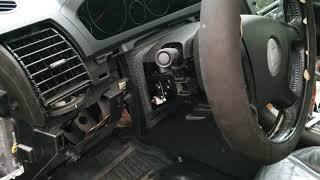
Typical fix: Replace the ignition switch assembly, which is located in the steering column. 🎬 See this walkthrough on how to replace the ignition switch.
Est. part cost: $40-$100
Rare But Worth Checking
- Damaged Wiring Harness: An open or short in the wiring between the UBEC and the ECM can cause this code. This is less likely than a fault inside the fuse block itself but should be considered if a new fuse block doesn't solve the issue. The issue could be at the harness-side connector terminal (pin 51) which can be repaired separately.
- Faulty Engine Control Module (ECM): This is extremely rare. The ECM is often replaced by mistake when the true fault lies in the UBEC or wiring providing power to it. One owner complaint noted that replacing the ECM did not fix the problem. Always rule out all other possibilities before condemning the ECM. An ECM failure may be accompanied by other 'U' codes.
Diagnosis Steps
- Scan for all diagnostic trouble codes. Pay close attention if P0689 is also present, as this strongly points to the UBEC issue.
- As a simple first step, swap the Powertrain/Run/Crank relay with an identical relay from a non-critical circuit (e.g., horn) and see if the issue is resolved.
- Disconnect the negative battery terminal.
- Remove the cover and unbolt the main power cables (typically 13mm nuts) from the Underhood Fuse Block (UBEC).
- Unclip and lift the top portion of the fuse block to expose the large electrical connectors on the bottom. There are multiple plastic tabs around the perimeter that need to be released.
- Carefully inspect the terminals on both the fuse block and the harness connectors. Pay extremely close attention to terminal 51 of the gray X3 connector for any signs of black soot, arcing, corrosion, or heat damage, as specified in GM's TSBs. The damage can be a very small black dot. 🎬 Watch: How to diagnose and solve the P1682 circuit fault.
- If damage is found on the fuse block terminal, the UBEC will likely need replacement.
- If the harness terminal is damaged, it can be replaced with a new terminated lead (GM Part No. 84757974). This involves cutting the old terminal and splicing in the new one.
- If no issues are found at the UBEC, proceed with testing the ignition switch and checking the wiring harness for continuity between the switch, UBEC, and ECM.
Parts You'll Likely Need
- Underhood Fuse Block (UBEC)
(OEM #23436805 (supercedes 23436804))— This is the most common point of failure for this code on a Traverse due to a known design issue with internal terminal connections. Be sure to verify the part number with your VIN, as models with a tow package may use a different part.
Trusted brands: ACDelco (OEM), Dorman
OEM price range: $350-$550
Aftermarket price range: $250-$450 - Powertrain / Run/Crank Relay — A failing relay can cause an intermittent loss of ignition voltage, triggering the code. It's a common, low-cost diagnostic step to replace it first.
Trusted brands: ACDelco, Bosch
OEM price range: $20-$40
Aftermarket price range: $10-$25 - Terminated Wire Lead
(OEM #84757974)— If the terminal on the wiring harness side of the UBEC connector is burnt, this part is used to repair it without replacing the entire harness, as per TSB #19-NA-276.
Trusted brands: ACDelco (OEM)
OEM price range: $25-$50
Related Codes That Often Appear With This One
- P0689 — Stands for 'ECM/PCM Power Relay Control Circuit Low.' This code is frequently triggered alongside P1682 because both relate to the ECM's power supply. The same fault, a poor connection at the UBEC, causes the ECM to see issues with both its main relay circuit and its ignition verification circuit. Both codes are mentioned together in TSBs #PIT5643 and #19NA276.
Technical Service Bulletins (TSBs) & Recalls
- 19-NA-276: Addresses reduced engine power or stalling with DTCs P1682/P0689, caused by poor terminal tension at terminal 51 of the underhood fuse block. Recommends inspection and replacement of the terminal lead if necessary.
- PIT5643: Preliminary bulletin for diagnosing P1682/P0689, pointing to arcing and corrosion on terminal 51 of the X3 connector at the UBEC.
Platform-Specific Known Issues
- GM Technical Service Bulletin #19NA276 directly addresses P1682 and/or P0689 on the 2017 Traverse, noting that it can cause stalling or reduced engine power. The bulletin points to poor terminal tension on terminal 51 in the X3 connector of the underhood fuse block as the cause and provides a diagram for locating the pin.
- An earlier Preliminary Information bulletin, #PIT5643, highlights the same issue on slightly older models, describing the cause as "arcing/corrosion on terminal 51 of the X3 connector at the UBEC."
- Owner complaints filed with the NHTSA corroborate these findings, with drivers reporting sudden stalls and repeated issues related to the ignition system and fuse box.
- A class-action lawsuit was filed against GM regarding defective fuse blocks on these platforms, alleging that the design allows engine vibration to loosen terminals, causing intermittent power loss and stalling.
Mechanic-Grade Diagnostic Values
- Voltage difference between 'Ignition 1 Voltage' and 'Engine Controls Ignition Relay Feedback Signal' on a scan tool. — expected: Less than 3 Volts.. Failure: A difference greater than 3 Volts for more than 1 second will set DTC P1682.
- Resistance in the ignition voltage circuit or underhood fuse block. — expected: Less than 5-6 Ohms.. Failure: A resistance of 5-6 Ohms or greater can cause the DTC to set.
- System Voltage for DTC to run. — expected: Greater than 6 Volts.. Failure: The diagnostic will not run if system voltage is too low, which could mask the problem.
Scan Tool Commands That Help
- GDS2 / Tech2: Observe 'Ignition 1 Voltage' and 'EC Ignition Relay Feedback Signal' (also called 'Engine Controls Ignition Relay Feedback Signal') parameters. — This is the primary diagnostic step. With the ignition on, these two parameters should read nearly identical voltage. A discrepancy greater than 3V points directly to the circuit that is failing, helping to isolate whether the issue is with the run/crank relay circuit or the powertrain relay circuit.
Wiring & Ground Locations
- X3 Connector — Underneath the Underhood Fuse Block (UBEC). It is a large, multi-pin connector, typically gray.. Terminal 51 in this connector is the specific pin identified in GM TSBs #PIT5643 and #19-NA-276 as the point of failure due to arcing and corrosion, causing P1682.
- G103 / G105 — On the left (driver's) side of the engine compartment, on the inner fender panel or bulkhead.. These are major ground points for the Body Control Module (BCM) and Engine Control Module (ECM). A poor ground connection here can cause a variety of electrical issues, including voltage discrepancies that could contribute to setting a P1682 code.
- G113 — Located on the left side of the engine, at the engine-to-transmission stud.. This is a primary ground for the Engine Control Module (ECM). A loose or corroded connection here can directly impact ECM operation and its ability to correctly read voltage signals.
Real Owner Repair Stories
- YouTube video by 'Money Saving DIY' (2013 Chevrolet Traverse LTZ) — Intermittent P1682 code, instrument cluster lighting up, 'Traction Control Off' and 'ABS Off' messages, reduced power, and complete stalling in the road.
❌ Tried (didn't work) Replacing the ignition and run/crank relays.
✅ What actually fixed it Replacing the entire Underhood Fuse Block (UBEC). The video explains that intermittent connections develop inside the fuse block over time, causing the voltage mismatch. - YouTube video by 'Randy Barton' (Saturn Outlook (Lambda Platform sister vehicle)) — Code P1682, engine continues to run after the key is removed.
✅ What actually fixed it Replacing the ignition switch for approximately $15. This resolved the symptom of the engine not turning off.
OEM Part Supersession History
23436804→23436805— Standard part revision by the manufacturer, likely to address reliability issues of the original design.
Heads up: Part 23436805 is listed for 2015-2017 Traverse models, specifically those with the factory tow package. It is critical to verify the correct part number with the vehicle's VIN before ordering.
Helpful Videos

![P1682 Ignition 1 switch circuit 2 [SOLVED]](https://img.youtube.com/vi/KZFTjjczhPg/mqdefault.jpg)
We Have This Part in Stock



The information in this article is provided for general reference and educational purposes only. Vehicle specifications, procedures, and part compatibility can vary by production date, trim level, and region. Always consult your vehicle's factory service manual and verify part numbers before purchasing or performing repairs. Safety-critical components such as airbags, seat belts, and braking systems should be installed by a qualified professional.
- Chevrolet TRAVERSE:
- 🎬 Helpful Videos
- 🛍️ Shop This Part
- What's Unique About the 2017-2017 Chevrolet TRAVERSE
- Diagnostic Flowchart
- Symptoms You May Notice
- Most Likely Causes
- Rare But Worth Checking
- Diagnosis Steps
- Parts You'll Likely Need
- Related Codes That Often Appear With This One
- Technical Service Bulletins (TSBs) & Recalls
- Platform-Specific Known Issues
- Mechanic-Grade Diagnostic Values
- Scan Tool Commands That Help
- Wiring & Ground Locations
- Real Owner Repair Stories
- OEM Part Supersession History
- 🎟️ Get 5% Off