

P1682 on 2014-2015 Chevrolet Impala: Ignition Circuit Fault Causes and Fixes
On a 2014-2015 Impala, code P1682 indicates a problem with the ignition voltage circuit, which often causes a no-start or intermittent starting condition. The most common cause is a faulty Engine Controls Ignition Relay (KR75), an inexpensive part that is easy to replace in the underhood fuse box. The second most common cause is a failure within the underhood fuse box itself.
- P1682 on a 2014-2015 Impala almost always points to a no-start or intermittent start condition.
- Before attempting any complex repairs, swap the ignition relay in the underhood fuse box with a known-good one. This is the most likely fix and is very inexpensive.
- This is a known problem acknowledged by GM with a Technical Service Bulletin (TSB).
- If a new relay doesn't fix the issue, the next most likely culprit is the underhood fuse box itself, which is a more expensive and involved repair.
What's Unique About the 2014-2015 Chevrolet IMPALA

This issue is so common on the 2014-2015 Impala and other GM vehicles of the era that General Motors issued a specific Technical Service Bulletin (TSB) for it. The TSB, #PIC-5971-A, directly points technicians to investigate the KR75 Engine Controls Ignition Relay as a likely cause for an intermittent crank/no-start condition accompanied by code P1682. 🎬 Watch: Diagnosing P1682 and ignition relay voltage issues. This makes diagnosis much more direct than on vehicles without this known issue. Furthermore, failures within the underhood fuse box (UBEC) are also a well-documented weak point on this and related GM platforms, causing the same code.
Diagnostic Flowchart
Tap your situation to follow the diagnostic path that matches what you're seeing on this vehicle.
Symptoms You May Notice
- Intermittent crank with no start
- Engine will not start at all
- Check Engine Light is on
- Vehicle may stall while driving, especially when warm or hitting a bump.
- Reduced Engine Power message may appear on the dash.
- Instrument cluster lights (ABS, Traction Control) may flash erratically.
- Radio may shut off and reset the time.
- Replacing the battery or starter motor. While these can cause no-start issues, they do not typically set the P1682 code. The presence of this specific code points to an electrical control circuit fault.
- Replacing the Mass Airflow (MAF) sensor. TSB 21-NA-032 notes that P1682 can set along with MAF sensor code P0101 due to a shared wiring issue in the fuse box, leading to unnecessary MAF sensor replacement.
Most Likely Causes

- Faulty KR75 Engine Controls Ignition Relay 🔴 High Probability This is a known issue documented by GM in Technical Service Bulletin #PIC-5971-A for the 2014 Impala, which identifies this specific relay as the primary suspect after initial diagnostics fail to find another cause.
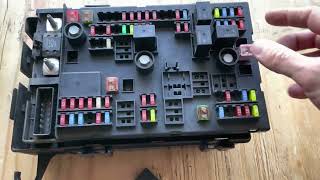
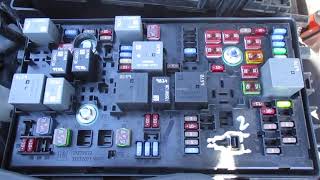
How to confirm: The simplest way to test is to swap the ignition relay (marked as #7 in the underhood fuse box for the 2014 Impala) with an identical relay from a non-critical system like the horn or rear defogger. If the car starts consistently, the relay is bad.
Typical fix: Replace the faulty relay with a new one. The OEM part number specified in the TSB is 13595908.
Est. part cost: $15-$50 - Internal Fuse Box Failure 🟡 Medium Probability Some GM vehicles from this era experience issues with internal connections, loose terminals, or micro-cracks in the copper traces within the underhood fuse block (UBEC). These issues are often exacerbated by heat, causing connections to expand and fail intermittently.
How to confirm: If a new relay doesn't solve the problem, a technician would test for voltage drops at the relay and fuse terminals. Wiggling the relay or fuses while monitoring voltage can reveal a bad internal connection. In a detailed diagnostic video, a technician confirmed a bad fuse box by applying slight pressure to the relay and seeing the voltage return to normal. Some TSBs for related issues point to poor terminal tension at specific locations, like Terminal 51 in the X3 connector.
Typical fix: The entire underhood fuse box assembly must be replaced. In some cases, skilled technicians can disassemble the box and repair cracked traces or re-tension loose terminals.
Est. part cost: $250-$400 - Blown Fuse or Poor Fuse Connection ⚪ Low Probability
How to confirm: Visually inspect all fuses related to the ECM and ignition circuits (often labeled 'ECM', 'IGN', 'ETC/ECM') in both the underhood and passenger compartment fuse boxes. Use a multimeter to check for continuity. A loose fuse socket can also be the culprit, which can be diagnosed by wiggling the fuse.
Typical fix: Replace any blown fuses and ensure all fuses are seated securely. If the socket is loose, the fuse box may need repair or replacement.
Est. part cost: $1-$10 - Faulty Ignition Switch ⚪ Low Probability
How to confirm: This requires testing the electrical signals from the ignition switch with a multimeter to ensure it's sending the correct voltage in each key position.
Typical fix: Replace the ignition switch.
Est. part cost: $50-$150
Rare But Worth Checking
- Wiring Harness Issue: An open, short, or high resistance in the wiring between the fuse box, ignition switch, and ECM can cause this code. This is often difficult to track down and usually requires professional diagnosis with wiring diagrams. A related TSB for other GM models (21-NA-032) points to compromised connections in the UBEC connector X3 as a cause for P1682.
- Faulty Engine Control Module (ECM): This is the least likely cause. The ECM should only be suspected after all other possibilities, including relays, fuses, the fuse box itself, and wiring, have been thoroughly ruled out.
Diagnosis Steps

- Scan for any other trouble codes. If codes like P0685, P0689, or P0101 are present, diagnose them as they are closely related and can point to a common cause.
- Locate the underhood fuse box (UBEC) in the engine compartment, on the driver's side.
- Consult the diagram on the fuse box cover to identify the KR75 Engine Controls Ignition Relay. TSB PIC-5971-A identifies this as relay #7 for the 2014 Impala.
- Swap the ignition relay with an identical, known-good relay from a less critical circuit (e.g., horn). Attempt to start the vehicle. If it starts, the original relay is faulty and needs replacement.
- If swapping the relay does not work, inspect all fuses labeled 'IGN', 'ECM', or 'BATT' in both the underhood and interior fuse boxes. Replace any that are blown. Check for loose-fitting fuses, as this indicates a problem with the fuse box terminal.
- If fuses and the relay are good, the issue may be the fuse box itself. With the key on, gently wiggle the ignition relay while an assistant observes the dash lights or a scan tool monitors ignition voltage. If wiggling the relay causes the power to flicker or return, the fuse box has an internal connection problem.
- A professional would confirm a bad fuse box by testing for voltage at the relay terminals (pins 30 and 87) and checking for a voltage drop across the box before recommending replacement.
- If the fuse box is confirmed to be good, the wiring harness (especially connector X3 at the UBEC) and the ignition switch should be tested for continuity and proper voltage, which may require a professional mechanic.
Parts You'll Likely Need

- Engine Controls Ignition Relay
(OEM #13595908)— This is the most common failure point for code P1682 on this vehicle, as identified in GM's own service bulletin PIC-5971-A.
Trusted brands: ACDelco, GM Genuine
OEM price range: $25-$50
Aftermarket price range: $15-$30 - Underhood Fuse Block
(OEM #23288145)— Internal failures in the fuse block are the second most common cause, leading to intermittent power delivery to the ignition relay and ECM. This is often due to heat-related stress causing cracks in internal circuits or loose pin connections.
Trusted brands: ACDelco, Dorman
OEM price range: $350-$450
Aftermarket price range: $250-$350
Related Codes That Often Appear With This One
- P0689 — This code relates to the ECM/PCM Power Relay Control Circuit Low Voltage and often appears with P1682 because they are both part of the same ignition power-up sequence and can be caused by the same faulty relay or fuse box.
- P0685 — Similar to P0689, this code indicates a fault in the ECM/PCM Power Relay Control Circuit and points to the same group of potential electrical issues.
- P0101 — This MAF sensor code can appear alongside P1682 due to a compromised connection within the Underhood Bussed Electrical Center (UBEC) that affects both circuits, as noted in TSB 21-NA-032.
Technical Service Bulletins (TSBs) & Recalls
- PIC-5971-A: Addresses an intermittent crank or no-start condition with DTC P1682, suggesting the KR75 Engine Controls Ignition Relay (#7) as a probable cause after in
Platform-Specific Known Issues
- A known issue documented in TSB #PIC-5971-A where an intermittent crank/no-start condition with DTC P1682 is often caused by the KR75 Engine Controls Ignition Relay.
- Some owners and technicians report that internal cracks in the underhood fuse box are a common point of failure, causing this code and related symptoms, especially in hot weather. A YouTube video shows a technician demonstrating how heat causes a micro-crack in the fuse box's copper trace to expand and break the connection.
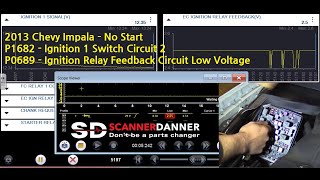
- A detailed diagnostic video by 'ScannerDanner' on a similar 2013 Impala with P1682 and P0689 confirmed the underhood fuse box was the culprit after swapping the relay had no effect. Wiggling the relay in its socket restored power, proving a bad internal connection.
Mechanic-Grade Diagnostic Values
- Voltage difference between 'Ignition 1 Voltage' and 'EC Ignition Relay Feedback' on a scan tool — expected: Less than 3 volts.. Failure: A difference greater than 3 volts for more than a few seconds will set the code.
- Voltage at KR75 Powertrain Relay socket, pin 30 — expected: Battery Positive Voltage (B+), should be constant.. Failure: Low or no voltage indicates a problem with the power feed to the fuse box.
- Voltage at KR75 Powertrain Relay socket, pin 87 — expected: Battery Positive Voltage (B+) only when the relay is commanded ON by the ECM.. Failure: No voltage when the relay is commanded on (and pin 30 has power) points to a bad relay or a faulty fuse box connection.
- Voltage at fuses labeled 'ECM1' and 'IGN E' in the underhood fuse box during a failure event — expected: Battery Positive Voltage (B+).. Failure: A loss or significant drop in voltage on these fuses when the no-start condition occurs points toward a faulty ignition switch or fuse box.
Scan Tool Commands That Help
- GDS2 / Tech2: Observe 'Ignition 1 Voltage' and 'EC Ignition Relay Feedback Signal' parameters. — This is the primary diagnostic step to confirm the fault condition. With the ignition on and engine off, these two values should be nearly identical. A discrepancy confirms the ECM is seeing the voltage difference that sets P1682.
Wiring & Ground Locations

- Underhood Fuse Block — In the engine compartment, on the driver's side, near the battery.. This is the central hub for the ignition relays and fuses. The KR75 relay is located here (position #7), and internal failures of the fuse block itself are a common cause of P1682.
- Instrument Panel Fuse Block — Inside the passenger compartment, on the driver's side, behind a cover to the left of the steering wheel.. Contains fuses related to the Body Control Module (BCM) and ignition switch signals which can be involved in the power-up sequence.
- G101 / G106 — G101 is located on the lower front of the engine block. It may be jumpered to G106, located on the front center of the frame cross rail under the crank pulley.. This is a primary ground point for the Engine Control Module (ECM) and Transmission Control Module (TCM). A poor connection here can cause a host of electrical issues, including erratic voltage readings by the ECM.
- G103 — Located at the left rear of the engine compartment on the cowl, above the brake booster.. This ground serves the Body Control Module (BCM), Instrument Panel Cluster (IPC), and Data Link Connector (DLC). A fault here can cause communication issues and incorrect data to be displayed.
Real Owner Repair Stories
- Chevrolet Forum user 'funtwodrv' (2014 Express 4500 (similar GM electrical architecture)) — Intermittent starter stays engaged after engine starts, 'Reduced Power Mode' message, and code P1682. Instrument cluster would also go dead intermittently.
❌ Tried (didn't work) Swapping the start relay with the A/C relay, Replacing the instrument cluster, Replacing the ignition switch twice
✅ What actually fixed it Replacing both the start and run relays resolved the P1682 and starting issue. - YouTube channel 'Money Saving DIY' (2013 Chevrolet Traverse (similar GM platform)) — Code P1682, ABS and traction control lights on, intermittent stalling, reduced engine power.
❌ Tried (didn't work) Replacing the ignition and powertrain relays.
✅ What actually fixed it Replacing the entire underhood fuse block assembly fixed the problem for four years. The issue later returned, suggesting the replacement part may have the same design flaw.
OEM Part Supersession History
20912127, 22862311→23288145— Standard part revision and consolidation by the manufacturer.
Heads up: The newest part number, 23288145, is the correct replacement for the earlier versions on this platform.
Helpful Videos
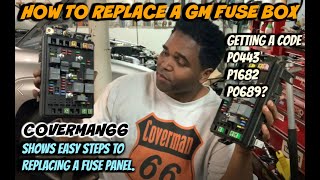
![P1682 Ignition 1 switch circuit 2 [SOLVED]](https://img.youtube.com/vi/KZFTjjczhPg/mqdefault.jpg)
We Have This Part in Stock





The information in this article is provided for general reference and educational purposes only. Vehicle specifications, procedures, and part compatibility can vary by production date, trim level, and region. Always consult your vehicle's factory service manual and verify part numbers before purchasing or performing repairs. Safety-critical components such as airbags, seat belts, and braking systems should be installed by a qualified professional.
- Chevrolet IMPALA:
- 🎬 Helpful Videos
- 🛍️ Shop This Part
- What's Unique About the 2014-2015 Chevrolet IMPALA
- Diagnostic Flowchart
- Symptoms You May Notice
- Most Likely Causes
- Rare But Worth Checking
- Diagnosis Steps
- Parts You'll Likely Need
- Related Codes That Often Appear With This One
- Technical Service Bulletins (TSBs) & Recalls
- Platform-Specific Known Issues
- Mechanic-Grade Diagnostic Values
- Scan Tool Commands That Help
- Wiring & Ground Locations
- Real Owner Repair Stories
- OEM Part Supersession History
- 🎟️ Get 5% Off